
Peripheral Nerve Stimulators Market Value and Revenue Estimations, 2026-2034
REPORT DETAILS
Peripheral Nerve Stimulators Market Summary
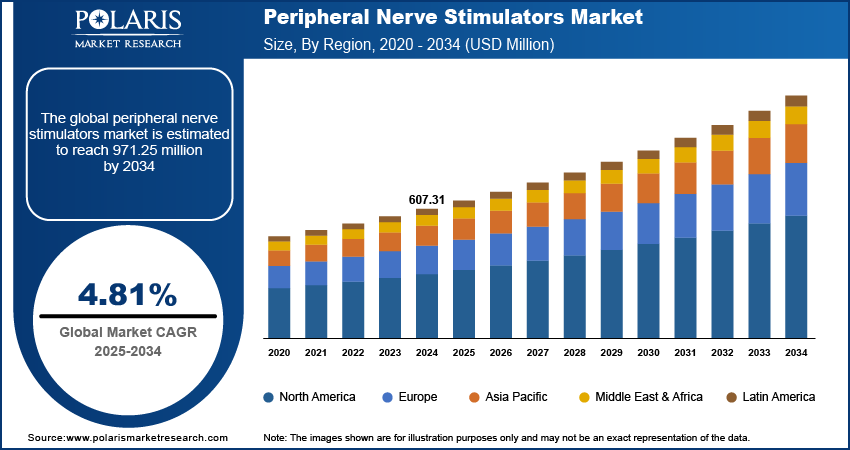
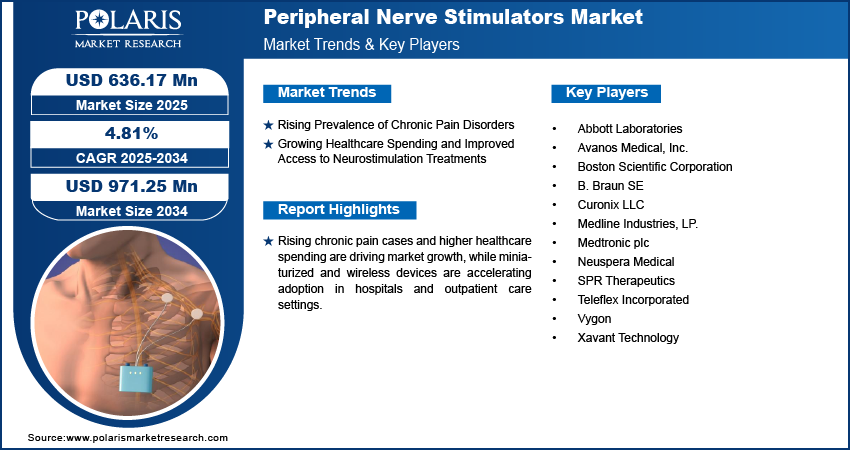
The peripheral nerve stimulators market was valued at USD 269.44 million in 2025 growing at a CAGR of 10.80% from 2026-2034. Growing chronic pain cases and rising healthcare spending in emerging markets are driving demand for peripheral nerve stimulators.
Market Statistics
Key Takeaways
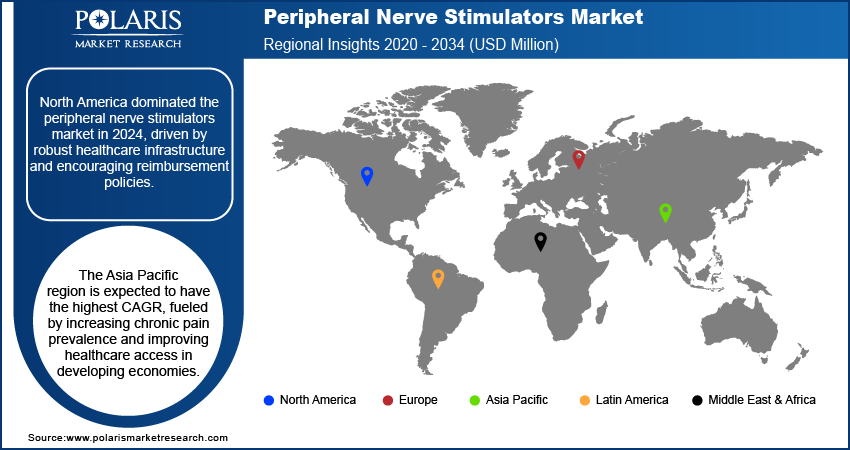
- North America dominated the global market with 42.0% share in 2025 through advanced healthcare infrastructure and chronic pain prevalence.
- The U.S. dominated North America capturing 78.0% share in 2025, with strong hospital networks and favorable reimbursement policies.
- Asia Pacific growing at fastest CAGR of 13.50% during 2026-2034 with the growth of increasing cases of chronic pain and improving access to healthcare.
- China held dominating position in Asia Pacific at a CAGR of 12.50% during the forecast period, due to increasing healthcare expenditure and government support for advanced medical devices.
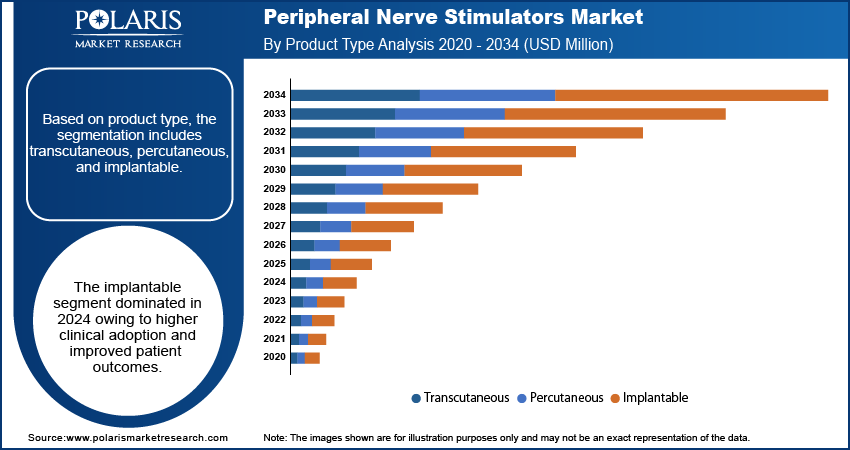
- The implantable segment led with 45.0% share in 2025 with the highest clinical adoption and long-term performance.
- The outpatient centers segment expected to expand the fastest at a CAGR of 12.51% with the growth of minimally invasive procedures and portable devices.
Note: Figures and projections outlined in this report are the result of Polaris Market Research’s proprietary analytical processes, grounded in the latest available datasets and market observations.
Industry Dynamics
- Rising prevalence of chronic pain disorders is increasing the demand for peripheral nerve stimulation therapies.
- Growing healthcare spending and improved access to neurostimulation treatments in emerging markets are driving market growth.
- High implantation and maintenance costs continue to restrain the adoption of peripheral nerve stimulators.
- Growing uses in neuropathic and post-operative pain treatment creates opportunity for the market.
What are Peripheral Nerve Stimulators?
Peripheral nerve stimulators (PNS) are implantable or wearable devices that are used to treat chronic pain by sending mild electrical impulses to specific peripheral nerves. They reduce the transmission of pain signals to the brain and provide a useful alternative treatment compared to opioid therapies.
Growing incidence of chronic pain diseases and rising healthcare expenditure in emerging markets are driving the use of nerve stimulation therapies. Device manufacturers are working towards creating miniaturized, wireless, and rechargeable devices to provide real time patient comfort and treatment results. In September 2025, Nervonik completed preclinical tests showing its PNS system that sense neural activity in real time, improving therapy precision and patient outcomes.
Source: Polaris Market Research Analysis
Healthcare providers across regions are integrating peripheral nerve stimulation into multidisciplinary pain management programs to reduce opioid dependency and improve patient quality of life. Top industry players are building out their R&D pipelines and partnering with hospitals to develop next-generation neurostimulation systems integrating AI-based monitoring and closed-loop feedback for enhanced clinical outcomes.
Difference Between Peripheral Nerve Stimulators Vs Spinal Cord Stimulators
Peripheral Nerve Stimulators (PNS) and Spinal Cord Stimulators (SCS) are neuromodulation therapies. The therapies are designed to manage chronic pain. They deliver electrical impulses that alter pain signaling pathways. Both technologies use similar principles of electrical stimulation. However, they differ significantly in implantation approach, targeted pain regions, invasiveness, cost structure, and clinical applications. The choice between PNS and SCS depends on pain origin, anatomical location, severity, and treatment goals.
| Parameter | Peripheral Nerve Stimulators (PNS) | Spinal Cord Stimulators (SCS) |
| Implantation Site | Electrodes are placed near specific peripheral nerves responsible for transmitting pain signals. The implant is positioned close to the affected nerve or nerve branch. | Electrodes are implanted in the epidural space near the spinal cord, usually targeting specific spinal nerve pathways involved in pain transmission. |
| Targeted Pain Area | Primarily targets localized pain regions such as limbs, joints, shoulder, back, pelvic areas, and specific nerve-related pain zones. | Targets broader chronic pain conditions, often affecting larger body regions such as lower back, legs, and widespread neuropathic pain areas. |
| Mechanism of Action | Modulates electrical activity of specific peripheral nerves to reduce pain signals before they reach the central nervous system. | Alters pain signaling within the spinal cord pathways by stimulating dorsal column nerves and changing pain perception. |
| Invasiveness | Generally considered less invasive, with minimally invasive lead placement and smaller treatment area coverage. Some temporary PNS systems can be placed without permanent implantation. | More invasive due to epidural lead placement and implantation of a pulse generator, often requiring surgical procedures. |
| Procedure Complexity | Usually involves targeted placement using imaging guidance and may require shorter recovery time. | Requires more advanced surgical expertise due to proximity to the spinal cord and higher procedural complexity. |
| Cost Consideration | Lower cost due to simpler implantation procedures, fewer hardware components, and reduced surgical requirements. | Higher cost because of complex implantation, advanced device components, surgical requirements, and long-term device management. |
| Treatment Applications | Used for focal neuropathic pain, post-surgical pain, peripheral nerve injuries, musculoskeletal pain, and conditions affecting specific nerve distributions. | Commonly used for failed back surgery syndrome, complex regional pain syndrome (CRPS), chronic radicular pain, and severe neuropathic pain conditions. |
| Pain Coverage | Provides targeted stimulation with high precision for localized pain sources. | Provides broader coverage and is suitable for pain involving multiple regions or spinal nerve pathways. |
| Long-Term Suitability | Increasingly adopted for patients seeking targeted, lower-risk neuromodulation options. | Preferred for severe, chronic pain conditions requiring extensive pain pathway modulation. |
Drivers & Opportunity
Rising Prevalence of Chronic Pain Disorders: Growing incidence of chronic pain diseases such as neuropathic pain, lower back pain, and post-surgical pain is driving the demand for peripheral nerve stimulation therapies. This large disease burden underscores an ongoing unmet need for effective pain relief, especially in those patients who derive ongoing symptom burden despite standard of care. Patients and physicians are now exploring more minimally invasive and non-opioid solutions for chronic pain management that could help diminish the need for long-term medication. As a result, the use of implantable and external peripheral nerve stimulators is witnessing a surge in the number of hospitals and specialized pain centers, which in turn is fueling the growth of the market in both developed and developing countries.
Growing Healthcare Spending and Improved Access to Neurostimulation Treatments: The nerves stimulation market is also booming in the developing countries. The rest of the Asia Pacific and now Latin America are expected to give a growing platform to advanced pain managing solutions like peripheral nerve stimulation as similar initiatives to build up healthcare infrastructure under the cover of amelioration act as the lever for the above-mentioned ground strengthening. Furthermore, the sustained growth of the market is also supported by government initiatives to support the innovation of medical devices and the growing awareness for non-opioid treatment alternatives.
Source: Polaris Market Research Analysis
Segmental Insights
Product Type Analysis
Based on product type, the segmentation includes transcutaneous, percutaneous, and implantable. The implantable segment led the market with 45.0% share in 2025, due to its established long-term effectiveness and increasing clinical favor for chronic pain treatment. Furthermore, technology advances in miniaturized implants and rechargeable battery systems are improving patient comfort and procedural success, facilitating ongoing adoption in specialized pain centres.
The percutaneous segment is expected to advance at the highest CAGR of 10.50% through the forecast period on account of its minimally invasive nature and reduced recuperation periods. In addition, the increasing use of ultrasound-guided implantation techniques is improving procedural precision and expanding adoption among outpatient pain management facilities.
End User Analysis
Based on end user, the segmentation includes hospitals and outpatient centers. The hospital segment held the market with 65.0% share in 2025, with the presence of advanced surgical facilities and specialty neurology departments contributing to it. In addition, rising hospital-based clinical trials and usage of neurostimulation devices for chronic pain treatment are enhancing their status as primary treatment centers.
The outpatient centers market is expected to exhibit the highest CAGR of 12.51% over the forecast period owing to the increasing demand for minimally invasive procedures and lower hospitalization costs. Moreover, enhanced reimbursement policies and accessibility of transportable PNS systems are fueling uptake in ambulatory care settings.
Technological Advancements in Peripheral Nerve Stimulation
The peripheral nerve stimulator (PNS) market is undergoing significant technological evolution. This is fueled by the rising demand for minimally invasive, patient-friendly, and highly targeted pain management solutions. There are increasing innovations in device miniaturization, power management, wireless communication, and AI. These technological advancements improve the stimulation accuracy, treatment personalization, and long-term patient outcomes. They expand the use of PNS across chronic pain management, postoperative pain control, and neurological rehabilitation applications.
| Technology Advancement | Description | Impact on Peripheral Nerve Stimulation Market |
| Miniaturized Implants | Development of smaller stimulation devices and compact electrodes enables easier implantation near targeted peripheral nerves with reduced surgical burden. | Improves patient comfort, reduces procedure complexity, and increases adoption among patients requiring localized pain relief. |
| Rechargeable Stimulators | Rechargeable pulse generators provide longer device lifespan compared with traditional battery-powered systems, reducing replacement procedures. | Enhances long-term cost efficiency, supports continuous therapy, and improves patient convenience. |
| Wireless Neurostimulation | Wireless PNS systems use externally controlled energy transfer and communication technologies, eliminating or reducing the need for wired connections in certain applications. | Enables minimally invasive treatment options, flexible device placement, and improved mobility for patients. |
| AI-Guided Therapy Optimization | Artificial intelligence and advanced algorithms analyze patient response patterns to optimize stimulation parameters such as intensity, frequency, and duration. | Enables personalized pain management, improves therapeutic effectiveness, and supports data-driven treatment adjustments. |
| Advanced Electrode Designs | New-generation electrodes improve nerve targeting precision and stimulation efficiency while minimizing unwanted stimulation effects. | Enhances treatment accuracy and expands applications across different nerve types and pain conditions. |
| Remote Monitoring & Digital Integration | Connected PNS devices allow clinicians to track therapy performance and modify settings remotely through digital platforms. | Supports better patient follow-up, improves adherence, and enables value-based care models. |
Source: Polaris Market Research Analysis
Regional Analysis
North America Peripheral Nerve Stimulators Market Overview
North America dominated the market for peripheral nerve stimulators capturing 42.0% share in 2025 owing to excessive cases of chronic pain disorders and robust adoption of advanced neuromodulation devices in the U.S. and Canada. Moreover, favorable reimbursement frameworks and continuous clinical research are strengthening regional growth.
The U.S. Peripheral Nerve Stimulators Market Insights
The U.S. market captured 78.0% share of North America in 2025, owing to growing aging population and increasing preference for non-opioid pain management therapies. In addition, strong regulatory support for innovative neurostimulation technologies and extensive hospital networks are fostering higher product utilization. For instance, in August 2025, Bioventus received FDA clearance for two PNS devices, TalisMann and StimTrial to improve chronic pain treatment and enable patient response trials.
Asia Pacific Peripheral Nerve Stimulators Market Insights
Asia Pacific is the fastest growing market witnessing 13.50% CAGR during 2026-2034, driven by rising chronic pain prevalence and improving healthcare infrastructure in countries such as China, Japan, and India. Furthermore, increasing medical tourism and government incentives for advanced treatments are speeding up market uptake.
China Peripheral Nerve Stimulators Market Insights
China is witnessing rapid peripheral nerve stimulators adoption at CAGR of 12.50% during 2026-2034, due to expanding healthcare expenditure and increasing awareness of non-invasive pain therapies. As per the Chinese National Health Commission (NHC), China’s 2024 healthcare reforms include bulk procurement of 500 drugs, pilot price reforms in three provinces, 5,500 hospitals offering “one-stop” services, and 3,000 institutions providing online medical care. Furthermore, local manufacturers are making investments in low-cost neurostimulation technologies, enhancing device affordability and fostering widescale adoption among hospital and ambulatory care centers.
Europe Peripheral Nerve Stimulators Market Insights
Europe holds the substantial share of 28.0% in 2025, driven by early adoption of implantable neurostimulation systems across Germany, the UK, and France. Moreover, rising healthcare investments and collaborative clinical studies are pushing the use of advanced pain management solutions across the region.
Source: Polaris Market Research Analysis
Key Players & Competitive Analysis Report
The peripheral nerve stimulators market is moderately competitive with players concentrating on creating advanced implantable and external stimulation systems. Furthermore, investments in artificial intelligence supported neuromodulation, integration of wireless devices, and partnership with hospitals and pain centers are enhancing clinical efficiency, patient access, and geographic reach.
Major companies operating in the peripheral nerve stimulators market are Bioventus Inc.; Boston Scientific Corporation; CEFALY Technology; Curonix LLC; DyAnsys Inc.; electroCore, Inc.; Mainstay Medical Limited; Medtronic plc; Neuralace Medical, Inc.; Neuros Medical, Inc.; Theranica Bio-Electronics Ltd.; Xavant Technology.
Key Players
- Bioventus Inc.
- Boston Scientific Corporation
- CEFALY Technology
- Curonix LLC
- DyAnsys Inc.
- electroCore, Inc.
- Mainstay Medical Limited
- Medtronic plc
- Neuralace Medical, Inc.
- Neuros Medical, Inc.
- Theranica Bio-Electronics Ltd.
- Xavant Technology
Industry Development
- May 2026: Epineuron received U.S. Food and Drug Administration (FDA) 510(k) clearance for the Evala® Nerve Stimulator. Evala is a handheld, intraoperative electrical stimulation device. The device is engineered to provide surgeons with a rapid and accurate solution for nerve identification and functional evaluation of different nerve sizes, large and small. (Source: businesswire.com)
- August 2025: Nalu Medical introduced a 39% smaller and lighter Therapy Disc for its wearable neurostimulation system, enhancing patient comfort and expanding treatment options for chronic pain through peripheral nerve stimulation. (Source: nalumed.com)
- July 2025: Bioventus received FDA clearance for two next-generation PNS devices, TalisMann and StimTrial, to expand its chronic pain management offerings. (Source: ir.bioventus.com)
Peripheral Nerve Stimulators Market Segmentation
By Product Type (Revenue, USD Million, 2021–2034)
- Transcutaneous
- Percutaneous
- Implantable
By End User (Revenue, USD Million, 2021–2034)
- Hospitals
- Outpatient Centers
By Region (Revenue, USD Million, 2021–2034)
- North America
- The U.S.
- Canada
- Europe
- Germany
- France
- UK
- Italy
- Spain
- Netherland
- Russia
- Rest of Europe
- Asia Pacific
- China
- India
- Japan
- Malaysia
- South Korea
- Indonesia
- Australia
- Rest of Asia Pacific
- Latin America
- Mexico
- Brazil
- Argentina
- Rest of Latin America
- Latin America
- Saudi Arabia
- UAE
- South Africa
- Israel
- Rest of South Africa
Peripheral Nerve Stimulators Market Report Scope
| Report Attributes | Details |
| Market Size in 2025 | USD 269.44 Million |
| Market Size in 2026 | USD 297.97 Million |
| Revenue Forecast by 2034 | USD 678.01 Million |
| CAGR | 10.80% from 2026 to 2034 |
| Base Year | 2025 |
| Historical Data | 2021-2024 |
| Forecast Period | 2026-2034 |
| Quantitative Units | Revenue in USD Million and CAGR from 2026 to 2034 |
| Report Coverage | Revenue Forecast, Competitive Landscape, Growth Factors and Industry Trends |
| Segments Covered |
|
| Regional Scope |
|
| Competitive Landscape |
|
| Report End User |
|
| Customization | Report customization as per your requirements with respect to countries, regions and segmentation. |
Source: Polaris Market Research Analysis
Peripheral Nerve Stimulators Market FAQ's
The global market size was valued at USD 269.44 million in 2025 and is projected to grow to USD 678.01 million by 2034.
The global market is projected to register a CAGR of 10.80% during the forecast period.
North America dominated the global market with 42.0% share in 2025, due to a high prevalence of chronic pain disorders and advanced healthcare infrastructure.
A few of the key players in the market are Bioventus Inc.; Boston Scientific Corporation; CEFALY Technology; Curonix LLC; DyAnsys Inc.; electroCore, Inc.; Mainstay Medical Limited; Medtronic plc; Neuralace Medical, Inc.; Neuros Medical, Inc.; Theranica Bio-Electronics Ltd.; Xavant Technology.
The implantable segment led with 45.0% share in 2025, due to long-term efficacy and growing clinical preference for chronic pain management.
The outpatient centers segment expected to expand the fastest at a CAGR of 12.51%, driven by minimally invasive treatments and increasing use of portable neurostimulation systems.
Download Sample Report of Peripheral Nerve Stimulators Market
Please fill out the form to request a customized copy of the research report.


