
Precision Psychiatry Market Size, Share, Trends and Forecast, 2026–2034
REPORT DETAILS
Precision Psychiatry Market Summary
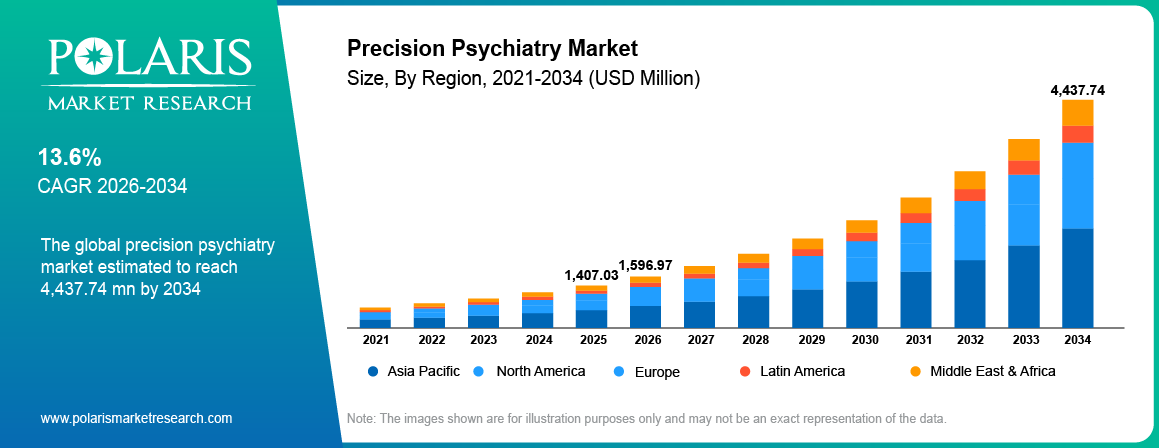
The global precision psychiatry market size was valued at USD 1,407.03 million in 2025, growing at a CAGR of 13.6% from 2026 to 2034. Precision psychiatry innovation is driven by growing awareness about mental health and increasing research funding.
Market Statistics
Key Takeaways
- North America accounted for 38.5% of the precision psychiatry market revenue in 2025. Strong investment in neurogenomics, AI-based diagnostics, and personalized mental healthcare supports its dominance.
- Asia Pacific is projected to register the highest CAGR of 15.2% during 2026–2034. Growing mental health awareness, genomics research, and government investments in China and India are driving regional growth.
- The products segment accounted for 62.4% of market revenue in 2025. Growing adoption of genomic and biomarker testing tools is supporting product demand.
- The services segment is projected to grow at a CAGR of 14.8% during 2026–2034. Increasing outsourcing of genomic and biomarker analysis and collaborations between diagnostic firms and research centers are supporting growth.
- The blood-based segment accounted for 54.6% of market revenue in 2025. Ease of collection and reliable biomarker detection are supporting its dominance.
- The polymerase chain reaction (PCR) segment is projected to grow at a CAGR of 14.5% during 2026–2034. High sensitivity in biomarker quantification and advances in quantitative and digital PCR technologies are driving growth.
Note: Figures and projections outlined in this report are the result of Polaris Market Research’s proprietary analytical processes, grounded in the latest available datasets and market observations.
What Is Precision Psychiatry?
Precision psychiatry includes tools and platforms that help identify biomarkers, genetic variants, and brain activity patterns linked to psychiatric disorders. These tools support the diagnosis and treatment of mental health conditions. They also help pharmaceutical and biotechnology companies improve drug development and study how patients respond to different treatments. Growing use of AI-based analytics and genomic profiling is helping researchers develop more personalized treatment approaches.
Rising awareness of mental health is supporting the growth of the precision psychiatry market. Government investment in neuroscience and genomics research is also driving innovation in psychiatric diagnostics and treatment. Advances in Artificial Intelligence, biomarker research, and digital health platforms are creating new opportunities for personalized mental healthcare. These technologies can help researchers study patient data, identify treatment patterns, and improve clinical trial design.
However, high genomic testing costs and the limited availability of clinically validated biomarkers remain key challenges. Researchers also need more evidence to confirm how well these tools work across different psychiatric disorders. In June 2025, Alto Neuroscience identified a patient-selection biomarker and reported positive pharmacodynamic results in an exploratory Phase 2 trial of ALTO-203 in patients with major depressive disorder (Source: altoneuroscience.com).
How Precision Psychiatry Works
Precision psychiatry uses genetic information, biomarkers, brain imaging, and patient health data to support personalized mental healthcare. The process begins with data collection, including medical history, genetic test results, symptoms, and behavioral patterns. These data are then analyzed to identify patterns linked to psychiatric disorders and treatment responses. AI-based analytics and genomic profiling can help researchers understand individual differences and support precision psychiatry research.
After data analysis, healthcare professionals interpret the findings to guide treatment choices. Genetic testing and biomarker analysis may help identify suitable treatment options based on a patient's needs. Once treatment begins, clinicians monitor the patient's response and adjust the treatment plan when needed. This process helps support personalized psychiatric treatment and better treatment decisions. However, clinicians remain responsible for interpreting results and making final decisions based on the patient's condition, medical history, and clinical needs.
Market Dynamics
Market Driver: Rising Demand for Personalized Mental Healthcare
The growing need for personalized mental healthcare is driving interest in precision psychiatry. In June 2026, Attunio Health announced a platform combining AI, biomarker testing, wearable data, and remote monitoring to support personalized mental health treatment. The platform aims to help clinicians assess patient-specific patterns and monitor treatment responses. This development highlights growing industry interest in data-driven psychiatric care (Source: trial.medpath.com).
Market Driver: Advancements in Biomarker-Based Treatment Research
Advances in biomarker research are supporting the development of personalized psychiatric treatments. In June 2025, Alto Neuroscience reported results from an exploratory Phase 2 trial of ALTO-203 involving 69 patients with major depressive disorder. The company identified an EEG-based biomarker linked to drug activity and attention. These findings highlight the potential of biomarkers to support patient selection and treatment research, although further validation is needed (Source: altoneuroscience.com).
Market Opportunity- AI-Based Clinical Trial Design
AI is creating new opportunities to improve patient selection and clinical trial design in psychiatric drug development. In April 2025, NetraMark Holdings Inc. and Worldwide Clinical Trials announced a global agreement to use AI-powered analytics in Phase 2 neuroscience and oncology trials and selected Phase 3 trials. The collaboration aims to identify patient subgroups, improve treatment response analysis, reduce trial timelines, and support more targeted drug development (Source: netramark-and-worldwide-clinical-trials).
Market Opportunity- Wearable-Based Mental Health Monitoring
Wearable devices create opportunities to collect ongoing data on sleep, activity, and other health patterns. In August 2026, a study published in npj Digital Public Health described the Digital Mental Health Study, which collected up to 12 months of smartphone and Apple Watch sensor data from more than 4,000 participants. This research supports further exploration of digital phenotyping for depression and anxiety assessment, although its clinical use requires continued evaluation (Source: nature.com).
Market Restraint- Limited Clinical Validation of Biomarkers
Limited clinical validation remains a challenge for the precision psychiatry market. A 2026 report on the Precision Psychiatry Roadmap highlighted the need for better biomarker validation, standardization, and clinical implementation. Biomarkers that show promise in early research may not work equally well across patient groups. This uncertainty can slow adoption by healthcare providers and drug developers. Further clinical studies are needed to establish their reliability and practical value.
Role of Biomarkers in Precision Psychiatry
Biomarkers help researchers identify biological patterns linked to psychiatric disorders. These markers may include genetic variations, proteins, and other measurable changes in the body. In precision psychiatry, biomarker analysis supports disease classification, patient assessment, and treatment response prediction. Researchers also use biomarkers to study why patients with the same mental health condition may respond differently to treatment.
Biomarker discovery is creating new opportunities for personalized mental healthcare and psychiatric drug development. Pharmaceutical and biotechnology companies are studying biomarkers to identify suitable patient groups and improve clinical trial design. However, many psychiatric biomarkers still require further clinical validation. Researchers must confirm their reliability across different patient groups before they can be widely used in routine psychiatric care.
Genetic Testing and Pharmacogenomics in Psychiatric Care
Genetic testing helps researchers and healthcare professionals understand how genetic differences may affect psychiatric medication response. Pharmacogenomics studies how genes influence the way the body processes and responds to medicines. In precision psychiatry, these tests can help identify genetic variations linked to medication metabolism. This information may support decisions about antidepressants and other psychiatric drugs.
Growing interest in personalized medicine is supporting the use of pharmacogenomic testing in mental healthcare. Healthcare professionals may use test results alongside medical history, symptoms, and other clinical information when selecting medicines. However, genetic testing cannot predict treatment outcomes with certainty. Medication response also depends on factors such as age, other medicines, health conditions, and individual patient needs. Clinical judgment remains essential when making treatment decisions.
AI and Machine Learning in Precision Psychiatry
Artificial intelligence (AI) and machine learning are gaining importance in the precision psychiatry market. These technologies help researchers analyze large amounts of genetic, clinical, behavioral, and brain imaging data. AI-based analytics can identify patterns that may be difficult to detect through traditional analysis. Researchers are exploring these tools to study psychiatric disorders, predict treatment responses, and improve patient selection in clinical trials.
Machine learning models can also support biomarker discovery and personalized psychiatric treatment research. Pharmaceutical companies may use these tools to identify patient groups with similar characteristics and study how they respond to different medicines. However, AI predictions depend on the quality and accuracy of the data used. Models require proper testing and clinical validation before wider use. Data privacy, bias, and clinician oversight also remain important considerations.
Digital Health, Digital Phenotyping and Neuroimaging
Digital health technologies are creating new opportunities for precision psychiatry research. Mobile applications, wearable devices, and remote monitoring platforms can collect information about sleep, physical activity, and behavioral patterns. Digital phenotyping uses data from these devices to study changes in behavior and health over time. These insights may help researchers understand differences between patients and explore new ways to assess mental health conditions.
Neuroimaging technologies, including magnetic resonance imaging (MRI) and functional MRI, help researchers study brain structure and activity. When combined with genetic information, biomarkers, and clinical data, imaging results may support research into personalized psychiatric care. These technologies are also being explored for treatment response prediction and patient assessment. However, many digital phenotyping and neuroimaging applications remain under study. Further clinical validation, data privacy safeguards, and reliable interpretation are needed before broader clinical use.
Traditional Psychiatry vs Precision Psychiatry
Traditional psychiatry and precision psychiatry both aim to improve mental health diagnosis and treatment. Traditional psychiatry mainly uses symptoms, medical history, and clinical assessments to guide treatment decisions. Precision psychiatry adds genetic information, biomarkers, brain imaging, and data analysis to support more personalized care. Both approaches rely on clinical judgment, and precision psychiatry is still developing for many applications.
| Feature | Traditional Psychiatry | Precision Psychiatry |
| Diagnosis | Based mainly on symptoms and clinical assessment | Combines clinical assessment with biological and genetic data where available |
| Treatment selection | Uses clinical guidelines, patient history, and observed response | Uses patient-specific data to help guide treatment choices |
| Data sources | Symptoms, medical history, and clinical observations | Clinical data, genetics, biomarkers, brain imaging, and behavioral data |
| Treatment response | Assessed through follow-up and symptom changes | May also use biomarkers and data analysis to study response |
| Technology | Clinical assessments and established diagnostic tools | May include genomic testing, AI, and digital monitoring |
| Main limitation | Finding the right treatment may require adjustments over time | Biomarker validation, cost, data privacy, and clinical evidence remain challenges |
Source: Polaris Market Research Analysis
Segmental Insights
By Product Type
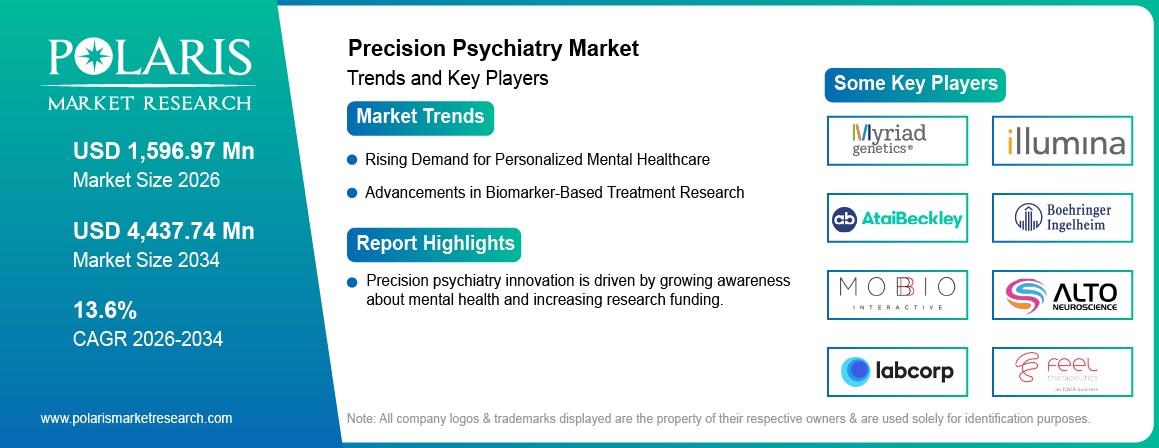
The global precision psychiatry market segmentation, based on product type, includes products and services. The products segment accounted for 62.4% of market revenue in 2025, driven by the growing adoption of genomic and biomarker testing tools. Increasing use of precision diagnostic kits across healthcare and research institutions is supporting product demand.
The services segment is projected to grow at a CAGR of 14.8% during 2026–2034. Rising demand for genomic analysis, biomarker testing, and data interpretation is supporting service adoption. Growing collaborations between diagnostic companies and research institutions are also creating opportunities for specialized service providers.
By Sample Type
The global precision psychiatry market segmentation, based on sample type, includes blood-based and non-blood-based samples. The blood-based segment accounted for 54.6% of market revenue in 2025, supported by its ease of collection and reliability in biomarker detection. Blood samples are widely used in genomic and proteomic screening to identify biological markers associated with psychiatric disorders. Their established use in clinical testing and research also supports segment growth.
The non-blood-based segment is projected to grow at a CAGR of 14.7% during 2026–2034. Increasing research into saliva, urine, and cerebrospinal fluid (CSF) is expanding the range of samples used in precision psychiatry. These samples can help researchers study biomarkers and biological changes associated with mental health conditions. Moreover, advances in multi-omics analysis and neuroimaging are supporting research into personalized psychiatric diagnosis and treatment.
By Biomarker Type
The global precision psychiatry market segmentation, based on biomarker type, includes genetic biomarkers and protein biomarkers. The genetic biomarker segment accounted for 36.8% of market revenue in 2025, driven by growing research into genetic variants linked to psychiatric disorders. Advances in genomic sequencing are helping researchers investigate genetic risk factors and understand differences in disease susceptibility. These biomarkers also support research into psychiatric disorder classification, although their ability to guide diagnosis and predict treatment response varies by condition and requires clinical validation.
The protein biomarker segment is projected to grow at a CAGR of 14.2% during 2026–2034. Increasing use of proteomic profiling is supporting research into proteins associated with psychiatric conditions. Protein biomarkers are also being studied to assess treatment response and monitor biological changes during therapy. However, further clinical validation is needed to establish their reliability in routine psychiatric care.
By Technology
The global precision psychiatry market segmentation, based on technology, includes sequencing, polymerase chain reaction (PCR), microarray, immunoassay, liquid chromatography-mass spectrometry (LC-MS), and others. The sequencing segment accounted for 32.6% of market revenue in 2025, supported by the growing use of next-generation sequencing (NGS) for genetic analysis and psychiatric biomarker discovery. Declining sequencing costs and improvements in genomic analysis are also supporting adoption across research institutions and clinical settings.
The PCR segment is projected to grow at a CAGR of 14.5% during 2026–2034. Its high sensitivity and ability to detect and quantify genetic material support its use in biomarker research. Advances in real-time PCR and digital PCR are improving the accuracy of genetic analysis. Meanwhile, microarrays support the analysis of multiple genetic markers, immunoassays help detect specific proteins, and LC-MS enables detailed analysis of proteins and other biological compounds. These technologies support complementary approaches to biomarker discovery and treatment-response research.
Technology Comparison in Precision Psychiatry
| Technology / Data Approach | Typical Role | Potential Value | Key Limitation |
| Next-Generation Sequencing (NGS) | Analyzes many genetic variants in a single sample. | Supports genetic profiling and research into variants linked to psychiatric traits and medication response. | Genetic findings do not independently confirm a diagnosis or guarantee treatment response. |
| PCR / RT-PCR / Digital PCR | Detects and measures selected genetic targets. | Supports targeted genetic testing and sensitive biomarker measurement. | Results depend on the selected target and the accuracy of the test. |
| Microarray | Measures multiple predefined genetic markers at once. | Enables large-scale analysis of known genetic markers. | Detects only markers included on the array. |
| Immunoassay | Detects specific proteins and other biological substances. | Supports the measurement of potential biomarkers in clinical and research settings. | Usefulness depends on the reliability of the biomarker and the test. |
| Liquid Chromatography-Mass Spectrometry (LC-MS) | Measures selected molecules, including proteins and metabolites. | Supports detailed molecular analysis and biomarker discovery. | May require specialized equipment, sample preparation, and technical expertise. |
| Neuroimaging (MRI / Functional Imaging) | Examines brain structure and activity-related patterns. | Supports research into brain patterns and differences between patient groups. | Findings vary by condition and are not sufficient for diagnosis on their own. |
| AI / Machine Learning / Digital Phenotyping | Analyzes clinical, behavioral, genetic, imaging, and device-based data. | Supports pattern identification, treatment-response research, and monitoring of behavioral changes over time. | Performance depends on data quality, validation, privacy protection, and appropriate clinical oversight. |
Source: Polaris Market Research Analysis
By Application
The global precision psychiatry market segmentation, based on application, includes Alzheimer’s disease, Parkinson’s disease, autism, depression, bipolar disease, and others. The Alzheimer’s disease segment accounted for 28.4% of market revenue in 2025, driven by growing biomarker research and increased adoption of neuroimaging technologies. Rising clinical research into early detection and targeted treatment approaches is also supporting segment growth. These developments are helping researchers study disease-related biological changes and explore more personalized approaches to patient assessment.
The depression segment is projected to grow at a CAGR of 15.1% during 2026–2034. Growing genomic research and the development of AI-based analytical tools are supporting precision-based approaches to depression research and treatment. Rising mental health awareness is also increasing interest in personalized psychiatric care. In October 2025, NeuroKaire entered an R&D collaboration with COMPASS Pathways to explore AI-based neural models and patient-derived neurons for developing precision treatments for depression (Source: neurokaire.com).
By End User
The global precision psychiatry market segmentation, based on end user, includes hospitals and diagnostic laboratories, academic and research institutions, and others. The hospitals and diagnostic laboratories segment accounted for 46.7% of market revenue in 2025, driven by rising patient volumes and growing adoption of genomic testing and precision diagnostics. Increasing use of biomarker analysis and genetic testing in clinical workflows is also supporting segment growth.
The academic and research institutions segment is projected to grow at a CAGR of 14.9% during 2026–2034. Rising investment in neurogenomics, psychiatric biomarker discovery, and personalized medicine research is supporting demand. Moreover, research collaborations and the adoption of AI-based data analytics are helping institutions study genetic patterns, treatment responses, and new approaches to precision psychiatry.
Precision Psychiatry Use Cases
| Use Case | Application | Potential Benefits | Key Consideration |
| Personalized Medication Selection | Uses genetic information and pharmacogenomic testing to study how patients may respond to psychiatric medications. | Supports more individualized medication decisions and may help reduce trial-and-error prescribing. | Genetic results must be considered alongside symptoms, medical history, and other clinical factors. |
| Treatment Response Prediction | Uses biomarkers, clinical data, and AI-based analytics to study differences in treatment response. | Helps researchers identify patient characteristics linked to treatment outcomes. | Predictive models require clinical validation before routine use. |
| Patient Monitoring | Uses clinical assessments, wearable devices, and digital health tools to track changes in symptoms and behavior. | Supports ongoing assessment of treatment response and changes in patient condition. | Data privacy and reliable interpretation are important. |
| Clinical Trials | Uses genetic profiles, biomarkers, and AI-based analysis to identify suitable participants for psychiatric studies. | Supports patient selection and analysis of treatment outcomes. | Findings depend on study design and the quality of patient data. |
| Research and Patient Stratification | Groups patients based on genetic, biological, behavioral, and clinical characteristics. | Helps researchers study disease subtypes and develop targeted treatment approaches. | Patient groups require reliable data and further validation. |
Source: Polaris Market Research Analysis
Regional Analysis
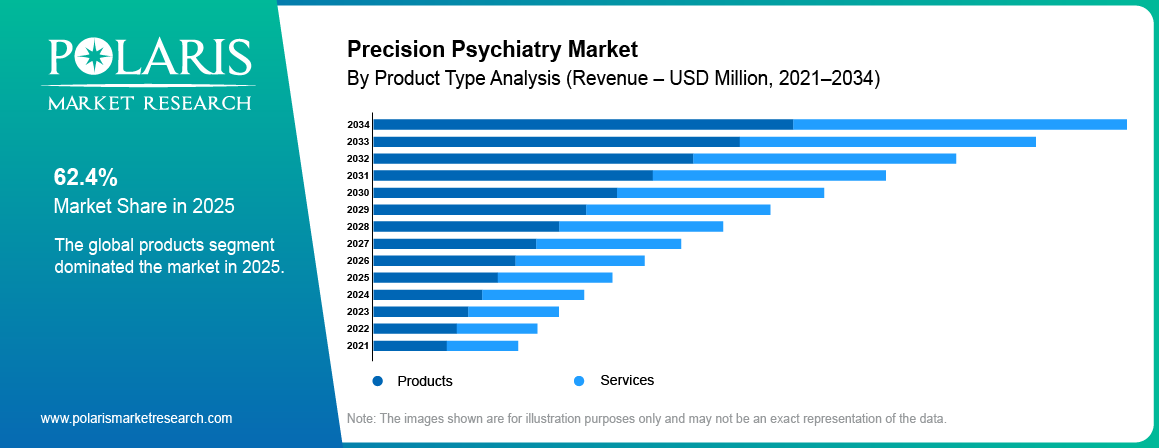
The precision psychiatry market is segmented into North America, Europe, Asia Pacific, Latin America, and the Middle East & Africa. Regional growth is influenced by investment in genomic research, psychiatric biomarker discovery, AI-based diagnostics, and personalized mental healthcare.
North America Precision Psychiatry Market
North America dominated the precision psychiatry market in 2025, accounting for 38.5% of market revenue, supported by well-developed mental health research infrastructure and advanced AI-enabled diagnostic technologies. Strong investment in neurogenomics, biomarker discovery, and personalized mental healthcare is supporting regional growth. The increasing use of genetic testing and AI-based diagnostic platforms is also contributing to precision-based treatment development.
U.S. Precision Psychiatry Market Insights
The U.S. held the largest share of the North American market, driven by investment in mental health genomics and biomarker discovery. The presence of biotechnology companies, research institutions, and academic collaborations is supporting the development of personalized psychiatric treatments. Growing interest in AI-based diagnostics and precision mental health programs is also contributing to market expansion.
Canada Precision Psychiatry Market Trends
Canada is included in the North American precision psychiatry market. The adoption of genomic testing, biomarker research, and personalized mental healthcare forms part of the regional market landscape. Research collaborations and advances in data-driven diagnostic approaches are relevant to the development of precision psychiatry solutions.
Asia Pacific Precision Psychiatry Market Trends
Asia Pacific is projected to register the fastest growth in the precision psychiatry market, with a CAGR of 15.2% during 2026–2034. Rising mental health awareness, increasing investment in genomic research, and expanding research infrastructure across China, Japan, and India are supporting regional growth. In April 2025, Fortis Healthcare launched a Genomic Medicine Institute to expand precision medicine using genomics and AI across multiple medical specialties.
China Precision Psychiatry Market Overview
China's precision psychiatry market is supported by government-backed precision medicine initiatives and investment in mental health research and development. The expansion of genome sequencing facilities and AI-based healthcare companies is contributing to the adoption of advanced diagnostic technologies. These developments are creating opportunities for psychiatric biomarker research and personalized treatment approaches.
Japan Precision Psychiatry Market Trends
Japan is included among the major country markets in the Asia Pacific precision psychiatry market. Genomic research, biomarker analysis, and advances in diagnostic technologies provide opportunities for precision-based psychiatric research. Growing interest in personalized healthcare also supports the development of approaches tailored to individual patient characteristics.
India Precision Psychiatry Market Outlook
India's precision psychiatry market is supported by growing mental health awareness and investment in genomic medicine. The launch of Fortis Healthcare's Genomic Medicine Institute in April 2025 highlights efforts to expand the use of genomics and AI in healthcare. Such developments create opportunities for biomarker research, personalized diagnostics, and precision-based treatment development.
Europe Precision Psychiatry Market Assessments
Europe represents an important regional market, supported by psychiatric biomarker research and increasing interest in genetic testing. Investment in digital mental health infrastructure is helping expand access to data-driven diagnostic approaches and personalized treatment research. Advances in genomic profiling and clinical research are also supporting the development of precision psychiatry solutions across the region.
Germany Precision Psychiatry Market Trends
Germany is one of the country markets covered under the European precision psychiatry market. Research into psychiatric biomarkers, genomic profiling, and personalized medicine contributes to the region's precision healthcare landscape. Continued development of diagnostic technologies and research collaborations supports further exploration of precision-based psychiatric care.
UK Precision Psychiatry Market Insights
The UK is another key country market within Europe. Research into psychiatric disorders, genetic testing, and personalized treatment approaches supports the development of precision psychiatry. The use of data analytics in healthcare research also creates opportunities to improve understanding of treatment response and patient differences.
Latin America Precision Psychiatry Market Analysis
Latin America is included in the global precision psychiatry market, with Brazil, Mexico, and Argentina among the country markets covered in the regional segmentation. The adoption of genomic testing, biomarker analysis, and AI-based diagnostic approaches represents potential areas of market development. Further expansion depends on access to diagnostic infrastructure, research investment, and the availability of specialized healthcare services.
Middle East & Africa Precision Psychiatry Market Analysis
The Middle East & Africa region includes markets such as Saudi Arabia, the UAE, Israel, and South Africa. Interest in advanced diagnostic technologies, genomic research, and personalized healthcare creates opportunities for precision psychiatry solutions. Regional market development is linked to healthcare infrastructure, investment in research, and access to specialized diagnostic services.
Precision Psychiatry Market Segment Overview
| Segment Dimension | Subsegments | Market Overview |
| Product Type | Products; Services | Products include diagnostic tools and testing kits, while services include genomic analysis, biomarker testing, and data interpretation. |
| Sample Type | Blood-Based; Non-Blood-Based (Saliva, Urine, Cerebrospinal Fluid (CSF), Others) | Blood samples are widely used for biomarker analysis. Non-blood-based samples provide additional options for studying biological markers associated with psychiatric conditions. |
| Biomarker Type | Genetic Biomarker; Protein Biomarker | Genetic biomarkers help researchers study genetic variations associated with psychiatric disorders and medication response. Protein biomarkers support research into biological changes and potential treatment-response indicators. |
| Technology | Sequencing (NGS, Sanger); PCR (RT-PCR, dPCR); Microarray; Immunoassay; Liquid Chromatography-Mass Spectrometry (LC-MS); Others | These technologies support genetic analysis, biomarker detection, and molecular profiling in precision psychiatry research and diagnostic development. |
| Application | Alzheimer’s Disease; Parkinson’s Disease; Autism; Depression; Bipolar Disease; Others | Precision psychiatry research explores biological markers, genetic factors, and treatment-response patterns across different neurological and psychiatric conditions. |
| End User | Hospitals and Diagnostic Laboratories; Academic and Research Institutions; Others | Hospitals and diagnostic laboratories support testing and clinical assessment, while academic and research institutions contribute to biomarker discovery and personalized treatment research. |
| Region | North America; Europe; Asia Pacific; Latin America; Middle East & Africa | Regional market development is influenced by investment in genomic research, diagnostic infrastructure, mental health services, and personalized medicine. |
Source: Polaris Market Research Analysis
Key Players & Competitive Analysis
The precision psychiatry market is very competitive, involving efforts by companies to use AI-driven diagnosis and biomarker discovery for the enhancement of precision in treatment. Additionally, collaborations among biotech firms, research institutes, and healthcare providers are accelerating innovation and widening regional market presence.
Some of the major companies in the precision psychiatry market include Alto Neuroscience, Inc., Altimate Healthcare, AtaiBeckley Inc., Boehringer Ingelheim International GmbH, Feel Therapeutics, Genomind, HMNC Holding GmbH, Illumina, Inc., Labcorp, MedGenome Labs Ltd., Mobio Interactive, Myriad Genetics, Inc., NeuroKaire, Polaris Genomics, Quest Diagnostics Incorporated, Spring Health, Tempus AI, Inc., and Thermo Fisher Scientific Inc.
Alto Neuroscience is a clinical-stage biopharmaceutical company focused on developing treatments for neuropsychiatric disorders. The company uses neuroscience-based assessments and biological data to identify patient characteristics linked to treatment response. Its research aims to support personalized treatment approaches for conditions such as depression and other mental health disorders.
Polaris Genomics develops genomic and machine learning technologies for neuropsychiatric biomarker discovery. Its platform combines biological and clinical data to study mental health conditions and identify potential biomarkers. The company focuses on developing blood-based testing approaches, including research into post-traumatic stress disorder (PTSD), supporting progress toward more personalized psychiatric assessment.
Key Players
- Alto Neuroscience, Inc.
- AtaiBeckley Inc.
- Boehringer Ingelheim International GmbH
- Feel Therapeutics
- Genomind, LLC
- Illumina, Inc.
- Labcorp
- Mobio Interactive
- Myriad Genetics, Inc.
- NeuroKaire
- Polaris Genomics
- Quest Diagnostics Incorporated
- Tempus AI, Inc.
- Thermo Fisher Scientific Inc.
Vendor Positioning Table
| Company Name | Headquarters | Area of Focus | Role in Precision Psychiatry |
| Alto Neuroscience, Inc. | Mountain View, California, USA | Neuroscience-based drug development | Develops treatments informed by biological and behavioral characteristics. |
| AtaiBeckley Inc. | New York, USA | Mental health therapeutics | Develops treatments for mental health conditions. |
| Boehringer Ingelheim International GmbH | Ingelheim am Rhein, Germany | Pharmaceutical research | Conducts research and develops medicines, including in neuroscience. |
| Feel Therapeutics | Athens, Greece | Digital mental health | Develops digital tools for mental health measurement and monitoring. |
| Genomind, LLC | King of Prussia, Pennsylvania, USA | Pharmacogenomic testing | Provides genetic insights to support psychiatric medication decisions. |
| Illumina, Inc. | San Diego, California, USA | Genomic sequencing | Provides sequencing technologies for genetic and biomarker research. |
| Labcorp | Burlington, North Carolina, USA | Clinical laboratory testing | Provides laboratory diagnostics and genetic testing services. |
| Mobio Interactive | Singapore | Digital mental health analytics | Uses digital measurements and analytics to support mental health assessment. |
| Myriad Genetics, Inc. | Salt Lake City, Utah, USA | Genetic testing | Offers GeneSight testing to help inform psychiatric medication selection. |
| NeuroKaire | United States and Israel | Precision psychiatry testing | Develops biological testing approaches to study antidepressant response. |
| Polaris Genomics | Gaithersburg, Maryland, USA | Neuropsychiatric biomarkers | Develops genomic and machine-learning approaches for biomarker discovery. |
| Quest Diagnostics Incorporated | Secaucus, New Jersey, USA | Clinical laboratory testing | Provides clinical laboratory and genetic testing services. |
| Tempus AI, Inc. | Chicago, Illinois, USA | AI-enabled precision medicine | Uses AI and healthcare data analytics to support personalized medicine research. |
| Thermo Fisher Scientific Inc. | Waltham, Massachusetts, USA | Laboratory and genomic technologies | Supplies technologies used in genetic testing and biomarker research. |
Source: Polaris Market Research Analysis
Precision Psychiatry Industry Developments
- July 2026: Ethos Laboratories launched CNSDose, a pharmacogenomic testing platform for neuropsychiatric medication management in the United States. The test evaluates 19 genes to provide genetic information that may help clinicians make more informed medication decisions. (Source: ethos-laboratorie)
- July 2026: Tempus AI, Inc. announced the national launch of its OneOme pharmacogenomic testing solution following its acquisition of OneOme in November 2025. The platform provides genetic insights related to medication response, dosing, and potential toxicity, supporting personalized medicine. (Source: tempus.com)
- June 2026: Attunio Health launched an AI-powered precision psychiatry platform combining biomarker testing, wearable devices, and continuous monitoring. The platform aims to support personalized mental healthcare through data-driven assessment and clinician-guided treatment, including care for ADHD and other mental health conditions. (Source: attunio-health)
- July 2025: NIMHANS and the University of Oslo launched the PrecInNor initiative for the development of precision psychiatry through integrated research in genetics, imaging, and data science.(Source: pharmabiz.com)
- May 2025: Alto Neuroscience is pushing four Phase 2 trials employing precision psychiatry methods, including patient stratification with biomarkers to better match treatments in unmet psychiatric areas. (Source: psychiatrictimes.com)
- April 2025: Johnson & Johnson Impact Ventures invested in Mobio Interactive to scale "precision psychiatry" tools for both patients and healthcare workers around the world. (Source: jnj.com)
Future Outlook
The precision psychiatry market is expected to benefit from advances in genomic testing, biomarker discovery, and artificial intelligence. Growing research into genetic variations and treatment response may support more personalized approaches to psychiatric care. Digital health platforms and wearable devices are also creating opportunities for continuous patient monitoring and data-driven treatment decisions. In addition, collaborations among pharmaceutical companies, diagnostic laboratories, and research institutions may accelerate the development of precision-based therapies. However, high testing costs, limited clinical validation of biomarkers, data privacy concerns, and unequal access to advanced diagnostic technologies may affect adoption. Continued research and clinical evidence will be important for wider integration into mental healthcare.
Research Methodology
The precision psychiatry market analysis examines key industry trends, market segments, regional developments, and competitive activities. The research considers factors such as the growing adoption of genomic testing, advances in biomarker discovery, AI-based diagnostic tools, and increasing interest in personalized mental healthcare.
The study reviews the market by product type, sample type, biomarker type, technology, application, end user, and region. It also examines developments across major countries and evaluates the roles of diagnostic laboratories, biotechnology companies, pharmaceutical companies, and research institutions.
The competitive assessment considers company offerings, product developments, research collaborations, and relevant corporate updates. Industry announcements and publicly available company information provide additional context for understanding market developments. Regional analysis considers differences in research infrastructure, healthcare investment, and technology adoption.
The overall assessment identifies key growth opportunities and challenges, including testing costs, biomarker validation, data privacy, and access to advanced diagnostic technologies. Market estimates and forecasts should be based on the underlying market data and validated research assumptions.
Precision Psychiatry Market Segmentation
By Product Type Outlook (Revenue, USD Million, 2021–2034)
- Products
- Services
By Sample Outlook (Revenue, USD Million, 2021–2034)
- Blood-Based
- Non-Blood-Based
- Saliva
- Urine
- Cerebrospinal Fluid (CSF)
- Others
By Biomarker Type Outlook (Revenue, USD Million, 2021–2034)
- Genetic Biomarker
- Protein Biomarker
By Technology Outlook (Revenue, USD Million, 2021–2034)
- Sequencing
- Next-Generation Sequencing (NGS)
- Sanger Sequencing
- Polymerase Chain Reaction (PCR)
- Real-Time Polymerase Chain Reaction (RT-PCR)
- Digital Polymerase Chain Reaction (dPCR)
- Microarray
- Immunoassay
- Liquid Chromatography-Mass Spectrometry (LC-MS)
- Others
By Application Outlook (Revenue, USD Million, 2021–2034)
- Alzheimer’s Disease
- Parkinson’s Disease
- Autism
- Depression
- Bipolar Disease
- Others
By End User Outlook (Revenue, USD Million, 2021–2034)
- Hospitals and Diagnostic Laboratories
- Academic and Research Institutions
- Others
By Regional Outlook (Revenue, USD Million, 2021–2034)
- North America
- U.S.
- Canada
- Europe
- Germany
- France
- UK
- Italy
- Spain
- Netherlands
- Russia
- Rest of Europe
- Asia Pacific
- China
- Japan
- India
- Malaysia
- South Korea
- Indonesia
- Australia
- Vietnam
- Rest of Asia Pacific
- Middle East & Africa
- Saudi Arabia
- UAE
- Israel
- South Africa
- Rest of Middle East & Africa
- Latin America
- Mexico
- Brazil
- Argentina
- Rest of Latin America
Precision Psychiatry Market Report Scope
| Report Attributes | Details |
| Market Size in 2025 | USD 1,407.03 Million |
| Market Size in 2026 | USD 1,596.97 Million |
| Revenue Forecast by 2034 | USD 4,437.74 Million |
| CAGR | 13.6% from 2026 to 2034 |
| Base Year | 2025 |
| Historical Data | 2021–2024 |
| Forecast Period | 2026–2034 |
| Quantitative Units | Revenue in USD Million and CAGR from 2026 to 2034 |
| Report Coverage | Revenue Forecast, Competitive Landscape, Growth Factors, and Industry Trends |
| Segments Covered |
|
| Regional Scope |
|
| Competitive Landscape |
|
| Report Format |
|
| Customization | Report customization as per your requirements with respect to countries, regions, and segmentation. |
Source: Polaris Market Research Analysis
Precision Psychiatry Market FAQ's
The global precision psychiatry market was valued at USD 1,407.03 million in 2025 and is projected to reach USD 4,437.74 million by 2034.
The global market is projected to register a CAGR of 13.6% during the forecast period.
North America dominated the market in 2025, supported by investment in neurogenomics, biomarker research, and AI-based diagnostic technologies.
Asia Pacific is expected to grow at the fastest rate, driven by rising mental health awareness, expanding genomic research, and investment in healthcare technologies.
Major companies include Alto Neuroscience, Inc., AtaiBeckley Inc., Boehringer Ingelheim International GmbH, Feel Therapeutics, Genomind, LLC, Illumina, Inc., Labcorp, Mobio Interactive, Myriad Genetics, Inc., NeuroKaire, Polaris Genomics, Quest Diagnostics Incorporated, Tempus AI, Inc., and Thermo Fisher Scientific Inc.
Advances in genetic testing, biomarker discovery, artificial intelligence, and personalized mental healthcare are supporting market growth.
Key technologies include sequencing, polymerase chain reaction (PCR), microarrays, immunoassays, and liquid chromatography-mass spectrometry (LC-MS).

Download Sample Report of Precision Psychiatry Market
Please fill out the form to request a customized copy of the research report.


