
Acai Berry Market Trends, Report Insights, Analysis Growth, 2026-2034
REPORT DETAILS
Acai Berry Market Summary
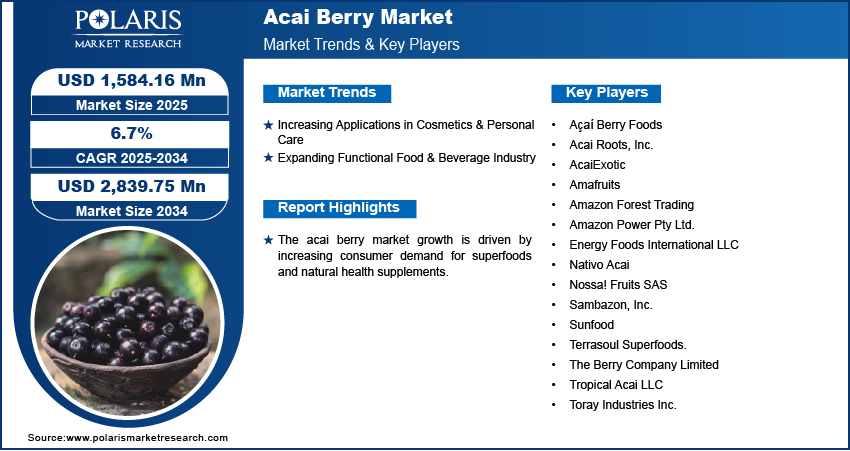
The global acai berry market size was valued at USD 1,583.75 million in 2025. According to our acai berry market forecast, the industry is projected to account for a CAGR of 6.7% between 2026 and 2034. The market is primarily driven by the increasing use of acai berry in cosmetics and personal care products, and by the expansion of the functional food & beverage industry.
Market Statistics
Key Takeaways
- North America dominated the global market with a 49.80% revenue share in 2025. This is because of increased awareness of superfoods among consumers in the region.
- Asia Pacific is expected to grow at a 7.3% CAGR during the forecast period. This is due to a growing health-conscious demographic and rapid urbanization in the region.
- The pulp segment led the market with a 82.91% revenue share in 2025, as acai pulp is widely used in food and beverages.
- The dietary supplements segment is expected to witness a 7.6% CAGR, owing to growing consumer affinity towards plant-based nutrition.
Note: Figures and projections outlined in this report are the result of Polaris Market Research’s proprietary analytical processes, grounded in the latest available datasets and market observations.
Industry Dynamics
- The growing consumer preference for natural ingredients has led to a rise in acai oil-based skincare and hair care products.
- The expansion of the functional foods and beverage industry has led to the wider use of acai berries in smoothies, juices, and energy bars.
- The emerging acai berry opportunities revolve around product innovation, especially in functional beverages and nutraceuticals.
- The complexities of the supply chain and acai price volatility may hinder market development.
The acai berry market encompasses acai berry cultivation, processing, and distribution. Acai berries are mainly found in the Amazon rainforest. The berries contain antioxidants. They are known for their health benefits. They are used in functional foods, beverages, and supplements. They also find uses in personal care products.
The growth of the acai berry market is largely driven by the increased demand for superfoods and natural health supplements. Consumers are seeking nutrient-dense foods with multiple health benefits as they become more health-conscious. Acai berries, which are rich in antioxidants, are becoming more popular due to their potential benefits in supporting heart health, digestion, and boosting immunity. Furthermore, consumers are becoming more interested in organic and natural products. They are avoiding artificial compounds and synthetic supplements. The interest in functional foods with scientific health benefits has also contributed to the market growth. With improvements in economic conditions and changes in food habits, the demand for acai berries in food products such as smoothie bowls and supplements is increasing.
Acai berry market is growing rapidly with the increase in demand for organic, ethical, and sustainable products. Health-conscious consumers are increasingly focusing on natural superfoods, which is enhancing the popularity of acai berries. Acai berries are loaded with antioxidants, which positively impact the demand for these berries. Ethical sourcing is becoming a major factor in purchasing, which is encouraging companies to focus on sustainable sourcing. Furthermore, improvements in extraction technology have enabled the production of high-quality acai-based ingredients, thus making acai more attractive in various functional food, beverage, and nutraceutical markets. The formulation of new products, such as acai-based supplements, energy bars, and cosmetics, is also opening more market opportunities. This dynamic environment is encouraging innovation and competition, which is thus ensuring continued growth.

To Understand More About this Research:Download Sample Report
Why the Acai Berry Market Matters?
The market for acai berries is growing into the premium segment of the broader superfoods and functional ingredients industry. It is driven by rising global demand for plant-based nutrition and antioxidants. The convergence of the food, nutraceutical, and personal care markets has helped establish the acai berry as a premium product.
The increase in demand for clean label products and the emergence of the functional food industry have made acai a significant ingredient in various industries. The importance of acai berries has increased due to the focus on preventive health care. Apart from that, the emergence of e-commerce and direct-to-consumer health companies has made acai more accessible. As awareness of the benefits of acai berries concerning immunity and anti-aging continues to rise, the acai berry market is growing significantly.
Acai Berry Market Dynamics
Increasing Applications in Cosmetics & Personal Care
Modern consumers are looking for natural ingredients in their products. This has led to a rise in acai oil-based skincare and hair care products. Acai oil contains active ingredients like polyphenols and vitamins. These ingredients provide hydration, repair, and anti-aging benefits. The cosmetic industry is adding acai oil to premium cosmetic products. For instance, in February 2023, Astraberry introduced a range of skincare products containing acai berry. Moreover, the move towards sustainable sourcing and organic certification is another factor that is adding to the growth of acai-based products. The research and development of advanced formulations have added more value to acai oil. All these aspects have helped to boost the competitive positioning of acai oil in the global market for cosmetics.
Expanding Functional Food & Beverage Industry
There has been an increased consumer preference for superfood ingredients. It is driving the wider use of acai berries in smoothies, juices, and energy bars. Consumers are increasingly choosing nutrient-rich, natural ingredients that offer added health benefits. Acai berries are rich in antioxidant content, essential fatty acids, and fiber. This makes them a popular choice for energy and wellness-focused products. Manufacturers are also focusing on innovation. They are introducing ready-to-drink acai-based beverages. It is being done to meet demand for convenient nutrition. For example, in April 2024, Juice It Up! launched a new Protein Acai Smoothie. The company also brought back its Chocolate Dipped Acai Smoothie. The new products targeted both health-focused and indulgent preferences. In addition, the shift toward clean-label and organic products is supporting market growth. Partnerships between food and beverage companies and superfood suppliers are further improving product availability and expanding consumer reach.
Market Restraints
The acia berries market is growing significantly. However, the market is also facing challenges concerning the complexities of the supply chain and acai price volatility. A majority of the acai berries are obtained from the Amazon rainforest. This makes the supply of acai berries seasonal and vulnerable to weather conditions.
In addition, the need for cold-chain logistics to maintain pulp quality increases transportation costs, which affects final product pricing. Limited cultivation outside Brazil also creates supply concentration risks and adds to acai sourcing risk.
Market Opportunities
The emerging acai berry opportunities revolve around product innovation, especially in functional beverages, nutraceuticals, and clean-label cosmetics. The increasing acceptability of acai-based products in emerging markets like India and Southeast Asia is creating fresh opportunities.
Advances in technologies such as freeze-drying and extraction techniques have improved the stability and shelf life of acai. They have enabled it to be used in more applications.
Acai Berry Market Segment Insights
By Product Type Outlook
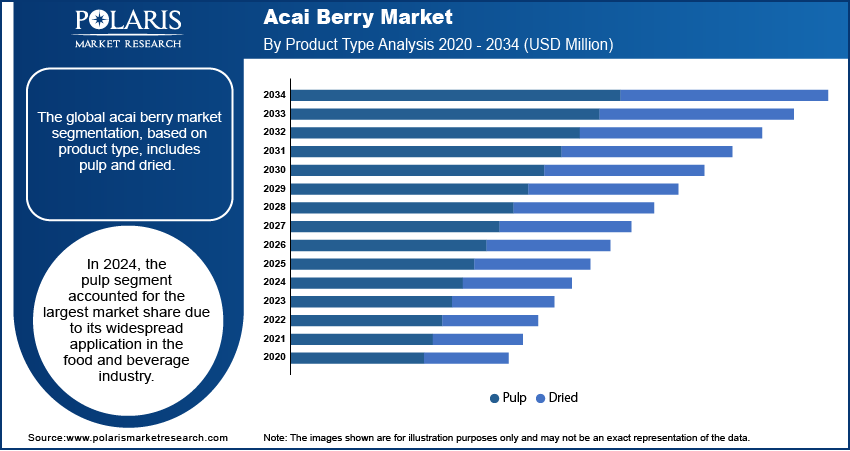
The global acai berry market segmentation, based on product type, includes pulp and dried. The pulp segment dominated the market with a 82.91% revenue share in 2025. This is because acai pulp is widely used in the food and beverages sector. The high demand for fresh, nutrient-rich superfoods among consumers has prompted the use of acai pulp in smoothies, juices, and beverages. The minimal processing involved in the product helps maintain the antioxidants, essential fatty acids, and dietary fiber found in the fruit, thus increasing its marketability among health-conscious consumers. There is an increase in the food chain, juice bars, and beverage companies launching various acai-based offerings. Advances in refrigerated storage infrastructure have helped turn the previously spoil-prone commodity into a shelf-stable ingredient, enabling the supply of the product on a year-round basis to manufacturers worldwide.
The dried process segment is projected to register the highest CAGR during the forecast period. This can be attributed to the rising demand for the shelf-stable, concentrated form of the acai berries. Freeze-dried and powdered forms of the acai berries have gained much traction in the dietary supplement and food industry. The longer shelf life of the acai berry powder has resulted in it being more appealing to the nutraceutical and cosmetic industries. The growth of the e-commerce industry is also seen to contribute to the demand for dried acai berries. The technological advancements in the drying of acai berries have helped retain the nutritional benefits of the berries.
By Application Outlook
The global acai berry market segmentation, based on application, includes food and beverages, dietary supplements, and confectionary. The food and beverages segment accounted for the largest market share in 2025. This is because of the rising demand for superfood-infused products. Functional beverages such as acai-based juices, energy drinks, and smoothie bowls have gained significant traction. The increased demand for plant-based foodstuffs has led to acai becoming a popular choice for health-oriented consumers. Food producers are now launching new products, such as acai-based yogurts and cereals. The rising health and wellness trend, especially in North America and Europe, has strengthened the market demand in this segment.
The dietary supplements segment is expected to witness a high CAGR of 7.6% during the forecast period. This is due to growing consumer affinity towards plant-based nutrition and antioxidant-dense superfood ingredients. Acai berries contain high levels of polyphenols, which are useful for maintaining immunity, heart health, and anti-aging effects. As a result, acai berries are in high demand as a dietary supplement ingredient in capsule and powder form. Increasing awareness of preventive health and improving purchasing power are fueling the acai berry market in the dietary supplements industry. Strategic alliances between nutraceutical companies and raw material companies are boosting the value of acai berries, while online channels are rapidly popularizing these supplements among consumers.
Regional Analysis
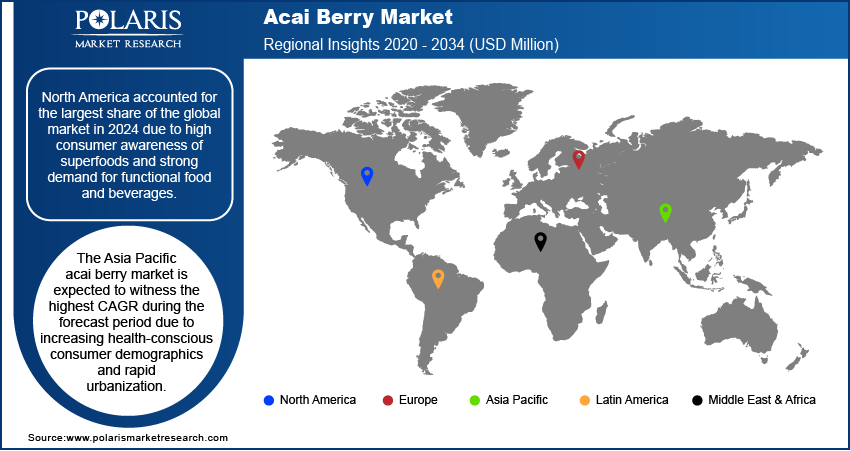
By region, the study provides the acai berry market insights into North America, Europe, Asia Pacific, Latin America, and the Middle East & Africa. North America accounted for the largest market share of 49.80% in 2025. This is because of increased awareness of superfoods among consumers and a strong demand for functional food and beverage products. The established health and wellness industry in the region has helped to ensure a strong penetration of acai in mainstream products. Investments in organic acai have also helped to boost growth in the regional acai market. For instance, in May 2024, the U.S. Department of Agriculture announced new initiatives. These include partnerships, grants, and additional funding of USD 10 million to improve market access for organic products and help conventional producers switch to organic production. Further, the presence of key food and beverage companies, along with strong marketing activities, has increased growth prospects for this market. The regulatory environment and wide distribution network have also driven demand for the acai berry market. All these factors have further consolidated North America's position in this market.
The Asia Pacific acai berry market is expected to grow at a 7.3% CAGR during the forecast period due to a growing health-conscious demographic and rapid urbanization in countries like China, India, and Japan. Increasing disposable incomes and a shift towards a more plant-based diet are contributing significantly to the growth of the acai berry market in these countries. The availability of acai berry-based products has become widespread due to the increase in retail and e-commerce channels, moving from a niche product to a widely available pantry staple. The growing nutraceutical and beauty sectors in the region are increasingly using acai, focusing on its antioxidant properties to develop premium products. Increasing investment in local processing and distribution infrastructure is also boosting penetration and growth.
Acai Berry Market – Key Players and Competitive Insights
The acai berry market is highly competitive. Major players are using various strategies like mergers and acquisitions, joint ventures, and partnerships to enhance their positions in the industry. Companies are also expanding their supply chains by entering into strategic alliances with acai berry farmers/cooperatives to ensure a consistent supply of organic acai berries. Developments in processing technologies, including freeze-drying and microencapsulation, are improving the quality of acai berry products and increasing their market penetration across various applications. Key players are using post-merger integration strategies to optimize operations. The ever-changing technology has helped in the development of new formulations of functional foods and nutraceuticals, intensifying competition strategy.
Companies are engaging in partnerships with research centers to discover additional health benefits of acai, which is diversifying their products. Aggressive brand strategies, digital marketing, and e-commerce strategies are altering competitive behavior, helping brands achieve better market penetration. New entrants and private brands are putting pressure on competition, prompting traditional brands to innovate in areas such as organic premium brands and sustainability. Due to increased demand for clean-label and plant-based products, firms are focusing on strategies to sustain their competitive advantage in the acai berry market.
Acai Roots, Inc. is involved in the business of product development and marketing related to acai berry products. The company specializes in sustainable sourcing practices. It was formed with the intention of capitalizing on the demand for healthy food products. The company is located in the U.S., and the product line includes acai berry powder, capsules, and other supplements. Acai Roots also offers services related to the sourcing and supply of acai berries. The company operates in the U.S. market with a reputation for sustainable sourcing in the acai berry market.
Sambazon, Inc. is a company dealing in acai berry-based food products. It was formed in 2000 and focuses on organic and sustainable food options. The organization is based in California, U.S. Its product offerings include a variety of acai berry-based food products, such as frozen acai berries, smoothie bowls, and snacks, along with services in acai berry sourcing and processing, which provide high-quality food products to consumers. The organization has a strong presence in North America, with a growing presence in other parts of the world as well. Sambazon is known for its innovative products and business strategies, such as its acquisition of SunOpta's acai business.
List of Key Companies in Acai Berry Market
- Açaí Berry Foods
- Acai Roots, Inc.
- AcaiExotic
- Amafruits
- Amazon Forest Trading
- Amazon Power Pty Ltd.
- Energy Foods International LLC
- Nativo Acai
- Nossa! Fruits SAS
- Sambazon, Inc.
- Sunfood
- Terrasoul Superfoods.
- The Berry Company Limited
- Tropical Acai LLC
Use-Case Demand Analysis
Acai berries are being consumed in many different ways. Acai applications include smoothie bowls, ready-to-consume beverages, and supplements, among others. The foodservice industry, especially cafes and juice bars, plays an important role in the sale of acai berries. The increasing emphasis on fitness, health, and active living is contributing to the increasing demand for acai-based energy products. It is also driving the rise in acai supplement demand.
Supply Chain & Sustainability Analysis
The acai berry supply chain is dominated by Brazil, especially in the Amazon region. The local communities are responsible for harvesting activities in this region. Sustainability and fair trade are key issues in this value chain. Factors such as fair trade acai, rainforest preservation, and traceability are becoming critical issues in this value chain, especially for North America and European consumers, who are influencing the acai value chain through their buying behaviors.
Pricing & Value Chain Assessment
The price of the acai berries is determined by the product's form, whether it is in the form of pulp, powder, or extract. The price is also determined by the quality as well as the conditions in which the product is sourced. The fresh pulp requires cold storage facilities, which increases the cost. The dried forms, such as powder, provide longer shelf life as well as reduced transport costs. The value chain involves the process from harvesting, processing, exporting, distribution, and retailing. The majority of the value is contributed by the processing stage.
Industry Developments
- February 2025: OAKBERRY, the global food brand known for fresh acai, collaborated with POM Wonderful to launch the Very POM Berry Smoothie.
Acai Berry Market Segmentation
By Product Type Outlook (Revenue, USD Million, 2021–2034)
- Pulp
- Dried
By Certification Outlook (Revenue, USD Million, 2021–2034)
- Organic
- Non-Organic
- Fair Trade
By Distribution Channel Outlook (Revenue, USD Million, 2021–2034)
- Supermarkets and Hypermarkets
- Convenience Stores
- Online
By Application Outlook (Revenue, USD Million, 2021–2034)
- Food and Beverages
- Dietary Supplements
- Confectionary
By Regional Outlook (Revenue, USD Million, 2021–2034)
- North America
- US
- Canada
- Europe
- Germany
- France
- UK
- Italy
- Spain
- Netherlands
- Russia
- Rest of Europe
- Asia Pacific
- China
- Japan
- India
- Malaysia
- South Korea
- Indonesia
- Australia
- Vietnam
- Rest of Asia Pacific
- Middle East & Africa
- Saudi Arabia
- UAE
- Israel
- South Africa
- Rest of Middle East & Africa
- Latin America
- Mexico
- Brazil
- Argentina
- Rest of Latin America
Acai Berry Market Report Scope
| Report Attributes | Details |
| Market Size in 2025 | USD 1,583.75 million |
| Market Size in 2026 | USD 1,688.33 million |
| Revenue Forecast by 2034 | USD 2,839.59 million |
| CAGR | 6.7% |
| Base Year | 2025 |
| Historical Data | 2021–2024 |
| Forecast Period | 2026–2034 |
| Quantitative Units | Revenue in USD million, and CAGR from 2026 to 2034 |
| Report Coverage | Revenue Forecast, Market Competitive Landscape, Growth Factors, and Trends |
| Segments Covered |
|
| Regional Scope |
|
| Competitive Landscape | Acai Berry Industry Trend Analysis (2025) Company profiles/industry participants profiling include company overview, financial information, product/service benchmarking, and recent developments |
| Report Format | PDF + Excel |
| Customization | Report customization as per your requirements with respect to countries, regions, and segmentation. |
Source: Polaris Market Research Analysis
Acai Berry Market FAQ's
The acai berry market was valued at USD 1,583.75 million in 2025. The market is projected to reach USD 2,839.59 million by 2034.
The market for acai berries is projected to account for a CAGR of 6.7% between 2026 and 2034.
Yes, global demand for acai berries is increasing rapidly. It is driven by the health and wellness trend and rising popularity of superfoods.
The potential health benefits of acai berries include lowering LDL ("bad") cholesterol and protecting against oxidative stress and chronic illness. They can also help improve heart health.
Acai berries are primarily produced in the Amazon region of South America, with Brazil being the dominant producer. Other producing countries in the Amazon basin include Colombia, Ecuador, Venezuela, Guyana, and Suriname.
A few of the key market companies include Açaí Berry Foods; Acai Roots, Inc.; AcaiExotic; Amafruits; Amazon Forest Trading; Amazon Power Pty Ltd.; Energy Foods International LLC; Nativo Acai; Nossa! Fruits SAS; Sambazon, Inc.; Sunfood; Terrasoul Superfoods.; The Berry Company Limited; and Tropical Acai LLC.
Download Sample Report of Acai Berry Market
Please fill out the form to request a customized copy of the research report.


