-
April 2026: Fermentalg unveiled OMEGA ΩRIGINS, a high-concentration EPA/DHA algal oil. The product concentrates on providing sustainable and plant-based omega-3 solutions for nutritional applications. Source: fermentalg.com
-
April 2026: HTBA launched Leanara at Vitafoods Europe 2026 to support muscle maintenance and energy levels in GLP-1 users. The launch aims the growing need for nutrition support among individuals using weight-loss treatments. Source: nutraceuticalbusinessreview.com
-
April 2026: Aarus, a D2C wellness startup incubated by the Kanoria Foundation, launched its first product, Drift, in the Indian market. Drift is a nighttime cocoa-based drink made to support sleep, relaxation, and evening wellness. Source: economictimes.indiatimes.com
-
June 2025: Dabur launched Siens, a new D2C brand focused on gut and skin health. Source: dabur.com

Dietary Supplements Market Size & Share Global Analysis Report, 2026-2034
REPORT DETAILS
Dietary Supplements Market Summary
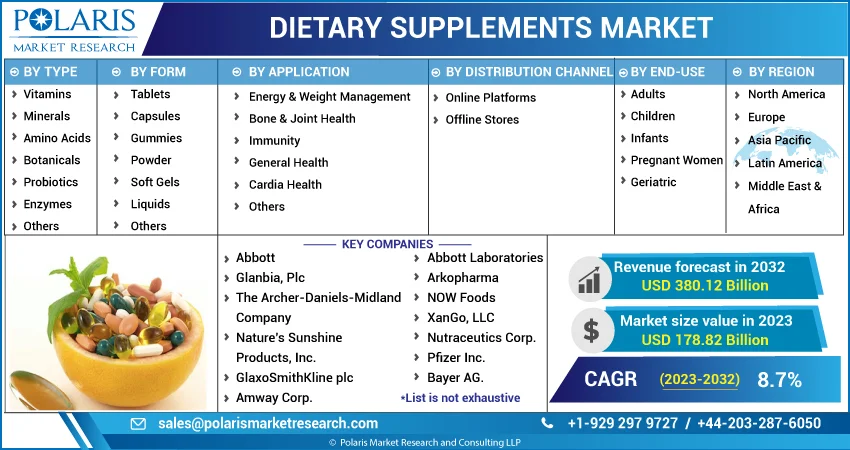
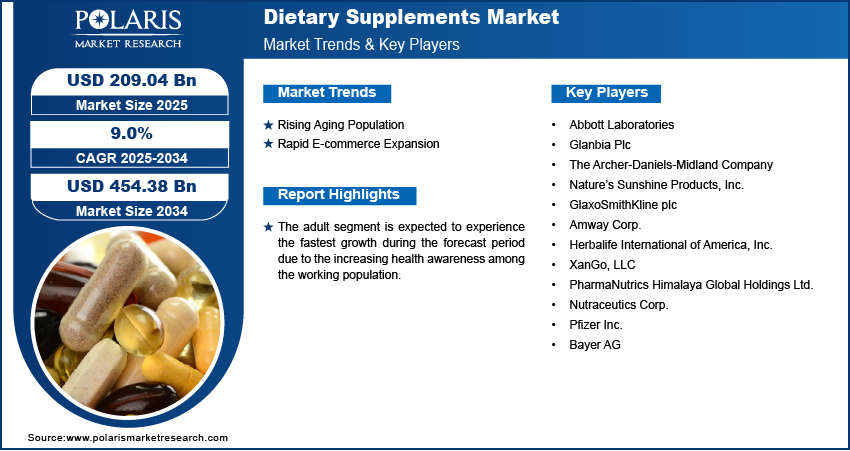
The dietary supplements market size was valued at USD 209.54 billion in 2025 and is expected to register a CAGR of 9.0% during 2026–2034. The market growth is driven by the increasing demand for supplements that enhance sports performance. Consumers are increasingly seeking supplements to meet their daily micronutrient requirements, which is driving demand for diet supplements. Moreover, the increasing consumer spending on health and wellness products boosts the industry expansion.
Market Statistics
Key Takeaways
- In 2025, North America held the largest global revenue share of 33.3%. The widespread adoption of preventive healthcare measures and the presence of a well-established supplement industry boost the regional market expansion.
- The dietary supplements industry in Asia Pacific is expected to witness the fastest growth rate of CAGR 10.5% during the forecast period. The industry growth is attributed to the increasing consumer awareness of health and wellness and a growing middle-class population.
- In 2025, the vitamins segment accounted for the largest industry share of 35.10% due to the increasing awareness of their role in maintaining overall health and preventing nutrient deficiencies.
- The adult segment is expected to witness the fastest growth rate of CAGR 9.06% during 2026–2034, due to the increasing health awareness among the working population, emerging fitness trends, and a growing emphasis on preventive healthcare.
- In 2025, the probiotics segment accounted for a notable share of the dietary supplements market and is expected to grow at a CAGR of 12.4% in 2026–2034. The segment growth is attributed to the rising consumer concentration on gut health, digestive balance, and immunity help.
What Are Dietary Supplements?
Dietary supplements include vitamins, minerals, amino acids, botanicals, and probiotics. They support overall health and fill gaps in daily nutrition. They are taken when the regular diet is not enough. Consumers use them to improve immunity, boost energy, and support bone health, heart health, and digestion.
The dietary supplements market produces and sells products that are designed to supplement the diet with additional nutrients, vitamins, minerals, and other substances that need to be obtained in sufficient quantities from food alone.
Dietary supplements are used for multiple purposes, such as improving overall health, supporting specific bodily functions, helping in weight loss, and enhancing athletic performance which is further contributing to the dietary supplements market growth. Furthermore, the COVID-19 pandemic has positively impacted the industry, as consumers seek products that boost their immune function and reduce the risk of infection; thus, the demand for dietary supplements is fueling the market expansion
Types of Dietary Supplements and Their Benefits
| Types | Benefits |
| Vitamins | Support immunity and overall health |
| Minerals | Help bone strength and body functions |
| Amino Acids | Support muscle growth and recovery |
| Botanicals | Provide natural health support and wellness |
| Probiotics | Improve digestion and gut health |
| Enzymes | Help in digestion and nutrient absorption |
Source: Polaris Market Research Analysis
AI Impact on Dietary Supplements Market
- AI tools are used to analyze current and emerging industry trends, customer feedback, SEO analytics, and competitor product analysis. This study helps identify opportunities to develop new supplements and create appropriate marketing materials.
- The tools analyze vast datasets of ingredient properties and their health outcomes. It is used to develop more clinically effective and less costly supplement formulas.
- Industry players adopt AI systems to ensure their products, marketing materials, and social media presence comply with legal requirements and recommendations.
Market Dynamics
Driver: Rapid E-Commerce Expansion Improving Product Accessibility
The rapid expansion of online retail platforms has increased the accessibility of dietary supplements, further fueling market growth. For instance, the US Census Bureau reported that Q3 2024 retail e-commerce sales, adjusted for seasonal variation, reached USD 300.1 billion, a 2.6 percent increase from Q2 2024. E-commerce software platforms, including major marketplaces such as Amazon, health-specific retailers, and direct-to-consumer websites, allow consumers to browse and purchase supplements from home. This convenience offers access to a wide range of brands, formulations, and price points, expanding the customer base and encouraging repeat purchases. The global reach of e-commerce has also supported the growth of niche and specialized brands offering vegan, gluten-free, and organic products. Competitive pricing, frequent promotions, and bundling options make premium products more accessible, reinforcing this trend as a key driver of industry growth.
Driver: Rising Aging Population
The growing global geriatric population is driving demand for dietary supplements designed to address age-related health concerns. These products target issues such as bone density, cognitive decline, and immune support. According to the WHO, the population aged 60 and older is projected to reach 2.1 billion by 2050, while those aged 80 and above are expected to triple to approximately 426 million between 2020 and 2050. Older people often experience a decline in physiological functions, leading to a higher prevalence of chronic conditions and nutrient deficiencies. Products such as bone and joint health supplements are in high demand due to the increased risk of osteoporosis, arthritis, and other musculoskeletal issues. Calcium, vitamin D, collagen, glucosamine, and chondroitin are commonly sought to maintain bone density and ease joint discomfort, boosting market expansion.
Driver: Increasing Focus on Health and Diet Among Younger Consumers
A growing emphasis on health, nutrition, and preventive wellness, particularly among the younger population, is fueling market demand. Younger consumers are becoming more proactive about managing their diets and supporting their overall well-being. This shift is encouraging greater use of dietary supplements as part of daily routines. Rising health awareness is also influencing purchasing decisions and brand preferences. As this consumer mindset strengthens, demand for supplements is expected to continue rising.
Restraint: High Cost of Supplements
The relatively high cost of dietary supplements remains a key factor restraining industry growth. Premium formulations and specialized products can be unaffordable for price-sensitive consumers, limiting wider adoption. This may lead some buyers to delay purchases or choose lower-priced alternatives. Affordability concerns can be especially influential in markets where consumers are highly cost-conscious. As a result, pricing challenges continue to limit the market’s overall growth potential.
Opportunity: Collaborations and Partnerships for Innovative Product Development
Rising collaborations and partnerships among market players are expected to create lucrative opportunities in the coming years. By combining expertise, resources, and research capabilities, companies can accelerate the development of innovative supplement formulations. Such alliances also help businesses strengthen their product portfolios and expand their market reach. This collaborative approach enables players to respond more effectively to evolving consumer needs. It is likely to support long-term competitiveness and growth.
Opportunity: Surging Shift Toward Plant-Based Products
The growing shift toward plant-based products is expected to open new avenues for industry players during the forecast period. Consumers are increasingly seeking supplements that align with their dietary preferences and lifestyle choices. This trend encourages manufacturers to broaden their offerings with plant-based formulations. Companies that adapt to this demand can attract a wider customer base and differentiate their brands. The expanding preference for plant-based options is expected to support sustained market opportunities.
Segment Insights
Market Assessment by Type Outlook
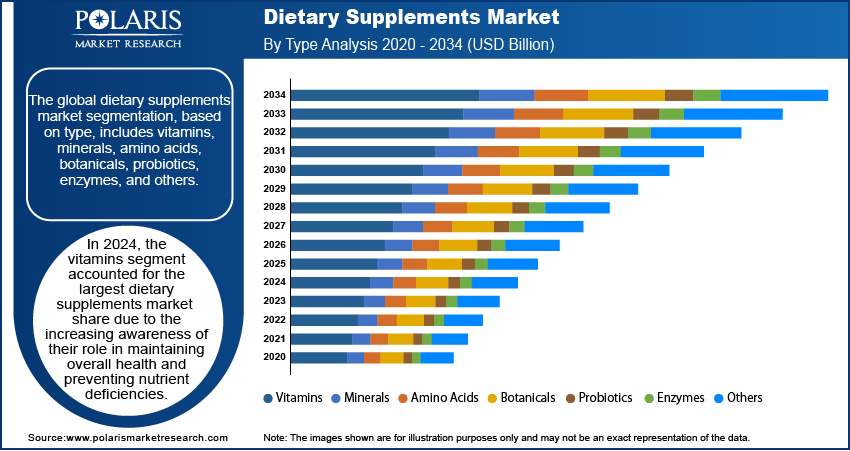
The global dietary supplements market segmentation, based on type, includes vitamins, minerals, amino acids, botanicals, probiotics, enzymes, and others. In 2025, the vitamins segment accounted for the largest dietary supplements market share due to the increasing awareness of their role in maintaining overall health and preventing nutrient deficiencies. Key factors driving this growth include the rising demand for immunity-boosting products, particularly the COVID-19 pandemic, and the widespread use of multivitamins as a convenient solution for meeting daily nutritional requirements. Additionally, the growing prevalence of lifestyle-related diseases, such as diabetes and cardiovascular conditions, has led to a surge in the consumption of vitamin D, C, and B-complex, which are known to support immunity, energy production, and overall well-being.
Market Evaluation by End Use Outlook
The global dietary supplements market segmentation, based on end use, includes, adults, children, infants, pregnant women, and geriatric. The adult segment is expected to experience the fastest growth during the forecast period due to the increasing health awareness among the working population, a rise in fitness trends, and a growing emphasis on preventive healthcare. Factors such as busy lifestyles, inadequate dietary intake, and stress-related health concerns have driven the adoption of supplements to boost energy, immunity, and overall wellness. Additionally, the popularity of targeted supplements, such as those for weight management, muscle recovery, and stress reduction, further contributes to the segment's rapid growth.
Use Cases of Dietary Supplements
| Area | Purpose | Common Supplements Used |
| Immune Support | Supports immune system function | Vitamin C, Vitamin D, Zinc |
| Sports Nutrition | Aids muscle growth and recovery | Protein, Amino acids |
| Daily Health | Maintains overall health and wellness | Multivitamins |
| Bone Health | Supports bone strength and density | Calcium, Vitamin D |
| Digestive Health | Supports digestion and gut function | Probiotics, Enzymes |
Source: Polaris Market Research Analysis
Market Regional Insights
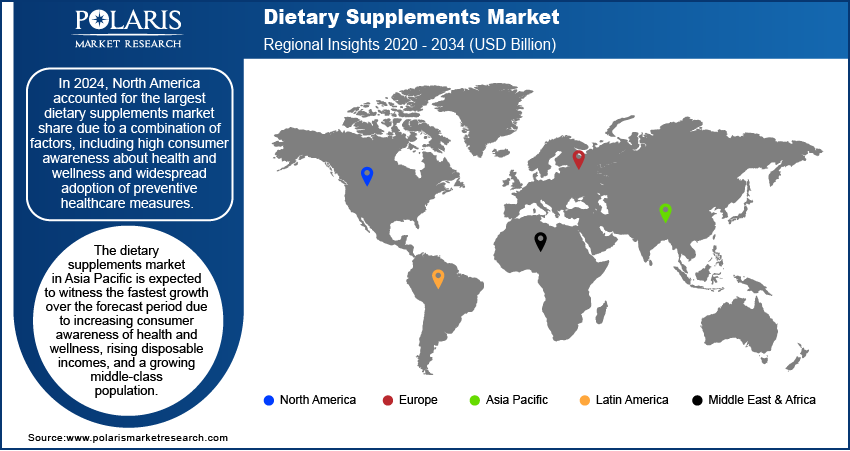
By region, the study provides dietary supplements market insights into North America, Europe, Asia Pacific, Latin America, and the Middle East & Africa. In 2025, North America accounted for the largest market share due to a combination of factors, including high consumer, widespread adoption of preventive healthcare measures, and the presence of a well-established supplement industry. The region benefits from robust distribution channels, including retail stores and e-commerce platforms, making supplements widely accessible. For instance, according to a research report by the National Institutes of Health Nutrition, poor diets are significantly impacting the US economy, with the combined healthcare spending and lost productivity from poor nutrition costing over USD 1 trillion annually. This economic burden has intensified the focus on dietary supplements as a cost-effective strategy to address nutritional deficiencies, improve public health, and reduce the prevalence of diet-related chronic diseases.
The dietary supplements market in Asia Pacific is expected to witness the fastest growth over the forecast period due to the increasing consumer awareness of health and wellness, rising disposable incomes, and a growing middle-class population. The region's diverse dietary habits and prevalence of nutrient deficiencies have driven demand for supplements to address specific health concerns. Additionally, rapid urbanization and the adoption of Western lifestyles have contributed to an increased focus on fitness and preventive healthcare. The expanding e-commerce sector and the presence of local and international supplement brands offering affordable and tailored products further fuel the market's growth. Cultural practices and traditional medicine systems, such as Ayurveda and Traditional Chinese Medicine, also play a significant role in shaping the demand for herbal supplements and natural supplements in the region.
Key Players and Competitive Analysis Report
The competitive landscape of the dietary supplements market is highly fragmented, with a blend of large multinational corporations, niche players, and regional brands. Major global companies such as Amway, Herbalife, Nestlé, Abbott Laboratories, and GNC dominate the market, offering a broad range of products and leveraging strong brand recognition, vast distribution networks, and substantial research and development resources. These companies provide diverse consumer needs across various segments such as vitamins, minerals supplements, and probiotics. Companies such as Thorne Research, Garden of Life, and Vital Proteins appeal to health-conscious consumers with clean-label and high-quality offerings. The rise of e-commerce has allowed smaller brands, such as Ritual and Care/of, to increase by providing personalized nutrition solutions through subscription models.
Regional brands often address local preferences or traditional wellness practices, such as Ayurvedic or Traditional Chinese Medicine-based supplements. Innovation and product diversification are crucial strategies, with companies developing vegan, organic, and gluten-free products to meet changing consumer preferences. Effective marketing, including influencer partnerships and consumer education, along with adherence to regulatory standards, further influences the market. The competitive landscape is shaped by constant innovation and the ability to meet consumers' evolving health and wellness demands. A few key major players are Abbott Laboratories; Glanbia Plc; The Archer-Daniels-Midland Company; Nature’s Sunshine Products, Inc.; GlaxoSmithKline plc; Amway Corp.; Herbalife International of America, Inc.; XanGo, LLC; PharmaNutrics Himalaya Global Holdings Ltd.; Nutraceutics Corp.; Pfizer Inc.; Bayer AG.
Bayer AG is a multinational conglomerate with core competencies in Life Sciences, encompassing healthcare and agriculture. The company has evolved into a global powerhouse with a diverse portfolio of products and solutions to improve lives and address some of the world's most pressing challenges. Bayer is advancing medical science and enhancing patient well-being in the healthcare sector. The company's pharmaceutical division researches, develops, and manufactures innovative medicines to prevent, treat, and cure many diseases. This includes cardiology, oncology, neurology, and women's health. In addition, Bayer's consumer health division offers a variety of over-the-counter products that promote personal well-being and health.
Abbott is a global healthcare company that discovers, develops, manufactures, and sells a wide range of healthcare products worldwide. The company operates in four segments: Established Pharmaceutical Products, Diagnostic Products, Nutritional Products, and Medical Devices. Abbott’s established pharmaceutical products segment offers generic pharmaceuticals for various medical conditions such as hypertension, pancreatic exocrine insufficiency, and pain management. The diagnostic products segment provides laboratory and transfusion medicine systems, point-of-care testing, molecular diagnostics, and informatics solutions for clinical laboratories. Abbott offers solutions designed to enhance overall wellness, focusing on bone health, cognitive function, and immune support, particularly for aging populations. The companys flagship products, such as Ensure and Similac, emphasize targeted nutrition for various life stages.
List Of Key Companies
- Abbott Laboratories
- Glanbia Plc
- The Archer-Daniels-Midland Company
- Nature’s Sunshine Products, Inc.
- GlaxoSmithKline plc
- Amway Corp.
- Herbalife International of America, Inc.
- XanGo, LLC
- PharmaNutrics Himalaya Global Holdings Ltd.
- Nutraceutics Corp.
- Pfizer Inc.
- Bayer AG
Dietary Supplements Industry Developments
Dietary Supplements Market Segmentation
By Type Outlook (Revenue, USD Billion; 2021–2034)
- Vitamins
- Minerals
- Amino Acids
- Botanicals
- Probiotics
- Enzymes
- Others
By Form Outlook (Revenue, USD Billion; 2021–2034)
- Tablets
- Capsules
- Gummies
- Powder
- Soft Gels
- Liquids
- Others
By Application Outlook (Revenue, USD Billion; 2021–2034)
- Energy & Weight Management
- Bone & Joint Health
- Immunity
- General Health
- Cardia Health
- Others
By Distribution Channel Outlook (Revenue, USD Billion; 2021–2034)
- Online Platforms
- Offline Stores
By End Use Outlook (Revenue, USD Billion; 2021–2034)
- Adults
- Children
- Infants
- Pregnant Women
- Geriatric
By Regional Outlook (Revenue, USD Billion; 2021–2034)
- North America
- US
- Canada
- Europe
- Germany
- France
- UK
- Italy
- Spain
- Netherlands
- Russia
- Rest of Europe
- Asia Pacific
- China
- Japan
- India
- Malaysia
- South Korea
- Indonesia
- Australia
- Vietnam
- Rest of Asia Pacific
- Middle East & Africa
- Saudi Arabia
- UAE
- Israel
- South Africa
- Rest of Middle East & Africa
- Latin America
- Mexico
- Brazil
- Argentina
- Rest of Latin America
Future of Dietary Supplements Market
The dietary supplements market is expected to grow due to increasing focus on health and preventive care. Need for personalized and targeted supplements is rising. Online platforms are making products more accessible to consumers. Plant-based and clean-label supplements are gaining more demand in the market
Dietary Supplements Report Scope
| Report Attributes | Details |
| Market Size Value in 2025 | USD 209.54 billion |
| Market Size Value in 2026 | USD 228.05 billion |
| Revenue Forecast by 2034 | USD 454.38 billion |
| CAGR | 9.0% from 2026 to 2034 |
| Base Year | 2025 |
| Historical Data | 2021–2024 |
| Forecast Period | 2026–2034 |
| Quantitative Units | Revenue in USD billion, 2021–2034 and CAGR from 2026 to 2034 |
| Report Coverage | Revenue Forecast, Market Competitive Landscape, Growth Factors, and Industry Trends |
| Segments Covered |
|
| Regional Scope |
|
| Competitive Landscape |
|
| Report Format |
|
| Customization | Report customization as per your requirements with respect to countries, regions, and segmentation. |
Source: Polaris Market Research Analysis
Dietary Supplements Market FAQ's
The global dietary supplements market size was valued at USD 192.20 billion in 2024 and is projected to grow to USD 454.38 billion by 2034.
The global market is projected to register a CAGR of 9.0% during the forecast period.
In 2024, North America accounted for the largest dietary supplements market share due to a combination of factors, including high consumer awareness about health and wellness and widespread adoption of preventive healthcare measures.
A few key players in the market are Abbott Laboratories; Glanbia Plc; The Archer-Daniels-Midland Company; Nature’s Sunshine Products, Inc.; GlaxoSmithKline plc; Amway Corp.; Herbalife International of America, Inc.; XanGo, LLC; PharmaNutrics Himalaya Global Holdings Ltd.; Nutraceutics Corp.; Pfizer Inc.; Bayer AG.
• In 2024, the vitamins segment accounted for the largest market share in the dietary supplements market due to the increasing awareness of their role in maintaining overall health and preventing nutrient deficiencies.
The adult segment is expected to experience the fastest growth during the forecast period due to the increasing health awareness among the working population.
Dietary supplements include vitamins, minerals, amino acids, botanicals, probiotics, enzymes, and others used for different health needs
They help fill nutrient gaps, support immunity, improve energy levels, and support functions like bone health, heart health, and digestion.
They are generally safe when taken in recommended amounts, but excess intake or misuse may lead to side effects
They are used for immunity support, sports nutrition, weight management, bone and joint health, and overall wellness.
Download Sample Report of Dietary Supplements Market
Please fill out the form to request a customized copy of the research report.


