
Herbal Supplements Market Size & Share Global Analysis Report, 2026-2034
REPORT DETAILS
Herbal Supplements Market Summary
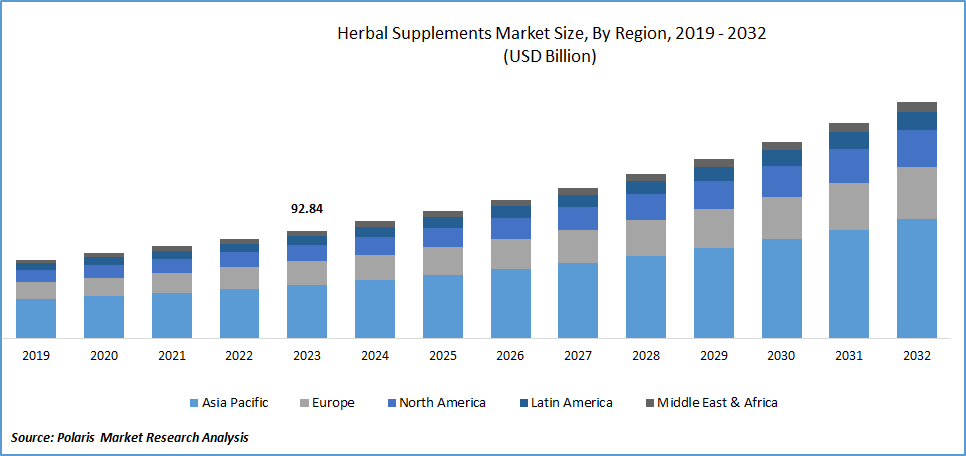
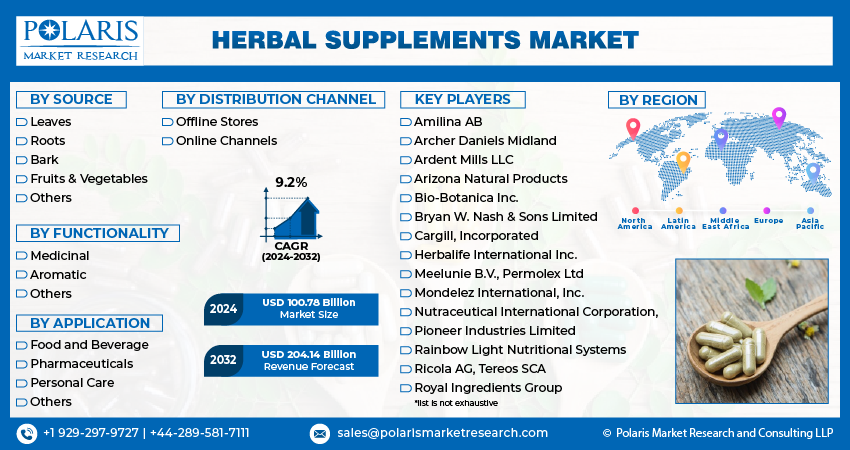
The global herbal supplements market was valued at USD 45.90 billion in 2025 and is projected to grow at a CAGR of 8.22% from 2026 to 2034. The market is expanding as consumers increasingly prioritize natural and plant-based health solutions, driven by rising awareness of preventive healthcare, clean-label trends, and the perceived safety of herbal supplement ingredients.
Market Statistics
Key Takeaways
- In 2025, Asia Pacific dominated the global market by holding 38.0% revenue share. Increasing consumer demand for nutritional and cosmetic products made with natural ingredients propels the regional market growth.
- China held the largest revenue share of 20.5% in 2025. The growth is driven by the country’s well-developed healthcare infrastructure and increased health and wellness awareness.
- The North America herbal supplements market is expected to register a significant CAGR of 7.60% during the forecast period. The region's regulatory environment plays a critical role in fostering consumer trust in herbal supplements.
- In 2025, the medicinal segment led with 56.0% revenue share. Rising consumer preference for natural health solutions contributed to the dominance.
- The offline stores segment is anticipated to register a higher CAGR of 11.20% during the forecast period. Consumers preference to visit offline retail stores to examine products physically propels the growth.
Note: Figures and projections outlined in this report are the result of Polaris Market Research’s proprietary analytical processes, grounded in the latest available datasets and market observations.
Industry Dynamics
- Increasing consumer preference for natural and plant-based healthcare products propels the demand for herbal supplements.
- Growing awareness regarding immunity enhancement, stress management, digestive health, and overall well-being drives the adoption of herbal supplements.
- Rising penetration of e-commerce platforms and digital health marketing improves product accessibility and expands consumer reach. This factor fuels the market expansion.
- Lack of standardized regulations and concerns regarding product authenticity and safety limit consumer trust. It hinders market growth.
- Surging demand for personalized nutrition products is expected to offer lucrative opportunities for manufacturers in the coming years.
What are Herbal Supplements?
Herbal supplements, also known as botanical products, are dietary supplements that contain one or more herbs. Herbs are parts of plants used to treat health conditions and illnesses. Herbal supplements come in various forms, including tea bags, capsules, tablets, liquids, and powders. They are intended to supplement the diet and contain dietary ingredients such as vitamins, minerals, herbs or other botanicals, and amino acids, among others.
Difference Between Herbal Supplements vs Synthetic Supplements
Herbal supplements and synthetic supplements differ significantly in sourcing, formulation, consumer perception, and wellness benefits. Herbal supplements are primarily derived from natural botanical ingredients. They are increasingly gaining popularity due to the growing demand for plant-based and clean-label healthcare products. However, synthetic supplements are chemically manufactured. They deliver standardized nutrient concentrations and targeted health benefits. Both categories play important roles in preventive healthcare and nutrition management. Consumer choice is often influenced by effectiveness, safety perception, affordability, and lifestyle preferences.
| Aspect | Herbal Supplements | Synthetic Supplements |
| Natural Sourcing | Derived from plants, herbs, roots, flowers, and other natural botanical sources. | Manufactured chemically in laboratories using artificial compounds or isolated nutrients. |
| Nutrient Absorption | Often contain naturally occurring cofactors and bioactive compounds that may support better bioavailability and holistic absorption. | Typically provide concentrated nutrients but may lack supporting natural compounds that aid absorption. |
| Consumer Preference | Increasingly preferred by health-conscious consumers seeking clean-label, organic, and plant-based wellness products. | Preferred for standardized dosage, affordability, and targeted nutrient supplementation. |
| Side Effects | Generally perceived as gentler with fewer side effects when used appropriately, though effectiveness may vary by formulation. | May cause side effects or intolerance in some consumers due to high potency or artificial ingredients. |
| Production Methods | Produced through cultivation, harvesting, extraction, drying, and processing of botanical materials. | Manufactured through industrial chemical synthesis and controlled pharmaceutical-style production processes. |
| Wellness Applications | Widely used for immunity support, stress relief, digestive health, sleep management, and holistic wellness. | Commonly used to address vitamin deficiencies, sports nutrition, and precise therapeutic supplementation needs. |
Source: Polaris Market Research Analysis
The companies operating in this space have numerous growth opportunities due to the increasing demand from developing nations. The growth of e-commerce, along with the increasing shift of retailers to online platforms, is another significant factor driving the market's growth. The increase in health disorders, coupled with the rising demand for dietary supplements from female and young consumers, is also pushing the market's expansion. The growth in the obese population and the sedentary lifestyles of consumers leading to lifestyle diseases are also driving the market for herbal supplements.
Source: Polaris Market Research Analysis
Several factors, including the increasing use of functional foods and rising disposable income, drive the growth of this market. The growing need for consumers to stay healthy is also a significant factor in the market's overall growth. The aging population and growing consumer awareness of preventive healthcare are also contributing to the expansion of this market.
The market research report offers an in-depth analysis of the industry to support informed decision-making. It offers a meticulous breakdown of various market niches and keeps readers updated on the latest industry developments. Along with tracking the Laminated Herbal Supplements Market on the basis of SWOT and Porter’s Five Forces models, the research report includes graphs, tables, charts, and other pictorial representations to help readers understand the key insights and important data easily.
The herbal supplements market, while experiencing overall growth, faces certain hindering factors that impact its market expansion. One significant challenge is the lack of stringent regulations and quality standards governing herbal supplements. Unlike pharmaceuticals, herbal supplements are often classified as dietary supplements, and the regulatory framework can be less precise. This can lead to concerns about product safety, quality, and consistency among consumers, potentially hindering wide acceptance and trust in herbal supplements.
Source: Polaris Market Research Analysis
Industry Dynamics
Growth Drivers
Rising Consumer Awareness of the Benefits of Health and Wellness Products
In recent years, there has been a notable shift in consumer preferences toward natural approaches to healthcare products, with an increasing emphasis on preventive measures and well-being. As part of this trend, consumers are becoming more conscious of the potential advantages offered by herbal supplements, which are often perceived as natural, plant-based alternatives to conventional pharmaceuticals.
Consumers are actively seeking products that fit with their preferences for clean labels, transparency, and minimal synthetic ingredients. Herbal supplements, with their roots in traditional medicine and the use of botanical extracts, resemble these preferences. The awareness of the potential health benefits associated with specific herbs, botanicals, and plant extracts has led consumers to incorporate herbal supplements into their daily routines as a bold step toward maintaining or improving their health.
Report Segmentation
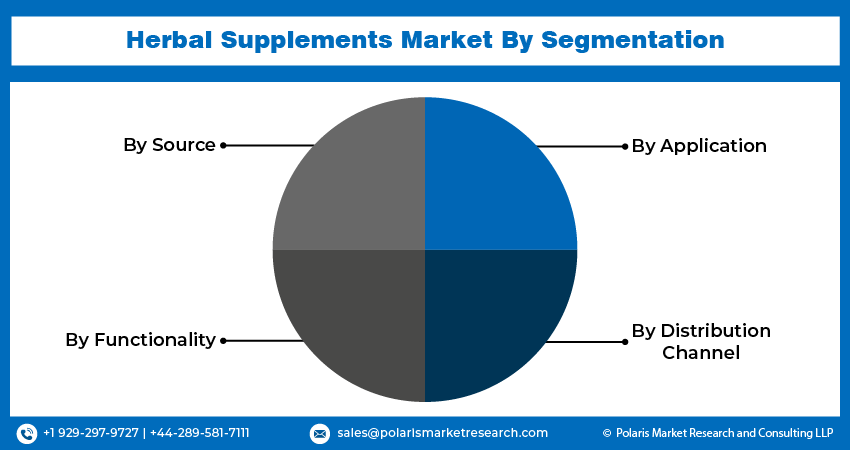
The market is primarily segmented based on source, functionality, application, distribution channel, and region.
| By Source | By Functionality | By Application | By Distribution Channel | By Region |
|
|
|
|
|
Source: Polaris Market Research Analysis
To Understand the Scope of this Report: Request Customization
By Functionality Analysis
Herbal Supplements for Medicinal Functionality Held the Largest Revenue Share in 2025
In 2025, herbal supplements with medicinal functionality emerged as the dominant revenue driver with 56.0% share in the herbal supplement market, reflecting a growing consumer preference for natural health solutions. Consumers were seeking alternatives to synthetic pharmaceuticals and were turning to herbal supplements for addressing specific health concerns and promoting overall well-being. Herbal supplements are perceived as natural and often culturally rooted in achieving these goals.
Scientific research and studies supporting the therapeutic benefits of specific herbs have also played a crucial role in driving the popularity of herbal supplements for medicinal purposes. Consumers are increasingly depending on evidence-based information that supports the effectiveness of herbal ingredients in addressing conditions such as immune system support, stress management, and digestive wellness. This scientific validation has enhanced consumer trust and confidence in the medicinal functionality of herbal supplements.
By Distribution Channel Analysis
The Offline Stores Segment Held Majority of Revenue Share in 2025
The offline stores segment held a greater revenue share of 62.0% in the global herbal supplement market in 2025 because of significant traditional retail channels in the distribution of health and wellness products. Consumers often prefer to visit offline retail stores to examine products physically, seek advice from experts, and make immediate purchase decisions. The herbal supplement market, being closely bound with health-conscious consumers, benefits from the personalized guidance that offline stores can provide, fostering trust and credibility.
Also, the offline retail stores is expected to grow at a CAGR of 11.20% during the forecast period as herbal supplements include pharmacies, health food stores, supermarkets, and specialty wellness retailers. These outlets serve as convenient points of access for consumers seeking a diverse range of herbal supplements, offering a one-stop shopping experience. The visibility of herbal supplements on physical shelves allows for better product visibility and discovery, influencing purchasing decisions.
Technological Advancements in Herbal Supplement Formulation
Technological innovations are transforming the market. They help improve product quality, efficacy, stability, and consumer personalization. Manufacturers use advanced formulation technologies to enhance nutrient absorption, standardize active ingredients, and develop targeted wellness solutions for diverse consumer needs.
| Technology | Description | Benefits in Herbal Supplements |
| Standardized Extracts | Advanced extraction techniques ensure consistent concentrations of active botanical compounds in every formulation. | Improves product quality, dosage accuracy, efficacy, and consumer trust. |
| Nanoencapsulation | Nano-sized delivery systems are used to encapsulate herbal ingredients for better stability and controlled release. | Enhances absorption, bioavailability, ingredient protection, and targeted nutrient delivery. |
| Personalized Nutrition | AI-driven health assessments and customized formulations are enabling tailored herbal supplement solutions. | Supports individualized wellness goals, improving consumer engagement and treatment effectiveness. |
| Improved Bioavailability Technologies | Technologies such as liposomal delivery, emulsification, and phytosome complexes increase nutrient absorption efficiency. | Enhances effectiveness of herbal ingredients and maximizes health benefits with lower dosages. |
| Advanced Drying & Extraction Methods | Techniques such as freeze-drying and supercritical fluid extraction preserve sensitive plant compounds. | Maintains potency, purity, shelf life, and nutritional value of herbal formulations. |
| Smart Packaging Technologies | Innovative packaging solutions help protect herbal products from moisture, oxygen, and contamination. | Improves product stability, safety, and shelf life during storage and transportation. |
Source: Polaris Market Research Analysis
Source: Polaris Market Research Analysis
Regional Insights
Asia-Pacific Dominated the Market in 2025
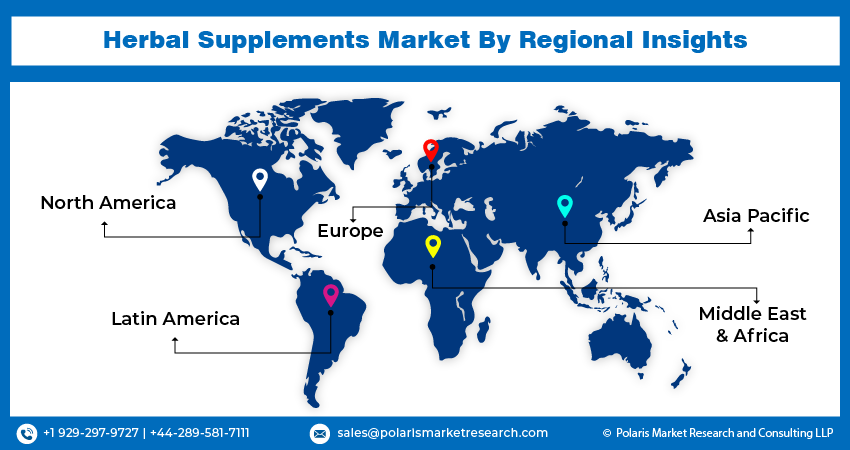
Natural products have seen strong growth in the Asia-Pacific herbal supplements market with 38.0% share in 2025. Consumers increasingly demand natural sources for nutritional and cosmetic products. Sustainability brands, antibiotic- and hormone-free ingredients, and local and organic goods will continue to gain market share as consumers seek these green and ethical attributes in their foods and cosmetics to fit a more ‘wellness’ lifestyle approach. Consumers in the region are increasingly inclined to incorporate herbal supplements into their daily routines, seeking alternatives to synthetic pharmaceuticals and embracing a natural approach to well-being. The region's well-developed healthcare infrastructure, coupled with a high level of health and wellness awareness, further fuels the demand for herbal supplements. Along With this, Asia-Pacific herbal supplements market has experienced a surge in consumer awareness regarding the potential health benefits of herbal ingredients.
The North America Herbal Supplements market is expected to represent a significant CAGR of 7.60% in the forecast period. The region's regulatory environment plays a significant role in fostering consumer trust in herbal supplements. Regulatory bodies in North America emphasize product labeling, ingredient transparency, and adherence to Good Manufacturing Practices (GMP), creating a favorable environment for manufacturers and importers. Herbal supplements in the North American region are mostly imported from Asian countries, resulting in an increasing consumption rate within the region.
Source: Polaris Market Research Analysis
Key Market Players & Competitive Insights
Global companies are expanding into developing markets to increase their customer base, market share, and presence. Leading companies are investing in research and development to introduce innovative herbal supplements that cater to specific health needs. Companies are investing in rigorous quality control measures, adhering to Good Manufacturing Practices (GMP), and obtaining third-party certifications to build consumer trust and differentiate their products in terms of safety and efficacy.
Some of the major players operating in the global Herbal Supplement market include:
- Amilina AB
- Archer Daniels Midland
- Ardent Mills LLC
- Arizona Natural Products
- Bio-Botanica Inc.
- Bryan W. Nash & Sons Limited
- Cargill, Incorporated
- Herbalife International Inc.
- Meelunie B.V.
- Mondelez International, Inc.
- Nutraceutical International Corporation
- Permolex Ltd
- Pioneer Industries Limited
- Rainbow Light Nutritional Systems
- Ricola AG
- Royal Ingredients Group
- Tereos SCA
- The Himalaya Drug Company
- THE KRAFT HEINZ COMPANY
- Willmar Schwabe GmbH
- Z&F Sungold Corporation
Recent Developments
- March 2026: Naturonel launched a line of herbal dietary supplements manufactured in the U.S. New supplements are expected to manage metabolic wellness. (Source: globenewswire.com)
- February 2025: Organic India expanded its portfolio with the launch of new Regenerative Organic Certified teas and herbal supplements at Expo West. The lineup features Neem, Tulsi Holy Basil, and Ashwagandha supplements, along with the Tulsi Original Tea. (Source: businesswire.com)
Herbal Supplement Market Report Scope
| Report Attributes | Details |
| Market size value in 2025 | USD 45.90 billion |
| Market size value in 2026 | USD 49.61 billion |
| Revenue Forecast in 2034 | USD 93.45 billion |
| CAGR | 8.22% from 2026 – 2034 |
| Base year | 2025 |
| Historical data | 2021 – 2024 |
| Forecast period | 2026 – 2034 |
| Quantitative units | Revenue in USD billion and CAGR from 2026 to 2034 |
| Segments Covered | By Source, By Functionality, By Application, By Distribution Channel, and By Region |
| Regional scope | North America, Europe, Asia Pacific, Latin America, Middle East & Africa |
| Customization | Report customization as per your requirements with respect to countries, regions, and segmentation. |
Source: Polaris Market Research Analysis
Explore the market dynamics of the 2025 Herbal Supplements Market market share, size, and revenue growth rate, meticulously examined in the insightful reports crafted by Polaris Market Rersearch Industry Reports. The analysis of Herbal Supplements Market extends to a comprehensive market forecast up to 2034, coupled with a retrospective examination. Avail yourself of a complimentary PDF download to sample this in-depth industry analysis.
Browse Our More Top Selling Reports:
Garage Organization and Storage Market Size & Share
Port Equipment Market Size & Share
Inspection Machines Market Size & Share
Herbal Supplements Market FAQ's
Ricola AG, Archer Daniels Midland, Nutraceutical International Corporation, Bio-Botanica Inc are the key companies in Herbal Supplements Market
The global herbal supplements market is anticipated to grow at a CAGR of 8.22% during the forecast period
Source, functionality, application, distribution channel, and region are the key segments covered.
Increasing use of functional foods and rising disposable income are the key driving factors in Herbal Supplements Market.
The global Herbal Supplements market size is expected to reach USD 93.45 Billion by 2034
Download Sample Report of Herbal Supplements Market
Please fill out the form to request a customized copy of the research report.


