
Anti-hypertensive Drugs Market Size, and Global Outlook, 2026-2034
REPORT DETAILS
Anti-hypertensive Drugs Market Summary
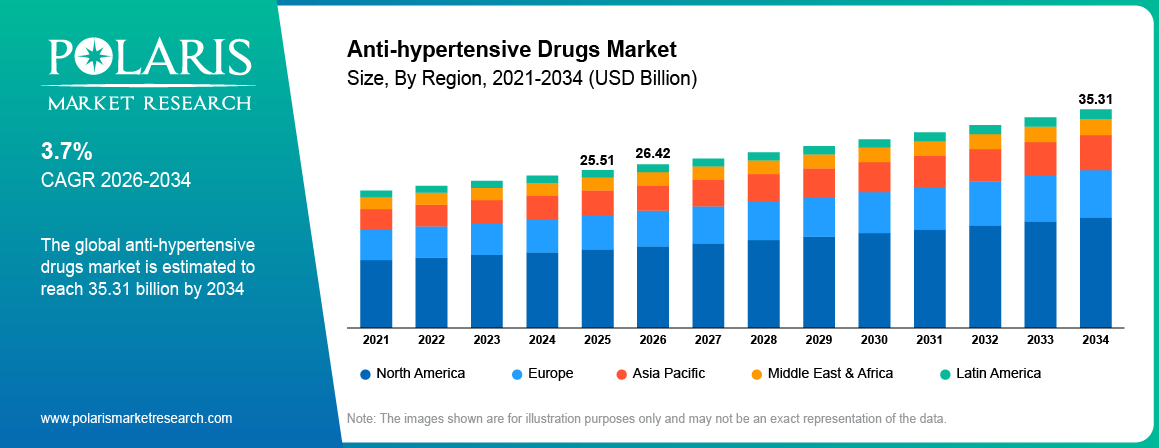
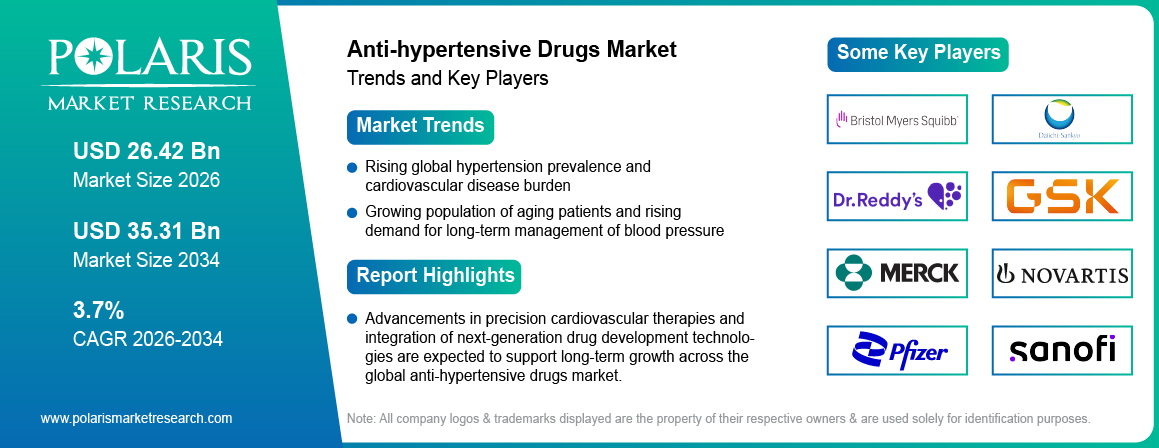
The global anti-hypertensive drugs market is estimated around USD 25.51 Billion in 2025,with consistent growth anticipated during 2026–2034. Expansion is supported by rising global hypertension prevalence, increasing cardiovascular disease burden, and growing aging population globally. The market is projected to grow at a CAGR of 3.7% during the forecast period.
Market Statistics
Key Takeaways
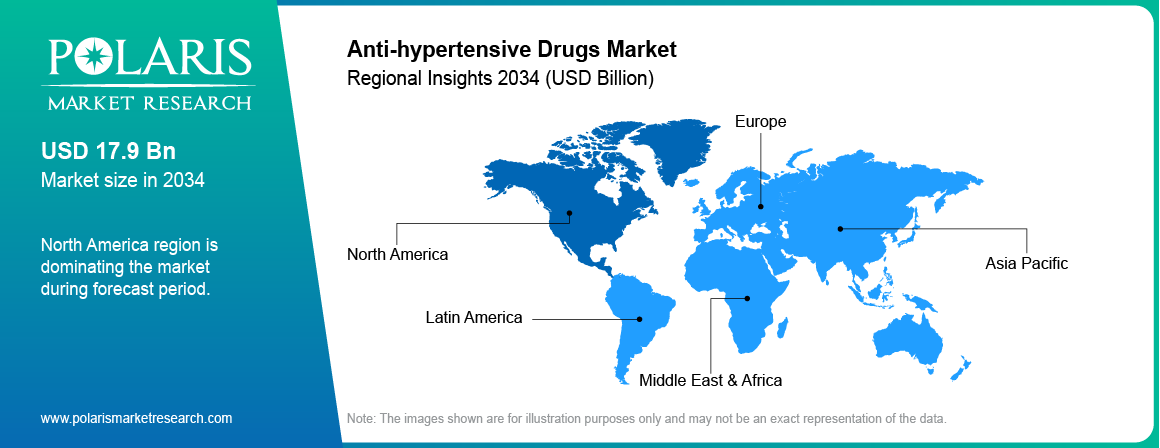
- North America accounted for the largest regional share of around 41.5% in 2025, driven by high diagnosis rates, advanced treatment accessibility, and strong healthcare infrastructure supporting hypertension management.
- By Drug Class, ACE Inhibitors segment accounted for the largest share of approximately 29.8% in 2025, supported by established clinical use and strong efficacy in managing hypertension and heart failure.
- By Drug Class, Angiotensin II Receptor Blockers segment is projected to grow at a CAGR of 6.7%, driven by better tolerability, fewer side effects, and increasing physician preference over traditional therapies.
- By Distribution Channel, Retail Pharmacy segment accounted for the largest share of around 62.4% in 2025, driven by consistent prescription refills and widespread accessibility for chronic disease management.
- By Distribution Channel, Online Pharmacy segment is projected to grow at a CAGR of 7.3%, driven by rising adoption of digital healthcare platforms and increasing preference for convenient medication delivery services.
Industry Dynamics
- Increase in global hypertension incidence rates fuels the demand for long-term antihypertensive pharmacotherapy in various healthcare settings.
- Rapid population aging fuels cardiovascular disease incidence rates and expands the potential patient population for chronic blood pressure management.
- Established antihypertensive drugs face generic competition and patent expiry-induced price pressure.
- Advances in precision medicine, targeted therapies, and RNA-based drug development create new opportunities in resistant hypertension treatment.
What is included in the Anti-hypertensive Drugs market?
Market expansion is strongly influenced by rising hypertension prevalence, aging populations, and expanded screening programs that accelerate diagnosis rates. The blood pressure medication market growth trajectory is further supported by widespread availability of generic formulations, which improve treatment affordability while expanding access in emerging healthcare systems.
Source: Polaris Market Research Analysis
To Understand More About this Research:Download Sample Report
Increasing pharmaceutical manufacturing capacity, treatment accessibility, and combination regimens are contributing factors to the anti-hypertensive drugs market forecast 2034. This places the anti-hypertensive drugs market in a stable and high-volume market for cardiovascular medications.
Drivers & Opportunities
Aging population impact: The rising aging population is fueling the need for antihypertensive medications, which are used for treating cardiovascular diseases. The UN has projected that by the late 2070s, there is a potential for the global population to rise to 2.2 billion people aged 65 and older, more than the number of children aged 18 and younger. The aging population is more prone to suffering from cardiovascular diseases such as hypertension, heart disease, and stroke. This is fueling the growth and adoption of long-term pharmacotherapy for developed and emerging markets for cardiovascular drugs.
Restraints & Challenges
Opportunity
Precision medicine and next-generation therapies: Precision medicine and next-generation therapies provide new opportunities in the resistant hypertension market. The Lancet, in February 2026, published a study indicating new approaches in hypertension treatment, which include small interfering RNA therapy. This targets the production of angiotensinogen, and aldosterone-targeting therapy. The integration of AI-powered drug discovery hypertension platforms is expected to accelerate the development of new treatments, providing long-term opportunities in the growth of new cardiovascular treatments.
Source: Polaris Market Research Analysis
Segmental Insights
This report offers detailed coverage of the anti-hypertensive drugs market by drug class, therapy model, hypertension type, distribution channel to help readers identify the fastest expanding and most attractive demand segments.
By Drug Class
-
ACE Inhibitors Market
The ACE inhibitors market accounts for the largest share in cardiovascular therapeutic segmentation due to long-standing clinical adoption and strong physician familiarity. However, ACE inhibitors are still widely used in the management of hypertension in patients with diabetes, heart failure, and renal disease.
-
Angiotensin II Receptor Blockers (ARBs) Market
The ARBs market is growing significantly, and it is preferred to treat patients with these drugs when they are unable to tolerate ACE inhibitors. Angiotensin II receptor blockers market trends indicate that these drugs are increasingly used due to their increased tolerability and reduced side effects in the form of cough.
By Therapy Model
-
Monotherapy
Monotherapy is dominating the anti-hypertensive drugs market in terms of market size. Most patients are prescribed a single class of drugs when first diagnosed with hypertension to assess their therapeutic response and tolerance. Treatment guidelines are still in favor of using monotherapy in the initial stages of hypertension.
-
Combination Therapy
Combination therapy hypertension market growth is accelerating due to increasing prevalence of uncontrolled and resistant hypertension. Fixed dose combination hypertension drugs and triple combination therapy regimens enable the simultaneous targeting of multiple blood pressure pathways.
By Hypertension Type
-
Primary Hypertension Drugs Market
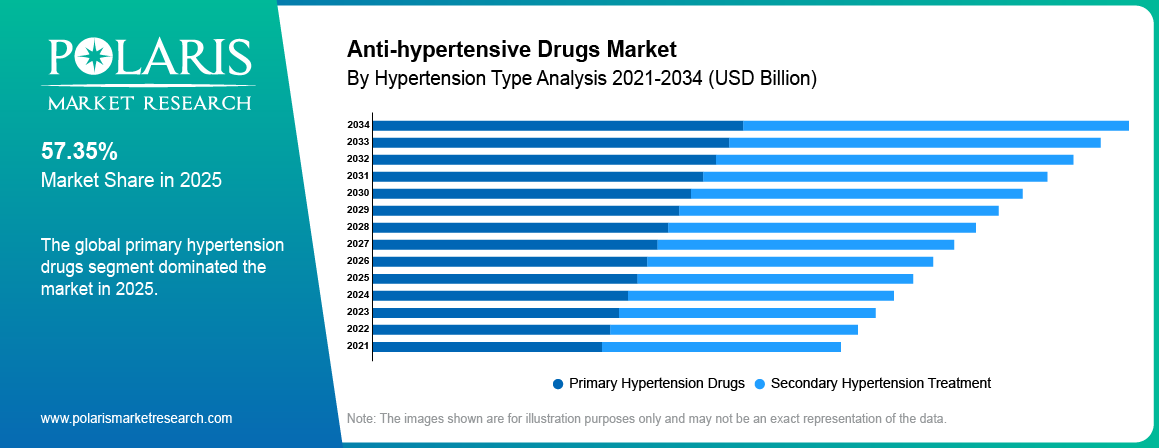
Primary hypertension drugs held the largest market share due to the large number of cases of essential hypertension worldwide. Most patients suffering from increased blood pressure fall under this category.
-
Secondary Hypertension Treatment Market
Secondary hypertension treatment is growing with advances in detection of hypertension and its associated causes such as endocrine disorders and kidney diseases. Targeted treatment approaches are increasing in specialized clinical settings. Primary vs secondary hypertension drug demand analysis indicates rising screening efforts are contributing to higher diagnosis and treatment rates.
By Distribution Channel
-
Retail Pharmacy Hypertension Drugs
The retail pharmacy antihypertensive drug sales segment registered the highest market share in terms of distribution. Retail pharmacies are the primary source of distribution for long-term hypertension medications. Patients regularly refill their prescriptions from retail pharmacies for convenience and ease of access.
-
Online Pharmacy Blood Pressure Medications
The online pharmacy cardiovascular drug market is growing at a high rate due to the increasing number of digital health services. Patients are increasingly using online services for convenience in refilling their chronic medications.
Source: Polaris Market Research Analysis
Regional Analysis
North America Anti-Hypertensive Drugs Market Assessment
The North America antihypertensive drugs market remained structurally dominant, due to high diagnosis rates, a well-structured reimbursement system, and a well-developed healthcare system in the US and Canada. According to the Centers for Disease Control and Prevention, nearly 48% of US adults had hypertension during August 2021–August 2023, with prevalence exceeding 70% among individuals aged 60 years and older. This large patient group sustained long-term pharmacological therapy need in primary and specialist cardiology settings. Stable reimbursement systems and treatment guidelines have also contributed to this trend, which has influenced the US market size, within a highly organized healthcare system.
Asia Pacific Anti-Hypertensive Drugs Market Insight
Asia Pacific represented the fastest-growing region as expanding healthcare access and rising chronic disease prevalence increased treatment demand. Investment in government healthcare infrastructure and insurance schemes increased patient accessibility to long-term cardiovascular treatment. India’s public expenditure in the healthcare sector is estimated to be 1.9 percent of GDP in FY26. These trends have sustained hypertension diagnosis and expansion within hospital and community settings, along with affordable antihypertensive therapy to large patient groups. The region’s expanding treatment coverage and demographic shifts intensified the chronic disease burden APAC, reinforcing the trajectory of the Asia Pacific fastest-growing antihypertensive drug markets.
Europe Anti-Hypertensive Drugs Market Overview
The Europe antihypertensive drugs market advanced through established primary care prescribing pathways and structured disease management programs. Physicians began to favor combination therapy regimens to ensure patient compliance and long-term control of blood pressure. National healthcare systems also focused on adherence to guidelines in prescription practices through adherence monitoring programs, thus increasing prescription continuity. These frameworks supported steady demand within markets such as the UK market size 2024, forecast 2033, where integrated care models reinforced preventive cardiovascular management and optimized medication compliance.
Latin America Anti-Hypertensive Drugs Market Assessment
The Latin America antihypertensive market expanded as healthcare systems improved chronic disease management capabilities and retail pharmacy networks broadened medication accessibility. Countries such as Brazil increased focus on cardiovascular public health initiatives targeting hypertension screening and treatment adherence. Pharmacy distribution channels expanded to increase medicine accessibility to the population in urban and semi-urban areas. These developments supported the growth outlook for the Brazil market size 2024, forecast 2033, reflecting rising patient engagement in long-term cardiovascular therapy.
Middle East & Africa Anti-Hypertensive Drugs Market Assessment
The MEA antihypertensive drugs market progressed through healthcare modernization programs and gradual expansion of treatment infrastructure. Governments across the Gulf and parts of Africa increased investment in hospital capacity, diagnostic services, and pharmaceutical access. The growing incidence of cardiovascular diseases due to lifestyle factors increased long-term demand for antihypertensive drugs. Healthcare system upgrades supported broader treatment coverage, reinforcing the growth outlook for markets such as the UAE market size 2024, forecast 2033, while improving chronic disease access across emerging healthcare systems.
Source: Polaris Market Research Analysis
Key Players & Competitive Analysis Report
The competitive environment in the anti-hypertensive drugs market is influenced by strong pharmaceutical R&D capabilities, expanding generic drug production, and the growing prevalence of hypertension worldwide. The companies are working towards the development of effective combination therapies, long-acting products, and improved drug delivery systems to ensure patient compliance and the success of the drug therapy. Strategic alliances, regulatory milestones, and the development of cardiovascular drug portfolios are further improving the competitive position of the companies in the global pharmaceutical industry.
Leading companies in the anti-hypertensive drugs market include AstraZeneca PLC, Bayer AG, Boehringer Ingelheim International GmbH, Bristol Myers Squibb Company, Daiichi Sankyo Company, Limited, Dr. Reddy's Laboratories Ltd., GlaxoSmithKline plc, Johnson & Johnson Services, Inc., Merck & Co., Inc., Novartis AG, Pfizer Inc., Sanofi S.A., Sun Pharmaceutical Industries Ltd., Takeda Pharmaceutical Company Limited, and Viatris Inc.
Key Players
- AstraZeneca PLC
- Bayer AG
- Boehringer Ingelheim International GmbH
- Bristol Myers Squibb Company
- Daiichi Sankyo Company, Limited
- Dr. Reddy's Laboratories Ltd.
- GlaxoSmithKline plc
- Johnson & Johnson Services, Inc.
- Merck & Co., Inc.
- Novartis AG
- Pfizer Inc.
- Sanofi S.A.
- Sun Pharmaceutical Industries Ltd.
- Takeda Pharmaceutical Company Limited
- Viatris Inc.
Future Outlook & Investment Insights
-
Technology & AI in Drug Development
Drug pipelines are increasingly incorporating computational modeling and AI in hypertension drug discovery to accelerate target identification and compound screening. Data-driven discovery tools are expected to shorten development cycles and shift revenue toward companies integrating AI with cardiovascular R&D platforms.
-
Long-acting & Injectable Therapies
Currently, there is a focus on the development of long-acting injectable hypertension medications and extended-release products that are intended to improve patient compliance. These medications reduce the frequency of hypertension treatment and also introduce new segments for hypertension treatment.
-
Digital Monitoring & Wearables Impact
Wearable blood pressure monitoring impact is increasing as early diagnosis and treatment adjustment are possible through continuous monitoring. Wearable devices are integrated with telehealth services for medication adherence tracking.
-
Investment Opportunities
The outlook for the antihypertensive market 2034 appears favorable, with the rising incidence of cardiovascular diseases and the growing age factor. Investment opportunities in cardiovascular therapeutics will be mainly focused in the area of combination therapy, long-acting platforms, and emerging market growth.
Industry Developments
- December 2025: AstraZeneca’s baxdrostat was granted FDA Priority Review status after the company submitted its New Drug Application for the treatment of adults with hard-to-control hypertension.
- August 2025: Roche and Alnylam plan to progress their zilebesiran, an RNA interference therapy targeting angiotensinogen, into a global Phase III cardiovascular outcomes trial in patients with uncontrolled hypertension.
Anti-hypertensive Drugs Market Segmentation
By Drug Class Outlook (Revenue, USD Billion, 2021-2034)
- ACE Inhibitors Market
- ARBs Market
- Beta Blockers Market
- Calcium Channel Blockers Market
- Diuretics Market
- Renin Inhibitors Market
- Aldosterone Antagonists Market
By Therapy Model Outlook (Revenue, USD Billion, 2021-2034)
- Monotherapy vs Combination Therapy
- Fixed-dose Combination Market
- Triple Combination Therapy
By Hypertension Type Outlook (Revenue, USD Billion, 2021-2034)
- Primary Hypertension Drugs Market
- Secondary Hypertension Treatment Market
By Distribution Channel Outlook (Revenue, USD Billion, 2021-2034)
- Retail Pharmacy Hypertension Drugs
- Hospital Pharmacy Cardiovascular Drugs
- Online Pharmacy Blood Pressure Medications
By Regional Outlook (Revenue, USD Billion, 2021-2034)
- North America
- US
- Canada
- Europe
- Germany
- France
- UK
- Italy
- Spain
- Netherlands
- Russia
- Rest of Europe
- Asia Pacific
- China
- Japan
- India
- Malaysia
- South Korea
- Indonesia
- Australia
- Vietnam
- Rest of Asia Pacific
- Middle East & Africa
- Saudi Arabia
- UAE
- Israel
- South Africa
- Rest of Middle East & Africa
- Latin America
- Mexico
- Brazil
- Argentina
- Rest of Latin America
Anti-hypertensive Drugs Market Report Scope
| Report Attributes | Details |
| Market Size in 2025 | USD 25.51 Billion |
| Market Size in 2026 | USD 26.42 Billion |
| Revenue Forecast by 2034 | USD 35.31 Billion |
| CAGR | 3.7% from 2026 to 2034 |
| Base Year | 2025 |
| Historical Data | 2021–2024 |
| Forecast Period | 2026–2034 |
| Quantitative Units | Revenue in USD Billion and CAGR from 2026 to 2034 |
| Report Coverage | Revenue Forecast, Competitive Landscape, Growth Factors, and Industry Trends |
| Segments Covered |
|
| Regional Scope |
|
| Competitive Landscape |
|
| Report Format |
|
| Customization | Report customization as per your requirements with respect to countries, regions, and segmentation. |
Source: Polaris Market Research Analysis
Anti-hypertensive Drugs Market FAQ's
The global market size was valued at USD 25.51 Billion in 2025 and is projected to grow to USD 35.31 Billion by 2034.
North America led the market due to high prevalence rates of hypertension, strong diagnosis rates, and established reimbursement schemes to facilitate long-term pharmacotherapy.
Major applications include treatment of primary hypertension, management of secondary hypertension, cardiovascular risk reduction, and long-term management of hypertension in patients with chronic disease states.
Key companies include AstraZeneca PLC, Bayer AG, Boehringer Ingelheim International GmbH, Bristol Myers Squibb Company, Daiichi Sankyo Company, Limited, Dr. Reddy's Laboratories Ltd., GlaxoSmithKline plc, Johnson & Johnson Services, Inc., Merck & Co., Inc., Novartis AG, Pfizer Inc., Sanofi S.A., Sun Pharmaceutical Industries Ltd., Takeda Pharmaceutical Company Limited, and Viatris Inc.
Key drivers include growing prevalence of hypertension, increasing age groups, higher diagnosis rates, increasing combination therapy regimens, and ongoing innovation in cardiovascular drug development.
Download Sample Report of Anti-hypertensive Drugs Market
Please fill out the form to request a customized copy of the research report.


