
Retail Vending Machine Market Size, Share & Trends Analysis Report, 2034
REPORT DETAILS
Retail Vending Machine Market Summary
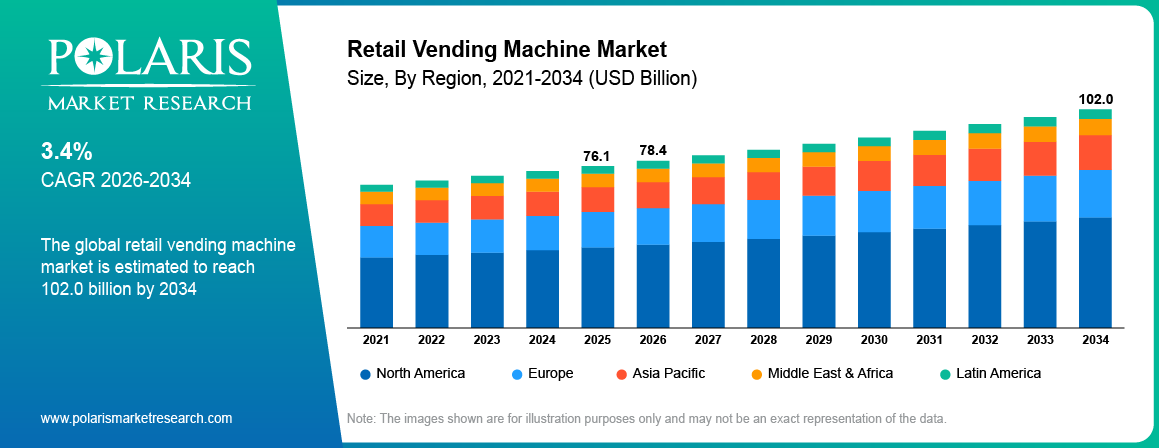
The global retail vending machine market is estimated around USD 76.1 Billion in 2025,with consistent growth anticipated during 2026–2034. Growth is supported by increasing adoption of automated retail systems, rising demand for contactless shopping experiences, and expansion of digital payment infrastructure. The market is projected to grow at a CAGR of 3.4% during the forecast period.
Market Statistics
Key Takeaways
- Smart vending machines segment is expected to grow rapidly at rate of 3.7% due to rising adoption of AI-enabled and cashless retail technologies.
- Traditional vending machines segment held largest share of 62.1%, due to lower deployment costs and wide installation across public spaces.
- Food & beverage segment held the largest share of 81.3% due to strong consumer demand for snacks and ready-to-drink products like tea and coffee.
- Non-food products segment is expected to grow rapidly at rate of 3.7% due to increasing vending deployment for electronics, healthcare, and personal care products.
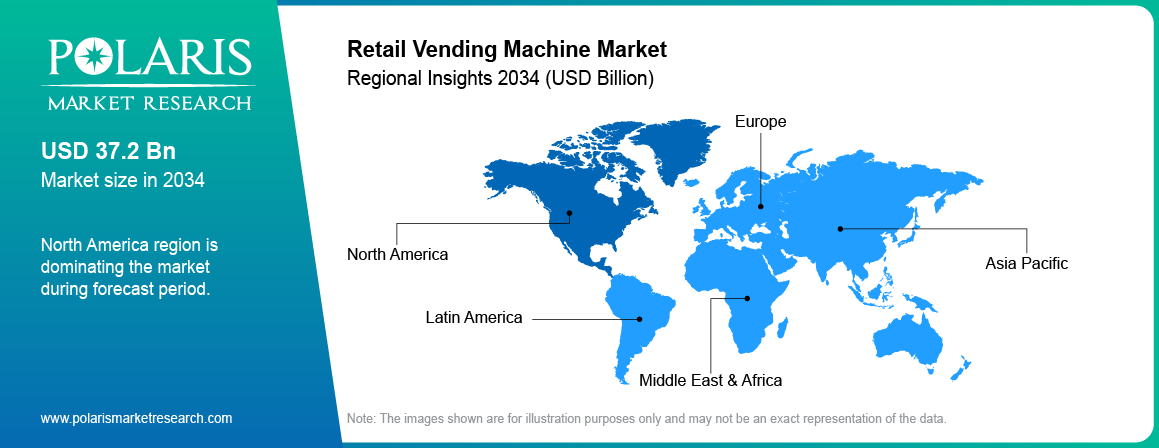
- North America dominated the market by holding 36.03% revenue share due to high adoption of automated retail systems and advanced payment technologies.
- Asia Pacific is expected to grow rapidly at a CAGR of around 3.7% owing to increasing adoption of smart and automated retail solutions.
Industry Dynamics
- Rising adoption of cashless payment systems is accelerating deployment of smart vending machines.
- AI-powered recommendation systems are improving customer engagement and vending profitability.
- High installation and maintenance costs are limiting adoption among smaller operators.
- Expansion of organized retail and digital payment infrastructure is creating new market opportunities.
What is Retail Vending Machine?
Retail vending refers to the automated sale of products through self-service machines installed across public and commercial locations. These types of machines are developed for dispensing food products, beverages, hygiene products, electronic gadgets, and other goods without any human assistance at all. The use of automated vending machines has been made a necessity for modern retail automation since it provides consumers with goods on-demand basis round-the-clock. The use of intelligent vending machines which come with digital means of payment and touch screens is on the rise.
The development of vending machines in the retail sector were used in offices, transport terminals, and educational institutions for dispensing food and beverage products. The demand for convenience on the part of consumers paved the way for using vending machines in busy locations like airports, malls, and subways.
Source: Polaris Market Research Analysis
The next stage of evolution entailed the innovation of cashless payment techniques that will facilitate transactions through cards, mobile wallet, and QR codes. The adoption of such technologies enhanced transaction efficiency and increased customer accessibility and reduced cash-related tasks. Retailers were incorporating vending technologies for better last mile deliveries.
Drivers & Opportunities
Growing Adoption of Cashless Payment Systems is accelerating deployment of Smart Vending Machines: Increasing popularity of payments made through UPI, NFC, QR codes, and mobile wallets is fueling convenience for consumers. As per reports from CoinLaw, about 86.9% of point-of-sale transactions in the US are conducted via cashless payment in 2024, whereas the global percentage of cashless POS transactions is at 85.0%. In addition, in 2024, Japan’s cashless payment transactions reached a level of 42.8%, thereby surpassing its national target in advance.[CoinLaw, "about 86.9% of point-of-sale transactions in the US are conducted via cashless payment in 2024", coinlaw.io] Growing consumer inclination towards digital payment vending systems is fueling the demand for connected vending machines.
AI-powered Recommendation Systems are Increasing Impulse Purchases and Improving Machine Profitability: The integration of artificial intelligence into vending machines is making it easier for retailers to understand customer behavior and recommend personalized products as well as manage their inventories. AI vending machines recommend different types of products depending on purchasing patterns, weather conditions, and consumers' preferences. This makes it possible for vending machines using AI technology to make more sales per transaction.
Restraints & Challenges
High Initial Installation Costs and Need for Maintenance are Hindering Growth: Installation of technologically advanced vending machines demands huge investments in terms of hardware and software as well as refrigeration. Additionally, maintenance needs of the vending machine create operational challenges for the vending machine operator. Capital cost has been a critical issue that is posing challenges for small retailers moving into automated retailing.
Opportunities
Emerging Markets such as India are Creating Strong Growth Opportunities due to Rapid Retail and Digital Payment Expansion: Increasing urbanization, growth in consumer expenditure, and the adoption of digital payments are driving the demand for retail vending machines in emerging countries. According to a report by Boston Consulting Group and Retailers Association of India, India’s retail market expanded from USD 400.9 billion in 2014 to USD 939.8 billion in 2024, representing annual growth of 8.9%.[Retailers Association of India, "India’s retail market expanded from USD 400.9 billion in 2014 to USD 939.8 billion in 2024", rai.net.in] Expansion of organized retail infrastructure and smart payment ecosystems is opening new opportunities for vending machine operators across Asia Pacific markets.
Source: Polaris Market Research Analysis
Segmental Insights
This report provides focused analysis of the retail vending machine market by machine type, product, and payment mode, highlighting the dominating and fastest growing segments to help stakeholders understand digital vending trends and changing consumer purchasing behavior.
By Machine Type
-
Smart Vending Machines
Smart vending machines segment is expected to grow rapidly at rate of 3.7% due to increasing adoption of automated retail technologies and rising consumer preference for contactless shopping experiences. Smart vending machines market is growing at an accelerating rate due to the implementation of artificial intelligence, touch screen, inventory management, and monitoring system in vending machines.
-
Traditional Vending Machines
Traditional vending machines segment held largest share of 62.1% owing to low installation cost and simple implementation in public places. Traditional vending machines are employed in transit stations, educational institutes, and business establishments for vending basic products.
By Product
-
Food & Beverage
Food & beverage segment held the largest share of 81.3% due to high consumer demand for snacking and beverages from vending machines. Food vending machines market are growing consistently in airports, malls, hospitals, and workplaces due to consumer preference.
-
Non-Food Products
Non-food products segment is expected to grow rapidly at rate of 3.7% due to use of vending machines for vending personal care items, accessories, health products, and daily necessities. Vendors are providing increased product availability using smart vending technologies in vending machines.
By Payment Mode
-
Cashless Payment
Cashless payment method category dominated the market in 2025 owing to the increasing use of electronic wallets, QR code payments, near-field communication system, and online mobile banking services. The cashless vending system is preferred by consumers due to speed and convenience in transactions.
-
Cash and Hybrid Systems
Cash and hybrid systems segment is projected to grow steadily during the forecast period due to the need for flexible payment acceptance across different customer groups. Operators are adopting hybrid models that combine digital payment capabilities with traditional cash acceptance to improve accessibility.
Source: Polaris Market Research Analysis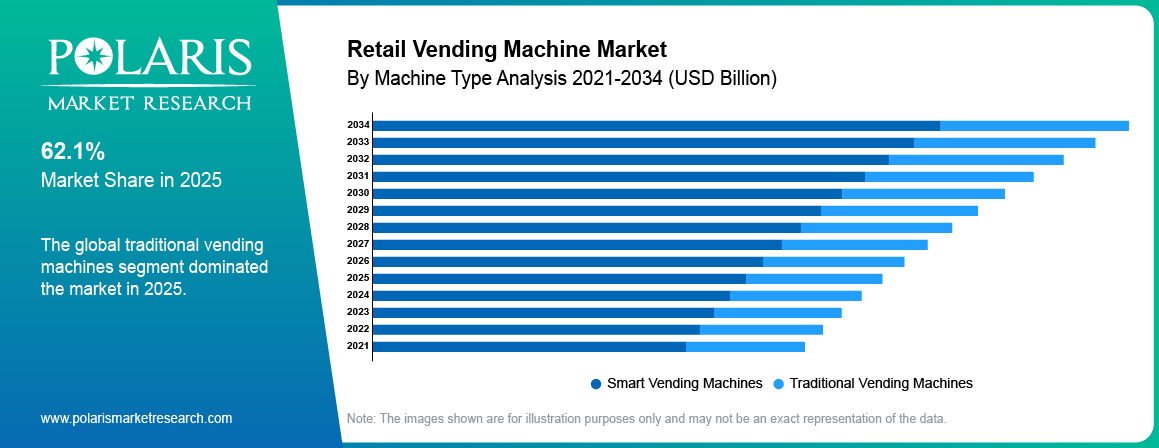
Regional Analysis
North America Retail Vending Machine Market Overview
North America dominated the market by holding 36.03% revenue share in the retail vending machine market due to technological advancements and high consumer adoption of automated retail systems. There are rising demands for AI-based and cashless vending systems in the US market. The instant vending machine configurator from VMFS USA was launched in April 2026, enabling customers to instantly configure machines, with pricing and features automatically configured.[VMFS USA, "Launched instant vending machine configurator", vmfsusa.com] The platform includes AI-powered vending, age-verification systems, elevator dispensing, and cashless payment integration. Rising focus on automation and convenience is supporting market expansion.
Europe Retail Vending Machine Market Insights
Europe retail vending machine market accounts for the substantial share due to expansion of transportation infrastructure including airports, railway stations, and metro networks. High passenger traffic across transit hubs is increasing demand for automated retail services. According to European Commission, 94 transport projects received approximately USD 3.0 billion in EU grants under the Connecting Europe Facility in 2025.[European Commission, "94 transport projects received approximately USD 3.0 billion in EU grants", ec.europa.eu] Expansion of public transportation networks is supporting deployment of vending systems across the region.
Asia-Pacific Retail Vending Machine Market Insights
Asia Pacific is expected to grow rapidly at a CAGR of around 3.7% due to rising digital payment adoption and expansion of smart retail infrastructure. Countries such as China, Japan, and India are witnessing increasing installation of cashless vending machines. According to India Brand Equity Foundation data, the number of digital payment transactions grew by 37% to 206 billion from FY24 to FY25, while the value of these transactions was USD 3.38 trillion.[India Brand Equity Foundation, "number of digital payment transactions grew by 37% to 206 billion from FY24 to FY25", www.ibef.org] Growth in mobile wallet usage and contactless payments is supporting India vending growth and regional vending analysis.
Rest of the World Retail Vending Machine Market Outlook
The retail vending machine market across the rest of the world is expanding steadily due to urbanization and retail sector growth. Growing investments in commercial infrastructure and intelligent retail solutions are contributing to the installation of vending machines in Latin America, the Middle East, and Africa. The growing inclination towards easy-to-use purchasing solutions help drive market growth in the coming years.
Source: Polaris Market Research Analysis
Competitive Landscape & Key Players
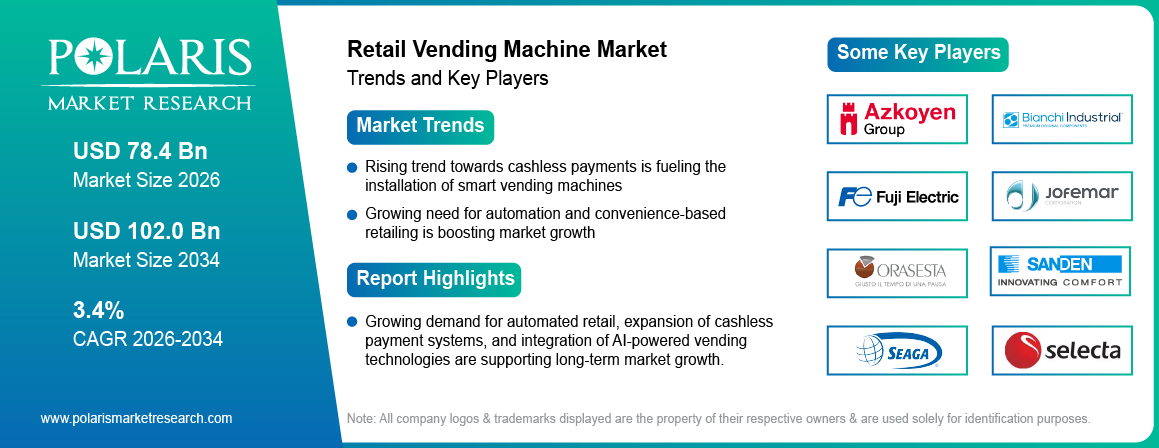
The retail vending machine market features moderate level of fragmentation, with competition prevailing amongst global vendors of vending machines, automation solutions, and regional machine vendors. Competition in the market is determined by the reliability of the machines, payment mechanisms, customizability, and efficiency. Participants are increasingly concentrating on improving smart vending solutions using AI, robotics, and cloud-based solutions. Consumer interest in contactless payment methods, remote inventory management, and personalized consumer interactions have become trends influencing the competitive dynamics in the market. Market development through innovation, partnerships, and geographic expansion into new regions represent some of the common strategies employed by market players.
The prominent players operating in the retail vending machine market include Azkoyen Group, Bianchi Industry S.p.A., Crane Merchandising Systems Ltd., Fuji Electric Co., Ltd., Jofemar Corporation, N&W Global Vending S.p.A., Orasesta S.p.A., Royal Vendors, Inc., Sanden Holdings Corporation, Seaga Manufacturing Inc., Selecta Group, Sielaff GmbH & Co. KG, Westomatic Vending Services Ltd., Automated Merchandising Systems Inc., and FAS International S.p.A.
Premium Insights
- Integration of artificial intelligence into vending machines is revolutionizing sales conversion via personalized product recommendations, efficient inventory management, and promotions that are unique to individuals
- Maintenance operations that incorporate predictive maintenance technologies minimize downtime by 30% leading to improved efficiency and lower maintenance costs
- Payment methods such as cashless payments, mobile wallet payments, and NFC payments are revolutionizing payment process speed and efficiency
Key Players
- Azkoyen Group
- Bianchi Industry S.p.A.
- Crane Merchandising Systems Ltd.
- Fuji Electric Co., Ltd.
- Jofemar Corporation
- N&W Global Vending S.p.A.
- Orasesta S.p.A.
- Royal Vendors, Inc.
- Sanden Holdings Corporation
- Seaga Manufacturing Inc.
- Selecta Group
- Sielaff GmbH & Co. KG
- Westomatic Vending Services Ltd.
- Automated Merchandising Systems Inc.
- FAS International S.p.A.
Industry Developments
- March 2026: BuyBuyCart expanded into the automated retail sector with the introduction of intelligent vending machines that provide seamless access to grocery and FMCG goods. The intelligent vending machines are equipped with touch screen interfaces, UPI and digital wallets payment solutions, and automated retail solutions that make the transactions convenient. [source: buybuycart.com]
Retail Vending Machine Market Segmentation
By Machine Type Outlook (Revenue, USD Billion, 2021-2034)
- Smart Vending Machines
- Traditional Vending Machines
By Product Type Outlook (Revenue, USD Billion, 2021-2034)
- Food & Beverage
- Non-Food Products
By Payment Mode Outlook (Revenue, USD Billion, 2021-2034)
- Cashless payment
- cash and hybrid systems
By Regional Outlook (Revenue, USD Billion, 2021-2034)
- North America
- US
- Canada
- Europe
- Germany
- France
- UK
- Italy
- Spain
- Netherlands
- Russia
- Rest of Europe
- Asia Pacific
- China
- Japan
- India
- Malaysia
- South Korea
- Indonesia
- Australia
- Vietnam
- Rest of Asia Pacific
- Middle East & Africa
- Saudi Arabia
- UAE
- Israel
- South Africa
- Rest of Middle East & Africa
- Latin America
- Mexico
- Brazil
- Argentina
- Rest of Latin America
Retail Vending Machine Market Report Scope
| Report Attributes | Details |
| Market Size in 2025 | USD 76.1 Billion |
| Market Size in 2026 | USD 78.4 Billion |
| Revenue Forecast by 2034 | USD 102.0 Billion |
| CAGR | 3.4% from 2026 to 2034 |
| Base Year | 2025 |
| Historical Data | 2021–2024 |
| Forecast Period | 2026–2034 |
| Quantitative Units | Revenue in USD Billion and CAGR from 2026 to 2034 |
| Report Coverage | Revenue Forecast, Competitive Landscape, Growth Factors, and Industry Trends |
| Segments Covered |
|
| Regional Scope |
|
| Competitive Landscape |
|
| Report Format |
|
| Customization | Report customization as per your requirements with respect to countries, regions, and segmentation. |
Source: Polaris Market Research Analysis
Retail Vending Machine Market FAQ's
The global market size was valued at USD 76.1 Billion in 2025 and is projected to grow to USD 102.0 Billion by 2034.
North America dominated the market by holding 36.03% owing to high-level adoption of intelligent and AI-operated cashless vending machine technologies.
Major applications include snacks, beverages, electronics, healthcare supplies, and personal care products.
Key players include Azkoyen Group, Fuji Electric Co., Ltd., Seaga Manufacturing Inc., Selecta Group, and Sanden Holdings Corporation.
Key drivers include rising digital payment adoption, increasing retail automation, and growing demand for convenience-based shopping.
The common types are smart vending machines and food & beverage vending machines.
Earnings vary by location and product type, with high-footfall areas generating higher monthly revenue.
Return on investment depends on machine type, products sold, and their location; however, smart vending machines offer faster returns.
Smart food & beverage vending machines installed in airports, malls, hospitals, and offices are among the most profitable.
AI enhances sales by offering recommendations, optimizing inventory management, predicting demand, and providing promotions that cater to individual customers.
Download Sample Report of Retail Vending Machine Market
Please fill out the form to request a customized copy of the research report.


