
Artificial Intelligence in Cancer Diagnostics Market Size, Share Analysis Report, 2026-2034
REPORT DETAILS
Artificial Intelligence in Cancer Diagnostics Market Summary
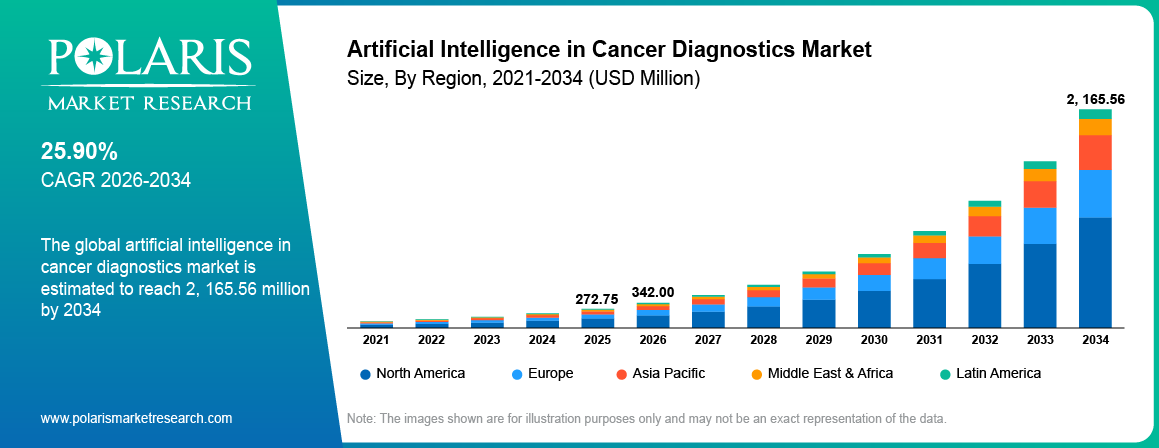
The artificial intelligence (AI) in cancer diagnostics market size was valued at USD 272.75 million in 2025, growing at a CAGR of 25.90% during 2026–2034. The rising incidence of cancer and increasing demand for precision medicine are a few of the key factors fueling the market growth.
Market Statistics
Key Takeaways
- With a share of 39.0% North America dominated the market in 2025. The region has a strong healthcare system and uses advanced cancer care methods.
- Asia Pacific is expected to grow at the highest CAGR of 27.2% during 2026–2034. Growth is fueled by increasing healthcare expenditure and improved cancer testing services.
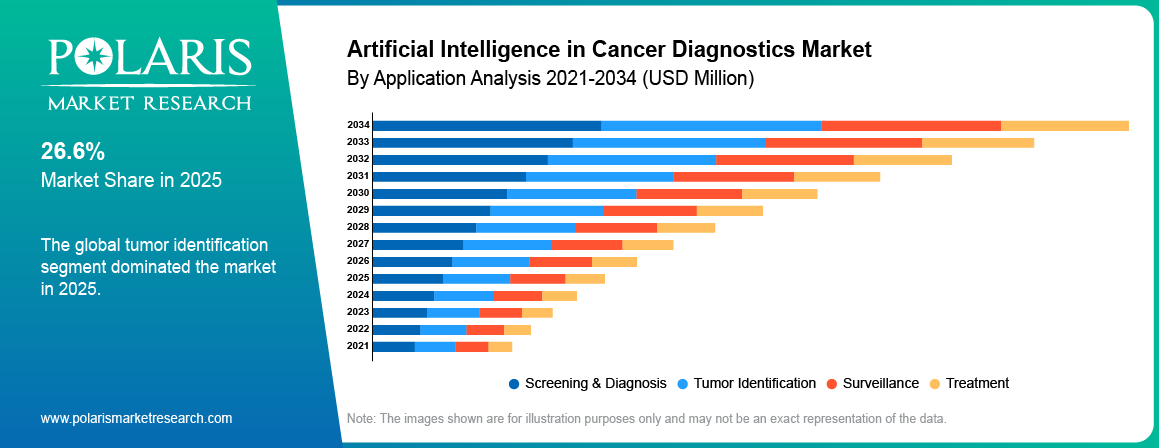
- In 2025, The screening & diagnosis segment held the largest market share of 37.0%. The segment is growing due to a rising number of people opting for early cancer screening.
- The tumor identification segment is projected to grow at the highest CAGR of 26.6% during 2026-2034. The rising demand for this segment is due to improvements in tumor detection techniques.
- The breast cancer segment held the largest market share of 26.0% In 2025. This growth because of the high incidence of breast cancer and regular screening programs.
- The lung cancer segment is projected to register the highest CAGR of 26.4% during the forecast period of 2026-2034. The increase is related to the rising cases of lung cancer and the need for early diagnosis.
Note: Figures and projections outlined in this report are the result of Polaris Market Research’s proprietary analytical processes, grounded in the latest available datasets and market observations.
What is Artificial Intelligence in Cancer Diagnostics Market?
The artificial intelligence in cancer diagnostics market comprises AI-powered software, platforms, and algorithms that assist in detecting, analyzing, and diagnosing various cancers. These solutions leverage machine learning, deep learning, computer vision, and data analytics to interpret medical images, pathology slides, genomic data, and clinical records, enabling earlier detection, improved diagnostic accuracy, and personalized cancer care.
How AI Cancer Diagnostics Works?
- Patient Data Collection: Medical images, pathology slides, genomic data, and clinical records are gathered from patients.
- Medical Imaging & Pathology Analysis: AI processes imaging scans and tissue samples to identify relevant diagnostic features.
- AI Algorithm Processing: Machine learning and deep learning models analyze large datasets for abnormalities.
- Pattern Recognition: AI detects suspicious lesions, tumors, and cancer-related patterns with high precision.
- Diagnostic Insights Generated: The system provides risk assessments, classifications, and decision-support recommendations.
- Doctor Evaluation: Healthcare professionals review AI-generated findings alongside clinical expertise to confirm the diagnosis.
- Treatment Planning: Confirmed diagnostic results support personalized treatment selection, monitoring, and follow-up care.
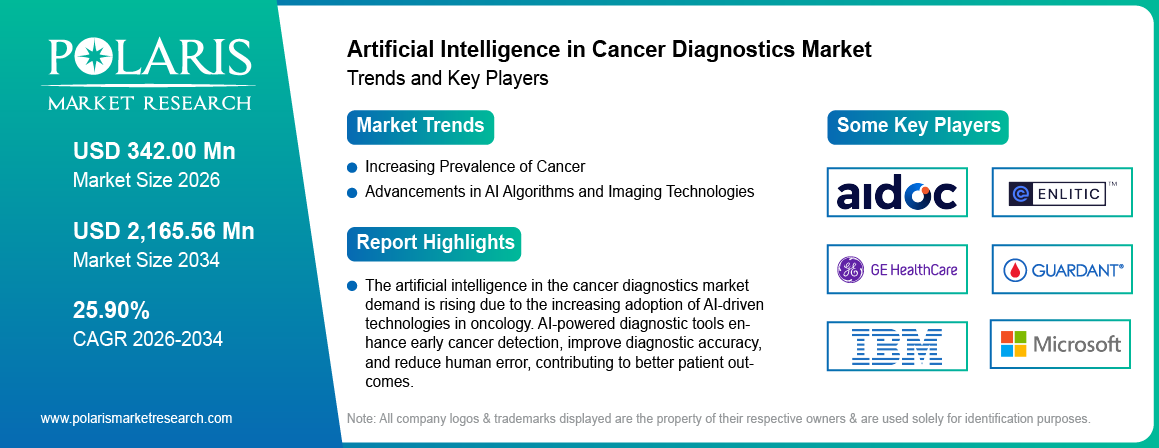
The artificial intelligence in the cancer diagnostics market demand is rising due to the increasing adoption of AI-driven technologies in oncology. AI-powered diagnostic tools enhance early cancer detection, improve diagnostic accuracy, and reduce human error, contributing to better patient outcomes.
Key drivers of AI in the cancer diagnostics market growth include the rising prevalence of cancer, the growing demand for precision medicine, and advancements in machine learning and deep learning algorithms. Additionally, the integration of AI with medical imaging and pathology is streamlining cancer diagnosis. A few artificial intelligence in the cancer diagnostics market trends include the expansion of AI-based diagnostic solutions in emerging economies, regulatory advancements supporting AI adoption in healthcare, and increasing investments in AI-driven oncology research.
Source: Polaris Market Research Analysis
To Understand More About this Research: Download Sample Report
Artificial Intelligence in Cancer Diagnostics Market Dynamics
Market Driver- Rising Number of Cancer Cases Increases Demand for AI Diagnostics
The demand for AI-based diagnostic tools is rising as number of cancer cases in the world is increasing. According to the latest GLOBOCAN estimates by the International Agency for Research on Cancer (IARC), around 20.6 million new cancer cases and 9.8 million cancer-related deaths were reported worldwide in 2024. The increasing burden of diseases is resulting in a higher demand for faster and accurate diagnosis. AI assists doctors in detecting cancer at an early stage, making it easier to begin treatment on time and improve patient outcomes. Source: https://www.iarc.who.int
Market Driver- Technological Advances in AI and Medical Imaging
The rapid development of artificial intelligence (AI) technology is resulting in a faster and accurate diagnosis of cancer. Tools such as machine learning and deep learning support are used to analyze medical images such as MRI and CT scans more accurately. These tools help doctors by reducing the time taken to review scans and help them in finding signs of cancer easily. This is leading to an increase in the usage of AI-based diagnostic solutions among healthcare providers.
Market Opportunity- Growing Adoption of AI Diagnostics in Emerging Economies
Emerging economies are creating new growth opportunities for the market. According to the World Health Organization (WHO), Governments are using AI to improve the access to healthcare services and support healthcare workers. Many countries are improving healthcare facilities and increasing investments in digital health. Growing healthcare infrastructure, increasing healthcare spending, and rising awareness for early cancer detection are expected to drive the demand for AI-based cancer diagnostic solutions in the upcoming years. Source: https://www.who.int
Market Restraint- Lack of Common Standards for AI Systems
The lack of common standards for AI-based diagnostic systems remains a key challenge for the market. AI solutions are subject to testing and approval regulations that differ from country to country. This makes it difficult to ensure consistent performance across healthcare settings, delays product approvals and erodes healthcare providers’ confidence in the use of AI for cancer diagnosis.
Traditional Cancer Diagnosis vs AI-Based Cancer Diagnosis
| Factor | Traditional Cancer Diagnosis | AI-Based Cancer Diagnosis |
| Data Analysis | Manual interpretation by clinicians | Automated analysis using AI algorithms |
| Speed | Time-intensive diagnostic process | Faster processing and results |
| Pattern Detection | Dependent on human expertise | Detects subtle and complex patterns |
| Decision Support | Limited integration of patient data | Integrates imaging, clinical, and genomic data |
| Diagnostic Accuracy | May vary by experience | Improves consistency and diagnostic precision |
| Scalability | Limited by specialist availability | Enables high-volume, standardized analysis |
Source: Polaris Market Research Analysis
AI Impact on Artificial Intelligence in Cancer Diagnostics Market
- Advanced AI systems process complex imaging and clinical datasets to identify cancer cases with high accuracy.
- Deep learning models uncover minute abnormalities and early-stage signs that conventional approaches may overlook.
- AI-driven diagnostic tools support oncologists in tailoring treatment strategies by integrating diverse patient health information.
- With continuous algorithm refinement, AI enhances diagnostic precision and contributes to improved survival rates and care quality.
Government Initiatives and Funding
Government support through funding and policy initiatives plays a crucial role in driving artificial intelligence in cancer diagnostics market expansion. The US government's Cancer Moonshot initiative aims to reduce cancer mortality by investing in AI data analysis to establish a nationwide ecosystem for data sharing among patients, doctors, and researchers. Such initiatives encourage the development and implementation of AI-driven diagnostic tools, fostering innovation in the cancer diagnostics.
Source: Polaris Market Research Analysis
Future of The Artificial Intelligence in Cancer Diagnostics Market
The artificial intelligence in cancer diagnostics market is expected to witness strong growth as healthcare providers increasingly adopt AI-powered imaging, pathology, and screening solutions. Advancements in deep learning, precision oncology, and genomic analytics will further enhance diagnostic capabilities. The expansion of cloud-based healthcare platforms and digital health infrastructure will accelerate adoption, positioning AI as a key technology for improving diagnostic accuracy, clinical efficiency, and personalized cancer care.
Artificial Intelligence in Cancer Diagnostics Market Segment Insights:
Applications of Artificial Intelligence in Cancer Diagnostics
| Application | Role of AI |
| Tumor Detection in CT & MRI Scans | Identifies suspicious lesions and tumors with greater speed and accuracy. |
| Pathology Slide Analysis | Analyzes digital pathology images to detect cancerous cells and tissue abnormalities. |
| Cancer Biomarker Identification | Detects genetic and molecular biomarkers to support precision oncology. |
| Breast Cancer Screening | Enhances mammography interpretation for earlier and more accurate diagnosis. |
| Cancer Progression Prediction | Predicts disease progression and recurrence using clinical and imaging data. |
| Treatment Decision Support | Assists oncologists with AI-driven insights for personalized treatment planning. |
| Early Cancer Detection | Identifies cancer at earlier stages, enabling timely intervention and improved patient outcomes. |
Source: Polaris Market Research Analysis
AI in Cancer Biomarker Discovery
- Molecular Data Analysis: AI analyzes complex molecular datasets to identify biomarkers associated with different cancer types.
- Genomic Profiling: Machine learning processes genomic data to detect genetic mutations and support precision oncology.
- Treatment Response Prediction: AI predicts how patients may respond to specific therapies based on biomarker profiles.
- Disease Classification: AI classifies cancer subtypes by integrating molecular, genomic, and clinical data for improved diagnostic accuracy.
- Personalized Diagnostics: AI enables tailored diagnostic strategies by identifying patient-specific biomarkers that support individualized care.
AI in Cancer Diagnostics Market Assessment by Application
The screening and diagnosis segment accounted for 37.0% of the market share in 2025.
The artificial intelligence in cancer diagnostics market, by application, is segmented into screening & diagnosis, tumor identification, surveillance, and treatment. The screening and diagnosis segment held the largest market share in 2025. This prominence is attributed to the integration of AI technologies in medical imaging and pathology, which enhances early cancer detection and diagnostic accuracy. AI algorithms assist in analyzing complex imaging data, facilitating the identification of malignancies at initial stages, thereby improving patient outcomes. The demand for AI-driven screening and diagnostic tools is further propelled by the increasing global cancer incidence and the need for efficient diagnostic solutions.
The tumor identification segment is expected to register the highest CAGR of 26.6% during the forecast period.
The tumor identification segment is experiencing the highest growth rate within this market. Advancements in machine learning and deep learning algorithms have significantly improved the precision of tumor detection and characterization. AI applications in tumor identification aid in distinguishing between benign and malignant tumors, assessing tumor boundaries, and evaluating metastatic spread. This rapid growth is driven by the continuous development of AI models capable of processing vast datasets to provide accurate tumor assessments, thereby supporting personalized treatment planning and monitoring.
Artificial Intelligence in Cancer Diagnostics Market Evaluation by Cancer Type
The breast cancer segment accounted for the largest market share, representing 26% of the market in 2025.
The artificial intelligence in cancer diagnostics market, by cancer type, is segmented into breast cancer, prostate cancer, lung cancer, colorectal cancer, cervical cancer, and others. The breast cancer segment dominated the market share in 2025. This is attributed to the high incidence of breast cancer globally, necessitating advanced diagnostic tools for early detection and treatment. AI technologies have been instrumental in enhancing the accuracy of mammography interpretations, leading to improved patient outcomes. According to the World Health Organization, approximately 2.4 million women were diagnosed with breast cancer in 2024, (Source: https://www.who.int )
The lung cancer segment is expected to register the highest CAGR of 26.4% during 2026-2034.
The lung cancer segment is experiencing the highest growth rate within this market. This rapid expansion is driven by the increasing prevalence of lung cancer and the demand for precise diagnostic methods. AI applications in lung cancer diagnostics, such as the analysis of imaging data from CT scans, have shown promise in early detection and accurate tumor characterization. The integration of AI in these processes aids in identifying malignancies at earlier stages, thereby facilitating timely interventions and improving survival rates.
Artificial Intelligence in Cancer Diagnostics Market Outlook by End Use
The hospital segment held the largest market share, accounting for 41.23% of the market in 2025.
The artificial intelligence in cancer diagnostics market, by end use, is segmented into hospitals, diagnostic centers, medical research institutes, contract research organizations, and others. The hospital segment holds the largest market share. This dominance is attributed to the widespread integration of AI algorithms into hospital workflows, addressing the shortage of healthcare professionals and enhancing the speed and accuracy of cancer diagnoses. Hospitals are increasingly adopting AI-powered diagnostic tools to improve patient outcomes and streamline operations. For instance, Cheshire and Merseyside Radiology Imaging Network (CAMRIN) introduced Annalise.ai across 11 NHS imaging sites in the UK to support faster lung cancer diagnosis. The AI tool helps doctors review chest X-rays, detect possible signs of lung cancer more quickly, and improve diagnostic accuracy. (Source: heshireandmerseyside.nhs.uk)
Source: Polaris Market Research Analysis
Challenges Related to AI Adoption in Cancer Diagnostics
- Data Privacy Concerns: Protecting sensitive patient information while complying with healthcare data regulations remains a major challenge.
- Lack of Standardized Datasets: Variations in data quality and limited standardized datasets can affect AI model performance and reliability.
- Regulatory Challenges: Evolving regulatory requirements may delay the approval and deployment of AI-based diagnostic solutions.
- Algorithm Bias: AI models trained on non-diverse datasets can introduce bias and reduce diagnostic accuracy across different patient populations.
- Need for Clinical Validation: Extensive clinical validation is required to ensure AI tools are safe, accurate, and reliable for routine clinical use.
Artificial Intelligence in Cancer Diagnostics Market Regional Outlook
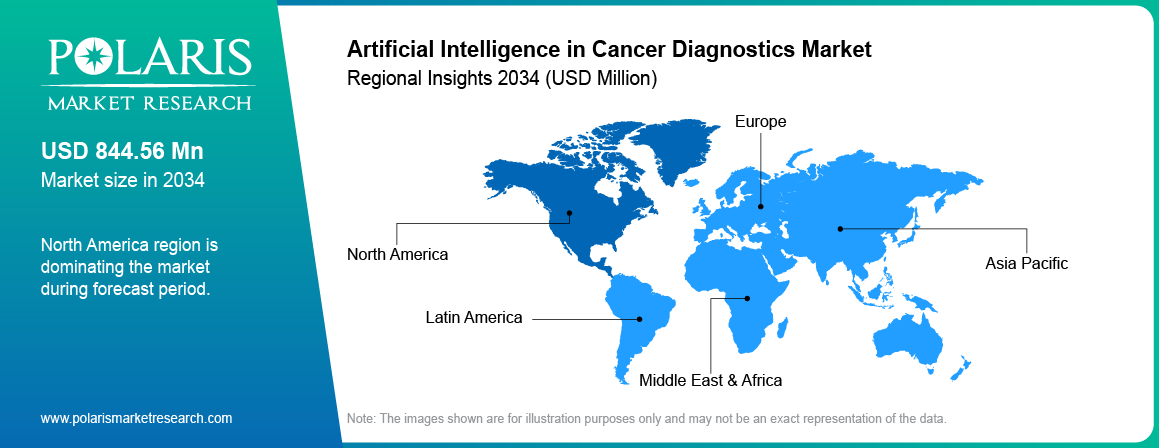
North America accounted for the largest market share, representing 39% of the global market in 2025.
By region, the report provides AI in cancer diagnostics market insights into North America, Europe, Asia Pacific, Latin America, and the Middle East & Africa. North America held the largest market share in 2025. This dominance is attributed to the region's advanced healthcare infrastructure, significant investments in healthcare IT solutions, and the presence of key industry players. The increasing adoption of AI technologies in oncology, supported by substantial funding for AI development, further propels market growth in North America. Additionally, the rising prevalence of cancer and heightened patient awareness contribute to the expanding utilization of AI-driven diagnostic tools in the region.
The Europe AI in cancer diagnostics market is experiencing substantial growth, driven by significant investments and technological advancements. For instance, in February 2025, the European Investment Bank (EIB) provided a €15 million loan to Spanish biotech company Amadix to support the development of innovative blood tests for early cancer detection. (Source: https://www.eib.org)
The Asia Pacific artificial intelligence in cancer diagnostics market is expected to grow at a CAGR of 27.2% from 2026 to 2034, driven by rising healthcare investments and AI adoption.
The Asia Pacific artificial intelligence in the cancer diagnostics market is rapidly expanding due to increasing healthcare investments and the adoption of AI technologies. Countries such as China and Japan are at the forefront of integrating AI into medical diagnostics to improve early cancer detection rates. The growing prevalence of cancer in the region, coupled with supportive government initiatives, is propelling the adoption of AI-driven diagnostic solutions. This trend is expected to continue, contributing significantly to advancements in cancer diagnostics and patient care.
Source: Polaris Market Research Analysis
Artificial Intelligence in Cancer Diagnostics Market – Key Players and Competitive Analysis Report:
Notable companies include DeepHealth, Microsoft Corporation, GE HealthCare Technologies Inc., Tempus AI, Inc., and Roche Diagnostics. These companies are advancing AI-based cancer diagnostics. They focus on medical imaging, pathology, and data-driven diagnostic solutions.
Other key players include PathAI, Inc., Paige, Ibex Medical Analytics, Lunit Inc., Aidoc Medical Ltd., Nanox.AI, Qure.ai Technologies Private Limited, DeepMind Technologies Limited, and Flatiron Health (an independent affiliate of the Roche Group). These companies develop AI solutions for early cancer detection and improved diagnostic accuracy.
In the artificial intelligence in the cancer diagnostics market, several companies are actively contributing to advancements in early detection and treatment. Notable entities include Microsoft Corporation, IBM Corporation, Siemens Healthineers, GE Healthcare, and Tempus Labs, Inc. These organizations are at the forefront of integrating AI into healthcare to enhance diagnostic accuracy and patient outcomes.
Other significant contributors such as PathAI; Paige.AI, Inc.; and Kheiron Medical Technologies Limited specialize in developing AI-powered pathology solutions to improve cancer diagnosis. Additionally, companies such as Aidoc and Zebra Medical Vision are focusing on AI applications in medical imaging, aiding in the early detection of various cancers. Furthermore, Flatiron Health and Guardant Health are leveraging AI to analyze real-world oncology data and develop liquid biopsy technologies, respectively. These efforts collectively aim to revolutionize cancer diagnostics by providing more precise and less invasive testing options.
Microsoft Corporation is a prominent entity in the AI in the cancer diagnostics market. The company has been actively developing AI solutions to enhance cancer detection and treatment. In collaboration with Paige, a digital pathology provider, Microsoft is working on creating the world's largest image-based AI model for cancer detection. This model is being trained on up to four million digitized microscopy slides across various cancer types, utilizing Microsoft's advanced supercomputing infrastructure. The initiative aims to improve the accuracy and efficiency of cancer diagnosis, potentially leading to earlier detection and treatment for patients.
GE HealthCare Technologies Inc. is a leading company in the AI in cancer diagnostics market. The company develops AI-powered imaging solutions that help doctors detect cancer more accurately. Its AI tools support faster image analysis and improve clinical workflows. These solutions help healthcare providers make timely decisions and deliver better patient care.
List of Key Companies in Artificial Intelligence in Cancer Diagnostics Market
- DeepHealt
- Microsoft Corporation
- Nanox.AI
- Tempus AI, Inc.
- Flatiron Health (Independent affiliate of the Roche Group)
- PathAI, Inc.
- GE HealthCare Technologies Inc.
- DeepMind Technologies Limited
- Aidoc Medical Ltd.
- Paige
- Lunit Inc.
- Ibex Medical Analytics
- Roche Diagnostics
- Qure.ai Technologies Private Limited
Artificial Intelligence in Cancer Diagnostics Industry Developments
- May 2026: Roche announced the acquisition of PathAI for up to USD 1.05 billion to strengthen its AI-driven cancer diagnostics portfolio. The acquisition enhances Roche's digital pathology capabilities and supports the adoption of AI-powered precision cancer diagnosis and personalized treatment planning.(Source: www.roche.com)
- January 2026: Universal Diagnostics secured a €30 million investment from the Spanish government to advance its AI-powered liquid biopsy platform for early cancer detection. The funding will accelerate the development of AI-driven blood tests for multiple cancer types, including colorectal, lung, liver, pancreatic, and esophageal cancers. (Source: app.dealroom.co)
- March 2025: Philips revealed an expanded partnership with Ibex to fast-track the use of AI-powered digital pathology, addressing the worldwide shortage of pathologists and the increasing cancer patient population. (Source: https://www.philips.com)
Artificial Intelligence in Cancer Diagnostics Market Segmentation
By Application Outlook (Revenue – USD Million, 2021–2034)
- Screening & Diagnosis
- Tumor Identification
- Surveillance
- Treatment
By Cancer Type Outlook (Revenue – USD Million, 2021–2034)
- Breast Cancer
- Prostate Cancer
- Lung Cancer
- Colorectal Cancer
- Cervical Cancer
- Others
By End Use Outlook (Revenue – USD Million, 2021–2034)
- Hospitals
- Diagnostic Centers
- Medical Research Institute
- Contract Research Organization
- Other
By Regional Outlook (Revenue – USD Million, 2021–2034)
- North America
- US
- Canada
- Europe
- Germany
- France
- UK
- Italy
- Spain
- Netherlands
- Russia
- Rest of Europe
- Asia Pacific
- China
- Japan
- India
- Malaysia
- South Korea
- Indonesia
- Australia
- Vietnam
- Rest of Asia Pacific
- Middle East & Africa
- Saudi Arabia
- UAE
- Israel
- South Africa
- Rest of Middle East & Africa
- Latin America
- Mexico
- Brazil
- Argentina
- Rest of Latin America
Artificial Intelligence (AI) in Cancer Diagnostics Market Report Scope
| Report Attributes | Details |
| Market Size Value in 2025 | USD 272.75 million |
| Market Size Value in 2026 | USD 342.00 million |
| Revenue Forecast by 2034 | USD 2,165.56 million |
| CAGR | 25.90% from 2026 to 2034 |
| Base Year | 2025 |
| Historical Data | 2021–2024 |
| Forecast Period | 2026–2034 |
| Quantitative Units | Revenue in USD million and CAGR from 2026 to 2034 |
| Report Coverage | Revenue Forecast, Market Competitive Landscape, Growth Factors, and Trends |
| Segments Covered |
|
| Regional Scope |
|
| Competitive Landscape |
|
| Report Format |
|
| Customization | Report customization as per your requirements with respect to countries, regions, and segmentation. |
Source: Polaris Market Research Analysis
Artificial Intelligence in Cancer Diagnostics Market FAQ's
The market size was valued at USD 272.75 million in 2025 and is projected to grow to USD 2,165.56 million by 2034.
The market is projected to register a CAGR of 25.90% during the forecast period.
North America held the largest share of the market in 2025.
Several companies in the market are actively contributing to advancements in early detection and treatment. A few notable entities include Microsoft Corporation, IBM Corporation, Siemens Healthineers, GE Healthcare, and Tempus Labs, Inc. These organizations are at the forefront of integrating AI into healthcare to enhance diagnostic accuracy and patient outcomes.
The screening & diagnosis segment accounted for the largest share of the market in 2025.
Artificial intelligence in cancer diagnostics refers to the use of AI technologies, including machine learning, deep learning, and computer vision, to improve the accuracy, efficiency, and speed of cancer detection and diagnosis. AI-powered algorithms analyze medical imaging, pathology slides, and genomic data to identify cancerous cells, predict tumor progression, and assist healthcare professionals in making informed clinical decisions. These AI solutions help reduce diagnostic errors, enhance early detection, and personalize treatment plans by processing vast amounts of medical data. The integration of AI in cancer diagnostics aims to improve patient outcomes and streamline healthcare workflows.
A few key trends in the market are described below:
Artificial intelligence in cancer diagnostics uses machine learning and advanced algorithms to analyze medical data, enabling earlier, faster, and more accurate cancer detection.
AI analyzes medical images, pathology slides, genomic data, and clinical records to detect abnormalities, identify tumors, and support clinical decision-making.
Key technologies include machine learning, deep learning, computer vision, natural language processing, and data analytics integrated with medical imaging and genomics.
Yes. AI enhances screening accuracy by detecting subtle abnormalities, reducing diagnostic errors, and supporting earlier cancer detection alongside clinician expertise.
Download Sample Report of Artificial Intelligence in Cancer Diagnostics Market
Please fill out the form to request a customized copy of the research report.


