
Beta Carotene Market Size, Share & Growth Analysis Report, 2026-2034
REPORT DETAILS
Beta Carotene Market Summary
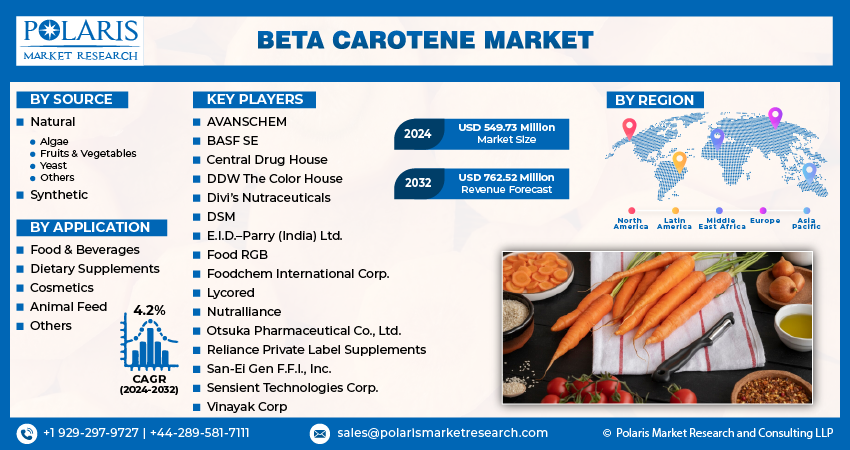
The global beta carotene market was valued at USD 672.06 million in 2025 and is projected to grow at a CAGR of 5.23% from 2026 to 2034. The growth is primarily fueled by increasing consumer preference for clean label products, leading to higher demand for natural food colorants and nutritional supplements offering visual appeal and as well as health benefits.
Market Statistics
Key Takeaways
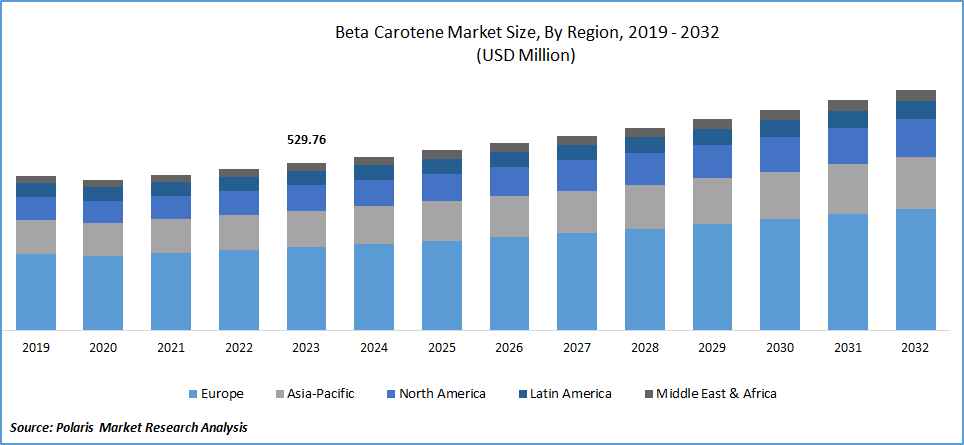
- In 2025, Europe dominated the global market with 46.0% revenue share. Increasing preference for natural and health-oriented products contributed to the dominance.
- In Europe, Germany led with 27.6% revenue share in 2025. The robust food & beverage sector propels the demand for beta-carotene across various categories in the country.
- The North America beta carotene market is expected to register the highest CAGR of 5.3% during the forecast period. The increasing awareness and emphasis on health and wellness among North American consumers drive the market growth.
- The natural resources segment dominated the market with 60.2% share in 2025. This is due to a rising shift in consumer preferences toward natural, plant-based nutrition.
- In 2025, the food and beverage segment held the largest revenue share of 34.0%. Rising use of beta-carotene as a colorant and nutrient in the food and beverage applications contributed to the segment growth.
*Note: Figures and projections outlined in this report are the result of Polaris Market Research’s proprietary analytical processes, grounded in the latest available datasets and market observations.
Industry Dynamics
- Rising preference for natural food colorants in processed foods and beverages drive the market growth.
- Expansion of the dietary supplements industry, driven by preventive healthcare and wellness trends, also fuels the growth.
- Increasing awareness of antioxidant and vitamin A benefits supports beta carotene usage in pharmaceuticals and functional foods. It fuels the growth of the market.
- Rising use in cosmetics and personal care products due to skin-health and anti-aging applications.
- High production and extraction costs of natural beta carotene hinder the market expansion.
- Fluctuations in raw material supply also limit market growth.
- Increasing adoption of algae-derived and plant-based beta carotene would provide lucrative opportunities in the coming years.
What are Beta-carotenes?
Beta-carotenes are natural pigments found in plants that give them their characteristic colors. They also act as antioxidants. This pigment is part of the carotenoid family and is used in various industries, including food and beverages, pharmaceuticals, dietary supplements, personal care, cosmetics, and animal feed. Beta-carotene can be obtained naturally from sources such as algae, fruits, vegetables (carrots, sweet potatoes, pumpkins, spinach, and plums), fungus, palm oil, yeasts, bacteria, and microorganisms.
Source: Polaris Market Research Analysis
For natural sources, beta-carotene is obtained through solvent extraction methods or biological production methods, followed by a purification process. New technologies are being developed to synthesize beta-carotene through genetic engineering. The value chain of beta-carotene includes raw material procurement, manufacturing processes, distribution, and the end-use industry. In the food and beverages industry, beta-carotenes are used as nutritional supplements and coloring agents. They are also used as antioxidants in dietary supplements and several cosmetic product categories. Beta-carotene is also extensively used as a nutritional supplement in animal feed.
The Beta Carotene Market report details key market dynamics to help industry players align their business strategies with current and future trends. It examines technological advances and breakthroughs in the industry and their impact on the market presence. Furthermore, a detailed regional analysis of the industry at the local, national, and global levels has been provided.
Despite its numerous health benefits, the market for beta-carotene faces potential hindrances due to the side effects associated with excess consumption. While beta-carotene is generally considered safe and is converted into vitamin A, an essential nutrient, within the body, excessive intake through supplements or high-dose formulations can lead to a condition known as hypervitaminosis. This can result in a range of adverse effects, including skin discoloration, nausea, dizziness, and, in severe cases, may negatively impact bone health and liver function. Manufacturers and marketers in the beta-carotene market need to address these concerns effectively through transparent labeling, responsible marketing practices, and education campaigns to ensure the sustainable growth of the market.
Source: Polaris Market Research Analysis
Industry Dynamics
Growth Drivers
The Rising Awareness About the Enhancement of Cognitive Function
Beta carotene, a pioneer in vitamin A, is renowned for its antioxidant properties and plays a crucial role in supporting overall health. The recent scientific research on the potential cognitive benefits associated with beta-carotene consumption has defined its role in promoting brain health and function. As awareness grows regarding the importance of cognitive health and the impact of nutrition on brain function, consumers are increasingly seeking dietary sources of beta-carotene.
Foods rich in beta-carotene, such as certain fruits and vegetables, are becoming popular choices for those aiming to support cognitive well-being. This rising awareness about the cognitive benefits of beta-carotene is influencing purchasing decisions and contributing to the growth of the beta-carotene market as consumers prioritize products that offer potential cognitive enhancements in addition to general health benefits.
Report Segmentation
The market is primarily segmented based on source, application, and region.
| By Source | By Application | By Region |
|
|
|
Source: Polaris Market Research Analysis
By Source Analysis
Natural Resources Dominated the Global Market in 2025
The dominance of natural sources of beta-carotene in the global beta-carotene market with 60.2% share is due to a broader shift in consumer preferences towards natural, plant-based nutrition. Natural sources, primarily found in fruits and vegetables, are gaining attention as consumers increasingly prioritize whole foods over synthetic supplements. Fruits and vegetables provide not only beta-carotene but also other essential vitamins, minerals, and antioxidants that contribute to overall health and well-being. The nutritional profile of natural sources aligns with the growing awareness of the importance of a balanced and diverse diet in supporting various aspects of health, including immune function and skin health. As a result, the natural source of beta-carotene is not only dominating the market but is expected to continue driving growth as health-conscious consumers seek nutritional solutions rooted in the goodness of nature.
Comparison Matrix: Natural vs Synthetic Beta Carotene
| Factor | Natural Beta Carotene | Synthetic Beta Carotene |
| Source | Extracted from algae, carrots, palm oil, fruits, vegetables, and microbial fermentation | Chemically synthesized from petrochemical derivatives through industrial processes |
| Stability | More sensitive to heat, light, and oxygen; may require encapsulation for improved shelf life | Higher processing and storage stability with longer shelf life |
| Bioavailability | Generally offers better absorption and antioxidant activity due to mixed carotenoid isomers and co-nutrients | Primarily all-trans structure with comparatively lower absorption efficiency in some applications |
| Production Cost | Higher production and extraction costs due to natural sourcing and limited supply | Lower manufacturing cost with large-scale and cost-efficient production capabilities |
| Clean-Label Appeal | Strong clean-label, organic, and plant-based appeal among health-conscious consumers | Limited clean-label appeal because it is chemically synthesized |
| Industrial Applications | Widely used in premium foods, nutraceuticals, dietary supplements, natural cosmetics, and clean-label beverages | Commonly used in mass-market food fortification, animal feed, pharmaceuticals, and cost-sensitive processed foods |
Source: Polaris Market Research Analysis
By Application Analysis
The Food and Beverage Segment is Estimated to Dominate the Market Over the Forecasted Period
The food and beverage segment dominated the market with 34.0% share in 2025. Beta-carotene, a natural pigment and antioxidant found in various fruits and vegetables, plays a crucial role as a colorant and nutrient in the food and beverage industry. Its vibrant orange color makes it a popular choice for enhancing the visual appeal of food products, particularly in the production of beverages, snacks, and packaged foods. Beyond its color-enhancing properties, beta-carotene is a pioneer in vitamin A, providing essential health benefits such as supporting vision, immune function, and skin health.
As consumer preferences increasingly shift towards healthier and natural ingredients, the demand for beta-carotene in the food and beverage sector continues to rise. Also, beta-carotene's role in fortifying products with nutritional value aligns with the growing emphasis on functional foods, contributing to its dominance in this market segment.
Source: Polaris Market Research Analysis
Regional Insights
Europe Held the Largest Market Share in 2025
In 2025, Europe beta carotene market emerged as the dominant share holder accounting for 29.0% of the global market. European consumers exhibit a strong inclination towards natural and health-oriented products, aligning with the qualities of beta-carotene as a natural pigment and antioxidant.
The stringent regulatory environment in Europe, particularly regarding food safety and quality, favors the adoption of beta-carotene, a naturally occurring compound derived from sources such as carrots and sweet potatoes. Also, the region's robust and diverse food and beverage sector, ranging from traditional to innovative products, provides more and more opportunities for the incorporation of beta-carotene across various categories.
North America beta carotene market is poised to experience rapid growth at a CAGR of 5.3% in the industry, emerging as the fastest-growing region. The increasing awareness and emphasis on health and wellness among North American consumers have led to a growing demand for natural and functional ingredients in food and beverages. Also, the region's dynamic and innovative food and beverage industry constantly seeks novel ingredients to cater to evolving consumer tastes. Moreover, the increasing trend of health-conscious lifestyles and dietary preferences, including a rise in plant-based diets, further fuels the demand for beta-carotene, which is commonly sourced from fruits and vegetables.

Source: Polaris Market Research Analysis
Key Market Players & Competitive Insights
In the market, there is a lot of competition because there are many large and small manufacturers and suppliers. The main focus of major players is on integrating advanced technology and creating new products. Smaller players tend to use pricing strategies to compete. Companies are also forming partnerships, merging, and introducing innovative products to strengthen their position in the market.
Some of the major players operating in the global Beta Carotene market include:
- AVANSCHEM
- BASF SE
- Central Drug House
- DDW The Color House
- Divi’s Nutraceuticals
- DSM
- E.I.D.–Parry (India) Ltd.
- Food RGB
- Foodchem International Corp.
- Lycored
- Nutralliance
- Otsuka Pharmaceutical Co., Ltd.
- Reliance Private Label Supplements
- San-Ei Gen F.F.I., Inc.
- Sensient Technologies Corp.
- Vinayak Corp
Natural Ingredient Price Trends & Market Dynamics
Changing agricultural production, raw material availability, and rising consumer demand for natural ingredients influence the price trends of natural ingredients. Fluctuations in crop yields and algae production impact the pricing of naturally sourced beta carotene. Increasing demand for clean-label and plant-based products supports market growth. Expanding nutraceutical and functional food industries fuel higher consumption of beta carotene. This is due to its antioxidant and vitamin A benefits. Additionally, advancements in extraction and fermentation technologies help manufacturers improve production efficiency and reduce overall processing costs.
Recent Developments
- In June 2025, DSM-Firmenich expanded its distribution deal with Brenntag Specialties Pharma to cover Poland and the Czech Republic, enabling distribution of 40+ pharmaceutical vitamins and carotenoids, including A, B-complex, C, D3, E, K1, and beta-carotene. (Source: nutraceuticalbusinessreview.com)
Beta Carotene Market Report Scope
| Report Attributes | Details |
| Market size value in 2025 | USD 672.06 million |
| Market size value in 2026 | USD 706.58 million |
| Revenue Forecast in 2034 | USD 1,063.21 million |
| CAGR | 5.23% from 2026 – 2034 |
| Base year | 2025 |
| Historical data | 2021 – 2024 |
| Forecast period | 2026 – 2034 |
| Quantitative units | Revenue in USD million and CAGR from 2026 to 2034 |
| Segments Covered | By Source, By Application, and By Region |
| Regional scope | North America, Europe, Asia Pacific, Latin America, Middle East & Africa |
| Customization | Report customization as per your requirements with respect to countries, regions, and segmentation. |
Source: Polaris Market Research Analysis
Explore the market dynamics of the 2025 Beta Carotene Market share, size, and revenue growth rate, meticulously examined in the insightful reports crafted by Polaris Market Rersearch Industry Reports. The analysis of Beta Carotene Market extends to a comprehensive market forecast up to 2034, coupled with a retrospective examination. Avail yourself of a complimentary PDF download to sample this in-depth industry analysis.
Browse Our Top Selling Reports
Industrial Utility Communication Market Size, Share 2024 Research Report
Electronic Wet Chemicals Market Size, Share 2024 Research Report
Brushless DC Motor Market Size, Share 2024 Research Report
Solar Encapsulation Market Size, Share 2024 Research Report
Nutraceutical Excipients Market Size, Share 2024 Research Report
Beta Carotene Market FAQ's
The global beta carotene market size is expected to reach USD 1,063.21 million by 2034.
Sensient Technologies Corp., Vinayak Corp, AVANSCHEM, Divi’s Nutraceuticals are the top market players in the market.
n 2025, Europe dominated the global market with 46.0% revenue share.
The global beta-carotene market is expected to grow at a CAGR of 5.23% during the forecast period.
Source, application, and region are the key segments in the Beta Carotene Market.
Download Sample Report of Beta Carotene Market
Please fill out the form to request a customized copy of the research report.


