
Blood Warmers Market Share, Trends, Industry Analysis Report, 2026 - 2034
REPORT DETAILS
Blood Warmers Market Summary
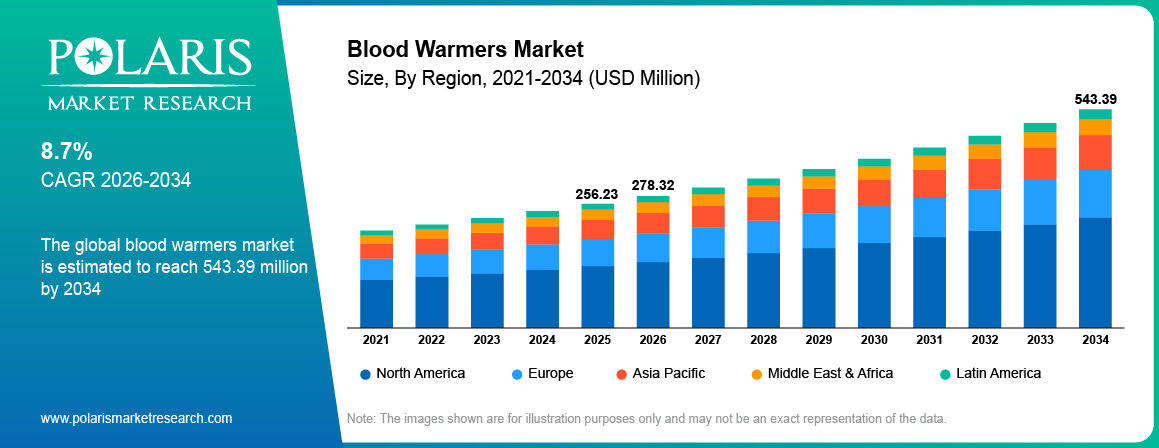
The global blood warmers market size was valued at USD 256.23 million in 2025. The market is projected to grow at a CAGR of 8.7% from 2026 to 2034. Increasing volume of complex surgical procedures and rising trauma cases are a few of the key factors driving market demand.
Market Statistics
Blood Warmers Market Key Takeaways
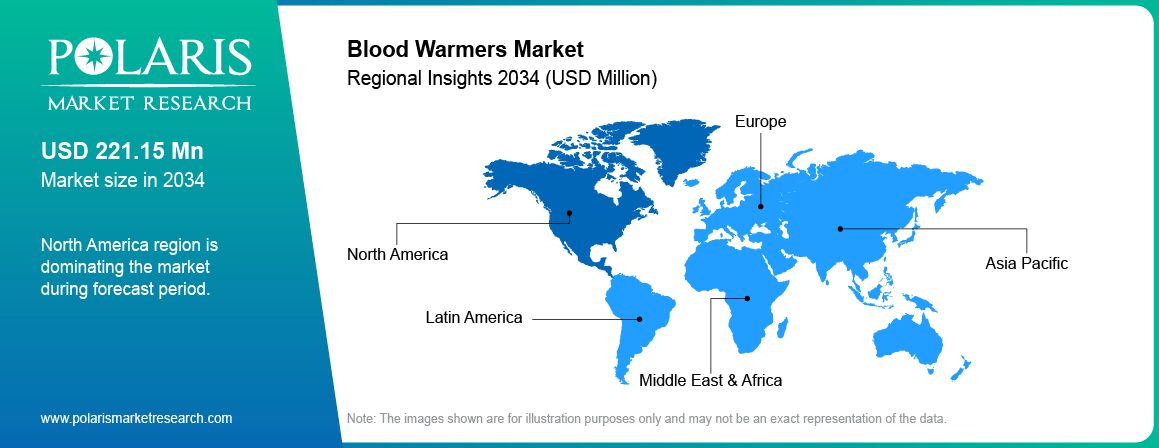
- North America led with a 40.7% market share in 2025. Technological advancements and rising government investments contribute to the regional market dominance.
- Asia Pacific is expected to register significant growth at a 9.1% CAGR. Large elderly patient population and increased demand for advanced healthcare solutions are driving the regional market growth.
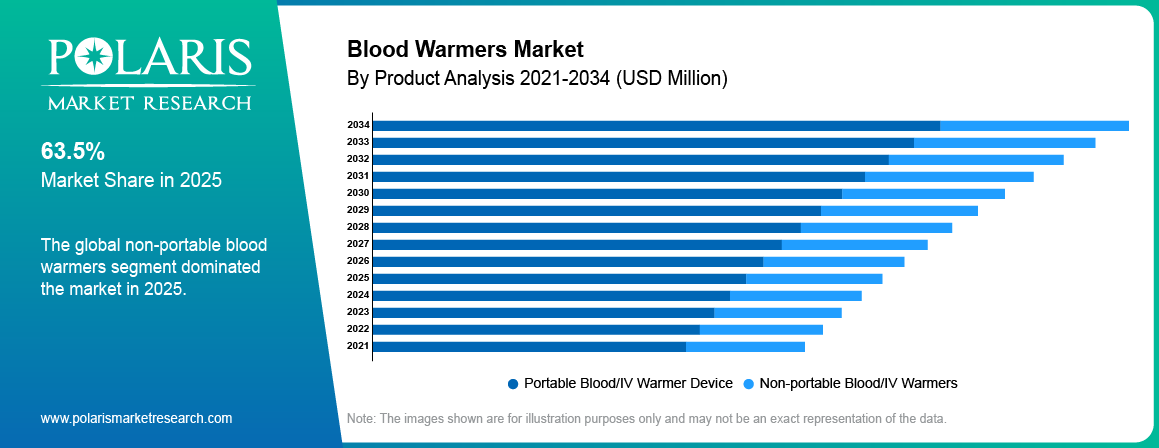
- Non-portable blood warmers led with a 63.5% market share in 2025. This is owing to increased adoption in healthcare settings.
- The hospitals/clinics segment dominated the market with a 71.2% share in 2025. This is due to the rising global surgical rate.
- The ambulatory services segment is expected to experience significant growth at a 9.6% CAGR. Increased procurement of blood warmers by government agencies globally drives the segment’s growth.
Note: Figures and projections outlined in this report are the result of Polaris Market Research’s proprietary analytical processes, grounded in the latest available datasets and market observations.
AI Impact on Blood Warmers Market
- AI improves the performance of blood warmers by providing accurate temperature measurements during transfusion.
- It ensures patient safety by preventing overheating or underheating of blood or other fluids.
- It also enables predictive maintenance by identifying potential problems before they occur.
- It makes it possible to achieve greater efficiency in workflow management.
Blood warmer is a medical device used in healthcare facilities to warm fluids, crystalloids, colloids, or blood products before administering to patients at body temperature levels to prevent hypothermia.
The blood warmers market growth is driven by factors such as hypothermia prevention and a rising number of surgical interventions. The increasing number of surgical procedures worldwide has significantly heightened the demand for hypothermia prevention measures. Blood warmers play a crucial role in these interventions by ensuring that the fluids infused into patients are at body temperature, thereby maintaining normothermia. This is essential for both routine operations and emergency procedures, as it helps to reduce the risk of complications associated with cold blood transfusions. The ability of blood warmers to prevent hypothermia and improve patient safety and outcomes has driven their growing demand in medical settings, making them indispensable in modern surgical practices. This trend underscores the importance of advanced medical devices in enhancing patient care.
Source: Polaris Market Research Analysis
To Understand More About this Research: Download Sample Report
The blood warmers market demand is being fueled by critical therapies such as continuous renal replacement and dialysis. These therapies are essential for patients with renal failure or undergoing organ transplantation, leading to a growing need for reliable blood warming solutions. Additionally, the increasing prevalence of kidney diseases and the demand for efficient treatment and blood warmers during dialysis procedures are contributing to this trend.
For instance, according to the National Institute of Health, approximately 2 in 1,000 Americans have end-stage kidney disease (ESKD), which is treated through dialysis or transplants.
Blood IV Warmers vs Traditional Fluid Administration
| Comparative Factor | Blood & IV Warmers | Standard Fluid Infusion Practices |
| Temperature Management | Ensures the heating of blood and IV solutions to clinical-safe temperatures prior to their use | Fluids can be delivered to patients at room or even chilled temperatures |
| Prevention of Hypothermia | Contributes to the preservation of body temperature in patients; lowers chances of hypothermia | Increases likelihood of hypothermia in the peri-operative and transfusion environment |
| Safety for Patient | Helps improve patient safety and minimizes surgical and trauma procedure risks | High probability of increased patient cardiac stress and clots |
| Surgical and Trauma Outcomes | Contributes to enhanced patient surgical outcome and emergency resuscitation | Decreased effectiveness in the resuscitation process |
| Uses | Used in surgical settings, intensive care units, trauma facilities, ambulances and even in neonatal care | Used in basic fluid delivery with no warming |
| Efficiency in Clinical Setting | Allows efficient infusion management | Limited infusion temperature management capabilities |
Source: Polaris Market Research Analysis
Blood Warmers Market Dynamics
Driver: Growing Demand for Blood Warmers in Military and Ambulatory Surgical Settings
The demand for blood warmers is increasing in both military and ambulatory surgical settings due to their critical role in providing rapid and efficient treatment. In military environments, where fast interventions are essential, blood warmers ensure blood products are available at optimal temperatures for transfusions, supporting life-saving measures in emergencies. Similarly, in ambulatory surgical centers, these devices enhance operational efficiency by reducing delays and facilitating smoother procedures. This growing adoption underscores the importance of blood warmers in improving patient outcomes in time-sensitive scenarios, driving significant growth in the market. Leading companies are innovating to meet the rising need, particularly in military ambulances for emergency cases.
For instance, in December 2020, Danish company MEQU introduced the Power Pack, a new battery for their M Warmer System. This compact system heats blood and IV fluids and is often used in emergency settings like ambulances and rescue helicopters. It’s used by military and special forces in the UK, US, Netherlands, Germany, France, Sweden, and Denmark to perform blood transfusions in remote or battlefield locations.
Driver: Rising Incidence of Trauma Cases
The number of trauma cases worldwide is increasing and is expected to continue rising in the future. This is significantly contributing to the blood warmers market trend, as trauma is a leading cause of death globally, especially among young adults. The need for efficient and rapid blood warming solutions in emergency and trauma care is driving the market expansion. Blood warmers are essential for preventing hypothermia and improving patient outcomes, making them vital in trauma treatment. The demand for advanced blood warming technologies is projected to grow accordingly as trauma cases increase.
For instance, according to the National Institute of Health in 2023, trauma is the leading cause of death worldwide. In the United States, trauma is the primary cause of death in young adults, accounting for ten percent of all male and female deaths.
Opportunities: Sustainable Medical Device Manufacturing Trends
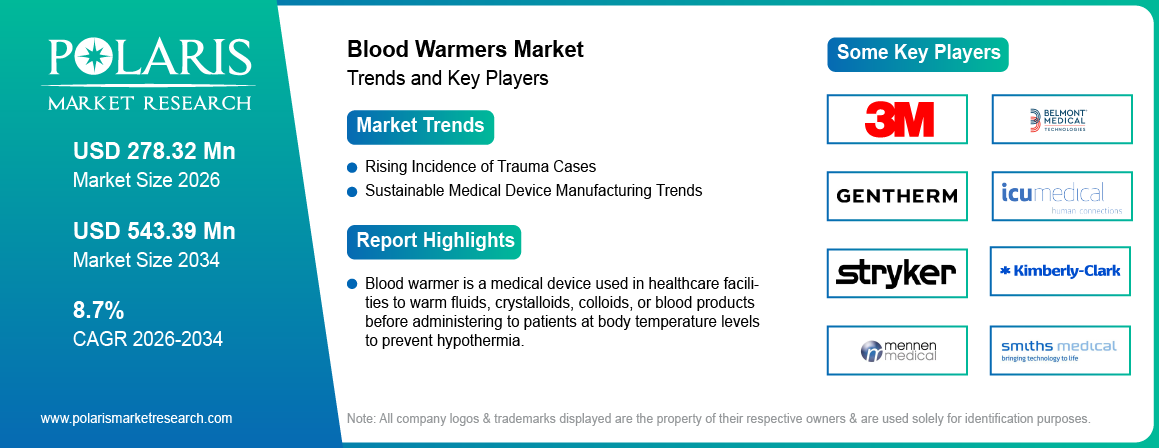
Medical device companies are now prioritizing sustainability by creating energy-saving systems, using reusable parts, and implementing green healthcare technology solutions. Increasing concern about the environmental effects of healthcare services has prompted more firms to minimize the use of materials, maximize manufacturing efficiency, and embrace eco-friendly manufacturing processes. In relation to blood IV warmers, one prevailing trend among manufacturers is to create smaller, energy-efficient devices with reusable components and extended lifetimes. Indeed, the health care sector is increasingly interested in purchasing medical equipment that saves energy and reduces costs without compromising patient care.
Source: Polaris Market Research Analysis
Blood Warmers Market Segment Analysis
Blood Warmers Market Assessment by Product Insights
The global blood warmers market segmentation, based on product, includes portable blood/IV warmer device and non-portable blood/IV warmers. Non-portable blood warmers dominated the product type segment in 2025 due to factors such as being early entrants in the market, increased adoption in health, and strong partnerships with end-users.
The portable blood warmer segment is also expected to have the fastest market growth during the forecasted period due to the increased demand for these devices from defense, paramedic, ambulatory, and rescue services. Additionally, there is a growing need for healthcare in remote clinics and emergency units, which is likely to drive growth in this segment of the market. This portable device ensures rapid blood and IV fluid warming, which is crucial for improving outcomes in critical military operations worldwide. For instance, in April 2021, Belmont Medical Technologies secured a contract with the US Defense Logistics Agency to supply blood infusers and related products.
Blood Warmers Market Evaluation by End Use Insights
The global blood warmers market segmentation, based on end use, includes hospitals/clinics, ambulatory services, defense forces, and rescue forces. Hospitals/clinics segment dominated the market in 2025 due to the rising global surgical rate, which boosts the demand for blood warmers. These warmers play a vital role in preventing hypothermia, and their effectiveness, affordability, and ease of maintenance make them indispensable in healthcare settings. For instance, QinFlow's partnership with Premier, Inc. provides blood warmers that are cost-effective and high-performance to hospitals and clinics. This agreement effectively enhances critical care by addressing supply gaps and ensuring efficient warming in emergency and intensive care settings.
The ambulatory services segment is also expected to experience significant growth during the forecast period due to the increased procurement of blood warmers by government agencies worldwide. This strategic investment aims to enhance emergency medical care capabilities, which will contribute to the overall growth of the ambulatory segment. For instance, in March 2021, the medical technology firm MEQU was granted a contract to supply portable blood warmers to Norway's National Air Ambulance Services. Given the critical nature of air ambulance operations, having solutions for pre-warming patients is essential. As a result, including blood warmers in ambulance equipment is becoming a standard practice. These initiatives are expected to lead to increased demand within the segment.
Source: Polaris Market Research Analysis
Blood Warmers Market Share Regional Insights
By region, the study provides blood warmers market insights into North America, Europe, Asia Pacific, Latin America, and the Middle East & Africa. The market in North America was dominated in 2025, driven by a combination of technological advancements, substantial government investments, and increasing demand from military and emergency services. Government initiatives in the US and Canada have provided funding for the development of innovative medical technologies, including blood warmers, to improve patient care and emergency response. For instance, in 2020, the Combat Readiness Medical Research Program (CRRP), in collaboration with the US Army Institute of Surgical Research (USAISR) and MaxQ Research, LLC, developed the MaxExo blood warmer. This innovative device uses a chemical reaction to safely and rapidly warm reconstituted freeze-dried plasma at trauma sites. Designed to be smaller, easier to use, and more robust, the MaxExo blood warmer operates without electricity, making it highly suitable for use in emergency and battlefield settings.
Robust defense budgets and a focus on improving military and emergency healthcare systems in cold regions with harsh winter conditions have also boosted the demand for blood warmers. In these areas, maintaining blood products at optimal temperatures during transport and transfusion is crucial, as cold temperatures can affect blood viability. Consequently, blood warmers play a vital role in ensuring safe and effective transfusions in emergency medical situations.
Source: Polaris Market Research Analysis
Asia Pacific is expected to experience significant growth in the blood warmers market, driven by a large elderly patient population and a rising demand for advanced, cost-efficient healthcare solutions. For instance, according to WHO, in September 2023, the growing elderly population and high incidence of chronic diseases are primary factors, with non-communicable diseases responsible for 74% of all deaths in the region, highlighting the need for effective blood warming technologies in healthcare settings across the region. Furthermore, the growing incidence of surgeries and accidental injuries is anticipated to further accelerate blood warmers market expansion.
Blood Warmers Market- Competitive Analysis Report
The competitive landscape of the blood warmers industry features global leaders and regional players striving to gain market share through innovation, strategic partnerships, and regional expansion. Major companies such as Smiths Medical, 3M, GE Healthcare, and Stryker leverage their strong R&D capabilities and broad distribution networks to offer advanced blood warming technologies for use in military, emergency, and clinical settings. Market trends indicate a rising demand for portable and energy-efficient devices, with innovations such as battery-operated or chemically activated blood warmers gaining traction for use in remote and battlefield environments. The market statistics show that the blood warmers market is poised for growth, driven by the increasing need for rapid and safe blood transfusions in trauma care and surgical procedures. Regional companies are focusing on localized demands, particularly in emerging economies, by providing cost-effective solutions tailored to unique operational challenges. Competitive strategies include collaborations with military organizations, the development of lightweight and portable technologies, and mergers and acquisitions to expand product portfolios, emphasizing the critical role of innovation and adaptability in this evolving market. A few major players in the blood warmers market include Stryker Corporation, Gentherm Medical, Belmont Medical, Kimberly-Clark, 3M, Mennen Medical, Smith’s Medical, ICU Medical, Vyaire Medical, Inc., The Surgical Company PTM, Life Warmer, MEQU
3M Company, originally founded in 1902 as Minnesota Mining and Manufacturing Company, is a diversified technology and science corporation headquartered in St. Paul, Minnesota. The company has operations in over 70 countries and sales in approximately 200 countries. 3M business operates in various industries, including industrial, safety, healthcare, and consumer markets. The company’s portfolio features more than 60,000 products categorized into key business segments. The Safety & Industrial segment offers personal protective equipment, adhesives, abrasives, and tapes for industries such as automotive and construction. In the transportation & electronics segment, 3M provides solutions for automotive OEMs and electronic components. The health care segment focuses on medical supplies, dental products, and health information systems for hospitals and clinics. Meanwhile, the consumer segment includes home improvement items, office supplies, and consumer health products. 3M operates manufacturing facilities across various regions, including North America, and significant operations in Asia Pacific, particularly in India and China. The company also maintains a robust presence throughout Europe.
Belmont Medical Technologies specializes in fluid and patient temperature management solutions. Known for devices such as the Belmont Rapid Infuser and Buddy Lite Warmer, Belmont serves critical care globally. Their dedication to innovation drives their mission of saving lives together. In April 2021, Belmont Medical Technologies secured a contract with the US Defense Logistics Agency to supply blood infusers and related products.
Key Companies in Blood Warmers Market
- 3M
- Belmont Medical
- Gentherm Medical
- ICU Medical
- Stryker Corporation
- Kimberly-Clark
- Mennen Medical
- Smith's Medical
- Life Warmer
- MEQU
- Niscomed
- Keewell Technologies
- REMI
Blood Warmers Market Developments
February 2026: TSC Life announced the U.S. FDA cleared its Fluido Compact Fluid Warming System for pediatric use. The company stated that the indication will enable it to market the system to healthcare facilities specifically for pediatric patients in the U.S. and Canada. (source: tsc-life.com)
Blood Warmers Market Segmentation
By Product Outlook (Revenue, USD Million, 2021–2034)
- Portable Blood/IV Warmer Device
- Non-portable Blood/IV Warmers
By Application Outlook (Revenue, USD Million, 2021–2034)
- Surgery
- Acute Care
- New Born Care
- Homecare
- Others
By End Use Outlook (Revenue, USD Million, 2021–2034)
- Hospitals/Clinics
- Ambulatory Services
- Defense Forces
- Rescue Forces
By Regional Outlook (Revenue, USD Million, 2021–2034)
- North America
- US
- Canada
- Europe
- Germany
- France
- UK
- Italy
- Spain
- Netherlands
- Russia
- Rest of Europe
- Asia Pacific
- China
- Japan
- India
- Malaysia
- South Korea
- Indonesia
- Australia
- Vietnam
- Rest of Asia Pacific
- Middle East & Africa
- Saudi Arabia
- UAE
- Israel
- South Africa
- Rest of the Middle East & Africa
- Latin America
- Mexico
- Brazil
- Argentina
- Rest of Latin America
Blood Warmers Report Scope
| Report Attributes | Details |
| Market Size Value in 2025 | USD 256.23 Million |
| Market Size Value in 2026 | USD 278.32 Million |
| Revenue Forecast in 2034 | USD 543.39 Million |
| CAGR | 8.7% from 2026 – 2034 |
| Base Year | 2025 |
| Historical Data | 2021 – 2024 |
| Forecast Period | 2026 – 2034 |
| Quantitative Units | Revenue in USD Million and CAGR from 2026 to 2034 |
| Report Coverage | Revenue Forecast, Market Competitive Landscape, Growth Factors, and Industry Trends |
| Segments Covered |
|
| Regional Scope |
|
| Competitive Landscape |
|
| Report Format |
|
| Customization | Report customization as per your requirements with respect to countries, regions, and segmentation. |
Source: Polaris Market Research Analysis
Blood Warmers Market FAQ's
The global blood warmers market size was valued at USD 256.23 million in 2025 and is projected to grow to USD 543.39 million by 2034.
The global market is projected to grow at a CAGR of 8.7% during the forecast period, 2026-2034.
North America held the largest blood warmers market share, at 40.7% in 2025, driven by technological advancements and rising government investments.
The key players in the market are Stryker Corporation, Gentherm Medical, Belmont Medical, Kimberly-Clark, 3M, Mennen Medical, Smith’s Medical, ICU Medical, Vyaire Medical, Inc., The Surgical Company PTM, Life Warmer, and MEQU
Non-portable blood warmers dominated the blood warmers market by product type, holding a 63.5% share in 2025, owing to increased adoption in healthcare settings.
Ambulatory services is the end-use segment expected to have significant blood warmers market growth, at a 9.6% CAGR, driven by increased procurement of blood warmers by government agencies globally.
Download Sample Report of Blood Warmers Market
Please fill out the form to request a customized copy of the research report.


