
Caprylyl Glycol Market Size, Share & Growth Report, 2026-2034
REPORT DETAILS
What is Caprylyl Glycol Market Size?
Caprylyl glycol market size was valued at USD 1.74 billion in 2025 and is anticipated to exhibit the CAGR of 6.4% during the forecast period. The growth is driven by increase in the demand for skincare products, rise in popularity of bio-based cosmetics, and advancement in the product formulation.
Market Statistics
Key Takeaways
-
The skincare products segment accounted for the largest caprylyl glycol market share in 2025, representing approximately 46.82% of total revenue, driven by increasing demand for multifunctional cosmetic ingredients that provide moisturizing, antimicrobial, and preservative-boosting properties.
-
The personal care & cosmetics segment accounted for the largest revenue share of 68.47% in 2025, owing to the extensive use of caprylyl glycol in skincare, haircare, color cosmetics, sunscreens, and premium beauty formulations.
-
North America dominated the caprylyl glycol market in 2025, capturing approximately 35.91% of global revenue, supported by a mature cosmetics industry, strong consumer spending on personal care products, and growing demand for clean-label and multifunctional ingredients.
-
Asia Pacific witnessed the fastest growth in the caprylyl glycol market and is projected to register a CAGR of 8.76% during the forecast period, driven by expanding beauty and personal care industries, rising disposable incomes, increasing skincare awareness, and growing cosmetics manufacturing activities across China, India, South Korea, and Southeast Asia.
The caprylyl glycol market growth is driven by the expanding usage in numerous industries such as pharmaceuticals, cosmetics, and personal care. Caprylyl glycol also provides emollient, antimicrobial properties, and moisturizing. The increasing awareness related to grooming and personal hygiene is driving the growth of the market.
Source: Polaris Market Research Analysis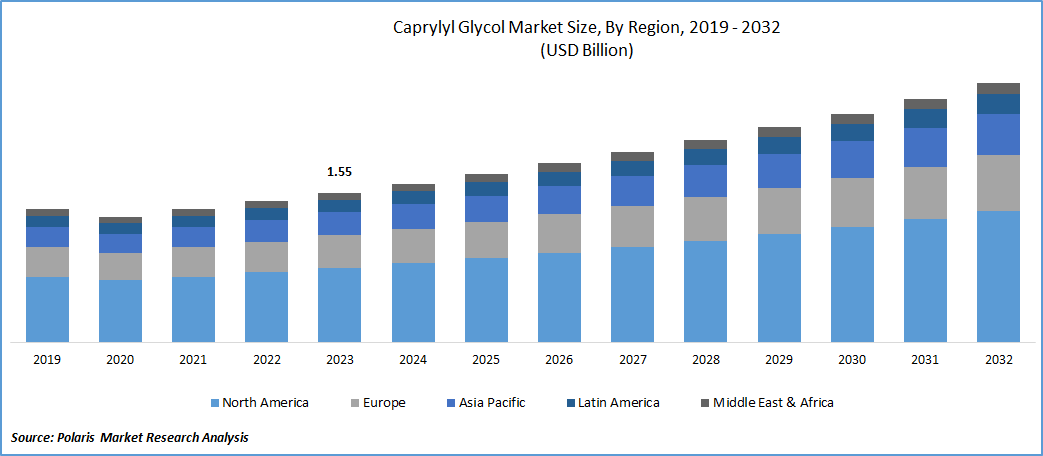
To Understand More About this Research: Download Sample Report
Caprylyl glycol is a liquid additive commonly used in pharmaceutical, cosmetics, and personal care products. It comes from caprylic acid, a fatty acid found in palm oil, coconut oil, and certain animal fats, and is classified as an alcohol. Caprylyl glycol is a versatile component used primarily for preservation and stabilization in cosmetics and personal care products. It also has emollient properties, which help to keep the skin hydrated and soft.
The presence of a diverse range of brands and products on the market, such as shower and bath essentials oral hygiene items, beard maintenance products, and oral hygiene items, is driving the growth of the market. As a result, the surge in demand is increasing the use of ingredients in hygiene product manufacturing processes.
Caprylyl glycol plays an important role in the pharmaceutical industry, where it is used as a component in ointment bases, drug delivery carriers in suppositories, capsule and tablet binders, and liquid prescription formulations. It also plays an important role in various veterinary drug preparations. Leather, plastics, resins, paper, ceramics, glass, rubber, petroleum, and metal industries all benefit from caprylyl glycol's versatility in a variety of applications.
Caprylyl glycol plays a versatile role in the personal care industry, commonly incorporated into formulations like lotions, creams, serums, cleansers, shampoos, and conditioners. Recognized for its moisturizing capabilities, it effectively draws and locks in moisture for a more supple and smoother texture in both skin and hair. Additionally, caprylyl glycol serves as a stabilizing agent, elevating the efficiency and lifespan of formulations by impeding the proliferation of microorganisms. Often combined with other preservatives, it produces a synergistic effect, enabling the use of lower amounts of traditional preservatives while preserving the overall integrity of the product.
Caprylyl glycol, also known as 1,2-Octanediol, is a versatile compound widely used in the chemical industry as a key intermediate owing to its diverse range of properties and applications. This colorless liquid, with a subtle aroma, dissolves in water and the majority of organic solvents. Caprylyl glycol has recently gained popularity due to its multifaceted properties and ability to improve the efficacy of a variety of products.
Caprylyl glycol can kill or inhibit the growth of microorganisms such as bacteria, viruses, protozoans, and fungi. This property makes it an important component in cosmetic and personal care products, as well as pharmaceutical formulations. Caprylyl glycol, a common preservative in cosmetic and personal care products, plays an important role in extending their shelf life while also ensuring their safety and effectiveness.
The COVID-19 pandemic has had a significant negative impact on the caprylyl glycol market. With widespread lockdowns, supply chain disruptions, and reduced consumer spending on non-essential products, demand for cosmetic and personal care items decreased during the pandemic's early stages. This, in turn, affected the caprylyl glycol market development, as manufacturers reduced production in response to lower demand. As the global economy gradually recovers, the caprylyl glycol market is expected to rebound. Still, the pace of recovery may vary across regions depending on the ongoing impact of the pandemic and related economic factors.
Source: Polaris Market Research Analysis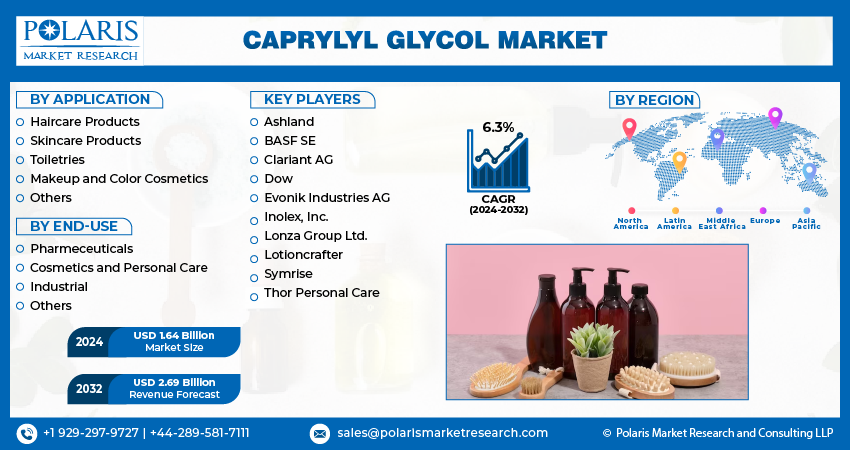
Market Dynamics
Market Drivers
The Increasing Demand for the Skincare Products Is Driving the Growth of the Market
The rising demand for skincare products is driving caprylyl glycol market growth. As people prioritize their skincare routines and overall well-being, the demand for effective and safe ingredients has increased. Caprylyl glycol, known for its multifunctional properties as a moisturizing and antimicrobial preservative, has become a popular ingredient in many skincare formulations. Its ability to enhance the texture of products while increasing their shelf life makes it a popular choice among cosmetic manufacturers. With an emphasis on self-care and a growing awareness of the importance of skincare, the market for caprylyl glycol is on the rise, fueled by an ever-expanding range of skincare products catering to a variety of consumer needs. As the beauty and personal care industries evolve, the market is poised for long-term growth, meeting the needs of a growing skincare-conscious consumer base.
The Increasing Popularity of Natural Cosmetics Facilitating the Growth of the Market
The surging popularity of natural cosmetics is driving the growth of the market. Consumers are becoming more aware of the potential long-term effects of synthetic chemicals on their skin and the environment, which is driving their preference for natural alternatives. Natural cosmetics with caprylyl glycol as a key ingredient are gaining popularity due to their perceived health benefits and sustainability. This shift in consumer behavior reflects a broader trend toward cleaner and greener beauty options, indicating a need for cosmetic formulations that prioritize efficacy and environmental consciousness. As the natural cosmetics market grows, caprylyl glycol will play an important role in meeting the changing expectations of discerning consumers looking for a harmonious blend of skincare efficacy and natural goodness.
Market Restraints
High Cost Associated with the Natural Ingredients Hampering on the Growth of the Market
The huge cost of natural ingredients hindering the growth of the market. The sourcing and extraction of these natural components has become more expensive, raising overall production costs. This increase in expenses not only affects manufacturers' profit margins but also results in higher prices for end consumers. As a result, the market's growth is declining as businesses find it difficult to balance product quality and affordability.
Market participants are compelled to investigate alternative solutions and innovations to mitigate the impact of the high cost of natural ingredients on both production and consumer access. Addressing these challenges is critical to the market's continued growth and relevance in the cosmetics and personal care industries.
Key Trends in Caprylyl Glycol
| Trend | Description | Technical / application focus | Examples from Practice |
| Bio‑based, “green” caprylyl glycol | Launch of 100% bio‑based caprylyl glycol grades derived from natural feedstocks to meet clean‑beauty and sustainability demands. | Providing identical multifunctional performance (humectant, emollient, antimicrobial booster) with renewable carbon content for eco‑designed formulations. | Seqens’ AdvensProtect 8 Green is a fully bio‑based caprylyl glycol positioned as a sustainable multifunctional cosmetic ingredient. Industry overviews list caprylyl glycol as a popular natural‑leaning preservative booster. |
| Multifunctional humectant/emollient and preservative booster | Widely adopted as 1,2‑octanediol humectant that also provides mild antimicrobial activity and boosts traditional preservatives by improving their partitioning and solubility. | Allows lower levels of parabens/phenoxyethanol while maintaining preservation, and contributes to skin conditioning and wetting in creams, lotions, and serums. | Technical review shows caprylyl glycol’s C8 chain disrupts microbial membranes and acts as a cosolvent to enhance paraben/phenoxyethanol efficacy, enabling reduced use levels. Supplier data describe it as a “preservative‑free” preservation alternative and multifunctional emollient/wetting agent. |
| Synergistic antimicrobial combinations and mechanism clarification | Research on 1,2‑alkanediols confirms membrane‑disruption as primary antimicrobial mechanism, and documents synergy with other boosters and preservatives (e.g., ethylhexylglycerin, phenoxyethanol). | Designing lower‑dose, broad‑spectrum preservation where caprylyl glycol reduces water activity and enhances membrane permeabilization for partner actives. | USP24‑NF19‑based tests show caprylyl glycol at 0.5% inhibits S. aureus, E. coli, P. aeruginosa, C. albicans within 1 day and A. niger within 28 days, with further synergy in 1:3 blends with ethylhexylglycerin. Mechanism reviews describe straight‑chain 1,2‑alkanediols acting via membrane disruption, with C8 (caprylyl glycol) near optimum. |
| Replacement of conventional preservatives in sensitive‑skin and baby formulations | Regulatory and consumer pressure to minimize parabens, formaldehyde donors, and isothiazolinones drives use of caprylyl glycol–based systems as milder alternatives. | Providing preservation plus moisturization in leave‑on skincare, baby products, sunscreens, and “dermatologist‑tested” lines targeted at reactive skin. | A 2024 analysis on trends in replacing conventional preservatives in cosmetics highlights multifunctional ingredients like 1,2‑alkanediols (including caprylyl glycol) as key replacements in sensitive‑skin products. Industry guidance lists caprylyl glycol as a top “natural booster” used alongside phenoxyethanol in modern systems. |
Source: Polaris Market Research Analysis
Report Segmentation
The market is primarily segmented based on application, end-use, and region.
| By Application | By End-Use | By Region |
|
|
|
Source: Polaris Market Research Analysis
To Understand the Scope of this Report: Request Customization
Market Segmental Analysis
By Application Analysis
The skincare products segment accounted for the largest caprylyl glycol market share in 2025. Rising consumer interest in a variety of skincare products, such as creams, lotions, peels, and face masks, is driving demand for skincare products. Cosmetic preservatives are essential for extending product shelf life, providing hydration, and protecting against UV rays, dirt, and humidity. The increasing consumer awareness of the harmful effects of ultraviolet radiation, which can cause a variety of acute and chronic illnesses as well as dermatological health concerns, is a key driver of caprylyl glycol market growth.
By End-Use Analysis
Based on end-use analysis, the market has been segmented on the basis of pharmaceuticals, cosmetics and personal care, industrial, and others. The personal care & cosmetics segment accounted for the largest revenue share in the market. Caprylyl glycol is a versatile ingredient, serving as a humectant, emollient, and skin conditioning agent, delivering numerous advantages across a range of skincare and haircare formulations. Its widespread application as a preservative enhancer, emollient, and hydrating agent is attributable to its remarkable skin compatibility and antimicrobial attributes.
Source: Polaris Market Research Analysis
Regional Insights
North America Dominated the Market with Largest Revenue Share in 2025
North America dominated the caprylyl glycol market. Humectants, emollients, and preservatives are used in personal care and cosmetic products in North America, which has led to their widespread adoption. These ingredients play an important role in preserving moisture, improving texture, and extending the shelf life of products. Furthermore, in North America's vast pharmaceutical industry, these ingredients are used in a variety of products, including ointments, capsules, tablets, and liquid medications.
In North America, the increasing preference of consumers towards natural and organic personal care items is fueling a surge in caprylyl glycol market demand. Manufacturers are proactively formulating products devoid of harmful chemicals. Caprylyl glycol, recognized for its safety and effectiveness, is gaining traction in line with this preference. Additionally, there is a growing demand for disinfectant wipes and spray in the region, particularly in the initial phases of the COVID-19 pandemic, where antimicrobial features are valued.
Asia Pacific has witnessed the fastest growth in the caprylyl glycol market due to increasing disposable income and changing lifestyles. The demand for organic and natural cosmetics is on the rise, which creates a substantial opportunity for the caprylyl glycol market manufacturers. Also, the region has a large population, which drives the demand for personal care and cosmetic products.
Source: Polaris Market Research Analysis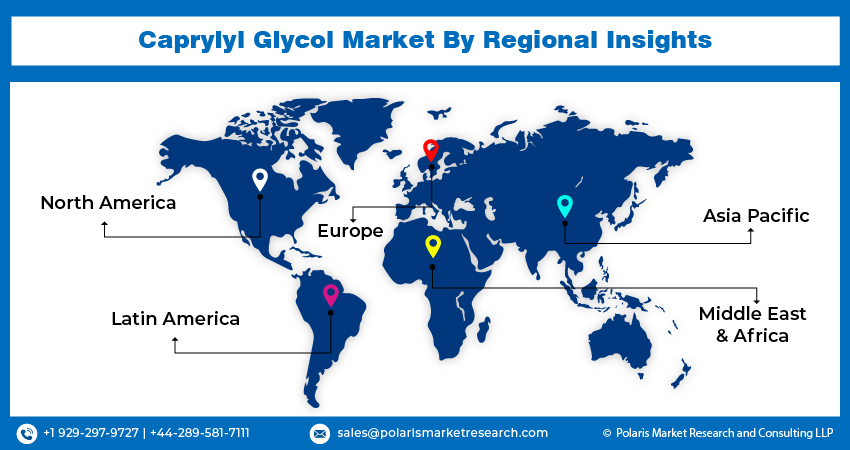
Competitive Landscape
The market is characterized by intense competition, with established players relying on advanced technology, high-quality products, and a strong brand image to drive revenue growth. These companies employ various strategies such as research and development, mergers and acquisitions, and technological innovations to expand their product portfolios and maintain a competitive edge in the market.
Some of the major players operating in the global market include:
- Ashland
- BASF SE
- Clariant AG
- Dow
- Evonik Industries AG
- Inolex, Inc.
- Lonza Group Ltd.
- Lotioncrafter
- Symrise
- Thor Personal Care
Recent Developments
- January 2025, SEQENS Personal Care launched AdvensProtect 8 Green, a 100% biobased caprylyl glycol, expanding its sustainable ingredient portfolio for makeup, skin, and hair care products while enhancing preservation, moisturizing performance, and formulation versatility across a wide range of personal care applications.
Report Coverage
The Caprylyl Glycol Market report emphasizes on key regions across the globe to provide better understanding of the product to the users. Also, the report provides market insights into recent developments, trends and analyzes the technologies that are gaining traction around the globe. Furthermore, the report covers in-depth qualitative analysis pertaining to various paradigm shifts associated with the transformation of these solutions.
The report provides detailed analysis of the market while focusing on various key aspects such as competitive analysis, application, end-use, and their futuristic growth opportunities.
Caprylyl Glycol Market Report Scope
| Report Attributes | Details |
| Market size in 2025 | USD 1.74 billion |
| Market size in 2026 | USD 1.85 billion |
| Revenue forecast in 2034 | USD 3.05 billion |
| CAGR | 6.4% from 2026 – 2034 |
| Base year | 2025 |
| Historical data | 2021 – 2024 |
| Forecast period | 2026 – 2034 |
| Quantitative units | Revenue in USD billion and CAGR from 2026 to 2034 |
| Segments Covered | By Application, By End-Use, By Region |
| Regional scope | North America, Europe, Asia Pacific, Latin America, Middle East & Africa |
| Customization | Report customization as per your requirements with respect to countries, region, and segmentation |
Source: Polaris Market Research Analysis
Caprylyl Glycol Market FAQ's
The caprylyl glycol market size is expected to reach USD 3.05 Billion by 2034
Ashland, BASF SE, Clariant AG, Dow, Evonik Industries AG, Inolex, Inc. are the top market players in the market
North America region contribute notably towards the global Caprylyl Glycol Market
Caprylyl glycol market is exhibiting the CAGR of 6.4% during the forecast period
The Caprylyl Glycol Market report covering key segments are application, end-use, and region
Download Sample Report of Caprylyl Glycol Market
Please fill out the form to request a customized copy of the research report.


