
Cell & Gene Therapy Bioanalytical Testing Services Market Size, Share & Industry Report, 2026 - 2034
REPORT DETAILS
Cell and Gene Therapy Bioanalytical Testing Services Market Size and Growth Overview
The global cell & gene therapy bioanalytical testing services market size was valued at USD 579.30 million in 2025. The market is anticipated to grow at a CAGR of 7.30% during 2026–2034. Surging research investments and a robust clinical pipeline for rare and chronic diseases are a few of the key factors driving market growth.
Market Statistics
Cell and Gene Therapy Bioanalytical Testing Services Market Key Takeaways
• Asia Pacific held the largest share of 43.0% in the global cell & gene therapy bioanalytical testing services market in 2025. The dominance is attributed to the increasing prevalence of chronic health conditions across the world.
• China led the Asia Pacific market with 42.0% revenue share in 2025. The market growth in China is fueled by increasing focus on R&D and surging demand for effective healthcare and specialty care.
• The market in Europe is expected to register a substantial CAGR of 7.2% during the forecast period. Support from government and nongovernment organizations for advancements in cell and gene therapies propels the regional market growth.
• The bioavailability and bioequivalence studies segment is expected to exhibit a significant CAGR of 34.0% during the forecast period. This is due to the growing drug development activities and increasing imposition of stringent biopharmaceutical regulations.
• The cell therapy segment held the largest revenue share of 7.3% in 2025. The increasing development of cell therapies is propelling the demand for bioanalytical testing services.
Note: Figures and projections outlined in this report are the result of Polaris Market Research’s proprietary analytical processes, grounded in the latest available datasets and market observations.
What Are Cell and Gene Therapy Bioanalytical Testing Services?
Cell and gene therapy bioanalytical testing services are specialized laboratory testing services that help in characterizing and analyzing advanced therapies for their identification, purity, potency, safety, biological activity, and persistence. The tests performed based on the therapy’s nature and the phase of development include but are not limited to flow cytometry, quantitative or digital PCR, next-generation sequencing, kinetic analysis of cells, immunogenicity, biodistribution, vector shedding, transgene expression, biomarker testing, replication-competent virus testing, and validated potency testing.
How Does Cell and Gene Therapy Bioanalytical Testing Work?
- Sample Collection: The biological samples, which include blood, tissue, plasma, or serum, are obtained from preclinical trials or clinical trial patients.
- Laboratory Testing: Highly advanced testing methodologies are used to recognize the therapeutic cells, gene vectors, biomarkers, and other biological agents.
- Biomarker Testing: Biomarkers are tested for the analysis of the effects and safety of the treatment, along with the potency and biological activity.
- Pharmacokinetic Testing: Specialists test the treatment's effect on cellular kinetics, vector biodistribution, transgene persistence, shedding, immunogenicity and exposure-response relationships.
- Data Interpretation: Data from the tests is analyzed for evaluating the efficiency of the treatment and potential concerns of safety.
- Regulatory Reporting: Data validation is performed for report generation to comply with the needs of regulatory agencies and to facilitate product filings.
- Clinical Trial Validation: The results of the bioanalytical process are used to validate clinical trials.
Ongoing developments of new cell and gene therapies are creating favorable market conditions for bioanalytical testing services. For instance, in November 2025, the U.S. FDA approved Itvisma (onasemnogene abeparvovec-brve) for the treatment of spinal muscular atrophy (SMA). The regulatory authority stated that Itvisma has been approved for adult and pediatric patients 2 years of age and older who have a confirmed mutation in the survival motor neuron 1 (SMN1) gene. Itvisma is an adeno-associated virus (AAV) vector-based gene therapy (source: fda.gov).
Cell and Gene Therapy Bioanalytical Testing Use Cases
- Testing of cancer immunotherapy: Its role is to analyze the safety, effectiveness, and immune response of CAR-T cell therapy, T cell receptor therapy (TCR), and other cellular therapeutic products in the development stage.
- Gene therapy for rare genetic disorders: During this study, both the gene expression and the functionality of the vectors are analyzed for the purposes of developing therapies for diseases with an inherited mechanism.
- Cell-Based Regenerative Medicine Trials: The study of the cells for the identification of their effectiveness and for evaluation of safety of or cellular products.
- Vaccine Development Support Studies: This method helps evaluate the immune reactivity and effectiveness of the vaccine candidates based on viral vectors and nucleotides.
The rising prevalence of chronic diseases, such as cancer, which lack permanent cures, is significantly driving the demand for advanced cell and gene therapies, as well as intensifying research in this domain. Furthermore, the implementation of increasingly stringent government safety guidelines is compelling researchers to develop high-efficacy, safer cell and gene therapies. These dynamics are collectively contributing to the robust growth of the global cell and gene therapy bioanalytical testing services market.
For instance, in June 2026, the U.S. FDA issued draft guidance to assist applicants, manufacturers, and other stakeholders in developing human gene therapy (GT) products. The draft guidance is for GT products that involve ex-vivo and in vivo genome editing (GE) of human somatic cells (GE products). According to the U.S. FDA, the draft reflects the regulatory authority’s current thinking on the type of prior knowledge that may be scientifically appropriate to use for advancing product development (source: fda.gov).
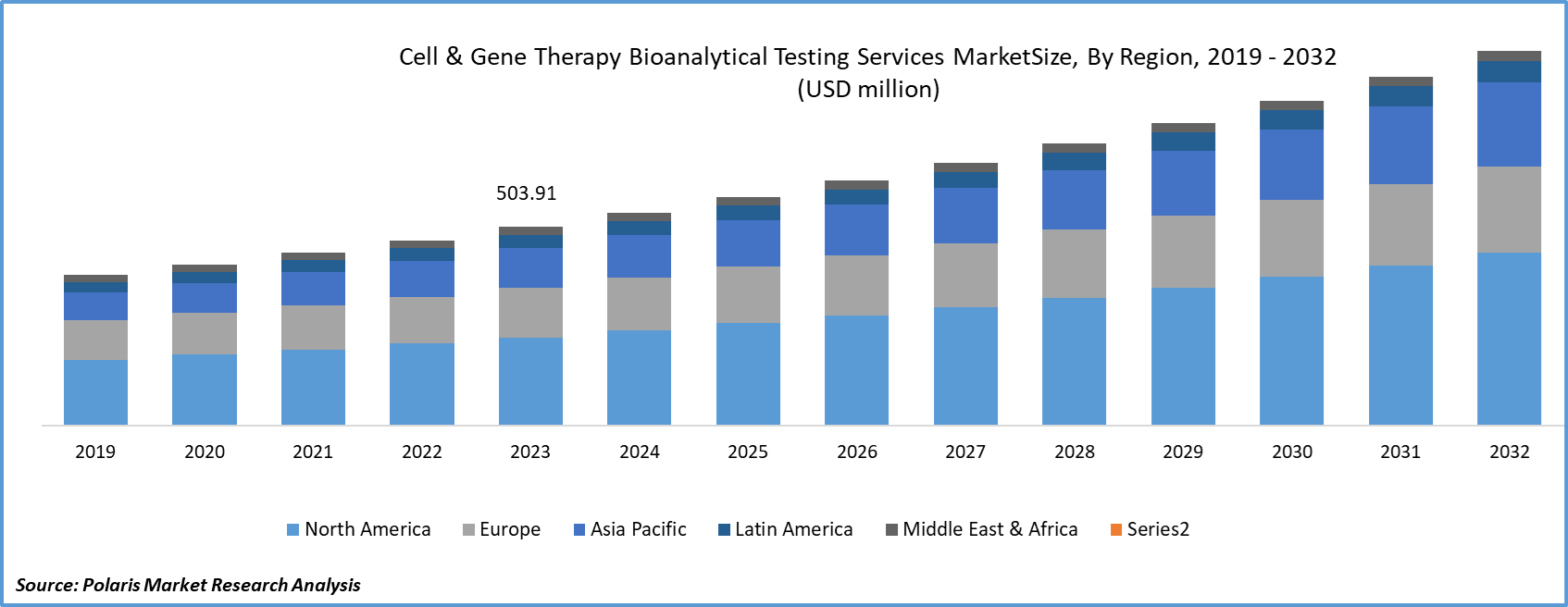
Source: Polaris Market Research Analysis
To Understand More About this Research:Download Sample Report
Market Drivers, Restraints and Opportunities
Growth Drivers
Rising Cell and Gene Therapy R&D Investment Increases Demand for Bioanalytical Testing
The rising global demand for cell and gene therapies is driving substantial investments in development activities, thereby increasing the need for bioanalytical testing solutions in this sector. For instance, in February 2026, Johnson & Johnson announced a more than $1 billion investment in a next generation cell therapy manufacturing facility in Montgomery County, Pennsylvania. The company stated that the facility will expand its U.S. footprint. It will leverage the company’s advanced cell therapy technologies to help deliver its portfolio of transformational medicines (source: jnj.com). This trend is expected to significantly boost the demand for bioanalytical testing services during the forecast period. Furthermore, the growing demand for effective healthcare and specialty care is fueling innovation in cell and gene therapies, prompting market players to expand into bioanalytical testing services. For instance, in August 2025, Walgreens Specialty Pharmacy received its first Gene and Cell Services accreditation, ACHC Specialty Pharmacy Accreditation from ACHC. In addition, Walgreens Central Specialty Pharmacy received its first infusion nursing services and infusion pharmacy services accreditations (source: walgreens.com).
Expanding Cell and Gene Therapy Pipelines Drive Outsourced Bioanalytical Testing
The potential for lasting, focused clinical improvement is driving research efforts, although safety surveillance, long-term tracking, and product-specific risks continue to be major aspects of development. Ongoing research collaborations to enhance cell and gene therapy capabilities create demand for bioanalytical testing services. Scientists initiated a milestone clinical trial in June 2025 in which CRISPR-Cas9 technology will be used for editing HLA genes in human kidneys obtained from donors. The objective of the trial is to use HLA gene editing to avoid immune rejection of transplanted organs (source: clinicaltrials.gov). Thus, expanding cell and gene therapy pipelines are driving the demand for outsourced bioanalytical testing. The rising prevalence of deadly diseases is forcing researchers to conduct cell and gene research. In a 2025 study published in Cell Stem Cell, researchers discovered a new treatment method for polycystic kidney disease through gene editing technologies. Also, they developed a new drug, glycoside, to reduce or remove the effect of defective genes.
Market Opportunities
Personalized Medicine Expands Biomarker, Potency and Cellular-Kinetics Testing
The rising need for personalized medicine propelled the use of bioanalytical testing services related to cell and gene therapy. Personalized medicine involves medical treatments that address the specific genetics and molecular nature of each patient. Precision medicine requires sophisticated analytical techniques to assess the effects of such therapies and their potency, efficacy, and biomarker profile. Such testing allows developers to determine the efficiency of the therapy and improve the dosing regime. Thus, pharmaceutical companies, biotechnology firms, and contract research organizations increasingly invest in advanced analytical technologies to support the development of customized therapies. It is driving the growth of the bioanalytical testing services market.
Cell and Gene Therapy Bioanalytical Testing Market Challenges
Complex Regulations, Assay Validation and Skilled-Labor Shortages Restrain Growth
The huge costs of designing and producing cell and gene therapies, the lower chance of attaining high-performing therapeutics, and growing government stringent regulations are negatively impacting the market. The limited availability of skilled professionals in the biopharmaceutical sector and the need for effective healthcare infrastructure also hinder the cell & gene therapy bioanalytical testing services market growth.
Outsourcing Trends and Provider-Selection Criteria
The use of outsourced services is becoming more popular among pharmaceutical and biotechnology companies in order to obtain advanced testing capabilities, expertise, and laboratory infrastructure. It has become easier for companies engaged in developing cell and gene therapies because of the complex nature of testing and strict regulations. Outsourcing enables companies to develop cell and gene therapies without the requirement of laboratory facilities in house.
When selecting a service provider for bioanalytical testing, firms consider technical expertise, regulation, quality of the test, time taken to complete tests, and whether the service providers have experience working on cell and gene therapies. Service providers that have valid testing methods, qualified staff, good data management, and experience in submitting regulatory filings are more likely to attract customers. The ability to meet complex testing needs, data integrity, and scalability of services are becoming increasingly crucial due to increased therapy pipelines.
Cell Therapy vs. Gene Therapy Bioanalytical Testing Requirements
| Analytical Requirements | Cell Therapy | Gene Therapy |
| Identity testing | Tests to confirm the identity and properties of the therapeutic cells, which may include modified cells. | Tests to confirm the identity of the genetic materials or vector delivering the therapy. |
| Potency testing | Tests to determine if the cells possess the ability to perform the intended biological activity. | Tests to determine if the therapy possesses the capability of producing the intended biological/genetic activity. |
| Characterization of Cell and Product | Consists of identification and quantitation of different cell populations and their properties. | Consists of the evaluation of genetic materials, vectors, and other product properties. |
| Genetic testing | Tests to evaluate genetic modifications of the cells and confirm the properties of genetically modified cells. | Tests to examine genetic sequences, gene expression, and presence of the desired genetic material. |
| Biomarker testing | Tests using biomarkers to assess the treatment efficacy and safety. | Tests using genetic and molecular biomarkers to assess the treatment efficacy and safety. |
| Safety testing | Evaluation of safety issues associated with cells. | Immune reaction, distribution of therapy, and other safety issues assessment. |
Source: Polaris Market Research Analysis
Core Bioanalytical Tests: Potency, Immunogenicity, Biodistribution, Shedding and Cellular Kinetics
| Test Area | Description | Relevance |
| Potency assays | Biological effect associated with the mechanism of action | Release, stability, comparability and regulatory submission |
| Kinetics studies | Expansion, survival and trafficking of the infused cells | CAR-T cell therapies and other cellular therapies |
| Biodistribution | Distribution and survival of the vector or the gene-edited cells | Gene therapy and nonclinical safety |
| Vector shedding | Secretion of the vector into body excretions | Evaluation for environmental and patient safety |
| Immunogenicity | Response to the vector, transgene or drug | Safety, efficacy and durability |
| Molecular characterization | Vector genome copy number, integration, sequences and transgene expression | Identity, quality and mechanism |
| Biosafety tests | Sterility, mycoplasma, adventitious agents and replication competent viruses | Manufacturing and lot release |
Source: Polaris Market Research Analysis
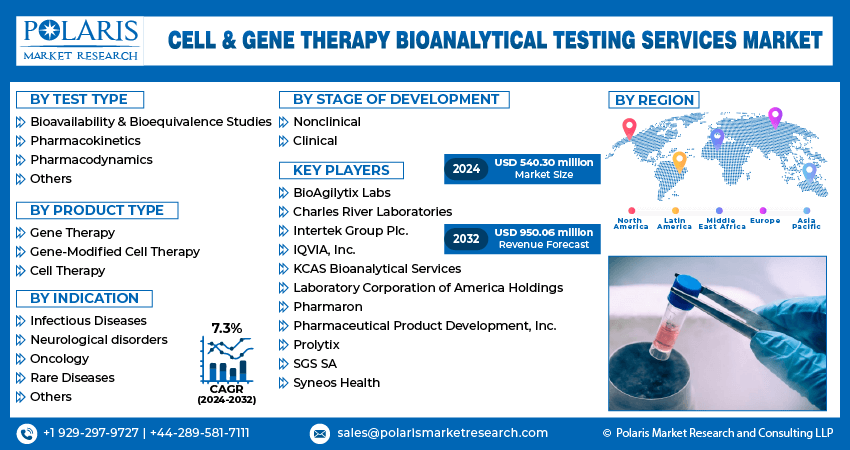
Source: Polaris Market Research Analysis
Cell and Gene Therapy Bioanalytical Testing Services Market Segmentation
The cell & gene therapy bioanalytical testing services market is segmented on the basis of test type, product type, stage of development, indication, and region.
| By Test Type | By Product Type | By Stage of Development | By Indication | By Region |
|
|
|
|
|
Source: Polaris Market Research Analysis
Cell and Gene Therapy Bioanalytical Testing Services Market by Test Type
The bioavailability & bioequivalence studies segment is projected to grow at a 34% CAGR. The segment’s rapid growth is due to rising drug development activities. Bioequivalence studies are used to monitor human body reactions and the functioning of the treatment. The rising stringent biopharmaceutical regulations are promoting the use of bioavailability and bioequivalence studies to evaluate the safety and efficiency of therapies for treating human diseases.
Cell and Gene Therapy Bioanalytical Testing Services Market by Therapy Type
The cell therapy segment accounted for a 7.3% share in 2025. and is likely to retain its market dominance during the forecast period. The rising development of cell therapies is positively impacting the demand for bioanalytical testing services. Moreover, the FDA has accelerated approvals for cell therapies, reflecting a rapidly evolving landscape driven by advancements in treating complex diseases.
Cell and Gene Therapy Bioanalytical Testing Services Market by Development Stage
The non-clinical segment led with a xx% share in 2025. The segment’s leading position is driven by the increase in the number of cell and gene therapy drug candidates being developed through initial-stage development, where bioanalytical testing is essential to determine the safety and biological profile of these therapies prior to conducting any clinical studies. Increased interest and investments in advanced therapies have also fueled the demand for bioanalytical testing during the preclinical phase. Additionally, the increased interest in determining safety profiles at the early stage is another factor contributing to the demand for advanced bioanalytical testing services. The rising complexity of cell and gene therapies is also boosting the demand for such services.
Cell and Gene Therapy Bioanalytical Testing Services Market by Indication
The oncology segment accounted for a xx% share in 2025. The segment’s dominance is due to increasing adoption of cellular and gene therapies for the treatment of cancer and the development of advanced therapies for the treatment of various cancers. The increasing number of research and development initiatives associated with cancer therapies is driving the requirement for advanced bioanalytical testing services to analyze their safety, efficacy, and biological impact. The increasing development of CAR-T therapies and other cell-based cancer therapies is driving the requirement for specialized bioanalytical testing services. Increasing investments in cancer research and evaluation of therapy efficacy at various stages of development are also driving the segment growth.
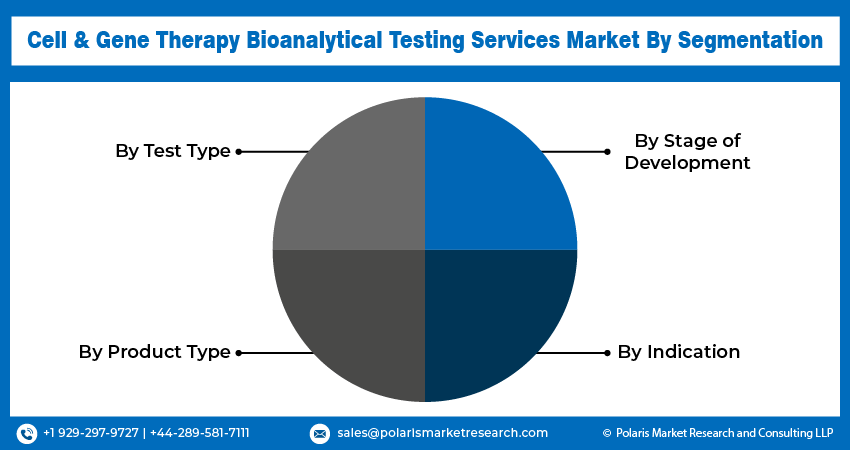
Source: Polaris Market Research Analysis
Advanced Technologies in Cell & Gene Therapy Bioanalytical Testing
| Technology | Application in Bioanalytical Testing | Key Benefit |
| LC-MS/MS (Liquid Chromatography–Mass Spectrometry) | Quantifies therapeutic molecules, metabolites, and biomarkers with high precision during pharmacokinetic and bioavailability studies. | High sensitivity, accuracy, and reliable quantitative analysis. |
| Flow Cytometry Analysis | Identifies, characterizes, and quantifies immune cells, stem cells, and engineered cell populations such as CAR-T cells. | Rapid multi-parameter cellular analysis and precise cell characterization. |
| Next-Generation Sequencing (NGS) Support | Detects genetic variants, transgene integration, vector sequences, and gene expression profiles for gene therapies. | Comprehensive genomic analysis with high throughput and accuracy. |
| Biomarker-Based Testing Platforms | Measures protein, genetic, and molecular biomarkers to evaluate therapy response, efficacy, and safety. | Enables personalized treatment assessment and early response monitoring. |
| Automated Laboratory Analytics Systems | Automates sample preparation, testing workflows, data processing, and quality control in bioanalytical laboratories. | Improves throughput, reduces manual errors, and enhances reproducibility. |
Cell and Gene Therapy Bioanalytical Testing Services Market by Region
North America Held Largest Share of Global Cell & Gene Therapy Bioanalytical Testing Services Market in 2025
North America led with a xx% share in 2025. The regional dominance can be attributed to investments made in cell and gene therapy R&D and the availability of existing pharmaceutical and biotech companies in the region. The growing number of cell and gene therapy programs has created an increased need for bioanalytical testing. There is a well-developed health and research infrastructure that can facilitate the adoption of new testing technologies. The increased utilization of contract research organizations and laboratories is also driving regional market growth.
Asia Pacific Held Largest Share of Global Cell & Gene Therapy Bioanalytical Testing Services Market in 2025
Asia Pacific is projected to witness the fastest growth at a 43% CAGR. This growth in the region is attributed to growing investments in research and development in the field of cell and gene therapy and the expanding activities of pharma and biotech companies. There are growing healthcare infrastructures and growing research capabilities in countries like China, Japan, South Korea, and India that are contributing to the growth of the market. The increasing number of cell and gene therapy programs will drive the demand for bioanalytical testing services.
Europe Held Largest Share of Global Cell & Gene Therapy Bioanalytical Testing Services Market in 2025
Europe accounted for a 7.2% market share in 2025. The regional growth is supported by increased spending in research and development efforts associated with cell and gene therapy, in addition to higher demands for bioanalytical testing services. The presence of major pharmaceutical and biotech industry players, together with advanced research centers, helps in the development of such therapies. In addition, increased clinical research efforts and higher focus on the safety and effectiveness of therapies are expected to increase the demand for bioanalytical testing services in Europe.
Regional Bioanalytical Testing Trends and Outsourcing Opportunities
| Region | Future Trend |
| North America |
|
| Europe |
|
| Asia Pacific |
|
| Latin America |
|
| Middle East & Africa |
|
Source: Polaris Market Research Analysis
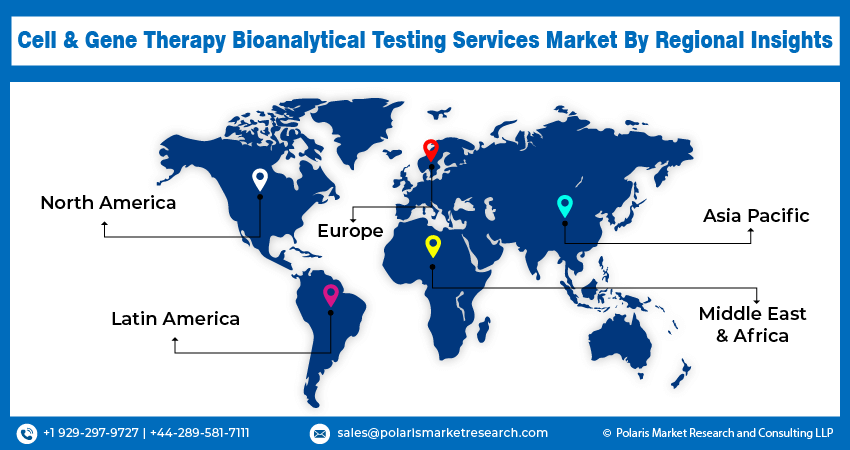
Source: Polaris Market Research Analysis
FDA and EMA Regulatory Requirements
The FDA and EMA require cell and gene therapy developers to provide extensive analytical information about their identity, safety, purity, potency and overall quality. In this case, bioanalytical testing can be one of the approaches for obtaining such data. It can be carried out during preclinical and clinical trials. Regulatory testing should be reliable, validated properly, and adequate to each particular therapy's properties.
Regulatory testing of cell therapies can include cell identity, viability, potency, genetic profile, and possible safety risks. Regarding gene therapies, developers may need to investigate such aspects as genetic content, vectors used in the therapy, gene expression, and other factors. The increasing complexity of cell and gene therapy products is driving the demand for bioanalytical testing to meet the expectations of the FDA and EMA.
| Regulatory Aspect | Impact on the Cell & Gene Therapy Bioanalytical Testing Services Market |
| FDA and EMA Guidelines Drive Testing Standards | Regulatory guidance from the U.S. FDA and the European Medicines Agency (EMA) establishes standardized requirements for bioanalytical testing, ensuring the safety, efficacy, and quality of cell and gene therapies. |
| Strict Validation Requirements for Gene Therapies | Developers must validate analytical methods for potency, identity, purity, biodistribution, immunogenicity, vector shedding, and stability to support clinical development and product approvals. |
| Increasing Global Harmonization of Clinical Testing Rules | Greater alignment of international regulatory frameworks is simplifying multinational clinical trials and promoting standardized bioanalytical testing practices across global markets. |
| Growing Demand for GLP-Compliant Testing Services | Pharmaceutical and biotechnology companies are increasingly partnering with GLP-compliant laboratories to ensure data integrity, regulatory compliance, and acceptance by global health authorities. |
Source: Polaris Market Research Analysis
Cell and Gene Therapy Bioanalytical Testing Services Competitive Landscape
Strategic Activities by Market Players to Drive Competition
The cell & gene therapy bioanalytical testing services market is fragmented and is anticipated to witness competition due to the presence of several players. The rising efforts taken by the key market players across the world in the form of investments, acquisitions, collaborations, and partnership activities are widening the expansion of global cell and gene therapy bioanalytical testing services.
| Company | Key Capabilities |
| BioAgilytix | Bioanalytical testing, pharmacokinetics, biomarkers, immunogenicity, flow cytometry, and cell-based testing. |
| Charles River Laboratories International, Inc. | Bioanalytical testing, safety testing, biomarkers, immunogenicity, molecular testing, and cell-based testing. |
| Eurofins Scientific | Bioanalytical testing, biomarkers, immunogenicity, flow cytometry, and molecular testing for cell and gene therapies. |
| Fortrea | Pharmacokinetic, pharmacodynamic, biomarker, immunogenicity, and bioanalytical testing services. |
| ICON plc | Bioanalytical testing, pharmacokinetics, pharmacodynamics, biomarkers, immunogenicity, and flow cytometry. |
| Intertek Group plc. | Bioanalytical and analytical testing, molecular testing, biomarkers, potency, safety, and product testing. |
| KCAS Bio | Pharmacokinetic, immunogenicity, biomarker, flow cytometry, molecular, and cell-based testing. |
| Labcorp Holdings Inc. (Labcorp) | Bioanalytical testing, pharmacokinetics, biomarkers, immunogenicity, flow cytometry, and molecular testing. |
| Merck KGaA (BioReliance) | Viral-vector testing, safety testing, analytical testing, release testing, and product characterization. |
| Pharmaron | Bioanalytical testing, pharmacokinetics, biomarkers, immunogenicity, molecular testing, and product testing. |
| Prolytix | Bioanalytical testing, pharmacokinetics, immunogenicity, biomarkers, potency, and vector testing. |
| SGS SA | Bioanalytical testing, pharmacokinetics, pharmacodynamics, biomarkers, immunogenicity, and cell-based testing. |
| Syneos Health | Pharmacokinetic, pharmacodynamic, biomarker, immunogenicity, and bioanalytical testing. |
| Thermo Fisher Scientific Inc. (PPD clinical research business) | Bioanalytical testing, biomarkers, molecular testing, cell-based testing, pharmacokinetics, and immunogenicity testing. |
| WuXi AppTec | Bioanalytical testing, pharmacokinetics, biomarkers, immunogenicity, molecular testing, and flow cytometry. |
Source: Polaris Market Research Analysis
Leading Cell and Gene Therapy Bioanalytical Testing Service Providers
- BioAgilytix
- Charles River Laboratories International, Inc.
- Eurofins Scientific
- Fortrea
- ICON plc
- Intertek Group plc.
- KCAS Bio
- Labcorp Holdings Inc. (Labcorp)
- Merck KGaA (BioReliance)
- Pharmaron
- Prolytix
- SGS SA
- Syneos Health
- Thermo Fisher Scientific Inc. (PPD clinical research business)
- WuXi AppTec
Cell & Gene Therapy Bioanalytical Testing Services Recent Developments in Industry
- May 2026: Merck signed a five-year agreement with Genetix Biotherapeutics to provide analytical and biosafety release testing services for its FDA-approved gene therapies. (Source: merckgroup.com)
Future Outlook
The cell & gene therapy bioanalytical testing services market is expected to experience robust growth in the coming years. The pipeline of advanced therapies continues to expand from early-stage research to commercial production. There are rising investments in cell and gene therapy development and increasing demand for personalized medicine. This will reinforce the demand for bioanalytical testing tailored to specific needs. There are continuous advancements in analytical technologies, automation, next-generation sequencing, and AI-driven analytics. They will increase the efficacy and efficiency of such testing. In addition, increased demands for compliance with stringent regulations worldwide and the use of contract research organizations for testing services will drive continued growth in this market.
What Does the Cell and Gene Therapy Bioanalytical Testing Services Report Cover?
The cell & gene therapy bioanalytical testing services market report emphasizes key regions across the globe to provide a better understanding of the product to the users. Also, the report provides market insights into recent developments and trends and analyzes the technologies that are gaining traction across the world. Furthermore, the report covers an in-depth qualitative analysis pertaining to various paradigm shifts associated with the transformation of these solutions.
The report provides a detailed analysis of the market while focusing on various key aspects such as competitive analysis, test type, therapy type, stage of development, indication, and their future growth opportunities.
Cell & Gene Therapy Bioanalytical Testing Services Market Report Scope
| Report Attributes | Details |
| Market Size Value in 2025 | USD 579.30 million |
| Market Size Value in 2026 | USD 620.75 million |
| Revenue Forecast in 2034 | USD 1091.86 million |
| CAGR | 7.30% from 2026 to 2034 |
| Base Year | 2025 |
| Historical Data | 2021–2024 |
| Forecast Period | 2026–2034 |
| Quantitative Units | Revenue in USD million and CAGR from 2026 to 2034 |
| Segments Covered |
|
| Regional Scope |
|
| Competitive Landscape |
|
| Report Format |
|
| Customization | Report customization as per your requirements with respect to countries, regions, and segmentation. |
Source: Polaris Market Research Analysis
Cell & Gene Therapy Bioanalytical Testing Services Market FAQ's
The global cell & gene therapy bioanalytical testing services market size was valued at USD 579.30 million in 2025 and is projected to grow to USD 1091.86 million by 2034.
The global market is projected to grow at a CAGR of 7.30% during the forecast period
Asia Pacific had the largest share in the global market due to the rising prevalence of chronic health conditions.
A few of the key market players include BioAgilytix; Charles River Laboratories International, Inc.; Eurofins Scientific; Fortrea; ICON plc; Intertek Group plc.; KCAS Bio; Labcorp Holdings Inc. (Labcorp); Merck KGaA (BioReliance); Pharmaron; Prolytix; SGS SA; Syneos Health; Thermo Fisher Scientific Inc. (PPD clinical research business); and WuXi AppTec.
The bioavailability & bioequivalence studies segment is projected to grow at a 34% CAGR. The segment’s rapid growth is due to rising drug development activities.
The bioavailability and bioequivalence category had the fastest share due to the rising drug development activities.
Cell and gene therapy bioanalytical testing services are adopted to evaluate the safety, efficacy, potency, pharmacokinetics, and quality of advanced therapies. They are used across preclinical studies, clinical trials, and commercialization.
Testing provides essential safety, efficacy, biodistribution, and immunogenicity data that are needed for regulatory purposes, optimizing the product, and developing the gene therapy clinically.
There are several types of tests such as flow cytometry, potency assay, biomarker testing, immunogenicity testing, and pharmacokinetic study. The other types of tests include biodistribution study and molecular characterization.
Regulatory agencies require validated testing for identity, purity, potency, safety, biodistribution, immunogenicity, vector shedding, and analytical method validation before the product is approved.
Download Sample Report of Cell & Gene Therapy Bioanalytical Testing Services Market
Please fill out the form to request a customized copy of the research report.


