
Cell Therapy Market Size, Share, Growth Analysis Report,2026-2034
REPORT DETAILS
Cell Therapy Market Summary
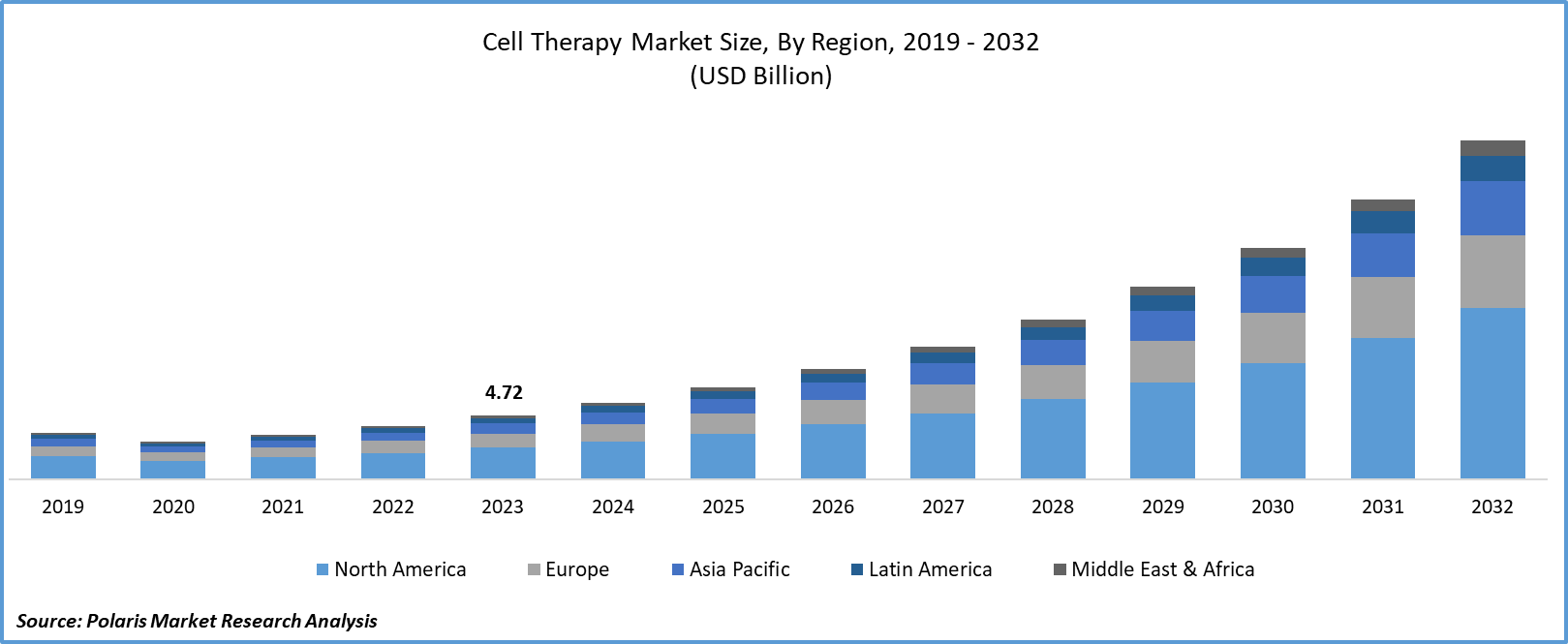
Cell therapy market size was valued at USD 6.17 billion in 2025. The market is anticipated to grow from USD 7.42 billion in 2026 to USD 32.98 billion by 2034, exhibiting a CAGR of 20.47% during the forecast period.
Market Statistics
Key Takeaways
- North America dominated the market in 2025, reaching a value of 42.6%, driven by strong clinical approvals and research collaborations.
- Asia Pacific is projected to register the fastest growth from 2026–2034, expanding at a CAGR of 22.45%. This is due to rising chronic disease burden and healthcare investments.
- Autologous therapies segment held the dominant share in 2025, accounting for a share of 59.2%. The share is supported by higher adoption in genetic and musculoskeletal treatments.
- Somatic cell technology emerged as a dominant segment in 2025, reaching a value of 31.6% owing to its growing use in immunotherapies and cancer treatment.
- Musculoskeletal application segment is expected to grow at the fastest CAGR of 19.75% in 2026–2034. This is driven by aging population and increasing disorder prevalence.
What is Cell Therapy?
Cell therapy is a treatment that uses living cells. These cells repair, replace, or regenerate damaged or diseased tissues. It is used in regenerative medicine and oncology. These therapies help restore normal body function. They are used in chronic and genetic conditions. The constant rise in funding for cell therapy clinical studies worldwide, rising adoption of regulatory guidelines for cell therapy manufacturing, and development of new cell banking facilities, are leading factors driving market’s growth. Also, rising adoption of human cells for cell therapeutics research and growing technological advancements in the field of cell therapy that led to creation of more innovated solutions, are likely to bode well for market’s growth.
- For instance, in July 2023, CDMO Excellos announced the opening of its new cell therapy production facility in San Diego, US, with aim to support the pre-clinical and commercial manufacturing of CGTs.
Moreover, the rising incidences of various chronic disorders and illnesses such as cardiovascular disease, cancer, and autoimmune diseases that led to increased demand for efficient treatment options including cell therapies. Also, regulatory authorities worldwide are willing to support the development and approval process for new innovative cell therapies, which in turn, allowing entry of new products with enhanced characteristics into the market.
- For instance, according to the World Health Report 2023, over half a billion people across the globe are affected by cardiovascular diseases, which accounted for over 20.5 million deaths in 2021. Cardiovascular diseases are the major cause of mortality and the leading contributor to disability globally.
There are several different types of cells in the human body. Stem cells, also known as the body’s raw materials, are cells from which all other cells with specialized functions are developed. These cells can divide to form more cells called daughter cells under the right conditions in the body or a lab. The daughter cells can then either become new stem cells or specialized cells with a specific function. Stem cells have the ability to generate specialized cells, such as brain cells, blood cells, heart muscle cells, or bone cells. Other than stem cells, no other cells in the human body can generate new types of cells.
Cell therapy, also referred to as regenerative medicine, is a therapy that aids in the replacement or repair of damaged tissue or cells. It’s the next advancement in organ transplantation and employs stem cells instead of organs. Cell therapy involves the development of stem cells in a lab, which are then modified to specialize into specific cell types like nerve cells or blood cells. After that, the specialized cells can be implanted into the patient. With rising advancements in stem cell therapeutics and the introduction of new products by cell therapy market key players, the industry is anticipated to witness healthy growth in the upcoming years.
Market Dynamics
Driver: Growing Need for Effective Treatments Across Diseases
Healthcare providers and patients are seeking more effective therapeutic options, particularly where conventional treatments offer limited results. Cell therapies are increasingly being adopted across multiple disease areas to address this need. Their expanding clinical relevance is encouraging greater investment and wider acceptance within the healthcare community. As more conditions are explored for cell-based treatment, demand continues to build steadily.
Driver: Rising Acceptance of Personalized Medicine
Personalized medicine is gaining recognition as a way to tailor care to the needs of individual patients. Cell therapies align closely with this approach, as they support patient-specific treatment strategies. Growing awareness among clinicians and patients is increasing demand for such targeted solutions. This shift toward individualized care is strengthening the role of cell therapies in modern treatment planning.
Driver: Rising Chronic Disease Burden and Aging Population
The growing prevalence of chronic diseases and an aging population are increasing the need for regenerative treatment methods. Cell therapies offer promising approaches for repairing and restoring damaged tissues and functions. As healthcare systems seek long-term solutions for age-related and chronic conditions, interest in regenerative options continues to rise. This demographic and epidemiological trend is a lasting contributor to market growth.
Restraint: High Development Costs and Complex Manufacturing Processes
Developing cell therapies requires substantial financial investment and specialized expertise. Manufacturing processes are complicated and demand strict control to maintain consistency and quality. These requirements create significant barriers for new companies looking to enter the market. As a result, high costs and operational complexity can limit competition and slow broader market participation.
Opportunity: Expanding Collaborations Between Pharma, Biotech and Research Firms
Partnerships among pharmaceutical companies, biotechnology firms and research organizations are becoming more common. These collaborations bring together complementary expertise, resources and technologies to support therapy development. They can help share the burden of development and move promising candidates forward more efficiently. As cooperation deepens across the ecosystem, it is expected to create new opportunities for innovation and market expansion.
Report Segmentation
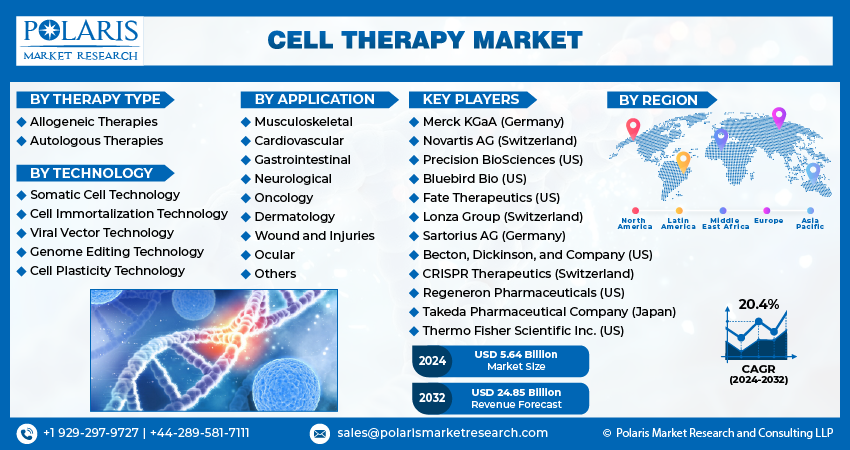
The market is primarily segmented based on therapy type, technology, application, and region.
| By Therapy Type | By Technology | By Application | By Region |
|
|
|
|
Source: Polaris Market Research Analysis
To Understand the Scope of this Report: Request Customization
By Therapy Type Insights
-
Autologous therapies segment captured largest share in 2025
The autologous therapies segment captured the largest share of 59.2% in 2025. This dominance is attributable to rising adoption of these therapies over others due to its favorable outcomes for the treatment of different type of genetic disorders. Additionally, growing incidences of orthopedic and musculoskeletal conditions worldwide also increases the demand for these therapies, as autologous stem cells have the natural healing & regeneration after any injury.
- For instance, according to the WHO, around 1.71 Bn people across the globe have Musculo-skeletal conditions, and they are the leading contributor to disability worldwide.
Autologous vs Allogeneic Cell Therapy
| Basis | Autologous Cell Therapy | Allogeneic Cell Therapy |
| Source of Cells | Cells are taken from the same patient’s body | Cells are taken from a donor |
| Risk of Rejection | Very low risk of immune rejection | Higher risk of immune rejection |
| Usage Trend | High adoption due to favorable outcomes in genetic and musculoskeletal disorders | Used where patient cells are not suitable or available |
| Healing Capability | Strong natural healing and regeneration ability | Depends on donor compatibility and processing |
| Manufacturing | Patient-specific processing required | Can be produced in bulk and stored |
| Application Areas | Widely used in orthopedic and musculoskeletal treatments | Used in broader therapeutic areas including cancer and immune disorders |
Source: Polaris Market Research Analysis
By Technology Insights
The somatic cell technology dominated the market with a revenue share of 31.6% in 2025. This growth is due to increased usage of this technology for the treatment of various diseases including autoimmune disease, degenerative disorders, and different types of cancer. Moreover, somatic cell technology is being extensively used for the development of immunotherapies that includes the extraction and medication of an individual own immune cells to improve the ability to eliminate cancer cells.
By Application Insights
-
Musculoskeletal segment is expected to witness highest growth
The musculoskeletal segment will grow at highest pace with a CAGR of 19.75%. Segment’s growth is attributed to continuous increase in the number of people suffering with these disorders as a result of growing global aging population who are more prone to these disorders. Ongoing research and development activities focused on the discovery of new cell sources and enable the regeneration or restoration of several impaired musculoskeletal tissues, is further likely to propel segment’s growth.
- For instance, according to the World Health Organization, the number of people aged 60 years and above is projected to increase from 1 billion in 2020 to 1.4 billion by 2030. And, the world’s population aged 60 years or over will double and reach 2.1 billion by 2050.
Cell Therapy Real-World Applications
| Application Area | Description | Type of Therapy Used | Key Benefit |
| Cancer Treatment | Used in therapies like CAR-T to target and destroy cancer cells | Autologous / Allogeneic | Targeted cancer cell elimination |
| Tissue Regeneration | Helps repair or replace damaged tissues such as bone, cartilage, or skin | Autologous | Natural healing and faster recovery |
| Autoimmune Diseases | Modifies immune cells to reduce abnormal immune responses | Autologous / Allogeneic | Controlled immune response |
| Genetic Disorders | Corrects or replaces defective cells causing inherited diseases | Autologous | Personalized treatment approach |
| Musculoskeletal Conditions | Supports healing of bones, joints, and related injuries | Autologous | Tissue repair and regeneration |
| Cardiovascular Diseases | Aids in repairing damaged heart tissues and improving function | Autologous / Allogeneic | Improved heart function |
| Neurological Disorders | Used in research for conditions like Parkinson’s and spinal injuries | Allogeneic | Potential nerve regeneration |
Source: Polaris Market Research Analysis
Regional Insights
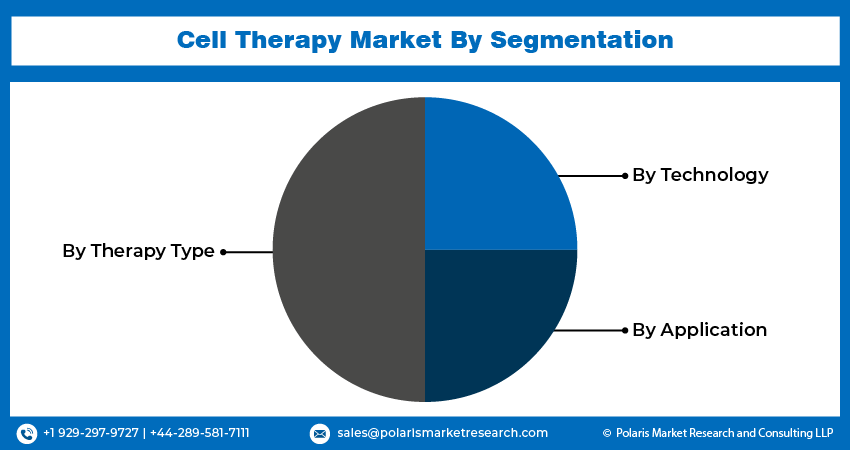
North America region dominated the global market in 2025. The North America region dominated the global market in 2025 with a 42.6% share. The region’s dominance is attributed to a rising number of collaborative research initiatives by leading pharma giants and research institutes. Also, there are several new advancements and improvements in cell therapies in terms of manufacturing and applications, creating a substantial demand for these therapies.
-
For instance, in December 2023, the U.S. Food and Drug Administration announced that they have approved 2 gene therapies for sickle cell disease. It is the first treatment in the U.S. based on the CRISPR gene editing technology.
Asia Pacific Cell Therapy Market Insights
The Asia Pacific region is anticipated to emerge as the fastest-growing region with a CAGR of 22.45%, on account of the growing prevalence of various chronic disorders, investments in healthcare infrastructure, a streamlined regulatory environment or framework, and greater focus on regenerative medicines including cell therapies. For instance, as per a report by the National Center for Biotechnology Information, approx. 21% of the elderly population in India have at least one chronic disease.
Cell Therapy Market Competitive Landscape
Establishing strategic partnerships and developing cost-efficient solution to drive competition
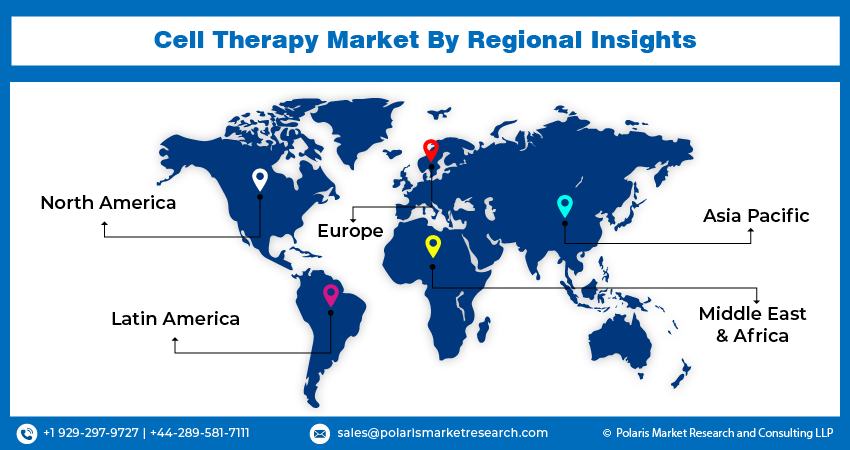
The cell therapy market is highly competitive in nature with the robust presence of global players offering advanced cell therapy solutions. Key players in the market are competing on factors including improvement in efficacy of therapies, developing cost-effective solutions, expanding their global presence, ensuring better patient access, and establishing strategic partnerships and collaborations. For instance, in September 2023, Agilent Technologies, announced that they have signed a Memorandum of Understanding with the Advanced Cell Therapy and Research Institute, Singapore, for the development of cell and gene therapy over next three years.
Key Companies in the Cell Therapy Market
- Becton, Dickinson, and Company (US)
- Bluebird Bio (US)
- CRISPR Therapeutics (Switzerland)
- Fate Therapeutics (US)
- Lonza Group (Switzerland)
- Merck KGaA (Germany)
- Novartis AG (Switzerland)
- Precision BioSciences (US)
- Regeneron Pharmaceuticals (US)
- Sartorius AG (Germany)
- Takeda Pharmaceutical Company (Japan)
- Thermo Fisher Scientific Inc. (US)
Recent Developments in the Industry
- April 2026: Eli Lilly is planning to acquire Kelonia Therapeutics. The deal is valued up to $7 billion. The focus is on in vivo CAR-T technology. It enables reprogramming of immune cells inside the body. (Source: prnewswire.com)
- April 2026: UCB agreed to acquire Neurona Therapeutics. Deal valued up to $1.2 billion. Adds NRTX-1001 cell therapy for seizure reduction. Expands presence in regenerative medicine. (Source: ucb.com)
- March 2026: Sartorius launched the Eveo Cell Therapy Platform. It is an integrated system for CAR-T production. Helps reduce manufacturing cost significantly. (Source: sartorius.com)
- December 2025: Cipla launched Ciplostem in India. It is an allogeneic cell therapy for knee osteoarthritis. Developed by Stempeutics Research. (Source: cipla.com)
Report Coverage
The cell therapy market report emphasizes on key regions across the globe to provide better understanding of the product to the users. Also, the report provides market insights into recent developments, trends and analyzes the technologies that are gaining traction around the globe. Furthermore, the report covers in-depth qualitative analysis pertaining to various paradigm shifts associated with the transformation of these solutions.
The report provides detailed analysis of the market while focusing on various key aspects such as competitive analysis, therapy type, technology, application, and their futuristic growth opportunities.
Cell Therapy Market Report Scope
| Report Attributes | Details |
| Market size value in 2025 | USD 6.17 billion |
| Market size value in 2026 | USD 7.42 billion |
| Revenue forecast in 2034 | USD 32.98 billion |
| CAGR | 20.47% from 2026 – 2034 |
| Base year | 2025 |
| Historical data | 2021 – 2024 |
| Forecast period | 2026 – 2034 |
| Quantitative units | Revenue in USD billion and CAGR from 2026 to 2034 |
| Segments covered |
|
| Regional scope |
|
| Competitive Landscape |
|
| Report Format |
|
| Customization | Report customization as per your requirements with respect to countries, region and segmentation. |
Source: Polaris Market Research Analysis
Cell Therapy Market FAQ's
The global cell therapy market size is expected to reach USD 32.98 billion by 2034, according to a new study by Polaris Market Research.
Key players in the market are
North America contribute notably towards the global Cell Therapy Market
Cell therapy marketexhibiting the CAGR of 20.47% during the forecast period.
The Cell Therapy Market report covering key segments are therapy type, technology, application, and region.
Download Sample Report of Cell Therapy Market
Please fill out the form to request a customized copy of the research report.


