
Data Center Coolant Distribution Units Market Size, & Trend Analysis Report, 2026-2034
REPORT DETAILS
Data Center Coolant Distribution Units Market Summary
The global data center coolant distribution units market size was valued at USD 1.04 billion in 2025. The market is projected to grow at a CAGR of 33.39% from 2026 to 2034. Rising data center construction activity along with growth of AI, HPC, and cloud computing workloads is propelling the market growth.
Market Statistics
Key Takeaways
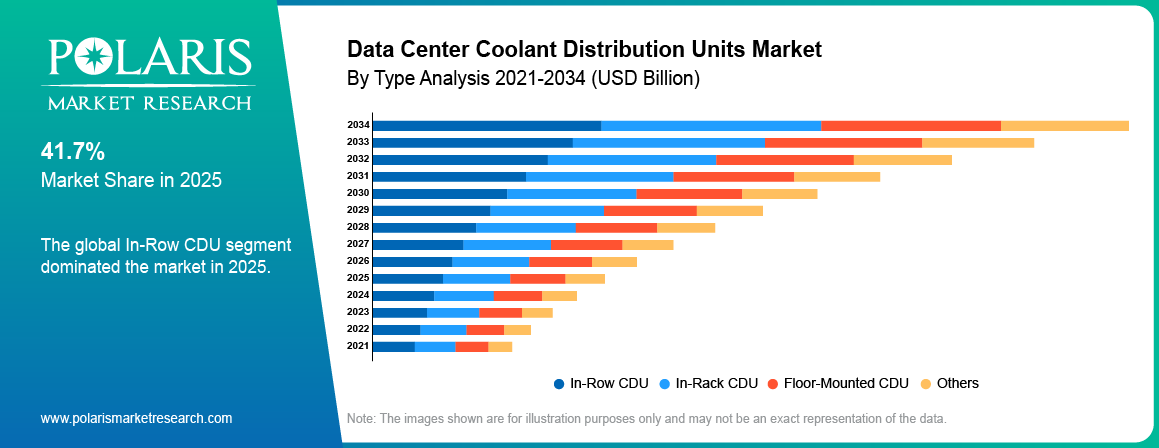
- North America accounted for 39.8% of the global Data Center Coolant Distribution Units (CDU) market in 2025. The region's leadership is driven by the rapid deployment of AI workloads, increasing investments in hyperscale data centers, and growing adoption of advanced liquid cooling infrastructure.
- The U.S. led the North American market with a 78.6% share in 2025. This dominance is attributed to the fast expansion of hyperscale data centers, strong cloud service provider presence, and increasing investments in high-performance computing facilities.
- The Asia Pacific market is forecast to register the highest CAGR of 19.1% during the forecast period. Growth is supported by the rapid adoption of AI, IoT, and high-density computing infrastructure, alongside expanding data center investments across China, India, Japan, and Southeast Asia.
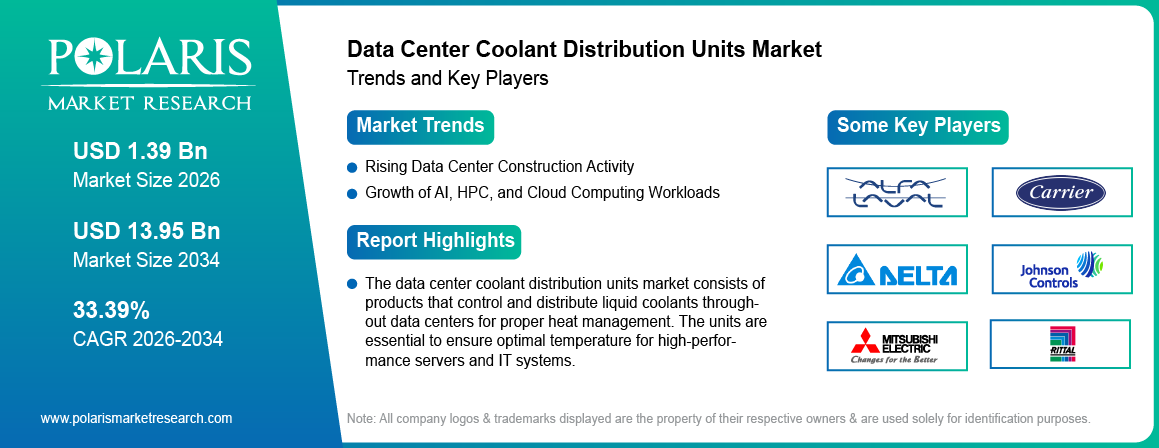
- The In-Row CDU segment dominated the market with a 41.7% revenue share in 2025. Its leading position is attributed to superior cooling efficiency, reduced energy consumption, and effective thermal management for high-density server environments.
- The Industrial Cooling application segment is projected to register a CAGR of 18.4% during the forecast period. The increasing deployment of liquid cooling technologies in industrial automation, semiconductor manufacturing, and high-performance computing facilities is expected to drive robust segment growth.
Note: Figures and projections outlined in this report are the result of Polaris Market Research’s proprietary analytical processes, grounded in the latest available datasets and market observations.
What Is a Data Center Coolant Distribution Unit?
A data center coolant distribution unit (CDU) refers to a type of cooling system that handles the distribution of liquid coolant to computer equipment within a building through its cooling system. The unit ensures control over the temperature, pressure, and flow of coolant for the purposes of removing the heat from high-performance servers, GPUs, and other computing components.
How Data Center Coolant Distribution Units Work?
Coolant Supply – Chilled liquid coolant is provided by the facility’s centralized cooling system into the coolant distribution unit.
Flow and Temperature Regulation – CDU controls the temperature, pressure, and flow of the liquid coolant to ensure it fulfills the requirements of the connected equipment.
Heat Removal – The cooled liquid is delivered to the server, processor, GPU, where the heat from the equipment operation is absorbed.
Returning to the CDU – After absorbing the heat, heated coolant is brought back into the CDU.
Cooling and Recirculation – CDU discharges the heat into the facility cooling system, cools the liquid, and delivers it back into the cooling circuit.
The data center coolant distribution units market consists of products that control and distribute liquid coolants throughout data centers for proper heat management. The units are essential to ensure optimal temperature for high-performance servers and IT systems. Increasing data processing needs, cloud infrastructure expansion, and high-density computing adoption are fueling demand for sophisticated cooling solutions. Convergence of smart monitoring, power-efficient designs, and modular architectures is increasing performance, reducing power, and making data center operation sustainable.
Sustained innovation in coolant distribution unit (CDU) design, such as the creation of modular and scalable systems, is fueling the data center cooling market. In October 2025, Johnson Controls unveiled a new Silent-Aire Coolant Distribution Unit (CDU) platform with scalable liquid cooling from 500 kW to more than 10 MW, designed to support high-density racks for data centers. These next-generation designs allow for easy integration, greater maintenance flexibility, and optimal heat management throughout large-scale data centers, and they are well-suited for high-density computing needs.
Hyperscale operators and colocation facilities are spending significant amounts of money upgrading their cooling equipment with next-generation CDUs to improve performance and achieve sustainability goals. Interest in energy efficiency, low water consumption, and stable thermal management is driving the use of advanced CDU technologies in data center networks worldwide.
Liquid Cooling vs Air Cooling in Data Centers
| Features | Liquid Cooling | Air Cooling |
| Cooling Technique | Deploys liquid coolant to dissipate heat from IT hardware | Dissipates heat using fans and cold air |
| Efficiency | Very efficient, particularly at high densities | Efficient at low to medium server densities |
| Suitability for AI/GPU | Excellent for AI servers and GPU-intensive applications | Not very efficient at increasing computing density |
| Power Usage | Low cooling power usage | High cooling power usage due to constant fan rotation |
| Support for Rack Densities | Good for high-density server racks | More suitable for conventional server racks |
| Space Needed | Necessitates liquid cooling system but enhances cooling effectiveness | Simplicity of setup but needs more space for airflow |
| Operating Expenses | Can save on cooling expenses in the long run | Lowers initial expenses but incurs higher power expenses |
| Optimal for Use | In AI data centers, HPC, and hyperscale data center infrastructure | Conventional enterprise data centers |
Source: Polaris Market Research Analysis
Data Center CDU Market Drivers, Opportunities and Challenges
- Rapid growth in data center development across the globe is fueling widespread adoption of advanced CDUs on a large scale.
- Increasing requirements for AI, HPC, and cloud workloads are boosting the adoption of effective liquid cooling equipment.
- High initial capital investment and installation costs of CDUs still remain a constraint to adoption for small and medium data centers.
- Implementation of AI-powered thermal management systems is creating market opportunity, with improved coolant flow, energy savings, and enhanced overall data center efficiency.
AI Impact on Data Center Coolant Distribution Units Market
- AI contributes to the optimization of coolant distribution units through the monitoring of temperature, coolant flow, and performance.
- It is useful for performing predictive maintenance, which means the identification of any possible problems with the equipment that may lead to breakdowns.
- AI assists in improving energy efficiency through automatic adjustment of cooling depending on the workload of servers and the environment.
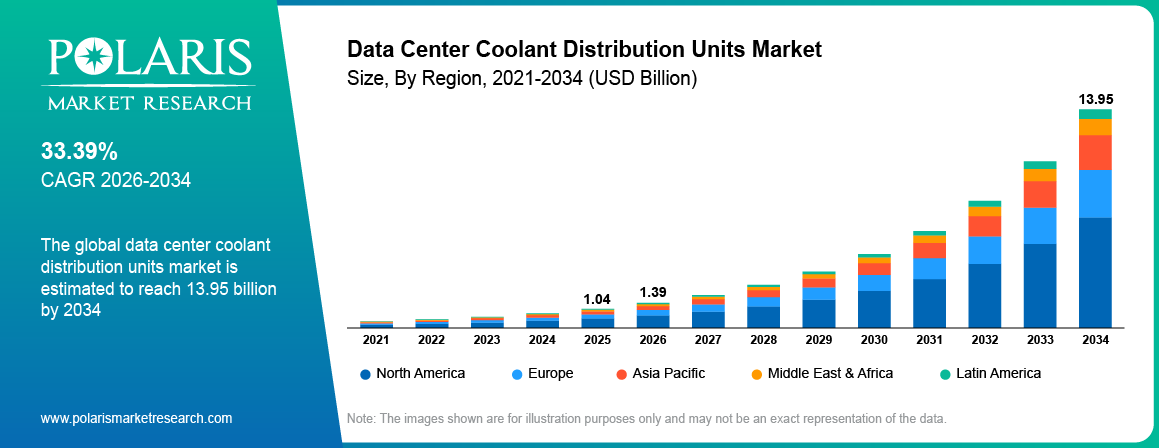
AI, HPC and Hyperscale Data Center Cooling Drivers and Opportunities
Rising Data Center Construction Activity
The rising data center development among hyperscale and colocation sites, is driving significant demand for high-capacity and efficient cooling solutions. Global investments in data centers nearly doubled since 2022 to around half a trillion dollars in 2024, as per the International Energy Agency (IEA). Therefore, operators are increasingly using CDUs to provide stable thermal conditions and guaranteed system performance.
Growth of AI, HPC, and Cloud Computing Workloads
The growth of artificial intelligence (AI), high-performance computing (HPC), and cloud computing workloads is accelerating the demand for high-performance cooling infrastructure. Eurostat reports that 45.2% of businesses in the European Union utilized cloud computing services during 2023 for predominantly email hosting, storage of files, and office software. Out of this, 75.3% embraced sophisticated cloud solutions centering on security and software applications. Elevated CDUs are important in the management of the heat caused by these power-dense workloads, for stable performance, extended equipment life, and lower operating expenses.
Rise of Direct-to-Chip Liquid Cooling Technology
Direct-to-chip liquid cooling is a cooling technology in which liquid coolant is directed directly into processors, graphics processing units (GPUs), and other components of computer hardware that generate heat. Heat is therefore eliminated directly at the source, hence making it effective compared to air cooling systems. It is currently used extensively in AI servers, HPC systems, and hyperscale data centers where heat generation is very significant. This technology makes it possible to stabilize temperatures and enhance system performance in these data centers. It also reduces the load of cooling on the existing equipment, hence saving on energy. With rising demands for computing power, direct chip cooling will become increasingly relevant to data centers.
Sustainability Impact of CDUs
The coolant distribution units contribute to energy savings in data centers by enhancing the effectiveness of liquid cooling systems and solutions from the immersion cooling systems market. The liquid cooling system is effective in eliminating heat compared to the conventional air cooling system. Hence, the facilities require less energy to cool their servers and other IT infrastructure. Such cooling enhances energy savings and promotes the power usage effectiveness (PUE), which is critical when evaluating the efficiency of data centers. Furthermore, effective cooling prevents overheating, which may increase the durability of the servers. Many firms are implementing CDUs in their facilities to cut down costs and achieve sustainable operations.
CDUs in Edge Data Centers
Edge data centers are relatively smaller facilities constructed closer to consumers to ensure reduction in latency and enhance performance of applications. While these facilities offer very little space, there is still a need to ensure proper cooling of high-performance computers used. Coolant distribution units offer an efficient and effective means of ensuring that this is achieved in such facilities. These facilities allow edge servers to function effectively when it comes to the use of applications such as 5G, IoT, autonomous vehicles, and real-time computing. As edge computing becomes increasingly popular, the need for efficient cooling systems will grow.
Data Center Coolant Distribution Units Market Segment Analysis
By Type: In-Row, In-Rack and Floor-Mounted CDUs
Based on type, the data center coolant distribution units (CDU) market is segmented into in-row CDU, in-rack CDU, floor-mounted CDU, and others. In-row CDUs held the largest market share in 2025 as they are capable of managing high-density heat loads effectively and optimizing data center aisle space.
Floor-mounted CDUs continue to experience stable growth due to its extensive use in large establishments with greater need for cooling capacity and superior heat transfer performance.
The following table provides a comparison between In-Row CDU, In-Rack CDU, and Floor-Mounted CDU, along with their features:
| Feature | In-Row CDU | In-Rack CDU | Floor-Mounted CDU |
| Placement | Installed between server racks in a row | Integrated at the bottom of rack | Mounted on or under the data center floor |
| Cooling Type | Liquid-to-liquid or two-phase direct-to-chip | Liquid-to-liquid or two-phase direct-to-chip | Usually liquid-to-liquid with facility water loop |
| Application | Hyperscale, AI/ML, HPC, high-density racks | Edge computing, telecom, storage, modular or single rack | Traditional raised floor data centers |
| Space Efficiency | Space-efficient but requires row space | Compact, fits standard 19" rack 8U | Larger footprint and requires floor space |
| Installation Flexibility | Scalable across multiple racks | Localized rack-level deployment | Centralized cooling distribution |
| Advantages | High capacity, scalability, efficient chip-level cooling | Compact, fast upgrades, localized thermal control | Handles large heat loads, integrates with facility cooling |
| Typical Use Cases | Large data centers with high heat density | Edge, telecom, storage, space-constrained | Data centers with existing water infrastructure |
Source: Polaris Market Research Analysis
By Application: Data Centers, Telecom and Industrial Cooling
On the basis of application, the market is categorized into data centers, industrial cooling, telecommunication facilities, and others. Data center segment held the dominant segment in 2024 due to the highest growth rate of hyperscale and enterprise data centers globally. Increased demand for energy-efficient cooling systems to manage growing server densities remains a key driver for the adoption of high-end CDUs.
Industrial cooling uses are expected to grow rapidly during the forecast period driven by the increasing use of liquid cooling in manufacturing and processing industries where precise temperature control is a must.
| Use Cases | How CDUs Help |
| AI Data Centers | Cool GPUs with the power to train and process AI models. |
| Cloud Computing | Stabilize the temperature of cloud servers running 24/7. |
| High-Performance Computing (HPC) | Cool down supercomputers utilized for science and research. |
| Hyperscale Data Centers | Enhance cooling performance in centers housing thousands of high density servers. |
| Edge Data Centers | Offer compact liquid cooling for edge computing centers with space constraints. |
| Financial Services | Cool high speed computing machines in use in trading and other data processing applications. |
| Healthcare and Research | Cool machines required for conducting medical research and data analysis. |
| Enterprise Data Centers | Enhance energy efficiency and improve server reliability. |
Source: Polaris Market Research Analysis
By Capacity: Below 100 kW, 100–500 kW and Above 500 kW
Based on capacity, the market is divided into below 100 kW, 100–500 kW, and above 500 kW. The 100–500 kW segment held the highest share in 2025, fueled by mid-sized colocation data centers and facilities looking to manage scalability and cooling efficiency.
Systems larger than 500 kW are expected to grow at fastest pace during the forecast period, as hyperscale operators invest in big infrastructure to manage cloud computing and AI workloads.
By End User: IT & Telecom, BFSI, Healthcare and Government
By end-user, the data center CDU market is segmented into IT & telecom, BFSI, healthcare, government, and others. The IT & telecom segment dominated the market in 2025, driven by huge data traffic, cloud penetration, and the increasing proliferation of data-intensive applications.
The healthcare segment is estimated to grow rapidly, due to the rising demand for high-performance computing infrastructure with proper cooling support to maintain medical data and AI-based diagnostic systems.
By Distribution Channel: Direct Sales and Distributors/Resellers
Based on distribution channel, the market is classified into direct sales, distributors/resellers, and others. Direct sales held significant share in 2025, as enterprises and large-scale data center operators choose direct interaction with manufacturers to get customized system design and integration.
Distributors/resellers segment is expected to grow rapidly, due to the increasing demand from small and medium-sized facilities for cost-efficient and easy-to-deploy solutions. Equipment manufacturers partnering with regional resellers is further improving market access and after-sales support in emerging economies.
Regional Analysis
North America accounted for dominant share in data center coolant distribution units (CDU) market in 2025. Increasing demand for high-performance computing (HPC) and AI-based workloads is driving the growth of effective coolant distribution solutions within hyperscale and enterprise data centers. Strong regional emphasis on energy reduction and sustainability is also driving the move towards liquid-based cooling technology.
The U.S. Data Center Coolant Distribution Units Market Overview
The U.S. remains the market leader in North America, driven by rapid growth of hyperscale data centers by dominant cloud leaders like Amazon, Microsoft, and Google. For instance, in September 2025, OpenAI, along with Oracle and SoftBank, announced the opening of five new data center locations in the U.S. under its Stargate program. The growth brought Stargate project's overall intended compute capacity to close to 7 gigawatts, and investments were already over USD 400 billion towards its USD 500 billion infrastructure target. Increasing applications of AI and machine learning platforms are generating extra cooling demands, driving the need for sophisticated liquid cooling systems.
Asia Pacific Data Center Coolant Distribution Units Market Insights
Asia Pacific is poised to grow at a high rate during the forecast period. The growth of high-density server deployments fueled by AI, 5G services, and IoT applications is triggering increasing adoption of liquid cooling technologies. Rising government policies supporting data localization and the development of eco-friendly data centers is generating robust demand for CDU deployment in the region.
China Data Center Coolant Distribution Units Market Analysis
China is emerging as a major contributor to regional growth, driven by large-scale expansion of data centers to support cloud computing and digital transformation efforts. According to a BBC report, Beijing aims to invest USD 1.4 trillion over the next 15 years to compete with Washington in gaining an advantage in advanced technologies. Growing government interest in developing smart infrastructure and domestic manufacturing capacity is driving adoption of sophisticated CDU solutions in hyperscale and enterprise data center facilities.
Europe Data Center Coolant Distribution Units Market Assessment
Europe held significant market share, driven by increasing investments in Germany, the UK, and the Netherlands' data center infrastructure. Adoption of stringent EU carbon neutrality and energy efficiency regulations is propelling the demand towards sustainable and liquid-based coolants. Demand for next-generation CDU solutions is also bolstered by environmental focus of the region on lowering operational energy expenditures and meeting long-term environmental goals.
Key Players & Competitive Analysis
The world data center coolant distribution units (CDU) market is competitive, driven by continuous liquid cooling technology innovations and expanding demand for power-saving data center infrastructure. The companies are targeting the development of modular, high-capacity, and intelligent CDU systems that maximize cooling efficiency, lower operational expenditure, and minimize carbon emissions. The growing development of hyperscale and colocation data centers, along with the use of high-density servers, is fueling ongoing innovation in CDU design and functionality. Strategic alliances, product development, and expansion into new data center hotspots are primary growth initiatives throughout the sector.
Who are the key players in Data Center Coolant Distribution Units market?
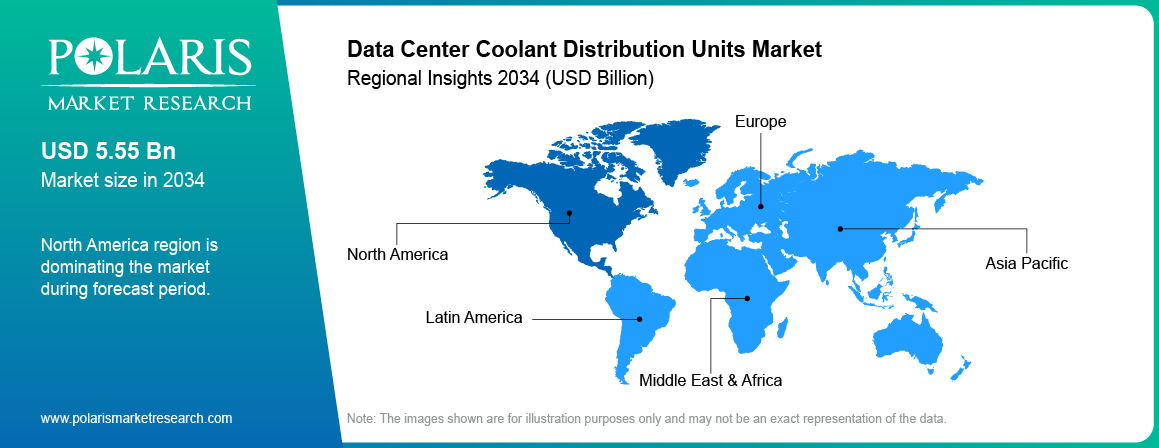
Major market players in the data center coolant distribution units market are Airedale International Air Conditioning Ltd., Alfa Laval AB, Boyd Corporation, Carrier Global Corporation, DCX Liquid Cooling Systems Sp. z o.o., Delta Electronics, Inc., Green Revolution Cooling, Inc., Johnson Controls International plc, Mitsubishi Electric Corporation, nVent Electric plc, Rittal GmbH & Co. KG, Schneider Electric SE, STULZ GmbH, Submer Technologies SL, and Vertiv Group Corporation.
Key Players
- Airedale International Air Conditioning Ltd.
- Alfa Laval AB
- Boyd Corporation
- Carrier Global Corporation
- DCX Liquid Cooling Systems Sp. z o.o.
- Delta Electronics, Inc.
- Green Revolution Cooling, Inc.
- Johnson Controls International plc
- Mitsubishi Electric Corporation
- nVent Electric plc
- Rittal GmbH & Co. KG
- Schneider Electric SE
- STULZ GmbH
- Submer Technologies SL
- Vertiv Group Corporation
Future Outlook
There will be continued growth in the global market of coolant distribution units owing to the rise in the demand for advanced cooling technology due to the growth in AI, cloud computing, and high-performance computing. Increased server rack density along with increased adoption of liquid cooling technology is also likely to drive the growth of the market. Advancements in direct-to-chip cooling, smart thermal management, AI data center cooling solutions, and efficient energy cooling technology will help data centers achieve better performance with reduced operational cost. The investments in hyperscale data centers and edge computing technology have also opened up avenues for growth in the market.
Data Center Coolant Distribution Units Industry Developments
- July 2026: Eolab announced the completion of its acquisition of CoolIT Systems. The company stated that the acquisition will extend its established global leadership in water technologies, research, and service to the fastest-growing AI infrastructure and computing market.(source: ecolab.com)
- February 2026: Boyd more than doubled its liquid cooling manufacturing capacity. The company expanded its design and manufacturing facility in Juarez, Mexico. The expanded production will help it meet demand for liquid cooling solutions for data centers.(source: businesswire.com)
- In October 2025: KSTAR launched a new-generation CDU liquid cooling solution under its LiquiX portfolio, capable of managing up to 600 kW and delivering up to 400% higher heat dissipation per area compared to conventional air cooling.
- In October 2025, Johnson Controls committed investment to enhance data center liquid cooling capabilities by acquiring or partnering with Accelsius, a company specializing in direct-to-chip cooling systems.
Data Center Coolant Distribution Units Market Segmentation
By Type Outlook (Revenue, USD Billion, 2021–2034)
- In-Row CDU
- In-Rack CDU
- Floor-Mounted CDU
- Others
By Capacity Outlook (Revenue, USD Billion, 2021–2034)
- Below 100 kW
- 100-500 kW
- Above 500 kW
By Application Outlook (Revenue, USD Billion, 2021–2034)
- Data Centers
- Industrial Cooling
- Telecommunication Facilities
- Others
By End-User Outlook (Revenue, USD Billion, 2021–2034)
- IT & Telecom
- BFSI
- Healthcare
- Government
- Others
By Distribution Channel Outlook (Revenue, USD Billion, 2021–2034)
- Direct Sales
- Distributors/Resellers
- Others
By Regional Outlook (Revenue, USD Billion, 2021–2034)
- North America
- U.S.
- Canada
- Europe
- Germany
- France
- UK
- Italy
- Spain
- Netherlands
- Russia
- Rest of Europe
- Asia Pacific
- China
- Japan
- India
- Malaysia
- South Korea
- Indonesia
- Australia
- Vietnam
- Rest of Asia Pacific
- Middle East & Africa
- Saudi Arabia
- UAE
- Israel
- South Africa
- Rest of Middle East & Africa
- Latin America
- Mexico
- Brazil
- Argentina
- Rest of Latin America
Data Center Coolant Distribution Units Market Report Scope
| Report Attributes | Details |
| Market Size in 2025 | USD 1.04 Billion |
| Market Size in 2026 | USD 1.39 Billion |
| Revenue Forecast by 2034 | USD 13.95 Billion |
| CAGR | 33.39% from 2026 to 2034 |
| Base Year | 2025 |
| Historical Data | 2021–2024 |
| Forecast Period | 2026–2034 |
| Quantitative Units | Revenue in USD Billion and CAGR from 2026 to 2034 |
| Report Coverage | Revenue Forecast, Competitive Landscape, Growth Factors, and Industry Trends |
| Segments Covered |
|
| Regional Scope |
|
| Competitive Landscape |
|
| Report Format |
|
| Customization | Report customization as per your requirements with respect to countries, regions, and segmentation. |
Source: Polaris Market Research Analysis
Data Center Coolant Distribution Units Market FAQs
The global CDU market was valued at USD 1.04 billion in 2025 and is projected to reach USD 13.95 billion by 2034, growing at 33.39% CAGR.
In-row CDUs dominated in 2025 due to their efficiency in managing high-density heat loads effectively while optimizing space within data center aisles for high-performance computing applications.
Data centers segment held the dominant share in 2025 due to highest growth rate of hyperscale and enterprise facilities globally, driven by demand for energy-efficient cooling systems.
The 100-500 kW segment held the highest share in 2024, fueled by mid-sized colocation data centers and facilities seeking to balance scalability and cooling efficiency requirements.
North America held major share in 2025, driven by increasing demand for high-performance computing, AI-driven workloads, hyperscale data center expansion, and strong sustainability focus in the region.
Asia Pacific is projected to grow fastest, driven by surge in high-density server installations for AI, 5G, IoT applications, and China's large-scale data center expansion efforts.
AI and high-performance computing generate significantly higher heat densities than traditional workloads, making conventional air cooling insufficient and driving widespread adoption of advanced liquid-based CDUs to ensure stable performance, extend equipment lifespan, and reduce operational costs.
The coolant distribution unit (CDU) is the system that regulates the flow rate, temperature, and pressure of coolant in a liquid-cooling system. The device cools servers and other IT equipment, enabling the efficient operation of the data center.
With the help of coolant distribution units, it becomes possible to cool servers with better efficiency than using conventional air cooling. Such devices help reduce power consumption, allow the use of high-performance servers, avoid overheating, and make operation in the data center more reliable.
The devices are used in AI data centers, HPC, cloud data centers, hyperscale data centers, and edge data centers.
Download Sample Report of Data Center Coolant Distribution Units Market
Please fill out the form to request a customized copy of the research report.


