
Cell Therapy Human Raw Materials Market Size Report, 2026-2034
REPORT DETAILS
Cell Therapy Human Raw Materials Market Summary
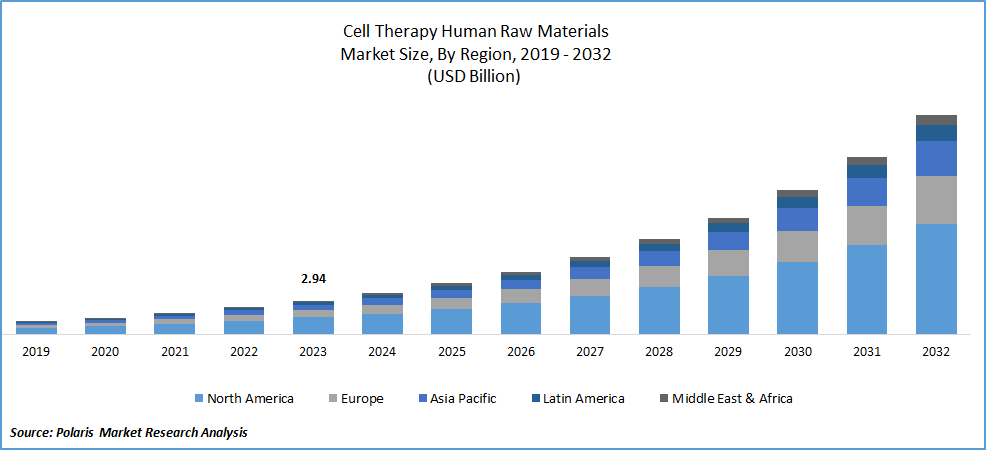
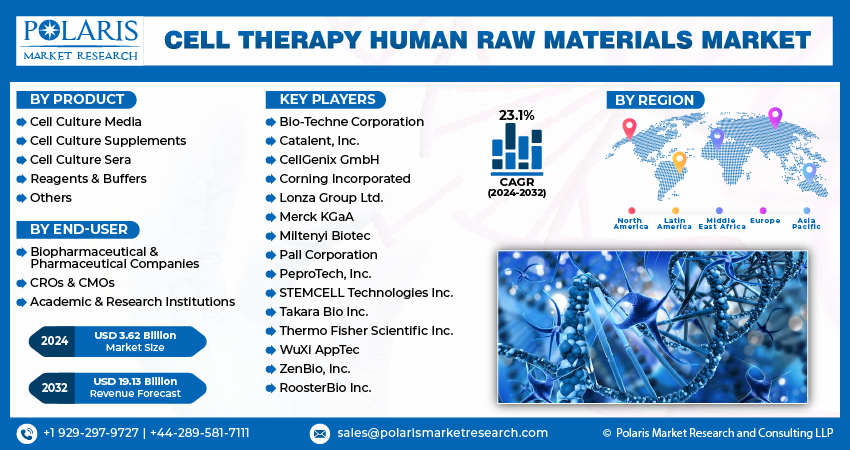
The cell therapy human raw materials market size was valued at USD 4.43 billion in 2025. The market is anticipated to grow at a CAGR of 22.95% from 2026 to 2034. The rising global incidence of cancer and chronic diseases and surging clinical trials for cell and gene therapies are a few of the key factors driving market growth.
Market Statistics
Key Takeaways
• North America dominated the global market with a 42.0% revenue share in 2025. The regional market dominance is attributed to favorable government regulations and a rising need for advanced therapeutics.
• Asia Pacific is projected to witness rapid growth at a 24.3% CAGR. This surge is attributed to a heightened emphasis on biotechnology and a growing demand for advanced cell therapies.
• Europe is anticipated to witness steady growth at a 26.0% CAGR. The regional market growth is supported by strong regulatory frameworks and increasing investment in advanced treatments.
• The cell culture media segment is projected to grow at a 32.0% CAGR. The controlled environment of cell culture media allows researchers and manufacturers to optimize conditions.
• The biopharmaceutical & pharmaceutical companies segment led with a 47.0% share in 2025. The rising demand for personalized medicine and regenerative treatments has propelled these companies to focus on developing and commercializing advanced cell therapies.
Note: Figures and projections outlined in this report are the result of Polaris Market Research’s proprietary analytical processes, grounded in the latest available datasets and market observations.
What is the Current Market Size?
Cell therapy human raw materials market size was valued at USD 4.43 billion in 2025. The market is anticipated to grow from USD 5.43 billion in 2026 to USD 28.35 billion by 2034, exhibiting the CAGR of 22.95% during the forecast period.
Industry Dynamics
- The rising occurrence of chronic ailments, such as cancer and diabetes, has led to increased demand for cell therapy human raw materials.
- The favorable regulatory landscape is another factor shaping the cell therapy human raw materials market landscape.
- Increased focus on providing GMP-compliant reagents is creating several market opportunities.
- Stringent regulatory compliance may present market challenges.
AI Impact on Cell Therapy Human Raw Materials Market
- Artificial intelligence technology assists in improving the selection and evaluation of human raw materials for the process of cell therapy production.
- It also assists in optimizing the process through data analysis that enhances the consistency and efficiency of the manufacturing process.
- AI facilitates monitoring of quality parameters on a real-time basis to minimize variability.
- It assists in managing the supply chain, inventory, and forecast demand through data analysis.
Market Introduction
The human raw materials in cell therapy is currently experiencing a surge in technological advancements, marked by the development of innovative biomaterials and sophisticated manufacturing processes. These breakthroughs serve to enhance the efficiency and scalability of cell therapy production. Also, there is a noticeable shift towards personalized medicine, placing an increased focus on tailoring cell therapies to individual patient profiles. This evolving trend underscores the imperative for a diverse range of high-quality human raw materials that are essential in supporting the manufacturing of customized cell therapies, eventually contributing to cell therapy human raw materials market growth.
Automation is gaining momentum in the manufacturing processes of cell therapy, aiming to streamline operations and enhance reproducibility. The inclination towards automated workflows in the handling of raw materials reduces the risk of contamination and ensures a consistent approach in cell therapy production.
Source: Polaris Market Research Analysis
To Understand More About this Research: Download Sample Report
- For instance, in May 2023, Lonza introduced the TheraPeak T-Vivo cell culture medium, an innovative chemically defined medium designed to enhance the manufacturing of CAR T cells. Devoid of animal-origin components, this medium enhances consistency and process control, streamlining regulatory approval processes for accelerated time-to-market.
The rising incidence of chronic conditions such as cancer, diabetes, and autoimmune disorders, coupled with a growing demand for regenerative and personalized medicines, increasing research and development initiatives, and a surge in investments, are expected to increase the cell therapy human raw materials market size in the forecast period.
Cell Therapy Human Raw Materials Market Definition
Cell therapy human raw materials consist of biological materials and manufacturing materials used in the development and production of cell therapy treatments. This category includes items such as cell culture media, sera, cell culture supplements, reagents, buffers, and others that enable the growth and expansion of cells. Such materials have significant uses in manufacturing cell therapies for purposes like regenerative medicine and cancer treatment.
How Cell Therapy Raw Materials Are Used?
Cell Sourcing: The first step involves collecting cells either from the donor or patient depending on the cell therapy product being manufactured.
Cell Isolation: The necessary cells are isolated from the cell sample and subjected to further procedures under controlled laboratory conditions.
Preparation of Culture Medium: Various raw materials, including cell culture medium, supplements, growth factors, among others, are prepared in order to create an environment conducive to cell growth.
Cell Expansion: Isolated cells are grown using special raw materials until sufficient numbers of therapeutic cells are generated.
Quality Control Testing: The expanded cells are tested for quality, purity, safety and effectiveness.
Manufacturing of Therapeutic Cells: The processed cells are formulated into a product under controlled manufacturing conditions using GMP raw materials and quality control.
Patient Administration: Finally, after undergoing quality testing, the ready cell therapy product is made available for administration.
Industry Growth Drivers
Increasing occurrence of chronic ailments is projected to spur the product demand.
The cell therapy human raw materials market growth is greatly aided by the mounting prevalence of chronic conditions, including cancer and diabetes, stands as a significant catalyst for the cell therapy market. Cell therapies present inventive treatment avenues that address the underlying causes of these ailments, thereby amplifying the need for human raw materials.
Favorable Regulatory Landscape is expected to drive cell therapy human raw materials market growth.
Governments and regulatory entities are progressively acknowledging the promise of cell therapies and are streamlining the regulatory framework to facilitate their development and commercialization. A regulatory environment that is supportive fosters investments and expedites the expansion of the cell therapy human raw materials market size.
Growth of Cell Therapy Pipeline
There are increasing numbers of cell therapy programs being developed due to increased funding from biotechnology and pharmaceutical firms for treatments against cancer, rare diseases, and regenerative medicines. The pipeline of clinical trials is driving increased demand for reliable cell therapy raw materials. The more cell therapy products that advance through clinical development, the greater the need will be for reliable cell therapy raw materials for efficient manufacturing and regulatory purposes. Increased regulatory approvals and continued investment in advanced therapies are also driving the expansion of the development pipeline.
Demand from CAR-T Cell Therapy Development
As the popularity of CAR-T cell treatment increases, there has been a need for quality raw materials for the processing and manufacture of the cells. Cell culture media, reagents, supplements, and buffers are some important materials that assist in ensuring that the cells retain their quality and efficiency in the manufacturing process. With the increasing trend in the commercial manufacture of CAR-T therapy, manufacturers have started using standardized GMP-grade materials to ensure the quality of the products. Another factor that influences the need for manufacturing materials is innovation in cancer immunotherapy.
Source: Polaris Market Research Analysis
Industry Challenges
High development cost is likely to impede the market cell therapy human raw materials growth opportunities.
High development cost stand as a prominent factor hindering the growth of the cell therapy human raw materials market. The creation of cell therapies entails substantial research and development expenditures, encompassing costs associated with clinical trials and manufacturing processes. The substantial upfront costs may serve as a hindrance for smaller companies, constraining their engagement in the market.
Moreover, cell therapy manufacturing involves intricate processes demanding precision and adherence to stringent quality benchmarks. The intricacy of production poses challenges in scalability, impacting the cost-effectiveness of cell therapies. Thereby, hindering the cell therapy human raw materials market growth.
Critical Material Attributes for Viral Vector Production
| Raw Material Category | Manufacturer | Critical Material Attributes (CMAs) | Rationale / Testing Specified | Supporting Documentation |
| Transfection reagents (e.g., FectoPRO-AAV GMP) | Sartorius (Polyplus) | Identity, purity, potency, safety, quality; full batch traceability from synthesis to fill-finish; compliance with EudraLex Vol 4 Part II / 21 CFR Part 210. | Ensures high transfection efficiency, batch reproducibility, no impurities impacting vector yield/safety; aseptic process simulations per Annex 1. | Certificate of Analysis (CoA), Certificate of Origin, Certificate of Compliance, full batch record (ALCOA+ data integrity). |
| Plasmid DNA | Sartorius (Polyplus) | cGMP-grade; identity, purity, high quality. | Critical for upstream productivity; poor quality leads to low vector titers/batch failure. | CoA confirming specs; supplier qualification. |
| Cell culture media & components (growth factors, serum, excipients) | Sartorius (Polyplus) | Identity, purity, quality; animal-free preferred; full traceability. | Prevents contamination/adventitious agents; ensures reproducibility in cell expansion/transfection. | CoA, origin certs; risk-based QbD evaluation. |
| Producer cells / cell banks (for unpurified bulk) | MilliporeSigma | Identity verification; absence of replication-competent vectors, microorganisms (bacteria, fungi, mycoplasma), adventitious viruses. | Reduces risk of contamination/mutagenesis in vector production for cell therapy transduction. | Rigorous testing program; master/working cell banks (MCB/WCB) qualified. |
| Plasmids & media/serum | MilliporeSigma | Approved supplier sourcing; purity, identity, free of adventitious agents. | Critical inputs must undergo testing to avoid introducing agents into process. | Supplier qualification; CoA; broad virus assays. |
| Final vector-related inputs | MilliporeSigma | Identity (gene of interest sequencing), potency (infectivity/genomic titer), sterility, endotoxin levels, aggregation, pH, osmolality. | Ensures vector suitability for ex vivo cell therapy; links back to raw material quality. | QC methods for unpurified bulk/final product. |
| Cell culture media (e.g., TheraPEAK sfAAV, T-VIVO, X-VIVO) | Lonza Bioscience | GMP standards per USP/EP for CGT raw materials; NAO traceability; performance matching research-grade; WFI (USP/EP). | Enables scalable, efficient vector production/transduction without animal-derived risks. | ISO 13485 QMS; FDA-registered sites; full validation/testing docs. |
| Freezing/lysis buffers (e.g., ProFreeze, ACK Lysing, PBS) | Lonza Bioscience | GMP production; safety assessments; effective removal pre-patient exposure. | Supports cell banking/processing in vector workflows. | Compliance certs; not for in vivo use without user validation. |
| Nucleofection solutions/cartridges | Lonza Bioscience | ISO 13485; GMP-certified sites for solutions; weldable for closed systems. | High-efficiency electroporation for hard-to-transfect cells in therapy production. | Material specs; user responsibility for reg compliance. |
| Raw materials (media components, enzymes, nucleotides for vector prod.) | Roche CustomBiotech | Precisely defined; scalable; high-quality; full traceability; regulatory compliance. | Supports efficiency from cell isolation to QC release in viral vector processes. | State-of-the-art biotech facility docs; pharma/diagnostics expertise. |
| All listed products (bioprocess aids) | Roche CustomBiotech | Tailored to unique CGT processes; quality-controlled. | Ensures consistency in vector production for ex vivo cell modification. | Product portfolio specs; contact for customization. |
Source: Polaris Market Research Analysis
Importance of GMP-Grade Raw Materials
GMP-grade raw materials are an important requirement for producing safe, consistent, and high-quality cell therapies. They are produced based on high quality standards so that there is a low risk of contamination and that their performance is predictable throughout the manufacturing process. The use of GMP-grade raw materials enables manufacturers to meet regulatory standards, ensure consistency in batches, and achieve high product quality. In addition, the use of high-quality raw materials increases manufacturing efficiency. There will be increased need for such raw materials as more cell therapies advance towards commercial manufacture.
Report Segmentation
The market is primarily segmented based on product, end-user, and region.
| By Product | By End-User | By Region |
|
|
|
Source: Polaris Market Research Analysis
By Product Analysis
Cell Culture Media segment is expected to witness highest growth during forecast period
The cell culture media segment is projected to grow at a CAGR during the projected period in the cell therapy human raw materials market. This is propelled by various significant factors. Cell culture media provides a controlled and optimized environment with essential nutrients, growth factors, and other critical components necessary for the survival & proliferation of cells. This controlled environment allows researchers and manufacturers to optimize conditions, ensuring the reproducibility & scalability of cell cultures for therapeutic applications. In addition, numerous companies are making substantial investments in the development of cell culture media to enhance the effectiveness of the cell therapy process.
By End-User Analysis
Biopharmaceutical and pharmaceutical companies segment is expected to dominate the cell therapy human raw materials market during forecast period
In 2025, the cell therapy human raw materials market share was predominantly influenced by biopharmaceutical & pharmaceutical companies, commanding a significant market share. The escalating demand for personalized medicine and regenerative treatments has propelled these companies to focus on developing and commercializing cutting-edge cell therapies. Advancements in technology and a supportive regulatory environment have further incentivized biopharmaceutical and pharmaceutical firms to expand their presence in this burgeoning market. The need for high-quality human raw materials, devoid of animal-origin components, is driving strategic partnerships, acquisitions, and intensified research efforts. This dynamic landscape underscores the pivotal role these companies play in shaping the future of cell therapy and underscores the potential for sustained growth in the industry.
Major Applications of Cell Therapy Human Raw Materials
| Application | Description |
| Production of CAR-T Cell Therapies | The materials used to create CAR-T therapies for cancer treatment are involved in the cultivation, alteration, and proliferation of immune cells. |
| Expansion of Stem Cells | The materials are used in maintaining and growing stem cells for use in research or therapy purposes. |
| Development of Regenerative Medicine | Raw materials are involved in producing cell-based treatments that can be used to repair or regenerate damaged organs and tissues in regenerative medicine. |
| Research on Tissue Engineering | The raw materials are used in cultivating cells for tissue engineering and biomedical research in regenerative medicine. |
| Cancer Immunotherapy Manufacturing | The materials are utilized in manufacturing immune cell therapies that can identify and attack cancerous cells. |
| Applications in Personalized Medicine | High-quality raw materials are needed in developing patient-specific cell-based therapies in personalized medicine. |
| Clinical Trial Cell Production | They are used in manufacturing cells for research studies and clinical trials. |
Source: Polaris Market Research Analysis
Regional Insights
North America region dominated the global cell therapy human raw materials market in 2025
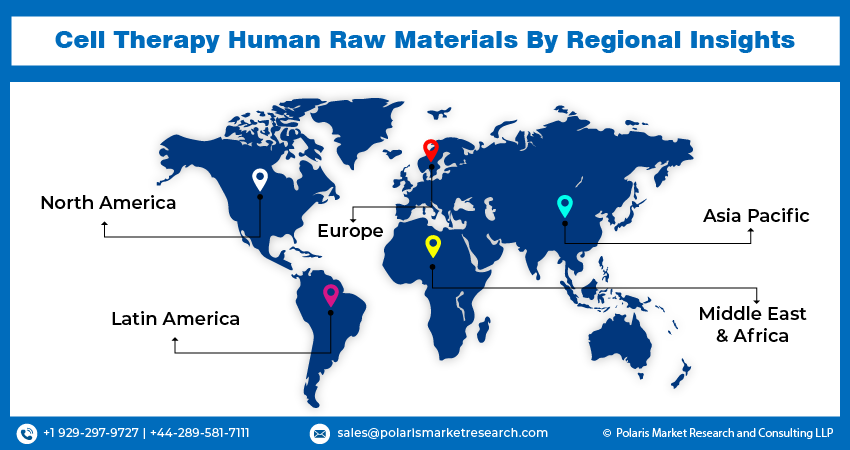
North America dominated the global cell therapy human raw materials market in 2025 and is expected to continue to do so. The prevailing influence of the region can be credited to favorable government regulations, a rising need for groundbreaking therapeutics, and concerted endeavors by major market entities to enhance cell-based therapy products addressing various chronic disorders. Additionally, North America hosts numerous prominent companies engaged in the production and commercialization of cell-based products, creating a surge in demand for cell therapy human raw materials and thereby propelling market expansion. Furthermore, collaborative initiatives between key industry players and smaller biotechnology firms heighten competition, as companies strive to fortify their positions in the dynamically evolving cell therapy market.
In the meanwhile, the Asia Pacific region is poised to experience the most rapid growth in the market. This surge is attributed to a heightened emphasis on biotechnology and a growing demand for advanced cell therapies. The market's expansion is further propelled by increased research and development activities, strategic collaborations, and the establishment of manufacturing facilities by major industry players.
Source: Polaris Market Research Analysis
Key Market Players & Competitive Insights
The cell therapy human raw materials market is fragmented and is anticipated to witness competition due to several players' presence. Major service providers in the market are constantly upgrading their technologies to stay ahead of the competition and to ensure efficiency, integrity, and safety. These players focus on partnership, product upgrades, and collaboration to gain a competitive edge over their peers and capture a significant cell therapy human raw materials market share.
Some of the major players operating in the global market include:
- Bio-Techne Corporation
- Catalent, Inc.
- CellGenix GmbH
- Corning Incorporated
- Lonza Group Ltd.
- Merck KGaA
- Miltenyi Biotec
- Pall Corporation (Danaher Corporation)
- PeproTech, Inc.
- STEMCELL Technologies Inc.
- Takara Bio Inc.
- Thermo Fisher Scientific Inc.
- WuXi AppTec
- ZenBio, Inc.
- RoosterBio Inc.
Future Outlook
The cell therapy human raw materials market is projected to exhibit robust growth as cell-based treatments advance. The ongoing efforts to develop cell-based treatments have been increasing rapidly across applications such as oncology, regenerative medicine, and rare disease treatments. Investment in biotechnology research, an increased number of clinical trials, and the focus on manufacturing cell therapy on a large scale will further fuel the demand for raw materials. Developments in cell culture techniques, GMP manufacturing, and automation of production processes are also expected to foster growth in the market.
Recent Developments
- May 2026: Sartorius announced opening a new competence center for cell and gene therapy components in Freiburg, Germany. According to Sartorius, the center will more than double its manufacturing capacity for quality-critical materials for the dynamic cell and gene therapy market. (source: sartorius.com)
- February 2026: Gemini Bioproducts, LLC announced the launch of aiMOS (Artificial Intelligence Media Optimization Service). The company stated that the service leverages artificial intelligence/machine learning (AI/ML) and multi‑omics data for designing custom media supplements that enhance the performance and scalability of cell therapy manufacturing.
Report Coverage
The cell therapy human raw materials market report emphasizes on key regions across the globe to provide better understanding of the product to the users. Also, the report provides market insights into recent developments, trends and analyzes the technologies that are gaining traction around the globe. Furthermore, the report covers in-depth qualitative analysis pertaining to various paradigm shifts associated with the transformation of these solutions.
The report provides detailed analysis of the cell therapy human raw materials market size while focusing on various key aspects such as competitive analysis, product, end-user, and their futuristic growth opportunities.
Cell Therapy Human Raw Materials Market Report Scope
| Report Attributes | Details |
| Market size Value in 2025 | USD 4.43 billion |
| Market size Value in 2026 | USD 5.43 billion |
| Revenue Forecast in 2034 | USD 28.35 billion |
| CAGR | 22.95% from 2026 – 2034 |
| Base Year | 2025 |
| Historical Data | 2021 – 2024 |
| Forecast Period | 2026 – 2034 |
| Quantitative Units | Revenue in USD billion and CAGR from 2026 to 2034 |
| Segments Covered |
|
| Regional Scope |
|
| Competitive Landscape |
|
| Report Format |
|
| Customization | Report customization as per your requirements with respect to countries, region and segmentation. |
Source: Polaris Market Research Analysis
Cell Therapy Human Raw Materials Market FAQ's
The global cell therapy human raw materials market size is expected to reach USD 28.35 billion by 2034.
Corning Incorporated, Lonza Group Ltd., Merck KGaA, Miltenyi Biotec, Pall Corporation are the top market players in the market.
North America region contribute notably towards the global Cell Therapy Human Raw Materials Market.
Cell Therapy Human Raw Materials Market is exhibiting the CAGR of 22.95% during the forecast period.
The Cell Therapy Human Raw Materials Market report covering key segments are product, end-user, and region
Human cell therapy raw materials are the materials required to cultivate and grow cells in preparation for cell therapy procedures. These include culture media, supplements, reagents, and buffers that are required to manufacture safe and efficient cell therapies.
Cell therapy raw materials enable the creation of conditions suitable for growing and maintaining cell health during manufacture. They help improve product quality, enhance production consistency, and meet regulatory standards.
The growing development of cell therapies to treat various cancers and rare diseases, as well as advances in regenerative medicine, are major factors driving demand for these materials.
Download Sample Report of Cell Therapy Human Raw Materials Market
Please fill out the form to request a customized copy of the research report.


