
Ear Infection Treatment Market Size, Share, Global Analysis Report, 2026-2034
REPORT DETAILS
Ear Infection Treatment Market Summary
The ear infection treatment market size was valued at USD 12.93 billion in 2025. The market is anticipated to grow at a CAGR of 5.35% from 2026 to 2034. The high prevalence of acute otitis media (AOM) in pediatric patients and the widespread adoption of first-line antibiotic therapies are a few of the key factors driving market growth.
Market Statistics
Ear Infection Treatment Market Key Takeaways
- North America dominated the global Ear Infection Treatment market with a 41.3% revenue share in 2025. The region's leadership is driven by the high prevalence of ear infections, well-established healthcare infrastructure, widespread access to advanced diagnostic services, and favorable reimbursement policies.
- Asia Pacific is projected to register the highest CAGR of 8.8% during the forecast period. Government healthcare initiatives, expanding healthcare infrastructure, increasing awareness of early diagnosis, and improving access to medical treatment are expected to support regional market growth.
- The Bacteria segment accounted for the largest market share of 68.5% in 2025. The high incidence of bacterial ear infections, increasing demand for antibiotic therapies, and growing concerns regarding antibiotic-resistant pathogens continue to drive the segment's dominance.
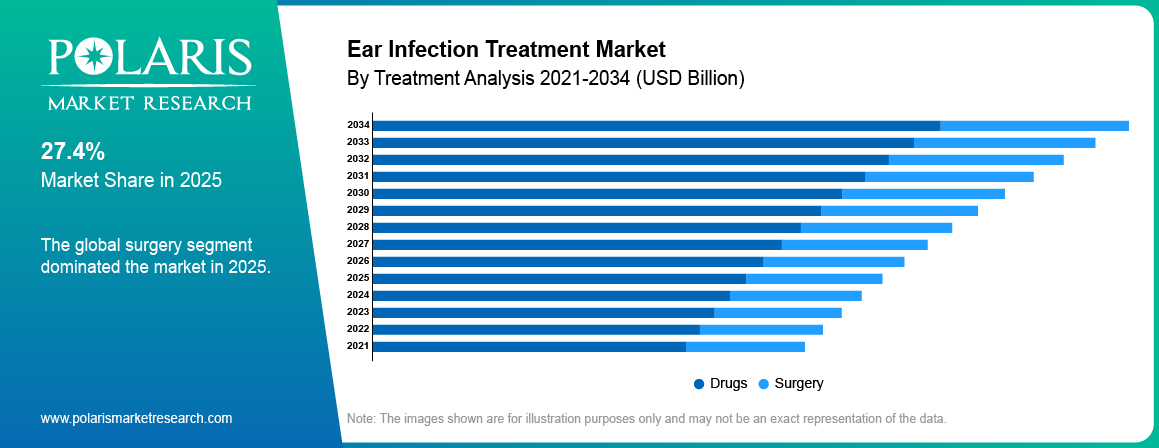
- The Surgery segment held the largest share of 27.4% in 2025. Persistent and recurrent ear infections that are resistant to conventional drug therapies, along with increasing adoption of minimally invasive surgical procedures, are supporting the segment's growth.
- The Hospitals segment accounted for the largest market share of 54.9% in 2025. Hospitals remain the primary treatment centers for ear infections due to their comprehensive diagnostic capabilities, access to ENT specialists, advanced surgical facilities, and integrated patient care services.
Note: Figures and projections outlined in this report are the result of Polaris Market Research’s proprietary analytical processes, grounded in the latest available datasets and market observations.
Ear Infection Treatment Market Definition and Scope
Ear infection treatment encompasses all the drugs, therapies, and treatments for curing infections in the ear’s outer, middle, and inner sections. It includes treatments ranging from antibiotics, ear drops, and pain medications to surgeries that help reduce symptoms, treat infections, and prevent hearing disorders.

Source: Polaris Market Research Analysis
To Understand More About this Research: Download Sample Report
Ear Infection Treatment Market Drivers, Opportunities and Challenges
- Breakthroughs in formulations and delivery methods are shaping the ear infection treatment market landscape.
- The rising prevalence of ear infections, spanning otitis media to external otitis, is fueling the market growth.
- The shift towards minimally invasive surgeries is expected to create several market opportunities.
- Escalating antibiotic resistance may present market challenges.
AI Impact on Ear Infection Treatment Market
- AI assists in diagnosing ear infections via analysis of medical imagery, clinical data, and symptoms of the infection to ensure rapid and accurate decisions regarding treatment.
- The technology ensures personalization in the delivery of treatment through aiding medical practitioners in selecting the right kind of therapy for the infection.
- AI assists in facilitating clinical research through analysis of treatment outcomes.
- The technology facilitates monitoring of patients, telemedicine services, and treatment plans through predictive analysis.
How Ear Infection Diagnosis and Treatment Work
Symptoms Evaluation – A patient comes for medical consultation with symptoms like ear pain, fever, hearing problems, or ear discharge.
Ear Exam – The ear of the patient is examined using the otoscope to determine whether there is an infection and where it occurs.
Diagnosis – Diagnosis of the infection determines whether the infection is an outer, middle, or inner infection and its causes, such as bacteria or viruses.
Choosing the Correct Treatment – Based on the examination results, the appropriate treatment method is chosen, which may include antibiotic therapy, ear drops, painkillers, and supportive treatment.
Recovery Evaluation – The symptoms of the patient are examined to prove that the infection is healing and the treatment is successful.
Surgical Treatment (If Required) – If the infection happens again and is severe enough, operations like inserting tubes into the ears are advised to prevent further infections and drain the fluid.
Aftercare Treatment – The ability of hearing and the state of the ears of the patient are examined for recovery and preventing complications.
Ear Infection Treatment Market Size and Growth Outlook
The ear infection treatment market share is on the rise due to a surge in pediatric ear infections. The growing prevalence among children has become a driving factor for market expansion, necessitating specialized treatment solutions. Pediatric cases, often caused by bacteria or viruses, prompt demand for advanced antibiotics and innovative formulations. The market is responding with child-friendly medication options to enhance compliance and minimize discomfort for young patients. As healthcare providers and parents seek effective and safe treatments, the ear infection treatment market industry forecast is adapting to meet the increasing demand for age-appropriate interventions, addressing the unique needs of pediatric ear infections.
In addition, companies operating in the market are concentrating on developing new solutions to cater to the growing market demand.
For instance, in August 2020, Dr. Reddy’s Laboratories Ltd has introduced a therapeutic equivalent generic version of Ciprodex Otic Suspension, approved by the U.S. Food and Drug Administration (USFDA). The launched product is Ciprofloxacin 0.3% and Dexamethasone 0.1% Otic Suspension.
Technological breakthroughs are driving the ear infection treatment market size, revolutionizing diagnostics and therapies. High-resolution otoscopy enhances diagnosis precision, while advanced drug delivery systems optimize treatment. Minimally invasive procedures, like endoscopic ear surgery, reduce recovery times. Telemedicine facilitates timely consultations, attracting substantial investments.
Industry Growth Drivers
Advances in Antibiotics and Otic Drug Delivery Are Driving Market Growth
Antibiotic advancements are driving notable growth in the market. Breakthroughs in formulations and delivery methods, including sustained-release options and combination therapies, enhance efficacy and patient compliance. Key antibiotics like amoxicillin and azithromycin continue to play a crucial role in managing bacterial ear infections. The pharmaceutical industry's relentless focus on research yields more potent and targeted antibiotics, addressing concerns about resistance. This progress results in an expanding array of treatment options, fostering a more robust and responsive approach to tackling diverse bacterial strains causing ear infections, ultimately elevating the effectiveness of ear infection treatments.
Rising Pediatric Burden of Acute Otitis Media Is Driving Treatment Demand
The escalating prevalence of ear infections, spanning otitis media to external otitis, is fueling the market. Affecting both children and adults, the surge in infections is linked to factors like pollution and compromised hygiene. This upswing has triggered a heightened demand for effective treatment solutions, fostering innovation in diagnostics and therapeutics. Advanced antibiotics, minimally invasive procedures, and novel drug delivery systems are reshaping the market. Increased research and development activities are introducing cutting-edge therapies. With the global burden of ear infections persisting, the market is positioned for continued growth in the coming years.
Tele-Otoscopy, AI Diagnosis and High-Resolution Ear Imaging
Advancements in technology in diagnostic equipment have facilitated the process of diagnosing ear infections efficiently and effectively. High-resolution otoscopes, computerized imaging systems, and endoscopic examination of the ears ensure that there is improved visualization of the ear, and thus it is easy to determine the type of infection. Technological advancements assist doctors in making the diagnosis fast and choosing the right treatment methods. In some hospitals, artificial intelligence is being utilized to assist in diagnosing ear infections. Better technology, especially when it comes to diagnostic tools, will reduce the chances of misdiagnosis.
Telemedicine in Ear Infection Management
The use of telemedicine makes the treatment of ear infections easier because people can consult a doctor virtually and do not have to visit the clinic in person. Through a virtual consultation, the patient can discuss their symptoms, seek medical advice, and determine whether a physical visit is necessary. This is especially useful when dealing with patients who come from distant areas where there are not many ENT specialists around. Using this technology, the doctor can schedule follow-ups with the patient in order to assess the progress made by the patient in their treatment.

Source: Polaris Market Research Analysis
Ear Infection Treatment Market Restraints and Challenges
Treatment Access Gaps and Shortage of ENT Specialists
Global health disparities pose a significant impediment to the growth of the market. Variances in healthcare infrastructure and access create substantial challenges, limiting timely and effective diagnosis and treatment of ear infections. Socioeconomic factors and inadequate access to medical facilities disproportionately affect lower-income regions, hindering market growth. Disparities in healthcare education contribute to delayed healthcare-seeking behavior, impacting early detection. Addressing global health inequalities is crucial for fostering market growth, requiring collaborative efforts to enhance healthcare infrastructure and accessibility globally.
Preventive Healthcare, Vaccination and Early Diagnosis Opportunities
Preventive healthcare assists in lowering the possibility of getting an ear infection, more so in children. The pneumococcal and influenza vaccines decrease the probability of infections that could lead to ear infections. Health checkups and treating respiratory infections early on are also helpful in prevention. Awareness campaigns regarding good ear hygiene and not using cotton buds unnecessarily are other ways of preventing ear infections. It is also important for parents to detect any early signs and seek medical attention immediately. With continued expansion of preventive healthcare, the number of ear infections is expected to reduce.
Ear Infection Treatment Market Segmentation by Pathogen, Treatment, Infection Type and End Use
The ear infection treatment market analysis is primarily segmented based on pathogen, treatment, infection type, end use, and region.
| By Pathogen | By Treatment | By Infection Type | By End Use | By Region |
|
|
|
|
|
Source: Polaris Market Research Analysis
Ear Infection Treatment Market by Pathogen: Bacterial, Viral and Other Infections
Bacteria Segment Accounted for Significant Market Share in 2025
The bacteria segment accounted for a significant market share in 2025. The surge in bacterial ear infection treatment is propelled by escalating antibiotic resistance challenges, necessitating targeted strategies. Pervasive bacterial infections, particularly among children, heighten demand for specialized interventions. Delayed initial treatment instances underscore the need for comprehensive bacterial infection solutions. Improved awareness and diagnostics drive demand for precision-targeted treatments. Global health trends, including population shifts and lifestyle changes, contribute to an increased incidence, demanding adaptable treatments. Ongoing technological advancements aid in precise bacterial strain identification, enhancing tailored treatment development for effective bacterial ear infection management.
Ear Infection Treatment Market by Treatment: Drugs and Surgery
Surgery Segment Accounted for Significant Market Share in 2025
The surgery segment accounted for a significant market share in 2025. Persistent ear infections resistant to standard treatments drive demand for surgeries like myringotomy or tympanoplasty. Complications like mastoiditis highlight surgery's vital role in addressing structural damage. Procedures like stapedectomy or tympanoplasty cater to the demand for auditory restoration. Pediatric ear infections boost demand for adenoidectomy, emphasizing specialized pediatric ear surgery. Technological progress enhances safety, propelling market growth.
Ear Infection Treatment Market by Infection Type: Outer, Middle and Inner Ear
Middle Ear Segment Held Significant Market Revenue Share in 2025
The middle-ear segment held a significant revenue share in 2025. Middle ear infection (otitis media) treatment adopts a comprehensive strategy. Precise antibiotic selection based on bacterial diagnosis ensures targeted therapy. Analgesics alleviate severe pain, while warm compresses and ear drops provide localized relief. Surgical interventions like myringotomy or tympanoplasty address persistent or complicated infections. Diagnostic tools like pneumatic otoscopy aid in assessing middle ear fluid. Complication management includes addressing issues like hearing loss. Personalized treatment, considering patient factors, underscores the importance of timely medical consultation.
Outer Ear vs Middle Ear vs Inner Ear Infections
| Infection | Common Causes | Common Treatment |
| Outer Ear Infection (Otitis Externa) | Bacterial infections, water exposure, or any injury to the ear canal | Ear drops with antibiotics or antifungals, ear canal cleaning, and pain relief medicines |
| Middle Ear Infection (Otitis Media) | Viral or bacterial infections, normally after suffering from a cold or an upper respiratory infection | Careful observation, painkillers, antibiotics, and ear tube surgery if the condition recurs are used for middle ear infection treatment |
| Inner Ear Infection | Bacterial or viral infections or inflammation of the inner ear | Treatment for symptoms and underlying disease |
Source: Polaris Market Research Analysis
Ear Infection Treatment Market by End Use: Hospitals, Clinics and Other Settings
Hospital Segment Held Significant Market Revenue Share in 2025
The hospital segment held a significant revenue share in 2025. Hospital-based treatment of ear infections encompasses a thorough medical assessment, including history and diagnostics like otoscopy. Accurate diagnosis guides antibiotic therapy, administered intravenously or orally based on bacterial specifics. Pain relief, achieved through analgesics, complements treatment. Continuous monitoring and follow-up ensure effective treatment, with surgical interventions like mastoidectomy considered for complications. Hospitals play a pivotal role in patient education, emphasizing antibiotic completion, proper ear hygiene, and symptom recognition.
Use Cases of Ear Infection Treatment
| Use Case | How Treatment Helps |
| Otitis Media in Children | Antibiotics, analgesics, and observation can be used for treating infections in the middle ear. |
| Swimmer’s Ear (Otitis Externa) | Medicinal ear drops may help reduce the effects of infections in the outer ear associated with water exposure. |
| Chronic Infections in the Middle Ear | Prolonged use of medicine and/or surgery may be applied to manage infections in the middle ear and prevent possible complications. |
| Post-Viral Ear Infection Care | Medicine-based treatments reduce the inflammatory effect on the ear and relieve the symptoms experienced by patients. |
| Ear Tubes Placement | Tympanostomy tubes help reduce the frequency of recurrent infections in the middle ear. |
| Hearing Preservation | Early treatment will help avoid possible hearing loss. |
Source: Polaris Market Research Analysis
Source: Polaris Market Research Analysis
Cost and Treatment Accessibility
The expenses related to ear infection treatments differ based on the degree of infection that an individual is suffering from and the kind of treatment needed. If the infection is minor, ear infection medications and ear drops can be used. However, serious or chronic infections will require specialized care, making the cost much higher. Availability of treatment also varies depending on the location and availability of doctors who specialize in ENT care, which is less likely in rural areas. With better health care facilities being developed, access to treatment is becoming easier for many people.
Ear Infection Treatment Market Regional Analysis
North America Ear Infection Treatment Market
In 2025, the North American region dominated the global market. The North American market is fueled by the high prevalence of ear infections, especially in children. Advances in antibiotics, medications, and minimally invasive procedures reshape treatment approaches. Over-the-counter options like ear drops respond to consumer preferences. The market dynamics are closely tied to healthcare policies and regulations, affecting accessibility and affordability. Key players' strategic collaborations and product launches contribute to a competitive landscape, requiring continuous monitoring for insights into evolving treatment trends.
Over the projected period, the Asia-Pacific region is likely to experience significant growth. Government healthcare initiatives and policies significantly influence the market. Subsidies, awareness programs, and regulatory frameworks play a role in shaping the landscape. Some Asian countries are popular medical tourism destinations. Patients seeking ear infection treatments travel to specific countries known for advanced healthcare services, impacting the regional market.

Source: Polaris Market Research Analysis
Key Market Players & Competitive Insights
The ear infection treatment market industry displays a variety of participants, and the entry of numerous newcomers is anticipated to intensify competition. Recognized leaders in the industry consistently upgrade their technologies to sustain a competitive edge, emphasizing efficiency, integrity, and safety. These entities prioritize strategic initiatives like forming partnerships, enhancing products, and engaging in collaborative ventures to outperform their peers. Their objective is to secure a significant ear infection treatment market share.
Ear Infection Treatment Market Competitive Landscape and Leading Companies
- Abbott Laboratories
- AstraZeneca plc
- Bayer AG
- Boehringer Ingelheim International GmbH
- Bristol Myers Squibb
- Daiichi Sankyo Company, Limited
- Eli Lilly and Company
- GlaxoSmithKline plc
- Johnson & Johnson
- Merck & Co., Inc.
- Novartis International AG
- Pfizer Inc.
- Roche Holding AG
- Sanofi S.A.
- Teva Pharmaceutical Industries Ltd.
Ear Infection Treatment Market Future Outlook and Emerging Opportunities
The market for ear infection treatments is projected to witness steady growth due to the increasing number of patients suffering from such infections, particularly children. Advancements in the field of antibiotics, diagnosis, and telemedicine will help in improving the way ear infections can be managed and treated. Hearing health awareness and improved healthcare access have helped in making the market develop. Minimally invasive procedures and innovative drug delivery mechanisms are creating new avenues for this market. An increased focus on preventive healthcare and vaccinations will keep the demand for ear infections rising in the future.
Ear Infection Treatment Market Recent Developments and Regulatory Approvals
- April 2026: Earflo announced the U.S. market availability of its FDA-cleared pediatric ear pressure treatment device. The company stated that the device is designed to treat negative middle ear pressure in children as young as two. It gives families an at-home alternative for the "watchful waiting" period often prescribed before surgery.(source: prnewswire.com)
- October 2025: Salvat Pharmaceutical Group announced the U.S. Food and Drug Administration (FDA) approved Clotic, an innovative treatment for otomycosis with Orphan Drug Designation. The company stated that the approval introduces a highly effective therapeutic option to alleviate the hallmark symptoms of fungal infections that affect the external auditory canal.(source: svt.com)
- In October 2024, Health Canada approved over-the-counter sales of Soothe antibiotic drops from Bausch + Lomb for treating external infections affecting the eyes and ears.
Report Coverage
The ear infection treatment market report emphasizes on key regions across the globe to provide better understanding of the product to the users. Also, the report provides market insights into recent developments, trends and analyzes the technologies that are gaining traction around the globe. Furthermore, the report covers in-depth qualitative analysis pertaining to various paradigm shifts associated with the transformation of these solutions.
The report provides detailed analysis of the market while focusing on various key aspects such as competitive analysis, pathogens, treatments, infection types, end uses, and their futuristic growth opportunities.
Ear Infection Treatment Market Report Scope
| Report Attributes | Details |
| Market size value in 2025 | USD 12.93 billion |
| Market size value in 2026 | USD 13.57 billion |
| Revenue forecast in 2034 | USD 20.66 billion |
| CAGR | 5.35% from 2026 – 2034 |
| Base year | 2025 |
| Historical data | 2021 – 2024 |
| Forecast period | 2026 – 2034 |
| Quantitative units | Revenue in USD billion and CAGR from 2026 to 2034 |
| Segments covered |
|
| Regional scope |
|
| Competitive Landscape |
|
| Report Format |
|
| Customization | Report customization as per your requirements with respect to countries, region, and segmentation. |
Source: Polaris Market Research Analysis
Ear Infection Treatment Market FAQs
The Ear Infection Treatment Market report covering key segments are pathogen, treatment, infection type, end use, and region.
Ear Infection Treatment Market Size Worth $20.66 Billion By 2034
Ear Infection Treatment Market exhibiting the CAGR of 5.35% during the forecast period.
North America is leading the global market
key driving factors in Ear Infection Treatment Market are advancements in antibiotics is projected to spur the product demand
An ear infection arises due to a bacterial or viral infection in the outer, middle, or inner ear, resulting in symptoms like ear pain, swelling, difficulty hearing, and discharging fluids. An ear infection can happen to children and adults, but it is relatively more common in young children.
Antibiotics are one of the main options for treating bacterial ear infections when needed. In some cases, physicians recommend analgesics or ear drops. Nevertheless, the type and site of the disease can exclude the use of antibiotic ear drops.
Market drivers include the increase in the frequency of ear infections and growing awareness about hearing health. The market also benefits from improved access to healthcare.
Download Sample Report of Ear Infection Treatment Market
Please fill out the form to request a customized copy of the research report.


