
Europe Laboratory Developed Tests Market Growth Analysis, 2026-2034
REPORT DETAILS
Europe Laboratory Developed Tests Market Summary
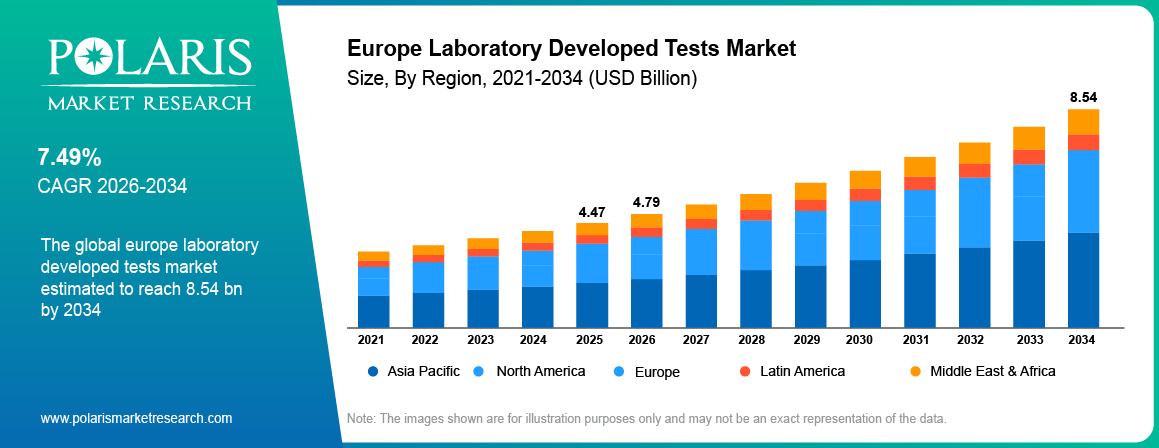
The europe laboratory developed tests market size was valued at USD 4.47 billion in 2025. The market is anticipated to grow from USD 4.79 billion in 2026 to USD 8.54 billion by 2034, exhibiting the CAGR of 7.49% during the forecast period.
Market Statistics
Key Takeaways
- France accounted for 15.70% of the Europe laboratory developed tests market revenue in 2025. Rising demand for early disease detection and an aging population support the adoption of advanced diagnostic tests.
- The UK laboratory developed tests market is projected to grow at a CAGR of 8.05% during 2026–2034. Increasing adoption of personalized healthcare and rising research and development activities are supporting market growth.
- Molecular diagnostics accounted for 26.35% of the market revenue in 2025. Its applications in genetic disorders and infectious disease detection support segment demand.
- The immunoassays segment is projected to grow at a CAGR of 8.71% during 2026–2034. Rising demand for early disease detection and increasing chronic and infectious disease cases are driving growth.
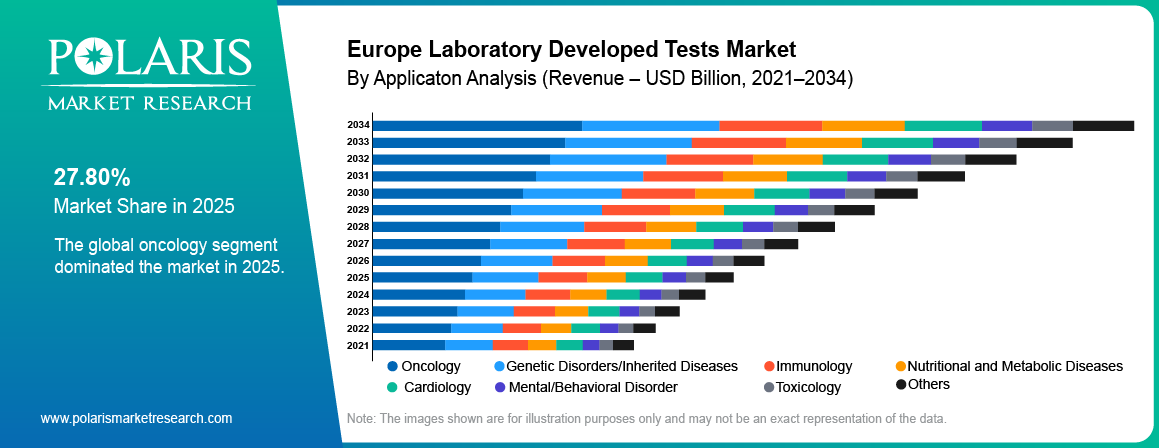
- Oncology accounted for 27.80% of the market revenue in 2025. Growing demand for early cancer detection, biomarker testing, and personalized treatment supports segment dominance.
- The nutritional and metabolic diseases segment is projected to grow at a CAGR of 7.26% during 2026–2034. Rising cases of obesity and diabetes are increasing demand for specialized diagnostic testing.
Note: Figures and projections outlined in this report are the result of Polaris Market Research’s proprietary analytical processes, grounded in the latest available datasets and market observations.
What are Laboratory Developed Tests?
Laboratory-developed tests (LDTs) are diagnostic tests made and performed within a clinical laboratory. They help detect diseases, genetic changes, and other health conditions. These tests help doctors understand a patient's condition and choose suitable treatments. They are useful when standard commercial tests do not meet specific medical needs. LDTs support cancer testing, genetic analysis, infectious disease detection, and personalized medicine. They must also meet the required quality, safety, and regulatory standards.
The growing demand for personalized medicine and the rising number of cancer cases are supporting the Europe laboratory developed tests market. Advances in molecular diagnostics, next-generation sequencing, and laboratory automation are also creating new growth opportunities. These technologies help laboratories perform specialized tests and support better diagnosis and treatment decisions.
For instance, in January 2026, three new European Union reference laboratories became operational to strengthen testing and disease surveillance across Europe. This development supports improved testing capacity and public health preparedness (Source: ecdc.europa.eu).
Regulatory changes are also shaping the diagnostic testing landscape in Europe. The EU In Vitro Diagnostic Regulation (IVDR) sets requirements for diagnostic tests and in-house laboratory devices, making regulatory compliance an important factor for laboratories and manufacturers.
How Laboratory Developed Tests Work
Laboratory-developed tests follow six main steps to produce useful diagnostic results. Each step helps laboratories maintain test quality and provide reliable information for patient care.
Patient Sample Collection: A sample, such as blood, tissue, or saliva, is collected from the patient. The sample type depends on the condition being tested.
Test Development: The laboratory selects suitable methods and technologies to detect a disease, genetic change, or biomarker. The test is designed to meet a specific diagnostic need.
Validation and Quality Testing: The laboratory checks the test's accuracy, performance, and reliability before using it for patient testing. Quality controls help identify errors and support consistent results.
Diagnostic Analysis: The collected sample is tested using suitable laboratory equipment and methods. The process depends on the technology used and the purpose of the test.
Result Interpretation: Laboratory professionals review the test results to identify important findings. They check the results carefully before sharing them with the healthcare team.
Clinical Decision-Making: Doctors use the results along with the patient's symptoms and medical history. This information helps them support diagnosis, select treatments, or recommend further testing.
Market Dynamics
Market Driver: Demand for Personalized Medicine and Biomarker Testing
The growing demand for personalized medicine is increasing the need for tests that help doctors select suitable treatments. Laboratory-developed tests can detect specific genetic changes and biomarkers. These findings help healthcare professionals make treatment decisions based on individual patient needs.
For instance, in 2025, the European Commission highlighted personalized medicine and genomics in its life sciences strategy. This focus supports the development of targeted diagnostic approaches and creates opportunities for laboratories to address specific patient needs (Source: research-and-innovation.ec.europa.eu)
Market Driver: Chronic Disease, Cancer and Aging Population
The rising burden of cancer and other chronic diseases is increasing the need for diagnostic testing across Europe. Older adults are also more likely to develop certain long-term health conditions. These trends increase demand for tests that support early detection and disease management.
For instance, according to the European Commission, around 2.7 million people in the EU were diagnosed with cancer in 2024. Eurostat also reported that people aged 65 and over accounted for 22% of the EU population in 2025 (Source: europarl.europa.eu).
Market Opportunity- Advances in Molecular Diagnostics and Genomic Testing
Advances in molecular diagnostics and genomic testing are creating new opportunities for the Europe laboratory developed tests market. These technologies help laboratories identify genetic changes and disease-related biomarkers. They can also support more targeted approaches to diagnosis and treatment.
For instance, in January 2026, a European joint action on personalized cancer medicine began to support wider adoption of personalized cancer care. This initiative may encourage greater use of genomic testing and specialized diagnostic methods across European healthcare systems (Source: ec.europa.eu).
Market Opportunity- Growth of AI and Laboratory Automation
AI and laboratory automation offer opportunities to improve testing workflows and support data analysis. Automated systems can help laboratories process samples and manage diagnostic information. These tools may also reduce manual work and help laboratories handle growing testing needs.
For instance, the European Commission reported in 2025 that investment in health-related information and communication technology grew by around 30% between 2021 and 2024. This investment supports digital healthcare development and creates opportunities for laboratories to adopt advanced diagnostic tools (Source: health.ec.europa.eu)
Market Restraint- High Development Costs, Validation and Regulatory Requirements
Developing laboratory-developed tests requires investment in equipment, skilled staff, test validation, and quality control. Smaller laboratories may find these costs difficult to manage. Meeting regulatory requirements can also increase the time and resources needed to develop and maintain tests, which may limit adoption among laboratories with limited budgets.
Technology Insights
The Europe laboratory developed tests market includes several technologies used to detect diseases and health conditions. Molecular diagnostics supports genetic analysis and infectious disease testing. Immunoassays help detect specific proteins, hormones, and antibodies. Hematology and coagulation tests examine blood cells and blood clotting. Microbiology identifies microorganisms, while clinical chemistry measures substances in body fluids. Histology and cytology examine tissues and cells. Flow cytometry studies cell characteristics, and mass spectrometry helps identify and measure compounds in samples. These laboratory developed test technologies support specialized clinical diagnostics across Europe. Their adoption depends on clinical needs, laboratory capabilities, and the demand for advanced diagnostic testing.
| Technology | What It Measures or Does | Potential LDT Applications |
| Molecular Diagnostics | Detects DNA, RNA, and specific molecular markers. | Infectious disease detection, inherited genetic disorders, and tumour mutation analysis. |
| Immunoassays | Detects specific proteins, antigens, antibodies, and hormones. | Biomarker analysis, selected infectious disease testing, and metabolic disorder diagnosis. |
| Hematology and Coagulation | Examines blood cells and measures blood clotting. | Specialized blood disorder diagnosis and assessment of clotting conditions. |
| Microbiology | Identifies and studies microorganisms, including bacteria, viruses, and fungi. | Detection and analysis of infectious agents. |
| Clinical Chemistry | Measures chemical substances in blood and other body fluids. | Metabolic disorder diagnosis and assessment of organ function. |
| Histology, Cytology, and Digital Pathology | Examines tissue and cell samples, including digital analysis of tissue images. | Tumour classification, cellular analysis, and biomarker assessment. |
| Flow Cytometry | Measures cell characteristics using light-based detection methods. | Analysis of blood disorders and immune system conditions. |
| Mass Spectrometry | Identifies and measures compounds based on their mass-to-charge ratio. | Specialized biochemical testing, metabolic analysis, and toxicology testing. |
Source: Polaris Market Research Analysis
Molecular Diagnostics and LDT Growth
Molecular diagnostics plays an important role in the Europe laboratory developed tests market because it helps identify genetic changes and disease-causing organisms. Polymerase chain reaction (PCR) detects specific DNA or RNA sequences, while next-generation sequencing (NGS) examines many genetic changes at once. These molecular diagnostic tests support infectious disease testing, inherited disorder diagnosis, and cancer biomarker analysis. Laboratories can use these methods to develop specialized laboratory developed tests (LDTs) when standard commercial diagnostic tests do not meet specific clinical needs.
Advanced Technologies Driving LDT Development
Advanced laboratory technologies are expanding the range of laboratory developed diagnostic tests. Mass spectrometry helps measure specific substances in samples, while digital pathology allows tissue images to be examined using digital tools. Laboratory automation supports sample handling and routine testing tasks. Bioinformatics platforms help manage and analyze complex biological data. These diagnostic laboratory technologies can improve workflows and support specialized testing for precision medicine and disease diagnosis. Their adoption depends on equipment availability, staff skills, test validation, and applicable regulatory requirements, including the EU In Vitro Diagnostic Regulation (IVDR).
Laboratory Developed Tests vs Commercial IVD Tests
Laboratory-developed tests (LDTs) are developed and performed within clinical laboratories to meet specific diagnostic needs. Commercial in vitro diagnostic (IVD) tests are manufactured for wider use across healthcare settings. Laboratory-developed diagnostic tests offer flexibility for specialized testing, while commercial IVD tests support standardized testing. Both must meet applicable quality and regulatory requirements based on the jurisdiction, intended use, and test context.
| Comparison Point | Laboratory-Developed Tests (LDTs) | Commercial IVD Tests |
| Development | Designed, developed, and used within a clinical laboratory. | Developed by manufacturers for use across multiple laboratories and healthcare settings. |
| Customization | Can be designed to meet specific diagnostic needs. | Usually designed for a defined purpose and standardized use. |
| Validation and Performance | Laboratories assess test performance and follow applicable quality requirements. | Manufacturers establish test performance and meet applicable regulatory requirements. |
| Availability and Scale | May be limited to the laboratory or network that developed the test. | Can be distributed to multiple healthcare facilities, subject to market access and supply. |
| Regulatory Requirements | In the EU, in-house tests must meet the applicable conditions under the In Vitro Diagnostic Regulation (IVDR), including Article 5(5). | Commercial IVD tests generally follow the applicable IVDR requirements for conformity assessment and market placement. |
| Clinical Use | Can address specific diagnostic needs that available commercial tests may not meet. | Used for their defined intended purposes according to the manufacturer's instructions. |
Source: Polaris Market Research Analysis
Role of LDTs in Personalized Medicine
Laboratory-developed tests (LDTs) support personalized medicine by helping doctors understand each patient's specific health needs. These laboratory-developed diagnostic tests can identify genetic changes, biomarkers, and other biological features that may affect treatment choices. The results help healthcare professionals select suitable treatments and monitor patient responses. Patient-specific diagnostic testing also supports targeted therapies and precision healthcare. As demand for personalized healthcare grows, LDTs help laboratories address diagnostic needs that standard commercial tests may not fully meet.
Impact of AI and Laboratory Automation
Artificial intelligence (AI) and laboratory automation are creating new opportunities in the Europe laboratory developed tests market. AI tools can help analyze diagnostic data, examine digital pathology images, and identify patterns that require further clinical review. Laboratory automation supports sample handling, data processing, and routine testing tasks. These advanced diagnostic technologies may help laboratories manage workloads and improve testing efficiency. However, AI-based diagnostic tools require proper validation and professional review. Data quality, patient privacy, and system reliability remain important considerations.
For instance, in May 2026, the European Commission reported on the first meeting of its network of AI-powered advanced screening centres. The initiative focuses on using and assessing AI tools for the early detection and diagnosis of cancer and cardiovascular diseases. Although it is not specific to LDTs, it highlights growing European interest in AI-powered medical diagnostics (Source: digital-strategy.ec.europa.eu).
EU Regulatory Landscape and IVDR Transition Timeline
The Europe laboratory developed tests market is shaped by the In Vitro Diagnostic Regulation (IVDR), Regulation (EU) 2017/746. The regulation has applied since 26 May 2022. It sets requirements for the safety and performance of in vitro diagnostic (IVD) devices, including commercial diagnostic products and certain tests developed within healthcare institutions.
IVDR Requirements for In-House Laboratory Tests
Article 5(5) of the IVDR covers certain in-house devices developed and used within the same health institution. These laboratory-developed tests can address specific patient needs when an equivalent device available on the market cannot meet those needs at the appropriate level. Eligible health institutions must meet applicable conditions for quality management, documentation, and test performance. Therefore, laboratory-developed tests are not automatically exempt from regulatory requirements.
IVDR Transition Timeline for Commercial IVDs
Regulation (EU) 2024/1860 extended transition periods for certain eligible legacy commercial IVDs. The deadlines depend on the device category and whether the manufacturer meets the required conditions. These dates apply to eligible commercial devices, not as universal deadlines for all laboratory-developed tests.
| Commercial IVD category | Transition deadline |
| Eligible Class D devices | 31 December 2027 |
| Eligible Class C devices | 31 December 2028 |
| Eligible Class B devices and Class A sterile devices | 31 December 2029 |
Source: Polaris Market Research Analysis
Manufacturers must meet the applicable conditions to benefit from these extensions. New devices and Class A non-sterile devices do not qualify for these extended transition periods.
Understanding the difference between IVDR transition deadlines and in-house LDT requirements is important for diagnostic laboratories across Europe. Compliance planning helps laboratories maintain testing services while meeting applicable quality and regulatory standards.
Source: European Commission, In Vitro Diagnostic Medical Devices Regulation (IVDR) – Transitional Provisions. health.ec.europa.eu
Segment Analysis
By Technology Insights
The molecular diagnostics segment accounted for the largest market share in 2025 with 26.35%. Its demand is supported by the use of molecular diagnostic tests to detect genetic disorders and identify viral and bacterial infections. These tests can help healthcare professionals detect diseases and make timely treatment decisions. Advances in PCR-based testing and genetic analysis are also supporting the use of molecular diagnostics in the Europe laboratory developed tests market.
The immunoassays segment is expected to register the highest growth rate of 8.71% during the forecast period. Immunoassay-based tests help detect specific proteins, hormones, and antibodies linked to different health conditions. Growing demand for early disease detection and the need to diagnose chronic and infectious diseases are supporting this segment. These tests also help laboratories measure biomarkers that can support disease diagnosis and treatment decisions.
For instance, on 1 January 2025, six EU reference laboratories for public health became operational. They support infectious disease testing, improve laboratory methods, and help strengthen disease surveillance across Europe. This development highlights the importance of reliable diagnostic testing and laboratory capabilities in the region (Source: ecdc.europa.eu)
By Application Insights
The oncology segment accounted for the largest market share in 2025 with 27.80%. Its demand is supported by the growing use of laboratory-developed tests for cancer biomarker testing and personalized medicine. These tests help identify specific biomarkers and genetic changes that can guide treatment decisions. The focus on early cancer detection and targeted therapies is also supporting demand for oncology diagnostic testing across Europe.
The nutritional and metabolic diseases segment is expected to register the highest growth rate of 7.26% during the forecast period. Rising cases of diabetes, obesity, and other metabolic conditions are increasing the need for specialized diagnostic tests. Laboratory-developed tests can help detect relevant biomarkers and support disease diagnosis and monitoring. Growing awareness of early diagnosis is also supporting demand for these tests.
For instance, in December 2025, the European Commission's Joint Research Centre reported that around 2.7 million people in the EU were diagnosed with cancer in 2024. This highlights the need for effective diagnostic testing to support cancer detection and treatment planning (Source: joint-research-centre.ec.europa.eu)
Application Insights and Use Cases
| Application | Testing Methods | Examples | Purpose |
| Oncology and Precision Oncology Testing | Molecular tests and biomarker testing | Detecting cancer-related mutations and studying tumour samples | Helps diagnose cancer and support treatment decisions. |
| Genetic and Rare-Disease Diagnosis | Genetic testing and DNA sequencing | Identifying inherited conditions and rare genetic disorders | Helps detect genetic conditions and support diagnosis. |
| Infectious Disease, Immunology and Metabolic Testing | PCR tests, immunoassays, and biochemical tests | Detecting infections, immune disorders, and metabolic conditions | Helps identify diseases and monitor health conditions. |
| Drug Response and Treatment Selection | Biomarker and genetic testing | Identifying markers that may affect a patient's response to medicines | Helps doctors select suitable treatments based on test results. |
Source: Polaris Market Research Analysis
Regional Insights
The Europe laboratory developed tests market is segmented into the UK, Germany, France, Italy, Spain, the Netherlands, Russia, and the Rest of Europe.
France
France held significant market of 15.70% in 2025. Demand is supported by the growing need for early disease detection and specialized diagnostic testing. The country's aging population and rising cases of non-communicable diseases are increasing the need for laboratory-developed tests (LDTs). These tests help healthcare professionals identify health conditions and support treatment decisions.
UK
The UK laboratory developed tests market is expected to register the significant CAGR of 8.05% during the forecast period. Growing interest in personalized healthcare is increasing demand for tests that support tailored treatment decisions. Research and development activities are also helping laboratories develop specialized diagnostic solutions. In addition, the focus on early disease detection and advances in molecular diagnostics may support the adoption of laboratory-developed tests across the UK healthcare sector.
Germany
Germany is an important market for laboratory-developed tests in Europe, supported by its established healthcare system and demand for advanced diagnostic testing. Molecular diagnostics and biomarker testing can help identify diseases and guide treatment decisions. Continued demand for early diagnosis and specialized clinical testing may support market growth. The report's country-level data should be checked to confirm Germany's market share.
Italy
Italy contributes to the Europe laboratory developed tests market through demand for specialized diagnostic services and disease detection. Laboratory-developed tests can support the diagnosis of cancer, genetic conditions, and other health disorders. The need for timely diagnosis and personalized healthcare may create further opportunities for LDT adoption. Italy's specific market share and growth rate should be confirmed using the report's country-level forecasts.
For instance, the European Commission's cancer prevention and early detection efforts highlight the importance of reliable diagnostic testing across healthcare systems. This focus supports the wider need for specialized tests that can help detect diseases and guide clinical decisions (Source: health.ec.europa.eu).
Key Players and Competitive Landscape
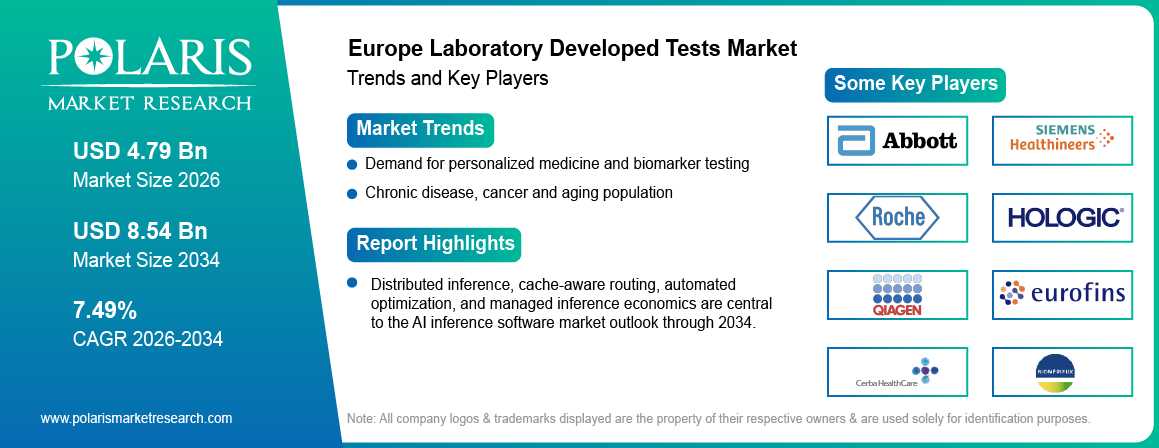
The Europe laboratory developed tests market is highly fragmented, with several global players competing to strengthen their market presence. Key players include Abbott Laboratories, bioMérieux SA, Cerba HealthCare, Eurofins Scientific SE, QIAGEN N.V., Roche Diagnostics, Siemens Healthineers AG, and SYNLAB Group. These companies compete through the development of reliable diagnostic technologies, specialized testing solutions, and improvements in test quality. They also focus on regulatory compliance, personalized testing, and cost-effective diagnostic services. In addition, partnerships with healthcare providers, research institutions, and other industry participants can help expand testing capabilities, improve diagnostic methods, and support the development of specialized laboratory-developed tests (LDTs) across Europe.
Major Players in the Europe Laboratory Developed Tests Market:
- Abbott Laboratories
- bioMérieux SA
- Cerba HealthCare
- Eurofins Scientific SE
- Hologic, Inc.
- QIAGEN N.V.
- Roche Diagnostics International Ltd.
- Siemens Healthineers AG
- SYNLAB AG
- The Doctors Laboratory (TDL)
Vendor Positioning
| Company | Key Business Activities | Relevance to the Market |
| Abbott Laboratories | Provides diagnostic testing platforms, assays, and laboratory solutions. | Supports disease detection and clinical diagnostic testing. |
| bioMérieux SA | Develops diagnostic solutions for infectious diseases and microbiology. | Supports infection detection and specialized laboratory testing. |
| Cerba HealthCare | Provides clinical laboratory and specialized diagnostic services. | Supports complex testing and clinical diagnosis. |
| Eurofins Scientific SE | Offers laboratory testing and diagnostic services across several fields. | Supports specialized laboratory analysis and diagnostic testing. |
| Hologic, Inc. | Provides diagnostic technologies, including molecular diagnostics and women's health testing. | Supports disease detection and specialized diagnostic testing. |
| QIAGEN N.V. | Provides molecular testing technologies, sample preparation, and related solutions. | Supports genetic analysis and molecular diagnostic testing. |
| Roche Diagnostics International Ltd. | Offers molecular and clinical diagnostic systems, tests, and assays. | Supports disease detection and biomarker analysis. |
| Siemens Healthineers AG | Provides diagnostic platforms and laboratory testing systems. | Supports clinical testing and laboratory workflows. |
| SYNLAB AG | Provides clinical laboratory and diagnostic services. | Supports routine and specialized diagnostic testing. |
| The Doctors Laboratory (TDL) | Provides specialist pathology and clinical laboratory services. | Supports complex diagnostic testing and specialist investigations. |
Source: Polaris Market Research Analysis
Recent Developments
- September 2026: bioMérieux launched its SPINCHIP hs-cTnI point-of-care test in Europe. The test measures high-sensitivity cardiac troponin I from a single drop of blood and is designed to help healthcare teams assess adults with suspected heart attacks more quickly (Source: biomerieux.com).
- April 2026: Bruker launched its MyGenius PRO molecular diagnostics system in Europe. The automated PCR-based platform supports infectious disease testing, with initial assays for cytomegalovirus (CMV), Epstein–Barr virus (EBV), and BK virus. The system aims to improve laboratory workflows and support diagnostic testing. (Source: ir.bruker.com)
- December 2025: The European Commission proposed simplifying EU rules for medical devices and in vitro diagnostic devices. The proposal aims to reduce administrative work, improve certification processes, and support innovation while maintaining patient safety. These changes are relevant to the regulatory environment for diagnostic testing in Europe. (Source: health.ec.europa.eu)
- September 2025: QIAGEN received European CE-IVDR certification for its full QIAstat-Dx portfolio, including testing panels for respiratory, gastrointestinal, and central nervous system infections. The portfolio supports rapid molecular diagnosis and helps laboratories meet European regulatory requirements. (Source: corporate.qiagen.com)
Future Outlook
The Europe laboratory developed tests market is expected to benefit from advances in molecular diagnostics and genetic testing. Growing interest in personalized medicine may increase demand for tests that support individual treatment decisions. Artificial intelligence (AI) and laboratory automation can help improve testing workflows and data analysis. At the same time, compliance with the European In Vitro Diagnostic Regulation (IVDR) will remain important for test quality, safety, and reliability. These developments may support the wider use of specialized diagnostic testing across Europe.
Research Methodology
The Europe laboratory developed tests market assessment combines secondary research, market data analysis, and analyst review. Secondary sources may include European Commission publications, national regulatory guidance, public health statistics, peer-reviewed clinical studies, company annual reports, product documentation, and credible industry publications. Sources are assessed for relevance to Europe, publication date, and consistency with the definition of laboratory-developed tests (LDTs).
Market sizing considers the base year, historical period, forecast period, currency, and measurement unit. The analysis covers country-level markets, technology segments, and application segments. Where direct data is limited, estimates may rely on documented assumptions and available industry information. Forecasts consider factors such as molecular diagnostics, personalized medicine, disease burden, laboratory capacity, reimbursement, and regulatory compliance costs.
Company analysis distinguishes laboratory service providers, test developers, diagnostic technology suppliers, and commercial in vitro diagnostic (IVD) manufacturers. Recent developments are reviewed using primary sources where available, with attention to publication date and geographic relevance. Differences between market estimates are assessed based on scope, base year, forecast period, and methodology.
The final methodology should be reviewed by the research team to ensure it accurately reflects the methods used in preparing the report.
Report Segment
Europe Laboratory Developed Tests, Technology Outlook (Revenue - USD Billion, 2021 - 2034)
- Immunoassays
- Hematology and Coagulation
- Molecular Diagnostics
- Microbiology
- Clinical Chemistry
- Histology/Cytology
- Flow Cytometry
- Mass Spectroscopy
- Others
Europe Laboratory Developed Tests, Application Outlook (Revenue - USD Billion, 2021 - 2034)
- Oncology
- Genetic Disorders/Inherited Diseases
- Immunology
- Nutritional and Metabolic Diseases
- Cardiology
- Mental/Behavioral Disorder
- Toxicology
- Others
Europe Laboratory Developed Tests, Regional Outlook (Revenue - USD Billion, 2021 - 2034)
- Europe
- UK
- Germany
- France
- Italy
- Spain
- Netherlands
- Rest of Europe
Europe Laboratory Developed Tests Market Report Scope
| Report Attributes | Details |
| Market size value in 2026 | USD 4.79 billion |
| Revenue forecast in 2034 | USD 8.54 billion |
| CAGR | 7.49% from 2026 – 2034 |
| Base year | 2025 |
| Historical data | 2021 – 2024 |
| Forecast period | 2026 – 2034 |
| Quantitative units | Revenue in USD billion and CAGR from 2026 to 2034 |
| Segments covered |
|
| Regional scope |
|
| Competitive Landscape |
|
| Report Format |
|
| Customization | Report customization as per your requirements with respect to countries, region and segmentation. |
Source: Polaris Market Research Analysis
Europe Laboratory Developed Tests Market FAQ's
The Europe laboratory developed tests market was valued at USD 4.47 billion in 2025. Demand is supported by the need for specialized diagnostic testing and early disease detection.
The market is projected to grow at a CAGR of approximately 7.49% from 2026 to 2034, reaching around USD 8.54 billion by 2034.
Laboratory-developed tests are diagnostic tests developed and performed within a laboratory. They help detect diseases, genetic changes, and biomarkers when specialized testing is needed.
Growing demand for personalized medicine, rising cases of chronic diseases, advances in molecular diagnostics, and the need for early disease detection are supporting market growth.
Molecular diagnostics plays an important role because it helps detect genetic changes and infectious agents. Other technologies include immunoassays, microbiology, clinical chemistry, and mass spectrometry.
The EU In Vitro Diagnostic Medical Devices Regulation (IVDR) sets requirements for the safety, performance, and oversight of diagnostic tests. Laboratory-developed tests must meet the applicable conditions, including those under Article 5(5), where relevant. Compliance depends on the test and laboratory circumstances, and not every LDT automatically qualifies for the in-house exemption.
Advances in genetic testing, personalized medicine, AI, and laboratory automation may create new opportunities. These technologies can support specialized testing, improve laboratory workflows, and help healthcare professionals make informed diagnostic and treatment decisions.
Download Sample Report of Europe Laboratory Developed Tests Market
Please fill out the form to request a customized copy of the research report.


