
GLP-1 Analogues Market Size, Share & Forecast Report, 2026-2034
REPORT DETAILS
GLP-1 Analogues Market Summary and Key Insights
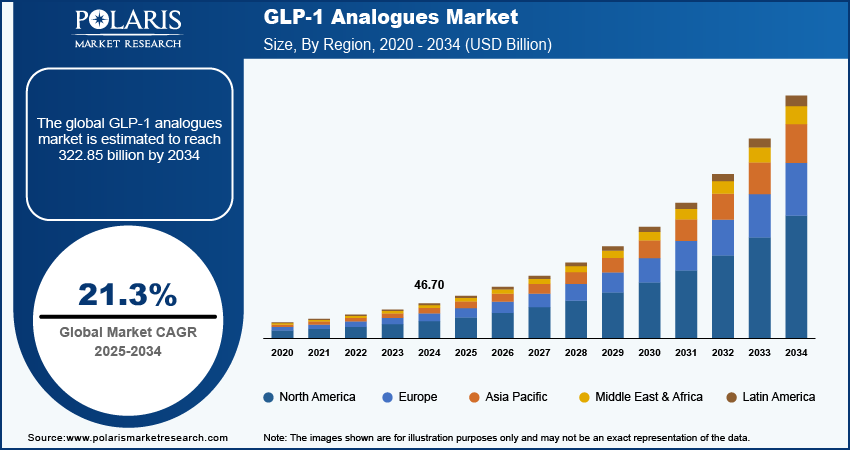
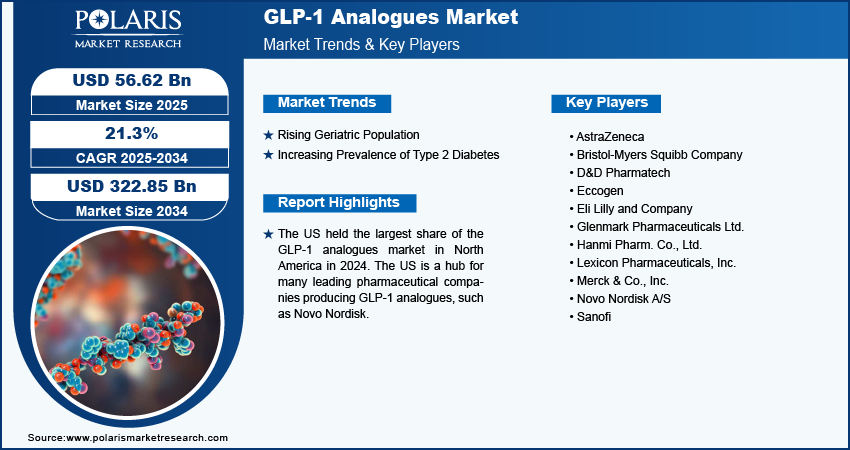
The global GLP-1 analogues market size was valued at USD 56.62 billion in 2025. The market is projected to grow at a CAGR of 21.39% from 2026 to 2034. The expanded regulatory approvals for chronic weight management and cardiovascular risk reduction are a few of the key factors driving market growth.
Market Statistics
Key Takeaways
• North America accounted for the largest share of 45.0% in 2025. This is owing to the high prevalence of diabetes and obesity in the region.
• The US held the largest share of 87.0% in 2025. The US is a hub for many leading pharmaceutical companies producing GLP-1 analogues.
• The Asia Pacific GLP-1 analogues market is expected to register the highest CAGR of 23.2%. The regional market growth is driven by an increasing proportion of the aging population.
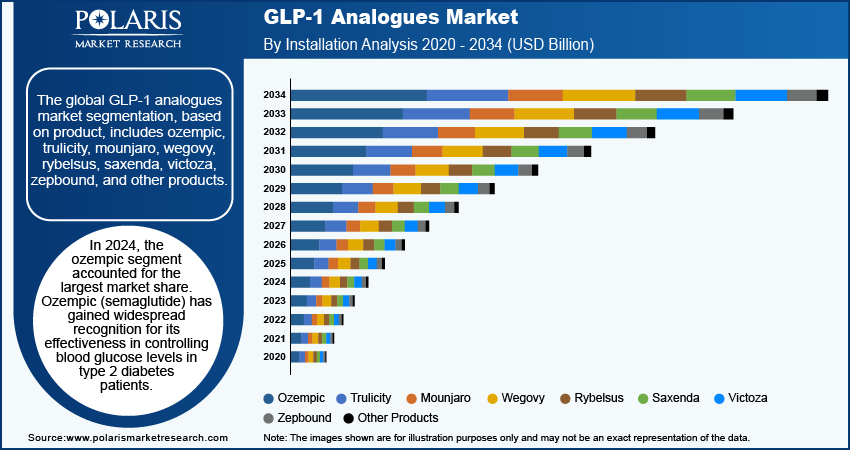
• The ozempic segment accounted for the largest market share of 23.0% in 2025. Ozempic (semaglutide) has gained widespread recognition for its effectiveness in controlling blood glucose levels in patients affected by type 2 diabetes.
• The online pharmacies segment is expected to register the fastest growth at a 23.5% CAGR. The unparalleled convenience of online pharmacies allows patients to order their medications from the comfort of their home.
Note: Figures and projections outlined in this report are the result of Polaris Market Research’s proprietary analytical processes, grounded in the latest available datasets and market observations.
Glucagon-like peptide-1 (GLP-1) analogues are a class of drugs primarily used in the treatment of type 2 diabetes and obesity. They are synthetic versions of the naturally occurring GLP-1 hormone that plays a crucial role in regulating blood sugar levels by enhancing insulin secretion, suppressing glucagon release, and slowing gastric emptying. This helps lower blood glucose levels and aids in weight management. The clinical guidelines and recommendations from esteemed health organizations such as the American Diabetes Association (ADA) and the European Association for the Study of Diabetes (EASD) consistently endorse the use of GLP-1 analogues for specific patient associates. This support has significantly contributed to the proliferation of GLP-1 analogues. Furthermore, ongoing research and development endeavors are expected to bring advanced inhibitors. Advancements in drug formulations, synergistic combinations with other antidiabetic medications, and improved safety profiles are poised to drive market expansion during the forecast period.
Consumption of highly processed foods and food items containing refined sugars and unhealthy fats is a significant contributing factor leading to the rising incidence of type 2 diabetes. The excessive intake of sugary beverages, fast food, and snacks has been directly linked to weight gain and impaired glucose metabolism, significantly boosting the risk of diabetes development. Furthermore, the rising prevalence of obesity has significantly contributed to the growing utilization of GLP-1 analogs in the treatment of obesity, which is significantly driving the GLP-1 analogues market.
Industry Dynamics
- The rising geriatric population, which is at a higher risk of developing type 2 diabetes and related health conditions, has led to a greater need for GLP-1 analogues inhibitors.
- The growing prevalence of type 2 diabetes worldwide is another factor driving demand for GLP-1 analogues.
- Therapeutics and clinical expansion of GLP-1 analogues is presenting several market opportunities.
- High costs and restrictive insurance coverage may present market challenges.
AI Impact on GLP-1 Analogues Market
- New analogues of GLP-1 drugs may be discovered with AI based on clinical and biological information.
- AI contributes to personalized medicine through the prediction of patient response and dosing.
- AI makes clinical trials more efficient since patient selection and data analysis will be more manageable.
- Predictive analysis allows AI to aid in managing the disease and pharmacovigilance.
Source: Polaris Market Research Analysis
To Understand More About this Research: Download Sample Report
GLP-1 Analogues in Simple Terms
GLP-1 analogues are medications that are prescribed for managing type 2 diabetes and obesity. GLP-1 analogues work like the naturally produced hormone called glucagon-like peptide-1 (GLP-1). The production of GLP-1 happens after eating. The function of this type of medication is to control glucose levels, reduce appetite, and give the feeling of satiety.
How GLP-1 Analogues Work?
Reproduces the Effects of the Natural GLP-1 Hormone: After intake, the drug reproduces the effects of the natural GLP-1 hormone by maintaining proper blood glucose concentration and lowering the sensation of hunger.
Causes Insulin Release: The drug causes the release of insulin by the pancreas when the blood glucose level is increased.
Blocks Release of Glucagon: This medicine blocks the release of glucagon, which is responsible for the release of glucose in the liver.
Delays the Digestive Process: This medicine delays the passage of food from the stomach to the intestines, thus leading to slow entry of glucose into the blood.
Creates Sense of Satiety: GLP-1 agonists affect the areas of the brain that contribute to satiety.
Helps Manage Metabolic Conditions: GLP-1 agonists help manage type 2 diabetes and obesity by managing blood glucose levels and reducing weight.
GLP-1 Analogues vs Traditional Antidiabetic Drugs
| Parameter | GLP-1 Analogs | Conventional Antidiabetics |
| Mode of Action | Acts like GLP-1 hormone for improvement of insulin secretion and appetite reduction | Function via different mechanisms, including an increase in insulin sensitivity or lowering glucose production |
| Effect on Weight | Promotes weight loss. Offered by weight loss drugs market players. | May be weight neutral or even lead to weight gain |
| Glycemic Control | Strong glycemic control with less chance of hypoglycemia | Good glycemic control based on different classes of medication |
| Cardiovascular Effects | Many drugs have been shown to provide cardiovascular effects | Vary according to different classes of drugs |
| Administration Route | Both injection and oral form possible | Mainly oral forms, with some injection forms possible |
| Common Application | Obesity and Type 2 diabetes drug market | Mainly type 2 diabetes |
Source: Polaris Market Research Analysis
GLP-1 Analogues Market Trends
Rising Geriatric Population
Older individuals, due to age-related factors, are at a higher risk of developing type 2 diabetes and related health conditions, resulting in a greater need for GLP-1 analogues inhibitors. According to the UN, the global population of individuals aged 65 years and above is expected to increase significantly, more than doubling from 761 million in 2021 to 1.6 billion by 2050. The demographic of those aged 80 years and above is expanding at an even faster rate. As the elderly population is highly prone to health issues such as Type 2 diabetes, the growing geriatric population is expected to drive the GLP-1 analogues market during the forecast period.
Increasing Prevalence of Type 2 Diabetes
The cases of type 2 diabetes are rising across the world. For instance, according to the International Diabetes Federation,537 million individuals were affected by diabetes worldwide in 2021, with more than 75% of adult diabetes cases occurring in low and middle-income countries. The International Diabetes Federation projected that the number of new diabetes cases is expected to reach 643 million by 2030 and 783 million by 2045. Hence, the rising prevalence of type 2 diabetes is estimated to boost the GLP-1 analogues market during the forecast period.
Pipeline and Emerging Drug Innovations
Pipeline developments of GLP-1 analogues are aimed at better treatment options for individuals suffering from diabetes and obesity. Drug manufacturers have developed dual and triple agonists for the modulation of several metabolic pathways, which are intended to improve blood sugar levels and facilitate weight loss. Scientists are currently involved in developing extended-acting drugs to reduce the frequency of dosages and also developing oral GLP-1 drugs as an alternative to injectable ones. Moreover, companies are working on the creation of combined therapies and advanced formulations of drugs in order to boost treatment efficacy and improve patients' compliance with treatments.
Regulatory Landscape for GLP-1 Analogues
Regulation of GLP-1 analogues is under the jurisdiction of health regulatory agencies, which ensure their safety, efficacy, and quality before approval. Health regulatory agencies such as the United States Food and Drug Administration (FDA), the European Medicines Agency (EMA), and the Pharmaceuticals and Medical Devices Agency of Japan (PMDA) evaluate data from clinical trials before approving the use of GLP-1 analogs for the treatment of diabetes and obesity. Innovations in medicine can be evaluated faster to allow patients to use the drug earlier. Post-marketing surveillance and adherence to high-quality production standards must continue after the drug is approved.
Source: Polaris Market Research Analysis
GLP-1 Analogues Market Segment Insights
GLP-1 Analogues Market Breakdown, by Product Insights
The global GLP-1 analogues market, based on product, is segmented into ozempic, trulicity, mounjaro, wegovy, rybelsus, saxenda, victoza, zepbound, and other products. In 2024, the ozempic segment accounted for the largest market share. Ozempic (semaglutide) has gained widespread recognition for its effectiveness in controlling blood glucose levels in patients affected by type 2 diabetes. Ozempic effectively reduces HbA1c levels, which is a key focus in managing diabetes. Additionally, ozempic has demonstrated substantial benefits in promoting weight loss and lower the risk of kidney disease, making it a preferred choice among healthcare providers and patients. In March 2024, Novo Nordisk A/S stated that ozempic (semaglutide) 1.0 mg shows a 24% lower risk of kidney disease events in type 2 diabetes and chronic kidney disease in the FLOW trial. This dual benefit of glycemic control and weight reduction has driven its popularity, further boosting the segment expansion.
GLP-1 Analogues Market Breakdown, by Distribution Channel Insights
The global GLP-1 analogues market segmentation, based on distribution channel, includes hospital pharmacies, retail pharmacies, and online pharmacies. The online pharmacies is expected to be the fastest-growing segment due to its unparalleled convenience, allowing patients to order their medications from the comfort of their homes. GLP-1 analogues are often prescribed for chronic conditions such as type 2 diabetes and obesity, which require ongoing, long-term management. Online pharmacies are well-suited to serve these patients by providing continuous access to necessary medications, supporting adherence, and reducing the hassle of frequent pharmacy visits. The ability to have medications delivered directly to their doorsteps, often with the option of automatic refills, appeals to many patients and contributes to the growth of this segment. Furthermore, the growth of telemedicine, especially accelerated by the COVID-19 pandemic, has led to an increase in online consultations and prescriptions. Patients who receive prescriptions for GLP-1 analogues via telehealth platforms are more likely to use online pharmacies to fill these prescriptions.
Real-World Use Cases of GLP-1 Analogues
| Use Case | How GLP-1 Analogues Are Used |
| Blood Glucose Control in Type 2 Diabetes | The GLP-1 analogues are responsible for lowering the levels of blood glucose through promoting the production of more insulin when required and decreasing the unnecessary production of glucose. |
| Medical Treatment for Obese Patients | As a way of controlling appetite, the medications increase the feeling of satiety, ensuring that the obese patients are able to lose a clinically significant amount of weight. |
| Cardiovascular Risk Reduction in Diabetic Patients | Certain GLP-1 analogues have been proven to reduce the risk of major cardiovascular events in type 2 diabetic patients with cardiovascular diseases. |
| Appetite Control in Metabolic Disorders | Since the GLP-1 therapies help control the appetite and food intake of the patients, they become essential in dealing with obesity and other metabolic diseases resulting from excessive weight gain. |
| Chronic Disease Management | Physicians prescribe GLP-1 analogues for the management of chronic diseases such as diabetes, obesity, and other metabolic disorders. |
| Insulin Therapy in Advanced Type 2 Diabetes | Some GLP-1 analogues are recommended for the management of advanced type 2 diabetes together with insulin therapy. |
Source: Polaris Market Research Analysis
Source: Polaris Market Research Analysis
GLP-1 Analogues Market Value Chain Analysis
The value chain of GLP-1 analogues market begins with the drug development process, which involves drug discovery and preclinical testing. Subsequently, the drugs pass through clinical trials to assess their efficacy and safety. Upon approval, the drugs are produced by pharmaceutical companies and CMOs. Subsequently, wholesalers, hospital pharmacies, retail pharmacies, and online pharmacies become involved in their distribution to end users. The treatments are prescribed by healthcare professionals to patients, who subsequently use the products. Regulatory authorities control the safety, efficacy, and manufacturing processes of the approved drugs.
Regional Insights
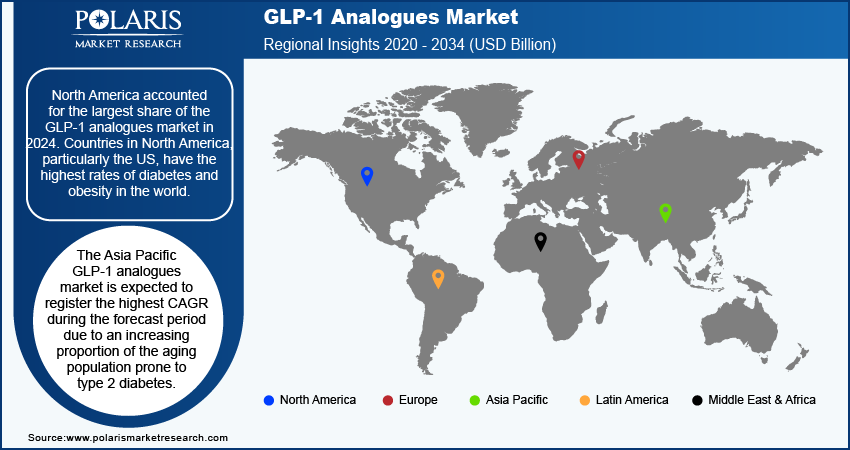
By region, the study provides market insights into North America, Europe, Asia Pacific, Latin America, and the Middle East & Africa. North America accounted for the largest share of the GLP-1 analogues market in 2024. Countries in North America, particularly the US, have the highest rates of diabetes and obesity in the world. According to the American Diabetes Association, in 2021, the prevalence of diabetes in the US was 11.6%, affecting 38.4 million Americans. Among them, 2 million people had type 1 diabetes, with ∼304,000 being children and adolescents. The rising prevalence of these chronic conditions has led to an increased demand for effective treatments, including GLP-1 analogues, to control diabetes and weight. Thus, the increasing demand for GLP1 analogue in North America is contributing to the market growth.
The US held the largest share of the GLP-1 analogues market in North America in 2024. The US is a hub for many leading pharmaceutical companies producing GLP-1 analogues, such as Novo Nordisk. These companies have a strong presence in the region, with extensive distribution networks and robust marketing strategies, which support market growth in the country.
The Asia Pacific GLP-1 analogues market is expected to register the highest CAGR during the forecast period due to an increasing proportion of the aging population. According to the Asia Development Bank, in May 2024, Asia Pacific is projected to experience a significant demographic shift, with the population of individuals aged 60 and above nearly doubling to reach 1.2 billion by 2050. This demographic group is anticipated to constitute ∼25% of the total population in the region. The older adults are at higher risk of developing type 2 diabetes. Thus, the rising geriatric population prone to diabetes across Asia Pacific would propel the demand for effective treatments such as GLP-1 analogues during the forecast period.
The India GLP-1 analogues market is expected to grow significantly during the forecast period due to the growing middle-class population in countries that are driving increased healthcare spending. Owing to the rising disposable incomes, patients are able to afford advanced diabetes and obesity treatments, contributing to the rapid growth of the market in the country.
Source: Polaris Market Research Analysis
GLP-1 Analogues Market – Key Players and Competitive Insights
Leading market players are investing heavily in research and development to expand their product lines, which will boost the GLP-1 analogues market growth during the forecast period. Market participants are also undertaking a variety of strategic activities, including new product launches, contractual agreements, mergers and acquisitions, higher investments, and collaboration with other organizations, to expand their global footprint. To expand and survive in a more competitive and rising market climate, the market players must offer cost-effective items.
In recent years, the GLP-1 analogues industry has offered some technological advancements. A few major players in the market are AstraZeneca; Bristol-Myers Squibb Company; D&D Pharmatech; Eccogen; Eli Lilly and Company; Glenmark Pharmaceuticals Ltd.; Hanmi Pharm. Co., Ltd.; Lexicon Pharmaceuticals, Inc.; Merck & Co., Inc.; Novo Nordisk A/S; and Sanofi.
AstraZeneca PLC is a biopharmaceutical company that researches, develops, manufactures, and sells prescription drugs. The company's products include tagrisso, lynparza, imfinzi, calquence, orpathys, truqap, enhertu, zoladex, and others. In November 2023, AstraZeneca and Eccogene signed an exclusive license agreement for ECC5004, an investigational oral once-daily GLP-1RA for treating obesity, type 2 diabetes, and other cardiometabolic conditions.
Glenmark Pharmaceuticals Limited is engaged in the development, manufacturing, and marketing of pharmaceutical products across various regions, including India, North America, Latin America, Europe, Japan, and internationally. The company provides branded and generic formulations in therapeutic areas such as dermatology, respiratory, and oncology, along with a range of active pharmaceutical ingredients. For instance, in January 2024, Glenmark Pharmaceuticals Ltd. launched a biosimilar of the popular anti-diabetic drug Liraglutide in India, marketing it as Lirafit after obtaining approval from the Drug Controller General of India (DCGI).
Key Companies in GLP-1 Analogues Market
- AstraZeneca
- Bristol-Myers Squibb Company
- D&D Pharmatech
- Eccogen
- Eli Lilly and Company
- Glenmark Pharmaceuticals Ltd.
- Hanmi Pharm. Co., Ltd.
- Lexicon Pharmaceuticals, Inc.
- Merck & Co., Inc.
- Novo Nordisk A/S
- Sanofi
Future Outlook
The future prospects of the GLP-1 analogues market seem promising due to the growing demand for the treatments against diabetes, obesity, and other metabolic diseases. The emergence of novel oral drugs in the next-generation diabetes treatment market, dual- and triple-agonists, and prolonged-release formulations can make the treatment even more convenient for patients and increase its effectiveness. Rising regulatory approvals, reimbursement rates, and awareness of weight-loss drugs are expected to contribute to their increasing use across the world. Despite challenges such as high prices and product shortages in the market, further investments in R&D and production are expected to ensure their continued development.
GLP-1 Analogues Industry Developments
- March 2026: Dr. Reddy’s Laboratories Ltd. announced the launch of its injectable semaglutide under the brand name Obeda. The company stated that the launch marked a major step in expanding access to advanced GLP‐1 receptor agonist–based therapy for type 2 diabetes management in India. (source: sec.gov)
- January 2026: Novo Nordisk announced the broad availability of the Wegovy pill across America. According to Novo Nordisk, the Wegovy pill is the first and only oral GLP-1 for weight loss in adults. The advancement opens new possibilities for over 100 million Americans living with obesity. (source: prnewswire.com)
GLP-1 Analogues Market Segmentation
By Route of Administration Outlook
- Subcutaneous Route
- Oral Route
By Product Outlook
- Ozempic
- Trulicity
- Mounjaro
- Wegovy
- Rybelsus
- Saxenda
- Victoza
- Zepbound
- Other Products
By Application Outlook
- Type 2 Diabetes Mellitus
- Obesity
- Others Applications
By Distribution Channel Outlook
- Hospital Pharmacies
- Retail Pharmacies
- Online Pharmacies
By Regional Outlook
- North America
- US
- Canada
- Europe
- Germany
- France
- UK
- Italy
- Spain
- Netherlands
- Russia
- Rest of Europe
- Asia Pacific
- China
- Japan
- India
- Malaysia
- South Korea
- Indonesia
- Australia
- Vietnam
- Rest of Asia Pacific
- Middle East & Africa
- Saudi Arabia
- UAE
- Israel
- South Africa
- Rest of Middle East & Africa
- Latin America
- Mexico
- Brazil
- Argentina
- Rest of Latin America
GLP-1 Analogues Market Report Scope
| Report Attributes | Details |
| Market Size Value in 2025 | USD 56.62 billion |
| Market Size Value in 2026 | USD 68.50 billion |
| Revenue Forecast by 2034 | USD 324.15 billion |
| CAGR | 21.39% from 2026 to 2034 |
| Base Year | 2025 |
| Historical Data | 2021–2024 |
| Forecast Period | 2026–2034 |
| Quantitative Units | Revenue in USD billion and CAGR from 2026 to 2034 |
| Report Coverage | Revenue Forecast, Market Competitive Landscape, Growth Factors, and Trends |
| Segments Covered |
|
| Regional Scope |
|
| Competitive Landscape |
|
| Report Format |
|
| Customization | Report customization as per your requirements with respect to countries, regions, and segmentation. |
Source: Polaris Market Research Analysis
GLP-1 Analogues Market FAQ's
The global GLP-1 analogues market size was valued at USD 56.62 billion in 2025.
The global market is projected to register a CAGR of 21.39% during 2026–2034.
North America accounted for the largest share of the global market as it has the highest rates of diabetes and obesity in the world.
A few key players in the market are AstraZeneca; Bristol-Myers Squibb Company; D&D Pharmatech; Eccogen; Eli Lilly and Company; Glenmark Pharmaceuticals Ltd.; Hanmi Pharm. Co., Ltd.; Lexicon Pharmaceuticals, Inc.; Merck & Co., Inc.; Novo Nordisk A/S; and Sanofi.
The ozempic segment dominated the market in 2025 due to its effectiveness in controlling blood glucose levels in patients affected by type 2 diabetes.
The online pharmacies segment accounted for the largest share of the global market in 2024 due to its unparalleled convenience, allowing patients to order their medications from the comfort of their homes.
GLP-1 analogues are primarily used to manage type 2 diabetes through regulating blood sugar levels. Some drugs belonging to this group are approved for use for weight management among obese and overweight people with comorbidities.
The expansion of the market is fueled by an increase in the number of people diagnosed with diabetes and obesity, heightened awareness of the benefits of weight management, and innovation within the GLP-1 market segment.
Innovations include the emergence of oral GLP-1 agents, long-lasting drugs, as well as dual and triple agonists.
Download Sample Report of GLP-1 Analogues Market
Please fill out the form to request a customized copy of the research report.


