
Home Security Systems Market Size, Share Analysis Report, 2026-2034
REPORT DETAILS
Home Security Systems Market Summary
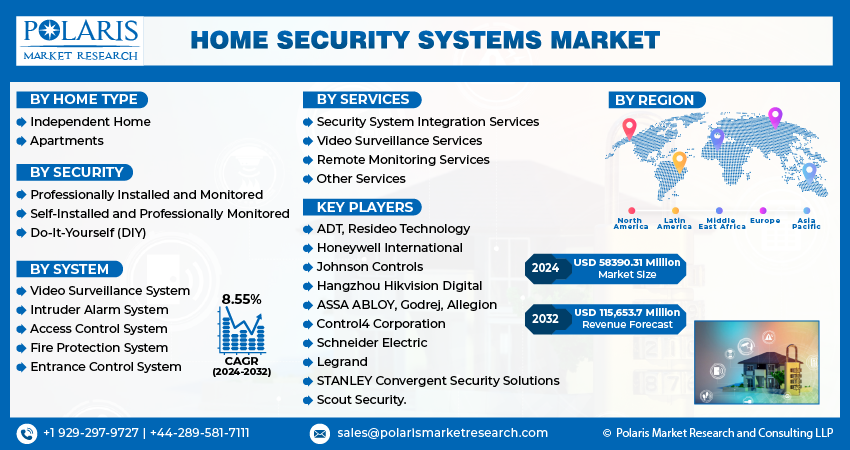
The home security systems market stood at USD 65.00 billion in 2025. According to our home security systems industry analysis, the market is projected to account for a CAGR of 8.55% between 2026 and 2034. Some of the major factors driving demand for home security systems include rising crime rates and the need for safety and security. The evolution of technology and the rise of DIY security systems also drive market demand.
Market Statistics
Key Takeaways
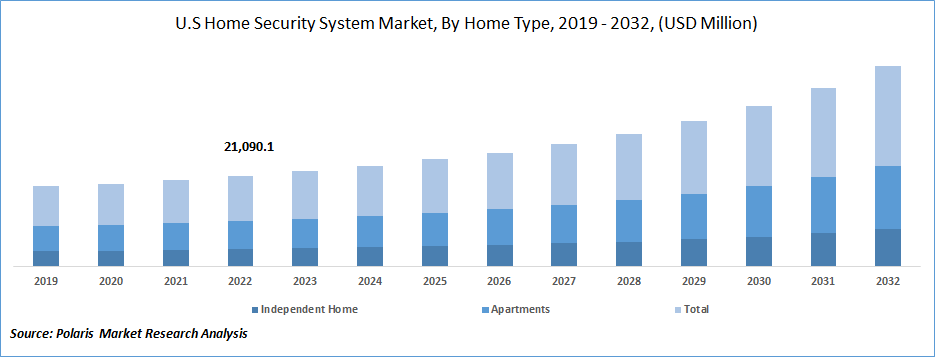
- The apartment segment accounted for the largest revenue share in the home security systems market in 2025, due to the unique security challenges apartment living presents, including shared spaces and higher break-in rates.
- The video surveillance system segment dominated the revenue share in 2025, due to advancements in digital video cameras for surveillance.
- North America held the largest revenue share in 2025, due to companies in the region expanding their expertise in access control systems.
- Asia Pacific is projected to grow at the fastest pace during the forecast period, owing to the increasing public spending on smart city projects.
Home security systems comprise equipment such as cameras, sensors, and control units, as well as software, storage, and monitoring services. Increasing numbers of firms are opting for subscription-based monitoring services, helping shift revenue from equipment sales to monitoring services. With the expansion of the connected homes ecosystem, integration with smart home platforms, voice services, and mobile services is becoming increasingly essential for competing in the industry. Additionally, the integration of AI-powered home security systems, edge computing, and cloud-based remote access is revolutionizing the smart home security market. These technologies are helping users in quicker threat detection and providing them with timely alerts and remote access facilities via mobile devices.
Industry Dynamics
- Rising safety and security concerns are boosting demand for home security systems.
- Advancements in technology like IoT and cloud computing are also boosting growth in the market for home security systems by making them efficient and accessible.
- Increased investments in smart homes are also offering market growth opportunities.
- Cybersecurity in smart home security systems is a major concern. Risks of increased IoT security issues and cloud computing data breaches may also hinder home security systems market growth.
- There are stringent regulations on data privacy concerning home surveillance systems in regions like Europe and North America. Therefore, manufacturers need to abide by stringent home security compliance standards on encrypting data and protecting consumers.
Source: Polaris Market Research Analysis
To Understand More About this Research:Download Sample Report
AI Impact on Home Security Systems Market
- There is increased integration of artificial intelligence at both the cloud and device levels to enable faster, real-time analysis while minimizing the need for data processing in centralized locations.
- Edge AI surveillance systems minimize latency, thereby enhancing the detection of intrusions and reducing false alarms. There is also the use of predictive analytics tools to analyze behavioral patterns and detect anomalies before they happen.
- Additionally, AI-based video analytics has enhanced features such as face recognition, detection of package theft, and perimeter surveillance.
- Insurance firms in developed countries are offering discounts to those who install AI-based home security systems, thereby promoting the integration of AI into the home security market.
Home security systems consist of cameras and sensors connected to a central hub. The hub controls the entire security system. The security system includes various devices, such as motion sensors, security cameras, door sensors, and window sensors. The security system also includes window stickers and alarms. The major factors driving the global market for security systems are advances in wireless technology and the Internet of Things. In addition, awareness of the security of surroundings and the prevalence of theft has increased demand for security systems.
Many companies are using IoT technology to design advanced security systems for improving home security. IoT integration makes homes more connected and manageable using smartphones, thus improving security. Using IoT and cloud computing together allows for accessibility of the security system from different locations, making it more efficient and improving storage capabilities. This allows residential users to manage complex software easily and conveniently.
Home security systems are compatible with Alexa or Google Assistant and can also be integrated with smartphone apps, smart locks, doorbells, cameras, thermostats, and wall-mounted touchscreen monitors. Additionally, these systems are equipped with additional features such as fire alarms, smoke detectors, and flood and freeze alarms, which have increased the demand for home security systems. These systems also use Wi-Fi cameras and are Z-Wave compatible, allowing them to hear any sounds.
Industry Dynamics
Growth Drivers
Growing concerns about safety and security are driving the home security systems market demand. Home security systems are becoming increasingly important due to rising crime rates. Technological developments, such as IoT and cloud computing, are making home security systems more efficient, accessible, and affordable. These technologies allow people to access and manage home security systems remotely using devices such as smartphones.
In addition, government policies and the rise of smart homes are driving demand for home security systems. Governments across the world are promoting home security systems through various policies and schemes. Similarly, smart homes are incorporating home security systems as a part of the smart home ecosystem.
Source: Polaris Market Research Analysis
Report Segmentation
Home Type Insights
Based on home type, the home security systems market is segmented into independent home and apartments. The apartments segment accounted for the largest market share in 2025. This is because of the security concerns associated with staying in apartments, such as having communal places of stay and a higher incidence of break-ins. Therefore, to meet this market demand, security companies are specializing in apartment security systems. These include wireless sensors, motion detectors, and video surveillance systems that can be installed without extensive drilling. The apartment security systems are also often more affordable than traditional home security systems, contributing to the segment’s dominance.
Security Insights
By security, the market segmentation is done into professionally installed and monitored, self-installed and professionally monitored, and do-it-yourself (DIY). The market is witnessing growing demand for professional installation of wireless sensors and security cameras from consumers who are ready to pay more for this service. This is due to their need to have the equipment installed properly and receive professional assistance in optimizing the view and minimizing the risk of theft. These are professionals who can assist in activities that may not be easy for an average person, such as climbing ladders, drilling, and electrical work. Professionally monitored security systems have a greater average revenue per user (ARPU), as these are mostly subscription-based models. This segment has the advantage of long-term contracts and packages, such as remote monitoring services, which may help in revenue growth. Professionally installed security systems may also help in reducing churn, as these are more reliable compared to DIY models.
The do-it-yourself (DIY) segment accounted for a moderate revenue share in 2025. The DIY segment is influenced by demand for eco-friendly products, the need for cost transparency, and a desire to avoid long-term commitments. Customers who prefer DIY installation avoid salespeople who work on commission-only and might pressure them into purchasing unwanted and expensive additional features through complicated contracts. The DIY home security systems market is growing steadily due to flexible pricing and no long-term contract requirements. It also benefits from increased consumer interest in DIY security systems. The ease of integrating smart home devices and mobile app control with DIY systems is attracting tech-savvy customers. However, there is a lack of customer support and complexity in the installation process. This can affect the end-user experience and satisfaction.
System Insights
By system, the market is segmented into video surveillance system, intruder alarm system, access control system, fire protection system, and entrance control system. The video surveillance system segment led the home security systems market in 2025. This is because of developments in surveillance digital video cameras, which provide better viewing angles and quality. Additionally, the user-friendly nature of these video surveillance systems is increasing demand, as users can access them from anywhere in the world via PCs, mobile devices, and tablets. Furthermore, users can view recorded videos and live videos, thus increasing revenue growth for this segment.
The fire protection system (FPS) segment is expected to account for a high CAGR in the forecast period. The growing demand for FPS via conventional modes, such as smoke detectors, is fueling the market, as this helps provide security for properties and the people living in them at an affordable price. Fire alarms can reduce fire-related fatalities by up to 82%, thereby creating awareness among consumers and fueling the market in the long term.
Services Insights
By services, the home security systems market segmentation is done into security system integration services, video surveillance services, remote monitoring services, and other services. The remote monitoring services segment is expected to have the highest CAGR during the forecast period. The remote monitoring services segment is another significant and growing segment. It allows users to monitor their homes remotely via a smartphone app or online. This gives users peace of mind, as they can take quick action in the event of potential security breaches. Some of the features include real-time video, alert systems, and the ability to arm and disarm the system remotely. This service can be bought as an additional feature with home security systems or on its own. It can be very useful for people who travel frequently, have second homes, and/or live in high-crime areas. With advances in technology, remote monitoring services are becoming increasingly sophisticated and are expected to continue to grow in popularity.
Source: Polaris Market Research Analysis
Regional Analysis
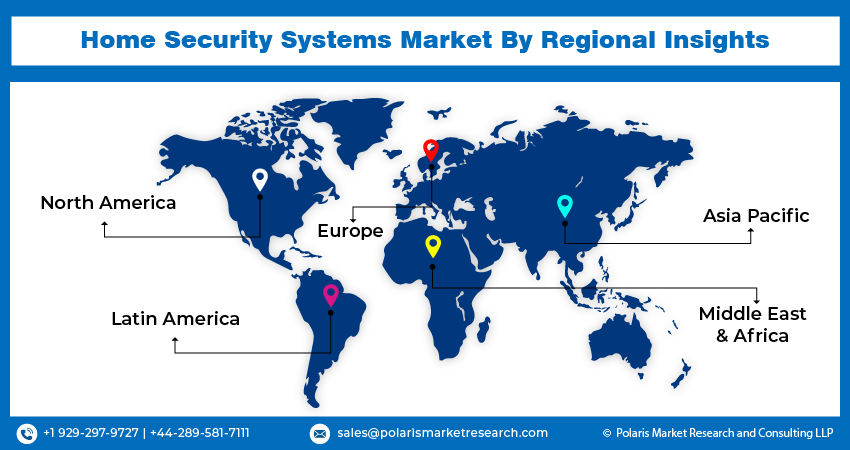
The North America home security systems market dominated the market with the largest market share in 2025. Organizations in North America are enhancing their capabilities in access control systems to develop new and unique innovations and services, thereby gaining a competitive advantage over players from other countries. Fire safety and prevention regulations have been set for builders, and they are required to integrate these systems into their construction plans. Various options for fire protection equipment and systems are available for this area, including smoke and flame detectors and alarm systems.
The U.S. home security market trends indicate increasing demand for AI-enabled cameras and subscription-based services. The rise of smart home devices and insurance offerings for connected security systems has also been a contributing factor in the regional market.
The Asia Pacific market is expected to record the highest CAGR during the forecast period. The Asia Pacific smart home security market is fueled by rapid urbanization, rising middle-class incomes across the Asia Pacific, and government investments in smart city security infrastructure in China and India. These smart city projects are implemented to improve safety and security, regulate traffic, and optimize resource allocation, among other benefits. Countries in the Asia Pacific, such as Japan and Korea, are witnessing a rise in connected home security systems driven by technological advancements and high broadband penetration.
Source: Polaris Market Research Analysis
Competitive Landscape
The competitive dynamics in the home security industry are also being driven by the emergence of platform-based competition. Home security systems market key players are moving from hardware-based businesses to SaaS-based businesses in order to create recurring revenue models. The mergers and acquisitions in the home security SaaS space are aimed at expanding the businesses in AI analytics and remote monitoring services. At the same time, firms are also moving to develop lock-in strategies within the ecosystem by providing smart locks, cameras, and cloud-based all-in-one solutions.
List of Key Companies
- ADT
- Allegion
- ASSA ABLOY
- Control4 Corporation
- Godrej
- Hangzhou Hikvision Digital
- Honeywell International
- Johnson Controls
- Legrand
- Resideo Technology
- Schneider Electric
- Scout Security
- STANLEY Convergent Security Solutions
Recent Developments
April 2025: Johnson Controls introduced the IQ Panel 5 using Qualcomm DragonWing. According to Johnson Controls, the panel delivers faster on-device AI performance and improved PowerG+ wireless coverage.
February 2025: Alarm.com announced the acquisition of cloud remote video monitoring (RVM) services platform CHeKT. The company revealed that CHeKT will continue to operate independently. The OpenEye enterprise video solution and the Alarm.com video solution will be fully integrated into CHeKT’s control room software.
January 2025: ASSA ABLOY revealed the completion of the acquisition of InVue. According to ASSA ABLOY, the strategic move will enhance its portfolio of connected access control solutions.
November 2024: Resideo Technologies Inc (U.S.) launched the First Alert VISTA H Series at CONNECT 2024, upgrading its VISTA security platform for homes and small commercial spaces. The flexible hybrid system works with existing devices, making installation easier and lowering costs. The First Alert H3 Security Panel, the first model in the series, launched the same month.
July 2024: ADT (U.S.) launched its new ADT Plus smart security system. It combines ADT hardware with Google Nest cameras and Yale Assure Lock 2. The system enhances home security with features like Trusted Neighbor, powered by AI automation and Z-Wave connectivity. ADT Plus replaced the earlier Self-Setup system following Google’s investment.
April 2024: Hangzhou Hikvision Digital Technology (China) introduced the AX HOME wireless alarm system for residential security. Certified to EN Grade 2 standards. The system supports OTAP for easy integration and offers energy-efficient operation. It also enables remote control through the Hik-Connect app.
Market Segmentation
By Home Type Outlook (Revenue, USD Billion, 2021–2034)
- Independent Home
- Apartments
By Security Outlook (Revenue, USD Billion, 2021–2034)
- Professionally Installed and Monitored
- Self-Installed and Professionally Monitored
- Do-It-Yourself (DIY)
By System Outlook (Revenue, USD Billion, 2021–2034)
- Video Surveillance System
- Intruder Alarm System
- Access Control System
- Fire Protection System
- Entrance Control System
By Services Outlook (Revenue, USD Billion, 2021–2034)
- Security System Integration Services
- Video Surveillance Services
- Remote Monitoring Services
- Other Services
By Regional Outlook (Revenue, USD Billion, 2021–2034)
- North America
- US
- Canada
- Europe
- Germany
- France
- UK
- Italy
- Spain
- Netherlands
- Russia
- Rest of Europe
- Asia Pacific
- China
- Japan
- India
- Malaysia
- South Korea
- Indonesia
- Australia
- Vietnam
- Rest of Asia Pacific
- Middle East & Africa
- Saudi Arabia
- UAE
- Israel
- South Africa
- Rest of Middle East & Africa
- Latin America
- Mexico
- Brazil
- Argentina
- Rest of Latin America
Home Security Systems Market Report Scope
| Report Attributes | Details |
| Market Size in 2025 | USD 65.00 billion |
| Market Size in 2026 | USD 70.46 billion |
| Revenue Forecast by 2034 | USD 135.96 billion |
| CAGR | 8.55% |
| Base Year | 2025 |
| Historical Data | 2021–2024 |
| Forecast Period | 2026–2034 |
| Quantitative Units | Revenue in USD billion, and CAGR from 2026 to 2034 |
| Report Coverage | Revenue Forecast, Market Competitive Landscape, Growth Factors, and Trends |
| Segments Covered |
|
| Regional Scope |
|
| Competitive Landscape | Home Security Systems Industry Trend Analysis (2025) Company profiles/industry participants profiling include company overview, financial information, product/service benchmarking, and recent developments |
| Report Format | PDF + Excel |
| Customization | Report customization as per your requirements with respect to countries, regions, and segmentation. |
Source: Polaris Market Research Analysis
Home Security Systems Market FAQ's
The home security systems market stood at USD 65.00 billion in 2025. The market is projected to reach USD 135.96 billion by 2034.
Home security systems include video surveillance cameras, intruder alarms, access control systems, fire protection systems, and smart door locks that can be remotely monitored via smartphones. These systems provide real-time alerts and protection.
The demand for home security systems is driven by rising crime rates and advancements in smart home technology. The market also benefits from the integration of cloud computing.
The video surveillance system segment led the home security systems market in 2025. This is because of developments in surveillance digital video cameras that provide better viewing angles and quality.
North America accounted for the largest market share in 2025. Organizations in North America are enhancing their capabilities in access control systems to develop new and unique innovations and services.
Download Sample Report of Home Security Systems Market
Please fill out the form to request a customized copy of the research report.


