
Moringa Products Market Share, Size, Trends, Industry Analysis Report, 2026 - 2034
REPORT DETAILS
Moringa Products Market Summary
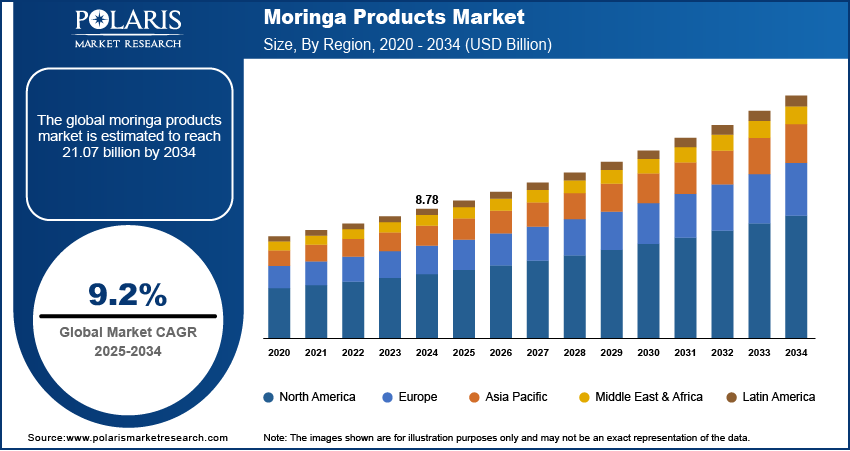
The global moringa products market was valued at USD 10.01 billion in 2025 and is expected to grow at a CAGR of 10.76% during the forecast period. The primary drivers of the demand for dietary supplements are the rising prevalence of obesity and the rising propensity of people for fast food as it contains so many vital elements that support better health making moringa products a common inclusion in dietary supplements.
Market Statistics
Key Takeaways
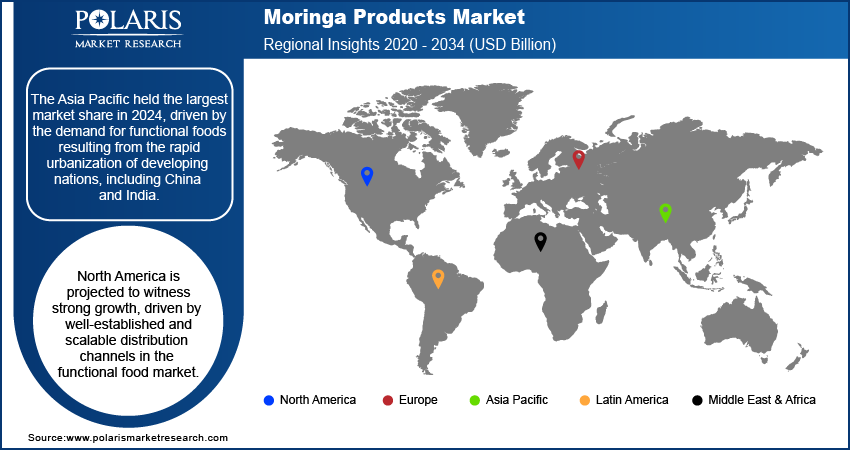
- The Asia Pacific held the largest market share of 42.0% in 2025, driven by the demand for functional foods resulting from the rapid urbanization of developing nations, including China and India.
- North America is anticipated to experience substantial growth at a CAGR of 10.19% during the forecast period, primarily due to the functional food market's existing and scalable distribution channels, which are expected to boost market growth.
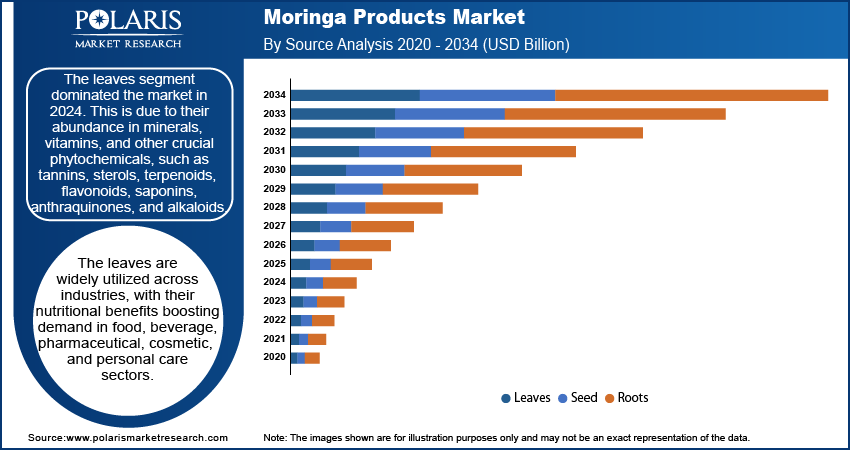
- In 2025, the leaves segment dominated the market with 68.0% share due to their abundance in minerals, vitamins, and other crucial phytochemicals.
- The organic segment held the largest revenue share of 38.0% in the market in 2025. This is due to the health benefits that encourage their growth and demand in various commercial applications.
- In 2025, the food & beverage sector dominated the market with 63.0%, attributed to the growing demand for functional food among urban populations globally.
Note: Figures and projections outlined in this report are the result of Polaris Market Research’s proprietary analytical processes, grounded in the latest available datasets and market observations.
Industry Dynamics
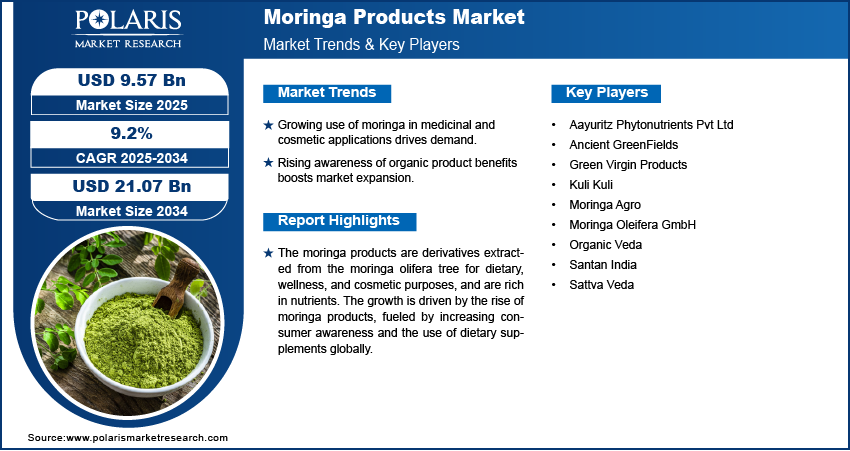
- The widespread use of moringa products in various medicinal, cosmetic, and nutritional supplement applications has boosted their demand.
- Awareness of the advantages of organic products over conventional products is driving the expansion opportunities.
- Lack of standardized processing, unpredictable harvest yards, and supply chain inconsistency create challenges in final product quality for large-scale commercialization.
- The global demand for natural and plant-based supplements creates growth opportunities for these products as they are rich in nutrients.
Source: Polaris Market Research Analysis
To Understand More About this Research: Download Sample Report
What Does the Current Market Landscape Look for Moringa Products?
The moringa products are derivatives extracted from the moringa olifera tree for dietary, wellness, and cosmetic purposes, and are rich in nutrients. The growth is driven by the rise of moringa products, fueled by increasing consumer awareness and the use of dietary supplements globally. Growing public awareness of the therapeutic benefits of moringa products is expected to drive industry growth. All parts of this plant, such as the flowers, seeds, pods, leaves, gum, and bark, treat vitamin and mineral deficiencies. This plant also helps maintain normal blood sugar levels, supports a healthy cardiovascular system and immune system, enhances the body's anti-inflammatory mechanisms, and enriches anemic blood, neutralizing free radicals. Malnutrition, nursing moms, overall weakness, depression, menopause, osteoporosis, and arthritis are expected to be treated with their help. Moreover, customers are becoming increasingly aware of herbal goods and their numerous advantages, which has inspired them to seek natural, nutritionally balanced products. This adoption has led to the product's inclusion in several food items for fortification and preservation. This is due to its antibacterial and other beneficial properties. The tree's resistance to drought and ability to prevent pests make it important for agriculture as well.
Furthermore, the demand for natural pesticides has boosted the importance of health and fitness, and the demand for organic goods supports industry expansion. Vegetables, fruits, nutraceuticals, and other commodities were nevertheless classified as essentials in the pandemic's later phases, resulting in a negligible impact on industry performance.
Difference Between Moringa vs Other Superfoods
Moringa is gaining popularity in the global superfoods market. This is attributed to its dense nutritional composition and various plant-based wellness applications. Compared with other popular superfoods such as spirulina, chia seeds, matcha, and turmeric, moringa offers a balanced combination of vitamins, minerals, antioxidants, and plant-based nutrients.
| Parameter | Moringa | Spirulina | Chia Seeds | Matcha | Turmeric |
| Nutritional Profile | Rich in vitamins, minerals, amino acids, fiber, and bioactive compounds | High protein and micronutrients but limited in certain vitamins | High omega-3 fatty acids, fiber, and minerals | Rich in catechins and plant compounds | Known mainly for curcuminoids and anti-inflammatory compounds |
| Antioxidant Content | Contains polyphenols, flavonoids, and antioxidant compounds supporting oxidative stress management | Contains phycocyanin and carotenoids | Provides antioxidants mainly from seeds | High in EGCG catechins | Strong antioxidant activity from curcumin |
| Protein Content | Provides plant-based protein with essential amino acids (especially in leaf powder form) | Very high protein concentration compared with many plant foods | Moderate protein with high fiber | Low protein content | Low protein content |
| Vitamin Profile | Naturally contains vitamins A, C, E, and several B vitamins | Contains some B vitamins but lower vitamin diversity | Provides minerals but limited vitamins | Contains vitamin C and other micronutrients | Limited vitamin contribution |
| Mineral Content | Source of calcium, iron, potassium, and magnesium | Provides iron and trace minerals | High calcium, magnesium, and phosphorus | Contains minerals in smaller amounts | Mainly used for bioactive compounds |
| Plant-Based Health Benefits | Supports nutritional supplementation, immunity, energy, and overall wellness | Used for protein supplementation and antioxidant benefits | Supports digestive health and heart wellness due to fiber and omega-3s | Associated with focus, metabolism, and antioxidant support | Popular for inflammation and joint wellness applications |
| Wellness Applications | Functional foods, dietary supplements, smoothies, herbal products, and nutraceuticals | Protein powders, supplements, sports nutrition | Energy bars, beverages, digestive health products | Beverages, functional foods, beauty products | Supplements, functional foods, traditional wellness products |
Source: Polaris Market Research Analysis
Industry Dynamics
Growth Drivers
How Increasing Awareness About Health Supplements is Driving the Market Expansion?
The rise in consumer awareness of the drumstick's health benefits, combined with its historical use as a vegetable in many Asian nations, has contributed to its growing popularity. The widespread use of these products in various medicinal, cosmetic, and nutritional supplement applications has boosted their demand. Food fortification element to combat hunger and malnutrition, as well as among health-conscious customers, has also gained appeal. Numerous studies are being conducted to determine the product's full potential in the pharmaceutical sector. Moreover, this rise in demand is due to the innovation in product development, which has led to the wide availability of moringa in various forms, such as capsules, teas, and protein powders. Thus, healthcare companies are investing in supply chains to fulfill the varying needs of modern consumers.
What are the Factors Driving the High Sales Growth of Moringa Industry?
The organic goods market is witnessing growth and a rise in demand. This is due to the people who are becoming aware of the advantages of organic products over conventional products. People's attention these days is on safer and better-for-you items, which has an impact on their eating preferences. These days, people opt for natural and organic vitamins to lower their risk of illness. The market's performance is aided by the growing popularity of clean-label products, particularly in developed economies such as those in North America and Europe. Thus, this development has encouraged several manufacturers to create organic-based products in an effort to reach a larger customer base, which is projected to fuel the industry’s expansion.
Challenges in Moringa Ingredients Market
- Supply Chain Inconsistencies: Dependence on agricultural production makes the market vulnerable to seasonal availability, climate conditions, farming practices, and logistics challenges.
- Limited Consumer Awareness in Some Regions: Despite growing popularity, awareness about moringa’s nutritional benefits and applications remains limited in certain markets, affecting adoption rates.
- Price & Availability Fluctuations: Changes in cultivation output, demand growth, and sourcing conditions can influence moringa ingredient pricing and availability.
- Market Competition from Other Superfoods: Moringa competes with established ingredients such as spirulina, matcha, chia seeds, and turmeric, requiring stronger product differentiation and consumer education.
Report Segmentation
The market is primarily segmented based on source, origin, application, and region.
| By Source | By Origin | By Application | By Region |
|
|
|
|
Source: Polaris Market Research Analysis
Know more about this report: Download Sample Report
Segmental Insights
Source Analysis
Which Segment by Source Dominated the Market in 2025?
The leaves segment dominated the market with 68.0% share in 2025. This is due to their abundance in minerals, vitamins, and other crucial phytochemicals, such as tannins, sterols, terpenoids, flavonoids, saponins, anthraquinones, and alkaloids. The leaves are widely used in various end uses. These nutritional qualities are raising awareness of the leaves and powder made from them in various industries, such as food and beverage, pharmaceuticals, cosmetics, and personal care. Major firms are upgrading their product offerings in the industry by leveraging these nutritional properties.
Source: Polaris Market Research Analysis
Origin Analysis
Why Organic Segment Held the Largest Revenue Share of the Market in 2025?
The organic segment held the largest revenue share of 38.0% in 2025. This is due to the growth in using non-GMO agricultural techniques. There are health advantages that encourage their growth and demand in a variety of commercial uses. Organically developed ripe fruits/pods, mature leaves, mature flowers, and organically grown roots are frequently included as the main components promoting the quickest growth of organically farmed moringa. Substances of natural and organic origin are also environmentally friendly due to their minimal environmental impact. Moreover, producers across all industrial sectors, such as those in the food and beverage, cosmetics and personal care, and pharmaceutical industries, aim to use components that are organically sourced. This shift is attributed to the rise in demand from consumers for environmentally friendly products.
Furthermore, farmers are expected to increase agricultural production by using organic fertilizers to examine the changes in the end-use market. The market value is further supported by growing public awareness of the health benefits of consuming organic food items, particularly among health-conscious individuals.
Application Analysis
Which Application Segment was the Most Dominant in 2025?
In 2025, the food & beverage sector dominated the market with 63.0%. This growth is attributed to ready-to-cook products, such as moringa powder and moringa tea, as well as chocolates, cakes, juices, and lattes, which contribute to their expansion. The food and beverage sector is also supported by the growing demand for functional food among urban populations globally. The nutritional value of the elements in moringa, such as the pods/seeds, leaves, flowers, bark, honey, and roots, is contributing to the plant's expansion into the food and beverage industries. The common nutrients included in substances produced from moringas, such as protein, fat, carbohydrate, and fiber, as well as vitamins B1, B2, B3, C, and E, calcium, magnesium, phosphorus, potassium, copper, iron, and sulfur, among others, are assisting in the expansion of the application market.
Regional Analysis
Why Asia Pacific Dominated the Moringa Products Market in 2025?
In 2025, the Asia Pacific dominated the market with 42.0% share, due to its ideal conditions for growing moringa. India is the main nation cultivating and distributing the plant on the international market. The regional market value is boosted by the rise in farmers ability to learn and technical advancements in agricultural techniques. The demand for functional foods is also driven by the rapid urbanization of developing nations such as China and India. The rise in urban population's awareness of the health advantages of moringa components has also boosted revenue growth opportunities and ongoing development.
Developing nations are undergoing several changes in terms of agricultural methods and related technological developments. Moreover, the capacity to provide and distribute ingredients in local and regional markets is enhanced by the expanded agricultural methods used for moringa cultivation. Furthermore, the industry is expanding due to the continuously rising demand in the region's emerging economies and the rising spending power.
What is the Reason for North America's Substantial Growth During the Forecast Period?
North America is anticipated to experience substantial growth at a CAGR of 10.19% in the forecast period. This is attributed to the developed market infrastructure and presence of health-conscious consumers. The dietary supplement and functional food market provides a scalable and pre-existing distribution channel to boost market growth. Moreover, trends in consumer preference for natural, sustainable, and plant-based solutions for health and wellness contribute to the market growth. Additionally, existence of predominant health-focused food chains and online platforms provides greater visibility and market access of products, which allows consumers to spend more money on premium products with health benefits. Therefore, developed clean-label trends and product innovations in this region are expected to boost expanded opportunity for these products growth.
Source: Polaris Market Research Analysis
Key Players and Competitive Insights
The moringa ingredients market features a mix of specialized growers, established supplement brands, and vertically integrated suppliers. Aduna Limited, True Moringa, and Kuli Kuli Foods compete through direct sourcing relationships with smallholder farmers, ethical positioning, and consumer-facing branding. These players emphasize traceability and social impact to differentiate in a crowded wellness space.
Grenera Nutrients, Aayuritz Phytonutrients, and Organic India compete on organic certification, cultivation expertise, and bulk supply capability, serving both branded and private-label customers. Organic Veda and Green Virgin Products target value-conscious buyers with broad natural product portfolios.
NOW Foods and Swanson Health Products leverage large distribution networks, brand recognition, and diverse supplement catalogs to capture mass-market demand, though moringa represents only a portion of their offerings.
Key competitive factors include sourcing integrity, organic certification, price competitiveness, product form innovation, and distribution reach. Smaller specialists risk losing share to larger brands unless they sustain differentiation through quality, sustainability claims, and specialized applications.
Key Companies
- Aayuritz Phytonutrients Pvt. Ltd.
- Aduna Limited
- Green Virgin Products
- Grenera Nutrients Pvt. Ltd.
- Kuli Kuli Foods
- NOW Foods
- Organic India Pvt. Ltd.
- Organic Veda
- Swanson Health Products
- True Moringa
Recent Developments
- February 2026: Baidyanath Ayurved announced the launch of its certified organic moringa powder. With this launch, the company aims to address daily nutritional gaps through a plant-based, nutrient-dense supplement. (Source: fnbnews.com)
- January 2026: Kuli Kuli Foods announced the launch of Pure Organic Moringa Capsules. Each bottle of these capsules contains a 30-day supply. Two capsules deliver over 1,000 mg of organic moringa leaf powder. It offers a travel friendly and approachable format for consumers seeking to boost daily energy, digestion, and immunity. (Source: finance.yahoo.com)
Moringa Products Market Report Scope
| Report Attributes | Details |
| Market size value in 2025 | USD 10.01 billion |
| Market size value in 2026 | USD 11.08 billion |
| Revenue forecast in 2034 | USD 25.11 billion |
| CAGR | 10.76% from 2026 - 2034 |
| Base year | 2025 |
| Historical data | 2021 - 2024 |
| Forecast period | 2026 - 2034 |
| Quantitative units | Revenue in USD billion and CAGR from 2026 to 2034 |
| Segments covered | By Source, By Origin, By Application, By Region |
| Regional scope | North America, Europe, Asia Pacific, Latin America; Middle East & Africa |
| Key companies | Aayuritz Phytonutrients Pvt. Ltd.; Aduna Limited; Green Virgin Products; Grenera Nutrients Pvt. Ltd.; Kuli Kuli Foods; NOW Foods; Organic India Pvt. Ltd.; Organic Veda; Swanson Health Products; True Moringa |
Source: Polaris Market Research Analysis
moringa ingredients market FAQ's
• The global market size was valued at USD 10.01 billion in 2025 and is projected to grow to USD 25.11 billion by 2034.
• The global market is projected to register a CAGR of 10.76% during the forecast period.
• The Asia Pacific held the largest market share of 42.0% in 2025
• A few of the key players in the market are Aayuritz Phytonutrients Pvt. Ltd.; Aduna Limited; Green Virgin Products; Grenera Nutrients Pvt. Ltd.; Kuli Kuli Foods; NOW Foods; Organic India Pvt. Ltd.; Organic Veda; Swanson Health Products; True Moringa.
• In 2025, the leaves segment dominated the market with 68.0% share.
• The organic segment held the largest revenue share of 38.0% in the market in 2025.
Download Sample Report of moringa ingredients market
Please fill out the form to request a customized copy of the research report.


