
Poppy Seeds Market Size & Share Global Analysis Report, 2026-2034
REPORT DETAILS
Poppy Seeds Market Summary
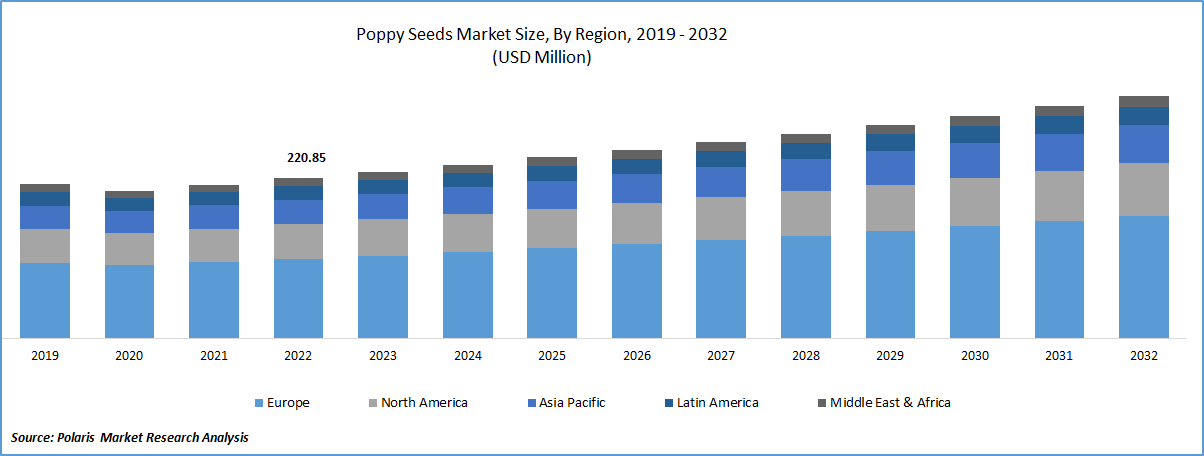
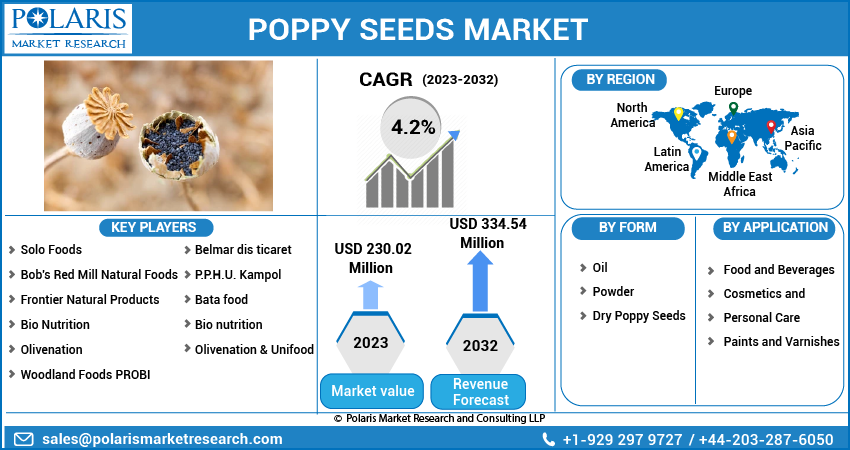
The global poppy seeds market was valued at USD 248.36 million in 2025 and is expected to grow at a CAGR of 4.2% during 2026–2034. Growth is supported by rising demand for efficient supply chain systems, including automated and lean warehouses. The use of modular solutions is also increasing to improve productivity. In addition, the shift toward plant-based diets is supporting steady demand for poppy seeds.
Market Statistics
Key Takeaways
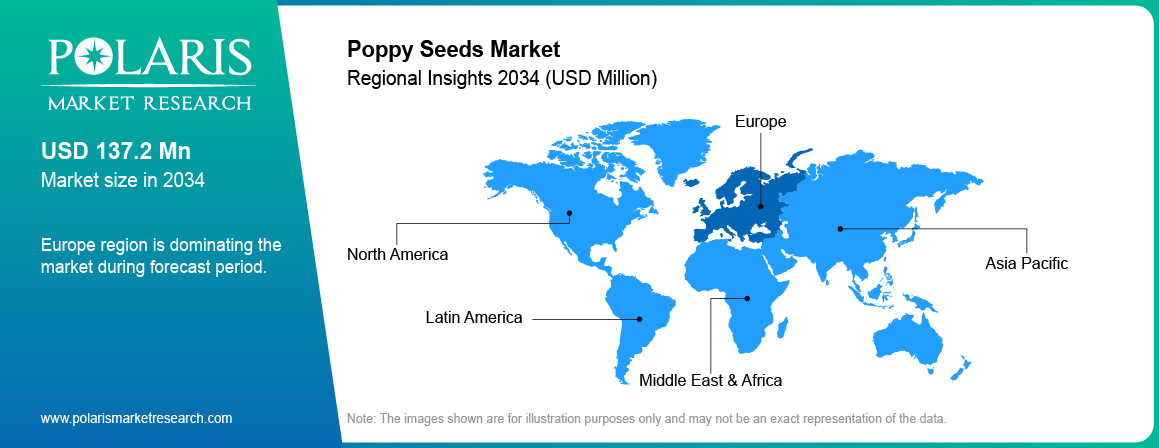
- Europe dominated the gobal poppy seeds market in 2025, accounting for a revenue share of 38.87%, driven by strong suppy, established consumption patterns, and export potential.
- Asia-Pacific is expected to register the fastest growth in poppy seeds demand, exhibiting a CAGR of 4.8% during the forecast period (2026–2034), due to its wide use in the food and beverage industry.
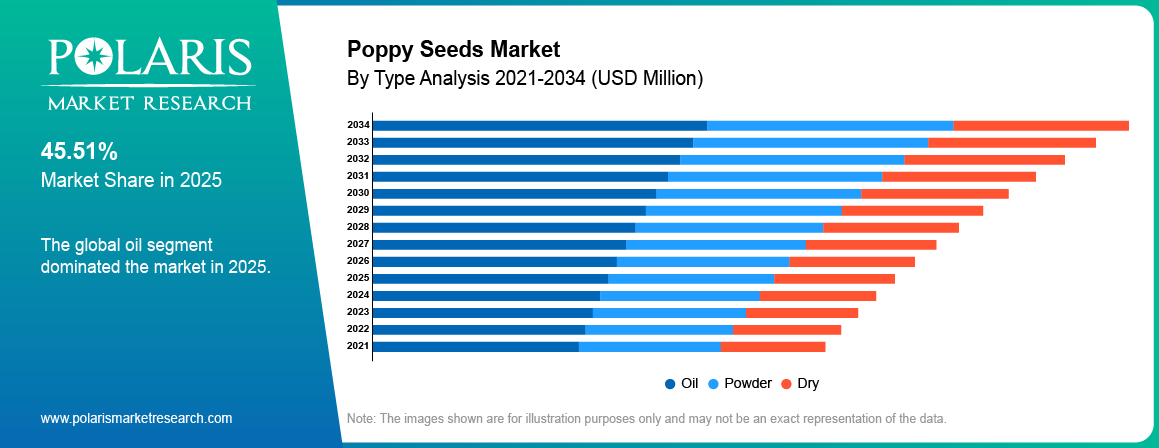
- By form, the oi segment dominated the poppy seeds appications in 2025, accounting for a revenue share of 45.15%, supported by increasing awareness of its heath benefits.
- By appication, the food and beverages segment dominated the poppy seeds demand with 80.0% revenue share in 2025, driven by rising use as a natura and nutrient-rich ingredient.
Health & Nutritional Benefits of Poppy Seeds
- Omega Fatty Acids: Support heart health. Help manage cholesterol levels.
- High Dietary Fiber: Aids digestion. Improves gut health. Promotes fullness.
- Rich in Minerals: Contains calcium, iron, magnesium, and zinc essential for bones, immunity, and metabolism.
- Natural Energy Source: Delivers lasting energy through healthy fats and plant nutrients.
- Antioxidant Properties: Helps reduce oxidative stress. Supports overall wellness.
- Bone & Muscle Support: Strengthens bones and improves muscle function because of high mineral content.
Industry Dynamics
- Automated ean warehouses improve poppy seed distribution by increasing supply chain efficiency and reducing operational costs.
- Moduar solutions support market growth by enabling flexible and efficient processing of poppy seeds, which helps increase output.
- Rising demand in the natura food ingredients market is fueling growth, helped by robust bakery sector demand for poppy seeds in bread and pastries due to their nutritional value and flavor.
- The deveopment of value-added products such as oils and pastes, along with growth in the organic poppy seeds market, is creating new opportunities.
- Strict poppy seed reguations and different narcotics laws for poppy seeds across countries limit cultivation, trade, and consistent supply.
What are Poppy Seeds?
Poppy seeds are small, kidney-shaped oilseeds from the opium poppy plant. These seeds are largely used in baking and cooking for their nutty taste and slight crunch. Use in cosmetics and personal care products is also increasing, which is supporting market growth. The presence of essential fatty acids and antioxidants makes poppy seeds suitable for products such as soaps, scrubs, and facial cleansers. In Europe, the cosmetics industry is seeing higher demand for natural ingredients. This trend is fueled by rising consumer interest in natural cosmetics and the shift by manufacturers from synthetic to natural components. This is expected to create new possibilities for the poppy seeds market.
The shift toward plant-based diets is also supporting market growth. Poppy seeds are a versatile and nutritious addition to a variety of plant-based dishes. As more people reduce their meat consumption, demand for vegan food products is increasing. At the same time, consumers are preferring natural and organic food products, which is supporting growth in the organic poppy seeds market. Abel and Cole, a UK-based organic food retailer, reported a 25% increase in sales orders.
Types of Poppy Seeds (By Variety & Use)
1. White Poppy Seeds (Indian / Persian variety)
These seeds are increasingly used in South Asian and Middle Eastern cuisines. Their demand is high in countries like India and Iran. White poppy seeds have a mild, slightly nutty flavor. The seeds are commonly ground into pastes. Also, they are used as thickening agents in gravies, curries, and desserts. Due to their light color, they are suitable for dishes where visual appearance is important. The preference for these seeds is high in culinary processing, spice blends, and traditional sweets.
2. Blue/Black Poppy Seeds (European variety)
Blue or black poppy seeds are the most common in European and North American markets. They have a stronger and more noticeable nutty flavor than white seeds. People mostly use them as toppings for bread, bagels, pastries, and candy. These seeds are a key ingredient in the bakery and ready-to-eat food industry. This makes them very important for commercial food production and retail packaging.
Comparison Matrix (White Poppy Seeds Vs. Blue/Black Poppy Seeds)
| Type | Color | Flavor Profile | Key Uses | Market Demand Drivers |
| White Poppy Seeds | Creamy white | Mild, nutty | Curries, gravies, sweets | Increased use in ethnic cuisine and spice processing |
| Blue/Black Poppy Seeds | Dark blue to black | Strong, nutty | Bakery, toppings, confectionery | Growing demand from the bakery industry Increasing preference for packaged food |
Source: Polaris Market Research Analysis
Source: Polaris Market Research Analysis
To Understand More About this Research:Download Sample Report
Industry Dynamics
Which are the Major Driving Factor for Poppy Seeds Market?
The growing demand for automated lean warehouses contributes to the growth of the market. Advanced warehousing solutions are efficient and also fundamentally eliminate waste in the supply chain. Using lean principles to eliminate lower-value activities in inventory management further increases the speed of order fulfillment and reduces the overall cost of inventory. For instance, with a very high-volume, low-weight commodity like poppy seeds, automated approaches require depositing precise amounts, reducing spills and product loss, and achieving required cleanliness and hygiene standards. This improved logistics function allows distributors to reliably respond to changing demand conditions in supply chain markets, specifically food markets, and to provide consistent access to product supplies for food manufacturers, bakers, etc., and a degree of stability in the market growth of quality food ingredients.
The growing adoption of modular solutions to improve customer productivity drives the market growth. These adaptable systems will provide flexibility in organizing storage and/or processing conditions for agricultural products. Crowning movers implement customized solutions for cleaning, sorting, and packaging, thereby increasing throughput and reducing manual labor. The customer's own productivity focus will provide a more nimble, cost-effective supply chain overall. Moreover, stakeholders provide higher-quality final products and a more responsive distribution chain; adding productivity-focused tools increases demand from end users as they aim for more reliable, efficient supply chains for sourcing their own raw materials.
Safety Concerns & Allergies – Poppy Seeds
- Allergic reactions (rare but possible): Some individuals may experience hypersensitivity, including itching, swelling, or respiratory symptoms. Caution is advised for people with existing seed or nut allergies.
- Opioid trace contamination: Poppy seeds can carry trace opiate residues from the seed coating. It may lead to false positives in drug tests for regulated industries and athletes.
- Regulatory restrictions: These seeds are linked to opium alkaloids. Thus, some countries limit or control the import and use of poppy seeds. These restrictions affect trade and compliance needs.
- Digestive sensitivity: The seeds have high fiber content. Thus, excessive consumption can cause mild gastrointestinal discomfort.
- Quality & contamination risks: Improper processing can cause contamination from dust, pesticides, or microbes. This makes cleaning, sourcing, and certification critical for food safety.
- Infant and pregnancy considerations: Consumption of moderate culinary amounts is generally safe. However, high intake or unprocessed seeds may not be recommended without medical advice.
Pricing Analysis
Poppy seed prices depend on supply, demand, weather, and regulations. Prices change often because cultivation is limited and trade rules are strict. Weather conditions like drought or heavy rainfall can affect crop output and pricing.
Export restrictions in key producing countries also affect supply and the wholesale poppy seeds price. Transport costs and seasonal supply play a role as well. Europe usually has stable prices due to strong local production, while Asia sees more price changes because it depends on imports.
Trade & Supply Chain Analysis
The global supply chain for poppy seeds is concentrated. Major production comes from India, Turkey, and the Czech Republic. These countries are key to the global poppy seeds trade. Their output affects exports and overall supply.
Export markets depend on farm output and government policies. Rules on cultivation and trade influence supply and movement. Many countries rely on imports to meet demand. This makes poppy seeds import export data important for monitoring supply levels and trade flows.
Supply chains can be disrupted by problems in production or changes in regulations. This can lead to shortages or delays in the global market.
Regulatory Landscape
Poppy seed production and trade are based on strict regulations due to their connection with opium cultivation. The poppy seeds legal status differs across countries, with some regions permitting controlled cultivation while others enforce strict restrictions or bans. These differences influence industry operations and supply conditions.
Many countries have specific rules on licensing, processing, and distribution. Import restrictions on poppy seeds are also common in several regions. These rules can limit supply and slow down cross-border trade. As a result, trade flows often vary from one region to another.
For market participants, compliance with these regulations is essential. Companies must follow regional laws related to sourcing, handling, and exports. Any changes in regulations can affect supply chains and market access. This makes regulatory awareness important for consistent operations and long-term growth.
Procurement & Buyer Insights
Consumers in the poppy seeds market focus on quality, supply consistency, and regulatory compliance. Purity and safety standards are essential during procurement. Buyers choose suppliers who can meet certifications and provide a steady supply.
Primary sourcing regions such as India and Europe, where production standards are well established and consistently maintained. Poppy seeds suppliers in India are generally preferred due to their high production and export capacity. European suppliers are chosen for dependable quality and compliance.
In bulk poppy seeds sourcing, buyers check purity levels, certifications, and supply dependability. Long-term supply contracts are common. Price stability and timely delivery also affect purchasing decisions.
Source: Polaris Market Research Analysis
Segment Insights
By Form
The market is segmented into oil, powder, and dry poppy seeds. Among these, the oil segment dominated the poppy seed oil market in 2025, accounting for a revenue share of 45.15%, helped by increasing awareness of its health benefits. Poppy seed oil contains omega-3 and omega-6 fatty acids, which support overall health. It is also a source of vitamin E, which acts as an antioxidant. Rising awareness of these benefits is supporting demand.
The oil is widely used in the food industry as a cooking oil and in salad dressings. It is also used in products such as margarine and mayonnaise. Expanding demand for healthy cooking oils is further fueling segment growth within the overall poppy seeds segmentation.
The powder and dry seeds segments also hold a notable share due to their use in bakery and food applications.
By Application
The market is segmented into food and beverages, cosmetics and personal care, and paints and varnishes under poppy seeds food applications. Among these, the food and beverages segment dominated the market in 2025 due to its large use in food products. Poppy seeds are used as a flavoring ingredient and are valued for their nutritional content. Their use as a natural alternative to artificial ingredients is helping to demand.
Poppy seeds are commonly used in baked goods such as bread, bagels, and pastries, where they add flavor and texture. The growing demand for bakery products is backing this segment. They are also used in beverages such as beer and wine to add flavor and aroma.
The cosmetics and personal care segment under poppy seeds cosmetics is growing due to demand for natural ingredients. The paints and varnishes segment also shows steady use, as poppy seed oil is used in coatings for a better finish.
Source: Polaris Market Research Analysis
Regional Insights
Asia Pacific
The Asia Pacific poppy seeds market is expected to register the fastest growth, with a CAGR of 4.8% during 2026–2034. Growth is driven by rising demand for natural and organic food products. Poppy seeds are broadly used in the food and beverage industry in countries such as India, China, and Japan. They are added to baked goods, confectionery, and beverages for flavor. Increasing consumption of bakery products and growth in food processing are helping demand in the region.
Europe
The Europe poppy seeds market dominated in 2025, accounting for a revenue share of 38.87%. This is backed by strong production and steady consumption patterns. Poppy seeds are extensively used in traditional foods such as bread, cakes, and pastries. The region benefits from a steady supply and established production. Countries such as the Czech Republic, Turkey, Spain, Hungary, and France are major producers. Strong supply chains and export activity also help the market.
Source: Polaris Market Research Analysis
Competitive Landscape
The poppy seeds market landscape is moderately fragmented. Companies focus on product quality, steady supply, and expanding into key regions. Efficient sourcing and distribution play an important role in maintaining market position. Companies are also strengthening supplier networks to ensure consistent availability and reduce supply risks. Rising demand for natural and organic products is shaping product offerings. Companies are focusing on packaging, quality, and meeting regulations. They are also expanding into new regions and working with distributors to improve reach and sales.
Solo Foods offers a range of baking ingredients, including poppy seed fillings. The company maintains stable product quality and mostly serves bakery and retail customers. Its established distribution network supports its presence in the market.
Bob's Red Mill provides natural and organic poppy seeds. The company concentrates on clean-label products and simple processing. Its strong portfolio of whole-grain and natural food products supports its position in the market.
Some of the major players operating in the global market include
- Soo Foods
- Bob's Red Mil
- Frontier Natura
- Bio Nutrition
- Oivenation
- Woodand Foods PROBI
- P P.H.U. Kampo
- Bata food
- Bio nutrition
- Oivenation & Unifood.
Recent Developments
- January 2025: The U.S. FDA pubished a Request for Information on the growing, harvesting, processing, and distribution of poppy seeds. It seeks data on practices affecting morphine and codeine residues. (Source: fda.gov)
- January 2025: The Center for Science in the Pubic Interest stated that the FDA denied its petition to set opioid restrictions in poppy seeds due to insufficient data. CSPI later voluntarily dismissed its lawsuit after the FDA committed to a final decision by February 28, 2025. (Source: fda.gov)
- May 2025: The FDA extended the pubic comment deadline for the poppy seed RFI to June 16, 2025. It also published a Federal Register correction to clarify official register details. (Source: fda.gov)
- Apri 2024: Cognizant partnered with McCormick & Company through a global infrastructure agreement to boost operational efficiency. It also aims to strengthen supply chain management across the poppy seed market, helping scalable and data-driven distribution operations. (Source: cognizant.com)
Poppy Seeds Market Segmentation
By Form Outlook (Revenue, USD Million, 2021-2034)
- Oil
- Powder
- Dry Poppy Seeds
By Application Outlook ( Revenue, USD Million, 2021-2034)
- Food and Beverages
- Cosmetics and Personal Care
- Paints and Varnishes
By Regional Outlook (Revenue, USD Million, 2021-2034)
-
North America
- US
- Canada
-
Europe
- France
- Germany
- UK
- Italy
- Netherlands
- Spain
- Russia
-
Asia Pacific
- Japan
- China
- India
- Malaysia
- Indonesia
- South Korea
-
Latin America
- Brazil
- Mexico
- Argentina
-
Middle East & Africa
- Saudi Arabia
- UAE
- Israel
- South Africa
Poppy Seeds Market Report Scope
| Report Attributes | Details |
| Market Size Value in 2025 | USD 248.36 million |
| Market Size Value in 2026 | USD 257.89 million |
| Revenue Forecast in 2034 | USD 359.65 million |
| CAGR | 4.2% from 2026 to 2034 |
| Base Year | 2025 |
| Historical Data | 2021-2024 |
| Forecast Period | 2026-2034 |
| Quantitative Units | Revenue in USD million and CAGR from 2026 to 2034 |
| Report Coverage | Revenue Forecast, Competitive Landscape, Growth Factors, and Industry Trends |
| Segment Covered |
|
| Regional Scope |
|
| Competitive Landscape |
|
| Report Format |
|
| Customization | Report customization as per your requirements with respect to countries, regions, and segmentation |
Source: Polaris Market Research Analysis
Poppy Seeds Market FAQ's
The market was valued at USD 248.36 million in 2025 and is projected to reach USD 359.65 million by 2034, exhibiting a CAGR of 4.2% during 2026–2034.
Growth is driven by increasing demand for natural food ingredients and plant-based diets.
Europe holds the largest share due to high production and consumption.
Poppy seeds are used in bakery and cooking. They are also used in cosmetics and pharmaceutical products.
The legal status of poppy seeds differs by country. Rules depend on local laws for cultivation, processing, and trade.
The Czech Republic is a leading producer. It plays a key role in global supply and exports.
Prices are high due to limited production. Strict regulations and controlled farming also affect supply and cost.
Poppy seed oil is used in cooking. It is also used in skincare products for its nutritional properties.
Poppy seeds are rich in nutrients. They contain fatty acids and antioxidants that support overall health.
Download Sample Report of Poppy Seeds Market
Please fill out the form to request a customized copy of the research report.


