
Probiotics Market Share, Size, Trends, Industry Analysis Report, 2026 - 2034
REPORT DETAILS
Probiotics Market Summary
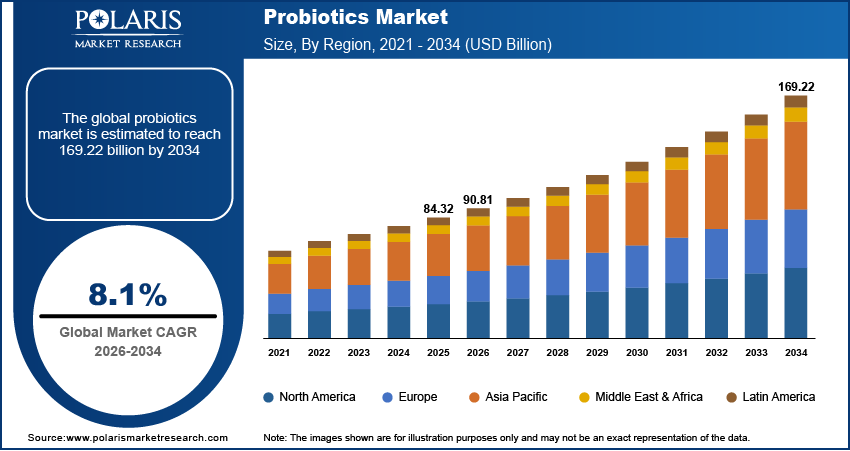
The global probiotics market was valued at USD 84.32 billion in 2025, growing at a CAGR of 8.1% from 2026–2034. The growing consumer awareness toward preventive healthcare and advancement of systematic probiotic strains drive the market growth. Advancements in microbiome science and expanding clinical evidence for digestive and immune health also propel probiotics demand, The rapid penetration of probiotic dietary supplements among adults and children contributed to industry growth. Further, shelf-stable formulations, spore-based probiotics, and microencapsulation probiotics improve CFU survivability through storage and GI transit. It supports broader probiotics adoption across functional foods and beverages, nutraceuticals, and clinical nutrition.
Market Statistics
Key Takeaways
- The bacteria segment dominated the market with a share of 86.0% in 2025, due to growing consumption of dairy-based products across the globe.
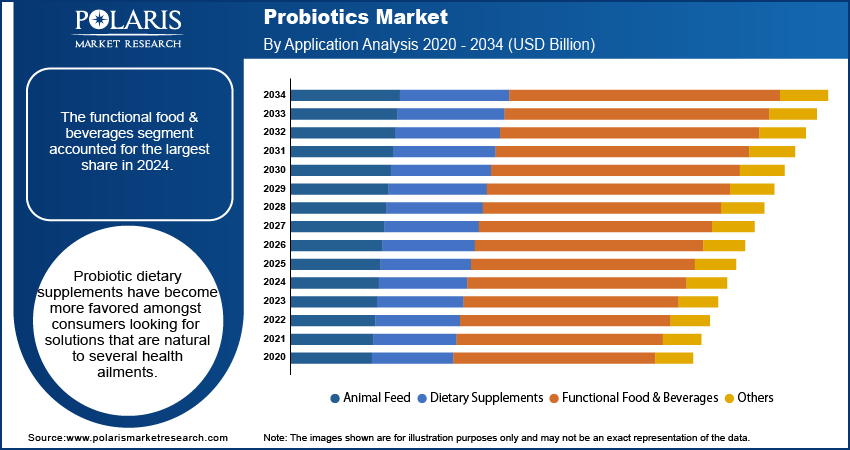
- The functional food & beverages segment accounted for the largest share of 55.0% in 2025. Rising demand for functional food probiotics, probiotics beverages, plant-based probiotics, probiotic snacks, non-dairy probiotics, and packaged functional foods drives the segment dominance.
- Asia Pacific dominated with the largest share of 42.0% in 2025. The presence of global players and their competitive strategies propels the Asia Pacific probiotics market share. With the rising e-commerce nutraceuticals penetration and local regulatory frameworks evolving, there is a growth probiotics demand China. Strong dairy and fermented food consumption contributed to the growing probiotics market India.
- North America is projected to grow with a CAGR of 7.5% during the forecast period in the global market due to rising investment in the food & beverage industry.
What are Probiotics?
Probiotics, which are live microorganisms, provide health benefits when consumed in adequate amounts. Probiotics differ from prebiotics, postbiotics, and synbiotics. Each offer unique roles in gut microbiome balance and digestive health regulation. Therefore, probiotics have a significant demand in the functional food industry. They are used in dietary supplements and functional foods, particularly yogurt. Rising interest in the gut–brain axis probiotics expands probiotic applications. Also, focus on precision nutrition probiotics will boost the demand for probiotics. They are majorly used for gastrointestinal benefits, immunity, metabolic wellness, women’s health, and mental health solutions. Probiotics efficacy is strain- and dose-specific. Viability through shelf life (CFU at end of shelf life) is a major quality marker. These factors are highly considered for procurement and regulatory compliance.
Comparison Matrix: Probiotics vs Prebiotics vs Postbiotics vs Synbiotics
| Category | Probiotics | Prebiotics | Postbiotics | Synbiotics |
| Definition | Live beneficial microorganisms. They offer a health benefit when consumed in adequate amounts. | Non-digestible ingredients (usually fibers) that selectively boost activity/growth of beneficial gut microbes | Inactivated microbial cells or microbial metabolites. They offer physiological benefits | A combination of probiotics and prebiotics designed to work synergistically |
| Primary Function | Restore and improve gut microbiota balance and enhance digestion, immunity | Feed beneficial bacteria | Provide bioactive compounds directly without requiring live bacteria | Deliver beneficial bacteria and support their survival and activity |
| Examples | Lactobacillus and Bifidobacterium strains | Inulin, FOS, GOS, and resistant starch | Short-chain fatty acids (SCFAs), bacterial lysates, and cell wall fragments | Product combining Bifidobacterium and inulin |
| Regulatory Status | Strain-specific approvals. Varies by region | Widely recognized as dietary fibers. Regulated as food ingredients | Emerging regulatory frameworks. Not standardized globally | Depends on probiotic and prebiotic components |
| Safety Profile | Generally safe. Caution in immunocompromised individuals | High safety profile | Very high. Non-viable cells reduce infection risks. | Same as probiotics. Depends on strain |
| Key Benefits | Gut health, immunity, digestion, metabolic support | Improved microbiome diversity and improved bowel function | Immune modulation, reduced inflammation, and gut barrier support | Enhanced efficacy and broader health outcomes |
| Major Applications | Supplements, gut health ingredients, dairy, fermented foods, and functional beverages | Functional foods, supplements, infant formula, and bakery | Medical foods, supplements, skin care, and beverages | Infant formula, nutraceuticals, and clinical nutrition probiotics |
| Market Trend | Strong R&D activities | Strong growth due to fiber awareness & digestive health | The postbiotics market is a fast-emerging market due to high interest in stability & safety | The synbiotics market is rapidly growing due to their rising preference in premium formulations |
Source: Polaris Market Research Analysis
Market Dynamics
Driver: Health Benefits Associated With Probiotic-Fortified Foods
The growing evidence-based gut health awareness and preventive healthcare adoption drives the demand for probiotic-fortified foods. Clinical studies highlighted the key role of probiotics for IBS and overall digestive regularity. Thus, food manufacturers are focusing on incorporating targeted strains into everyday products. Owing to the rising shift toward cleaner and more transparent formulations, demand for clean label probiotics in high across beverages, snacks, yogurts, and functional foods. The dairy-free probiotics market expansion is driven by rising demand for plant-based alternatives among vegan and lactose-intolerant consumers. These factors are prompting F&B brands to reformulate portfolios with stable and heat-resistant strains. It is enabling broader application in non-dairy matrices while strengthening the health-positioning of fortified foods. Microencapsulation technology and protective coatings are used to make probiotics heat, oxygen, and moisture resistant. These innovations expand the adoption of shelf-stable probiotics. They also widen distribution through probiotics supermarkets and e-commerce.
Driver: Increasing Popularity of Probiotic Dietary Supplements
Consumers seek convenient, high-potency solutions for digestive wellness, immune support, and targeted conditions such as probiotics for IBS. There are rapid innovations in capsule, gummy, sachet, and microencapsulated formats. They deliver enhanced strain survival and controlled release. Clean label probiotics enable brands to eliminate artificial additives. Brand emphasize safety, transparency, and scientific validation. The rising preference for vegan and lactose-intolerant options boosts demand for plant-based dietary supplements. It also propels the adoption of controlled release probiotics and allergen-free probiotics. Probiotics assist digestion by improving immunity and sustaining gut health. It also help in weight management and circumventing obesity. Owing to all these factors, probiotic dietary supplements are witnessing robust adoption. Introduction of probiotics subscription-based models is increasing customer lifetime value. Further, there is a rising demand for probiotic gummies among millennials and Gen Z consumers. Also, personalized probiotics include microbiome testing and tailored blends. Emergence of these products leads to premium product pricing and boost the D2C probiotics industry growth.
Restraints: International Quality Standards and Regulations for Probiotic Products
Regulatory challenges hinder the probiotics market due to inconsistent and complex probiotics standards. Regulatory bodies across the U.S., Europe, and Asia Pacific differ widely in defining probiotics, validating health claims, and approving strains. It creates compliance complexity for manufacturers. Requirements related to strain-specific identification, stability testing, CFU labeling, and clinical substantiation often vary by country. Probiotic labeling rules differ as per product and regions. The probiotics compliance requirements differ by product category such as food, supplement, or pharmaceutical. These inconsistencies slow down product launches. They increase documentation burdens. Stringent scrutiny demands strong clinical evidence for probiotics claims for IBS . It limits flexibility in marketing and positioning. Increasing scrutiny of health claims and proof of strain viability at end-of-shelf-life requires documentation. Complex documentation for health claims substantiation delays cross-border launches. Thus, stringent and complex probiotics regulatory framework act as one of the significant restraints to scaling probiotic innovation internationally.
Opportunities: R&D in Probiotic Formulations and Delivery Systems
Research and development (R&D) in probiotic formulations and novel delivery systems is rising. Companies emphasize more effective, stable, and targeted solutions in probiotic product development. Innovation shifts toward next-generation probiotics, including novel strains with enhanced resilience, metabolic activity, and disease-modulating potential. Advances in microencapsulation probiotics enhance viability through processing, storage, and gastrointestinal transit. These advancements use use lipid, polysaccharide, and polymer-based coatings. It enables incorporation into broader food, beverage, and supplement categories. There is an increasing research on personalized probiotics. In this segment, formulations are customized as per an individual’s microbiome profile. It helps meet specific digestive, immune, and metabolic needs. Emerging microbiome-based therapies bridge the gap between nutraceuticals and therapeutic applications. It supports precision health approaches. Such innovations strengthen efficacy and product differentiation across probiotic portfolios. Also, market players emphasize synbiotics and postbiotics for stability and next-gen strains. They also focus on delivery innovations such as microencapsulation and time-release. It helps them expand into metabolic wellness positioning and women’s health probiotics segment. Thus, growing R&D in probiotic formulations and delivery systems is expected to create lucrative opportunities in the coming years.
Which Innovations are Transforming the Probiotics Market?
The industry is rapidly moving toward precision health, functional innovation, and cross-industry integration. Advances in microbiome research and biotechnology propel the industry expansion. Also, consumer demand for functional wellness solutions drives increased probiotic consumption. Companies invest in the next-generation probiotics market. They also focus on precision formulations and novel delivery technologies. It helps them improve efficacy and stability. AI-driven formulation and advanced delivery technologies expand the probiotics use. Industry players adopt these innovations to gain competitive advantages.
Probiotics Innovations and Their Impact on Probiotics Industry
| Innovations | Description | Impact |
| Next-Generation Strains | Development of Akkermansia muciniphila, Bacteroides uniformis, Faecalibacterium prausnitzii, and other advanced probiotic strains. It targets metabolic, gut, and immune health. | Expands applications beyond digestive health to metabolic, cognitive, and skin health. |
| Synbiotics & Postbiotics | Combining probiotics and prebiotics (synbiotics) or the introduction of heat-killed bacterial metabolites (postbiotics) | Enhances shelf life, stability, and targeted product efficacy |
| Precision & Personalized Probiotics | AI and microbiome sequencing are used to design strain combinations tailored to individual gut profiles. | Facilitates personalized nutrition and therapy-driven probiotic products. |
| Novel Delivery Systems | Lipid coating, microencapsulation, and time-release capsules enhance survivability through the GI tract. | Enhances viability and bioavailability, mostly in supplements and functional foods. |
| Probiotic-Infused Functional Foods & Beverages | Expansion into non-dairy options, including plant-based yogurts, juices, protein snacks, and kombucha. | Expands consumer base to vegan, wellness-oriented, and lactose-intolerant users. |
| Stability Innovations and Smart Packaging Probiotics | Packaging with oxygen-absorbing films, desiccants, and smart sensors for CFU count maintenance. | Increases product shelf life and ensures potency till consumption. |
Source: Polaris Market Research Analysis
Segmental Overview
By Source
Probiotics by source are segmented into yeast and bacteria. The bacteria segment dominated the market with a share of 86.0% in 2025. The growing consumption of dairy-based products boost the dominance. Bacteria-based probiotics offer health benefits such as enhanced immune function, improved digestion, and greater lactase production. Lactobacillus and Bifidobacterium proven benefits such as gut health, boost immunity, improve digestion. This is fueling the adoption of the bacteria-based probiotics in the functional food and dietary supplements. Moreover, yogurt, kefir, fermented milk, cheese, and plant-based beverages are a few examples of bacteria-based probiotics. These products are available in the retail and e-commerce platforms. This improved accessibility is driving the segment demand.
The yeast-based segment is expected to register a higher CAGR of 8.8% during the forecast period. The demand for yeast and spore-based probiotics is rising due to their shelf-life stability. Yeast probiotics are highly used in the treatment of gastric acidity, intestinal manifestations, and diarrheas. Spore-based probiotics are considered safe for all age groups.
Comparison Between Yeast-Based Probiotics and Bacteria-Based Probiotics
| Parameter | Yeast-Based Probiotics | Bacteria-Based Probiotics |
| Common Strains | Saccharomyces boulardii | Lactobacillus, Bifidobacterium, Streptococcus |
| Antibiotic Resistance | Naturally resistant to antibiotics | Often sensitive to antibiotics |
| Primary Health Benefits | Gut barrier protection and pathogen inhibition | Immune modulation, digestive health, and microbiome balance |
| Stability | High resistance to heat, pH, and moisture | Lower intrinsic stability. It often needs microencapsulation. |
| Formulation Complexity | Lower | Higher (strain protection and viability maintenance needed) |
| Shelf-Life | Longer shelf-life | Shorter. Advanced stabilization is required to increase shelf life. |
| Regulatory Acceptance | Well-established for specific medical nutrition uses | Highly regulated. Stringent requirements for strain-level substantiation. |
| Common Applications | Pharma-grade supplements and hospital use | Functional foods, dietary supplements, and personalized probiotics |
| Market Role | Therapeutic, condition-specific niche | Mass-market and premium probiotic formulations |
Source: Polaris Market Research Analysis
By Application
Out analysis on probiotics by application reveals that the functional food & beverages segment held the largest share of 55.0% in 2025. Probiotics are included to improve the total nutritional value and the flavor of food. The demand for the functional food and beverages is rising worldwide. This rise is demand is fuel by expansion of the retail channel in urban as well as rural areas. This expansion is improving the product accessibility, which is fueling the demand for the probiotics. Additionally, growth of the e-commerce platform fuels the functional food and beverage accessibility. It drives the demand for the probiotics in this application.
Probiotic dietary supplements have become more favored amongst consumers seeking solutions that are natural to several health ailments. Probiotics, as contrasted to pharmacological solutions, are a natural way of curing various diseases connected to gut health, gastrointestinal situations, and immunity strengthening. The progression of new delivery systems such as fizzy powders, gummies, and chewable products is anticipated to boost growth.
Moreover, increasing preference for snacks containing ingredients with digestive health benefits contributed to the segment growth. Also, the rising consolidation of food and beverage with the science-backed probiotic ingredients will fuel the demand for probiotic food and drinks that are functional.
Other Key Applications of Probiotics
- Digestive health probiotics: Growing consumer emphasis on gut health and clinically validated strains propels demand for these probiotics across functional foods and supplements.
- Probiotics for women: The segment is expanding rapidly due to rising awareness of vaginal health, hormone-linked digestive issues, and UTI prevention.
- Pediatric probiotics: There is an increasing demand for safe, clinically supported solutions for immunity, colic, and antibiotic-associated digestive issues in children. It propels the pediatric probiotics market growth.
- Sports probiotics: Athletes adopt strains that support endurance, immunity, recovery, and nutrient absorption for performance optimization. This factor boosts the demand for sports probiotics.
- Psychobiotics: Mental wellness probiotics are used for stress and mood support. Emergence of these psychobiotics is driven by the gut–brain axis trend.
By Distribution Channel
Based on probiotics distribution channels, the segmentation includes offline stores and online platforms. Offline stores include pharmacies probiotics, hypermarkets and supermarkets probiotics, and specialty stores. The offline segment dominated with a share of 72.0% in 2025. The availability of a wide variety of probiotics under one roof and the ease of purchasing drive the segment dominance. The online platforms segment is expected to record a higher CAGR during the forecast period. The rising adoption of probiotics online platforms is attributed to their convenience and easy accessibility. Market players focus on omnichannel expansion, including pharmacies, supermarkets, and online platforms. These channels support different price tiers and product formats.
Types, Benefits, and Real-World Examples
| Type | Benefit | Real-World Example |
| Vitamins | Supports immunity and daily health | Vitamin tablets/supplements |
| Minerals | Helps maintain bone and body function | Calcium supplements |
| Amino Acids | Supports muscle repair and recovery | Protein powder (sports use) |
| Botanicals | Supports general wellness and stress | Herbal supplements (Ayurveda) |
| Probiotics | Supports digestion and gut balance | Yogurt, probiotic drinks |
Source: Polaris Market Research Analysis
Geographic Overview
According to our study on the global probiotics market by region, Asia Pacific led with a largest revenue share of 42.0% in 2025. The region is witnessing significant growth in consumer consciousness driven by international players' competitive strategies. The increasing population, rising disposable income, and enhancement of the standard of living boost the regional growth. China and India are emerging as innovation hubs across the world. It is supported by evolving national guidelines, including the ICMR–DBT standards in India. Increasing China probiotics demand is driven by rising digestive-health awareness and rapid growth in e-commerce nutraceuticals. India’s probiotics regulations are tightening as FSSAI enforces clearer strain-specific labeling and quality standards for foods and dietary supplements.
Asia Pacific Probiotics Industry Drivers and Restraints
- The rising focus on R&D activities for the advancement of planned strains drives the market growth.
- Rising digestive health awareness and high prevalence of gut-related disorders boost the market growth.
- Regulatory fragmentation and varying probiotic approval, labeling, and health-claim standards lead to compliance complexity and time-to-market for manufacturers. This complex regulatory compliance process hinders the market growth.
The North America probiotics market is anticipated to register a substantial growth over the forecast period. Pursuing investments from manufacturers in the food and beverage and pharmaceutical industries is expected to present regional growth. The regional players are investing in R&D to put forward contemporary products to handle consumers of different age groups and genders. Such factors are anticipated to fast-track the market growth over the forecast period.
North America Probiotics Industry Drivers and Restraints
- There is a rising consumer awareness of gut health, immunity, and preventive healthcare. This factors boosts the adoption of clinically backed probiotic formulations in the U.S. and Canada.
- Robust clinical research ecosystem and innovation in strain development and delivery technologies (e.g., microencapsulation and synbiotics) propel the market growth. Also, increasing adoption of personalized nutrition platforms accelerate premium product uptake.
- Authorities such as the FDA and Health Canada impose stringent regulations on health claims and labeling. It increases substantiation costs and limits aggressive marketing of probiotic benefits. Such factors restrain the market growth in North America.

Key Market Players & Competitive Analysis Report
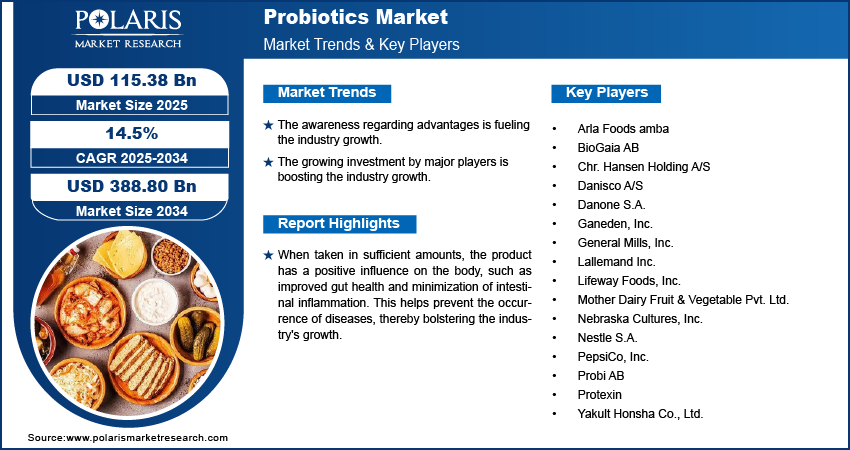
Probiotics M&A (mergers and acquisitions) activities and clinical partnerships with research universities are positively impacting the probiotics industry growth. Also, investments in postbiotics and microbiome-based therapeutics, as well as clinical collaborations, reshape probiotics competitive landscape. Ingredient suppliers and dairy majors focus on building alliances to expand their regional distribution networks. Instead of emphasizing only brand recognition, Industry players must focus on strain IP, stability technologies, clinical substantiation of claims, and distribution reach to gain competitive advantages.
Key Market Players
- Arla Foods amba
- BioGaia AB
- Chr Hansen Holding A/S
- Danisco A/S
- Danone S.A.
- Ganeden, Inc.
- General Mills, Inc.
- Lallemand Inc.
- Lifeway Foods, Inc.
- Mother Dairy Fruit & Vegetable Pvt. Ltd.
- Nebraska Cultures, Inc
- Nestle S.A.
- PepsiCo, Inc.
- Probi AB
- Protexin
- Yakult Honsha Co., Ltd.
Consumer Decision Criteria for Evaluating Probiotic Products
| Evaluation Factor | What Consumers Seek? | Why It Matters? |
| Strain ID | Labeling with clear information on genus, species, and strain | Builds trust. It ensures that product is scientifically defined and not generic |
| Clinical Backing | Human studies or clinically proven claims are considered. | Provide guarantee on efficacy of health benefits |
| Dosage Form | Capsules, gummies, liquids, sachets, and functional foods | Influences preference considering convenience, compliance, and daily usage |
| Stability Tech | Microencapsulation, spore-forming strains, and moisture protection | Ensures probiotic viability through digestion and storage |
| Storage | Ambient-stable vs refrigerated products | Impacts the portability, ease of use, and purchase decisions |
| Shelf-Life | Long shelf-life with the guarantee of CFU till expiry | Signals quality and value for money |
| QA Standards | GMP certification, third-party testing, and CoA availability | Improves confidence in safety, consistency, and product authenticity |
Source: Polaris Market Research Analysis
Probiotics Industry Development
-
January 2026: Karma launched Pineapple Coconut Probiotic Water with 2 billion CFU of BC30 probiotics. It uses “Push Cap” technology for stability. (Source: prnewswire.com)
- April 2026: Researchers at Chulalongkorn University identified Lactobacillus rhamnosus L34 for treating chronic kidney disease. The finding highlights its potential use in medical uses. (Source: chula.ac.th)
- March 2026: Nature Made expanded its portfolio with SuperGreens and digestive enzymes. The launch shows a shift toward combining probiotics with other nutrients. (Source: businesswire.com)
- December 2025: Ageasy partnered with Wellbeing Nutrition to launch a gut care range for seniors. The product line is focused on digestive health help for the elderly. (Source: businesswireindia.com)
- April 2024: dsm-firmenich, innovators in nutrition and health, partnered with Lallemand Health Solutions. They launched new synergistic synbiotic solutions. These solutions support infant health and development. (Source: dsm-firmenich.com)
Probiotics Market Segmentation
By Source Outlook (Revenue – USD Billion, 2021–2034)
- Yeast
- Bacteria
By Application Outlook (Revenue – USD Billion, 2021–2034)
- Animal Feed
- Dietary Supplements
- Functional Food & Beverages
- Others
By Distribution Channel Outlook (Revenue – USD Billion, 2021–2034)
- Offline Stores
- Pharmacies
- Supermarkets and Hypermarkets
- Specialty Stores
- Online Platforms
By End-Use Outlook (Revenue – USD Billion, 2021–2034)
- Animal Probiotics
- Human Probiotics
By Regional Outlook (Revenue – USD Billion, 2021–2034)
- North America
- U.S.
- Canada
- Europe
- France
- Germany
- UK
- Italy
- Spain
- Netherlands
- Russia
- Rest of Europe
- Asia Pacific
- Japan
- China
- India
- Malaysia
- Indonesia
- South Korea
- Rest of Asia Pacific
- Latin America
- Brazil
- Mexico
- Argentina
- Rest of Latin America
- Middle East & Africa
- Saudi Arabia
- UAE
- Israel
- South Africa
- Rest of Middle East & Africa
Future of Probiotics Market
The probiotics market is expected to grow due to increasing awareness of gut health and preventive care. Demand for targeted and strain-specific products is increasing across different age groups. Use in functional foods, beverages, and dietary supplements is rising. Growth in research and product innovation is supporting new formulations. E-commerce and direct-to-consumer channels are also expanding product reach.
Probiotics Market Report Scope
| Report Attributes | Details |
| Market Size in 2025 | USD 84.32 Billion |
| Market Size in 2026 | USD 90.81 Billion |
| Revenue Forecast by 2034 | USD 169.22 Billion |
| CAGR | 8.1% from 2026 to 2034 |
| Base Year | 2025 |
| Historical Data | 2021–2024 |
| Forecast Period | 2026–2034 |
| Quantitative Units | Revenue in USD billion, 2021–2034 and CAGR from 2026 to 2034 |
| Report Coverage | Revenue Forecast, Market Competitive Landscape, Growth Factors, and Trends |
| Segments Covered |
|
| Regional Scope |
|
| Competitive Landscape |
|
| Report Format |
|
| Customization | Report customization as per your requirements with respect to countries, regions, and segmentation. |
Source: Polaris Market Research Analysis
Probiotics Market FAQ's
The probiotics market generated revenue of USD 84.32 billion in 2025.
The market is expected to grow at a CAGR of 8.1% during 2026–2034. The market is projected to reach USD 169.22 billion by 2034.
Probiotics are used to help gut health, improve digestion, and maintain microbiome balance.
They support in digestion, support immunity, and reduce issues such as bloating and irregular bowel movements.
Next-generation strains and personalized probiotics are emerging trends. Also, plant-based and vegan formats, synbiotics combining prebiotics and probiotics, and postbiotics are in trend.
They are generally safe when taken in recommended amounts. On the other hand, caution is needed in certain health conditions.
Common sources include yogurt, kefir, fermented foods, and dietary supplements.
Download Sample Report of Probiotics Market
Please fill out the form to request a customized copy of the research report.


