
Ready Meals Market Share, Size, Trends, Industry Analysis Report, 2026 - 2034
REPORT DETAILS
Ready Meals Market Summary
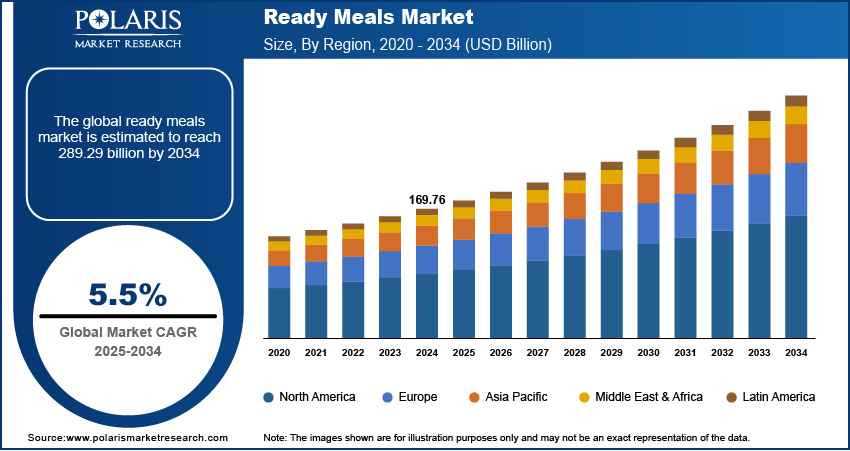
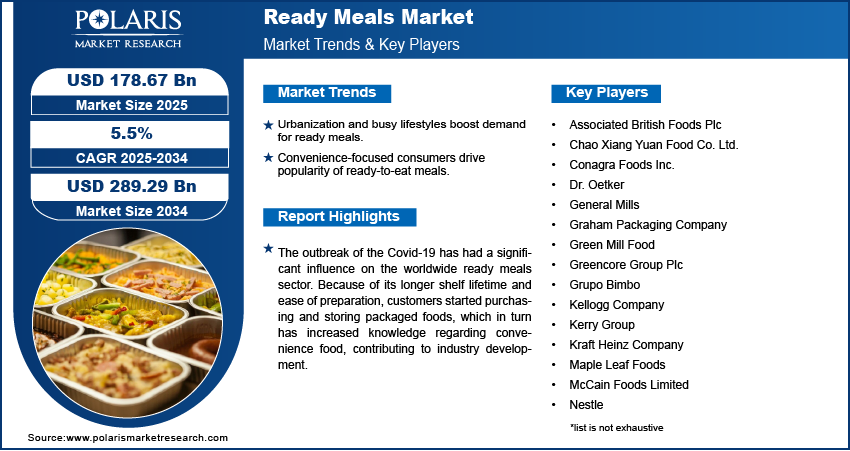
The global ready meals market was valued at USD 178.3 billion in 2025 and is expected to grow at a CAGR of 5.5% during the forecast period. Change in lifestyle among individuals due to rapid urbanization coupled with the introduction of healthy and convenient ready foods is expected to increase the market throughout the forecast period.
Market Statistics
Key Takeaways
- By region, North America held the largest share in 2025 at 41.74%. Mainly because of busy consumer lifestyles and increasing demand for convenient & time-saving meal options.
- Asia-Pacific is projected to be the fastest-growing region, registering a CAGR of 6.0%, driven by rising disposable incomes, rapid urbanization, and growing demand for convenient and ready-to-eat food products.
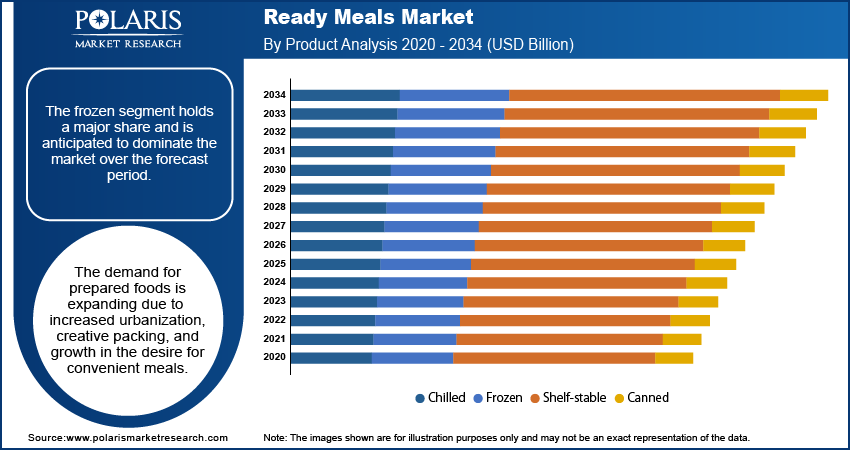
- By product, the frozen segment accounted for the largest share in 2025 at 51.71%. This was because ready-made meals are easy to store, last longer, and are easy to make.
- In 2025, by meal type, the non-vegetarian segment dominated the market with a 51.94% share. This is due to rising user preferences for protein-rich foods such as chicken nuggets, sausages, and other meat-based products.
- In 2025, supermarkets and hypermarkets segment led distribution channel market, by holding 61.23% share, owing to their wide range of products and easily accessible to a large number of customers.
Note: Figures and projections outlined in this report are the result of Polaris Market Research’s proprietary analytical processes, grounded in the latest available datasets and market observations.
Industry Dynamics
- An increasing number of individuals migrating to live in urban areas and adopting busy lifestyles means people have limited time to spend on meal preparation. Thus, growing the demand of ready meals.
- Increasing prioritization of convenience above the time spent on meal preparation has led to the increasing popularity of ready-to-eat meals.
- Technology and innovation in the food industry have improved quality, nutrition, and the convenience of preparing meals and have also prolonged the shelf life of ready-to-eat meals.
AI Impact on the Market
- AI is gaining a foothold in manufacturing to improve processes and enhance the productivity of encompassing resources at a given stage.
- AI allows businesses to forecast demand more precisely and manage their inventories accordingly. This prevents shortages and overstocking.
Source: Polaris Market Research Analysis
To Understand More About this Research: Download Sample Report
What Are Ready Meals?
Ready meals are pre-cooked or partially cooked packaged food products designed for quick and convenient consumption with minimal preparation time. These products include frozen, chilled, canned, and shelf-stable meals that can be heated or prepared quickly, catering to busy lifestyles, urban consumers, and the growing demand for convenience foods across households and foodservice sectors.
How Ready Meals are Produced
- Ingredients prepared and cooked: Raw ingredients such as vegetables, grains, meat, and seasonings are cleaned, processed, and cooked according to product recipes.
- Meals portioned and packaged: The cooked food is divided into individual or family-sized portions and packed in trays, bowls, pouches, or containers.
- Freezing or preservation applied: Products are frozen, chilled, canned, or processed using other preservation methods to extend shelf life.
- Products distributed through retail and e-commerce channels: Ready meals are transported through cold chain networks to supermarkets, convenience stores, and online grocery platforms.
- Consumers heat and consume: End users heat the products using microwaves, ovens, or stovetops before consumption.
Source: Polaris Market Research Analysis
Frozen vs Chilled vs Shelf-Stable Ready Meals
| Factor | Frozen Ready Meals | Chilled Ready Meals | Shelf-Stable Ready Meals |
| Shelf Life | Long, usually several months to one year | Short, usually a few days to weeks | Long, usually several months to years |
| Storage Requirement | Stored at freezing temperatures | Stored under refrigeration | Stored at room temperature |
| Freshness | Good taste and texture after heating, but may change during freezing | Closest to freshly prepared meals | Lower perceived freshness compared to frozen and chilled products |
| Nutritional Retention | Retains nutrients through freezing processes | Retains nutrients but has a shorter consumption period | May experience nutrient loss due to intensive processing and preservation |
| Convenience | Easy to store and prepare | Requires refrigeration and faster consumption | Highly convenient because refrigeration is not required |
| Pricing | Moderate | Generally higher due to shorter shelf life and cold chain needs | Usually lower because of lower storage and distribution costs |
Industry Dynamics
Growth Drivers
Ready-to-eat meals are food products that have been pre-cooked so that they may be enjoyed without further preparation. Consumers are getting more mindful of dietary products' quality and purity. As novel processed foods are offered to the marketplace, such as organic, ready-to-eat, and frozen with sophisticated technology, the demand for the industry is also likely to increase.
Ready-to-eat meals come in various tastes and appearances, appealing to a large client base. These foods are emerging as an increasingly important aspect of human existence across the world. The adoption of organic prepared foods, the entrance of new types of ready foods, technical improvements, and the construction of a powerful worldwide distribution infrastructure are all critical aspects anticipated to propel ready meals market growth over the forecast period.
Report Segmentation
The market is primarily segmented based on product, meal type, distribution channel, and region.
| By Product | By Meal Type | By Distribution Channel | By Region |
|
|
|
|
Source: Polaris Market Research Analysis
Insight by Product
In 2025, the frozen segment holds a major share of 51.71% in the market. The demand for prepared foods is expanding due to increased urbanization, creative packing, and growth in the desire for convenient meals. Further, the segment benefits from customers' growing need for convenience and comfort as a result of their hectic schedules.
The shelf-stable segment is expected to hold 4.90% CAGR throughout the forecast period as these meals do not require freezing or refrigeration, making them easier to store. Further, shelf-stable food meals are more affordable than other alternatives, contributing to the increasing demand.
Source: Polaris Market Research Analysis
Insight by Distribution Channel
The supermarkets & hypermarkets segment holds a significant share of 61.23% in 2025 and is expected to dominate over the projected period due to the easy availability and accessibility of ready-to-eat meals. Furthermore, the increasing variety of product offerings by these channels is expected to propel segment growth.
The online segment is expected to grow at the fastest pace of 8.40% CAGR throughout the forecast period owing to the rapid adoption of smartphones across multiple economies coupled with increasing discounts and variety offered by e-commerce merchants.
Real-World Examples of Ready Meals
- Frozen pizzas: Frozen pizzas are widely consumed ready meals that can be stored for long periods and prepared quickly in ovens or microwaves.
- Microwaveable pasta meals: Single-serve pasta products, including macaroni, spaghetti, and noodle bowls, offer quick meal options for busy consumers.
- Ready-to-eat curries: Packaged curries with rice or bread are popular in many regions and are available in frozen, chilled, and shelf-stable formats.
- Airline meals: Airlines use pre-cooked and packaged meals that can be stored, transported, and reheated efficiently during flights.
- Office lunch products: Sandwiches, rice bowls, salads, and boxed meals are commonly purchased by office workers seeking convenient lunch options.
- Meal kits: Pre-portioned ingredients with cooking instructions provide consumers with convenient meal preparation at home.
- Healthy diet meals: High-protein, low-calorie, vegan, and keto-friendly ready meals are gaining popularity among health-conscious consumers.
- Convenience snacks: Ready-to-eat snack packs, wraps, sandwiches, and snack bowls are widely used for on-the-go consumption.
Geographic Overview
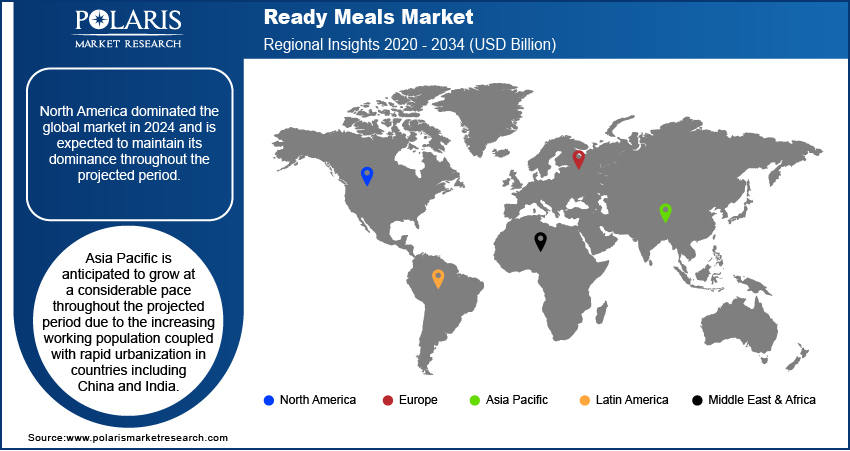
North America dominated the global market in 2025 with 41.74% share and is expected to maintain its dominance throughout the projected period. Increasing trends of gluten-free products due to portability and convenience are expected to propel the demand in the region. Another element boosting the industry is changing food intake habits as a result of increased urbanization.
Furthermore, the presence of a fast-paced culture, particularly in metropolitan regions, contributes to a growth in consumer desire for prepacked dishes to save time. Thus, increasing trends for pere packed food items are expected to propel the ready meals market growth during the forecast period.
Asia Pacific is anticipated to grow at a considerable pace with 6.0% CAGR throughout the projected period due to the increasing working population coupled with rapid urbanization in countries including China and India. Furthermore, rising disposable income and improving the standard of living are expected to create lucrative opportunities for industry growth in the region.
Source: Polaris Market Research Analysis
Competitive Insight
The ready meals market is fiercely competitive, led by global powerhouses Nestlé, Conagra, Kraft Heinz, and General Mills, which leverage scale, strong brands, and broad retail distribution. Nomad Foods, FRoSTA, and Dr. Oetker dominate European frozen segments, while Ajinomoto and Hormel excel in Asian and protein-based meals. HelloFresh and COOK Trading disrupt traditional retail through direct-to-consumer meal kits and home delivery, pressuring incumbent margins. Regional players like 2 Sisters, Greencore, Samworth Brothers, and Premier Foods compete via private-label partnerships and cost efficiency, though profitability remains tight. Amy's Kitchen differentiates through organic, vegetarian, and clean-label offerings, capturing health-conscious consumers. Bellisio and heristo focus on convenience-driven frozen entrees. Key success factors include innovation, sustainability, supply chain resilience, and omnichannel reach. Premiumization, plant-based expansion, and consolidation will shape future competition, favoring agile, brand-differentiated players with strong D2C capabilities.
Industry players operating in the global ready meals market include 2 Sisters Food Group; Ajinomoto Foods North America, Inc.; Amy's Kitchen, Inc.; Bellisio Foods, Inc.; Conagra Brands, Inc.; COOK Trading Ltd.; FRoSTA AG; General Mills, Inc.; Greencore Group plc; HelloFresh SE; heristo aktiengesellschaft; Hormel Foods Corporation; Nestlé S.A.; Nomad Foods Limited; Premier Foods plc; Samworth Brothers Limited; The Campbell's Company; The Kraft Heinz Company
- 2 Sisters Food Group
- Ajinomoto Foods North America, Inc.
- Amy's Kitchen, Inc.
- Bellisio Foods, Inc.
- Conagra Brands, Inc.
- COOK Trading Ltd.
- FRoSTA AG
- General Mills, Inc.
- Greencore Group plc
- HelloFresh SE
- heristo aktiengesellschaft
- Hormel Foods Corporation
- Nestlé S.A.
- Nomad Foods Limited
- Premier Foods plc
- Samworth Brothers Limited
- The Campbell's Company
- The Kraft Heinz Company
Tyson Foods, Inc.The industry is highly fragmented due to the presence of prominent players operating regionally and globally. These players are focusing on promotional strategies such as new product launches, product upgradation, partnerships & acquisitions & mergers & expansion in order to expand their global footprint.
Industry Dynamics
- May 2026: Nestlé expanded its ready meals portfolio with the Maggi Global Kitchen range, offering single-serve international meals. The launch focuses on global flavors and quick preparation. (Source: nestle.co.uk)
- March 2026: Danone agreed to acquire Huel to strengthen its presence in ready-to-consume nutrition products. The acquisition expands Danone's plant-based meal replacement portfolio. (Source: reuters.com)
- April 2025: DDC Enterprise Ltd., a leading multi-brand Asian company, entered into a strategic agreement with Hewen Agricultural Technology Limited, a premium prepared-meal producer, to strengthen direct-to-consumer delivery of ready-to-eat food products across Mainland China. (Source: ir.ddc.xyz)
- February 2025: Bonduelle rolled out its ready-to-eat Lunch Bowls, made with plant-based ingredients, each offering more than 10 grams of protein and free from artificial preservatives. (Source: bonduelleamericas.com)
Challenges in Ready Meals Market
- Health concerns related to processed foods: Many consumers perceive ready meals as highly processed products containing preservatives, additives, and artificial ingredients.
- High sodium content: Several ready meal products contain high levels of sodium, sugar, and fats to improve taste and extend shelf life, creating health concerns among consumers.
- High cold chain costs: Ready meal manufacturers require refrigerated storage, transportation, and distribution networks, which increase operational costs.
- Packaging waste: Most ready meals use single-use plastic trays, pouches, and containers, raising concerns about packaging waste and environmental impact.
- Competition from fresh meal delivery services: The growing availability of fresh meal kits and food delivery platforms is increasing competition for ready meal manufacturers.
Ready Meals Market Report Scope
| Report Attributes | Details |
| Market size value in 2025 | USD 178.3 Billion |
| Market size value in 2026 | USD 187.5 Billion |
| Revenue forecast in 2034 | USD 288.7 Billion |
| CAGR | 5.5% from 2026 - 2034 |
| Base year | 2025 |
| Historical data | 2021 - 2024 |
| Forecast period | 2026 - 2034 |
| Quantitative units | Revenue in USD Billion and CAGR from 2026 to 2034 |
| Segments covered | By Product, By Meal Type, By Distribution Channel, By Region |
| Regional scope | North America, Europe, Asia Pacific, Latin America; Middle East & Africa |
| Key Companies | 2 Sisters Food Group; Ajinomoto Foods North America, Inc.; Amy's Kitchen, Inc.; Bellisio Foods, Inc.; Conagra Brands, Inc.; COOK Trading Ltd.; FRoSTA AG; General Mills, Inc.; Greencore Group plc; HelloFresh SE; heristo aktiengesellschaft; Hormel Foods Corporation; Nestlé S.A.; Nomad Foods Limited; Premier Foods plc; Samworth Brothers Limited; The Campbell's Company; The Kraft Heinz Company |
Source: Polaris Market Research Analysis
Ready Meals Market FAQ's
? The global market size was valued at USD 178.3 million in 2025 and is projected to grow to USD 288.7 million by 2034.
? The global market is projected to register a CAGR of 5.5% during the forecast period.
? North America dominated the market with 41.74% share in 2025.
? The frozen segment accounted for the largest share of 51.71% in the market in 2025.
Download Sample Report of Ready Meals Market
Please fill out the form to request a customized copy of the research report.


