
SGLT2 Inhibitors Market Size, Share, Trends & Forecast, 2026-2034
REPORT DETAILS
SGLT2 Inhibitors Market Summary
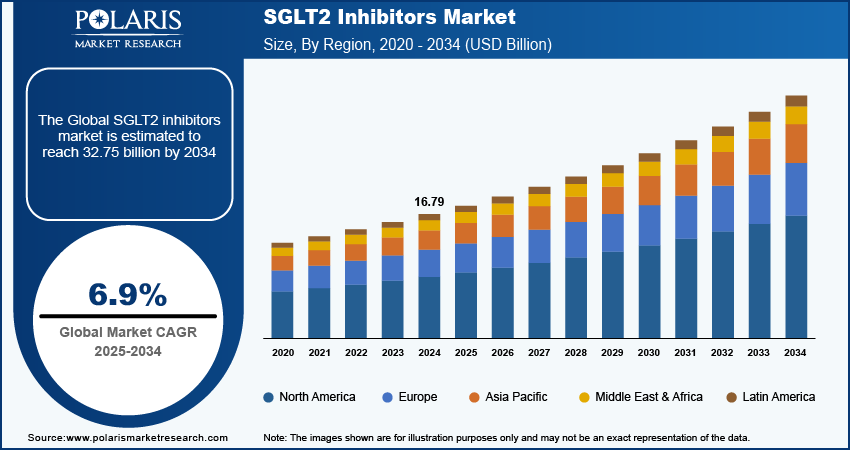
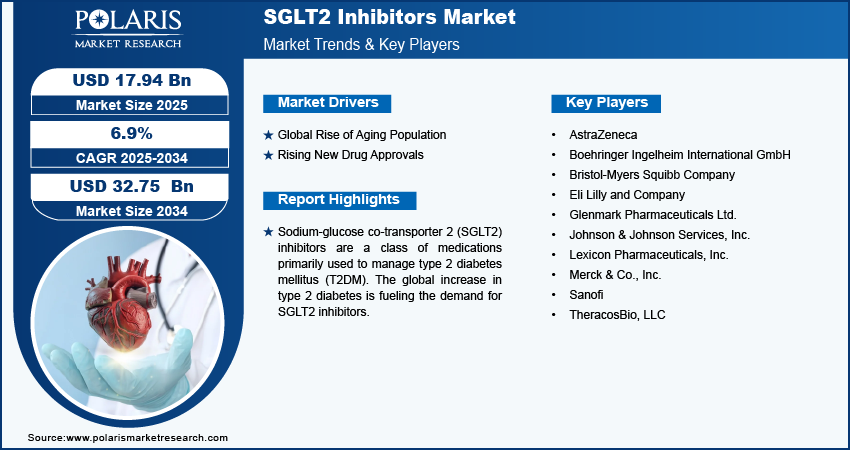
The global SGLT2 inhibitors market size was valued at USD 18.32 billion in 2025. According to our SGLT2 inhibitors market forecast, the market is projected to account for a CAGR of 6.90% between 2026 and 2034. The market growth is primarily driven by the global rise of the aging population and increasing new drug approvals.
Market Statistics
SGLT2 Inhibitors Market Key Takeaways
- North America led the market with a 37.32% revenue share in 2025. The rising prevalence of diabetes has led to increased demand for SGLT2 inhibitors in the region.
- Asia Pacific is projected to witness a CAGR of 7.5% during the forecast period. The growing aging population has led to a rising incidence of type 2 diabetes in the region.
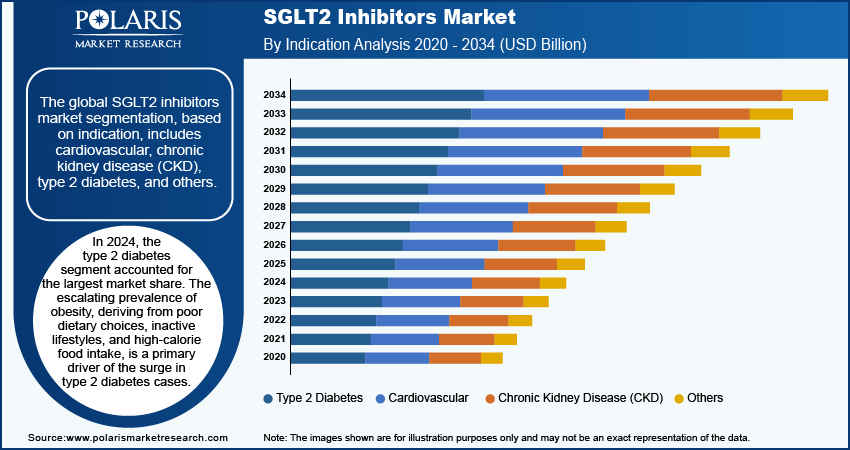
- The type 2 diabetes segment accounted for a market revenue share of 88.5% in 2025. The growing prevalence of obesity has resulted in a surge in type 2 diabetes cases.
- The online pharmacies segment is projected to witness the fastest growth, at a 7.9% CAGR. Online pharmacies offer unparalleled convenience to patients, especially those residing in remote or underserved areas.
Note: Figures and projections outlined in this report are the result of Polaris Market Research’s proprietary analytical processes, grounded in the latest available datasets and market observations.
What Are SGLT2 Inhibitors? Definition, Mechanism & Cardiorenal Uses
SGLT2 (sodium-glucose co-transporter 2) inhibitors are oral medications. They are used to manage type 2 diabetes. These inhibitors act by blocking the action of sodium-glucose cotransporter 2 protein found in the kidney. This will aid in eliminating any extra sugar from the body via urine. The inhibitors have some benefits regarding cardiovascular and kidney protection. Therefore, their demand has been rising for diabetes management, heart failure treatment, and chronic kidney disease care.
The sodium-glucose co-transporter 2 (SGLT2) inhibitors market encompasses medications primarily used to manage type 2 diabetes mellitus (T2DM). They work by inhibiting the SGLT2 proteins in the kidneys, which are responsible for reabsorbing glucose back into the bloodstream. SGLT2 inhibitors function by reducing the renal threshold for glucose, leading to increased urinary glucose excretion. This SGLT2 inhibitors mechanism of action not only lowers blood glucose but also induces osmotic diuresis, which leads to weight loss and reduced blood pressure.
The market is growing beyond its traditional role in diabetes care. SGLT2 inhibitors are increasingly being used for treating other conditions such as heart and kidney diseases. The use of these inhibitors is growing in the treatment of chronic kidney disease (CKD) and heart failure. Recent updates from the American Diabetes Association (ADA) have further contributed to the SGLT2 inhibitors market trends of increased use. The ADA recommends these inhibitors for patients with non-dialysis-dependent CKD to slow down the disease’s progression and help with heart health. This has further strengthened its long-term clinical relevance.
The increasing diabetes prevalence is expected to continue to support the long-term demand for the treatment. According to the International Diabetes Federation, the number of adults living with diabetes between the ages of 20 and 79 was approximately 589 million in 2024. This is projected to rise to 853 million by the year 2050. The increasing patient pool, along with the improvement in the diagnosis and treatment of the disease at a relatively early stage, is expected to boost the SGLT2 inhibitors market growth. As a result, demand for these drugs is expected to remain strong in the coming years.
Supportive SGLT2 inhibitors clinical guidelines and recommendations from organizations such as the ADA and the European Association for the Study of Diabetes (EASD) have also helped to drive market momentum. Their increasing endorsement of SGLT2 inhibitors for selected patients with diabetes, CKD, and cardiovascular risk profiles has improved prescriber confidence and extended the relevance of SGLT2 therapy beyond glucose control. At the same time, lifecycle management strategies, label extensions, and the introduction of fixed-dose combination products are helping manufacturers expand their market share of SGLT2 inhibitors.
Source: Polaris Market Research Analysis
To Understand More About this Research:Download Sample Report
How Do SGLT2 Inhibitors Work? Mechanism of Action in the Kidneys
- SGLT2 Inhibition: The drug blocks the SGLT2 protein in the kidney tubules.
- Reduced Glucose Reabsorption: The kidney reabsorbs lesser glucose in the blood.
- Increased Glucose Excretion: Extra glucose gets excreted in the form of urine.
- Blood Glucose Reduction: Blood glucose levels become low.
- Cardio-Renal Protection: Further cardio-renal protection may be seen in some cases.
- Ongoing Patient Monitoring: The healthcare professionals continuously monitor the patients for their results.
SGLT2 Inhibitors vs Other Glucose-Lowering Drug Classes: Mechanism, Cardiorenal Benefits & Administration
| Feature | SGLT2 Inhibitors | Traditional Diabetes Medications |
| Action | Remove excess glucose by blocking SGLT2 proteins in the kidneys. | Lower blood glucose through insulin-related or other metabolic pathways. |
| Primary Benefit | Provide glucose control with added heart and kidney protection. | Primarily improve blood glucose control. |
| Administration | Oral tablets, typically taken once daily. | Available as oral tablets or injectable medications. |
| Weight Effect | Commonly support modest weight loss. | Weight effects vary by drug class. |
| Cardiovascular Benefits | Reduce heart failure risk and improve cardiovascular outcomes. | Cardiovascular benefits depend on the specific medication. |
| Kidney Benefits | Help slow chronic kidney disease progression. | Limited or variable kidney protection. |
| Hypoglycemia Risk | Low risk when used alone. | Risk varies, with some drugs increasing hypoglycemia risk. |
| Additional Effects | Support weight management and long-term cardio-renal health. | Additional effects differ across medication classes. |
Source: Polaris Market Research Analysis
Market Dynamics
Driver: Aging Population and Rising Diabetes/CKD Burden
The increasing population of geriatric patients worldwide has led to a higher incidence of diabetes and other related metabolic disorders. Elderly populations are at a higher risk of developing type 2 diabetes, CKD, and cardiovascular complications. Hence, there is a need for effective oral drugs, such as SGLT2 inhibitors, in the type 2 diabetes treatment market.
The global population of people aged 65 years or older is estimated to increase from 761 million in 2021 to 1.6 billion in 2050, according to data from the United Nations. As the population of older adults increases, so does the prevalence of age-related conditions such as metabolic and renal diseases. This supports long-term demand for therapies targeting glycemia and cardiorenal outcomes in the geriatric diabetes market.
Driver: Label Expansions and New SGLT2 Drug Approvals
The SGLT2 inhibitors market trends reveal that the sector is also driven by regulatory clearances and product label expansions across key markets. SGLT2 inhibitors are no longer perceived simply as antidiabetics. They are increasingly positioned for use beyond diabetology into cardiovascular and nephrology care.
The FDA approved bexagliflozin for adults with type 2 diabetes in January 2023. This bexagliflozin approval provided a new oral treatment option for the drug class. In September 2023, the FDA approved Jardiance (empagliflozin) for adults with chronic kidney disease. It made SGLT2 inhibitors relevant for nephrology-based patient care. In June 2024, Farxiga (dapagliflozin) received approval from the FDA for the improvement of glycemic control in pediatric patients aged 10 years and older with type 2 diabetes. The dapagliflozin pediatric approval has widened the addressable patient base and created new SGLT2 inhibitors market opportunities.
Such developments are commercially important as they expand the class to new patient populations, reinforce physician familiarity, and expand the geographic reach of where these therapies are prescribed. As the treatment paradigms continue to evolve, the prescription demand for SGLT2 inhibitors is expected to come not only from endocrinologists but also from nephrologists, cardiologists, primary care physicians, and specialists in hospitals.
Trend: Expanding SGLT2 Use in Heart Failure and Chronic Kidney Disease
One of the most notable trends in the SGLT2 inhibitors market is the move towards cardiorenal use. In comparison to past market narratives, which were dominated by glucose control alone, the current demand for SGLT2 inhibitors is increasingly driven by their role in managing CKD and heart failure. As such, this is helping to create a diversified revenue portfolio, which could eventually alleviate overdependence on type 2 diabetes alone.
Opportunity: Fixed-Dose SGLT2 Combination Therapies
Pharmaceutical manufacturers are also looking for growth opportunities through FDCs as well as local product launches. Combination products, such as SGLT2 inhibitors combined with other antidiabetic drugs, have growth potential for patient compliance. SGLT2 inhibitor combination drugs can simplify drug regimens as well as differentiate brands in the SGLT2 inhibitors competitive landscape. The trend is particularly relevant for high-volume, price-sensitive markets for diabetes therapies. It’s because convenience and affordability influence prescribing behavior in these markets.
Challenges Restraining Market Growth
- The high cost of branded drugs is a constraint in price-sensitive areas.
- Fears related to safety issues such as diabetic ketoacidosis and the need for discontinuation of, the drug before surgery discourage its use.
- The growth of the market is also restrained by increasing competition from GLP-1 agonists and GLP-1 drugs.
- Awareness and diagnosis facilities are insufficient in emerging markets, limiting the market penetration.
- Patient adherence challenges tied to long-term chronic therapy adversely impact the industry growth.
Source: Polaris Market Research Analysis
SGLT2 Inhibitors Market Segmentation Analysis
SGLT2 Inhibitors Market by Indication
The global SGLT2 inhibitors market segmentation, based on indication, includes cardiovascular, chronic kidney disease (CKD), type 2 diabetes, and others. In 2025, the type 2 diabetes segment accounted for the largest market share of 88.5%. The increasing incidence of obesity due to unhealthy dietary habits, a lack of physical activity, and the consumption of high-calorie foods is one of the major reasons for the surge in type 2 diabetes cases. Physical inactivity is a significant risk factor for the development of type 2 diabetes. People living in modern societies experience a high level of physical inactivity due to physically inactive occupations, increased time spent watching screens, and a lack of physical exertion. A diet consisting of unhealthy foods is another risk factor for the development of type 2 diabetes. Since type 2 diabetes is more prevalent compared to type 1 diabetes, the treatment population for type 2 diabetes is high, which is one of the key contributors to the leading position of the type 2 diabetes SGLT2 inhibitors market.
Although type 2 diabetes currently leads, the CKD and cardiovascular segments are becoming increasingly important from a strategic growth perspective. Increased awareness of renal and cardiovascular benefits is expanding the class’s role in disease management and enhancing the value proposition in patients with multiple chronic conditions. According to the SGLT2 inhibitors market outlook, this is likely to drive a more diversified indication mix going forward.
SGLT2 Inhibitors in Heart Failure & CKD: Cardiovascular and Renal Benefits
Cardiovascular Benefits
- Reduce hospitalization risk for heart failure, including in patients without diabetes
- Lower cardiovascular mortality in high-risk patients
- Improve outcomes across the full ejection-fraction spectrum (both reduced and preserved)
- Support early cardiac remodeling when initiated soon after a cardiac event
Renal Benefits
- Slow progression of chronic kidney disease in eligible patients
- Reduce proteinuria and preserve long-term kidney function
- Extend clinical relevance beyond glycemic control into nephrology care
- Backed by expanding regulatory approvals for CKD-specific indications
SGLT2 Inhibitors Market by Drug
Based on drug, the market includes Farxiga (dapagliflozin), Jardiance (empagliflozin), Invokana (canagliflozin), Inpefa (sotagliflozin), Qtern (dapagliflozin/saxagliptin), and other SGLT2 inhibitors. Of these, Jardiance and Farxiga are particularly notable for their strong brands, broad clinical visibility, and growing use in the diabetes and cardiorenal areas. Medications with greater label depth and familiarity among physicians will likely be better positioned to maintain sales in developed markets. Meanwhile, the recently launched products and fixed-dose combinations could potentially provide opportunities for future growth in particular markets.
Major SGLT2 Inhibitor Drugs: Brands, Molecules, Companies & Approved Uses
| Brand Name | Generic Name | Manufacturer | Key Clinical Applications |
| Farxiga | Dapagliflozin | AstraZeneca | T2D glycemic control, heart failure hospitalization reduction Received FDA generics approval in April 2026 (Source: fda.gov) |
| Jardiance | Empagliflozin | Boehringer Ingelheim and Eli Lilly | Reduces the risk of kidney disease progression. Lowers the incidence of cardiovascular death in adults affected by CKD. |
| Invokana | Canagliflozin | Janssen (Johnson & Johnson) | Reduces risk of end-stage kidney disease (ESKD), glucose management, diabetic kidney disease, lowers the requirement for heart failure hospitalization (CREDENCE trial) |
| Inpefa | Sotagliflozin | Lexicon Pharmaceuticals | Used to treat full range of heart failure (HF) in patients with/without diabetes. (with preserved and reduced ejection fraction) |
Source: Polaris Market Research Analysis
SGLT2 Inhibitors Market by Distribution Channel
The global SGLT2 inhibitors market segmentation, based on distribution channel, includes hospital pharmacies, online pharmacies, and retail pharmacies. The online pharmacies segment is expected to witness the fastest growth, at a 7.9% CAGR. The online pharmacies give patients unparalleled convenience, particularly for patients who live in remote or hard-to-reach places. The expanded access to online pharmacies has led to an increase in the market penetration of SGLT2 inhibitors. Moreover, online pharmacies offer patients competitive prices or discounts on medications they need to take for an extended period, such as SGLT2 inhibitors. The global acceptance of e-commerce and digital health platforms has normalized online pharmacies for healthcare needs. As such, patients have gained trust in online pharmacies.
Hospital and retail pharmacies will likely continue to play a significant role, especially in markets where specialist prescribing, reimbursement approval, and face-to-face counseling are significant drivers for therapy initiation. However, online channels are emerging as a growing area, as chronic disease patients increasingly value accessibility, support, and home delivery for maintenance therapy. Online channels are also benefiting from digital health pharmacy adoption.
SGLT2 Inhibitor Uses: Type 2 Diabetes, Heart Failure & Chronic Kidney Disease
| Application | Description |
| Type 2 Diabetes Management | Helps improve glycemic control in adults with type 2 diabetes. |
| Blood Glucose Control | Lowers blood glucose levels by increasing urinary glucose excretion. |
| Cardiovascular Risk Reduction | Reduces the risk of cardiovascular events in eligible patients. |
| Heart Failure Treatment | Improves heart failure outcomes and lowers hospitalization rates. |
| Chronic Kidney Disease Management | Slows kidney disease progression and helps preserve kidney function. |
| Reducing Hospitalization Risk | Decreases the likelihood of hospitalization due to heart failure complications. |
| Long-Term Metabolic Disease Management | Supports long-term management of diabetes and related metabolic conditions. |
| Combination Diabetes Therapy | Used with other antidiabetic medications to improve overall treatment effectiveness. |
Source: Polaris Market Research Analysis
Source: Polaris Market Research Analysis
SGLT2 Inhibitors Market by Region
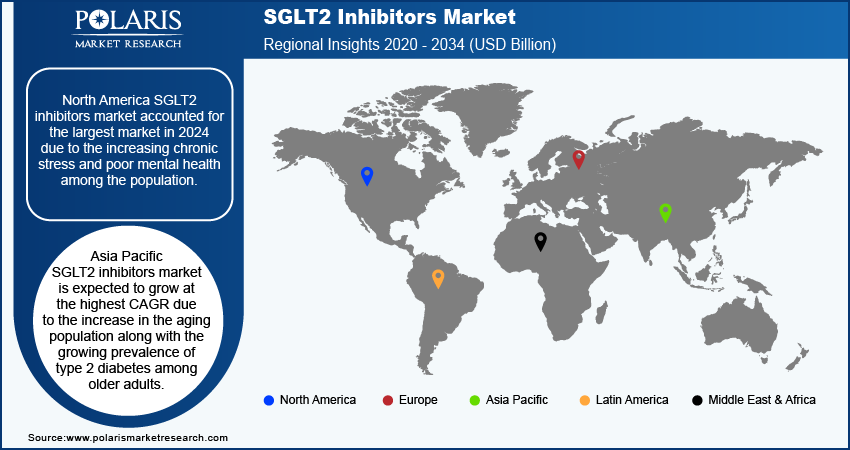
The study offers SGLT2 inhibitors market share by region insights of North America, Europe, Asia Pacific, Latin America, and the Middle East & Africa.
North America
The North America SGLT2 inhibitors market led the global market with a 37.32% revenue share in 2025. The region benefits from a high diagnosed prevalence of diabetes, increased obesity burden, early uptake of innovative branded therapies, and better access to specialist care and reimbursement systems. These factors support the overall adoption of SGLT2 inhibitors across different diabetes and cardiorenal treatment settings.
The prevalence of diabetes in the U.S. remains high. This continues to sustain the market for advanced oral antidiabetic agents in the U.S. diabetes drug market. The region also benefits from a strong level of disease awareness, screening activity, and established prescribing pathways for branded medicines.
Europe
The Europe SGLT2 inhibitors market is a significant market in the global SGLT2 inhibitors sector. The regional market is driven by a high rate of chronic diseases, increasing willingness to adopt guideline-based care, and widespread use of evidence-based treatments for diabetes and CKD management. Regulatory support for SGLT2 inhibitors, as well as earlier adoption of cardiorenal treatment guidelines, is expected to further contribute to the SGLT2 inhibitors market Europe.
Asia Pacific
The Asia Pacific SGLT2 inhibitors market is expected to have the highest CAGR of 7.5% during the forecast period. The region has a large population, an aging population, rising diagnostic rates, and a growing prevalence of metabolic conditions. These are expected to drive long-term SGLT2 inhibitors market growth Asia Pacific in both developing and developed nations.
According to the SGLT2 inhibitors regional outlook, Asia is likely to contribute significantly to the global elderly population in the coming decades. With aging and urban lifestyles also leading to increased occurrences of diabetes and other associated lifestyle problems, long-term therapies for metabolism and renal functions are also likely to gain momentum.
The China and India SGLT2 inhibitor markets would remain important opportunities for the Asia Pacific region. The regions are expected to benefit from large populations with diabetes, expanding healthcare access, and the increasing use of branded and combination therapies.
Latin America and Middle East & Africa
Long-term growth prospects are foreseen for the Latin America SGLT2 inhibitors market and the Middle East & Africa, driven by increasing prevalence rates, improved diagnostic rates, and expanding healthcare infrastructures. Market penetration would differ across countries depending on their reimbursement systems, the affordability of branded formulations, and the availability of specialist care.
Regional Market Trends
| Region | Market Position | Market Trends |
| North America | Largest Market | High diabetes prevalence, advanced healthcare infrastructure, favorable reimbursement, and continuous pharmaceutical innovation |
| Europe | Second-Largest Market | Increasing use of SGLT2 inhibitors for diabetes, heart failure, and CKD; growing emphasis on preventive healthcare; and updated clinical guidelines |
| Asia-Pacific | Fastest-Growing Market | Growing diabetes cases, rising healthcare access, expanding insurance coverage, and increasing adoption of modern diabetes therapies |
| Latin America | Emerging Market | Growing diabetes burden, improving access to healthcare, and increasing demand for effective diabetes treatment options. |
| Middle East & Africa | Developing Market | Rising prevalence of diabetes and obesity, expanding healthcare infrastructure, and growing awareness of advanced therapies |
Source: Polaris Market Research Analysis
Source: Polaris Market Research Analysis
SGLT2 Inhibitors Competitive Landscape & Leading Companies
Market leaders are investing in research, label expansion, and commercialization strategies to solidify their position in the SGLT2 inhibitors competitive landscape. Partnerships, new product launches, fixed-dose combinations, and regional expansions are other strategies adopted by key players in SGLT2 inhibitors market.
Our SGLT2 inhibitor company analysis indicates that the market is influenced by a number of factors that determine the competition. Such factors involve the indication scope, familiarity, regulatory support, pricing, distribution reach, and lifecycle management. Products with stronger clinical support for cardiorenal indications and greater familiarity among physicians will continue to hold a competitive advantage, especially in a mature pharmaceutical market.
Major players in the market include AstraZeneca; Boehringer Ingelheim International GmbH; Bristol-Myers Squibb Company; Eli Lilly and Company; Glenmark Pharmaceuticals Ltd.; Johnson & Johnson Services, Inc. (Janssen Pharmaceuticals, Inc.); Lexicon Pharmaceuticals, Inc.; Merck & Co., Inc.; Sanofi; and TheracosBio, LLC.
Boehringer Ingelheim has operations in both human pharmaceuticals and animal health. The company has a strong presence in the area of metabolism, cardiovascular diseases, and related diseases of the kidneys. Boehringer’s continuous growth in Jardiance reinforces its competitive positioning in the SGLT2 inhibitors market.
Glenmark Pharmaceuticals Limited specializes in pharmaceutical product development, manufacturing, and marketing. The firm operates in India, North America, Latin America, Europe, Japan, and other countries. The firm is enhancing its Glenmark diabetes portfolio through branded products.
Leading SGLT2 Inhibitor Companies
- AstraZeneca
- Boehringer Ingelheim International GmbH
- Bristol-Myers Squibb Company
- Eli Lilly and Company
- Glenmark Pharmaceuticals Ltd.
- Johnson & Johnson Services, Inc. (Janssen Pharmaceuticals, Inc.)
- Lexicon Pharmaceuticals, Inc.
- Merck & Co., Inc.
- Sanofi
- TheracosBio, LLC
SGLT2 Inhibitors Market Developments: Generic Entry, Label Expansion, Licensing & Launches
- February 2026: IQVIA and the Duke Clinical Research Institute (DCRI) announced their collaboration to improve the conduct of clinical research in obesity and related cardiometabolic trials. With this collaboration, the organizations will leverage DCRI’s expertise in GLP-1 receptor agonists and SGLT2 inhibitors research. IQVIA will offer electronic health records, advanced analytics, and real-world data in trial design and execution.(Source: BUSINESS WIRE)
- March 2025: Glenmark Pharmaceuticals introduced empagliflozin, a widely recognized SGLT2 inhibitor, into the Indian market under the brand name Glempa (10/25 mg). The rollout also featured its fixed-dose combinations: Glempa-L (combined with linagliptin) and Glempa-M (combined with metformin). This strategic move reinforced Glenmark’s diabetes portfolio. It also improved its competitive standing within India’s expanding anti-diabetes market.
What is the Future Outlook of SGLT2 inhibitors market?
The SGLT2 inhibitors market is expected to grow in the coming years. Healthcare systems are increasingly emphasizing integrated diabetes, cardiovascular, and kidney disease management. The market is witnessing the expansion of new therapeutic areas. Also, rising adoption of combination therapies and continued clinical research will create growth opportunities. Future development will focus on improving patient outcomes. There will be more preference for multi-benefit medications and personalized treatment strategies.
Market Segmentation
By Indication Outlook (Revenue, USD Billion, 2021–2034)
- Cardiovascular
- Chronic Kidney Disease (CKD)
- Type 2 Diabetes
- Others
By Drug Outlook (Revenue, USD Billion, 2021–2034)
- Farxiga (Dapagliflozin)
- Inpefa (Sotagliflozin)
- Invokana (Canagliflozin)
- Jardiance (Empagliflozin)
- Qtern (Dapagliflozin/Saxagliptin)
- Other SGLT2 Inhibitors
By Distribution Channel Outlook (Revenue, USD Billion, 2021–2034)
- Hospital Pharmacies
- Online Pharmacies
- Retail Pharmacies
By Regional Outlook (Revenue, USD Billion, 2021–2034)
- North America
- US
- Canada
- Europe
- Germany
- France
- UK
- Italy
- Spain
- Netherlands
- Russia
- Rest of Europe
- Asia Pacific
- China
- Japan
- India
- Malaysia
- South Korea
- Indonesia
- Australia
- Vietnam
- Rest of Asia Pacific
- Middle East & Africa
- Saudi Arabia
- UAE
- Israel
- South Africa
- Rest of Middle East & Africa
- Latin America
- Mexico
- Brazil
- Argentina
- Rest of Latin America
SGLT2 Inhibitors Market Report Scope
| Report Attributes | Details |
| Market Size in 2025 | USD 18.32 billion |
| Market Size in 2026 | USD 19.57 billion |
| Revenue Forecast by 2034 | USD 33.51 billion |
| CAGR | 6.9% |
| Base Year | 2025 |
| Historical Data | 2021–2024 |
| Forecast Period | 2026–2034 |
| Quantitative Units | Revenue in USD billion, and CAGR from 2026 to 2034 |
| Report Coverage | Revenue Forecast, Market Competitive Landscape, Growth Factors, and Trends |
| Segments Covered |
|
| Regional Scope |
|
| Competitive Landscape | SGLT2 Inhibitors Industry Trend Analysis (2025) Company profiles/industry participants profiling include company overview, financial information, product/service benchmarking, and recent developments |
| Report Format | PDF + Excel |
| Customization | Report customization as per your requirements with respect to countries, regions, and segmentation. |
Source: Polaris Market Research Analysis
SGLT2 Inhibitors Market FAQ's
The global SGLT2 inhibitors market was valued at USD 18.32 billion in 2025 and is projected to reach USD 33.51 billion by 2034.
The market is projected to grow at a CAGR of 6.9% from 2026 to 2034.
North America held the largest share of the market in 2025, leading with a 37.32% revenue share, driven by the rising prevalence of diabetes and increased demand for SGLT2 inhibitors in the region.
Asia Pacific is expected to grow the fastest, projected to witness a 7.5% CAGR during the forecast period, driven by the growing aging population and rising incidence of type 2 diabetes in the region.
SGLT2 inhibitors are increasingly important in CKD because they help reduce the risk of kidney disease progression in eligible patients.
By indication, the type 2 diabetes segment led the market in 2025, accounting for an 88.5% revenue share, driven by the growing prevalence of obesity and the resulting surge in type 2 diabetes cases.
By distribution channel, online pharmacies are expected to grow the fastest, at a 7.9% CAGR, as they offer unparalleled convenience to patients, especially those in remote or underserved areas.
A few of the key players in the market include AstraZeneca; Boehringer Ingelheim International GmbH; Bristol-Myers Squibb Company; Eli Lilly and Company; Glenmark Pharmaceuticals Ltd.; Johnson & Johnson Services, Inc. (Janssen Pharmaceuticals, Inc.); Lexicon Pharmaceuticals, Inc.; Merck & Co., Inc.; Sanofi; and TheracosBio, LLC.
The market is growing because of rising diabetes prevalence and increasing use in CKD and heart failure. It also benefits from expanded approvals and wider physician acceptance.
Major drugs include dapagliflozin, empagliflozin, canagliflozin, sotagliflozin, bexagliflozin, and selected combination products.
No. SGLT2 inhibitors were initially developed for type 2 diabetes. However, they are approved for treating certain heart failure and chronic kidney disease cases. They provide cardiovascular and renal benefits beyond blood glucose control.
Download Sample Report of SGLT2 Inhibitors Market
Please fill out the form to request a customized copy of the research report.


