
Spatial Transcriptomics Market Size, Share, Trends and Forecast, 2026–2034
REPORT DETAILS
Spatial Transcriptomics Market Summary
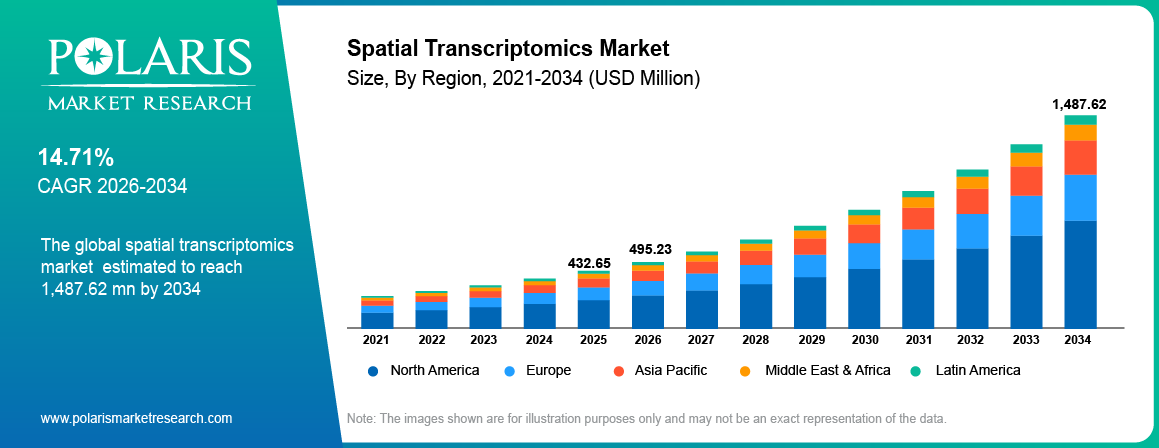
The global spatial transcriptomics market was valued at USD 432.65 million in 2025 and is projected to register a CAGR of 14.71% from 2026 to 2034. The market is growing as organizations engaged in research need techniques that provide both molecular characterization and tissue imaging capabilities. Also, increased investments by the pharmaceutical industry in the mapping of the tumor microenvironment to discover new biomarkers and conduct precision medicine studies drives the market expansion.
Market Statistics
Key Takeaways
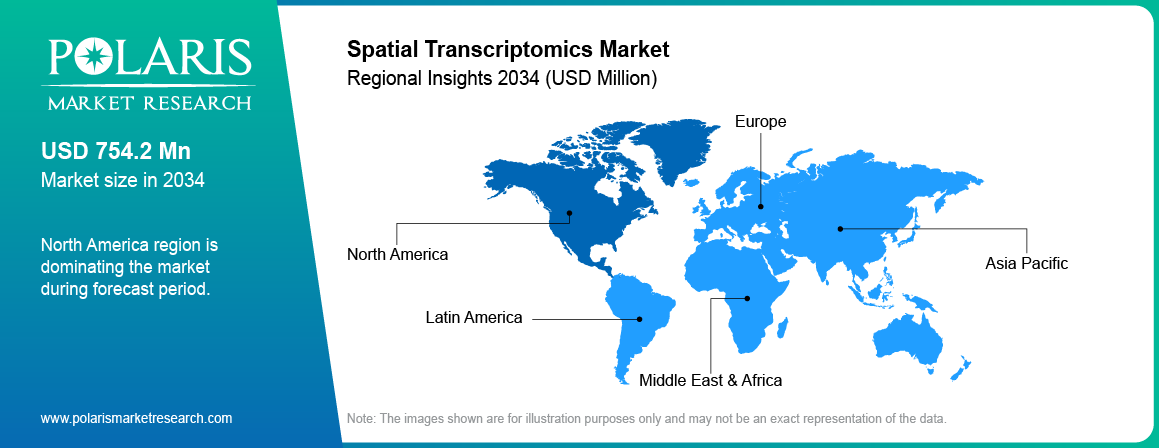
- North America accounted for the largest spatial transcriptomics market share of 57.86% in 2025, due to strong genomics research infrastructure and the presence of leading platform developers.
- The market in Asia Pacific is projected to register the highest CAGR of 18.38% during the forecast period. The growth is fueled by rising investments in precision medicine, genomics, and biomedical research.
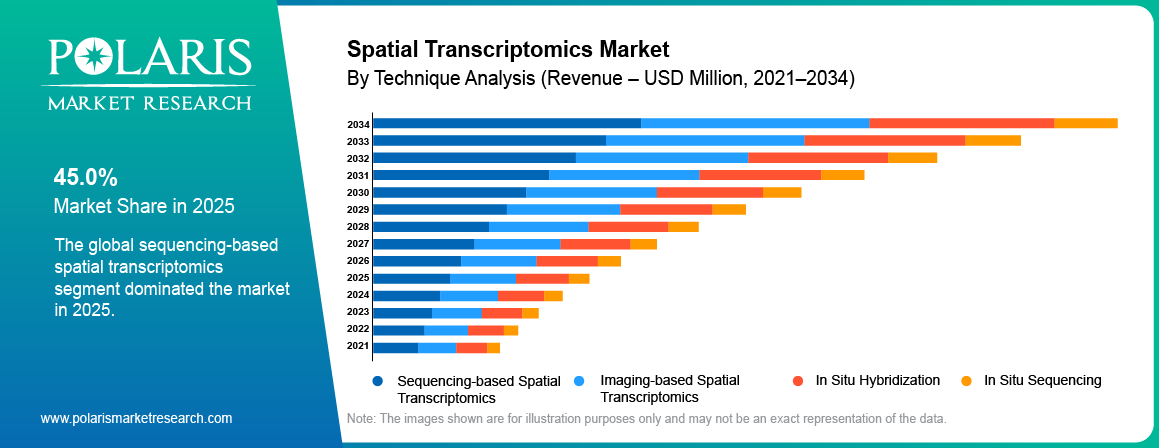
- Sequencing-based spatial transcriptomics dominated the market with a 47.82% share in 2025. The dominance is attributed to its ability to deliver whole-transcriptome analysis across intact tissue sections.
- Oncology dominated with 35.76% share in 2025 due to the growing adoption of tumor microenvironment mapping for precision medicine studies.
- The software platforms segment is expected to record a 17.48% CAGR during 2026–2034. The growth is driven by the rising use of AI-enabled gene expression imaging, automation in tissue analysis, and cloud bioinformatics across laboratories.
Note: Figures and projections outlined in this report are the result of Polaris Market Research’s proprietary analytical processes, grounded in the latest available datasets and market observations.
Spatial Transcriptomics Market Definition
Spatial transcriptomics refers to a technique used to analyze RNA expression while preserving cell location within the tissue sample. Its ability to perform such functions has enabled the technique to be used in oncology, neuroscience, immunology, and developmental biology, where the cellular arrangement within tissues plays an important role in disease mechanism identification and drug development. Gene expression analysis done without the preservation of tissue architecture poses several problems for scientists in determining disease progression and cellular interactions. This problem is solved through spatial transcriptomics.
The market covers instruments, consumables, software, and services used by academic institutions, pharmaceutical and biotechnology companies, contract research organizations, and translational research laboratories. It excludes conventional bulk RNA sequencing, standard single-cell sequencing workflows, and standalone spatial proteomics technologies. Technological advancements in the market are increasingly driven by software as well as instrumentation. Vendors are integrating AI-driven gene expression imaging, workflow automation, and spatial multiomics capabilities into their platforms to improve analytical performance and reduce workflow complexity.
Spatial Transcriptomics Market Growth Analysis
The spatial transcriptomics market is projected to witness strong growth as researchers increasingly require technologies capable of linking molecular information with preserved tissue architecture. Traditional sequencing techniques recognize gene expression patterns but are unable to show the role of cell organization in biological processes. The advantage of spatial transcriptomics is its ability to analyze molecular data at specific locations. Therefore, the technique is crucial in cancer biology, neuroscience, and immunology.
The demand is growing due to increased investments by the pharmaceutical industry in the mapping of the tumor microenvironment to discover new biomarkers and conduct precision medicine studies. In February 2026, Omics Empower Hong Kong introduced its Xenium in Situ Spatial Transcriptomics Services, providing high-resolution spatial gene expression analyses for biomedical studies (Source: www.prnewswire.com).
Competition is moving away from pure instrument performance to a more complex research ecosystem. Companies are leveraging spatial multiomics, artificial intelligence gene expression imaging, cloud computing analysis, and automation to boost efficiency and accuracy in laboratories. All these innovations will help the spatial transcriptomics market grow consistently through application in drug development, translational research, and even clinical settings in the coming years.
Spatial Transcriptomics Market Dynamics
Impact Analysis of Driver and Opportunity
| Market Driver and Opportunity | Est. CAGR Impact | Geographic Relevance | Impact Timeline |
| High-Throughput Platform Launches | +2.3% | Global, led by North America | Short-term |
| AI-Driven Gene Expression Imaging | +2.0% | North America, expanding globally | Short to medium term |
| Technological Advancements in Clinical Applications | +1.8% (estimated) | Global, led by North America, with expanding adoption in Europe and Asia Pacific | Medium to long term
|
Source: Polaris Market Research Analysis. CAGR reflect Polaris proprietary sizing methodology.
Driver: High-Throughput Platform Launches
Research organizations are generating larger tissue datasets as biomarker discovery, drug development, and precision medicine programs expand. The earlier versions of spatial transcriptomics platforms provided precise molecular information but had long processing times and high operational costs, making them unsuitable for large-scale studies. The recently launched platforms have attempted to resolve these problems by increasing the throughput of samples while ensuring precision and sub-cellular resolution.
High throughput spatial multiomics technology facilitates laboratories in conducting tests for more patients in less time, which boosts productivity and helps lower the cost of doing research. With this change, pharmaceutical companies and biotech firms find it profitable to adopt spatial transcriptomics in their research programs instead of just exploring this technology. In March 2026, Bioptimus launched STELA, a clinically linked spatial biology atlas using 10x Genomics’ Xenium platform to profile up to 100,000 patient tissue specimens with high-resolution spatial transcriptomics. (Source: www.bioptimus.com) Growing availability of sequencing-based spatial transcriptomics platforms with improved automation is expected to strengthen commercial adoption over the forecast period.
Driver: AI-Driven Gene Expression Imaging
Artificial intelligence is revolutionizing the way scientists conduct their analysis in the field of spatial biology through enhanced image processing and localization of transcripts. Rather than relying solely on advances in hardware technology, laboratories are utilizing artificial intelligence gene expression imaging and AI-powered spatial transcriptomics analysis to generate high-resolution biological insights from currently available sequencing data. In May 2025, NCI-supported researchers developed Spotiphy, which is an artificial intelligence software allowing for high-resolution visualization of whole-transcriptome spatial data (Source: www.cancer.gov). This method increases the precision of analysis and maximizes the use of current laboratory facilities.
Software-based innovations will promote the use of spatial multiomics, through the integration of transcriptomic, proteomic, and imaging data in a single workflow. With the continued development of computing platforms, scientists are expected to depend on integrated software ecosystems, thus opening new growth avenues for companies working on innovative bioinformatics software.
Restraint: Lack of Standardized Operating Procedures
Though there is significant research interest, clinical application is still lacking since laboratories need standardized processes and clinical validation. They require regulatory guidelines before incorporating molecular techniques into clinical practice. Inconsistencies in specimen processing, results analysis, and reporting protocols hinder wide clinical applications. Such operational complexities hinder the global spatial transcriptomics market value.
Opportunity: Technological Advancements in Clinical Applications
Advancements in spatial transcriptomics technologies expand their potential in clinical research, including oncology, biomarker discovery, disease classification, patient stratification, and treatment-response assessment. Advancement toward clinical applications is being facilitated by an increase in CLIA-certified lab capabilities and improved FFPE tissue compatibility. This makes it possible to analyze stored clinical samples with greater efficiency. Improvements in spatial resolution, transcript detection sensitivity, multiplexing, and integration with histopathology and AI-based analytics help researchers characterize tumor heterogeneity and identify clinically relevant molecular signatures. As technologies become more scalable and reproducible, opportunities may expand in translational research, precision medicine, and drug development. However, routine clinical adoption will depend on analytical validation, clinical utility, workflow standardization, regulatory requirements, and cost-effectiveness. Continued collaboration among technology developers, healthcare providers, and regulatory authorities is expected to accelerate future adoption as clinical evidence supporting spatial transcriptomics continues to grow.
Spatial Transcriptomics Market Segmentation Analysis
The report provides a comprehensive analysis of the spatial transcriptomics market by technique, product, application, and region to identify the leading revenue-generating segments and emerging growth opportunities.
Technique Insights
The sequencing-based spatial transcriptomics segment dominated the spatial transcriptomics market share by holding 45.0% in 2025. The leading share is fueled by its ability to deliver whole-transcriptome analysis across intact tissue sections. This technique has gained widespread acceptance for biomarker identification, disease profiling, and translational research due to its seamless integration into next-generation sequencing infrastructure. Further developments in sequencing chemistry and high-throughput systems will help consolidate its market position.
The imaging-based spatial transcriptomics segment is expected to register a CAGR of 13.90% during the forecast period. The segment growth is attributed to the rising need for increased subcellular resolution for complex tissue analysis. The growing requirement for high-resolution subcellular imaging techniques is driving the adoption of solutions like in situ hybridization and in situ sequencing, especially in oncology and neuroscience applications. There will be increasing interest in mapping the tumor microenvironment and spatial multiomics.
Sequencing Based vs Imaging Based Spatial Transcriptomics
| Comparison Parameter | Sequencing-Based Spatial Transcriptomics | Imaging-Based Spatial Transcriptomics |
| Core Principle | Uses spatial barcodes and next-generation sequencing (NGS) to identify and quantify RNA transcripts. | Uses fluorescent probes, microscopy, and image analysis to detect RNA molecules directly within tissue. |
| Throughput | Can support broad profiling across large tissue areas, depending on platform and sequencing capacity. | Depends on imaging speed, panel size, tissue area, and number of detection cycles. |
| Key Advantages | Broad gene coverage, discovery-oriented analysis, and compatibility with sequencing-based workflows. | High spatial precision, direct visualization of RNA, and detailed cellular localization. |
| Key Limitations | Capture inefficiencies, sequencing costs, and potentially lower resolution on spot-based platforms. | Probe-design constraints, imaging complexity, and potential limitations in transcriptome-wide coverage. |
| Representative Platforms | 10x Genomics Visium and Visium HD; Illumina spatial technology; Curio Seeker. | 10x Genomics Xenium; Bruker CosMx; Vizgen MERSCOPE; Resolve Biosciences Molecular Cartography. |
| Common Applications | Tissue atlas development, biomarker discovery, tumor microenvironment profiling, and transcriptome-wide research. | Cell-type mapping, gene localization, tumor heterogeneity analysis, and validation of spatial gene-expression patterns. |
Source: Polaris Market Research Analysis
Product Insights
The instruments segment held significant market share of 18.46% in 2025, as they form the foundation of every laboratory workflow, from tissue preparation to sequencing and imaging. Growing investments in advanced research platforms and increasing adoption of standardized FFPE tissue workflow protocols continue to support recurring demand for consumables across academic and pharmaceutical laboratories.
The software segment is expected to register the significant CAGR of 16.72% during the forecast period. The laboratories are utilizing AI-enabled gene expression imaging, automation in tissue analysis, and cloud bioinformatics. Adoption of these technologies help them handle data sets more efficiently. In March 2026, the Xenium spatial transcriptomics platform was officially introduced by the University of Basel, increasing opportunities for high-resolution spatial transcriptomics (Source: biomedizin.unibas.ch). Such advancements enhance workflow efficiency while allowing scientists to gain greater biological insight through their use of spatial transcriptomics techniques.
Application Insights
The oncology segment led the market with a dominating share of 35.76% in 2025, owing to the increasing adoption of tumor microenvironment mapping in cancer studies and precision medicines. Sequencing-based spatial transcriptomics and imaging-based spatial transcriptomics have gained popularity among pharmaceutical companies and research institutions for the discovery and identification of biomarkers.
The translational research segment is anticipated to have the significant CAGR of 13.92% during the forecast period, due to increasing efforts to connect laboratory research findings to their future applications in clinics by various healthcare institutions. The growth in collaboration between biotech firms, academic medical centers, and pharmaceutical companies has led to the increasing use of sequencing-based and imaging-based spatial transcriptomics for biomarker validation and companion diagnostics.
Segment Summary Table
| Segment | Category | 2025 Status | Forecast CAGR | Key Driver |
| By Technique | Sequencing-based spatial transcriptomics | Dominant | Steady growth | Whole-transcriptome coverage and established sequencing ecosystem |
| By Technique | Imaging-based spatial transcriptomics | Fastest growing | Highest CAGR | Rising demand for subcellular resolution and advanced imaging |
| By Product | Consumables | Dominant | Strong growth | Increasing installation of research platforms and recurring reagent demand |
| By Product | Software | Fastest growing | Highest CAGR | AI-driven gene expression imaging and workflow automation |
| By Application | Oncology | Dominant | Strong growth | Growing use of tumor microenvironment mapping in precision medicine |
| By Application | Immunology | Fastest growing | Highest CAGR | Rising investment in biomarker validation and clinical research |
Source: Polaris Market Research Analysis. Segment share and CAGR reflect Polaris proprietary sizing methodology.
Spatial Transcriptomics Market Regional Analysis
North America Spatial Transcriptomics Market Trends
North America dominated the spatial transcriptomics market share with 57.86% in 2025. The leading position is supported by its strong genomics research ecosystem, presence of leading technology providers, and high investment in precision medicine. The regional dominance is also attributed to the rising adoption of spatial transcriptomics technology by the pharmaceutical industry for biomarker discovery and tumor microenvironment analysis. Increased availability of CLIA-certified laboratories and increasing partnerships between academic medical centers and biotechnology companies are aiding the growth of the market.
The U.S. dominated the regional market share with 69.85% in 2025. Organizations like Illumina, 10x Genomics, Vizgen, Inc., and Singular Genomics launch advanced platforms. The National Institutes of Health and the National Cancer Institute make research investments in technological innovation. Such factors contribute to the expanding US spatial transcriptomics market share. In April 2026, Vizgen unveiled new pre-designed and custom gene panels along with AI-based cell segmentation technology solutions to expedite the spatial transcriptomics process (Source: vizgen.com).
Europe Spatial Transcriptomics Market Trends
Europe held a notable market share of 20.38% in 2025, owing to the presence of robust life sciences research base and presence of a developed pharmaceutical industry. Germany, the UK, Switzerland, and France make substantial efforts for genomic research. Universities and developers are initiating collaborations for platform development. The Genome of Europe initiative, for example, includes 27 countries with a budget of USD 51.91 million and 300 scientists for genomic research (Source: genomeofeurope.eu).
The region is projected to witness steady growth during the forecast period as pharmaceutical companies increase investment in biomarker discovery and translational research. Rising adoption of imaging-based spatial transcriptomics and expanding use of FFPE tissue workflow in clinical research are expected to support future demand.
UK Spatial Transcriptomics Market Trends
The UK market is expected to exhibit a 13.10% CAGR during the forecast period. It is due to extensive genomics research and strong cooperation between universities, healthcare providers, and biotechnology companies. The government’s support for the use of precision medicine and translational medicine research promotes the use of spatial transcriptomics technology in oncology and neuroscience research.
Increasing investments in clinical genomics projects and rising involvement in international research partnerships should help sustain the UKk spatial transcriptomics adoption market growth. In July 2025, the NHS 10-Year Plan of the UK highlights the role of genomics and precision medicine, facilitating adoption of advanced genomic solutions, such as spatial transcriptomics(Source: www.eastgenomics.nhs.uk) .The use of artificial intelligence-based imaging of gene expressions and other advanced spatial biology workflows is helping advance research in the nation.
Asia Pacific Spatial Transcriptomics Market Trends
The market in Asia Pacific is projected to register the fastest CAGR of 18.38% during the forecast period. The growth is attributed to increasing investments in genomics, precision medicine, and biomedical research. China, Japan, South Korea, and India are developing their research infrastructures and maintaining government backing for their genomics programs, which favor the adoption of spatial transcriptomics technologies. For instance, in August 2025, MGI Tech and JCBio established the DCS Lab project in South Korea by combining spatial omics and STOmics Stereo-seq technology to enhance spatial transcriptomics and multi-omics studies (Source: global-mgitech.com).
The growing number of pharmaceutical research studies, investments in biotechnological companies, and partnerships with academia will drive the growth of sequencing-based spatial transcriptomics and spatial multi-omics platforms. The area will also gain from higher healthcare spending and the development of personalized medicine.
Middle East & Africa Spatial Transcriptomics Market Trends
The Middle East and Africa accounted for a relatively smaller share of 3.16% in the base year. This is due to the limited availability of specialized research infrastructure and high technology costs. Adoption continues to be confined to the major academic institutions and research hospitals in the UAE, Saudi Arabia, and South Africa.
There will be an increase in the growth of the market in the region owing to investments made by the government in the field of biotechnology and healthcare innovation. Expansion of precision medicine programs and increasing collaboration with international research organizations are likely to create new opportunities for spatial transcriptomics during the forecast period.
Regulatory Heatmap
| Country | Policy Environment | Key Regulations | Market Implication | Trend |
| U.S. | Favorable | CLIA regulations, National Institutes of Health funding, National Cancer Institute research programs | Supports translational research and future clinical adoption | Expanding |
| Europe | Moderate | In Vitro Diagnostic Regulation (IVDR) | Strengthens quality standards for molecular diagnostics | Stable |
| UK | Favorable | National Genomic Research Program, Genomics England initiatives | Accelerates precision medicine and genomics research | Expanding |
| China | Moderate | National precision medicine and genomics initiatives | Expands domestic research capacity | Growing |
| Japan | Favorable | National biomedical research programs | Encourages academic and industry collaboration | Stable |
Source: Polaris Market Research Analysis based on publications from CMS, NIH, NCI, European Commission, Genomics England, National Health Commission of China, Ministry of Science and Technology of China, AMED, and MHLW
Competitive Landscape and Key Players
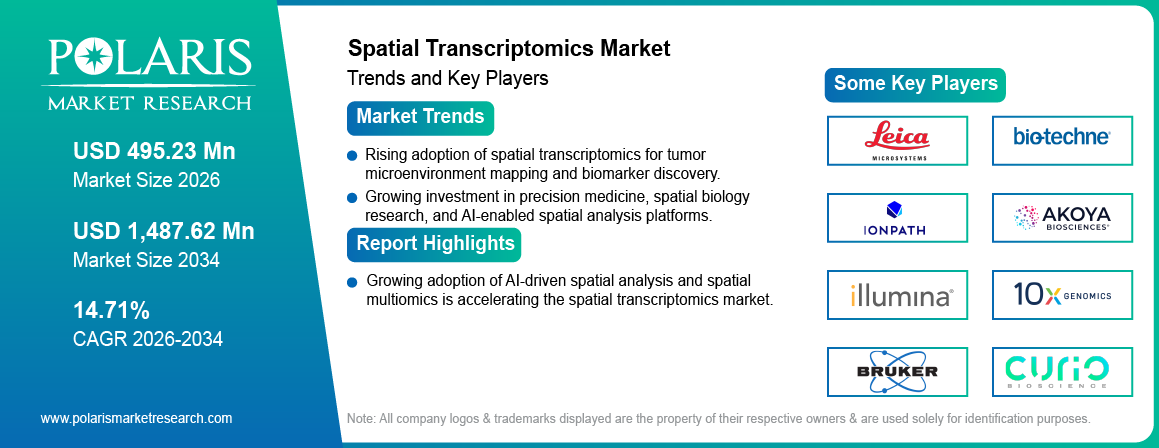
Competition in the spatial transcriptomics market is centered on improving workflow efficiency, analytical performance, and platform integration rather than competing on a single technology feature. The leading firms are enlarging their product lines through new launches, improvements in software, and partnerships with research organizations and pharmaceutical companies. Another factor driving the vendors to offer bundled solutions for instruments, reagents, software, and data analysis through a single workflow is the increasing use of sequencing-based spatial transcriptomics and imaging-based spatial transcriptomics platforms.
Firms are now able to differentiate themselves on the basis of advancements made in the areas of spatial multiomics, gene expression imaging using AI, and enhanced workflow compatibility in relation to FFPE tissues. Some of the firms are also working to enhance their capabilities in relation to clinical research by forming strategic partnerships and establishing CLIA certified labs to support the future clinical use of spatial transcriptomics.
Spatial Transcriptomics Platform Vendor Comparison
| Company | Est. Market Position | Primary Focus | Geographic Focus |
| 10x Genomics, Inc. | Leader | Spatial transcriptomics, spatial proteomics, single-cell and multiomics; Visium and Xenium platforms | North America, Europe, Asia Pacific |
| Akoya Biosciences, Inc. | Strong Player | High-plex spatial biology, multiplexed tissue imaging and spatial proteomics | North America, Europe, Asia Pacific |
| Bio-Techne Corporation | Strong Player | Spatial transcriptomics, in situ hybridization, spatial proteomics and tissue analysis | North America, Europe, Asia Pacific |
| Bruker Corporation | Leader | Spatial transcriptomics, spatial proteomics and multiomics through Bruker Spatial Biology; CosMx platform | North America, Europe, Asia Pacific |
| Curio Bioscience, Inc. | Emerging Player | Spatial mapping and transcriptomics; Curio Seeker platform | North America, Europe |
| Illumina, Inc. | Major Player | Spatial genomics/transcriptomics, sequencing and integrated genomic analysis | North America, Europe, Asia Pacific |
| Ionpath, Inc. | Niche Player | High-plex spatial proteomics and tissue imaging | North America, Europe |
| Leica Microsystems GmbH | Major Player | Spatial biology, tissue imaging, microscopy and pathology workflows | North America, Europe, Asia Pacific |
| Lunaphore Technologies SA | Emerging/Strong Player | Automated multiplex tissue staining, spatial biology and digital pathology | Europe, North America, Asia Pacific |
| MGI Tech Co., Ltd. | Emerging/Regional Player | Spatial omics, sequencing and multiomics technologies | China, Asia Pacific, Europe |
| RareCyte, Inc. | Strong Player | High-plex spatial analysis, multiplex tissue imaging and translational research | North America, Europe |
| Resolve Biosciences GmbH | Strong Player | High-resolution spatial transcriptomics and molecular mapping; Molecular Cartography | Europe, North America, Asia Pacific |
| S2 Genomics, Inc. | Niche/Emerging Player | Spatial genomics, tissue processing and high-throughput genomic workflows | North America, Europe |
| Standard BioTools Inc. | Major Player | Single-cell and spatial biology, multiplexed cellular analysis and research workflows | North America, Europe, Asia Pacific |
| Vizgen, Inc. | Strong Player | High-plex spatial transcriptomics and single-cell spatial analysis; MERSCOPE platform | North America, Europe, Asia Pacific |
Source: Company filings and press release
Technology and Innovation Landscape
Technology development is increasingly focused on improving throughput, analytical accuracy, and workflow automation. While sequencing-based spatial transcriptomics technology is constantly improving through better sequencing speed and transcriptome coverage, imaging-based spatial transcriptomics technology is being improved through higher subcellular resolution and increasing molecular sensitivity. Both technologies are now capable of providing better biological understanding without raising the level of complexity of workflows.
AI is emerging as an integral part of the next generation of spatial transcriptomics platforms. The vendors are offering AI-enabled gene expression imaging, automated tissue segmentation, and bioinformatics on the cloud to facilitate data interpretation and analysis. The growing investment in spatial multiomics and standard FFPE tissue workflow solutions would drive more adoption of spatial transcriptomics in precision medicine and translational research applications.
| Technology | Adoption Stage | Key Development | Market Impact |
| Sequencing-based spatial transcriptomics | Commercial | Improved throughput and transcriptome coverage | Expands large-scale research applications |
| Imaging-based spatial transcriptomics | Commercial | Higher subcellular resolution through advanced imaging | Supports detailed tissue analysis |
| AI-driven gene expression imaging | Early Commercial | Automated image interpretation and transcript localization | Improves workflow efficiency |
| Spatial multiomics | Emerging | Integrated RNA and protein analysis | Enables comprehensive biological profiling |
| FFPE tissue workflow | Growing Adoption | Improved compatibility with archived tissue samples | Expands translational research applications |
Source: Polaris Market Research Analysis based on company publications and peer-reviewed scientific literature
Buyer Use Cases
The academic and pharmaceutical industries still form the majority of customers for spatial transcriptomics technologies. Researchers utilize such tools for understanding the underlying biology of the disease. The pharmaceutical industry uses such technologies for biomarker discovery, characterization of the tumor microenvironment, and drug discovery applications. The growing trend toward precision medicine is also driving demand from translational research labs looking for technologies that preserve tissue morphology while providing molecular insights.
High instrument cost, complicated data analysis, and the need for technical expertise remain the most significant obstacles to entering the market. Vendors that provide integrated software platforms, workflow automation, AI-driven gene expression imaging, and comprehensive technical support are expected to strengthen their competitive position as laboratories increasingly prefer complete end-to-end spatial transcriptomics solutions.
Buyer Decision Framework
| Buyer/Investor Type | Primary Use Case | Key Insight Sought | Decision Horizon |
| Academic Institutions | Basic and translational research | Data quality, throughput, research flexibility | 1–3 Years |
| Pharmaceutical Companies | Biomarker discovery and drug development | Reproducibility, workflow integration, scalability | 2–5 Years |
| Biotechnology Companies | Platform development and precision medicine | Analytical performance and automation | 1–3 Years |
| Clinical Research Laboratories | Translational and future diagnostic research | Regulatory readiness, FFPE compatibility | 2–4 Years |
Source: Polaris Market Research Analysis
Premium Insights and Forward Outlook
The spatial transcriptomics market is moving from early technology adoption toward broader integration across translational research and pharmaceutical development. As per our spatial transcriptomics market forecast, future competition is expected to depend less on individual instrument performance. It will focus more on complete research ecosystems that combine sequencing platforms, imaging technologies, software, and analytical services. Firms capable of streamlining work processes and making sense of complex data are likely to benefit from their efforts in the future as laboratories produce larger spatial data.
AI, spatial multiomics, and standardized FFPE tissue workflow are forecasted to transform future developments of products. In addition to this, increasing funds allocated for CLIA-accredited laboratory capabilities and precision medicine initiatives will open new avenues other than academic research. Continued collaboration between technology developers, healthcare organizations, and pharmaceutical companies is expected to accelerate the commercial adoption of spatial transcriptomics throughout the forecast period.
List of Spatial Transcriptomics Market Key Players
- 10x Genomics, Inc.
- Akoya Biosciences, Inc.
- Bio-Techne Corporation
- Bruker Corporation
- Curio Bioscience, Inc.
- Illumina, Inc.
- Ionpath, Inc.
- Leica Microsystems GmbH
- Lunaphore Technologies SA
- MGI Tech Co., Ltd.
- RareCyte, Inc.
- Resolve Biosciences GmbH
- S2 Genomics, Inc.
- Standard BioTools Inc.
- Vizgen, Inc.
Industry Developments
- June 2026: Illumina introduced StrataMap Spatial, which is an integrated spatial transcriptomics technology that provides single-cell resolution along with unbiased whole-transcriptome profiling to define tissue structure and function. (source: prnewswire.com)
- April 2026: 10x Genomics introduced the Atera Spatial Biology Platform, which allows for whole-transcriptome spatial profiling to define tissue structure and gene expression at single-cell resolution.(source: drugtargetreview.com)
- February 2025: Illumina announced a novel spatial transcriptomics technology to provide unbiased whole-transcriptome profiling at the cellular resolution to map complex tissues and cellular behavior.(source: www.illumina.com)
- February 2025: 10x Genomics announced a roadmap for spatial transcriptomics, including Visium HD 3', cell segmentation, and tissue profiling expansion for whole-transcriptome analysis.(source: eastoregonian.com)
Spatial Transcriptomics Market Report Segmentation
By Technique Outlook (Revenue, USD Million, 2021–2034)
- Sequencing-based Spatial Transcriptomics
- Imaging-based Spatial Transcriptomics
- In Situ Hybridization
- In Situ Sequencing
By Product Outlook (Revenue, USD Million, 2021–2034)
- Instruments
- Consumables
- Software
- Services
By Application Outlook (Revenue, USD Million, 2021–2034)
- Oncology
- Neuroscience
- Immunology
- Developmental Biology
- Translational Research
- Drug Discovery
- Others
By Regional Outlook (Revenue, USD Million, 2021-2034)
- North America
- U.S.
- Canada
- Europe
- Germany
- France
- UK
- Italy
- Spain
- Netherlands
- Russia
- Rest of Europe
- Asia Pacific
- China
- Japan
- India
- Malaysia
- South Korea
- Indonesia
- Australia
- Vietnam
- Rest of Asia Pacific
- Middle East & Africa
- Saudi Arabia
- UAE
- Israel
- South Africa
- Rest of Middle East & Africa
- Latin America
- Mexico
- Brazil
- Argentina
- Rest of Latin America
Spatial Transcriptomics Market Report Scope
This report analyzes the global spatial transcriptomics market across technique, product, application, and region. It provides market size estimates, growth forecasts, competitive analysis, technology trends, regulatory developments, and strategic insights covering major industry participants and emerging growth opportunities.
| Report Attributes | Details |
| Market Size in 2025 | USD 432.65 Million |
| Market Size in 2026 | USD 495.23 Million |
| Revenue Forecast by 2034 | USD 1,487.62 Million |
| CAGR | 14.71% from 2026 to 2034 |
| Base Year | 2025 |
| Historical Data | 2021–2024 |
| Forecast Period | 2026–2034 |
| Quantitative Units | Revenue in USD Million and CAGR from 2026 to 2034 |
| Report Coverage | Revenue Forecast, Competitive Landscape, Growth Factors, and Industry Trends |
| Segments Covered |
|
| Regional Scope |
|
| Competitive Landscape |
|
| Report Format |
|
| Customization | Report customization as per your requirements with respect to countries, regions, and segmentation. |
Source: Polaris Market Research Analysis
Spatial Transcriptomics Market Research Methodology
This report is based on a combination of primary and secondary research to assess the current landscape and future outlook of the spatial transcriptomics market. Secondary research included company annual reports, investor presentations, product launch announcements, scientific journals, patent filings, government publications, and regulatory documents. Information was collected from organizations including the National Institutes of Health (NIH), National Cancer Institute (NCI), US Food and Drug Administration (FDA), Centers for Medicare & Medicaid Services (CMS), European Commission, Genomics England, and Japan Agency for Medical Research and Development (AMED).
The company information was analyzed from prominent market players including Illumina, 10x Genomics, Singular Genomics Systems, Bruker Corporation, and others. The scientific literature and technological advancements were verified from peer-reviewed journals like Nature, Nature Methods, Nature Biotechnology, Cell, Science, and PubMed, together with HuBMAP (Human BioMolecular Atlas Program) and HTAN (Human Tumor Atlas Network). Also, the Human Cell Atlas has been referred to for current advancements.
The primary research comprised interviews with biotechnology executives, pharmaceutical professionals, genomics and molecular pathology researchers, distributors, and academics. Also, information available from AACR (American Association for Cancer Research), ASCO (American Society of Clinical Oncology), and ESMO (European Society for Medical Oncology) was referred to for the validation of technology adoption and market prospects.
Market estimations were done by means of top-down and bottom-up approaches using data triangulation techniques. Revenue analysis, company comparison, product line evaluation, regional demand analysis, and results of interviews were considered to come up with market size estimates and project the growth in the coming period. Every number was validated using several sources to ensure consistency in all market segments.
Spatial Transcriptomics Market – Research Methodology Overview
| Research Phase | Key Activities | Data Sources | Purpose |
| Secondary Research | Review of company reports, government publications, scientific literature, and industry databases | Company annual reports, NIH, NCI, European Commission, peer-reviewed journals | Identification of market trends and competitive developments |
| Primary Research | Interviews with executives, researchers, distributors, and industry experts | Technology providers, pharmaceutical companies, academic institutions | Validation of market assumptions and demand trends |
| Market Estimation | Top-down, bottom-up, and data triangulation | Primary and secondary research findings | Market size and forecast development |
| Quality Validation | Cross-verification and analyst review | Internal analytical framework | Final validation of market estimates |
Source: Polaris Market Research Analysis
Spatial Transcriptomics Market FAQ's
• Spatial transcriptomics is a technology that measures gene expression while preserving the spatial organization of cells within tissue samples.
• Increasing demand for precision medicine, biomarker research, and advanced tissue analysis is promoting market development.
• Sequencing-based spatial transcriptomics accounted for the largest market share of 47.82% in the base year due to its whole-transcriptome analysis capability.
• Imaging-based spatial transcriptomics is projected to register the fastest CAGR of 15.84% due to increasing demand for subcellular resolution.
• Oncology remains the leading application with a 35.76% share in 2025 owing to increasing use of tumor microenvironment mapping in cancer research.
• North America dominated the market with a 57.86% share in 2025 due to its strong genomics research ecosystem and presence of major technology providers.
• Academic institutions, pharmaceutical companies, biotechnology companies, and translational research laboratories are the primary end users.
• Artificial intelligence, spatial multiomics, advanced imaging platforms, and improved FFPE tissue workflow are expected to shape future market growth.
Download Sample Report of Spatial Transcriptomics Market
Please fill out the form to request a customized copy of the research report.


