
Stroke Management Market Size, Share, Trends, and Forecast 2026–2034
REPORT DETAILS
Stroke Management Market Summary
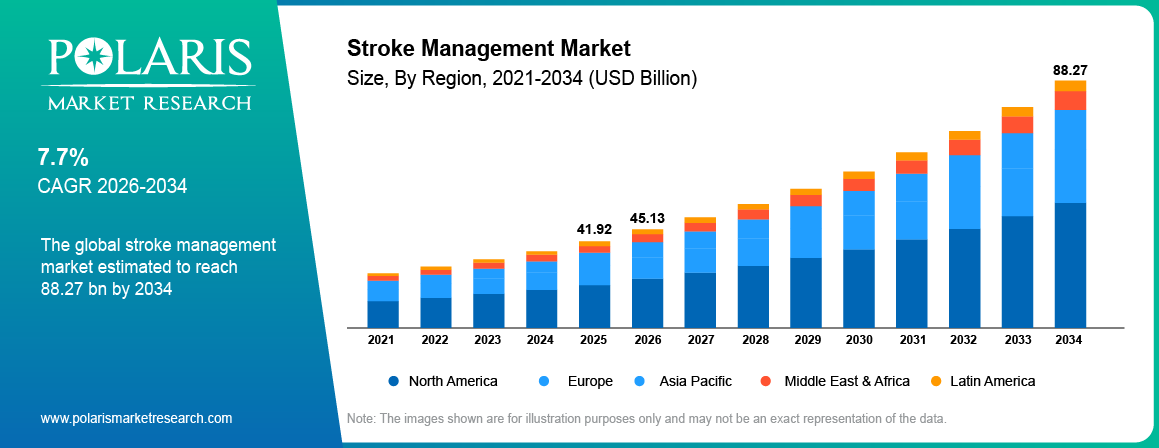
The global stroke management market was valued at USD 45.13 Billion in 2025 and is expected to reach USD 88.27 Billion by 2034, registering a CAGR of 7.7% from 2026 to 2034. Market is fueled by advances in acute ischemic stroke treatment, development of factor XIa inhibitors for secondary stroke prevention, and use of mechanical thrombectomy devices for large vessel occlusion.
Market Statistics
Key Takeaways
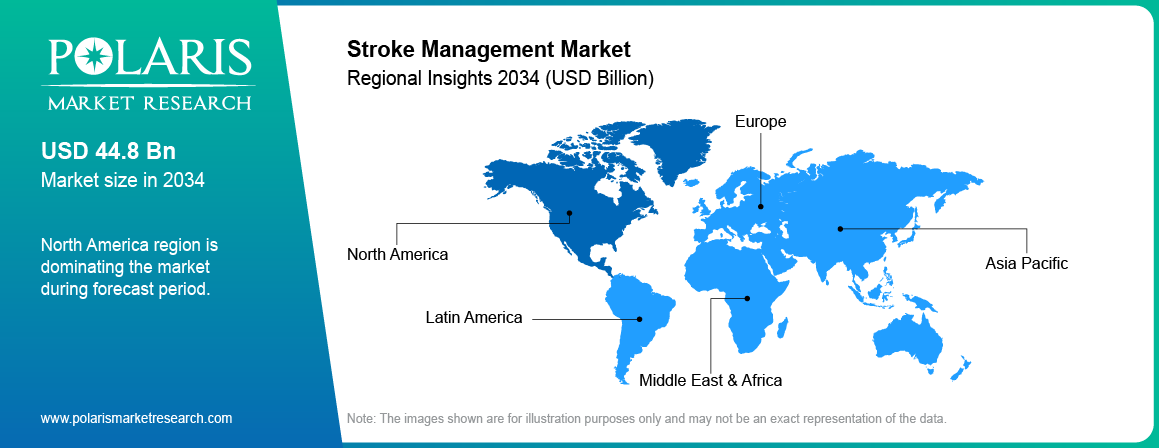
- North America accounted for 42.50% of the market in 2025, driven by the approval of TNKase across the U.S. and developments in stroke rehabilitation market.
- The market in Asia Pacific is projected to register the fastest CAGR of 9.62%, supported by the presence of established kallikrein-based stroke treatment in parts of the region.
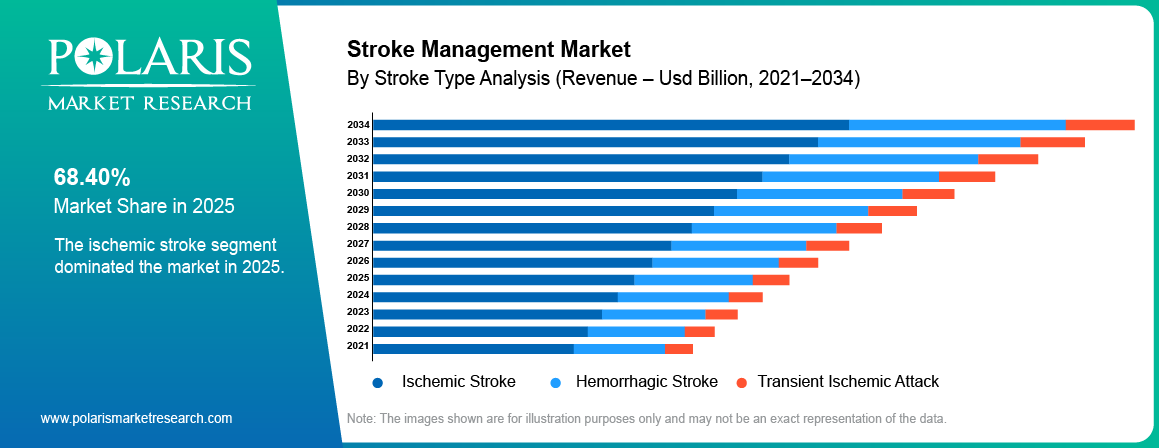
- Ischemic stroke accounted for the largest market share of 68.40% in 2025, reflecting the concentration of approved thrombolytic products and secondary prevention development in this category.
- Drugs accounted for 43.80% of the treatment segment in 2025, due to the increasing emphasis on regulatory approvals and the availability of well-established commercial products.
- Hospitals and stroke centers accounted for 62.80% of the end-user segment in 2025, supported by their role in acute thrombolysis and mechanical thrombectomy procedures.
Note: Figures and projections outlined in this report are the result of Polaris Market Research’s proprietary analytical processes, grounded in the latest available datasets and market observations.
What Is the Stroke Management Market?
The stroke management market covers drugs, medical devices, and rehabilitation products used to treat acute stroke, prevent recurrent stroke, and restore physical function following a cerebrovascular event. Its scope includes thrombolytic and other stroke-labeled drugs, mechanical thrombectomy systems, neurovascular access and support devices, and rehabilitation therapies. These products address treatment requirements across ischemic stroke, hemorrhagic stroke, and transient ischemic attack (TIA) care pathways. The market focuses on products used throughout acute intervention, secondary prevention, and post-stroke recovery.
The stroke management devices include products used in endovascular procedures for large vessel occlusion, particularly mechanical neurothrombectomy devices, clot retrieval devices, and aspiration systems. Mechanical thrombectomy is a catheter-based procedure that removes a blood clot from an artery supplying the brain. Neurovascular access and support products, including guidewires and catheters, assist physicians in navigating blood vessels and delivering treatment devices during these procedures. Products used across multiple vascular indications are allocated to stroke according to the stroke-use share applied in the market model.
The drug category focuses on products labeled for stroke treatment or prevention. It includes tenecteplase products such as TNKase and Metalyse, alongside investigational candidates being developed for secondary stroke prevention. General cardiology medicines, including broad-use antihypertensives and statins, are outside the defined market scope. The market includes neurovascular access products and technologies used during stroke procedures. Medtronic has bought Scientia Vascular for its neurovascular guidewires and catheters.
Market Dynamics
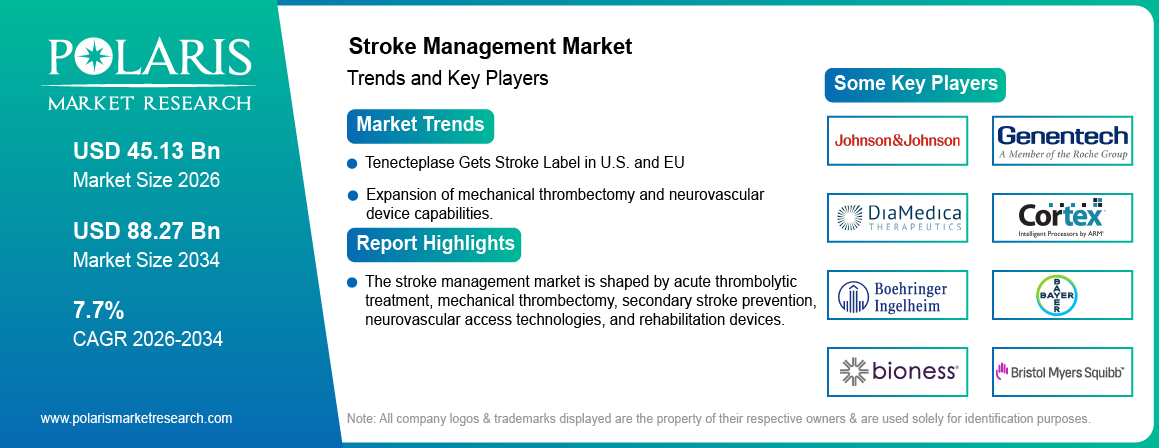
Driver: Tenecteplase Gets Stroke Label in U.S. and EU
Progress in thrombolytic treatment is driving the stroke management market growth. Tenecteplase has emerged as a clinical and regulatory player in the management of acute ischemic stroke. In March 2025, Genentech’s TNKase was approved by the U.S. FDA for use in adults with acute ischemic stroke. The AcT trial, which enrolled 1,577 adults at 22 Canadian centers, was the basis for this approval. The trial established noninferiority to Activase, providing a stroke indication for a thrombolytic that can be administered as a single 5-second bolus. This administration format offers an alternative to the infusion-based treatment workflow used with alteplase. Tenecteplase is also authorized and used for stroke management in Europe.
The difference between tenecteplase and alteplase is relevant for coordinating treatment at hospitals and stroke centers. Tenecteplase is given as a single bolus and alteplase needs an initial bolus followed by an infusion over 1 hour. The easier administration process can help coordinate treatment and help hospitals manage door-to-needle time. Genentech and Boehringer Ingelheim are key participants in the stroke thrombolytics market through TNKase and Metalyse, respectively.
Driver: Expansion of Mechanical Thrombectomy and Neurovascular Device Capabilities
The increasing adoption of endovascular treatment for large vessel occlusion is driving the demand for mechanical thrombectomy systems and related neurovascular devices. They use catheter-based technologies, such as stent retrievers and aspiration systems, to remove clots in blocked brain arteries. Penumbra’s global thrombectomy revenue for the quarter ended June 30, 2026 was USD 259.0 million, up 12.5% year-over-year.
Medtronic also strengthened its neurovascular portfolio with the USD 550 million acquisition of Scientia Vascular, which closed in June 2026, adding guidewires and catheters used in hemorrhagic and ischemic stroke procedures. Specialty Therapies sales were USD 774 million in the quarter ended July 2026, compared to USD 702 million in the prior-year quarter, the company said. The company’s Penumbra computer-assisted vacuum thrombectomy systems and Medtronic’s enhanced neurovascular access capabilities demonstrate ongoing product development in clot retrieval, aspiration and procedural support technologies. Thus, the expansion of mechanical thrombectomy market and neurovascular device capabilities drives the market expansion.
Restraint: Clinical Trial Risk and Funding Requirements
The time required to develop secondary stroke prevention drugs and other experimental treatments depends on clinical trial results and funding needs. In November 2025, Bristol Myers Squibb and Johnson & Johnson halted a Phase III trial of milvexian in acute coronary syndrome after the study was deemed unlikely to meet its endpoint. It led to uncertainty about the broader development program, including LIBREXIA STROKE.
Smaller biotech companies have large funding needs in clinical development. DiaMedica Therapeutics had USD 51.3 million in cash and investments as of March 2026 and projected cash runway through 2027, with its recombinant kallikrein KLK1 candidate DM199 still being evaluated in the Phase 2/3 ReMEDy2 study. The company reported in May 2026 that enrollment was over 70% of the way to the requirement for its interim analysis, scheduled for the fourth quarter of 2026. “Clinical outcomes are also part of the rationale for factor XIa inhibitors in the OCEANIC STROKE trial, where asundexian has recorded ischemic stroke rates of 6.2% vs 8.4% in the control group. ISTH major bleeding was 1.9% versus 1.7%, highlighting the need to evaluate recurrent stroke reduction in the light of bleeding outcomes. Thus, risks in clinical trials and requirements for funding among small players hinder the market development (Source: DiaMedica Therapeutics).
Opportunity: Advances in Secondary Stroke Prevention
Opportunities in secondary stroke prevention are emerging from the evolution of Factor XIa inhibitors. Bayer's oral candidate asundexian, dosed at 50 mg daily, was evaluated in the Phase III OCEANIC STROKE trial, NCT05686070, enrolling 12,327 patients. In May 2026, the FDA granted the candidate priority review for prevention following non-cardioembolic ischemic stroke or high-risk TIA. The trial reported ischemic stroke in 6.2% of patients receiving asundexian compared with 8.4% in the control group, corresponding to a hazard ratio of 0.74, while ISTH major bleeding was 1.9% compared with 1.7%. Milvexian, developed by Bristol Myers Squibb and Johnson & Johnson, represents another factor XIa inhibitor program under investigation in the Phase III LIBREXIA STROKE study, NCT05702034, with results expected in 2026. Regulatory progress for asundexian and clinical results from the milvexian program are important developments for companies seeking to expand treatment options for patients at risk of recurrent ischemic stroke.
Opportunity: Technology-Assisted Stroke Rehabilitation
Technology-assisted rehabilitation is creating opportunities for products that support functional recovery after stroke. Mobia Medical’s Vivistim system combines electrical stimulation with task-specific rehabilitation exercises. The system received greater exposure following the 2026 American Heart Association and American Stroke Association adult stroke rehabilitation guideline, published August 27, 2026, that included a statement that paired vagus nerve stimulation may be considered to improve upper-limb function after chronic stroke.
The supporting evidence included 159 patients from 10 centers demonstrating a 5.37 point gain on the Functional Gait Assessment in the PoNS group versus 3.31 points in the control group; the device is used in conjunction with supervised therapeutic exercise. This segment adds CorTec’s Brain Interchange system, an implanted brain-computer interface approach, which received FDA breakthrough device designation in April 2026 for chronic stroke motor rehabilitation, with an investigational device exemption study at the University of Washington. These developments are expanding the range of rehabilitation equipment through paired stimulation, neuromodulation, and brain-computer interfaces.
Market Segmentation Analysis
The stroke management market is segmented on the basis of stroke type, treatment, and end user. These categories distinguish the clinical conditions addressed, the products used for acute treatment and recovery, and the healthcare settings involved in purchasing and delivering stroke care. Each category includes a leading segment and a fastest-growing segment based on the market segmentation framework.
Stroke Type Insights
The ischemic stroke segment is dominating the market, accounting for 68.40% share in 2025. Ischemic stroke occurs when a blockage reduces blood flow to the brain and is an important focus for treatment with thrombolytic drugs and mechanical thrombectomy systems. FDA approval for Genentech’s TNKase for acute ischemic stroke in adults expanded the U.S. treatment landscape through a single-bolus tenecteplase option. The segment also includes secondary prevention developments such as Bayer's asundexian, evaluated in the Phase III OCEANIC STROKE trial involving 12,327 patients (Source: Practical Neurology).
The transient ischemic attack (TIA) segment is projected to register the significant CAGR of 6.38% during the forecast period. TIA is an important category within secondary stroke prevention because patients experiencing high-risk TIA require assessment and management of subsequent stroke risk. Bayer's asundexian development program includes patients with high-risk TIA alongside those with non-cardioembolic ischemic stroke. The Phase III OCEANIC STROKE trial showed a 6.2% rate of ischemic stroke with asundexian compared with 8.4% in the control group, and the FDA granted priority review to the candidate in May 2026. These advances support the growing interest in preventive treatment options for patients with an increased cerebrovascular risk.
Treatment Insights
In 2025, the drugs segment held the largest share of 43.80% in the market by treatment. This segment includes thrombolytic products and other drugs specifically labeled for the treatment or prevention of stroke. In the U.S., Genentech’s TNKase is approved for acute ischemic stroke in adults while Boehringer Ingelheim’s Metalyse is authorized for the 25 mg stroke dose in the European Union. Both products contain tenecteplase and are well-established commercial products in the stroke thrombolytics market. Factor XIa inhibitors, such as Bayer’s asundexian and milvexian from Bristol Myers Squibb and Johnson & Johnson, add further to the treatment pipeline for secondary stroke prevention.
The thrombectomy devices segment is projected to register the fastest growth, at a CAGR of 9.24% during the forecast period. These devices are used to remove blood clots from brain arteries, particularly in patients with large vessel occlusion. Mechanical thrombectomy restores blood flow with catheter-based technologies that include stent retrievers and aspiration catheters. Penumbra reported global thrombectomy revenue of USD 259.0 million for the second quarter of 2026, an increase of 12.5% year-over-year. Such developments indicate ongoing commercial activity and product expansion in the area of endovascular stroke treatment.
End User Insights
The hospitals and stroke centers segment dominated stroke management market share with 62.80% share in 2025. Hospitals and specialized stroke centers are capable of major purchasing and treatment settings for acute stroke drugs and intervention devices. They have required infrastructure and skilled professionals. They can offer effective acute stroke treatment with thrombolysis and mechanical thrombectomy, involving coordinated clinical assessment, drug delivery, and catheter-based intervention.
The rehabilitation centers and home care segment is anticipated to witness the fastest growth, at a CAGR of 8.27% during the forecast period. Demand in this segment is supported by the development of technologies designed to improve motor, upper-limb, and gait recovery following stroke. The 2026 American Heart Association/American Stroke Association guideline recommends consideration of paired vagus nerve stimulation to improve upper-limb function after chronic stroke. CorTec's Brain Interchange system received FDA breakthrough device designation for chronic stroke motor rehabilitation, adding a brain-computer interface approach to the rehabilitation technology pipeline. These developments are expanding the range of products available to rehabilitation providers and home-based recovery programs.
Regional Analysis
The stroke management market spans North America, Europe, Asia Pacific, the Middle East and Africa, and Latin America. Regional analysis considers approved stroke drugs, clinical development activity, neurovascular device portfolios, rehabilitation technologies, and the presence of stroke treatment infrastructure.
North America Stroke Management Market Trends
North America accounted for 42.50% of the stroke management market share in 2025. The leading position is driven by the presence of key players and advanced healthcare infrastructure. Acute stroke care is an important market in the U.S., with key players emphasizing FDA approval for their products. It’s also a major regulatory market for Bayer’s asundexian, which received FDA priority review in May 2026 for secondary prevention after non-cardioembolic ischemic stroke or high-risk TIA.
Rehabilitation technology is another area of product development in North America. The 2026 American Heart Association and American Stroke Association adult stroke rehabilitation guideline states that paired vagus nerve stimulation may be considered for chronic stroke upper-limb function. Bioness Medical also received 510(k) clearance for PoNS in June 2026 for gait deficits in chronic stroke. These developments complement the existing thrombolytic and neurovascular device portfolios to further augment the region’s treatment and rehabilitation product landscape.
Europe Stroke Management Market Trends
Europe accounted for 26.10% of the stroke management market in 2025. The region has an established tenecteplase treatment reference through Boehringer Ingelheim's Metalyse. The use of tenecteplase and alteplase is pertinent to the acute stroke treatment landscape of the region. Tenecteplase is given as a single bolus, whereas alteplase is given as an initial bolus followed by a one-hour infusion. This difference is relevant to thrombolysis workflows and treatment coordination across hospitals and stroke centers. The regional market assessment also covers mechanical thrombectomy systems, neurovascular access devices, and rehabilitation products (Source: Salud y Fármacos).
Asia Pacific Stroke Management Market Trends
The market in Asia Pacific is projected to register the fastest CAGR of 9.62% during the forecast period. The region’s market analysis includes stroke labeled drugs, thrombectomy devices, neurovascular access products and rehabilitation technologies. DiaMedica Therapeutics calls kallikrein therapy “a proven stroke treatment” in parts of Asia and a reference point for KLK1-based therapeutic approaches in the region. Its DM199 candidate, a recombinant kallikrein KLK1, is being evaluated in the Phase 2/3 ReMEDy2 study. In May 2026, the company reported that enrollment had exceeded 70% of the requirement for its interim analysis, which was planned for the fourth quarter of 2026 (Source: DiaMedica Therapeutics).
The regional market model covers China, Japan, India, South Korea, Taiwan, Australia, and the rest of Asia Pacific. Market assessment across these countries includes demand for acute stroke treatment, secondary prevention products, neurovascular procedures, and post-stroke rehabilitation technologies.
Middle East and Africa Stroke Management Market Trends
The Middle East & Africa accounted for 3.80% of the global market share in 2025. The regional assessment covers Saudi Arabia, the UAE, South Africa, and the rest of the Middle East & Africa. Demand is evaluated across the core product categories, including thrombolytic drugs, mechanical thrombectomy systems, neurovascular access and support devices, and rehabilitation therapies. The market model also considers the contribution of hospitals, stroke centers, specialty clinics, and rehabilitation facilities to regional product purchasing and use.
Latin America Stroke Management Market Trends
Latin America held 5.00% of the stroke management market in 2025. The regional assessment includes Brazil, Mexico, Argentina, and the rest of Latin America. Market demand is evaluated across stroke-labeled drugs, thrombectomy devices, neurovascular access and support products, and rehabilitation therapies and devices. The regional market model considers acute stroke treatment, secondary prevention, neurovascular procedures, and post-stroke recovery across the healthcare settings included in the report.
Stroke Management Market Competitive Landscape
Competition in the stroke management market is shaped by pharmaceutical companies developing thrombolytic and secondary prevention drugs and medical device manufacturers supplying thrombectomy and neurovascular access systems. Specialized companies emphasize developing rehabilitation technologies. Key players are focusing on strategic initiatives such as partnerships, mergers, and acquisitions.
| Company | Position | Latest dated evidence | Note |
| Medtronic plc | Thrombectomy and neurovascular access | SEC Form 10-Q, quarter ended July 31, 2026 | Scientia Vascular acquisition closed June 12, 2026 |
| Penumbra, Inc. | Thrombectomy | SEC exhibit, July 30, 2026 | Thrombectomy revenue of USD 259.0 million, up 12.5% |
| Johnson & Johnson | Milvexian co-developer | Pharmaceutical Technology, May 1, 2026 | LIBREXIA STROKE readout expected in 2026 |
| Bristol Myers Squibb Company | Factor XIa inhibitor, secondary prevention | Pharmaceutical Technology, May 1, 2026 | Milvexian Phase III program |
| Genentech, Inc. | Tenecteplase, US | Practical Neurology, March 2025 | TNKase stroke label |
| Boehringer Ingelheim | Tenecteplase, Europe | EMA and Prescrire evidence | Metalyse 25 mg stroke dose |
| Bayer AG | Factor XIa inhibitor, secondary prevention | HCPLive, May 19, 2026 | Asundexian received FDA priority review |
| DiaMedica Therapeutics Inc. | Kallikrein, Phase 2/3 | Company release, May 6, 2026 | ReMEDy2 interim analysis planned for Q4 2026 |
| Mobia Medical, Inc. | Paired VNS rehabilitation | Company release, August 28, 2026 | Vivistim referenced in the 2026 AHA and ASA guideline |
| Bioness Medical, Inc. | Gait rehabilitation | Company release, June 29, 2026 | PoNS received 510(k) clearance |
| CorTec | Implanted interface, rehabilitation | Robotics and Automation News, April 11, 2026 | Brain Interchange received FDA breakthrough designation |
Source: Polaris Market Research Analysis.
Technology and Innovation Landscape
The stroke management technology landscape includes thrombolytic drugs, catheter-based clot removal systems, neurovascular access products, and rehabilitation devices. Product development spans approved acute stroke therapies, late-stage secondary prevention candidates, cleared rehabilitation devices, and investigational brain-computer interfaces. These technologies tackle different stages of the treatment pathway, from restoring blood flow in acute ischemic stroke to supporting functional recovery post-event.
Tenecteplase is a major therapeutic innovation in the ischemic stroke treatment market. In the U.S., Genentech’s TNKase is FDA approved, while the European Union has a licensed 25 mg stroke dose of Boehringer Ingelheim’s Metalyse. Both products are given as a single bolus and offer an alternative to alteplase, which is given as an initial bolus followed by a one-hour infusion. The clinical comparison between tenecteplase and alteplase is relevant to treatment workflow and thrombolysis delivery at hospitals and stroke centers.
Factor XIa inhibitors represent an important area of development in secondary stroke prevention. Bayer’s asundexian was granted priority review by the FDA based on the OCEANIC STROKE Phase III study, and milvexian is in Phase III development with LIBREXIA STROKE. The candidates are being tested for efficacy in reduction of ischemic events; clinical assessment will also include bleeding outcomes. DiaMedica’s DM199 is a recombinant kallikrein KLK1 approach in the development pipeline through the Phase 2/3 ReMEDy2 study.
Devices innovation includes aspiration-based thrombectomy, neurovascular access products and rehabilitation technologies. Penumbra’s computer-assisted vacuum thrombectomy devices portfolio offers clot removal, while Medtronic’s acquisition of Scientia Vascular added guidewires and catheters to its neurovascular offerings. Rehabilitation development includes paired vagus nerve stimulation through Vivistim, tongue neuromodulation through PoNS, and the implanted brain-computer interface approach represented by CorTec's Brain Interchange system. These products illustrate the range of technologies being developed for acute intervention and post-stroke recovery.
The technology landscape includes products at different stages of commercial and clinical development.
| Technology or product | Example | Company | Evidence | Stage |
| Single-bolus thrombolytic | TNKase | Genentech | AcT trial, 1,577 adults | Approved in the U.S. |
| Tenecteplase stroke dose | Metalyse 25 mg | Boehringer Ingelheim | Two trials, 3,089 patients | Authorized in the EU |
| Oral factor XIa inhibitor | Asundexian | Bayer | OCEANIC STROKE, 12,327 patients | FDA priority review |
| Oral factor XIa inhibitor | Milvexian | Bristol Myers Squibb; Johnson & Johnson | LIBREXIA STROKE | Phase III |
| Recombinant kallikrein KLK1 | DM199 | DiaMedica Therapeutics | ReMEDy2 interim enrollment exceeded 70% of requirement | Phase 2/3 |
| Computer-assisted vacuum thrombectomy | Penumbra portfolio | Penumbra | USD 259.0 million quarterly thrombectomy revenue | Marketed |
| Neurovascular access | Scientia Vascular guidewires and catheters | Medtronic | Acquisition closed June 12, 2026 | Acquired |
| Paired vagus nerve stimulation | Vivistim | Mobia Medical | 2026 rehabilitation guideline reference | Marketed |
| Tongue neuromodulation | PoNS | Bioness Medical | 510(k) clearance, June 29, 2026 | Cleared |
| Implanted brain-computer interface | Brain Interchange | CorTec | FDA breakthrough designation, April 2026 | Investigational |
Source: Polaris Market Research Analysis.
Use Case Analysis
Hospitals and Stroke Centers: Acute Ischemic Stroke Treatment
Hospitals and stroke centers use thrombolytic drugs and thrombectomy systems in acute ischemic stroke treatment. Genentech's TNKase received FDA approval for acute ischemic stroke in adults in March 2025, based on the AcT trial involving 1,577 patients. Its single bolus format of 5 seconds offers an alternative administration approach compared to alteplase, which requires an initial bolus and a one-hour infusion. These treatment options are relevant to hospital protocols, drug delivery and door-to-needle time.
Mechanical thrombectomy is a procedure performed to clear the arteries in the brain of clots (especially in the case of large vessel occlusion). Penumbra’s thrombectomy portfolio includes computer-assisted vacuum systems. The company announced global thrombectomy revenue of USD 259.0 million in the second quarter of 2026. These systems form part of the device options used in endovascular stroke procedures.
Neurologists and Specialty Clinics: Secondary Stroke Prevention
Neurologists and specialty clinics are relevant healthcare settings for therapies developed to reduce the risk of recurrent stroke. Bayer's asundexian is being evaluated for secondary prevention following non-cardioembolic ischemic stroke or high-risk TIA. The OCEANIC STROKE trial enrolled 12,327 patients and reported ischemic stroke in 6.2% of the asundexian group compared with 8.4% in the control group. The FDA granted the candidate priority review in May 2026.
Milvexian is another candidate in the secondary prevention pipeline. Bristol Myers Squibb and Johnson & Johnson are evaluating the oral factor XIa inhibitor in the Phase III LIBREXIA STROKE study, NCT05702034. Its clinical development adds another investigational option for healthcare providers assessing future approaches to recurrent stroke prevention.
Rehabilitation Centers and Home Care: Chronic Stroke Recovery
Rehabilitation centers and supervised therapy programs use devices designed to support motor and gait recovery after stroke. Mobia Medical's Vivistim is associated with paired vagus nerve stimulation, which the 2026 American Heart Association and American Stroke Association adult stroke rehabilitation guideline states may be considered for improving upper-limb function following chronic stroke. The approach combines stimulation with task-specific therapy.
Emergency Medical Services: Prehospital Stroke Response
Emergency medical services and mobile stroke units form part of the wider stroke care pathway through prehospital response and patient transfer to an appropriate stroke center. These services are included in the Others category of the end-user segmentation. The market scope focuses on treatment and recovery products, while diagnostic products and AI triage software remain outside the base market assessment.
Barriers to Market Entry
Clinical development and regulatory requirements create barriers for companies entering the stroke drug market. Bristol Myers Squibb and Johnson & Johnson ended a Phase III milvexian study in acute coronary syndrome in November 2025 after the trial was judged unlikely to meet its endpoint. This development remains relevant to the broader risk profile of the LIBREXIA STROKE program, which is being evaluated separately for secondary stroke prevention.
Safety evaluation is another important consideration for factor XIa inhibitor development. In OCEANIC STROKE, asundexian reported ISTH major bleeding of 1.9% compared with 1.7% in the control group. Clinical programs therefore assess bleeding outcomes alongside reductions in recurrent ischemic events. The adjacent anticoagulant reversal drugs covers products used to manage bleeding associated with anticoagulant treatment.
Smaller biotechnology developers face funding needs. DiaMedica had USD 51.3 million in cash and investments and runway projected into 2027 as of March 31, 2026. Continuing to evaluate its DM199 candidate in the Phase 2/3 ReMEDy2 study, with an interim analysis planned for Q4 2026. The cost of clinical development and the availability of funding remain relevant to the pace of progress for smaller companies.
Device suppliers face requirements related to clinical evidence, regulatory clearance, product development, and portfolio scale. PoNS was cleared under the 510(k) pathway following a clinical program that enrolled 159 patients, and Penumbra and Medtronic have built up portfolios of thrombectomy and neurovascular devices, respectively. The 2026 rehabilitation guideline also defines a role for paired vagus nerve stimulation, suggesting that it may be considered for chronic stroke upper-limb function. These regulatory, clinical, and commercial requirements influence the ability of companies to enter and expand within the device market.
Premium Insights and Forward Outlook
Asundexian Advances Factor XIa Inhibitor Pipeline
Asundexian's hazard ratio of 0.74 in OCEANIC STROKE corresponds to a derived relative reduction of approximately 26% in ischemic stroke risk. The Phase III study enrolled 12,327 patients and reported ischemic stroke rates of 6.2% with asundexian compared with 8.4% in the control group. ISTH major bleeding was 1.9% compared with 1.7%. Bayer received FDA priority review in May 2026 for secondary prevention following non-cardioembolic ischemic stroke or high-risk TIA.
Milvexian, developed by Bristol Myers Squibb and Johnson & Johnson, is another major factor XIa inhibitor candidate in the report. The LIBREXIA STROKE Phase III readout was expected in 2026. The termination of the related acute coronary syndrome study in November 2025 is an important development milestone for the program. Future positioning of factor XIa inhibitors in secondary stroke prevention will depend on clinical outcomes, regulatory decisions, and the relationship between ischemic event reduction and bleeding outcomes.
Rehabilitation Technologies Reach Guideline and Regulatory Milestones
The 2026 American Heart Association and American Stroke Association adult stroke rehabilitation guideline states that paired vagus nerve stimulation may be considered for improving upper-limb function following chronic stroke. Mobia Medical's Vivistim is associated with this approach, providing a clinical reference point for neuromodulation products in rehabilitation.
The future commercial landscape includes paired stimulation, gait recovery devices, and implanted brain-computer interface systems alongside established acute stroke drugs and thrombectomy technologies. Product development across these categories will shape the range of treatment and rehabilitation options available to healthcare providers.
Cost and Pricing Benchmarking Analysis
Public prices per stroke thrombolytic dose, thrombectomy catheter, procedure, rehabilitation implant, or neuromodulation device are not stated in the available source material. The following benchmarks provide company-reported revenue, acquisition, and funding indicators for the stroke management market.
| Item | Value | Basis | Date |
| Penumbra total revenue, Q2 2026 | USD 390.0 million, up 14.9% | Company reported | June 30, 2026 |
| Penumbra thrombectomy revenue, Q2 2026 | USD 259.0 million, up 12.5% | Company reported; not stroke-only | June 30, 2026 |
| Thrombectomy share of Penumbra revenue | Approximately 66.4% | Derived; not stroke-only | June 30, 2026 |
| Medtronic Neuroscience sales | USD 2,678 million vs. USD 2,427 million | Company reported | July 31, 2026 |
| Medtronic Specialty Therapies sales | USD 774 million vs. USD 702 million | Company reported; not stroke-only | July 31, 2026 |
| Specialty Therapies growth | Approximately 10.3% | Derived | July 31, 2026 |
| Scientia Vascular acquisition | USD 550 million | Reported transaction value | June 12, 2026 |
| DiaMedica cash and investments | USD 51.3 million | Company reported; funding indicator | March 31, 2026 |
Source: U.S. Securities and Exchange Commission; U.S. Securities and Exchange Commission; MedTech Dive; DiaMedica Therapeutics
Penumbra's reported thrombectomy revenue and derived revenue share provide a company-level benchmark for device activity. Medtronic's Specialty Therapies sales offer a broader reference for specialty device activity, while the Scientia Vascular transaction and DiaMedica's reported cash position provide acquisition and funding indicators. These figures support commercial benchmarking across the stroke management market analysis, while product-level prices remain dependent on confirmed internal pricing data.
Key Players
- Bayer AG
- Bioness Medical, Inc.
- Boehringer Ingelheim
- Bristol Myers Squibb Company
- CorTec
- DiaMedica Therapeutics Inc.
- Genentech, Inc.
- Johnson & Johnson
- Medtronic plc
- Mobia Medical, Inc.
- Penumbra, Inc
Industry Developments
- October 2026: Apollo Hospitals and Medtronic collaborated to introduce AI-powered stroke management technology in Apollo’s neuroscience centers, to enable analysis of brain scans in under two minutes. (Source: ApolloHospitals.com)
- May 2026: DiaMedica announced that enrollment in ReMEDy2 has crossed 70% of the requirement for the interim analysis, scheduled for the fourth quarter of 2026.
- December 2025: India’s first clinical trial conducted by AIIMS New Delhi led to the regulatory approval of the indigenous Supernova Stent Retriever for the treatment of acute ischemic stroke.
- November 2025: Nicolab and Philips launched StrokeViewer in India, an AI-powered CT perfusion analysis that allows faster coordination between stroke care specialists. (Source: Nicolab.com)
Stroke Management Market Segmentation
By Stroke Type Outlook (Revenue, USD Billion, 2021–2034)
- Ischemic Stroke
- Hemorrhagic Stroke
- Transient Ischemic Attack
By Treatment Outlook (Revenue, USD Billion, 2021–2034)
- Drugs
- Thrombectomy Devices
- Neurovascular Access and Support Devices
- Rehabilitation Therapies and Devices
By End User Outlook (Revenue, USD Billion, 2021–2034)
- Hospitals and Stroke Centers
- Ambulatory Surgical Centers and Specialty Clinics
- Rehabilitation Centers and Home Care
- Others
By Region Outlook (Revenue, USD Billion, 2021–2034)
- North America
- U.S.
- Canada
- Europe
- Germany
- France
- UK
- Italy
- Spain
- Netherlands
- Rest of Europe
- Asia Pacific
- China
- Japan
- India
- South Korea
- Taiwan
- Australia
- Rest of Asia Pacific
- Middle East & Africa
- Saudi Arabia
- UAE
- South Africa
- Rest of Middle East & Africa
- Latin America
- Brazil
- Mexico
- Argentina
- Rest of Latin America
Stroke Management Market Report Scope
| Report Attributes | Details |
| Market Size in 2025 | USD 41.92 Billion |
| Market Size in 2026 | USD 45.13 Billion |
| Revenue Forecast by 2034 | USD 88.27 Billion |
| CAGR | 7.7% from 2026–2034 |
| Base Year | 2025 |
| Historical Data | 2021–2024 |
| Forecast Period | 2026–2034 |
| Quantitative Units | Revenue in USD Billion and CAGR |
| Report Coverage | Revenue Forecast, Growth Factors, Competitive Landscape, Industry Trends, and Strategic Analysis |
| Segments Covered |
|
| Regional Scope |
|
| Competitive Landscape | Company Profiling, Product Benchmarking, Financial Analysis, Market Developments, and Strategic Initiatives |
| Report Format | PDF + Excel |
| Customization | Available by Country, Region, and Segment |
Source: Polaris Market Research Analysis.
Why Choose Polaris Market Research
Polaris Market Research & Consulting, Inc. provides a structured assessment of the stroke management market forecast across acute stroke drugs, thrombectomy systems, neurovascular access devices, and rehabilitation therapies. The research separates treatment and recovery products from diagnostics, imaging, AI triage software, general cardiology drugs, and bleeding reversal agents. This scope gives buyers a defined view of the commercial activity associated with stroke treatment and rehabilitation.
The analysis includes a drug pipeline assessment covering TNKase, Metalyse, asundexian, milvexian, and DM199, with trial identifiers and regulatory or development status. It also evaluates device and rehabilitation developments involving Medtronic, Penumbra, Mobia Medical, Bioness Medical, and CorTec. Cost benchmarking distinguishes company-reported revenue, derived indicators, acquisition values, and product price placeholders.
The stroke management industry assessment can be customized by stroke type, treatment category, end user, or region. If you need this scope cut by stroke type or by a treatment and end user crosswalk, Polaris Market Research & Consulting, Inc. will build a custom study around it. A diagnostics and imaging cut is also available on request.
Research Methodology
Polaris Market Research & Consulting, Inc. built this analysis of the stroke management market and its suppliers through five phases. Phase one is scoping: the team set the basis at treatment and recovery products sold for acute stroke, secondary prevention, and rehabilitation. This includes stroke-labeled drugs, thrombectomy and neurovascular access devices, and rehabilitation therapies, separate from diagnostics, imaging, general cardiology drugs, aneurysm-only devices, and bleeding reversal agents. The scope boundary is checked against adjacent market categories to maintain consistency in revenue allocation.
Phase two is secondary research. The source mix includes company releases and investor filings, including SEC 10-Q and 8-K exhibits, a European regulator page, an American Heart Association statistics update, healthcare trade publications, and relevant Polaris market pages. Syndicated market research firms are used for segmentation structure and company names, while the market estimates in this report are reserved for Polaris internal modeling.
Phase three is estimation, covering revenue across stroke type, treatment, end user, and region. Company revenue figures that include non-stroke activities are distinguished from stroke-specific market estimates. Phase four validates the model against dated evidence, including approvals, trial milestones, regulatory clearances, company results, and acquisition activity. Phase five is a senior analyst review of source accuracy, scope consistency, segmentation, terminology, and forecast assumptions.
Five-Phase Research Methodology
| Phase | Activity | Primary Evidence |
| 1. Scope Definition | Define treatment and recovery products, segment categories, and exclusions | Market boundary and segmentation |
| 2. Secondary Research | Review company filings, regulatory records, clinical developments, guidelines, and industry sources | Source register |
| 3. Market Estimation | Assess revenue across stroke type, treatment, end user, and region | Polaris market model |
| 4. Validation | Cross-check estimates against approvals, trial results, clearances, company results, and acquisitions | Validated market assumptions |
| 5. Quality Review | Check source accuracy, scope consistency, terminology, and forecast assumptions | Final report and forecast |
Source: Polaris Market Research Analysis.
Stroke Management Market FAQ's
The global stroke management market was valued at USD 45.13 Billion in 2025 and is expected to reach USD 88.27 Billion by 2034, registering a CAGR of 7.7% during the forecast period.
The stroke management industry is expected to register a CAGR of 7.7% from 2026 to 2034.
North America led the market with 42.50% share in 2025. The region's position is supported by the U.S. approval of TNKase, the FDA priority review of asundexian, and developments in stroke rehabilitation.
The drugs segment led the treatment category, accounting for 43.80% of the market in 2025.
Stroke management includes acute treatment with clot-dissolving drugs or catheter-based thrombectomy, secondary stroke prevention, and rehabilitation to restore function.
The report covers ischemic stroke, hemorrhagic stroke, and transient ischemic attack. Ischemic stroke involves a blocked artery, while hemorrhagic stroke involves bleeding in the brain.
Tenecteplase is administered as a single 5-second bolus, while alteplase is given as an initial bolus followed by a one-hour infusion.
Mechanical thrombectomy is a catheter-based procedure used to remove a clot from a brain artery.
Medtronic and Penumbra have dated evidence in thrombectomy and neurovascular devices.
Asundexian received FDA priority review in May 2026 for secondary prevention following non-cardioembolic ischemic stroke or high-risk TIA.
Paired vagus nerve stimulation combines vagus nerve stimulation with task-specific rehabilitation therapy to support upper-limb function after chronic stroke.

Download Sample Report of Stroke Management Market
Please fill out the form to request a customized copy of the research report.


