
Targeted Protein Degradation Market Size, Industry Demand, 2026-2034
REPORT DETAILS
Targeted Protein Degradation Market Summary
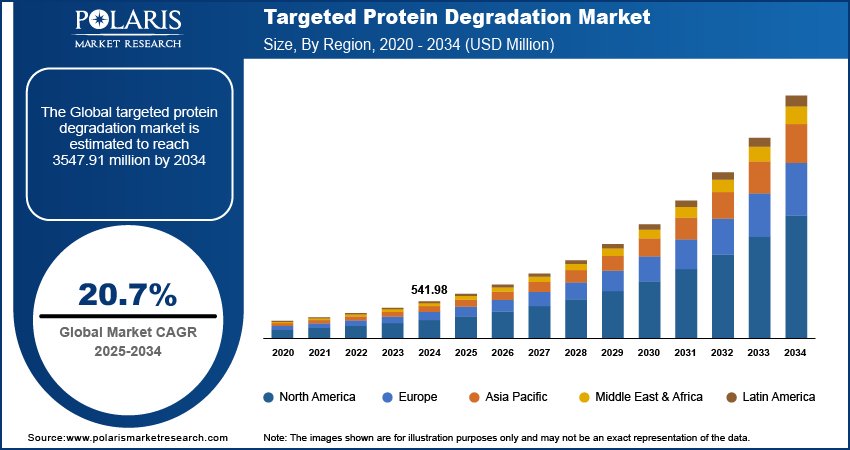
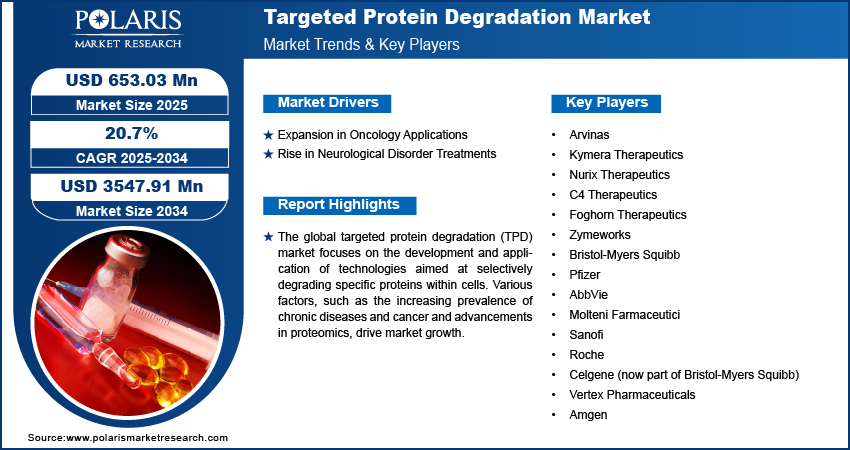
The global targeted protein degradation (TPD) market was valued at approximately USD 687.90 million in 2025 and is projected to reach USD 3,531.80 million by 2034, growing at a CAGR of 19.9% during the forecast period. Market growth is driven by FDA approval of the first PROTAC therapy in May 2026, expanding pharmaceutical partnerships for molecular glue degraders, and a growing clinical pipeline addressing oncology and immunology targets.
Market Statistics
Key Takeaways
- North America held approximately 50.0% of the global TPD market in 2025, supported by U.S. company concentration, capital access, and the first-ever FDA-approved PROTAC therapy in May 2026.
- PROTACs accounted for about 43.0% share of the technology category due to most advanced pipeline and validation of vepdegestrant FDA approval.
- The largest share of activities in the therapeutic area was oncology with about 68.0%, where breast cancer, hematological malignancies, and genetically defined solid tumors are of interest.
- Molecular glues are the fastest-growing technology class with Gilead Sciences activating a USD 45 million option in April 2026 on exclusive license rights of KT-200, an oral CDK2 molecular glue degrader developed by Kymera Therapeutics.
- C4 Therapeutics commenced the MOMENTUM Phase 2 study with cemsidomide in multiple myeloma in February 2026, adding TPDs other than PROTACs to the clinical pipeline.
Note: Figures and projections outlined in this report are the result of Polaris Market Research’s proprietary analytical processes, grounded in the latest available datasets and market observation
What is Targeted Protein Degradation?
Targeted protein degradation is a technique that involves the use of bifunctional or induced-proximity molecules to recruit a disease protein into an E3 ubiquitin ligase or lysosome for degradation by the natural cellular degradation pathways. This technique contrasts with the traditional method of inhibition, which blocks the protein but retains it in place.
The primary modalities include PROTACs (PROteolysis-Targeting Chimeras), molecular glues, lysosome-targeting chimeras (LYTACs), and degrader-antibody conjugates. PROTACs operate via event-driven pharmacology: once a degrader catalyzes target ubiquitination, the molecule dissociates and participates in another degradation cycle, enabling activity at sub-stoichiometric concentrations.
Source: Polaris Market Research Analysis
Targeted Protein Degradation Market Driver Impact Analysis
The targeted protein degradation market is expected to grow at a CAGR of 19.9% through 2034, driven by first-product commercial validation, late-stage clinical pipeline maturation across oncology and immunology, and increasing large-pharma investment through licensing and co-development agreements. The table below outlines the key growth drivers and their estimated contribution across major geographies.
| Market Driver | Est. CAGR Impact | Geographic Relevance | Impact Timeline |
| First commercial PROTAC validation shifting the category from investigational to early commercial | +5.5% | US; spillover to Europe and Japan | Short term (ongoing) |
| Late-stage clinical pipeline maturation across multiple oncology indications | +4.8% | North America, Europe | Short to medium term |
| Large-pharma partnership and molecular glue licensing strategies | +3.9% | Global | Medium term (2–4 years) |
| Expansion of degrader programs into immunology and neurology | +3.2% | US, Europe, Japan | Medium to long term |
| Greater China clinical development and regional partnering | +2.4% | China, Asia Pacific | Medium term (2–4 years) |
| E3 ligase and modality innovation expanding tractable target space | +2.0% | Global research hubs | Long term |
* Indicative estimates based on market context and analyst judgment. Figures reflect relative driver weight, not additive CAGR contributions. Source: Polaris Market Research Analysis.
Industry Dynamics
- The May 2026 FDA approval of VEPPANU (vepdegestrant) established the first regulatory, manufacturing, companion diagnostic, and commercial precedent for a PROTAC, significantly reducing category-level uncertainty for investors and partners.
- Pharmaceutical companies are increasingly using combination strategies pairing degraders with bispecific antibodies and targeted agents to position assets earlier in treatment pathways.
- Oral exposure, ternary-complex productivity, and proteome-wide selectivity remain central scientific constraints driving candidate attrition across development-stage programs.
- Molecular glue licensing intensity is rising, with Gilead's April 2026 USD 45 million option exercise for KT-200 demonstrating large-pharma confidence in induced-proximity modalities beyond PROTACs.
Targeted Protein Degradation Market Drivers, Restraints and Opportunities
How Is the FDA Approval of the First PROTAC Driving Growth in the Targeted Protein Degradation Market?
The FDA approval of VEPPANU (vepdegestrant) on May 2026 is the most consequential near-term commercial driver for the targeted protein degradation market. In the Phase 3 VERITAC-2 trial, vepdegestrant reduced the risk of disease progression or death by 43% versus fulvestrant in ESR1-mutated patients (hazard ratio 0.57; p=0.0001), with median PFS of 5.0 months versus 2.1 months(Source: www.fda.gov).The FDA also authorized the Guardant360 CDx as a companion diagnostic for patient selection. This milestone moves the category from exclusively investigational to early commercial status, providing the first real-world reference for PROTAC manufacturing quality, labeling scope, and payer engagement.
How Is Large-Pharma Partnership Activity Reshaping the Market?
Large pharmaceutical companies are increasingly acquiring access to degrader platforms and molecular glue programs through licensing rather than full acquisitions. In April 2026, Gilead Sciences invoked its option to license KT-200, a novel oral CDK2 molecular glue degrader developed by Kymera Therapeutics. This resulted in a USD 45 million milestone fee with overall deal value potential of USD 750 million. Gilead has secured worldwide rights and intends to file an IND in 2027. Meanwhile, C4 Therapeutics and Pfizer started a clinical collaboration in October 2025 to test cemsidomide in combination with elranatamab in patients with multiple myeloma. This is just one example of the way that degrader companies make use of pharma partnerships to get their assets into earlier lines of therapy.
What Challenges Threaten Market Expansion?
Scientific and Regulatory Complexity
Obtaining adequate oral bioavailability is still one of the critical medicinal chemistry issues facing bifunctional PROTACs due to their high molecular weight. There is no unique regulatory process for reducing the burden of protein degraders; regulators use conventional small-molecule approaches such as FDA’s API GMP guidelines.
What Opportunities Exist in the Market?
Clinical Pipeline Maturity Outside of Oncology:
The development of TPD outside of oncology and into immunology and other chronic conditions provides tremendous growth potential within the market. The maturation of the clinical pipeline in different therapeutic areas demonstrates the promise of the technology and drives further investment in the technology. In June 2026, Kymera Therapeutics completed enrollment in the Phase 2b BROADEN2 trial of KT-621, an oral STAT6 degrader for atopic dermatitis, while its FDA Fast Track designation for both atopic dermatitis and asthma reinforces the growing clinical potential of TPD in immunology.
Source: Polaris Market Research Analysis
Segment and Regional Leaders at a Glance
According to Polaris Market Research, North America leads the market while Asia Pacific the fastest-growing region.
- Dominant Region: North America
- Fastest-Growing Region: Asia Pacific
- Largest Technology Segment: PROTACs
- Fastest-Growing Technology Segment: Molecular Glues
- Largest Therapeutic Area: Oncology
- Largest End User Segment: Pharmaceutical and Biotechnology Companies
Targeted Protein Degradation Market Segmentation Analysis
The report provides a comprehensive analysis of the targeted protein degradation market by technology, application, therapeutic area, and end user to identify key revenue-generating and high-growth segments.
Targeted Protein Degradation Market by Technology
What is the Largest Technology Segment in the Market?
PROTACs dominated the targeted protein degradation market in 2025 with approximately 43.0% of technology segment revenue. Their leadership reflects the deepest clinical pipeline, the most extensive patent estate, and the first FDA-approved commercial product in the class. The event-driven pharmacological mechanism enabling target elimination at sub-stoichiometric drug concentrations provides a mechanistic differentiation from conventional inhibitors in resistant and undruggable target settings.
Which Technology Segment is Growing Fastest in the Market?
Molecular glues are the fastest growing category of technologies, estimated to have a CAGR of approximately 29.0% from 2024 to 2034. These molecules are smaller than bifunctional PROTACs and offer benefits for oral delivery. C4 Therapeutics is conducting the Phase 2 MOMENTUM study in patients with relapsed/refractory multiple myeloma with its cemsidomide starting February 2026 with recruitment of approximately 100 patients with NDA expected in 2028(Source: ir.c4therapeutics.com).
Targeted Protein Degradation Market by Application
Which Application Segment Leads the Market?
Therapy development was the largest application segment in 2025, estimated at approximately 52.0% of market share, covering candidate discovery, lead optimization, translational studies, and clinical advancement. The segment captures the primary commercial activity of platform-based biotechs and pharmaceutical companies funding degrader programs under licensing agreements.
Which Application Segment is Growing Fastest in the Market?
Target identification and validation is the fastest-growing application category, projected at approximately 30.0% CAGR. The expansion of E3 ligase knowledge, tissue-specific ligase expression profiles, and proteome-wide screening tools is increasing the number of computationally tractable programs, driving outsourced demand for validated target-ligase pair identification.
Targeted Protein Degradation Market by Therapeutic Area
Which Therapeutic Area Leads the Market?
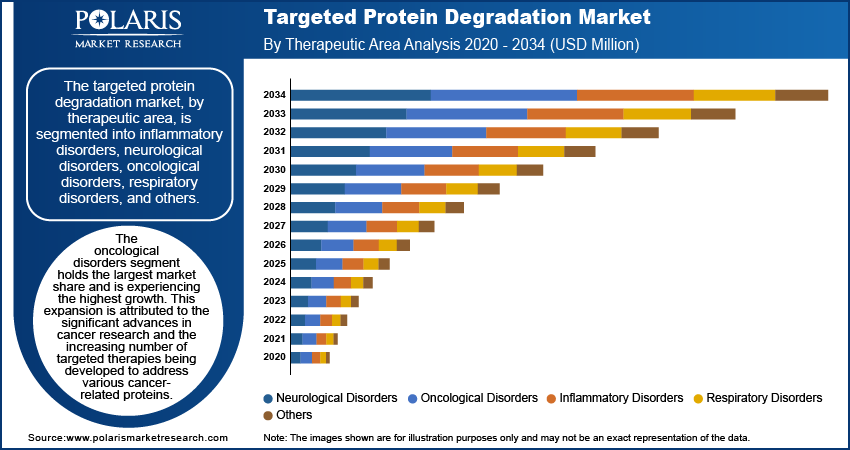
Oncology dominated the therapeutic area mix in 2025, estimated at approximately 68.0% of market activity. Programs are concentrated in breast cancer, hematologic malignancies, and genetically defined solid tumors. Vepdegestrant in ESR1-mutated breast cancer, cemsidomide in relapsed/refractory multiple myeloma, and C4 Therapeutics' CFT1946 in BRAF V600 and CFT8919 in EGFR L858R lung cancer illustrate the oncology concentration.
Which Therapeutic Area is Growing Fastest in the Market?
Neurology and immunology segment is projected to register the fastest CAGR of approximately 31.0% during the forecast period. Growth is driven by the expansion of targeted protein degradation beyond oncology and the advancement of non-oncology clinical programs. C4 Therapeutics is advancing discovery-stage programs targeting neuroinflammation and neurodegenerative diseases, supporting continued expansion into new therapeutic areas.
Targeted Protein Degradation Market by End User
Which End User Leads the Market?
Pharmaceutical and biotechnology companies segment accounted for the largest market share of approximately 61.0% in 2025. Growth is driven by increasing investment in internal TPD research, drug development, and strategic licensing partnerships. Collaborations such as Arvinas–Pfizer, Kymera Therapeutics–Gilead, and C4 Therapeutics–Pfizer continue to accelerate the development and commercialization of targeted protein degradation therapies.
Which End User Segment is Growing Fastest in the Market?
Contract research organizations (CROs) and specialist service providers segment is projected to register the fastest CAGR of approximately 30.5% during the forecast period. Growth is supported by rising demand for proteomics, structural biology, DMPK, toxicology, and biomarker analysis services as TPD developers advance multiple drug candidates across diverse therapeutic areas.
Segment Summary Table
| Segment | Category | 2025 Status | Forecast CAGR | Key Driver |
| PROTACs | Technology | Largest share, ~43.0% | ~26.0% | FDA approval of vepdegestrant; deep clinical pipeline |
| Molecular Glues | Technology | Fastest growing | ~29.0% | Gilead KT-200 license; C4 cemsidomide Phase 2 |
| Therapy Development | Application | Largest share, ~52.0% | ~26.5% | Clinical pipeline maturation and pharma partnerships |
| Target Identification & Validation | Application | Fastest growing | ~30.0% | E3 ligase discovery and proteome-wide screening |
| Oncology | Therapeutic Area | Largest share, ~68.0% | ~25.0% | Biomarker-defined programs; approved PROTAC precedent |
| Neurology & Immunology | Therapeutic Area | Fastest growing | ~31.0% | KT-621 Phase 2b; C4 neuroinflammation pipeline |
| Pharma & Biotechnology | End User | Largest share, ~61.0% | ~25.0% | Internal R&D and large-pharma partnership activity |
| CROs & Specialists | End User | Fastest growing | ~30.5% | Outsourced proteomics, DMPK, and biomarker services |
Source: Polaris Market Research Analysis
Source: Polaris Market Research Analysis
Regional Analysis
North America Targeted Protein Degradation Market Size and Share
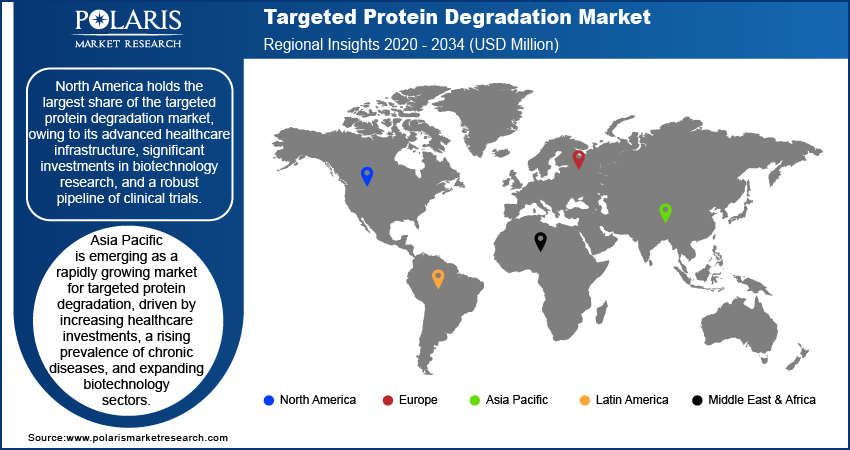
North America dominated the targeted protein degradation market in 2025, accounting for approximately 50.0% of global revenue. This region have the presence of a vibrant ecosystem comprising biotech companies, research institutes, venture capital investments, and pharmaceutical companies. For example, in June 2026, TRIMTECH Therapeutics received additional financing amounting to USD 14 million on top of its seed financing amounting to USD 47 million for development of its TRIMTAC and TRIMGLUE targeted protein degradation platforms(Source: trimtechtherapeutics.com).The additional funding is indicative of growing venture capital investments in targeted protein degradation to facilitate the development of the next generation of therapeutics for neurodegenerative diseases.
US Targeted Protein Degradation Market
It is anticipated that the U.S. to retain its position as a market leader during the forecast period. This growth is driven by a well-developed drug discovery infrastructure, active investments, and a solid regulatory environment at the FDA for novel drugs. The increase in clinical trials programs, along with regulatory involvement, is facilitating the commercialization of targeted protein degradation.
Europe Targeted Protein Degradation Market Analysis
Europe constitutes the second-largest target market for protein degradation therapies propelled by countries like the UK, Germany, France, and Switzerland dominating. The market is fueled by the presence of a well-developed pharmaceutical industry, harmonized clinical trial regulations, and increasing investments in advanced therapeutics. Moreover, the introduction of the ReArm Europe Plan/Readiness 2030 by the European Commission in March 2025 that intends to invest more than USD 920 billion via public and private sector initiatives will further aid this trend(Source: www.europarl.europa.eu).
Germany Targeted Protein Degradation Market
Germany ranks among Europe’s top protein degradation therapy markets due to its well-established expertise in medicinal chemistry, pharmaceutical production, and oncology research. Organizations including the German Cancer Research Centre (DKFZ) and the country’s extensive clinical trials network are continuing to facilitate the development and testing of novel protein degraders.
Asia Pacific Targeted Protein Degradation Market Growth Rate and Forecast
Asia Pacific is projected to register the fastest CAGR during the forecast period. Growth is driven by expanding clinical research, increasing biopharmaceutical investments, and improving drug development infrastructure across China, Japan, South Korea, India, and Australia. Regional collaborations and government support for advanced technologies continue to strengthen innovation across the life sciences sector.
China Targeted Protein Degradation Market
China has emerged as a key market for targeted protein degradation due to growing clinical trials and collaborations in the pharmaceutical sector. In June 2026, ZTE collaborated with National Clinical Research Center for Interventional Medicine in China to create an intelligent interventional medicine platform using artificial intelligence, 5G, and digital technologies in clinical research. The increasing capacity and regulatory framework of clinical trials in the country have been drawing investors from across the globe.
Japan Targeted Protein Degradation Market
Japanese targeted protein degradation market is driven by the presence of a matured pharmaceutical industry and efficiency of the PMDA's regulatory process. Japan's consistent inclination towards developing novel drugs and licensing deals is attracting investments into the emerging therapy platforms.
India and Australia Targeted Protein Degradation Markets
India is building its position with the help of contract research, medicinal chemistry, and clinical development services within the regulatory scheme of the CDSCO. The role of Australia as a site for early clinical research keeps on growing. At the beginning of 2026, the Image X Institute at the University of Sydney received an Ignite Grant from Australia’s Economic Accelerator (AEA) for the development of innovative radiation therapy technologies, reinforcing its commitment to advanced therapeutic innovation(Source: image-x.sydney.edu.au)
Source: Polaris Market Research Analysis
Regulatory Heatmap
| Country | Policy Environment | Key Regulations | Market Implication | Trend |
| US | Favorable | FD&C Act; ICH Q7A (API GMP); ICH M3(R2) (nonclinical safety); ICH M12 (drug interactions); FDA companion diagnostic framework | First PROTAC approval precedent; no separate TPD pathway standard small-molecule evidence burden applies | Expanding |
| Canada | Neutral | Food and Drugs Act; Health Canada clinical trial authorization; ICH alignment | Research and multi-country trial support; commercial company concentration lower than US | Developing |
| European Union | Favorable | EU Clinical Trials Regulation (EU) No 536/2014; EudraLex Volume 4 (EU GMP) | Unified multi-country trial framework; country-specific HTA and reimbursement remain | Expanding |
| UK | Neutral | Human Medicines Regulations 2012; MHRA pathways; post-Brexit separate jurisdiction | Strong research base; Innovate UK and NIHR support biotech R&D | Stable |
| Japan | Favorable | PMD Act; PMDA review pathway; ethnic-sensitivity data requirement | High-value pharma partner market; PMDA scientific advice for novel mechanisms available | Developing |
| China | Favorable | Drug Administration Law; NMPA/CDE review; local clinical data strategy required | Regional trial execution and partnering; CFT8919 Phase 1 active 2025 | Expanding |
| India | Neutral | New Drugs and Clinical Trials Rules, 2019 (CDSCO) | Chemistry CRO and clinical operations; long-term domestic market developing | Early stage |
| Australia | Favorable | Therapeutic Goods Act; TGA prescription medicine pathway | Phase 1 clinical hub utility; experienced trial sites | Developing |
Source: Polaris Market Research Analysis
Competitive Landscape and Key Players
The global targeted protein degradation market is platform-led but increasingly asset-specific. Competition is determined by target breadth, E3 ligase access, chemistry quality, demonstrated clinical benefit, cash runway, and partnership terms.
Competitive Positioning Table
| Company | Est. Market Position | Primary Focus | Geographic Focus | In Report |
| Arvinas / Pfizer | Top 3 | First FDA-approved PROTAC (VEPPANU); breast cancer and prostate cancer pipeline | US and global | Yes |
| C4 Therapeutics | Top 5 | Multi-asset clinical pipeline: cemsidomide (MM), CFT1946 (BRAF), CFT8919 (EGFR) | US, EU, Greater China | Yes |
| Kymera Therapeutics | Top 5 | KT-621 (STAT6 oral degrader, Phase 2b); KT-200 (CDK2 molecular glue, Gilead-licensed) | US and global | Yes |
| Nurix Therapeutics | Top 10 | Degrader and degrader-antibody conjugate platform | US and global partnerships | Yes |
| Bristol Myers Squibb | Top 5 | Large-pharma development scale; internal molecular glue and PROTAC programs | Global | Yes |
| Monte Rosa Therapeutics | Niche leader | Molecular glue discovery platform | US and global | Yes |
| Betta Pharmaceuticals | Regional leader | Greater China clinical execution; CFT8919 Phase 1 partner | China | Yes |
Source: Polaris Market Research Analysis
Technology and Innovation Landscape 2025–2026
The targeted protein degradation market is advancing across three axes: improving oral drug-like properties of bifunctional degraders, expanding systematic discovery for molecular glues, and extending degradation beyond the intracellular proteasome through lysosomal and antibody-delivered approaches.
| Technology | Adoption Stage | Key Development (2025–2026) | Market Impact |
| Oral PROTAC therapeutics | Early commercial deployment | FDA approved VEPPANU (vepdegestrant) May 1, 2026 first-ever approved PROTAC (Source: FDA.gov; Arvinas press release) | Creates commercial precedent for PROTAC regulatory, manufacturing, and payer engagement |
| Molecular glue degraders | Growing deployment | Gilead exercised USD 45M option for KT-200 (CDK2 molecular glue, Kymera) in April 2026; C4 cemsidomide Phase 2 MOMENTUM initiated February 2026 | Large-pharma licensing validates modality; Phase 2 efficacy data expected mid-2028 |
| Oral immunology degraders | Growing deployment | Kymera KT-621 (STAT6) Phase 2b BROADEN2 enrollment completed June 2026; topline data year-end 2026; FDA Fast Track in AD and asthma | Most advanced non-oncology degrader; establishes immunology TPD clinical precedent |
| Mutant-selective PROTAC oncology | Growing deployment | C4 CFT1946 (BRAF V600) and CFT8919 (EGFR L858R) in Phase 1; Greater China Phase 1 active for CFT8919 via Betta partnership | Targets resistance mutations not addressable by existing inhibitors |
| Degrader-antibody conjugates | Pilot / early research | Nurix platform spans intracellular degraders and DACs (accessed June 2026) | Improves tissue targeting; extends TPD beyond orally delivered small molecules |
| LYTACs / lysosomal degradation | Pilot / early research | Academic and early corporate programs active; addressable for extracellular protein targets | Expands TPD to membrane-associated and extracellular proteins |
Source: Polaris Market Research Analysis
Near-term development will be driven by autonomous AI PROTAC platform expansion and Phase 2 molecular glue data from cemsidomide and KT-621. The field's repeatability across multiple targets and therapeutic areas not single-product success will be the defining competitive differentiator through the forecast period.
Who Buys Targeted Protein Degradation Market Research and Why?
The report supports pharmaceutical companies, biotechnology firms, investors, CROs, and strategy teams in evaluating market size, competitive pipelines, technology trends, partnership opportunities, and regulatory developments across the targeted protein degradation landscape.
| Buyer / Investor Type | Primary Use Case | Key Insight Sought | Decision Horizon |
| Pharma Business-Development Teams | License or partner degrader platform assets | Clinical differentiation, rights geography, and deal precedent | 2–5 years |
| Biotech Portfolio Leaders | Target and modality prioritization | Target-ligase feasibility and tissue access | 3–7 years |
| Venture Capital and Crossover Funds | Platform and pipeline valuation | Probability-adjusted milestone and exit analysis | 3–7 years |
| CRO Strategy Executives | Build degrader-specific service capacity | Outsourced workflow demand by platform type | 1–3 years |
| Corporate Strategy and M&A Teams | Screen degrader acquisition targets | Platform repeatability and IP freedom to operate | 2–5 years |
| Regulatory and Market-Access Leaders | Plan filing and launch sequencing | Evidence framework and country priority order | 5–10 years |
Source: Polaris Market Research Analysis
What are the Barriers to Entering the Market?
- Access restriction due to patents: Key ligases protected by patents hinders the development of the platform.
- Complexity of the oral drug design: PROTAC compounds require sophisticated chemical modification to increase bioavailability.
- Target selectivity assessment: Comprehensive proteomics data is required to validate target specificity.
- Regulations: Protein degraders should conform to conventional global standards of drug development.
- Expensive development: Clinical development involves high expenses and takes time.
- Validation: Reproducible data on various targets is expected by pharmaceutical companies before obtaining licenses for the technology platform.
Premium Insights and Forward Outlook
2026 as a Category Transition Year Not a Finished De-Risking Event
VEPPANU (vepdegestrant) approval by the FDA in May 2026 represented a major event for the targeted protein degradation sector. This approval confirms the business viability of PROTAC drugs and underscores the importance for future programs to prove clinical efficacy, manufacturing scale-up capability, and biomarker approaches.
Molecular Glue Licensing as the Medium-Term Commercial Catalyst
The increasing number of licenses for molecular glue programs is generating revenues other than through approved drugs. The licensing deal by Gilead in April 2026 for KT-200 is one example of this growing trend in the pharma industry. Companies with scalable molecular glue discovery capabilities are expected to attract additional strategic partnerships as the market matures.
Cost Benchmarking Table
| Product / Service Type | Est. Price Range (USD) | Key Cost Driver | Complexity Tier |
| Target feasibility and degradation assessment package | USD 75,000–USD 250,000 | Assay breadth, ligase panel, and proteomics scope | Discovery / medium |
| Integrated degrader lead optimization program | USD 500,000–USD 2,500,000 | Chemistry cycles, DMPK, and selectivity studies | Preclinical / high |
| Proteome-wide selectivity study (mass spectrometry) | USD 40,000–USD 200,000 | Sample count and MS platform depth | Specialist / medium |
| Platform option or evaluation agreement | USD 1,000,000–USD 20,000,000 upfront | Exclusivity scope, target count, and territorial rights | Strategic / very high |
| Clinical-stage asset license (Phase 1/2 entry) | USD 10,000,000–USD 150,000,000 upfront | Clinical phase, data quality, and territory scope | Strategic / very high |
| Full collaboration (e.g., Gilead/Kymera KT-200 structure) | Up to USD 750,000,000 total potential value | Option fee, milestones, royalties, and global rights | Strategic / enterprise |
Source: Polaris Market Research Analysis.
Key Players
- Amphista Therapeutics Ltd.
- Arvinas Inc.
- Betta Pharmaceuticals Co. Ltd.
- Bristol Myers Squibb Company
- C4 Therapeutics Inc.
- Cullgen Inc.
- Dialectic Therapeutics Inc.
- Kymera Therapeutics Inc.
- Monte Rosa Therapeutics Inc.
- Nurix Therapeutics Inc.
- Pfizer Inc.
- Relay Therapeutics Inc.
Industry Developments
- April 2024: Novartis has secured ARV-766, a Phase II androgen receptor-directed protein degrader, from Arvinas under a licensing agreement worth more than USD 1 billion, with an upfront payment of USD 150 million(source: www.ddw-online.com).
- March 2024: C4 Therapeutics entered a strategic discovery collaboration with Merck KGaA, Darmstadt, Germany, to develop novel targeted protein degraders against key oncogenic proteins using its proprietary Degronimid platform. The partnership expands innovation in targeted protein degradation by accelerating the discovery of next-generation oncology therapeutics(source: ir.c4therapeutics.com).
Targeted Protein Degradation Market Segmentation
By Technology Outlook (Revenue, USD Million, 2021–2034)
- PROTACs (Heterobifunctional Degraders)
- Molecular Glues
- LYTACs (Lysosome-Targeting Chimeras)
- Degrader-Antibody Conjugates
- Other Induced-Proximity Modalities
By Application Outlook (Revenue, USD Million, 2021–2034)
- Therapy Development
- Target Identification and Validation
- Drug Discovery Research Tools
- Others
By Therapeutic Area Outlook (Revenue, USD Million, 2021–2034)
- Oncology
- Immunology and Inflammation
- Neurology and Neurodegenerative Diseases
- Infectious Diseases
- Others
By End User Outlook (Revenue, USD Million, 2021–2034)
- Pharmaceutical and Biotechnology Companies
- Contract Research Organizations (CROs) and Specialist Providers
- Academic and Research Institutions
- Others
By Regional Outlook (Revenue, USD Million, 2021–2034)
- North America
- US
- Canada
- Europe
- Germany
- France
- UK
- Italy
- Spain
- Netherlands
- Russia
- Rest of Europe
- Asia Pacific
- China
- Japan
- India
- Malaysia
- South Korea
- Indonesia
- Australia
- Vietnam
- Rest of Asia Pacific
- Middle East & Africa
- Saudi Arabia
- UAE
- Israel
- South Africa
- Rest of Middle East & Africa
- Latin America
- Mexico
- Brazil
- Argentina
- Rest of Latin America
Report Scope
| Report Attributes | Details |
| Market Size in 2025 | USD 687.90 Million |
| Market Size in 2026 | USD 822.40 Million |
| Revenue Forecast by 2034 | USD 3,531.80 Million |
| CAGR | 19.9% from 2026 to 2034 |
| Base Year | 2025 |
| Historical Data | 2021–2024 |
| Forecast Period | 2026–2034 |
| Quantitative Units | Revenue in USD Million and CAGR from 2026 to 2034 |
| Report Coverage | Revenue Forecast, Competitive Landscape, Growth Factors, Clinical Pipeline, Technology, and Industry Trends |
| Segments Covered | By Technology | By Application | By Therapeutic Area | By End User |
| Regional Scope | North America, Europe, Asia Pacific, Latin America, Middle East & Africa; country detail for US, Canada, Germany, UK, France, China, Japan, India, South Korea, Australia |
| Competitive Landscape | Company Profiles including platform overview, clinical pipeline, partnerships, and recent developments |
| Report Format | PDF + Excel |
| Customization | Report customization available as per requirements with respect to countries, regions, modalities, and therapeutic areas. |
Targeted Protein Degradation Market FAQ's
• The market was valued at USD 687.90 million in 2025 and is projected to reach USD 3,531.80 million by 2034.
• The market is expected to grow at a CAGR of approximately 19.9% from 2026 to 2034.
• The first-ever FDA approval of the drug called VEPPANU (vepdegestrant) in May 2026 is the most significant commercial achievement of the market.
• The PROTACs category held the largest share of 43.0% in 2025 driven by the most robust pipeline and the first drug approval.
• Molecular glues are estimated to witness the highest CAGR of about 29.0% due to growing licensing deals and increasing clinical pipeline.
• North America held the largest share of around 50.0% of the global revenue due to robust R&D activities and the first FDA-approved PROTAC.
• Major firms are Arvinas Inc., Pfizer Inc., C4 Therapeutics Inc., Kymera Therapeutics Inc., Nurix Therapeutics Inc., Bristol Myers Squibb Company, and Monte Rosa Therapeutics Inc.
• Key hurdles in the targeted protein degradation market are E3 ligase intellectual property, complex drug development, regulation, development cost, and validation of platform.
Download Sample Report of Targeted Protein Degradation Market
Please fill out the form to request a customized copy of the research report.


