
Antidote Market Size, Share, Growth Analysis Report, 2026-2034
REPORT DETAILS
Antidote Market Summary
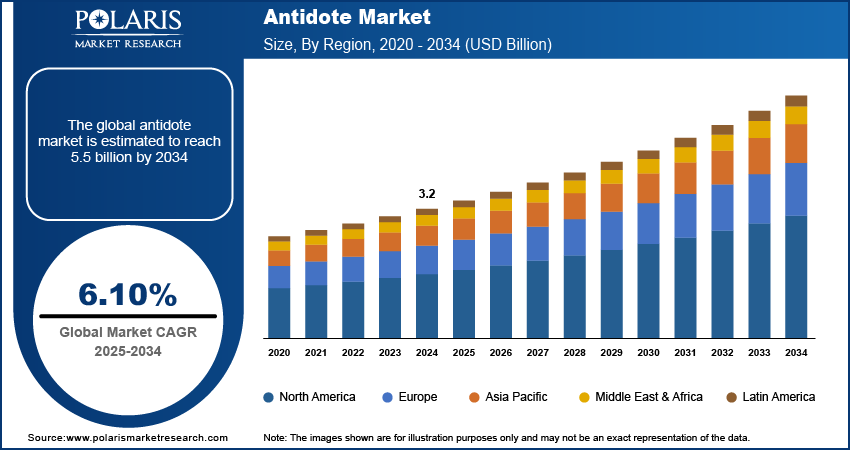
The global Antidote Market was valued at USD 2.58 billion in 2025 and is anticipated to grow at a CAGR of 7.64% from 2026 to 2034. Growing cases of drug overdoses, poisonings, and chemical exposures, along with advancements in emergency medicine and antidotal therapies, are fueling market expansion.
Market Statistics
Key Takeaways
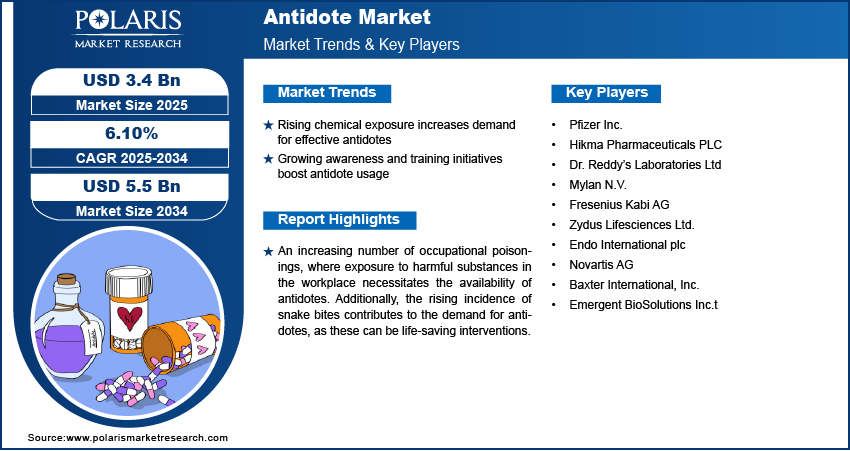
- North America led the global market with a 40.0% share in 2025. The rising burden of poisoning contributes to the regional market dominance.
- Asia Pacific is projected to account for a 8.75% CAGR. The high incidence of insecticide poisoning is driving the regional market growth.
- The chemical antitode segment accounted for a 45.0% market share in 2025. Chemical antidotes play an essential role in providing targeted and swift treatment for specific toxins.
- The oral segment is poised for significant growth at a 7.10% CAGR. The rising preference for oral antidote administration can be attributed to its widespread acceptance among patients.
- The hospital pharmacies segment led with a 58.0% share in 2025. This is owing to the enhanced availability of antidote treatments and medicines dispensed by these pharmacies.
Note: Figures and projections outlined in this report are the result of Polaris Market Research’s proprietary analytical processes, grounded in the latest available datasets and market observations.
Industry Dynamics
- The increasing use of chemicals across sectors in industries and households has heightened the need for accidental poisonings. This, in turn, is contributing to the antitode market demand.
- Increasing awareness and research initiatives led by major companies and government organizations is another factor fueling market expansion.
- Rising demand for auto-injectors and point-of-care devices is expected to present several market opportunities.
- High costs of novel biological reversal agents may present market challenges.
AI Impact on Antidote Market
- AI speeds up the process of discovering antidotes due to improved analysis of toxicological and clinical data.
- AI enables faster identification of appropriate treatment solutions for patients with poisoning and drug overdose.
- AI makes drug discovery faster because it enables the detection of possible antidote substances.
- The use of AI in medicine makes it possible to monitor and treat patients more effectively.
An antidote is a substance used to counteract the harmful effects of a poison, toxin, or overdose in the body. It works by neutralizing the poison, preventing its absorption, or reversing its toxic effects on organs and biological processes. Antidotes may be chemical, physical, or pharmacological in nature and are administered through routes such as oral, topical, or injectable. They are essential in emergency medicine for treating poisoning and reducing the risk of serious complications or death.
An increasing number of occupational poisonings, where exposure to harmful substances in the workplace necessitates the availability of antidotes. Additionally, the rising incidence of snake bites contributes to the demand for antidotes, as these can be life-saving interventions. Another critical driver is the escalating occurrences of drug overdoses.
The antidote market study is a compilation of first-hand data, quantitative and qualitative assessments by industry experts, and inputs from the most relevant stakeholders in the value chain. It uses a number of analytical tools to study and assess the data of key industry players and their antidote market share. Analytical tools used to prepare the report include SWOT analysis, Porter’s Five Forces analysis, feasibility study, and investment return analysis, amongst others.
Source: Polaris Market Research Analysis
To Understand More About this Research: Download Sample Report
Moreover, the prevalence of medical conditions that require antidotes has contributed to market growth. These conditions include pneumonia prophylaxis, opioid overdose, smoking cessation, toxoplasmosis, reversal of opioid sedation, trichotillomania, and sedation reversal. The demand for antidotes in these medical scenarios emphasizes the importance of having effective countermeasures available for diverse health-related emergencies.
Occupational poisoning, particularly due to pesticide exposure, is a significant concern, affecting a substantial portion of the global population. Similarly, the rising prevalence of drug overdoses is another critical factor propelling the demand for antidotes.
Source: Polaris Market Research Analysis
Antidote vs Antivenom
| Aspect | Antidote | Antivenom |
| Purpose | Used for treating poisoning, drug overdose, or exposure to toxic chemicals. | Used specifically for treating venomous bites from snakes, spiders or other venomous animals. |
| Nature of Treatment | A chemical or pharmaceutical treatment that acts by reversing or blocking toxic effect. | A biological treatment that uses antibodies to neutralize venom toxins. |
| Application | Drug overdose, chemical poisoning, heavy metal poisoning, and toxic ingestion cases. | Snake bite treatment, scorpion sting, spider bite and envenomation cases. |
| Mode of Action | Treatment works by neutralizing toxins, blocking absorption or reversing toxic reaction. | Treatment works by binding to the toxins in the body to prevent tissue damage. |
| Treatment Setting | A treatment that is normally used in hospitals, ambulance, and emergency rooms. | Treatment normally used in emergency treatment centers and areas with exposure to venomous animals. |
| Examples | Naloxone for opioid overdose, atropine for nerve agents, activated charcoal for poisoning. | Snake antivenom for cobras and vipers, scorpion antivenom treatments. |
| Development Process | Developed through research on pharmaceutical and chemical processes. | Developed using immune antibodies obtained from animals exposed to venoms under controlled conditions. |
Industry Dynamics
Growth Drivers
Rising Incidence of Poisoning
There's a heightened risk of accidental poisonings with the increasing use of chemicals in industries, households, and agriculture. This drives the demand for antidotes to treat such cases promptly.
The anticipated growth in the market is further supported by increasing awareness and research initiatives led by major companies and government organizations. Notably, these efforts are directed toward fostering a better understanding of antidotes and their applications, ultimately contributing to market expansion.
Report Segmentation
The market is primarily segmented based on type, route of administration, distribution channel, and region.
| By Type | By Route of Administration | By Distribution Channel | By Region |
|
|
|
|
Source: Polaris Market Research Analysis
To Understand the Scope of this Report: Request Customization
By Type Analysis
Chemical Antidote Segment Accounted for the Largest Market share in 2025
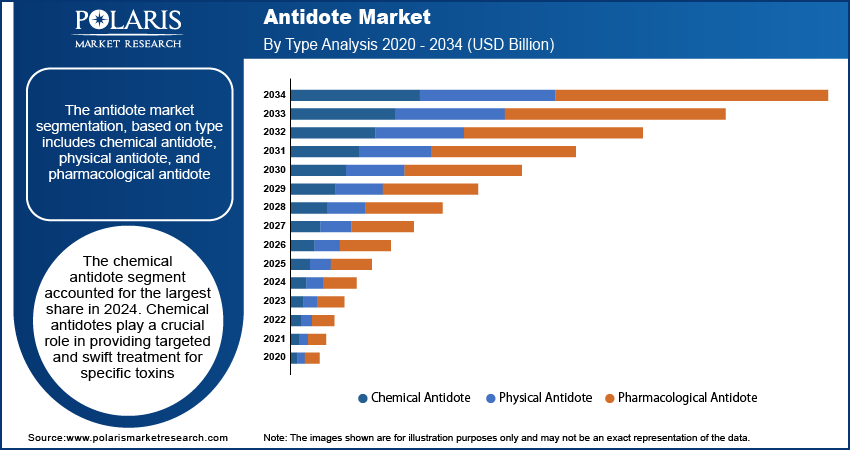
The chemical antidote segment accounted for the largest share of 45.0% in 2025. Chemical antidotes play a crucial role in providing targeted and swift treatment for specific toxins, ensuring efficacy while minimizing complications. Trained professionals administer these antidotes, enabling immediate action to reduce long-term health effects and deliver predictable emergency outcomes. The precise dosing and customization features of chemical antidotes enhance their therapeutic value, making them indispensable in specialty care settings for addressing poisoning and toxic exposures.
The pharmacological segment will grow rapidly with 7.10% CAGR over the anticipated period. Many existing antidotes only partially counteract the effects of toxins, targeting the body's tissues and inducing symptoms that are opposite to those caused by poisoning. In comparison to physical and chemical antidotes, pharmacological antidotes pose no harm. Examples of pharmacological antidotes include cyanide and amyl nitrate, barbiturates, picrotoxin, or amphetamine. For instance, the pharmacological antidote ACHE inhibitor-morphine facilitates the rapid and complete elimination of toxins by restoring normal function.
By Route of Administration Analysis
Injectables Segment held a Significant Market share in 2025
In 2025, the injectables sector dominated the market landscape with 56.0% share. Notably, antidote injections have earned a reputation for their ability to swiftly and precisely counteract the effects of toxins or medications. These injections are invaluable in emergency scenarios, effectively mitigating the harmful impacts of various toxic substances. They are specifically tailored to neutralize toxins, ensuring that treatments are both accurate and efficient.
On the other hand, the oral sector is poised for significant growth with 7.10% CAGR in the coming years. The rising preference for oral antidote administration can be attributed to its widespread acceptance among patients. Oral antidotes present numerous benefits, such as minimizing discomfort, since they negate the necessity for injections. This makes them a more favorable option for many individuals. Additionally, in certain situations, patients can self-administer oral antidotes, a vital feature especially when immediate intervention is required before professional medical assistance can be obtained.
By Distribution Channel Analysis
Hospital Pharmacies Segment held a Significant Market share in 2025
In 2025, the hospital pharmacy sector emerged as a dominant force in the market, capturing 58.0% share in 2025. This ascendancy can be credited to a range of factors, including the enhanced availability of antidote treatments and medicines dispensed by these pharmacies. Patients have found it increasingly convenient to procure their prescribed drugs and associated items from hospital pharmacies, fueling the demand for such services. Furthermore, the increased involvement of hospital pharmacies in patient education and advisory roles in antidote treatment plans is poised to be a pivotal driver for the sector's growth.
On the other hand, the online pharmacy sector is projected to witness 9.33% CAGR in the upcoming forecast period. The allure of convenience, adaptability, and simplicity in purchasing medications online has been instrumental in propelling this segment forward. Additionally, the attractive discounts extended by online pharmaceutical outlets act as a potent motivator for consumers to opt for digital platforms when sourcing their medicinal needs.
Source: Polaris Market Research Analysis
Emergency Supply Chain and Antidote Availability
Efficient emergency logistics and antidote availability are vital in providing timely and effective treatment of poisoning, drug overdose, chemical poisoning, and venom poisoning situations, where quick actions may considerably enhance the chances of survival and recovery. It is imperative for hospitals, emergency wards, poison control facilities, ambulances, and military healthcare organizations to have sufficient antidote reserves for timely use in case of any emergencies. These drugs usually need special conditions of storage, temperature controlled logistics, and regular inventory management to remain efficient and avoid shortages.
The number of patients suffering from drug toxicity and chemical poisoning cases, as well as snakebite incidents, continues increasing, and governments and healthcare institutions are increasingly enhancing emergency networks, creating regional stockpiling programs, and developing logistics to meet the increased demand for antidotes. Rural areas and developing countries still need more investment in transportation and healthcare development to avoid problems that may result from the inability to deliver the necessary drugs on time because of the associated risks. Advancements in information technology and health care management practices also contribute to the improvement of emergency logistics.
Regional Insights
North America Dominated the Global Market in 2025
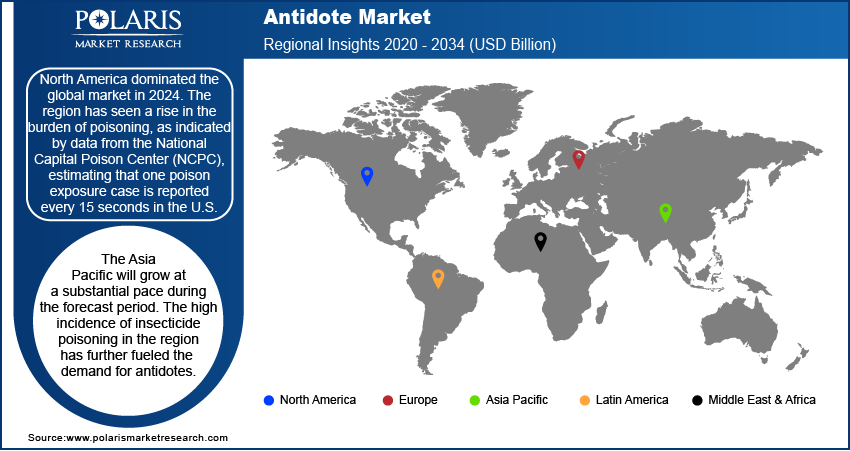
North America dominated the global market with 40.0% share in 2025. The region has seen a rise in the burden of poisoning. The substantial presence of major operating players in the antidote market within the region is expected to contribute to the increased availability of antidotes in the region. Moreover, the growth is further driven by the increasing healthcare spending and improved medical facilities in the region.
The Asia Pacific will grow at a 8.75% CAGR during the forecast period. The high incidence of insecticide poisoning in the region has further fueled the demand for antidotes. The cost of conducting clinical trials in developing economies is lower compared to developed economies. This factor encourages pharmaceutical companies to invest in research activities in these regions. Additionally, the growing disposable income in developing economies like India and China has increased the affordability of antidote medications.
Source: Polaris Market Research Analysis
Key Market Players & Competitive Insights
Companies are implementing strategic initiatives to enhance their market position, including collaborations on product development, expanding their geographic presence, and entering strategic agreements to diversify their product portfolios. These measures are aimed at maximizing market share and ensuring a more comprehensive and competitive offering within the industry.
Some of the major players operating in the global market include:
- Baxter International Inc.
- Cumberland Pharmaceuticals Inc.
- Dr. Reddy’s Laboratories Ltd.
- Emergent BioSolutions Inc.
- Endo International plc
- Fresenius Kabi AG
- Hikma Pharmaceuticals PLC
- Pfizer Inc.
- SERB Pharmaceuticals
- Zydus Lifesciences Ltd.
Recent Developments
- January 2025: Skadden revealed an analysis of the FDA’s ACNU framework. The analysis covers how the FDA's new ACNU framework impacts the commercial potential, generic competition, and strategic opportunities for prescription-to-OTC drug switches. (source: skadden.com)
Antidote Market Report Scope
| Report Attributes | Details |
| Market size value in 2025 | USD 2.58 Billion |
| Market size value in 2026 | USD 2.78 Billion |
| Revenue Forecast in 2034 | USD 5.02 Billion |
| CAGR | 7.64% from 2026 – 2034 |
| Base year | 2025 |
| Historical data | 2021 – 2024 |
| Forecast period | 2026 – 2034 |
| Quantitative units | Revenue in USD Billion and CAGR from 2026 to 2034 |
| Segments Covered | By Services, By End Use, By Region |
| Regional scope | North America, Europe, Asia Pacific, Latin America, Middle East & Africa |
| Customization | Report customization as per your requirements with respect to countries, regions, and segmentation. |
Source: Polaris Market Research Analysis
Navigate through the intricacies of the 2025 antidote market with precision, thanks to the comprehensive statistics on market share, size, and revenue growth rate assembled by Polaris Market Research Industry Reports. This thorough analysis not only provides a glimpse into the historical context but also extends its reach with a market forecast outlook until 2034. Immerse yourself in the richness of this industry analysis by securing a Download Sample Report.
Antidote Market FAQ's
The global antidote market size is expected to reach USD 5.02 Billion by 2034
Key players in the market are Baxter International Inc.; Cumberland Pharmaceuticals Inc.; Dr. Reddy’s Laboratories Ltd.; Emergent BioSolutions Inc.; Endo International plc; Fresenius Kabi AG; Hikma Pharmaceuticals PLC; Pfizer Inc.; SERB Pharmaceuticals; Zydus Lifesciences Ltd.
North America led the global market with a 40.0% share in 2025.
The global antidote market is expected to grow at a CAGR of 7.64% during the forecast period.
The Antidote Market report covering key segments are type, route of administration, distribution channel, and region.
Download Sample Report of Antidote Market Size, Share, Growth Analysis Report, 2026-2034
Please fill out the form to request a customized copy of the research report.


