
Automotive Wiring Harness Market Size, Share, forecast 2026-2034
REPORT DETAILS
Automotive Wiring Harness Market Summary
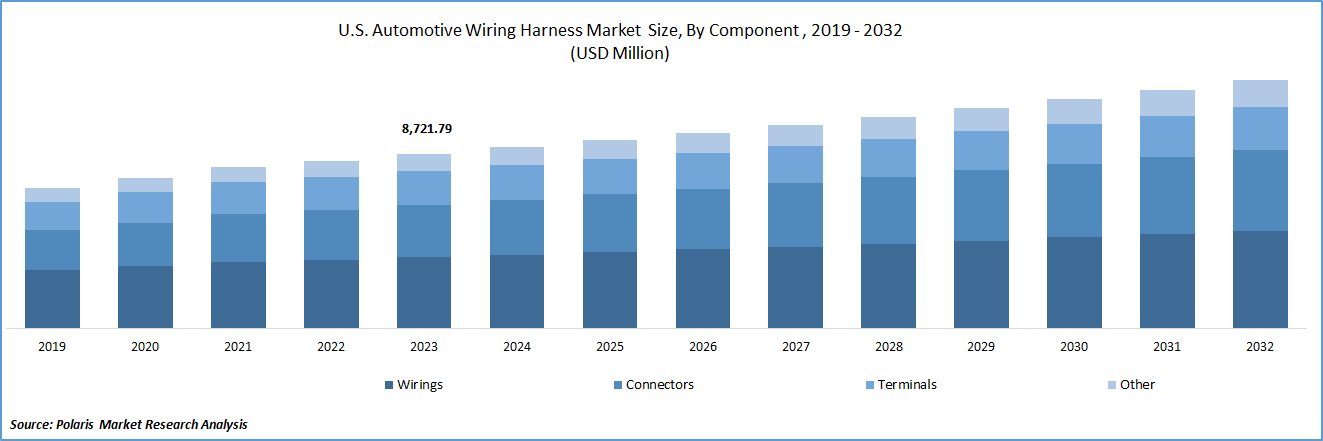
The global automotive wiring harness market was valued at USD 50.5 billion in 2025. The market is projected to grow at a CAGR of 4.50% from 2026 to 2034. Increasing vehicle electrification and advanced electronics integration are driving demand.
Market Statistics
Key Takeaways
- Asia Pacific dominated the global market with a 40.89% market share in 2025. The regional market dominance is attributed to the presence of large producers and increasing consumer demand.
- North America is projected to register the highest CAGR growth of 6.10%. The regional market is driven by its robust automotive sector and advancements in technology.
- The wires segment led the market with a 55.03% share in 2025. This is owing to the expansion in the automotive sector and stringent safety regulations.
- The commercial vehicles segment is likely to expand at the highest rate of 6.12% CAGR. The segment's dominance is driven by rising demand from the e-commerce and logistics sectors.
- The electrical wiring segment accounted for 45.10% market share in 2025. Electric wiring remains essential for power distribution in traditional and electric vehicles.
Note: Figures and projections outlined in this report are the result of Polaris Market Research’s proprietary analytical processes, grounded in the latest available datasets and market observations.
Industry Dynamics
- International government encouragement of sustainability and emission reduction is promoting the adoption of EVs, which in turn creates demand for advanced automotive wiring harnesses.
- The increasing number of advanced features in cars is increasing demand for automotive wiring harnesses.
- The transition towards more environmentally friendly cars is fueling demand for technologically advanced wiring harnesses, presenting robust investment growth opportunities.
- Varying copper and aluminum prices significantly influence the supply and pricing of car wiring harnesses.
AI Impact on Automotive Wiring Harness Market
- AI facilitates more effective and lighter weight wiring harness designs by simulation and data-driven optimization.
- It enhances predictive maintenance through data analysis to identify possible failures prior to their occurrence.
- AI improves production by automating the assembly of harnesses, improving accuracy and lowering labor expenses.
- It facilitates the management of increasing wiring system complexity in EVs and connected vehicles.
Source: Polaris Market Research Analysis
To Understand More About this Research:Download Sample Report
Automotive Wiring Harness Market Defined
Automotive wiring harnesses refer to organized bundles of wires, connectors, terminals, and sheathing designed for the conveyance of electrical energy and information from one component of a car to another. Such bundles link critical systems of an automobile, including its engines, headlights, infotainment systems, heating and ventilation systems, batteries, ADAS units, sensors, and electric car components.
Automotive Wiring Harness vs Cable Assembly
| Factor | Automotive Wiring Harness | Cable Assembly |
| Complexity | Highly complex design integration | Simple design for bundling |
| Usage | Application throughout the vehicle | Specialized electrical connections |
| Data Flow | For both power and data transfer | Mainly for signal transmission |
| Robustness | Designed for use in automobiles | Low environmental needs |
| Customization | Designed to fit specific vehicles | General purpose applications |
Source: Polaris Market Research Analysis
Industry Trend
The automotive wiring harness market is experiencing significant growth, driven by several key factors. One major driver is the increasing adoption of electric vehicles (EVs). As governments globally prioritize sustainability and emission reduction, they offer consistent support and incentives for the EV market. This surge in EV adoption necessitates complex wiring systems to power various components, thus fueling demand within the automotive wiring harness market. Additionally, EVs require intricate wiring setups to accommodate their unique powertrain and battery systems, further contributing to market growth.
Simultaneously, within the broader automotive manufacturing industry, there's a heightened demand for wiring harnesses. This demand stems from the industry's continuous innovation and integration of advanced technologies into vehicles. As automotive manufacturers strive to meet consumer demands for smart, connected, and autonomous vehicles, they require sophisticated wiring harnesses to support these features. Consequently, the automotive wiring harness market experiences a parallel surge in demand, driven by the automotive industry's relentless pursuit of innovation.
Moreover, there's a growing consensus regarding safety and security while driving, prompting an increased demand for automotive wiring harnesses. Modern vehicles are equipped with an array of safety features, from advanced driver assistance systems (ADAS) to electronic stability control (ESC). These systems rely on intricate wiring harnesses to function effectively, emphasizing the critical role of wiring harnesses in ensuring vehicle safety.
Consequently, as safety concerns continue to drive consumer preferences and regulatory mandates, the demand for automotive wiring harnesses escalates. The stringent safety norms introduced by authorities worldwide further bolster the automotive wiring harness market.
- For instance, in July 2022, EU's new Vehicle General Safety Regulation enforced advanced driver assistant systems, paving the way for automated vehicles, aiming to save lives. The regulation establishes the legal framework for the EU's approval of fully autonomous and automated vehicles.
It also introduces advanced driver assistance technologies for both passenger and commercial vehicles. Compliance with these standards necessitates advanced wiring harnesses designed to withstand stringent testing criteria, thereby stimulating market growth.
Additionally, the demand for automotive wiring harnesses is propelled by various factors such as the connected car ecosystem, electrification, and the preference for 48V high voltage capacity. As vehicles become increasingly connected and electrified, the complexity of their wiring systems rises, creating opportunities for the wiring harness market.
What are the Market Drivers Driving the Demand for the Automotive Wiring Harness Market?
Rise in Advanced Features in Vehicles
The rise in advanced features in vehicles is significantly driving the demand for the automotive wiring harness market. Modern vehicles are increasingly equipped with complex electronic systems, including advanced driver-assistance systems (ADAS), infotainment systems, and enhanced safety features. These advancements require robust and intricate wiring solutions to ensure seamless communication and operation of various electronic components. As manufacturers strive to offer more technologically advanced vehicles to meet consumer expectations, the need for sophisticated wiring harnesses becomes essential to support these innovations.
Simultaneously, the ongoing transition to electric and hybrid vehicles is significantly influencing the growth of the automotive wiring harness market. Electric vehicles (EVs) and hybrid vehicles come with intricate high-voltage systems that demand specialized wiring harnesses to manage the distribution of electrical power safely and efficiently. The complexity and safety requirements of these systems necessitate the development of more advanced and reliable wiring solutions. As the automotive industry moves towards greener and more sustainable transportation options, the demand for high-quality wiring harnesses that can handle the complexities of EV and hybrid systems is on the rise, providing a promising future for investors in the automotive wiring harness market.
Sustainable and Recyclable Wiring Materials
The development of sustainable, recyclable wires is becoming a priority for auto-wiring harness producers. The automotive wire harness industry is beginning to move towards environmentally friendly business processes. Recyclable insulations, eco-friendly polymers, and lightweight metal substitutes, such as those made from aluminum, are now being used by producers to decrease car weights and their environmental impact. Automotive wiring harness manufacturers have also advanced their operations by minimizing their environmental impact, energy consumption, waste generation, and emissions. This is due to stringent government regulations and the adoption of sustainable automotive systems. There is a growing demand for environmentally friendly automobiles, which will continue increasing alongside circular economy principles.
Which Factor is Restraining the Demand for Automotive Wiring Harness?
Fluctuating Prices of Metals such as Copper and Aluminum Hinder the Market Growth.
Fluctuating prices of metals such as copper and aluminum significantly affect the supply chain and pricing of automotive wiring harnesses. Copper and aluminum are essential materials in the production of wiring harnesses due to their excellent electrical conductivity and durability. When the prices of these metals rise, the cost of manufacturing wiring harnesses increases, leading to higher prices for end products. This price volatility creates challenges for manufacturers in maintaining stable production costs and profit margins, impacting their ability to price products competitively.
The impact of these fluctuating metal prices extends to the demand for automotive wiring harnesses. As the cost of raw materials increases, manufacturers may be forced to pass these costs onto consumers, leading to higher prices for vehicles equipped with advanced wiring harnesses. This, in turn, can dampen consumer demand, especially in price-sensitive markets. Additionally, higher costs may prompt automakers to seek alternative materials or technologies that can offer similar performance at a lower cost, potentially disrupting the traditional wiring harness market.
Source: Polaris Market Research Analysis
Report Segmentation
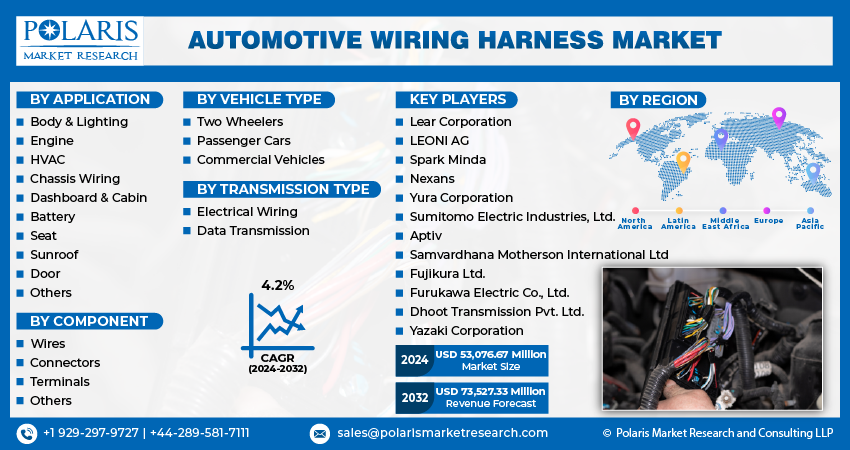
The market is primarily segmented based on application, component, vehicle type, transmission type, and region.
| By Application | By Component | By Vehicle Type | By Transmission Type | By Region |
|
|
|
|
|
Source: Polaris Market Research Analysis
Category Wise Insights
By Component Insights
Based on component analysis, the market is segmented on the wires, connectors, terminals, others. Wires segment held the largest market share of 55.03% in 2025. The demand for wires in automotive wiring harnesses is on the rise due to the expanding automotive industry, the increasing complexity of vehicle electronics, stringent safety, and quality standards, ongoing innovation in wire technology, and the diverse applications of wiring harnesses in various types of vehicles. These factors collectively drive the need for high-quality wires that can reliably transmit power and signals within vehicles, reflecting the dynamic and evolving nature of the automotive wiring harness market.
Automotive wiring harnesses are intricate networks of wires that form the backbone of a vehicle's electrical system. These wires serve as conduits for transmitting power and signals between the various components, ensuring smooth operation of essential functions like engine performance, safety systems, and entertainment features.
By Vehicle Type Insights
Based on vehicle type analysis, the market has been segmented on the basis of two wheelers, passenger cars, commercial vehicles. The commercial vehicles segment expected to be the fastest growing CAGR of 6.12% during the forecast period. The demand for commercial vehicles in the automotive wiring harness market is experiencing significant growth, driven by the rising needs of the e-commerce and logistics industries. As e-commerce continues to expand, there is a corresponding increase in the volume of goods that need to be transported, necessitating more commercial vehicles. This surge in demand for transportation solutions is fueling the need for advanced and reliable automotive wiring harnesses, which are critical for ensuring the efficient operation of commercial vehicles.
Source: Polaris Market Research Analysis
Regional Insights
Asia Pacific
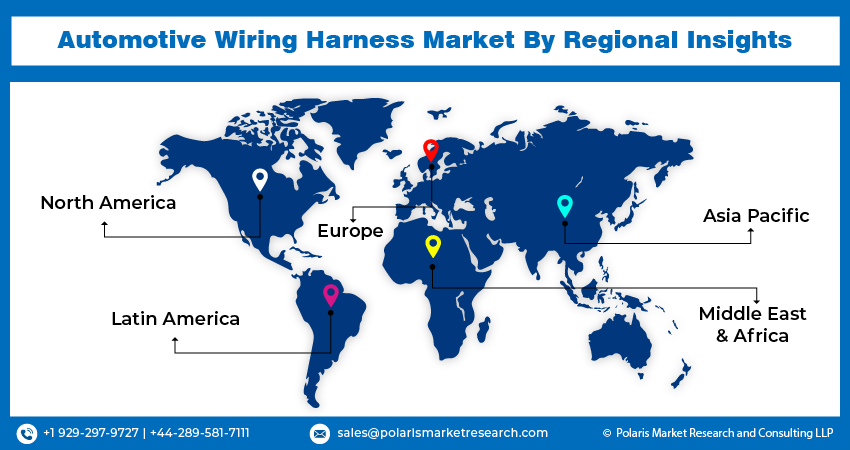
Asia Pacific region accounted for the largest market share of 40.89% in 2025. The Asia Pacific region stands as a dynamic and rapidly expanding hub within the automotive wiring harness market. With major automotive manufacturers and a growing consumer base, Asia Pacific drives global demand for wiring harnesses.
As Asia Pacific continues to shape the global automotive landscape, its wiring harness market is poised for significant expansion. This growth caters to the diverse needs of both traditional and electric vehicles, driving advancements in automotive technology. Key players like Minda Corporation Limited, Yura Corporation, Samvardhana Motherson International Ltd, Sumitomo Electric Industries Ltd, Dhoot Transmission Pvt. Ltd., and Yazaki Corporation lead the way as major manufacturers and suppliers of automotive wiring harnesses in the APAC region, fueling the market growth.
For instance, in December 2021, Sumitomo Electric Industries partnered with Valens Semiconductor to collaborate on A-PHY technology and deployments, ensuring alignment with A-PHY specification requirements. Similarly, in February 2023, Hero Electric joined forces with Dhoot Transmission for wiring harness solutions, signaling a joint effort to enhance innovation in the electric two-wheeler industry. Such collaborations underscore the thriving wiring harness market in the APAC region.
Which is the Largest Contributor to the Asia Pacific Automotive Wiring Harness Market Expansion?
Chine held the largest share in Asia Pacific market in 2025. High production of NEV (EV + hybrid) production in China and rising electronic content per vehicle boost the automotive wiring harness industry in the country. The increasing shift toward high-voltage, lightweight, and smart harness architectures contributes to the demand for automotive wiring harness. Sumitomo, Yazaki, and major global players have extensive manufacturing networks in China. Domestic companies such as Luxshare Precision and Tongsheng expand rapidly with stronger cost and vertical-integration advantages.
| Company | HQ and Profile | Role and Specialties | Source (click) |
| Luxshare Precision (Luxshare-ICT) | China — electronics & connector giant. | Rapidly expanding into wiring and automotive harnesses, EV cables Acquired majority stake in Leoni in July 2025. | |
| Hangsheng/Hangsheng Electric (Hangsheng Technology) | China — vehicle electronics supplier. | Domestic player for harness/electronics modules, infotainment, and connectivity; active in JV/partnerships. | (hsae.eu) |
| Kunshan Huguang/Fudi | China — captive OEM suppliers | Automotive high and low voltage wiring harness assemblies. They have customers such as BYD, Great Wall, and Geely | |
| Wiringo/Shenzhen EDOM (Domestic Specialists) | China — local mid-tier harness & cable makers. | Provide custom wire harnesses, Automotive wire harnesses, power cords, and network cables | |
| Zhejiang Tongsheng (TongSheng) | China (Zhejiang) — established domestic harness maker. | Makes cable harnesses, automotive connectors. and terminals; exports and supplies domestic OEMs. | |
| Sumitomo Wiring Systems (SWS) | Japan — major global harness supplier. | Multiple China plants. It produces low & high voltage harnesses for automobiles for local OEMs and joint ventures. | |
| Yazaki Corporation | Japan — global leader in wiring harnesses. | Large footprint in China; supplies OEMs with multi-system harnesses and connectors. |
Source: Polaris Market Research Analysis
Source: Polaris Market Research Analysis
North America
North America is expected for the growth of fastest CAGR of 6.10% during the forecast period. North America stands out as a pivotal region in the automotive wiring harness market, fueled by its robust automotive industry and technological progress. Wiring harnesses, also known as cable harnesses, serve as essential conduits for transmitting electrical power and signals across various industries, including automotive, food & beverage, agriculture, and electronics.
In North America, market players face stringent regulations and standards, with the IPC/WHMA-A-620 Revision D standard being a prominent example. Developed by IPC and the Wiring Harness Manufacturer's Association (WHMA), this standard plays a pivotal role in steering the market for automotive wiring harnesses by setting forth guidelines and requirements for the acceptance and production of wire harness assemblies, ensuring quality and reliability in automotive electrical systems.
Moreover, the increasing complexity of modern vehicles, where components like engines, air conditioning systems, instrumentation, audio systems, lights, and batteries are interconnected through front, rear, and roof wire harnesses, further boosts the demand for wire harnesses in the automotive industry. For instance, automotive components producer Yazaki North America, Inc. recently announced a significant investment of US$10 Billion in a pilot project factory in western Guatemala to expand its production capacity and meet the rising demand for wire harnesses.
Competitive Landscape
The market is fiercely competitive, characterized by the presence of numerous prominent players. These industry leaders have implemented diverse strategies, including acquisitions, product launches, collaborations, and partnerships, all while actively developing innovative products with heightened speed and enhanced features.
Some of the major players operating in the global market include:
- Lear Corporation
- LEONI AG
- Spark Minda
- Nexans
- Yura Corporation
- Samvardhana Motherson International Ltd
- Sumitomo Electric Industries, Ltd.
- Aptiv
- Fujikura Ltd.
- Furukawa Electric Co., Ltd.
- Dhoot Transmission Pvt. Ltd.
- Yazaki Corporation
Recent Developments
-
January 2026: DELFINGEN and PT Askara Internal made a strategic partnership and joint venture agreement. As per the statement from DELFINGEN, the partnership will concentrate on providing solutions for wiring protection in the Indonesian automotive industry. (source: delfingen.com)
-
December 2025: Samvardhana Motherson International Ltd (SAMIL) announced an agreement for the acquisition of 100% of the global wiring harness business of Germany-based Nexans Autoelectric GmbH and Elektrokontact GmbH. (source: mothersongroup.com)
Report Coverage
The automotive wiring harness market report emphasizes on key regions across the globe to provide better understanding of the product to the users. Also, the report provides market insights into recent developments, trends and analyzes the technologies that are gaining traction around the globe. Furthermore, the report covers in-depth qualitative analysis pertaining to various paradigm shifts associated with the transformation of these solutions.
The report provides detailed analysis of the market while focusing on various key aspects such as competitive analysis, application, component, vehicle type, transmission type, and their futuristic growth opportunities.
Report Scope
| Report Attributes | Details |
| Market size value in 2025 | USD 50.5 Billion |
| Market size value in 2026 | USD 51.41 Billion |
| Revenue forecast in 2034 | USD 75.0 Billion |
| CAGR | 4.50% from 2026 – 2034 |
| Base year | 2025 |
| Historical data | 2021 – 2024 |
| Forecast period | 2026 – 2034 |
| Quantitative units | Revenue in USD Billion and CAGR from 2026 to 2034 |
| Segments covered | By Application, By Component, By Vehicle Type, By Transmission Type, And By Region |
| Regional scope | North America, Europe, Asia Pacific, Latin America; Middle East & Africa |
| Customization | Report customization as per your requirements with respect to countries, region and segmentation. |
Source: Polaris Market Research Analysis
Automotive Wiring Harness Market FAQ's
The key companies in Automotive Wiring Harness Market are Lear Corporation, LEONI AG, Spark Minda, Nexans, Yura Corporation, Samvardhana Motherson International Ltd
The automotive wiring harness market exhibiting a CAGR of 4.50% during the forecast period
Automotive Wiring Harness Market report covering key segments are application, component, vehicle type, transmission type, and region.
The key driving factors in Automotive Wiring Harness Market are Rise in Advanced Features in Vehicles.
Automotive Wiring Harness Market Size Worth $ 75 Billion by 2034
Download Sample Report of Automotive Wiring Harness Market
Please fill out the form to request a customized copy of the research report.


