What are Bulk Food Ingredients?
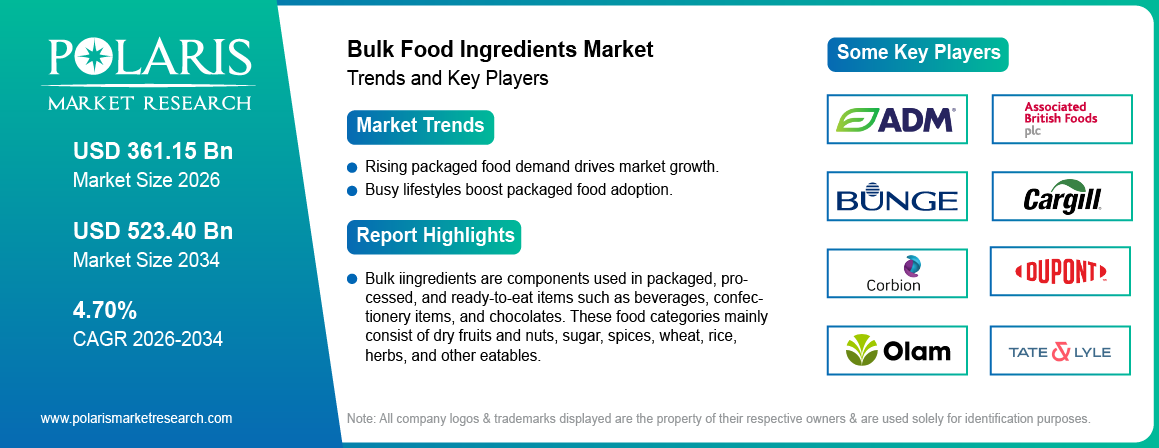
Bulk iingredients are components used in packaged, processed, and ready-to-eat items such as beverages, confectionery items, and chocolates. These food categories mainly consist of dry fruits and nuts, sugar, spices, wheat, rice, herbs, and other eatables. The market for bulk ingredients is growing immensely due to increased spending on packaged and processed consumables. Additionally, drastic lifestyle changes in developing economies have resulted in enhanced demand for ready-to-eat and processed food items. Further, the change in customers' preference from synthetic and pre-packaged consumables to organic, raw, and clean food items, specifically in developed nations, is estimated to impact the market positively. These consumables are also final products, including flours and oils. They are acquired bulk from the wholesalers and sold to various retail shops, supermarkets, hypermarkets, and others.
Impact of AI & Digitalization on Food Ingredient Manufacturing
- AI-Based Formulation Development: AI is used to optimize ingredient combinations and enhance flavor profiles and texture. It is also used to manage nutritional composition while accelerating product development cycles.
- Predictive Demand Forecasting: Advanced analytics is being adopted to improve demand prediction. Manufacturers use this technology to manage bulk ingredient production and inventory efficiently.
- Digital Supply Chain Management: Digital platforms enhance procurement planning and supplier coordination. They also assist in logistics tracking and raw material traceability.
- Automated Quality Control: AI-powered inspection systems detect contamination, color variations, and quality inconsistencies in bulk food ingredients.
- Smart Manufacturing Systems: IoT-enabled production facilities provide real-time monitoring of processing conditions. They improve operational efficiency and consistency.
- Inventory Optimization: AI-based warehouse systems support stock monitoring and shelf-life tracking. They are also used to reduce spoilage for bulk ingredients.
- Process Automation: Robotics and automated processing technologies reduce labor dependency. They improve large-scale ingredient manufacturing productivity.
- Blockchain Traceability: Digital traceability systems enhance transparency, food safety compliance, and ingredient sourcing verification.
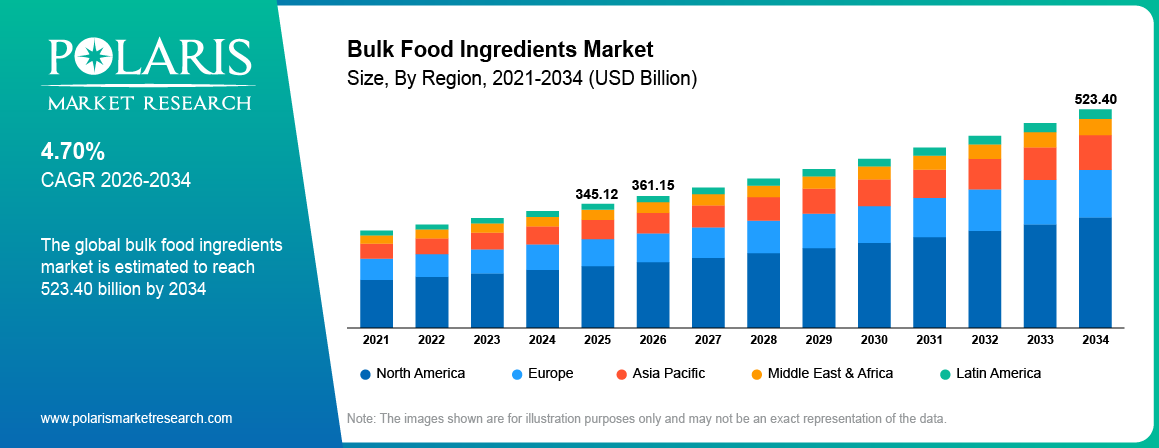
Source: Polaris Market Research Analysis
To Understand More About this Research:
Difference Between: Natural vs Synthetic Bulk Food Ingredients
| Aspect | Natural Bulk Food Ingredients | Synthetic Bulk Food Ingredients |
| Sourcing | Obtained from agricultural crops, spices, fruits, vegetables, grains, and natural fermentation processes in large commercial volumes. | Produced through chemical synthesis or industrial formulation to meet large-scale food manufacturing requirements. |
| Health & Consumer Perception | Preferred in clean-label, organic, and minimally processed food products due to strong consumer preference for natural ingredients. | Often perceived as artificial, though widely accepted for consistent quality, functionality, and cost efficiency in mass food production. |
| Shelf Life & Stability | Generally have lower stability and shorter shelf life, especially natural colors, flavors, and preservatives sensitive to heat and oxidation. | Offer superior stability, longer shelf life, and consistent performance during processing, storage, and transportation. |
| Production Cost | Higher costs due to agricultural dependency, seasonal variability, extraction complexity, and supply chain fluctuations. | Lower and more predictable production costs because of controlled industrial manufacturing and scalable production capacity. |
| Functionality in Food Processing | Provide natural taste, nutritional value, and clean-label appeal but may show variations in flavor intensity and texture performance. | Deliver standardized functionality, including enhanced flavor consistency, texture control, preservation, emulsification, and coloring efficiency. |
| Supply Consistency | Supply can fluctuate because of weather conditions, crop yields, and raw material availability in agricultural markets. | Ensure stable year-round supply with consistent quality specifications for bulk food manufacturers and processors. |
| Regulatory & Labeling Impact | Strongly aligned with organic certifications and clean-label food regulations, supporting premium food product positioning. | Subject to extensive food safety approvals and labeling regulations, particularly regarding additives and artificial ingredients. |
| Industrial Applications | Widely used in natural beverages, organic packaged foods, dairy products, nutritional supplements, and plant-based foods. | Extensively utilized in processed foods, bakery products, confectionery, instant meals, snacks, and large-scale beverage manufacturing. |
| Market Demand Trends | Demand is increasing rapidly due to consumer preference for healthier and sustainable food ingredients. | Continues to maintain significant market share because of affordability, scalability, and processing efficiency in industrial food production. |
Source: Polaris Market Research Analysis
Market Dynamics
The market is propelled due to the increasing adoption of packaged food & beverage items. This is due to the improved lifestyles and increasing standard of living. Moreover, the increase in urbanization, disposable income, and enhanced lifestyles encouraged the growth of the packaged bulk items market worldwide. Additionally, due to hectic lifestyles, people are shifting their preference from negligible cooking to consuming packed eatables, which are convenient to prepare and satisfy the consumer's taste buds. The companies manufacturing such packaged items are gaining equal revenues worldwide, both from developing and developed economies. For instance, based on a recent survey conducted by the Associated Chambers of Commerce and Industry of India (ASSOCHAM), the purchasing power for packaged items has increased drastically due to the increase in prices of vegetables, leading to the rise in sales of such products by to 20%–25%.
The demand for junk consumables or ready-to-eat items has increased steadily over the years due to the changing lifestyle of people, resulting in the consumption of bakery items, junk food, and desserts. The demand for convenience meals is more noticeable in developing countries, where per capita eatable expenditure rises with income.
Challenges in Bulk Food Ingredient Market
- Volatile Raw Material Prices: Fluctuations in agricultural commodity prices, transportation expenses, and energy costs adversely impact production costs and profit margins.
- Supply Chain Disruptions: Global logistics challenges, changing weather conditions, geopolitical tensions, and transportation delays disrupt raw material sourcing and ingredient availability.
- Stringent Food Safety Regulations: Manufacturers are required to comply with stringent international food safety, labeling, traceability, and quality standards. The compliance requirements increase operational complexity.
- Allergen & Contamination Concerns: There are rising concerns regarding allergens, cross-contamination, and foodborne pathogens. It requires advanced quality control and monitoring systems.
- Fluctuating Consumer Preferences: Consumer preference toward clean-label, organic, plant-based, and minimally processed foods is rising. It creates continuous pressure for product reformulation and innovation.
- Sustainability & Environmental Pressure: Increasing emphasis on sustainable sourcing, waste management, and carbon footprint reduction increases compliance and operational costs.
Source: Polaris Market Research Analysis
Report Segmentation
The market is primarily segmented based on type, application, distribution channel, and region.
| By Type | By Application | By Distribution Channel | By Region |
- Primary processed, by type
- Grains, Pulses, and Cereals
- Tea, Coffee, and Cocoa
- Herbs and Spices
- Oilseeds
- Sugar & Salt
- Others
- Secondary Processed, by type
- Processed Grains, Pulses, and Cereals
- Processed herbs and spices
- Dry Fruit & nuts
- Sugar & Sweetener
- Others
| - Bakery & Confectionery
- Snacks & Spreads
- Ready Meals
- Beverages
- Others
| | - North America (U.S., Canada)
- Europe (France, Germany, UK, Italy, Netherlands, Spain, Russia)
- Asia Pacific (Japan, China, India, Malaysia, Indonesia. South Korea)
- Latin America (Brazil, Mexico, Argentina)
- Middle East & Africa (Saudi Arabia, UAE, Israel, South Africa)
|
Source: Polaris Market Research Analysis
Know more about this report:
Herbs and Spices is the Most Lucrative Segment
Herbs and spices include ginger, pepper, cloves, cinnamon, basil, and many more. Herbs and spices are used in both the food & beverage industry expected to grow at a CAGR of 6.05%. Such processed food items have increased for preparing sauces, salad dressings, and condiments, resulting in the demand for herbs and spices
Source: Polaris Market Research Analysis
Bakery and Confectionery Segment Accounted for the Largest Market Share in 2025
Based on application, the bulk food ingredient market is categorized into bakery and confectionery, snacks & spreads, ready-to-eat meals, beverages, and others. Bakery and Confectionery Segment Accounted for the Largest Market Share of 31.3% in 2025. Increasing consumer consciousness about health and nutrition-related food items has encouraged bakery and confectionery manufacturers to produce goods such as probiotics, oats, quinoa, cereals, and other healthy food products. Thereby resulting in the procuring highest market share in the application segment. Moreover, the market for bakery & confectionery in Asia is mainly driven by the growing demand for processed bakery products, along with increasing awareness for clean labels and healthy bulk ingredients.
Offline Distribution Channel Segment Accounted for the Largest Market Share in 2025
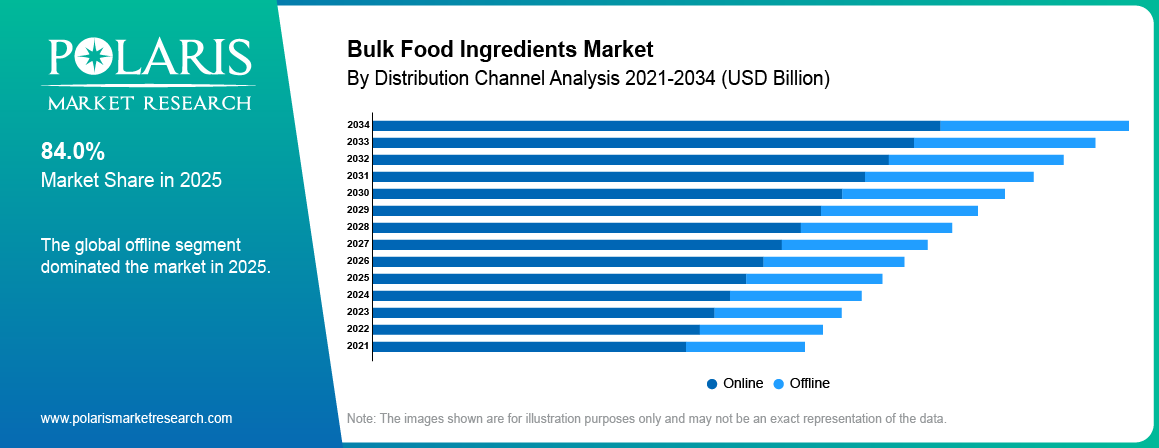
Offline segment held 84.0% share in 2025. The factors leading to the growth of this distribution channel are fluctuation in raw material prices, competitive pricing, product substitutes, and innovative sales strategies, among others. Moreover, various research and development for innovative products and solutions by manufacturers are projected to drive market growth for bulk ingredients.
The Asia Pacific Region Lead the Global Bulk Food Ingredients Market in 2025
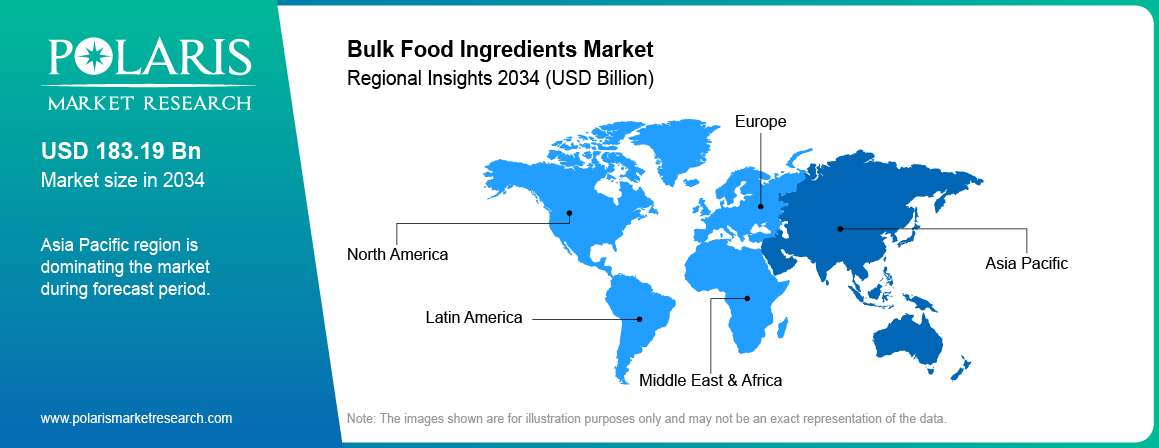
Asia Pacific led the market for bulk food ingredients in 2025 with 37.0% share. There is an increased demand in the food & beverages industry in countries such as China, Japan, India, Indonesia, Malaysia, and other Asian countries, resulting in the market growth of bulk ingredients. Growing disposable income and improving living standards have resulted in greater demand for these bulk ingredients in the Asia Pacific. The economic growth in countries such as China, Japan, and India has strengthened the food & beverage industry, resulting in increased demand for bulk food ingredients. Global players are expanding into emerging countries to tap the market potential. Technological advancements and rising investments in R&D further supported the market growth. Moreover, processed and packaged food consumption is the highest in the Asia Pacific region due to its rising population and growing exposure to western lifestyles. This fueld the market domianance.
Source: Polaris Market Research Analysis
Competitive Insight
Some of the major players operating in the global market for bulk ingredients include
- Archer-Daniels-Midland Company
- Associated British Foods plc
- Bunge Limited, Cargill, Incorporated
- Corbion, DuPont de Nemours, Inc.
- EHL Ingredients
- Essex Food Ingredients
- GCL Food Ingredients
- Ingredients Inc
- McCormick & Company, Inc
- Olam International
- Pure Ingredients
- Tate & Lyle
- The Green Labs LLC.
These players are expanding their presence across various geographies and entering new markets in developing regions to expand their customer base and strengthen their presence in the market. The companies are also introducing new innovative products to cater to the growing consumer demands for bulk ingredients.
Recent Developments
February 2026: Tate & Lyle PLC (Tate & Lyle) and Manus launched Yume, a brand under The Sweetener Alliance. The partnership aims to expand access to innovative sugar-reduction solutions. The first ingredient under this brand is Yume M Stevia Sweetener. It is a premium stevia-derived sweetener with sugar-like taste. (Source: tateandlyle.com)
April 2025: Nestlé and Olam Food Ingredients (OFI) announced their largest joint agroforestry initiative, partnering to transform cocoa farming while addressing carbon emissions and deforestation. (Source: ofi.com)
Bulk Food Ingredients Market Report Scope
| Report Attributes | Details |
| Market size value in 2025 | USD 345.12 billion |
| Market size value in 2026 | USD 361.15 billion |
| Revenue forecast in 2034 | USD 523.40 billion |
| CAGR | 4.70% from 2026 - 2034 |
| Base year | 2025 |
| Historical data | 2021 - 2024 |
| Forecast period | 2026 - 2034 |
| Quantitative units | Revenue in USD billion and CAGR from 2026 to 2034 |
| Segments covered | - By Type
- By Application
- By Distribution Channel
|
| Regional scope | - North America
- Europe
- Asia Pacific
- Latin America
- Middle East & Africa
|
| Key companies | Archer-Daniels-Midland Company, Associated British Foods plc, Bunge Limited, Cargill, Incorporated, Corbion, DuPont de Nemours, Inc., EHL Ingredients, Essex Food Ingredients, GCL Food Ingredients, Ingredients Inc, McCormick & Company, Inc, Olam International, Pure Ingredients, Tate & Lyle, and The Green Labs LLC |
Source: Polaris Market Research Analysis



