
Chicken Coop Market Size, Share Global Analysis Report, 2026-2034
REPORT DETAILS
Chicken Coop Market Summary
The global chicken coop market size was valued at USD 397.38 million in 2025. The market is projected to account for a CAGR of 5.3% between 2026 and 2034. The chicken coop market is projected to grow with the rising demand for poultry housing solutions and the growing demand for sustainable livestock practices.
Market Statistics
Key Takeaways
North America dominated the global market with a 27.80% revenue share in 2025. Sales have increased due to the care laws and regulations, which have ultimately helped the chicken coop market flourish.
Asia Pacific is projected to witness the fastest growth, at a 5.9% CAGR. The regional market is expanding due to increased interest in domestic poultry farming and government support.
The wooden coops segment led the market with a 42.8% revenue share in 2025. This is due to the various benefits of wire mesh coops, including strength and corrosion resistance.
The online retailers segment is projected to witness the fastest growth, at a 6.2% CAGR. The segment’s growth is attributed to the convenience and wide product availability offered by online channels.
Industry Dynamics
- The rising demand for organic eggs and backyard poultry farming is a major factor contributing to market expansion.
- The market is also benefiting from increased focus on poultry health and disease prevention.
- The rising integration of advanced technologies, such as IoT, is expected to create several market opportunities.
- High material costs and limited space in available areas may hinder market growth.
Source: Polaris Market Research Analysis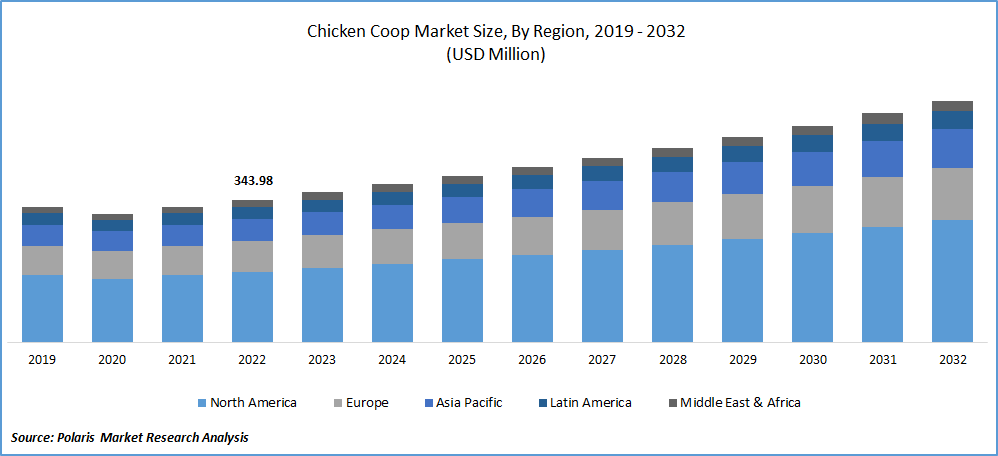
To Understand More About this Research:Download Sample Report
AI Impact on Chicken Coop Market
- AI helps in automating feeding, watering, and temperature control. This makes it easier for owners to take care of their chicken coops.
- The smart monitoring system helps track chicken health and behavior, reducing losses.
- AI-powered security features, such as motion sensors, help in protecting the chickens from predators.
- The data provided by AI tools helps in improving egg production over time.
A chicken coop is designed to house hens and protect them from danger and severe weather. The chicken coop's main functions are to prevent poultry deaths and provide minimal heat supply and ventilation. A nest box for laying eggs within the hen house and perches for sleeping make up a chicken coop. A chicken house effectively reduces disease-causing infections and keeps predators away from the birds. The growing interest in backyard poultry farming has increased the demand for chicken coops. As a result, there is a greater need for chicken coops. A chicken coop is necessary because it protects chickens from skin illnesses and health concerns.
The market offers a wide range of goods, and demand for them is rising globally, significantly boosting the industry. This business is also driven by social media, which promotes the idea of smaller poultry farms, pushing the chicken coop market. Chicken coops are also affordable and accessible to poultry farm owners due to the availability of multiple sales channels. The demand for chicken coops is increasing with their popularity in both developed and developing countries.
Furthermore, the rising adoption of advanced technologies, such as the Internet of Things (IoT) in chicken coops, provides various benefits for chickens. Keeping the temperature in the coops where the chickens live requires frequent visits, but as technology advances, many are turning to the IoT system. The IoT technology allows specific objects to transfer data over a network without human intervention.
The IoT technology is used in the harmful gas detection system in the chicken coop. The environment and air quality have a huge impact on the health of the chicken. The most common gas in the environment of the chicken coop is ammonia gas, which is produced by the dung of the chicken. Temperature and humidity are other environmental factors that impact chicken health. The issue small-scale chicken producers face is the deteriorating health of hens, which results in deaths due to poor air quality and environmental conditions. The adoption of advanced technology in chicken coops helps overcome these challenges, driving market growth.
Market Dynamics
Growth Drivers
Rising Demand for Organic Eggs and Backyard Poultry Farming
Increasing demand for organic eggs and free-range chicken products has led to a need for better chicken coops. Today, people are becoming more conscious of the quality and safety of food products. This shift towards natural chicken products is promoting backyard poultry farming. It is especially true for urban and semi-urban areas, where people are looking for fresh and chemical-free products. Therefore, there is a growing need for a small, user-friendly, well-ventilated, hygienic, safe, and easy-to-maintain chicken coop.
Increasing Focus on Poultry Health and Disease Prevention
Increased knowledge on poultry health management and prevention of diseases is also likely to increase demand in the chicken coops market. Chicken coops assist in enhancing poultry health. They ensure improved hygiene, environmental conditions, and reduced disease prevalence. Chicken coops with good design ensure adequate ventilation, temperature regulation, and protection against extreme environmental conditions. This, in turn, reduces mortality rates. Poultry keepers and small-scale farmers continue to emphasize poultry health management, thereby ensuring continued chicken coop market growth.
Technology and Innovation
The incorporation of IoT technology in chicken coops has revolutionized the market. This technology has enabled the creation of effective farm management systems. For example, modern chicken coops have been equipped with sensors that monitor temperature and air quality in real time. This enables the creation of optimal conditions in the coops.
There is also an increase in automated chicken coops. Such coops have been effective in reducing the workload associated with farm management. The coops have also been equipped with egg-collection mechanisms. There is also an increase in solar-powered chicken coops. This technology is effective at reducing energy costs on farms. This is particularly true in rural areas, where access to energy is limited.
Moreover, AI-based chicken coop monitoring tools are gaining popularity among farmers. AI tools are helping to improve the management of the farms. As the technology becomes more accessible, the popularity of smart and connected chicken coops is expected to increase.
How to Choose Chicken Coop?
When choosing the right chicken coop, the buyer should consider several important factors. The size of the flock is an important consideration. This is because the space needed for the chickens will determine the design of the coop. Climate is also an important factor. The design must ensure proper ventilation and insulate the chickens from extreme weather conditions. The materials used, whether wood, metal, or plastic, influence long-term protection.
Good ventilation is important for the maintenance of airflow and the removal of moisture. Good ventilation also helps maintain the health of poultry. In addition, easy cleaning, strong security features, and space for movement are important for optimal performance and convenience. Considering all these aspects helps the buyer purchase the best chicken coop.
Source: Polaris Market Research Analysis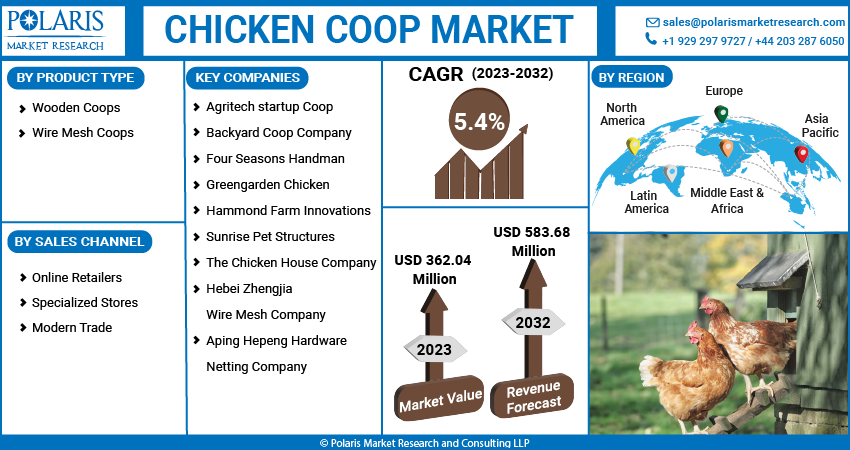
Segmental Insights
By Product Type Insights
Based on product type, the market is segmented into wooden coops and wire mesh coops. The wooden coops segment led the chicken coop market with a 42.8% revenue share in 2025. This is mainly due to the natural insulation and adaptability of wooden coops. These coops are thermo-regulated, which acts as a major factor in determining the productivity and health of the chicken. Coops made from wood can make the interior relatively cool during summer and warm during winter. This can help stabilize the microenvironment in the coop. It can also assist with the stabilization of egg production and stress levels.
The wire mesh coops segment is projected to witness significant growth during the forecast period. The key benefits of wire mesh coops are the strength, flexibility, and corrosion resistance of the wire mesh. They ensure the fox does not get into the chicken coop. They also ensure the birds do not escape. It is a cost-effective measure for enclosing small spaces. Galvanized steel wire is arranged in a hexagonal pattern in a crisscross design to form the chicken wire mesh. Various sizes and gauges of mesh and wire can be used to suit the intended purpose.
Also, the intended use determines the thickness of chicken wire mesh. Generally, a thicker mesh is longer-lasting and more robust. A thinner mesh might be preferable for applications and loads that are not as demanding. For long-term durability and outdoor use, the chicken wire mesh's finish needs to resist corrosion and abrasion. Materials such as zinc- or powder-coated finishes are considered to prevent rusting and weathering. Thus, the various benefits of wire mesh coops contribute to their leading market position.
By Sales Channel Insights
Based on sales channel, the chicken coop market is segmented into online retailers, specialized stores, and modern trade. The online retailers segment is projected to witness the fastest growth, at a 6.2% CAGR. Online shopping is taking a large share worldwide. People are mostly accustomed to purchasing everything online, and nowadays they also buy chicken coops online due to the benefits offered by online channels. A person may save a lot of time and money by purchasing a chicken coop online. They can compare several chicken coops and read reviews left by previous customers. Thousands of merchants and businesses sell chicken coops of all sizes and shapes online. Online shopping allows individuals to check whether a seller or business is legitimate by reading customer reviews and researching for red flags.
Also, rising internet usage has boosted poultry equipment e-commerce. Websites also offer return and refund policies, making buying products easier. Discounts offered by online merchants are higher than those in offline channels, which is a major benefit for people purchasing chicken coops online. Various benefits of online shopping are one of the major factors boosting segmental growth.
Source: Polaris Market Research Analysis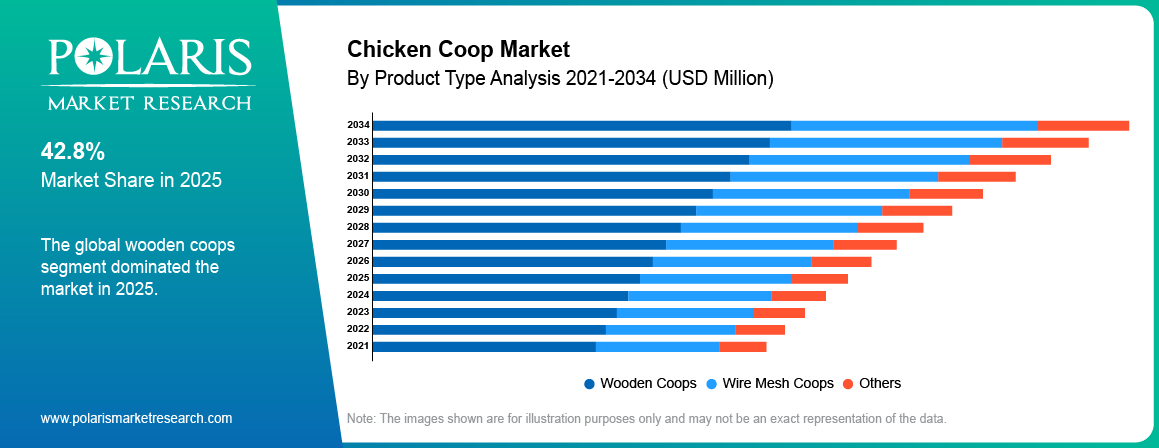
Regional Assessment
By region, the report offers market insights into North America, Europe, Asia Pacific, Latin America, and the Middle East & Africa. North America led the global market with a 27.80% revenue share in 2025. Sales have increased due to the care laws and regulations, which have ultimately helped the chicken coop market flourish. The market for small- and medium-sized chicken coop makers is highly fragmented, and this region is home to many of them. But as the market for premium chicken coops expands, competition is likely to intensify, with bigger producers and dealers possibly gaining market share. The demand for organic, locally sourced eggs is expected to increase, and technological developments such as automatic feeders and waterers are also anticipated to influence the market for chicken coops in North America.
The chicken coop market in the Asia Pacific is projected to witness the fastest growth, at a 5.9% CAGR. The market in this region is growing due to increased interest in domestic chicken farming. People are becoming aware of the benefits of domestic chicken farming, where they can get fresh eggs, know how their chickens are being raised, and participate in a fun and educational activity of chicken farming in their backyards. The activity of chicken farming in backyards can also be viewed as a method of local food production with a shorter distance to consumers, as people are becoming more interested in living sustainably and reducing their ecological footprint. The chicken coop market APAC also benefits from increasing government support.
Pricing Analysis
The cost of chicken coops differs depending on the material, size, and level of automation. For example, wooden chicken coops used in backyards are usually generally affordable. But larger models made of metal or even the most advanced plastic materials can be quite costly, considering their durability and resistance to harsh weather. Features such as ventilation, insulation, and predator protection can also increase pricing.
High-tech chicken coops with advanced feeding, weather control, and monitoring systems are typically priced at a premium. Apart from these parameters, regional influences and customization requirements may further influence the chicken coop price, reflecting the wide range of options available for different users.
Supply Chain Analysis
The supply chain for chicken coops includes players such as raw material suppliers, manufacturers, distributors, and retailers. All these players in the poultry supply chain help ensure the availability of the product. Raw materials such as wood, metals, plastics, and hardware are first procured, and the manufacturers then produce the chicken coops. The chicken coop distribution takes place through traditional channels such as wholesalers and retailers, as well as direct sales. In the last few years, e-commerce has been a major factor affecting the supply chain. E-commerce has helped manufacturers reach a larger market, thereby enhancing the supply chain.
Source: Polaris Market Research Analysis
Competitive Landscape
The competitive landscape of the chicken coop market is constantly changing. The market is driven by the growing interest in backyard poultry farming and sustainable living. The major players of the market are adapting strategies to take advantage of the changing market. The major players are also focusing on new and sustainable materials. Strategic alliances, product launches, and technological developments are some of the strategies adopted by the market players.
A few of the leading chicken coop market players include Aping Hepeng Hardware Netting Company, Backyard Coop Company, Four Seasons Handman, Greengarden Chicken, Hammond Farm Innovations, Sunrise Pet Structures, The Chicken House Company, Murray McMurray Hatchery, and Hebei Zhengjia Wire Mesh Company.
Sunrise Pet Structures is a company specializing in the production of handcrafted chicken coops. It is focused on providing high-quality chicken coops made from strong materials that are capable of withstanding different kinds of weather, thus keeping the chicken safe.
The Chicken House Company is a UK-based supplier of a range of chicken coops and poultry accessories. It provides both ready-to-use and custom-made chicken coops to small and medium-scale poultry farmers.
List of Key Companies
- Aping Hepeng Hardware Netting Company
- Backyard Coop Company
- Four Seasons Handman
- Greengarden Chicken
- Hammond Farm Innovations
- Hebei Zhengjia Wire Mesh Company
- Murray McMurray Hatchery
- Sunrise Pet Structures
- The Chicken House Company
Market Segmentation
By Product Type Outlook (Revenue, USD Million, 2021–2034)
- Wooden Coops
- Wire Mesh Coops
By Size Outlook (Revenue, USD Million, 2021–2034)
- Mini
- Small
- Medium
- Large
By Shape Outlook (Revenue, USD Million, 2021–2034)
- Rectangle
- Square
- Octagon
- A-Frame
By Capacity Outlook (Revenue, USD Million, 2021–2034)
- 1-3 Chickens
- 4-6 Chickens
- 7-10 Chickens
- Over 10 Chickens
By Features Outlook (Revenue, USD Million, 2021–2034)
- Automatic Door
- Nesting Boxes
- Ventilation System
- Predator Protection
By Sales Channel Outlook (Revenue, USD Million, 2021–2034)
- Online Retailers
- Specialized Stores
- Modern Trade
By Regional Outlook (Revenue, USD Million, 2021–2034)
- North America
- US
- Canada
- Europe
- Germany
- France
- UK
- Italy
- Spain
- Netherlands
- Russia
- Rest of Europe
- Asia Pacific
- China
- Japan
- India
- Malaysia
- South Korea
- Indonesia
- Australia
- Vietnam
- Rest of Asia Pacific
- Middle East & Africa
- Saudi Arabia
- UAE
- Israel
- South Africa
- Rest of Middle East & Africa
- Latin America
- Mexico
- Brazil
- Argentina
- Rest of Latin America
Chicken Coop Market Report Scope
| Report Attributes | Details |
| Market Size in 2025 | USD 397.38 million |
| Market Size in 2026 | USD 417.01 million |
| Revenue Forecast by 2034 | USD 632.49 million |
| CAGR | 5.3% |
| Base Year | 2025 |
| Historical Data | 2021–2024 |
| Forecast Period | 2026–2034 |
| Quantitative Units | Revenue in USD million, and CAGR from 2026 to 2034 |
| Report Coverage | Revenue Forecast, Market Competitive Landscape, Growth Factors, and Trends |
| Segments Covered |
|
| Regional Scope |
|
| Competitive Landscape | Chicken Coop Industry Trend Analysis (2025) Company profiles/industry participants profiling include company overview, financial information, product/service benchmarking, and recent developments |
| Report Format | PDF + Excel |
| Customization | Report customization as per your requirements with respect to countries, regions, and segmentation. |
Source: Polaris Market Research Analysis
Chicken Coop Market FAQ's
The chicken coop market size was valued at USD 397.38 million in 2025. The market is projected to reach USD 632.49 million by 2034.
The market for chicken coops is primarily driven by the rise of backyard poultry farming and increasing demand for organic eggs.
A chicken coop is a secure structure designed to house chickens. It provides protection from predators, harsh weather, and a safe environment for sleeping and laying eggs.
North America dominated the market in 2025. This is primarily due to the increasing implementation of care laws and regulations.
Smart chicken coops offer convenience through automatic doors, cameras, and app-based monitoring. This makes them suitable for customers who want to automate security and egg collection.
The best design for the chicken coop varies depending on the size of the birds as well as the backyard space. However, the walk-in chicken coop is widely preferred.
IoT in poultry farming is the application of sensors and automation technologies in the monitoring of the health of the birds.
Download Sample Report of Chicken Coop Market
Please fill out the form to request a customized copy of the research report.


