
District Heating Market Size & Trends, Industry Analysis Report, 2026-2034
REPORT DETAILS
District Heating Market Overview and Growth Outlook
The global district heating market size was valued at USD 209.47 billion in 2025. The market is projected to exhibit a CAGR of 5.1% from 2026 to 2034. Rising urbanization and increased focus on energy efficiency are a few of the key factors driving market growth.
Market Statistics
Key District Heating Market Takeaways
- Europe accounted for a major market share of 17.51% in 2025. This is due to the strong government policies promoting sustainability in the region.
- Asia Pacific is projected to experience the fastest growth at a 6.00% CAGR. Rapid industrialization in emerging economies is contributing to the regional market growth.
- The renewable energy segment is projected to witness rapid growth at a 8.01% CAGR. Stringent environmental regulations have led to the deployment of renewable heating technologies.
- The residential segment led with a 59.39% market share in 2025. Rapid urbanization worldwide has led to the segment's leading market position.
- The conventional district heating segment dominated with a 75.10% revenue share in 2025. This is because of the widespread existing infrastructure of conventional systems.
Note: Figures and projections outlined in this report are the result of Polaris Market Research’s proprietary analytical processes, grounded in the latest available datasets and market observations.
Industry Dynamics
- Rising urbanization worldwide has resulted in increased demand for efficient heating solutions.
- Technological advancements in heating systems are making operations more flexible and energy efficient. This, in turn, is contributing to the market demand.
- The shift towards the integration of renewable energy sources is creating several market opportunities.
- High initial capital investments for agriculture may present market challenges.
AI Impact on District Heating Market
- AI aids in making district heating more efficient by ensuring that the heat is distributed depending on the current demand.
- It helps conserve energy through control of temperatures and reduction of heat loss.
- The AI can help prevent breakdowns by predicting any problems with the heating system.
- It can help utility firms manage their activities through data analysis.
District heating, also known as community heating, utilizes energy sources such as natural gas, biomass, geothermal, and waste heat to deliver thermal energy through insulated pipes. This heating solution reduces the reliance on individual heating systems. It is widely adopted in developed countries such as Denmark, Sweden, and Germany, where efficient energy use and sustainability are prioritized.
How District Heating Works?
The process of generating heat takes place in a centralized heat production station. The generation of heat can be done by the use of boilers, cogeneration, geothermal, or renewable energy sources. The heat is then distributed to different buildings through insulated underground pipes. The delivery of heat occurs in the form of heat exchangers, which provide both space and water heating. Computerized control systems are also used by modern district heating systems to enhance heat distribution and efficiency.
The rising stringent initiatives on carbon footprint management such as greenhouse gas (GHG) emissions are propelling the district heating market growth. Governments globally are introducing stringent policies and incentives to reduce GHG emissions by promoting district heating as a low-carbon alternative for heating solutions in residential, commercial, and industrial spaces. For instance, the European Union has set ambitious targets to achieve net-zero carbon emissions by 2050, encouraging the deployment of district heating systems powered by renewable energy sources.
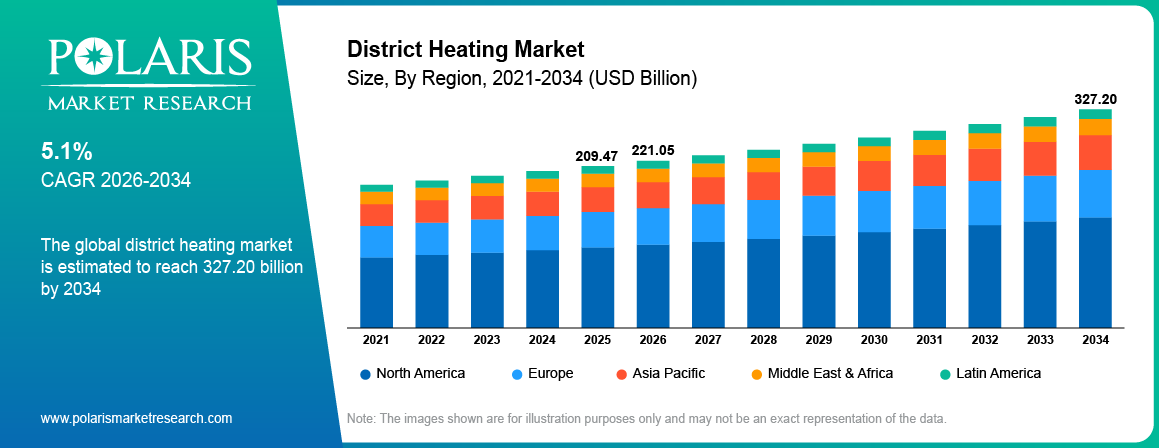
Source: Polaris Market Research Analysis
To Understand More About this Research: Download Sample Report
The district heating market demand is driven by the growing focus on energy efficiency. District heating systems deliver thermal energy from a centralized source to multiple buildings, ensuring optimized energy use and minimizing wastage compared to individual heating systems. Governments and organizations worldwide are setting energy efficiency targets to combat climate change, which has led to increased adoption of district heating systems powered by renewable energy sources and waste heat recovery.
District Heating vs Individual Heating Systems
| Factor | Community Heating System | Individual Building Heating System |
| Heat Source | One centralized power plant | Boiler/Unit per building |
| Efficiency | Highly efficient | Less efficient |
| Carbon Footprint | Low carbon footprint | Higher carbon footprint |
| Maintenance | Easy to maintain | Maintenance needed for each building |
| Applicability | Applicable to cities and university campuses | Limited scalability |
| Costs | Lower long-term costs | Larger energy and maintainence costs |
Source: Polaris Market Research Analysis
Market Dynamics
Urbanization and Dense City Development Accelerate Centralized Heat-Network Adoption
Rapid urbanization is driving the demand for efficient and reliable heating solutions in residential and commercial spaces. For instance, a report from the United Nations states that 55% of the world's population currently lives in urban areas, a figure expected to rise to 68% by 2050. District heating provides a cost-effective way to meet heating demands in residential and commercial spaces, minimizing energy losses and carbon footprints. Countries such as China and India, with growing urban populations, are witnessing high investments in district heating infrastructure. Additionally, the scalability of district heating systems enables governments worldwide to address the heating requirements of urban centers by integrating advanced technologies such as IoT technologies for real-time monitoring and optimization. Thus, the rising urbanization globally is driving the district heating market revenue.
Smart Controls, Heat Pumps and Low-Temperature Networks Improve District Heating Efficiency
Innovative technologies are contributing to the district heating market expansion by improving energy efficiency and operational flexibility. Smart heating systems equipped with sensors, data analytics, and artificial intelligence enable efficient energy distribution and predictive maintenance. Additionally, advancements in pipe insulation and heat exchanger designs minimize energy loss, further enhancing system efficiency. These developments are fueling the continued adoption of district heating systems.
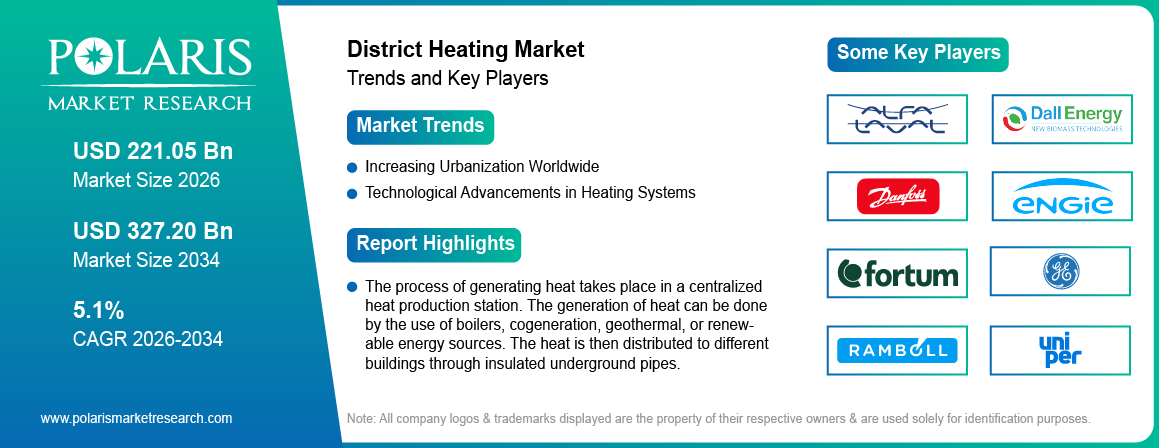
Source: Polaris Market Research Analysis
Segment Insights
By Energy Source Insights
Based on energy source, the district heating market is divided into renewable energy, fossil fuels, and waste heat. The renewable energy segment is expected to grow at a rapid pace of CAGR 8.01% during the forecast period, owing to the stringent environmental regulations and a global commitment to reduce greenhouse gas emissions. The ongoing deployment of modern heating technologies, such as fourth-generation district heating systems that rely heavily on renewable sources, plays a crucial role in driving the segment's growth. Additionally, the prioritization of energy security and sustainability by major countries worldwide is contributing to the rapid growth of the segment.
By Application Insights
In terms of application, the district heating market is segregated into residential, commercial, and industrial. The residential segment accounted for a major district heating market share of 59.39% in 2025 due to rapid urbanization worldwide. Governments and municipal authorities are prioritizing providing efficient and reliable heating solutions to urban housing developments, especially in colder climates where heating needs are essential. Subsidies and funding initiatives for sustainable heating systems in countries such as China, Germany, and Sweden have further boosted the adoption of district heating systems in the residential segment. Rising awareness of energy efficiency among homeowners, along with the integration of advanced technologies such as smart meters and energy management systems, has also contributed to the segment’s dominance.
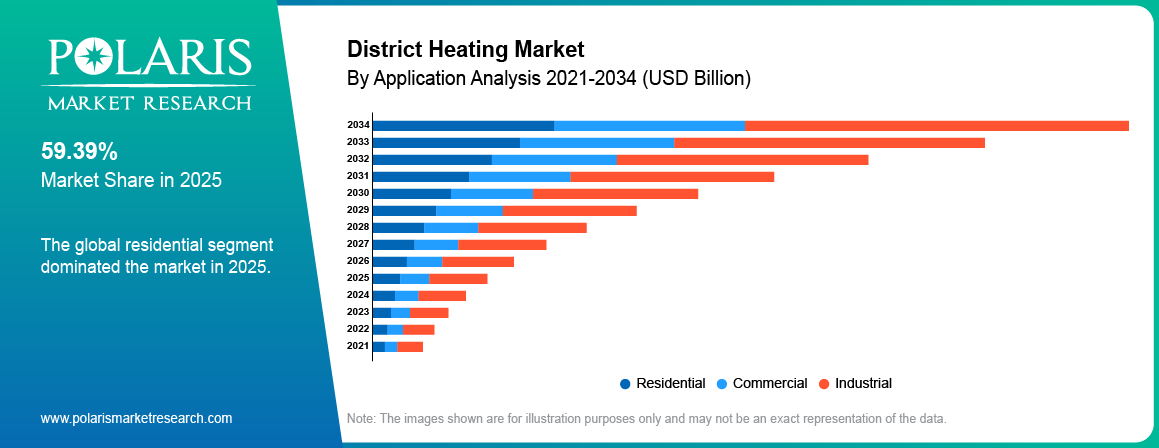
Source: Polaris Market Research Analysis
Regional Analysis
By region, the report provides the district heating market insights into North America, Europe, Asia Pacific, Latin America, and the Middle East & Africa. Europe accounted for a major market share of 17.51% in 2025 due to the strong government policies promoting sustainability, coupled with a well-developed infrastructure. Countries such as Denmark, Germany, and Sweden have made significant investments in integrating renewable energy sources and waste heat recovery technologies into their energy systems, which has propelled the growth of the market. Sweden emerged as the dominating country in Europe due to its heavy reliance on biomass and waste heat, supported by tax incentives and subsidies that prioritize low-carbon technologies.
The Asia Pacific district heating market is projected to experience the fastest growth of CAGR 6.0% during the forecast period, driven by rapid industrialization in countries such as China, India, and South Korea. China is estimated to hold the largest share within the region due to its large-scale adoption of centralized heating networks aimed at improving energy efficiency and reducing urban air pollution. Furthermore, the rising urban populations and the expansion of residential and commercial infrastructure are contributing significantly to the demand for efficient heating solutions, including district heating, in the region. For instance, as per the data published by UN-Habitat, 54% of the global urban population, more than 2.2 billion people, live in Asia. By 2050, the urban population in Asia is expected to grow by 50%.
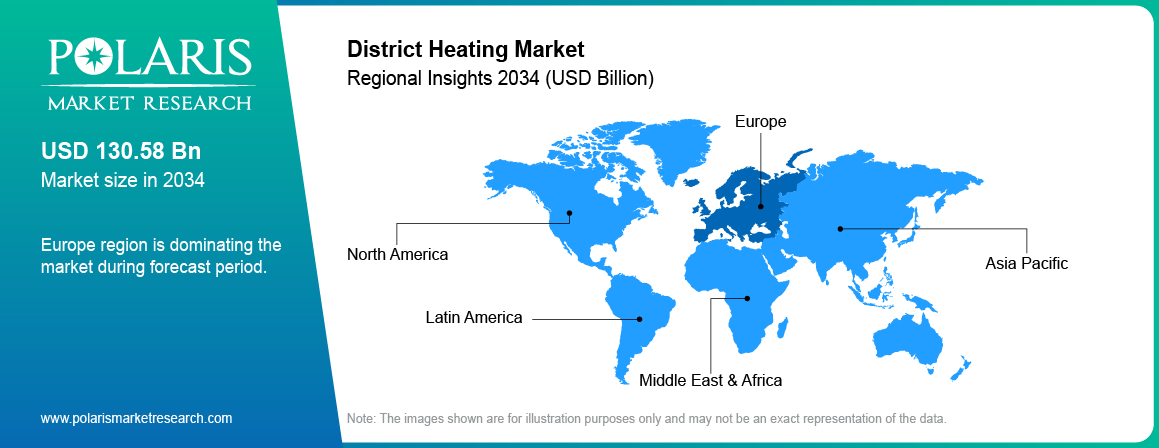
Source: Polaris Market Research Analysis
Key Players and Competitive Insights
Major market players are investing heavily in research and development in order to expand their offerings, which will help the district heating market grow even more. These market participants are also undertaking a variety of strategic activities to expand their global footprint, with important market developments including innovative launches, international collaborations, higher investments, and mergers and acquisitions between organizations.
The district heating market is fragmented, with the presence of numerous global and regional market players. Major players in the market include Alfa Level, Dall Energy, Danfoss Group, ENGIE, Fortum, FVB Energy Inc., GE, Helen, Ramboll, Statkraft, Uniper, Vattenfall, and Veolia.
Alfa Laval AB, founded in 1883 by Gustaf de Laval and Oscar Lamm, has evolved into a global company providing specialized products and solutions for heat transfer, separation, and fluid handling. Headquartered in Lund, Sweden, the company operates in over 100 countries. Alfa Laval's diverse product portfolio includes heat exchangers, pumps, valves, and centrifuges, which are essential in district heating and various industries such as energy, food processing, pharmaceuticals, and waste treatment.
Danfoss Group, established in 1933 by Mads Clausen in Nordborg, Denmark, has grown into a prominent multinational corporation specializing in engineering solutions that enhance energy efficiency across various sectors. Danfoss operates in more than 100 countries, focusing on technologies that empower industries to create sustainable and efficient systems. The company is structured into three main business segments: Danfoss Climate Solutions, Danfoss Drives, and Danfoss Power Solutions. It provides advanced solutions that optimize the efficiency of district heating systems.
List of Key Companies
- Alfa Level
- Dall Energy
- Danfoss Group
- ENGIE
- Fortum
- FVB Energy Inc.
- GE
- Helen
- Ramboll
- Statkraft
- Uniper
- Vattenfall
- Veolia
District Heating Industry Developments
-
May 2026: Johnson Controls announced the expansion of the heat pump and chiller plant located in Holme, Denmark. According to the company, the expansion will increase capacity to produce and test high-capacity industrial heat pumps amid increased demand across Europe. It will also help accelerate the electrification of district heating and some critical sectors. (source: johnsoncontrols.com)
-
February 2026: TRIMET Aluminium SE and Iqony Fernwärme GmbH announced a major project that involves feeding 31,000 MWh per year of waste heat from the aluminum plant in Essen to the district heating network of Iqony, heating more than 5,500 residences. The carbon-neutral energy will enhance the environmental impact of the already environmentally friendly district heating system in the region. (source: trimet.eu)
District Heating Market Segmentation
By Energy Source Outlook (Revenue – USD Billion, 2021–2034)
- Renewable Energy
- Fossil Fuels
- Waste Heat
By Application Outlook (Revenue – USD Billion, 2021–2034)
- Residential
- Commercial
- Industrial
By Technology Outlook (Revenue – USD Billion, 2021–2034)
- Conventional District Heating
- Smart District Heating
By Regional Outlook (Revenue – USD Billion, 2021–2034)
- North America
- US
- Canada
- Europe
- Germany
- France
- UK
- Italy
- Spain
- Netherlands
- Russia
- Rest of Europe
- Asia Pacific
- China
- Japan
- India
- Malaysia
- South Korea
- Indonesia
- Australia
- Vietnam
- Rest of Asia Pacific
- Middle East & Africa
- Saudi Arabia
- UAE
- Israel
- South Africa
- Rest of Middle East & Africa
- Latin America
- Mexico
- Brazil
- Argentina
- Rest of Latin America
District Heating Market Report Scope
| Report Attributes | Details |
| Market Size Value in 2025 | USD 209.47 billion |
| Revenue Forecast in 2026 | USD 221.05 billion |
| Revenue Forecast by 2034 | USD 327.20 billion |
| CAGR | 5.1% from 2026 to 2034 |
| Base Year | 2025 |
| Historical Data | 2021–2024 |
| Forecast Period | 2026–2034 |
| Quantitative Units | Revenue in USD billion and CAGR from 2026 to 2034 |
| Report Coverage | Revenue Forecast, Market Competitive Landscape, Growth Factors, and Trends |
| Segments Covered |
|
| Regional Scope |
|
| Competitive Landscape |
|
| Report Format |
|
| Customization | Report customization as per your requirements with respect to countries, regions, and segmentation. |
Source: Polaris Market Research Analysis
District Heating Market FAQs
• The global district heating market size was valued at USD 209.47 billion in 2025 and is projected to grow to USD 327.20 billion by 2034.
• The global market is projected to grow at a CAGR of 5.1% during the forecast period.
• Europe had the largest share of 17.51% in 2025.
• Some of the key players in the market are Alfa Level, Dall Energy, Danfoss Group, ENGIE, Fortum, FVB Energy Inc., GE, Helen, Ramboll, Statkraft, Uniper, Vattenfall, and Veolia.
• The residential segment dominated the market in 2025 with 59.39% share .
• Also known as community heating, it utilizes energy sources such as natural gas, biomass, geothermal, and waste heat to deliver thermal energy through insulated pipes, reducing reliance on individual heating systems.
• Key trends include rising renewable energy integration, growing smart heating system adoption with AI and IoT, increasing urbanization driving infrastructure investments, stricter GHG emission regulations, and expanding fourth-generation district heating deployments globally.
Download Sample Report of District Heating Market
Please fill out the form to request a customized copy of the research report.


