
Fish Protein Hydrolysate Market Trends Report, 2026-2034
REPORT DETAILS
Fish Protein Hydrolysate Market Summary
The global Fish Protein Hydrolysate Market was valued at USD 309.37 million in 2025 and is forecasted to grow at a CAGR of 4.7% from 2026 to 2034. Increasing use in aquafeed and functional food products is a major contributing factor.
Market Statistics
Fish Protein Hydrolysate Market Key Takeaways
- North America dominated the fish protein hydrolysate market in 2025, accounting for 39.5% of the global revenue share. This was driven by strong demand from the cosmetics and healthcare industries.
- Asia Pacific is expected to register the fastest growth during 2026–2034, expanding at a CAGR of 5.2%. This growth is supported by rising demand for nutritional supplements and increasing health-conscious consumer trends.
- The anchovy segment held the largest market share in 2025, contributing 35.6% of total revenue. This dominance is attributed to its growing use in organic fertilizers and sustainable agricultural applications.
- The powder segment accounted for the highest market share in 2025, representing 62.3% of global revenue. Its position is supported by extended shelf life, ease of storage, and broad industrial applicability.
- The sardine segment is projected to witness the fastest growth during 2026–2034, registering a CAGR of 5.3%. This growth is driven by increasing utilization in aquaculture feed and animal nutrition products.
- The liquid segment is anticipated to be the fastest-growing form category through 2034, recording a CAGR of 5.1%. Rising demand from pharmaceutical and nutraceutical applications is expected to support this expansion.
Note: Figures and projections outlined in this report are the result of Polaris Market Research’s proprietary analytical processes, grounded in the latest available datasets and market observations.
AI Impact on Global Fish Protein Hydrolysate Market
- AI optimizes hydrolysis processes, improving protein extraction efficiency and production consistency.
- AI analyzes protein quality, supporting faster testing and composition assessment.
- AI monitors supply chains, improving raw material tracking and inventory management.
- AI improves production efficiency by reducing waste and optimizing operation
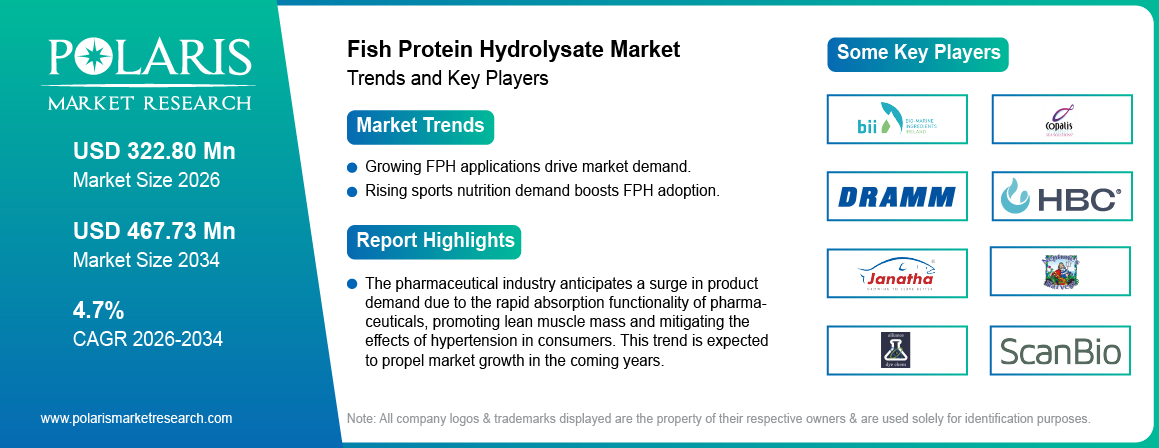
The pharmaceutical industry anticipates a surge in product demand due to the rapid absorption functionality of pharmaceuticals, promoting lean muscle mass and mitigating the effects of hypertension in consumers. This trend is expected to propel market growth in the coming years. Fish protein, derived from ground whole fish, encompasses ingredients used in various industries such as animal feed, pet food, cosmetics, and food & beverages. Fish Protein Hydrolysate (FPH) is particularly versatile, finding applications in infant formulations, sports nutrition, and protein supplements within the food & beverage sector. This increased utilization of fish protein in diverse applications is forecasted to drive overall market expansion in the foreseeable future.
The U.S. market is anticipated to experience substantial growth, driven by heightened product demand fueled by increasing awareness of weight management, muscle building, disease prevention, and overall physical and mental health. Furthermore, the expanding food & beverage industry, coupled with a rising middle-class population and high-income levels, is poised to contribute to the sustained demand for the product throughout the forecast period.
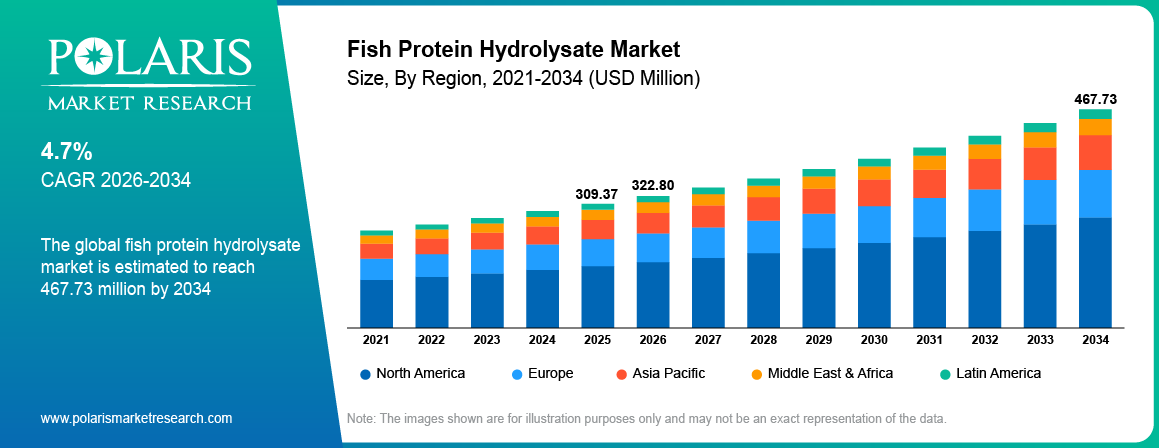
Source: Polaris Market Research Analysis
To Understand More About this Research: Download Sample Report
In the realm of food & beverage applications, the product has demonstrated efficacy in addressing gastrointestinal issues linked to Irritable Bowel Syndrome (IBS) and Crohn's disease. Within the infant formula application, fish proteins are employed to create alternative hypoallergenic protein sources for infants dealing with celiac disease, gluten intolerance, and milk allergy.
Anchovies, herrings, sardines, and other commonly used fish varieties serve as rich sources of diverse components, including peptides known for their antioxidative, antimicrobial, antihyperglycemic, and antihypertensive properties. Furthermore, research suggests that valuable bioactive ingredients such as fish oils & fatty acids, proteins, glucosaminoglycans, enzymes, and chitin & chitosan are present in fish side streams. Anticipated in the coming years is a substantial growth in the demand for Fish Protein Hydrolysate (FPH), particularly in animal feed applications.
A primary catalyst for this anticipated growth is the increasing adoption of the product in the aquaculture feed industry. This trend can be attributed to the fact that fish farming currently supplies over 50% of the world's fish food, a proportion expected to further expand in the future. As a result, Fish Protein Hydrolysate is poised to play a pivotal role, providing the growing aquaculture sector with high-quality amino acids and overall nutritional value.
Source: Polaris Market Research Analysis
Fish Protein Hydrolysate vs Whey Protein vs Plant Protein
| Parameters | Fish Protein Hydrolysate | Whey protein | Plant Protein |
| Amino Acid Profile | Rich in essential amino acids and bioactive peptides | Complete amino acid profile with high BCAAs | May lack some essential amino acids |
| Digestibility | Very high | High | Moderate to high |
| Absorption Rate | Fast | Fast | Slower |
| Allergen Risk | Fish allergy risk | Dairy allergy and lactose intolerance risk | Lower risk, except soy-based products |
| Sustainability | Uses fish processing by-products and waste streams | Linked to dairy production systems | Generally lower environmental impact |
| Sports Nutrition | Used for muscle recovery and performance nutrition | Commonly used in sports nutrition | Used in vegan sports nutrition |
| Pharmaceutical Use | Used in nutraceutical and medical nutrition products | Limited use | Used in selected nutrition products |
| Beauty Supplements | Used in collagen and skin health supplements | Limited use | Used in plant-based beauty products |
| Animal Feed & Aquaculture | Widely used | Limited use | Used in livestock and pet feed |
Source: Polaris Market Research Analysis
Market Dynamics
Drivers: Growing Requirements Across Diverse End-User Sectors, of Fish Protein Hydrolysate, Drives the Market in Forecast Period
Anticipated market growth in the coming years is fueled by increasing demand across a range of end-use industries, including food and beverage, dietary supplements, sports nutrition, and animal feed, with a notable preference for fish protein hydrolysates owing to their associated health benefits.
In the food and beverage sector, FPH is utilized to boost the nutritional content of shakes, protein bars, and functional foods, contributing to its popularity. Its role in supporting muscle recovery and growth also positions it as a preferred choice in the sports nutrition industry. Additionally, the presence of collagen in FPH makes it suitable for cosmetic applications, providing softening, moisturizing properties, and anti-aging benefits, making it an ideal ingredient for skincare nutraceuticals.
The increasing consumption of nutraceuticals serves as a driving force in the fish protein hydrolysate market. In response to the demand for products promoting health and well-being, the pharmaceutical industry incorporates FPH as a key ingredient in nutraceutical production, leveraging its essential components like amino acids and proteins. Moreover, the growing number of consumers seeking dietary supplements and the rising adoption of fish-based products are expected to further drive Fish Protein Hydrolysate market growth.
Report Segmentation
The market is primarily segmented based on source, form, technology, application, and region.
| By Source | By Form | By Technology | By Application | By Region |
|
|
|
|
|
Source: Polaris Market Research Analysis
To Understand the Scope of this Report: Request Customization
By Source Analysis
The anchovy segment held the largest market share in 2025, contributing 35.6% of total revenue
As the need for high-quality agricultural fertilizers continues to rise, coupled with a growing inclination towards organic alternatives fueled by changing consumer perceptions of chemical-based fertilizers in the agricultural sector, there is an anticipated and sustained growth in the demand for protein hydrolysate derived from anchovies in the years ahead.
Furthermore, the rapid expansion of the use of anchovy-based protein hydrolysate in the production of cost-effective and high-performance fertilizers, owing to its ability to improve soil quality, is expected to be a driving force for overall market demand. The presence of stringent regulations governing the use of chemically enhanced fertilizers and the proactive engagement of companies like Dramm Corporation and U.S. Ag Florida, Inc. in research and development initiatives focused on creating top-notch organic fertilizer solutions are likely to further contribute to the increasing demand for this product.
In volume, the demand for protein hydrolysate extracted from sardines is projected to demonstrate the fastest CAGR during the forecasted period. Sardines, with their abundance of long-branched amino acids and omega-3, are well-suited for incorporation into animal feed formulations. The product is highly compatible with aquatic life in salt and seawater environments, particularly in aquaculture feed applications, where its easy digestibility is expected to drive the anticipated demand in the upcoming years.
By Form Analysis
The powder segment accounted for the highest market share in 2025, representing 62.3% of global revenue
The increasing need for powdered Fish Protein Hydrolysate (FPH) in the production of pharmaceutical-grade items, including protein powder and supplements that support blood and muscle recovery after accidents, is expected to contribute to the growth of this segment in the coming years.
Additionally, the growing preference for natural ingredients with low toxicity and economic viability in cosmetics and agricultural applications is anticipated to drive the demand for FPH in powdered form. Moreover, powdered FPH products possess notable features such as extended shelf life, ease of transportation, and convenient storage, reducing the likelihood of spoilage.
In relation to revenue,The liquid segment is anticipated to be the fastest-growing form category, recording a CAGR of 5.1% throughout the forecasted period. Liquid products, comprising about 90 percent moisture, exhibit high water solubility and a favorable amino acid profile, making them well-suited for the production of pharmaceutical and nutraceutical formulations. Additionally, liquid FPH is known for its satiating effect, contributing to the maintenance of cholesterol levels and the potential reduction in the risk of both malignant and benign tumors in humans. These attributes are likely to further enhance the demand for these products.
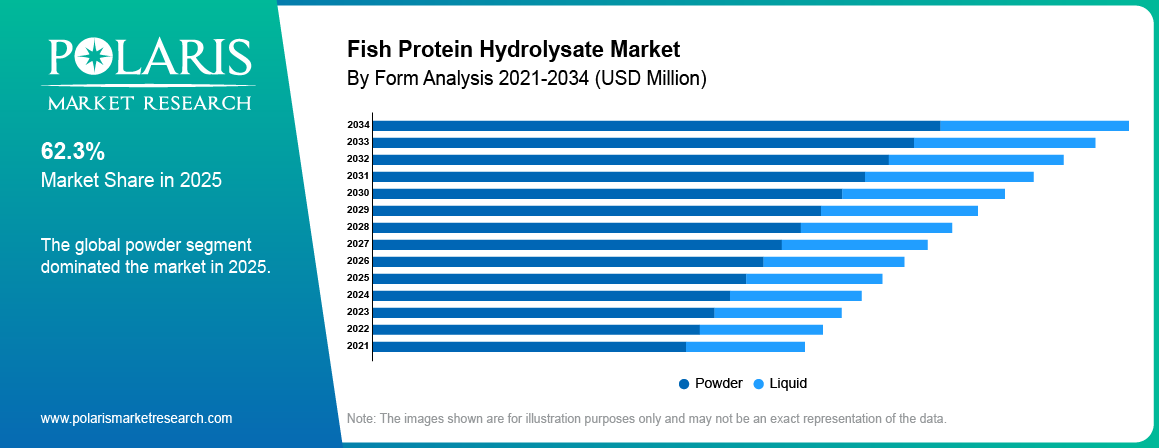
Source: Polaris Market Research Analysis
Regional Insights
North America Dominated the Largest Market in 2025
North America dominated the fish protein hydrolysate market in 2025, accounting for 39.5% of the global revenue share. Anticipated trends and an increasing preference for collagen-enriched and anti-aging products in the region are expected to boost the demand for the product in the cosmetics industry throughout the forecast period. Fish Protein Hydrolysate (FPH) is utilized in the production of serums, anti-aging creams, and face masks due to its high protein concentration and amino acid content.
The growing awareness of skincare in the region is predicted to fuel the demand for FPH in both the cosmetics and healthcare sectors in the coming years. The presence of well-established manufacturers of cosmetics products in the region, including Dr. Dennis Gross Skincare LLC, Elemis Ltd., and ReeceThomas LLC, which are actively expanding their product portfolios and consumer reach by introducing cosmetics solutions rich in protein and marine collagen, is expected to drive market growth further.
Asia Pacific is expected to register the fastest growth during 2026–2034, expanding at a CAGR of 5.2%.
In the regional food sector, fish protein is primarily employed for nutritional and dietary supplements. However, the market in the region has yet to fully explore its potential in the beverage’s application. The growing focus on products targeting mental well-being and overall health has spurred the industry to engage in new research and development initiatives related to food.
Despite uncertainties related to existing regulations, Fish Protein Hydrolysate (FPH) is shaping the landscape of a swiftly evolving market in key countries such as China, India, Japan, and Australia. The industry is expected to experience growth driven by the increasing self-care movement, shifts in food regulations, and ongoing scientific evidence emphasizing the crucial link between diet and health.
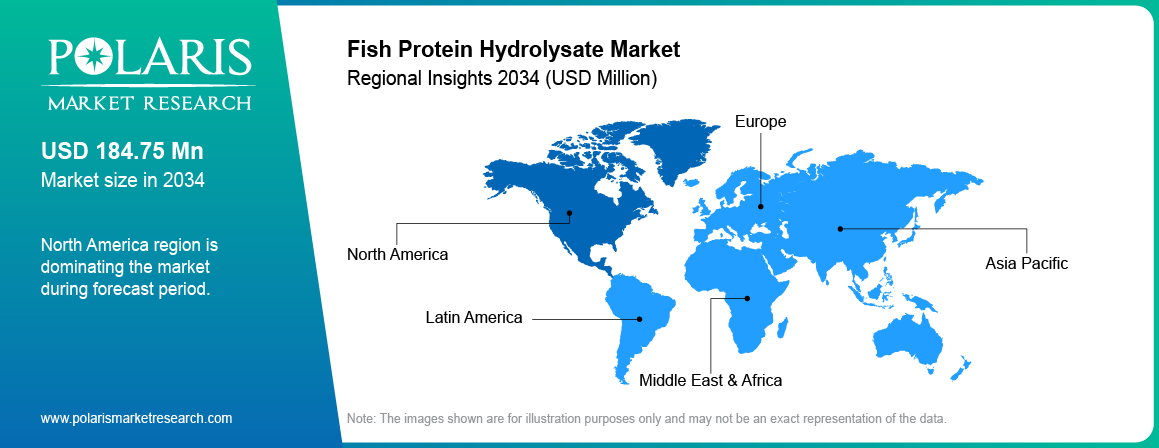
Source: Polaris Market Research Analysis
Key Market Players & Competitive Insights
The market is characterized by intense competition, with established players relying on advanced technology, high-quality products, and a strong brand image to drive revenue growth. These companies employ various strategies such as research and development, mergers and acquisitions, and technological innovations to expand their product portfolios and maintain a competitive edge in the market.
Some of the major players operating in the global market include:
- Alaska Protein Recovery, LLC
- Bio-marine Ingredients Ireland Ltd.
- BrownsFish Genesis
- Copalis Sea Solutions
- Diana Group
- Dramm Corp.
- Great Pacific BioProducts Ltd.
- Hofseth BioCare
- Janatha Fish Meal & Oil Products
- Marutham Bio Ages Innovations (p) Ltd.
- Neptune's Harvest
- New Alliance Dye Chem Pvt. Ltd.
- Sampi
- Scanbio
- Shenzhen Taier
- Sopropeche
- U.S. Ag Florida, Inc.
- United Fisheries
Future Outlook
The fish protein hydrolysate market is expected to grow with rising demand for sustainable marine protein products. Increasing aquaculture production and wider use in sports nutrition, pharmaceuticals, and beauty supplements will support demand. Marine biotechnology advancements are helping improve product development. AI-based processing systems and sustainable seafood utilization are expected to improve production efficiency. Growing innovation in bioactive peptides may further support commercial adoption across global markets
Recent Developments
- January 2026: ICAR-Central Institute of Brackishwater Aquaculture (ICAR-CIBA) partnered with Om Sai Aqua. The collaboration aims to evaluate marine protein hydrolysate for improving the growth and survival of Pacific white shrimp (Penaeus vannamei). (Source: icar.org.in)
- April 2026: Symrise announced new investments in sustainable protein innovation. The initiative supports the development of next-generation nutrition ingredients for animal and pet nutrition markets. (Source: worldbiomarketinsights.com)
- February 2025: Hofseth BioCare ASA announced a strategic partnership with Symrise AG, securing a €5 million loan to build a second enzymatic hydrolysis plant in Berkåk, Norway, tripling salmon-based hydrolysate production and supporting global distribution. (Source: symrise.com)
Fish Protein Hydrolysate Market Report Scope
| Report Attributes | Details |
| Market size value in 2025 | USD 309.37 million |
| Market size value in 2026 | USD 322.80 million |
| Revenue forecast in 2034 | USD 467.73 million |
| CAGR | 4.7% from 2026 – 2034 |
| Base year | 2025 |
| Historical data | 2021 – 2024 |
| Forecast period | 2026 – 2034 |
| Quantitative units | Revenue in USD million and CAGR from 2026 to 2034 |
| Segments Covered | By Source, By Form, By Technology, By Application, By Region |
| Regional scope | North America, Europe, Asia Pacific, Latin America, Middle East & Africa |
| Customization | Report customization as per your requirements with respect to countries, region, and segmentation. |
Source: Polaris Market Research Analysis
Fish Protein Hydrolysate Market FAQ's
Fish Protein Hydrolysate Market report covering key segments are source, form, technology, application, and region
Fish Protein Hydrolysate Market Size Worth $ 467.73 Million By 2034
The global Fish Protein Hydrolysate market is expected to grow at a CAGR of 4.7% during the forecast period.
North America dominated the fish protein hydrolysate market in 2025, accounting for 39.5% of the global revenue share.
The key driving factors in Fish Protein Hydrolysate Market are Ongoing research activities and implementation of advanced production technologies.
Download Sample Report of Fish Protein Hydrolysate Market
Please fill out the form to request a customized copy of the research report.


