
Epilepsy Drugs Market Share, Size, Trends, Industry Analysis Report, 2026 - 2034
REPORT DETAILS
Epilepsy Drugs Market Size and Growth Outlook
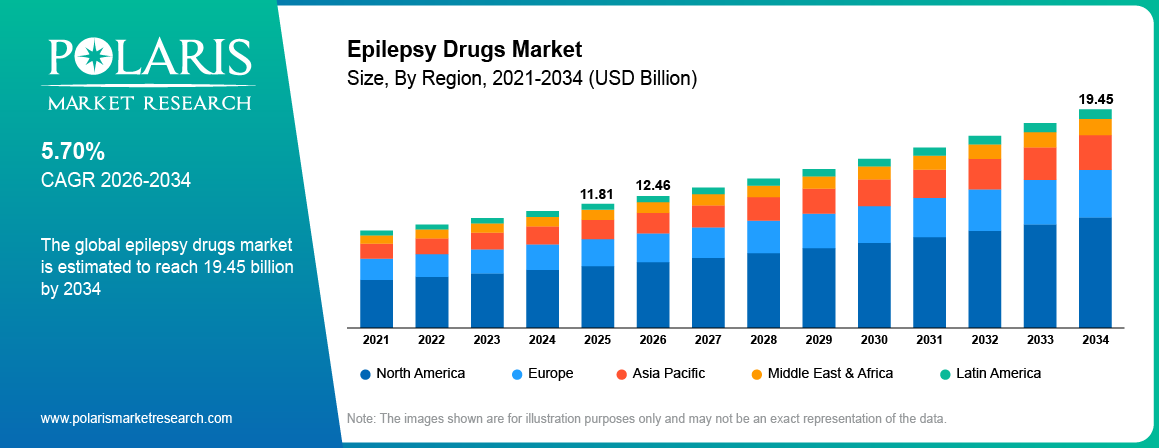
The epilepsy drugs market size was valued at USD 11.81 billion in 2025 and is expected to register a CAGR of 5.70% from 2026 to 2034. Rising incidence of epilepsy across the world and growing awareness of disease treatment boost the demand for epilepsy drugs. Further, increasing advancements in the treatment of epilepsy are expected to drive the industry expansion in the coming years.
Market Statistics
Epilepsy Drugs Market Key Takeaways
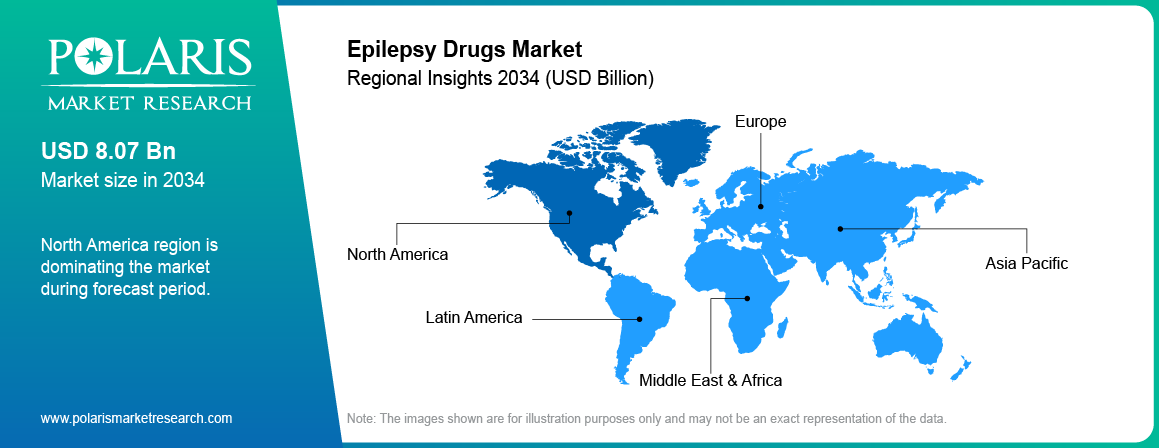
- North America held the largest revenue share of 41.5% in 2025. The dominance is attributed to the high awareness of epilepsy, well-established healthcare infrastructure, and widespread access to advanced antiepileptic therapies.
- The Asia Pacific epilepsy drugs industry is expected to exhibit the highest CAGR of 7.9% during the forecast period. The growth is driven by the increasing prevalence of epilepsy, improving healthcare infrastructure, expanding access to neurological care, and rising healthcare expenditure.
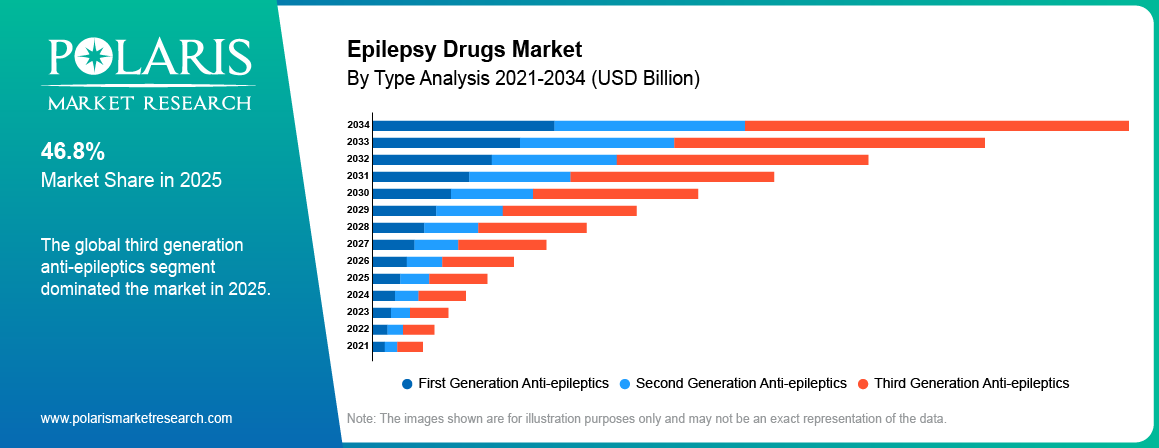
- The third generation anti-epileptics segment held the largest share of 46.8% in 2025. Their improved safety profiles, enhanced efficacy, better tolerability, and reduced side effects fuel the segment growth.
- In 2025, the oral segment held the largest share of 82.4%. Its noninvasive administration, ease of use, high patient compliance, and convenience for long-term epilepsy management propel the segment dominance.
- Broad-spectrum AEDs held the largest market share of 63.2% in 2025. This is due to their ability to effectively manage multiple seizure types within a single patient, reducing the need for multiple medications and supporting improved treatment outcomes.
Note: Figures and projections outlined in this report are the result of Polaris Market Research’s proprietary analytical processes, grounded in the latest available datasets and market observations.
Epilepsy Drugs Market Definition and Treatment Scope
Epilepsy drugs are also known as anti-epileptic drugs (AEDs) or anticonvulsants. These medications are prescribed to control and prevent seizures. Epilepsy drugs help reduce seizure frequency. Many mechanisms such as regulating neurotransmitter activity and stabilizing brain signals are used to manage different epilepsy forms. The drugs improve patient quality of life.
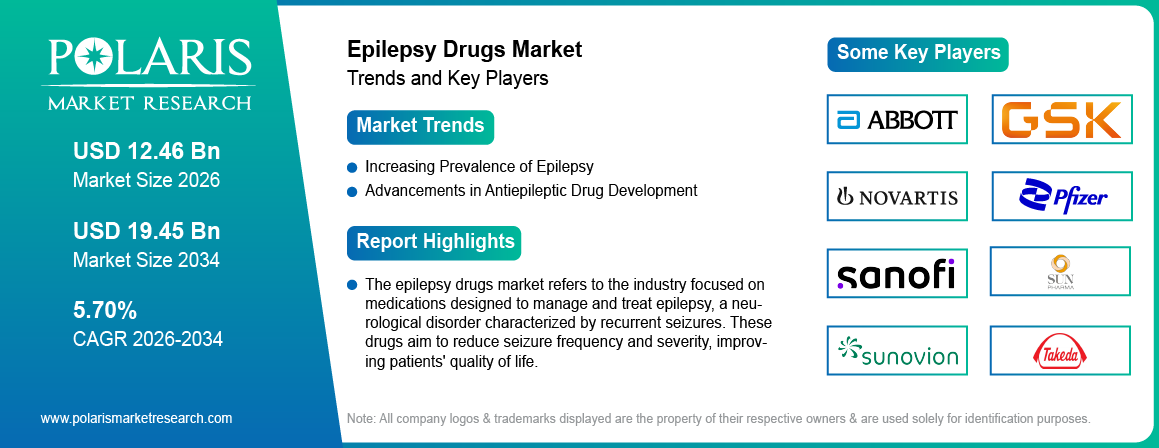
The epilepsy drugs market refers to the industry focused on medications designed to manage and treat epilepsy, a neurological disorder characterized by recurrent seizures. These drugs aim to reduce seizure frequency and severity, improving patients' quality of life. The market includes a range of treatment options, from first-generation antiepileptic drugs to newer, more advanced formulations that offer improved efficacy and fewer side effects. With a growing number of epilepsy cases worldwide, the demand for effective medications continues to rise, making this a crucial segment within the broader pharmaceutical industry.
The increasing prevalence of epilepsy, coupled with rising awareness about available treatment options such as epilepsy treatment devices and drugs, is a major factor driving the epilepsy drugs market growth. Additionally, advancements in drug development have led to the introduction of innovative medications with enhanced safety profiles, further boosting market demand. Government initiatives aimed at improving access to healthcare, along with growing investments in neurological research, are also contributing to epilepsy drugs market expansion. Moreover, the development of novel drug delivery systems is expected to enhance treatment outcomes, supporting the market forecast for steady growth in the coming years.
Source: Polaris Market Research Analysis
To Understand More About this Research:Download Sample Report
Industry Dynamics
- The increasing prevalence of epilepsy propels the requirement for effective antiepileptic medications, propelling the market growth.
- Rising advancements in drug development contribute to the industry growth by offering effective treatment options.
- Governments across the world are taking various initiatives to improve access to epilepsy treatment. Such initiatives are expected to offer lucrative opportunities during the forecast period.
- Drug resistance in a significant percentage of epilepsy patients hinders the industry expansion.
AI in Epilepsy Drug Discovery and Precision Treatment
- Artificial intelligence (AI) tools help analyze multimodal data, such as clinical, radiological, genetic, and electrophysiological. The data is used to customize drug choices for individual patients.
- AI use leads to the rapid discovery of novel anti-epileptic compounds as it simulates molecular interactions and predicts drug efficacy.
- It also helps repurpose existing drugs for rare epilepsy syndromes. It expands treatment options.
How Epilepsy Drugs Work
- The diagnosis of epilepsy relies on medical history, EEG, and other imaging tests.
- The most suitable anti-seizure medicine is prescribed by the physician.
- The patient takes the medicine following the prescription.
- Seizures are monitored and controlled promptly by the physician.
- If necessary, the dosage is adjusted to ensure better results.
- The continuous treatment is recommended to maintain seizure control and improve quality of life.
Types of Anti-Epileptic Drugs (AEDs) & Mechanism of Action
Anti-epileptic drugs (AEDs) stabilize electrical activity in the brain. It lowers the seizures frequency and severity. Treatment selection depends on seizure type, patient age, and tolerance to side effects. The market involves three drug generations. Each generation offers a different efficacy and safety profile.
Difference Between First-, Second-, and Third-Generation Anti-Epileptic Drugs (AEDs)
| Factor | First Generation AEDs | Second Generation AEDs | Third Generation AEDs |
| Development Period | Before the 1990s | During the 1990s–2000s | Recently developed therapies |
| Safety Profile | Higher risk of side effects | Improved tolerability | Enhanced safety. Targeted action |
| Drug Interactions | Frequent interactions | Reduced interactions | Minimal interactions |
| Mechanism of Action | Conventional mechanisms | Multiple and improved mechanisms | More targeted and precision-based mechanisms |
| Clinical Adoption | Widely established | Commonly prescribed | Growing adoption, especially for refractory epilepsy |
| Examples | Phenytoin, Carbamazepine, Valproate | Lamotrigine, Levetiracetam, Topiramate | Brivaracetam, Cenobamate, Perampanel |
Source: Polaris Market Research Analysis
Market Dynamics
Increasing Prevalence of Epilepsy
The rising prevalence of epilepsy significantly contributes to the epilepsy drugs market development. According to the Centers for Disease Control and Prevention, in 2021, approximately 2.9 million US adults aged 18 and older reported having active epilepsy, accounting for about 1% of the adult population. Globally, the number of epilepsy cases reached over 24 million in 2021, with an age-standardized prevalence rate of 307.38 per 100,000 persons. This increasing prevalence underscores the growing need for effective antiepileptic medications, thereby propelling the market growth.
Advancements in Antiepileptic Drug Development
Continuous research and development efforts have led to significant advancements in antiepileptic drug formulations, enhancing treatment efficacy and patient compliance. For instance, in 2022, the US Food and Drug Administration approved 37 new drugs, including novel therapies aimed at various medical conditions. Fintepla (fenfluramine) oral solution received approval in 2020 for the treatment of Dravet syndrome, a type of epilepsy, in patients aged two and older. In 2022, CDER also approved Fintepla for managing Lennox-Gastaut syndrome, another form of epilepsy, in the same age group. Additionally, recent studies have highlighted the introduction of drugs like brivaracetam, cannabidiol, cenobamate, everolimus, and fenfluramine, which have been employed in patients with epilepsy. These advancements in drug development contribute to the epilepsy drugs market growth by offering more effective treatment options.
Drug-Resistant (Refractory) Epilepsy: Treatment Landscape
Approximately one-third of patients with epilepsy are resistant to conventional treatments with antiepileptic drugs. Thus, there is always a consistent demand for improved treatment options.
- Prevalence: Drug resistance is an issue in a rising number of epilepsy patients. It reduces the efficacy of the initial drug regimen.
- Combination Therapy: Doctors are preferring combinations of different AED with complementary actions. The combination therapies help enhance seizure management in drug-resistant patients.
- Advanced Drug Development: Cenobamate, fenfluramine, and many others are examples of third generation AEDs. They act well to counteract resistant seizures.
- Alternative Non-Pharmacological Options: There seems to be a new trend towards the use of neurostimulation and diet along with drugs among those who are resistant to drugs.
- Innovation in the pipeline: Current clinical research in AEDs involves development of new methods of treatment for drug-resistant seizures.
Government Initiatives Enhancing Treatment Access
Government initiatives aimed at improving access to epilepsy treatment have played a crucial role in creating epilepsy drugs market opportunities. For instance, the US Department of Veterans Affairs has established the Epilepsy Centers of Excellence (ECoE) to provide comprehensive epilepsy care to veterans. A 2024 study concluded that the total number of unique patient clinical visits for therapeutic and diagnostic encounters in these centers rose by 74%, increasing from 10,487 in 2011 to 18,285 in 2023. This growth was nearly double the 39.5% increase in workforce strength, which expanded from 119 in 2011 to 166 in 2022 over a comparable period. Additionally, the Centers for Disease Control and Prevention (CDC) reported that epilepsy and seizures cost the nation at least USD 24.5 billion per year in medical costs, highlighting the economic impact and the need for accessible treatment options. These government efforts enhance patient access to care and stimulate the market growth.
Source: Polaris Market Research Analysis
Key Market Growth Drivers & Challenges
| Growth Drivers | Market Challenges |
| Rising global prevalence of epilepsy and seizure disorders | Side effects associated with long-term AED use |
| Continuous development of third-generation AEDs with improved safety | Persistent drug resistance among a significant patient subset |
| Government initiatives improving diagnosis and treatment access | High cost of advanced and third-generation therapies |
| Growing awareness and earlier diagnosis of epilepsy | Limited healthcare access and diagnostic infrastructure in developing regions |
| Expansion of reimbursement coverage for neurological treatment | Complex, multi-step diagnosis and treatment pathways |
Source: Polaris Market Research Analysis
Epilepsy Drugs Market Segment Analysis
Epilepsy Drugs Market by Drug Generation: First-, Second-, and Third-Generation Drugs
The epilepsy drugs market, by type, is segmented into first generation anti-epileptics, second generation anti-epileptics, and third generation anti-epileptics. The third generation anti-epileptics segment holds the largest market share in 2025 due to their improved safety profiles, enhanced efficacy, and reduced side effects compared to earlier generations. These newer drugs, such as lacosamide, perampanel, and brivaracetam, are designed with advanced mechanisms of action that provide better seizure control, particularly in patients suffering from drug-resistant or refractory epilepsy. Additionally, growing physician preference and patient adherence to these therapies have contributed to their wider adoption. The increasing availability of third-generation drugs through favorable reimbursement policies and expanded regulatory approvals across major markets has further accelerated their uptake. Moreover, rising awareness about epilepsy management and the growing demand for innovative treatment options have supported the segment’s dominance. As healthcare providers increasingly prioritize personalized and precision-based approaches to treatment, third-generation anti-epileptics have emerged as the preferred choice, strengthening their leading position in the market.
The second-generation anti-epileptic segment is expected to witness the highest CAGR during the forecast period. These drugs often offer advantages such as reduced side effects, fewer drug interactions, and improved patient compliance. The continuous introduction of innovative therapies within this category has garnered significant attention from both healthcare professionals and patients seeking alternative treatment options. This growing interest, coupled with ongoing research and development efforts, positions the second-generation anti-epileptic segment as the fastest growing within the epilepsy drugs market.
| Factor | First-Generation AEDs | New-Generation AEDs |
| Development | Earlier therapies | Advanced formulations |
| Side Effects | Higher risk in some cases | Improved safety profiles |
| Drug Interactions | More interactions | Fewer interactions |
| Adoption | Established clinical usage | Increasing preference in clinical practice |
| Dosing Flexibility | Limited dosing options | More flexible dosing regimens |
| Patient Tolerability | Lower in some patients | Better overall tolerability |
| Clinical Use | Widely used for established seizure control | Increasingly used for personalized epilepsy treatment |
Source: Polaris Market Research Analysis
Epilepsy Drugs Market by Route of Administration: Oral, Intravenous and Intramuscular
The epilepsy drugs market, by route of administration, is segmented into oral, intravenous, and intra-muscular. In 2025, the oral segment holds the largest share of the epilepsy drugs market revenue. The segment encompasses medications administered through the mouth, offering a non-invasive and convenient method for managing epilepsy. This route allows for easy self-administration, facilitating better adherence to prescribed regimens. The widespread availability of oral formulations, including tablets and capsules, further enhances accessibility for patients across various healthcare settings.
The intravenous segment involves the administration of antiepileptic drugs directly into the bloodstream, typically used in acute care settings for rapid seizure control. Advancements in intravenous formulations have improved their efficacy and safety profiles, making them more appealing for emergency interventions. The increasing prevalence of epilepsy-related emergencies and the need for immediate therapeutic responses have heightened the demand for intravenous treatments. Consequently, the intravenous segment is experiencing the highest growth rate within the epilepsy drugs market.
Epilepsy Drugs Market by Antiseizure Medication Type: Broad- and Narrow-Spectrum
The epilepsy drugs market, by antiepileptic drug type, is segmented into narrow-spectrum AEDs and broad-spectrum AEDs. The broad-spectrum AEDs segment secured the largest market share of the market. The broad-spectrum AEDs segment includes medications effective against various seizure types, making them versatile in treating diverse epilepsy forms. These drugs are often preferred due to their ability to manage multiple seizure types within a single patient, simplifying treatment regimens.
The epilepsy drugs market statistics indicate that this narrow-spectrum AEDs segment is experiencing the highest growth rate, driven by advancements in drug development and a better understanding of seizure pathophysiology. The narrow-spectrum AEDs segment comprises drugs tailored to specific seizure types, offering targeted therapeutic effects. The increasing emphasis on personalized medicine and the development of novel narrow-spectrum AEDs have contributed to their growing adoption.
Epilepsy Drugs Market by Distribution Channel: Hospital, Retail, and Online Pharmacies
| Real-World Application | Description |
| Preventing recurrent seizures | Anti-epileptic drugs help reduce the risk of repeated seizures in people diagnosed with epilepsy. |
| Managing focal and generalized epilepsy | Different medications are prescribed based on the type of epilepsy and seizure pattern. |
| Reducing seizure frequency | Regular treatment helps decrease the seizures frequency and severity over time. |
| Supporting long-term epilepsy management | Continuous medication is advised for achieving steady control of seizures. It helps in leading a normal life. |
| Treating drug-resistant epilepsy with advanced therapies | Newer anti-seizure drugs and combination therapy are being offered by market participants. These therapies can be provided to individuals who have resistance towards conventional treatment. |
Source: Polaris Market Research Analysis
Source: Polaris Market Research Analysis
Epilepsy Drugs Market Regional Analysis
In terms of region, the epilepsy drugs market is segmented into North America, Europe, Asia Pacific, Latin America, and the Middle East & Africa. Each region exhibits distinct market dynamics influenced by factors such as healthcare infrastructure, prevalence of epilepsy, governmental policies, and ongoing research and development activities. Understanding these regional variations is crucial for stakeholders aiming to navigate the global landscape of epilepsy treatment effectively.
North America Epilepsy Drugs Market
North America holds the largest share of the epilepsy drugs market revenue, primarily due to its advanced healthcare infrastructure, high awareness levels, and robust research and development initiatives. The US, in particular, leads in drug innovation, with numerous pharmaceutical companies developing new antiepileptic drugs and expanding treatment options. Favorable reimbursement policies and widespread access to healthcare contribute to increased drug adoption. The growing number of diagnosed epilepsy cases, along with an aging population, further boosts the demand for effective epilepsy treatments, thereby strengthening North America's dominant market position.
Asia Pacific Epilepsy Drugs Market
The Asia Pacific epilepsy drugs market is experiencing the highest growth rate, driven by a large and diverse population, increasing prevalence of epilepsy, and improving healthcare infrastructure. Countries such as China and India are witnessing rapid urbanization and enhanced access to medical services, leading to higher diagnosis and treatment rates. Government initiatives aimed at improving healthcare access and affordability, along with rising awareness about neurological disorders, are further propelling market growth in this region.
Source: Polaris Market Research Analysis
Key Players and Competitive Insights
The competitive landscape of the epilepsy drugs market is characterized by robust research and development initiatives, strategic partnerships, and a focus on expanding product portfolios. Companies strive to innovate and introduce novel therapies to address unmet medical needs and improve patient outcomes. Collaborations, such as the one between Stoke Therapeutics and Biogen Inc. for the development of treatments targeting severe childhood epilepsy, exemplify the industry's commitment to advancing care through combined expertise and resources. Additionally, mergers and acquisitions, such as H. Lundbeck A/S's agreement to acquire Longboard Pharmaceuticals, underscore the dynamic nature of the market as companies seek to strengthen their positions and enhance their offerings.
UCB S.A. is a global biopharmaceutical company specializing in neurology and immunology. The company offers several antiepileptic drugs, including Keppra (levetiracetam), Briviact (brivaracetam), and Vimpat (lacosamide), which are widely used in the management of various seizure types. UCB's commitment to epilepsy care is evident through its continuous investments in research and development to improve treatment options and patient quality of life.
Eisai Co., Ltd. is a pharmaceutical company with a strong focus on neurology and oncology. In the epilepsy market, Eisai offers Fycompa (perampanel), a medication approved for the treatment of partial-onset seizures and primary generalized tonic-clonic seizures in epilepsy patients. Eisai's dedication to addressing neurological disorders is reflected in its ongoing research efforts and commitment to providing innovative solutions for epilepsy management.
List of Key Companies
- UCB
- Eisai Co., Ltd.
- Pfizer Inc.
- Sanofi
- Jazz Pharmaceuticals plc
- SK Life Science, Inc.
- Neurelis, Inc.
- Marinus Pharmaceuticals, Inc.
- Lundbeck
- Takeda Pharmaceutical Company Limited
- Otsuka Pharmaceutical Co., Ltd.
- Novartis AG
- Lupin Limited
- Aquestive Therapeutics, Inc.
- Biohaven Ltd.
Epilepsy Drugs Industry Developments
- April 2026: The U.S. FDA approved an updated safety label for Diacomit (stiripentol), incorporating new post-marketing adverse reaction information to support ongoing pharmacovigilance.
- March 2026: Xenon Pharmaceuticals Inc. announced positive results from the Phase 3 X-TOLE2 study of azetukalner in focal onset seizures (FOS). Azetukalner is a novel, potent, KV7 potassium channel opener. It is currently in clinical development for depression and epilepsy. (Source: investor.xenon-pharma.com)
- January 2026: Praxis Precision Medicines announced progress toward FDA submission for relutrigine following positive clinical data in developmental and epileptic encephalopathies, strengthening the industry's precision medicine pipeline. (source: Praxis Precision Medicines – Corporate Update)
- July 2025: The U.S. Food and Drug Administration (FDA) granted Breakthrough Therapy Designation to relutrigine for the treatment of SCN2A- and SCN8A-related developmental and epileptic encephalopathies (DEEs). The designation is intended to accelerate the development and regulatory review of therapies that demonstrate substantial improvement over existing treatments for serious conditions.
- February 2025: Stoke Therapeutics Inc. and Biogen Inc. announced a collaboration to develop and commercialize zorevunersen, a treatment for Dravet syndrome, a severe form of childhood epilepsy. Under the agreement, Stoke retains rights in the US, Canada, and Mexico, while Biogen will manage markets in the Rest of world.
Future Outlook of Epilepsy Drugs Market
The epilepsy drugs industry is expected to grow at a faster pace during the forecast period. Increasing demand for effective seizure management therapies will drive the market growth. The market expansion would be fueled by the rising advancements in neurological research. Future growth will be supported by next-generation anti-epileptic drugs, personalized medicine approaches, digital monitoring technologies, and improved access to neurological healthcare. Continuous innovation will focus on enhancing treatment effectiveness while reducing side effects and improving patient outcomes.
Epilepsy Drugs Market Segmentation
By Type Outlook (Revenue-USD Billion, 2021–2034)
- First Generation Anti-epileptics
- Second Generation Anti-epileptics
- Third Generation Anti-epileptics
By Route of Administration Outlook (Revenue-USD Billion, 2021–2034)
- Oral
- Intravenous
- Intra-muscular
By Antiepileptic Drugs Type Outlook (Revenue-USD Billion, 2021–2034)
- Narrow-Spectrum AEDs
- Broad-Spectrum AEDs
By Distribution Channel Outlook (Revenue-USD Billion, 2021–2034)
- Hospital Pharmacies
- Retail Pharmacies
- Others
By Regional Outlook (Revenue-USD Billion, 2021–2034)
- North America
- US
- Canada
- Europe
- Germany
- France
- UK
- Italy
- Spain
- Netherlands
- Russia
- Rest of Europe
- Asia Pacific
- China
- Japan
- India
- Malaysia
- South Korea
- Indonesia
- Australia
- Vietnam
- Rest of Asia Pacific
- Middle East & Africa
- Saudi Arabia
- UAE
- Israel
- South Africa
- Rest of Middle East & Africa
- Latin America
- Mexico
- Brazil
- Argentina
- Rest of Latin America
Epilepsy Drugs Market Report Scope
| Report Attributes | Details |
| Market Size Value in 2025 | USD 11.81 billion |
| Market Size Value in 2026 | USD 12.46 billion |
| Revenue Forecast by 2034 | USD 19.45 billion |
| CAGR | 5.70% from 2026 to 2034 |
| Base Year | 2025 |
| Historical Data | 2021–2024 |
| Forecast Period | 2026–2034 |
| Quantitative Units | Revenue in USD billion and CAGR from 2025 to 2034 |
| Report Coverage | Revenue Forecast, Market Competitive Landscape, Growth Factors, and Industry Trends |
| Segments Covered |
|
| Regional Scope |
|
| Competitive Landscape |
|
| Report Format |
|
| Customization | Report customization as per your requirements with respect to countries, regions, and segmentation. |
Source: Polaris Market Research Analysis
Epilepsy Drugs Market Strategic Insights for Industry Participants
Epilepsy Drug Pipeline, Product Innovation and Market Expansion Strategy
The epilepsy drugs market has been segmented into detailed segments of type, route of administration, antiepileptic drugs type, and distribution channel. Moreover, the study provides the reader with a detailed understanding of the different segments at both the global and regional levels.
Growth/Marketing Strategy
The epilepsy drugs market growth and marketing strategy focuses on expanding product portfolios, increasing market penetration, and leveraging strategic partnerships. Companies invest in research and development to introduce novel therapies with improved efficacy and safety profiles. Expanding geographic reach, particularly in emerging markets, is a key approach to tapping into underserved patient populations. Additionally, digital marketing, patient awareness programs, and collaborations with healthcare providers play a crucial role in enhancing brand visibility and driving drug adoption. Regulatory approvals and fast-track designations also support epilepsy drugs market expansion by accelerating the introduction of new treatments.
Epilepsy Drugs Market FAQs
The epilepsy drugs market size was valued at USD 11.81 billion in 2025 and is projected to grow to USD 19.45 billion by 2034.
The market is projected to register a CAGR of 5.70% during the forecast period.
North America held the largest share of the market in 2025.
A few key players in the epilepsy drugs market include UCB S.A.; Sanofi, Pfizer Inc.; Eisai Co., Ltd.; Abbott Laboratories; Novartis AG; GlaxoSmithKline plc; Sunovion Pharmaceuticals Inc. (a subsidiary of Sumitomo Pharma); Jazz Pharmaceuticals plc; Neurelis Inc.; Takeda Pharmaceutical Company; and Sun Pharmaceutical Industries Limited.
The oral segment accounted for the largest share of the market in 2025.
Epilepsy drugs, also known as antiepileptic drugs (AEDs), are medications used to manage and prevent seizures in individuals diagnosed with epilepsy. These drugs work by stabilizing electrical activity in the brain, reducing excessive nerve signaling that leads to seizures. AEDs are categorized into narrow-spectrum and broad-spectrum types, depending on whether they target specific seizure types or a wider range of epileptic conditions. They are administered through various routes, including oral, intravenous, and intramuscular methods, depending on the severity and urgency of treatment. While AEDs do not cure epilepsy, they help control seizure frequency and severity, significantly improving the quality of life for patients.
Yes. Most epilepsies are treatable through anti-seizure medications. The medication help control the seizures and provide symptomatic relief.
A few advancements are the development of next generation anti-seizure medications and precision medicine. Gene-based therapy and neuromodulators are other treatments.
Download Sample Report of Epilepsy Drugs Market
Please fill out the form to request a customized copy of the research report.


