
Green Technology & Sustainability Market Growth Report 2026-2034
REPORT DETAILS
Green Technology & Sustainability Market Summary
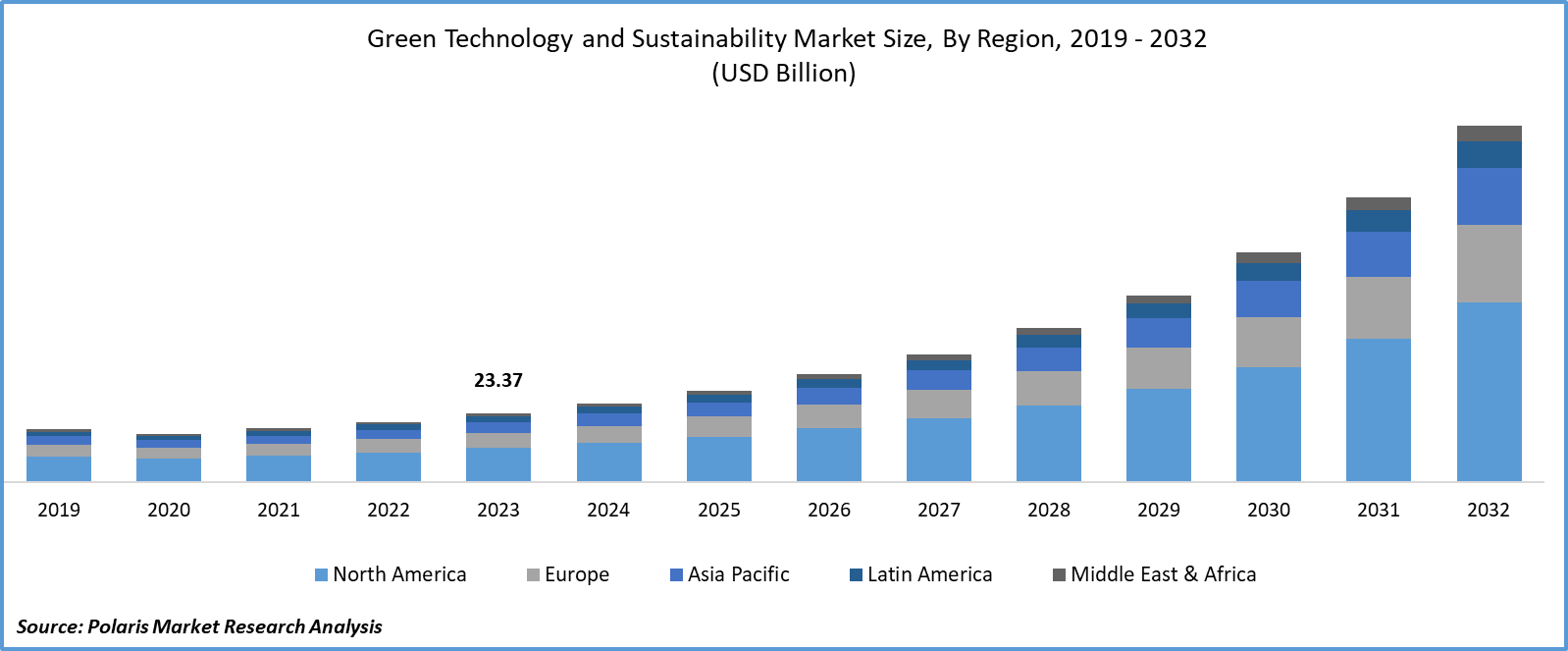
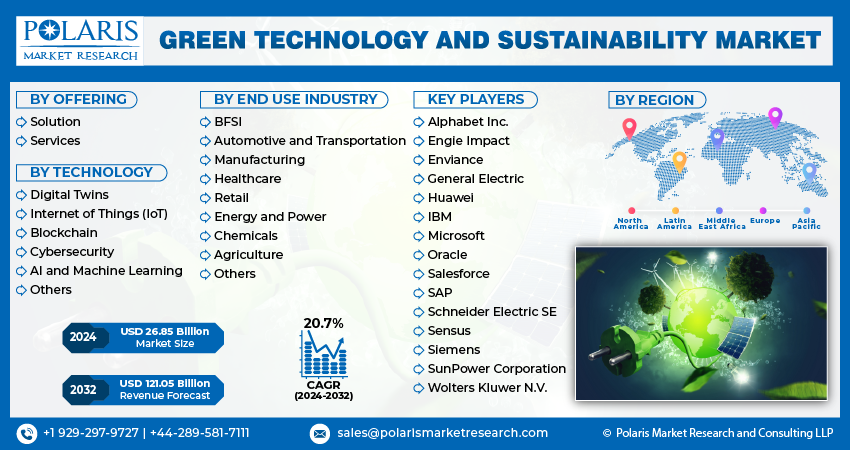
The global green technology and sustainability market size was valued at USD 30.61 billion in 2025. The market is projected to account for a CAGR of 23.08% between 2026 and 2034. Increasing awareness of climate change and the implementation of stringent environmental regulations and policies are the key factors driving market growth.
Market Statistics
Key Takeaways
- North America led the green technology and sustainability market with a 37.6% revenue share in 2025. This is owing to its stringent regulatory environment and significant financial investments.
- Asia Pacific is projected to register the highest CAGR of 24.6% between 2026 and 2034. Rising urbanization and population growth are necessitating sustainable solutions for efficient resource management in the region.
- The solution segment led the market with a 68.5% revenue share in 2025. There is an increased need for comprehensive solutions among consumers and businesses for addressing various sustainability challenges.
- The Internet of Things (IoT) segment led the market with a 29.8% revenue share in 2025. The technology improves energy efficiency by monitoring and improving energy consumption across various sectors.
Industry Dynamics
- Environmental regulations and policies have prompted businesses to innovate and adopt eco-friendly solutions. This, in turn, is driving market growth.
- Increasing awareness about climate change has resulted in consumers and businesses seeking eco-friendly solutions to mitigate their impact.
- The adoption of blockchain technology for sustainable tracking is expected to create several market opportunities.
- High initial costs associated with green technology may hinder market development.
Source: Polaris Market Research Analysis
To Understand More About this Research:Download Sample Report
AI Impact on Green Technology and Sustainability Market
- AI assists organizations to optimize their consumption of energy, water, and raw materials through spotting inefficiencies and offering ways to improve.
- AI also helps businesses make quick decisions on environmental data.
- Early detection of problems in machinery and systems is another benefit of AI technology.
- AI technology monitors the emission of pollutants and their effects on the environment. This helps companies meet sustainability goals and regulations.
Market Definition and Scope
The market of green technology and sustainability encompasses a wide range of solutions. Within this green technology and sustainability market report scope, these solutions include renewables, carbon management, smart grids, sustainable infrastructure, and environmental monitoring. The scope excludes pure fossil-fuel-based technologies and IT offerings not focused on sustainability solutions market. What differentiates this sector from conventional methods is the use of digital technologies, such as IoT, artificial intelligence, and blockchain, to enhance decision-making processes and achieve better sustainability outcomes.
The rapid growth of the global market for green technology solutions stems from the rising usage of such technologies, the need for ESG compliance and ESG technology adoption, and increased investment in renewable energy technologies. Companies have begun using green technologies in their processes to improve energy efficiency and reduce emissions.
Solar, wind, and hydropower investments can help countries cut their dependency on fossil fuels, while at the same time saving money in the long term. Likewise, innovations in energy-efficient technologies in the building, transportation, and manufacturing sectors are revolutionizing global industries.
Market Dynamics
Stringent Environmental Regulations and Policies
Environmental policies and regulations play an important role in driving the green technology and sustainability market growth. Environmental policies and regulations encourage companies to adopt environmentally friendly innovations. Emission requirements and policies for renewable energy encourage companies to explore the benefits of green technology. Government incentives also encourage companies to adopt sustainable solutions. There has been an increase in consumer demand for environmentally friendly products. Companies adapt to environmental policies by implementing sustainability within their operations. This not only ensures compliance but also gives them an edge in the business market.
Increasing Awareness of Climate Change
The rising consciousness about climate change has increased the demand for sustainable technologies and green solutions. With the rise in environmental pollution and depletion of resources, people are becoming conscious of environmentally friendly solutions to mitigate the negative effects of their activities on Earth. Strict government policies and regulations have been put into place to push organizations toward sustainable technology and practices. Organizations are setting net-zero goals. This has led to increased demand for carbon monitoring technology, ESG software, and energy optimization technology. From renewable energy sources like wind and solar energy to energy-efficient appliances and eco-friendly transport systems, there is a rising demand for green technology.
Market Opportunities
The green technology and sustainability market is creating new opportunities as businesses and governments place more focus on sustainability. The use of AI to track and improve environmental performance is growing, helping organizations make better decisions. At the same time, smart cities and eco-friendly buildings are increasing the demand for sustainable solutions. Technologies that reduce or capture carbon emissions are also gaining attention as companies work toward climate goals. Rising investments in climate-focused startups are further supporting innovation in the market.
Market Challenges
Some of the major problems facing the sector that may hinder the implementation of green technologies include high initial costs, a significant issue particularly for small firms. The incorporation of any new technology into existing systems may also be time-consuming. Moreover, the absence of standardized practices worldwide creates problems for corporations doing business across different regions. Most businesses find it hard to gauge their benefits at an initial stage. This makes it harder to justify investments, even though the long-term benefits are clear.
Source: Polaris Market Research Analysis
Segmental Analysis
By Offering Insights
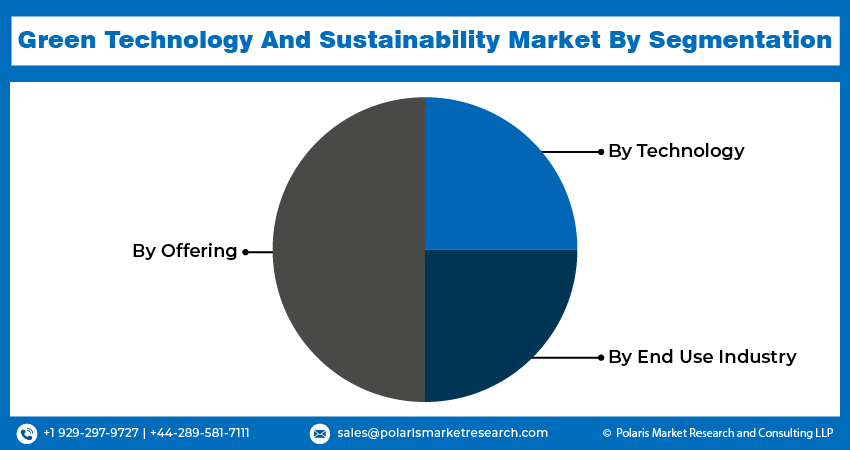
Based on offering, the green technology and sustainability market is segmented into solution and services. The solution segment led the market with a 68.5% revenue share in 2025. Consumers and companies need an all-around solution that is capable of addressing various sustainability challenges. There is a certain degree of complexity in implementing sustainable technology, which means that companies need a more specialized approach. Furthermore, packaged solutions are an economical means to address such challenges. As regulatory demands rise, businesses also require customized solutions to meet regulatory requirements. The value-added services, including training and optimization, serve to boost the attractiveness of the comprehensive solutions. All these factors contribute to the segment’s leading market position.
By Technology Insights
Based on technology, the market is segmented into digital twins, internet of things (IoT), blockchain, cybersecurity, AI and machine learning, and others. The internet of things (IoT) segment accounted for the largest green technology and sustainability market share of 29.8% in 2025. IoT improves the efficiency of energy utilization by measuring and optimizing its use in different industries. IoT helps in the deployment of smart grids, which increase the efficiency and reliability of energy delivery networks. The technology is effective in resource management in that it helps optimize the use of water resources in farming. IoT helps manage waste through the implementation of smart waste bins and recycling technology. IoT sensors have been effectively utilized in environmental monitoring, offering insight into water and air quality levels. This further drives demand for monitoring solutions to address environmental challenges in an effective way.
By End Use Industry Insights
Based on end use industry, the market is segmented into BFSI, automotive and transportation, manufacturing, healthcare, retail, energy and power, chemicals, agriculture, and others. The energy and power segment accounted for a significant revenue share in 2025. High energy consumption makes it essential to seek sustainable means to lower the environmental footprint. Stringent emissions rules lead companies to adopt greener technologies to meet the requirements. There is also potential for substantial financial gains through the use of energy-saving devices and alternative energy sources. In addition, the continuous improvement of renewable energy and energy grids catalyzes market growth. Corporate sustainability efforts also contribute to its market leadership.
Source: Polaris Market Research Analysis
Regional Insights
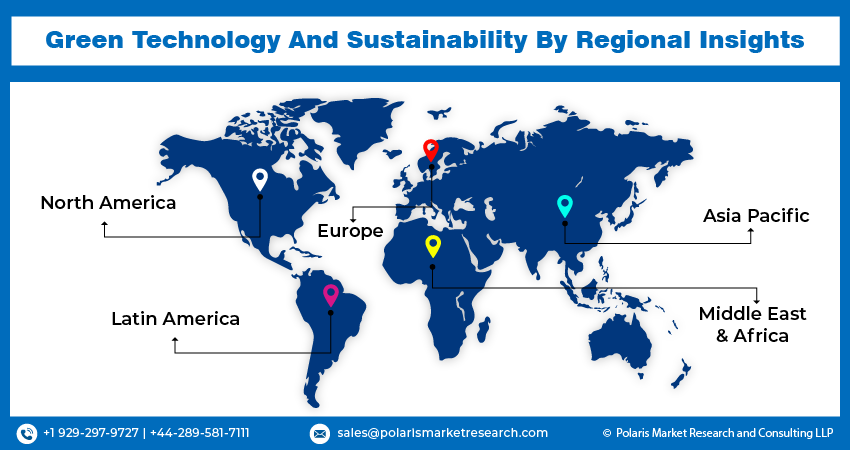
North America led the green technology and sustainability market with a 37.6% revenue share in 2025. The stringent regulatory framework in place encourages adoption, and technological innovation helps expand its market presence. Huge capital investments by governments and private entities help improve infrastructure. Increasing consumer awareness and rising demand for environmentally friendly products are driving market growth. Government and other company incentives encourage organizations to engage in environmentally sustainable activities. The availability of abundant renewable energy sources, such as wind and solar, helps tap into many green energy initiatives. Also, infrastructure development efforts help in establishing the region's leadership in green technologies and sustainability solutions.
Asia Pacific is projected to account for a 24.6% CAGR during the forecast period. Urbanization and rapid population growth require sustainable ways to effectively manage resources. Governments have put in place measures to encourage green technologies, and the area offers excellent investment opportunities in renewable energy and sustainable infrastructure. Developing countries offer enormous potential due to higher awareness levels and rising disposable incomes. Environmental concerns and international collaboration further support the region’s commitment to sustainable development.
Source: Polaris Market Research Analysis
Key Players and Competitive Insights
The green technology and sustainability market comprises several players, and new entrants are anticipated to fuel competition. Existing green technology and sustainability market leaders constantly innovate in order to stay ahead of the competition through the effectiveness, efficiency, and safety of their products. These companies focus on strategic initiatives such as developing business partnerships, improving their product lines, and entering joint ventures to surpass competitors.
IBM helps organizations reduce their ecological footprint through data and digitization. Its solutions focus on promoting higher energy efficiency and measuring carbon emissions. Additionally, IBM operates its business in accordance with sound sustainability principles, specifically in energy efficiency and resource management.
Oracle allows companies to be as efficient as possible while being environmentally friendly through its technology and cloud computing capabilities. It allows companies to function efficiently and utilize their resources effectively. Moreover, Oracle is increasingly becoming eco-friendly by relying on renewable energy sources.
List of Key Companies
- Alphabet Inc.
- Engie Impact
- Enviance
- General Electric
- Huawei
- IBM
- Microsoft
- Oracle
- Salesforce
- SAP
- Schneider Electric SE
- Sensus
- Siemens
- SunPower Corporation
- Wolters Kluwer N.V.
Market Ecosystem
The market ecosystem comprises multiple parties that collaborate for growth. Solution providers create technologies that aid in achieving sustainable development. Infrastructure providers construct the necessary infrastructure to implement these solutions.
End users include businesses and consumers. These end users play an important role by adopting these technologies in daily operations. At the same time, regulatory bodies set rules and guidelines that shape market development and ensure sustainability efforts stay on track.
Industry Developments
February 2025: Siemens Advanta incorporated sustainability features into its services. It introduced energy-efficient hospital products and sustainable manufacturing methods. This helps it achieve environmental objectives and encourages innovation.
January 2025: Microsoft upgraded its Cloud for Sustainability software. It introduced AI features on the Sustainability Manager. These AI features were added to help automate data management and reporting. They include Microsoft Copilot, which enables users to request ESG information and create reports through natural language processing.
Market Segmentation
By Offering Outlook (Revenue, USD Billion, 2021–2034)
- Solution
- Services
By Technology Outlook (Revenue, USD Billion, 2021–2034)
- Digital Twins
- Internet of Things (IoT)
- Blockchain
- Cybersecurity
- AI and Machine Learning
- Others
By End Use Industry Outlook (Revenue, USD Billion, 2021–2034)
- BFSI
- Automotive and Transportation
- Manufacturing
- Healthcare
- Retail
- Energy and Power
- Chemicals
- Agriculture
- Others
By Regional Outlook (Revenue, USD Billion, 2021–2034)
- North America
- US
- Canada
- Europe
- Germany
- France
- UK
- Italy
- Spain
- Netherlands
- Russia
- Rest of Europe
- Asia Pacific
- China
- Japan
- India
- Malaysia
- South Korea
- Indonesia
- Australia
- Vietnam
- Rest of Asia Pacific
- Middle East & Africa
- Saudi Arabia
- UAE
- Israel
- South Africa
- Rest of Middle East & Africa
- Latin America
- Mexico
- Brazil
- Argentina
- Rest of Latin America
Green Technology and Sustainability Market Report Scope
| Report Attributes | Details |
| Market Size in 2025 | USD 30.61 billion |
| Market Size in 2026 | USD 37.62 billion |
| Revenue Forecast by 2034 | USD 198.36 billion |
| CAGR | 23.08% |
| Base Year | 2025 |
| Historical Data | 2021–2024 |
| Forecast Period | 2026–2034 |
| Quantitative Units | Revenue in USD billion, and CAGR from 2026 to 2034 |
| Report Coverage | Revenue Forecast, Market Competitive Landscape, Growth Factors, and Trends |
| Segments Covered |
|
| Regional Scope |
|
| Competitive Landscape | Green Technology and Sustainability Industry Trend Analysis (2025) Company profiles/industry participants profiling include company overview, financial information, product/service benchmarking, and recent developments |
| Report Format | PDF + Excel |
| Customization | Report customization as per your requirements with respect to countries, regions, and segmentation. |
Source: Polaris Market Research Analysis
Research Methodology
The findings of this report are derived from primary and secondary sources as well as data verification. Expert opinions in the industry are validated through reliable sources and cross-referenced using various data points. Differences in market size across reports can arise from variations in scope, definitions, and segmentation.
Report Coverage
The green technology and sustainability market report emphasizes key regions worldwide to provide users with a better understanding of the product. Also, the report provides market insights into recent developments and trends, and analyzes the technologies gaining traction worldwide. Furthermore, the report provides in-depth qualitative analysis of the various paradigm shifts associated with the transformation of these solutions.
The report provides a detailed analysis of the market, focusing on key aspects such as competitive analysis, offerings, technologies, end-use industries, and future growth opportunities.
Green Technology & Sustainability Market FAQ's
The market encompasses technologies that minimize environmental damage by increasing energy efficiency, using renewable energy sources, and managing resources sustainably.
The market for green technology and sustainability was valued at USD 30.61 billion in 2025. It is projected to reach USD 198.36 billion by 2034.
The market is projected to grow at a CAGR of 23.08% between 2026 and 2034.
The internet of things (IoT) segment led the green technology and sustainability market in 2025. This is because IoT improves the efficiency of energy utilization by measuring and optimizing its use in different industries.
Asia Pacific is projected to register the fastest growth. Rapid urbanization and population growth are driving the demand for green technology and sustainability solutions in the region.
The adoption of green technology is primarily driven by a combination of cost regulations and environmental necessity.
Green building technologies are innovative systems and techniques. They are designed to minimize the environmental impact of a building. They also enhance occupant health and efficiency.
AI optimizes resource use and reduces waste. It also accelerates the development of green technologies.
Download Sample Report of Green Technology & Sustainability Market
Please fill out the form to request a customized copy of the research report.


