
Non-Alcoholic Steatohepatitis Treatment Market Size, Share, Trends & Forecast, 2026-2034
REPORT DETAILS
MASH / NASH Treatment Market Overview: Approved Drugs, Pipeline & Fibrosis Stages
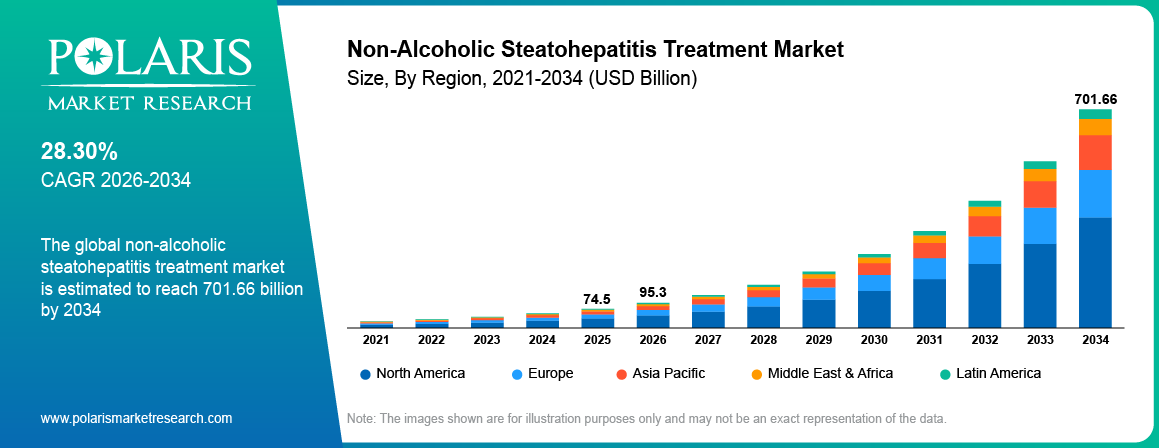
The non-alcoholic steatohepatitis treatment market size was valued at USD 74.5 billion in 2025. The market is projected to grow from USD 95.3 billion in 2026 to USD 701.66 billion by 2034, exhibiting a CAGR of 28.30% during 2026–2034.
Market Statistics
Non-Alcoholic Steatohepatitis Treatment Market Key Takeaways
- North America accounted for the highest share of 44.1% in 2025. Growing obesity rates and well-established healthcare infrastructure are the key factors supporting the market growth.
- Asia Pacific is estimated to be the fastest-growing market with a CAGR of 15.2% during 2026–2034. Growing awareness and healthcare facilities are boosting the demand for the obesity market.
- China is a prominent growth market with a CAGR of 15.8% during 2026–2034. Growing aging population and increasing prevalence of metabolic disorders are raising the need for treatment.
- Vitamin E and Pioglitazone led the drug segment with 24.8% in 2025. It is largely used for their efficiency and affordability.
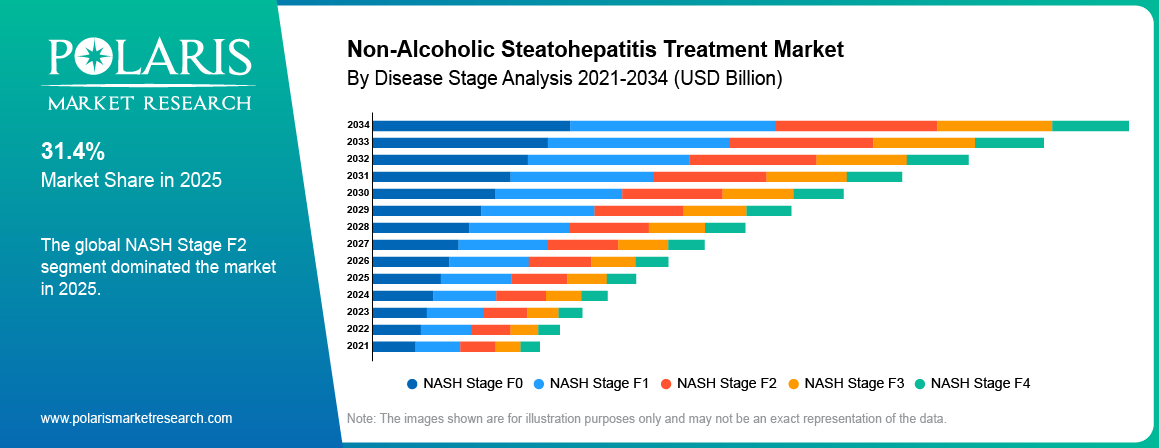
- NASH Stage F2 held 31.7% of the market in 2025. Demand in this stage is driven by early diagnosis and timely treatment.
- The retail and specialty pharmacies segment is projected to be the fastest-growing distribution channel, registering a CAGR of 15.6% during 2026–2034. The segment is growing with the help of improved access to medicines and better patient support.
Note: Figures and projections outlined in this report are the result of Polaris Market Research’s proprietary analytical processes, grounded in the latest available datasets and market observations.
Industry Dynamics
- Rising aging population is increasing the number of people at risk of NASH, as older adults are more likely to develop diabetes and hypertension. This is creating higher demand for NASH treatment options.
- The growing prevalence of type 2 diabetes is expanding the NASH patient population worldwide. Rising insulin resistance and health issues related to lifestyle are fueling market growth.
- Increasing cases of obesity and metabolic syndrome are adding to the growing burden of NASH. This is increasing the need for effective treatment and disease management.
- Growing awareness, improved diagnosis and ongoing clinical research is supporting the development of new NASH therapies. This is helping to expand the treatment market.
- The high cost of newer NASH therapies and limited availability of approved treatment options continue to restrict the market growth.
AI Impact on Non-Alcoholic Steatohepatitis Treatment Market
- AI is helping detect NASH earlier by studying liver scans and patient health data. This allows doctors to start treatment sooner.
- AI is making drug development faster by helping researchers find new drug targets and test medicines more quickly.
- AI is improving clinical trials by helping companies find suitable patients and analyze trial data faster.
- AI is supporting better treatment decisions by studying patient data and helping doctors choose the most suitable treatment.
Non-alcoholic Steatohepatitis Treatment Market Overview
Non-alcoholic steatohepatitis treatment is aimed at managing a serious form of fatty liver disease where inflammation and liver cell damage occur alongside fat accumulation in the liver, unrelated to alcohol use. This condition, if untreated, leads to fibrosis, cirrhosis, liver cancer, and even liver failure. The rising prevalence of non-alcoholic steatohepatitis is a key driver of the non-alcoholic steatohepatitis treatment market expansion. The global increase in prevalence of obesity is significantly contributing to the growing demand for NASH therapies, as obesity are major risk factors for NASH development. Governments and health organizations are intensifying efforts to address liver diseases, including NASH, through public health campaigns, research funding, and enhanced access to diagnostic tools. This focus is driving greater recognition of NASH as a significant and growing health concern, further boosting the non-alcoholic steatohepatitis treatment market demand. Moreover, advancements in diagnostic methods are enhancing the early detection of NASH, a critical factor for effective treatment. The development of noninvasive tools such as elastography and biomarkers has improved diagnostic accuracy, fueling increased demand for NASH treatments.
Source: Polaris Market Research Analysis
To Understand More About this Research: Download Sample Report
Understanding Non-alcoholic Steatohepatitis
Non-alcoholic steatohepatitis (NASH), also called metabolic dysfunction-associated steatohepatitis (MASH). NASH is a serious liver disease caused by excess fat accumulation in the liver. It causes inflammation and damage to liver cells and is not due to alcohol use. NASH most often occurs in people with obesity, type 2 diabetes, or metabolic syndrome. If untreated, NASH can cause fibrosis, cirrhosis, liver failure or liver cancer.
How NASH Treatment Works
An overaccumulation of fat in the liver leads to the beginning of NASH. It causes inflammation and damage to the cells in the liver. If not treated, scar tissue (fibrosis) begins to form and continues to get worse over time. Doctors diagnose NASH through imaging tests, blood tests (with biomarkers) or a liver biopsy to determine the health of the liver.
Lifestyle change is the first stage of treatment. This includes eating a healthy diet, losing weight and exercising regularly. Medicines may be added depending on how far the disease has progressed. The aim is to slow or prevent scarring of the liver and to protect liver function. Doctors monitor the patient’s condition with regular check ups and liver function tests to see how well the treatment is working.
NAFLD vs NASH
| Feature | NAFLD | NASH |
| Liver Fat Accumulation | Yes | Yes |
| Inflammation | Minimal or none | Significant |
| Liver Cell Damage | Limited | Present |
| Fibrosis Risk | Lower | High |
| Cirrhosis Risk | Lower | Higher |
| Treatment Urgency | Moderate | High |
Source: Polaris Market Research Analysis
Non-alcoholic Steatohepatitis Treatment Market Trend Analysis
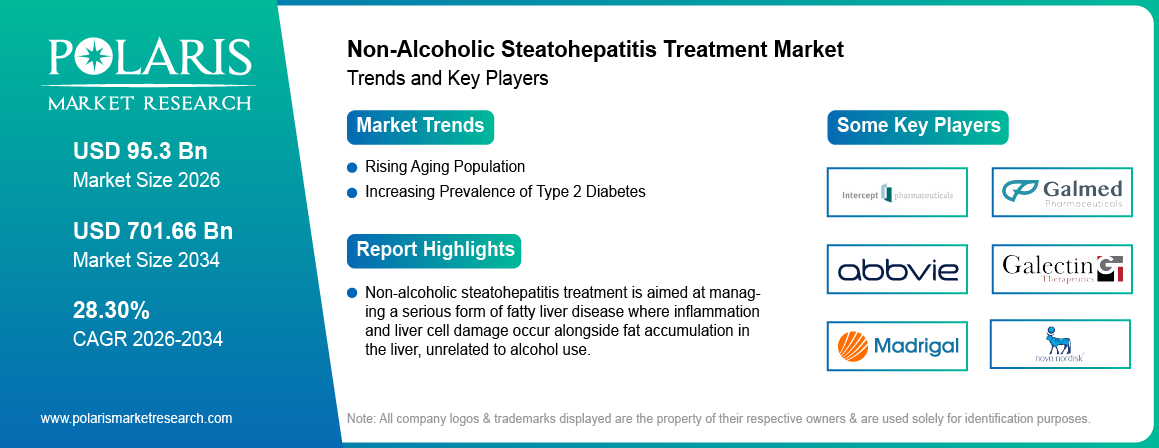
Rising Aging Population
The rising aging population across the world increases the incidence of NASH-related liver disease, with older adults at higher risk for conditions such as diabetes and hypertension linked to NASH. According to the World Health Organization, from 2015 to 2050, the percentage of the global population aged 60 and above is projected to nearly double from 12% to 22%, highlighting critical implications for social, economic, and healthcare systems. This demographic trend further accelerates demand for NASH-targeted treatments. Thus, surging aging population is expected to drive the NASH treatment market expansion during the forecast period.
Increasing Prevalence of Type 2 Diabetes
Insulin resistance, a common feature in diabetes, leads to fat accumulation in the liver, setting the stage for liver inflammation and fibrosis associated with NASH. The International Diabetes Federation reported that ∼537 million individuals were suffering from diabetes worldwide in 2021. Projections anticipate this number will rise to 643 million by 2030 and 783 million by 2045, highlighting an urgent need for effective public health strategies. The surge in type 2 diabetes cases globally, fueled by sedentary lifestyles and high-calorie diets, is significantly expanding the NASH patient population. Thus, the rising prevalence of type 2 diabetes is majorly contributing to the NASH treatment market development.
Rising Obesity and Type 2 Diabetes Driving Demand
Obesity, type 2 diabetes, insulin resistance, and metabolic syndrome are some of the main causes of NASH. The global prevalence of these conditions is rising as a result of unhealthy diets and low physical activity, leading to more people developing NASH, and increasing the demand for early diagnosis, effective treatment and ongoing disease management.
Transition from NASH to MASH
Healthcare organizations are starting to use the term Metabolic Dysfunction-Associated Steatohepatitis (MASH) instead of Non-alcoholic Steatohepatitis (NASH).The new name indicates that the main cause of the disease is metabolic problems. It include obesity, type 2 diabetes, and insulin resistance. This change is being used in research, clinical guidelines and medical practice, and is also shaping how the disease is diagnosed and how new treatments are developed.
Growing aging population adds to disease burden
The number of older adults is increasing globally. Many of them suffer from metabolic disorders, type 2 diabetes, obesity and other chronic health conditions. These conditions place people at increased risk of NASH and other liver diseases. As the population ages, more people are likely to need to be diagnosed with NASH, treated for NASH and receive ongoing follow-up care. This is driving demand for effective medicines and improved management of the disease.
Source: Polaris Market Research Analysis
MASH Treatment Market Segmentation & Segment Insights
MASH Treatment Market by Therapy: Approved Drugs, Supportive/Off-Label Therapy & Late-Stage Pipeline
The global non-alcoholic steatohepatitis treatment market segmentation, based on drug, includes vitamin E and pioglitazone, obeticholic acid (OCA), lanifibranor, semaglutide, resmetirom, aramchol, and cenicriviroc, and others. In 2025, the vitamin E and pioglitazone segment held the largest share of the market due to the established efficacy of vitamin E and pioglitazone in managing NASH symptoms, particularly in reducing liver inflammation and improving liver function. Additionally, vitamin E and pioglitazone are more widely accessible and cost-effective compared to newer, experimental drugs, which enhances their appeal among healthcare providers and patients. Vitamin E and pioglitazone are frequently recommended due to their safety profile and familiarity with clinical practice.
MASH Treatment Market by Distribution Channel: Hospital, Retail & Specialty Pharmacies
The global non-alcoholic steatohepatitis treatment market segmentation, based on distribution channels, includes hospital pharmacies, retail and specialty pharmacies, and other pharmacies. The retail and specialty pharmacies segment is expected to witness the highest CAGR during the forecast period due to increased accessibility and convenience for patients seeking non-alcoholic steatohepatitis treatments. Additionally, the growth of specialty pharmacies, which focus on complex and high-cost medications, enhances patient support and adherence to NASH therapies, further driving retail and specialty pharmacies segment expansion.
Real-World Applications of NASH Treatment
| Application | Purpose |
| Treatment of fatty liver disease patients | Helps reduce liver fat and inflammation. |
| Liver fibrosis management | Slows or reduces liver scarring. |
| Prevention of cirrhosis progression | Lowers the risk of severe liver damage. |
| Management of obesity-related liver disease | Treats liver problems linked to obesity. |
| Treatment of diabetic patients with NASH | Helps manage liver disease in people with type 2 diabetes. |
| Long-term liver health preservation | Supports better liver function and slows disease progression. |
| Prevention of liver transplantation requirements | Helps reduce the risk of advanced liver failure requiring a transplant. |
Source: Polaris Market Research Analysis
Source: Polaris Market Research Analysis
MASH Treatment Market Regional Analysis: North America, Europe, Asia Pacific, Latin America & MEA
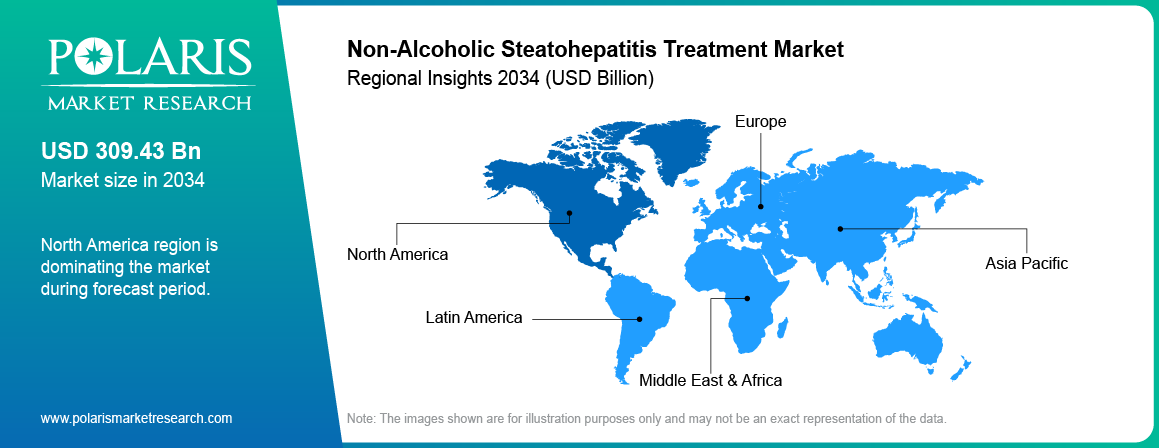
By region, the study provides non-alcoholic steatohepatitis treatment market insights into North America, Europe, Asia Pacific, Latin America, and the Middle East & Africa. In 2025, North America accounted for the largest share of the market due to the high prevalence of risk factors such as obesity, type 2 diabetes, and metabolic syndrome, which are major contributors to the rise in NASH cases. According to the Centers for Disease Control and Prevention (CDC), adult obesity prevalence in the US was 40.3% from August 2021 to August 2023, with no significant gender differences. Higher rates were observed in adults aged 40–59 compared to those aged 20–39 and 60+. Additionally, advanced healthcare infrastructure, high healthcare expenditure, and significant investments in research and development for NASH therapies have positioned North America as a dominant market. The region also benefits from a growing awareness of NASH among healthcare professionals and patients, further fueling the North America non-alcoholic steatohepatitis treatment market growth.
The US accounted for the largest share of the non-alcoholic steatohepatitis treatment market in North America. The presence of leading pharmaceutical companies and a favorable regulatory environment contribute to the rapid adoption of new therapies, driving significant market growth in the region.
The Asia Pacific non-alcoholic steatohepatitis treatment market is expected to witness the highest CAGR during the forecast period. The increasing awareness of NASH and its complications, combined with improving healthcare infrastructure and expanding access to advanced treatment options, is contributing to the market’s rapid growth in the region. The rising economic development in countries such as China and India, along with greater investments in healthcare, further supports the region's robust market expansion.
The China non-alcoholic steatohepatitis treatment market is expected to witness significant growth during the forecast period. The aging population in China is contributing to the non-alcoholic steatohepatitis (NASH) treatment market growth, as older adults are more prone to developing conditions such as type 2 diabetes and hypertension, which are major risk factors for NASH. According to the World Health Organization (WHO), in 2019, there were 254 million individuals aged 60 and older, including 176 million aged 65 and above. This demographic in China is projected to grow to around 402 million by 2040, constituting 28% of the total population.
Source: Polaris Market Research Analysis
Non-alcoholic Steatohepatitis Treatment Market – Key Players and Competitive Analysis Report
The competitive landscape of the non-alcoholic steatohepatitis (NASH) treatment market is marked by a dynamic and evolving environment, with several key players leading the way in drug development and treatment innovation. Leading pharmaceutical companies, including Intercept Pharmaceuticals, Bristol-Myers Squibb, Gilead Sciences, and Novo Nordisk, are at the forefront, actively involved in clinical trials and launching new therapies. Major companies are exploring various treatment options, such as obesity medications, anti-fibrotic drugs, and insulin-sensitizers, to address the complex pathophysiology of NASH.
The NASH treatment market is also witnessing the entry of biotech firms developing novel, noninvasive treatments and biomarker-based therapies, which are gaining attention for their potential to revolutionize NASH management. Strategic collaborations, mergers and acquisitions, and partnerships are common in this space, as companies look to expand their product portfolios and gain a competitive edge in the rapidly growing market. Additionally, the competitive dynamics are influenced by factors such as regulatory approvals, pricing strategies, and market access, with a strong emphasis on improving treatment efficacy and patient outcomes. A few key major players are Intercept Pharmaceuticals, Inc.; Galmed Pharmaceuticals Ltd; Inventiva; AbbVie Inc.; Galectin Therapeutics Inc.; Madrigal Pharmaceuticals Inc (Madrigal); NGM Biopharmaceuticals, Inc.; Novo Nordisk A/S; The Bristol-Myers Squibb Company; and Gilead Sciences, Inc.
Novo Nordisk A/S and its subsidiaries specialize in the research, manufacturing, development, and distribution of pharmaceutical products across various regions worldwide. The company has established 10 research and development centers across 5 countries, and it boasts 16 production facilities located in 9 countries. The company operates in two primary segments—Diabetes and Obesity Care and Rare Disease. The Diabetes and Obesity Care segment provides an extensive range of products for obesity, cardiovascular disease, diabetes, and other emerging therapy areas. The Rare Disease segment provides products for endocrine disorders, rare blood disorders, and hormone replacement therapy. In November 2024, Semaglutide 2.4 mg from Novo Nordisk A/S showed significant efficacy in promoting liver fibrosis improvement and facilitating the resolution of metabolic associated steatotic hepatitis (MASH) in the ESSENCE trial.
Gilead Sciences, Inc. is a biopharmaceutical company that specializes in the research, development, and commercialization of innovative medicines to treat life-threatening diseases. In 2017, Gilead Sciences, Inc. completely acquired Kite Pharma, Inc. Gilead Sciences is recognized for its pioneering work in antiviral therapies, especially in the area of HIV and hepatitis B and C. The company's first major success came in 1996 when it launched Viread, a treatment for HIV. Since then, Gilead Sciences has developed several bestseller drugs, including Atripla, Truvada, and Harvoni, which have transformed the treatment of HIV and hepatitis C.
Leading MASH Treatment Companies: Approved Drugs & Late-Stage Pipeline
- Intercept Pharmaceuticals, Inc.
- Galmed Pharmaceuticals Ltd
- Inventiva
- AbbVie Inc.
- Galectin Therapeutics Inc.
- Madrigal Pharmaceuticals Inc (Madrigal)
- NGM Biopharmaceuticals, Inc.
- Novo Nordisk A/S
- The Bristol-Myers Squibb Company
- Gilead Sciences, Inc.
Future of Non-Alcoholic Steatohepatitis Treatment Market
The non-alcoholic steatohepatitis (NASH/MASH) treatment market is expected to grow strongly through 2034. Increasing prevalence of obesity and type 2 diabetes, and increasing awareness of liver disease, will continue to drive demand for treatment. New drugs, better diagnostic tests and increasingly personalized treatment approaches should improve patient care. With healthcare systems increasingly focused on preventing liver damage, cirrhosis and liver failure, the market looks set for steady growth and a wider range of treatment options in the years to come.
Non-alcoholic Steatohepatitis Treatment Market Developments
- July 2026: The UK MHRA approved Wegovy (semaglutide) for adults with MASH and moderate to advanced liver fibrosis. The treatment is used along with diet and exercise. It adds a new treatment option for patients with MASH, subject to future NHS funding decisions.(Source: gov.uk)
- June 2026: The UK MHRA approved Rezdiffra (resmetirom) to treat adults with MASH and moderate to advanced liver fibrosis. The therapy is intended for patients with stage 2 or stage 3 fibrosis. The approval expands treatment options for adults with liver inflammation and scarring.(Source: gov.uk- Resmetirom (Rezdiffra))
- In March 2024, the FDA approved Rezdiffra (resmetirom) for adults with noncirrhotic NASH and moderate to advanced hepatic fibrosis to be used alongside diet and exercise.
Non-alcoholic Steatohepatitis Treatment Market Segmentation
By Drug Outlook (Revenue, USD Billion; 2021–2034)
- Vitamin E and Pioglitazone
- Obeticholic Acid (OCA)
- Lanifibranor
- Semaglutide
- Resmetirom
- Aramchol
- Cenicriviroc
- Other Drugs
By Disease Stage Outlook (Revenue, USD Billion; 2021–2034)
- NASH Stage F0
- NASH Stage F1
- NASH Stage F2
- NASH Stage F3
- NASH Stage F4
By Distribution Channel Outlook (Revenue, USD Billion; 2021–2034)
- Hospital Pharmacies
- Retail and Specialty Pharmacies
- Other Pharmacies
By Regional Outlook (Revenue, USD Billion; 2021–2034)
- North America
- US
- Canada
- Europe
- Germany
- France
- UK
- Italy
- Spain
- Netherlands
- Russia
- Rest of Europe
- Asia Pacific
- China
- Japan
- India
- Malaysia
- South Korea
- Indonesia
- Australia
- Vietnam
- Rest of Asia Pacific
- Middle East & Africa
- Saudi Arabia
- UAE
- Israel
- South Africa
- Rest of Middle East & Africa
- Latin America
- Mexico
- Brazil
- Argentina
- Rest of Latin America
MASH (NASH) Treatment Market Report Scope, Segmentation & Forecast Period
| Report Attributes | Details |
| Market Size Value in 2025 | USD 74.5 billion |
| Market Size Value in 2026 | USD 95.3 billion |
| Revenue Forecast by 2034 | USD 701.66 billion |
| CAGR | 28.30% from 2026 to 2034 |
| Base Year | 2025 |
| Historical Data | 2021–2024 |
| Forecast Period | 2026–2034 |
| Quantitative Units | Revenue in USD billion and CAGR from 2026 to 2034 |
| Report Coverage | Revenue Forecast, Market Competitive Landscape, Growth Factors, and Trends |
| Segments Covered |
|
| Regional Scope |
|
| Competitive Landscape |
|
| Report Format |
|
| Customization | Report customization as per your requirements with respect to countries, regions, and segmentation. |
Source: Polaris Market Research Analysis
Non-Alcoholic Steatohepatitis Treatment Market FAQ's
The global NASH treatment market size was valued at USD 74.5 billion in 2025 and is projected to grow to USD 701.66 billion by 2034.
The global market is projected to register a CAGR of 28.30% during the forecast period.
In 2025, North America dominated the market due to the high prevalence of risk factors such as obesity, type 2 diabetes, and metabolic syndrome.
A few key players in the market are Intercept Pharmaceuticals, Inc.; Galmed Pharmaceuticals Ltd; Inventiva; AbbVie Inc.; Galectin Therapeutics Inc.; Madrigal Pharmaceuticals Inc (Madrigal); NGM Biopharmaceuticals, Inc.; Novo Nordisk A/S; The Bristol-Myers Squibb Company; and Gilead Sciences, Inc.
In 2025, the vitamin E and pioglitazone segment held the largest market share due to the established efficacy of vitamin E and pioglitazone in managing NASH symptoms, particularly in reducing liver inflammation and improving liver function.
The retail and specialty pharmacies segment is expected to witness the highest CAGR during the forecast period due to increased accessibility and convenience for patients seeking NASH treatments.
The leading causes are obesity, type 2 diabetes, insulin resistance and poor diet, which cause fat to accumulate in the liver.
NASH is a serious type of fatty liver disease. It causes liver inflammation and damage without alcohol being the cause.
Doctors may use blood tests, imaging scans and sometimes a liver biopsy. These tests help check for liver damage and fibrosis.
Treatment includes weight loss, a healthy diet, exercise and medicines. Regular check ups control the disease.
Download Sample Report of Non-Alcoholic Steatohepatitis Treatment Market
Please fill out the form to request a customized copy of the research report.


