
Oligonucleotide Synthesis Market Size, Share, Trends & Forecast, 2026–2034
REPORT DETAILS
Oligonucleotide Synthesis Market Summary
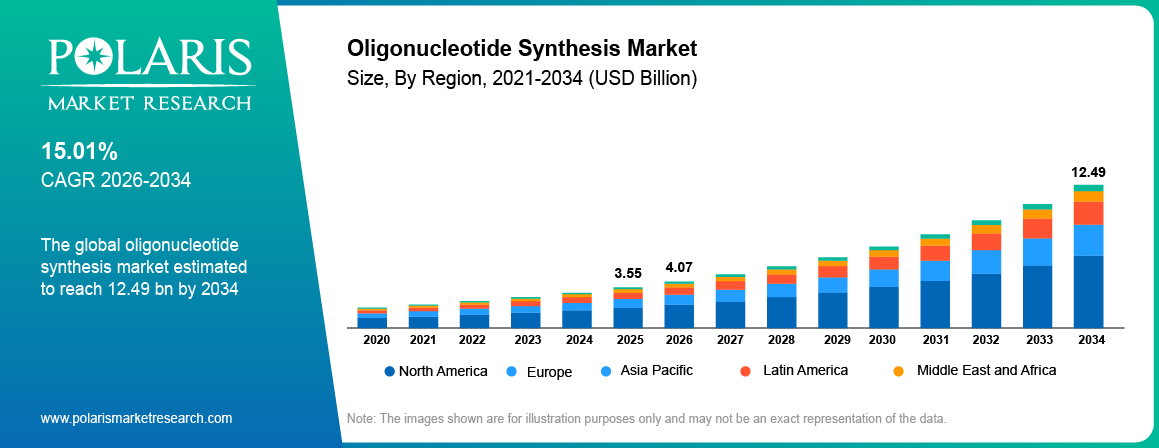
Oligonucleotide Synthesis Market size was valued at USD 3.55 billion in 2025. The market outlook is anticipated to grow from USD 4.07 billion in 2026 to USD 12.49 billion by 2034, exhibiting the CAGR of 15.01% during the forecast period.
Market Statistics
Oligonucleotide Synthesis Market Key Takeaways
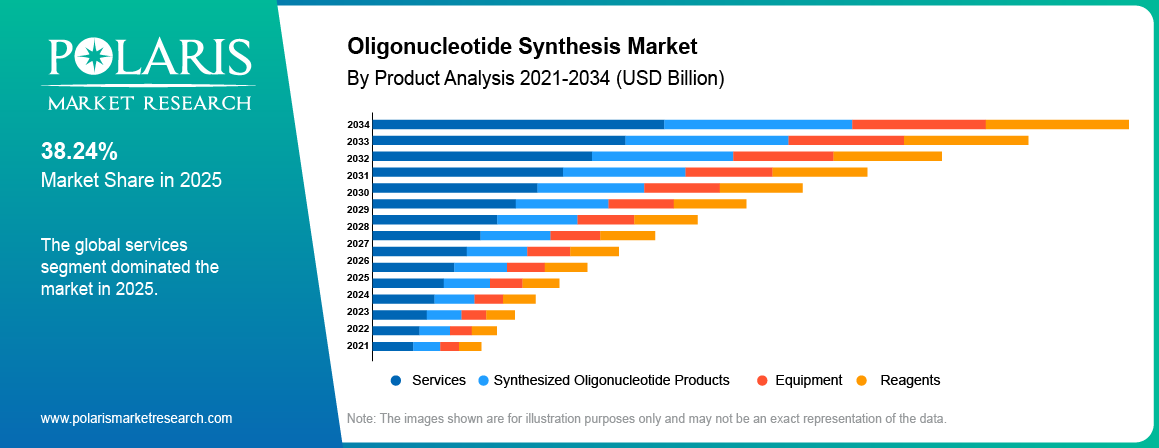
- North America accounted for 40.9% of market revenue in 2025. The region has strong pharma, biotech, and research activity, which supports market growth.
- Asia Pacific is projected to grow at a CAGR of 17.5% from 2026 to 2034. More biotech investment and genetic testing are driving demand across the region.
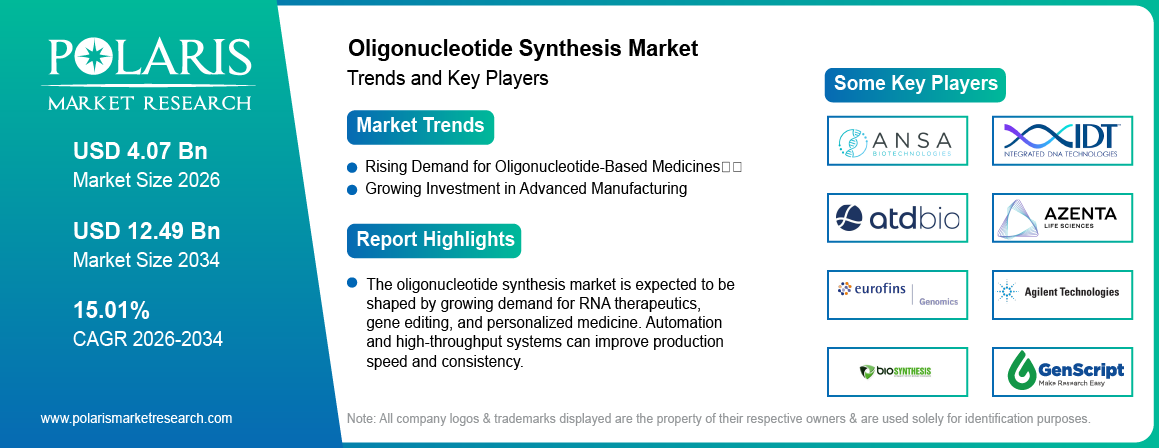
- In 2025, Services represented 38.24% of market revenue, and was the largest product segment. More companies are outsourcing oligonucleotide synthesis, purification and other services.
- PCR Primers represented 20.4% of the market revenue in 2025 and are the top application. PCR primers are widely used in PCR, sequencing, and genetic testing.
- Synthesized Oligonucleotide Products are expected to witness a CAGR of 15.14% between 2026 and 2034. Their use is growing in the areas of genomics, genetic testing, and therapeutic research.
- Antisense Oligonucleotides are expected to grow at a CAGR of 15.9% during 2026-2034. Growing research in cancer, cardiovascular and ocular diseases are driving demand.
Note: Figures and projections outlined in this report are the result of Polaris Market Research’s proprietary analytical processes, grounded in the latest available datasets and market observations
What is Oligonucleotide Synthesis?
Oligonucleotide synthesis is a laboratory process used to create short sequences of DNA or RNA. These sequences are used in a number of applications, such as PCR, DNA sequencing, genetic testing, gene expression analysis and drug development. They are also used in gene modification, molecular diagnostics and the development of nucleic acid based drugs.
The burgeoning utilization of synthesized oligos in applications, including clinical and molecular diagnostics, coupled with the cumulative infusion of government investments. Governments across different regions are heavily investing in research and development in sectors including pharmaceutical and biotechnology, alongside the increasing reservoir of venture capital savings, which emerges as the primary driving force set to propel the oligonucleotide synthesis market's growth in the forecast period.
Despite these optimistic factors, challenges loom on the horizon. The erosion of costs associated with oligo synthesis and the absence of a unified set of guidelines for therapeutic oligos stand as potential impediments likely to restrain the expansion of the oligonucleotide synthesis market throughout the forecast period.
However, potential obstacles and emerging market scope in developing countries are expected to present lucrative opportunities, providing a positive market outlook for industry participants. However, substantial challenges linked to the large-scale synthesis of oligos and the precise distribution of oligonucleotide drugs to targeted locations present formidable obstacles that may impede the consistent growth of the oligonucleotide synthesis market in the future. Skillfully navigating these intricacies will be essential for stakeholders to guarantee the ongoing progress of oligonucleotide synthesis technologies within the dynamic realm of molecular diagnostics and clinical applications.
In July 2026, DNA Script signed a distribution agreement with Imperial Life Sciences to expand access to its SYNTAX® on-demand DNA synthesis platform in India. The platform combines DNA synthesis, purification, and normalization in an automated workflow. For research applications this supports faster and more flexible oligonucleotide production (Source: www.dnascript.com).
The oligonucleotide synthesis market is experiencing significant expansion driven by various factors, including heightened research and development endeavors by industry participants and the expansion of manufacturing facilities to cater to growing customer demands. Furthermore, based on market dynamics, several market players have garnered accreditation from regulatory authorities for their manufacturing facilities.
How Oligonucleotide Synthesis Works
To produce short DNA or RNA sequences oligonucleotide synthesis follows a series of steps. The process starts with sequence design and ends with testing, packaging, and delivery.
Sequence Design
The required DNA or RNA sequence is first designed based on its intended use. For accuracy before synthesis begins researchers check the sequence.
Chemical or Enzymatic Assembly
The selected nucleotides are joined in the required order. Chemical synthesis is widely used, while enzymatic methods are also being developed for specific applications.
Purification and Quality Control
The synthesized oligonucleotide is purified to remove unwanted materials. Quality checks are then performed to confirm its identity, purity, and performance.
Packaging and End-Use Delivery
The final product is prepared according to its intended use. To research, diagnostic, pharmaceutical, or biotechnology users it is packaged and delivered.
DNA vs. RNA Oligonucleotides
| Factor | DNA Oligonucleotides | RNA Oligonucleotides |
| Structure | Made from DNA bases and do not have a 2′-hydroxyl group. | Contain ribose with a 2′-hydroxyl group, making them more sensitive to degradation. |
| Stability | Generally more stable for routine laboratory use. | Often need additional stabilization or chemical modifications. |
| Research Applications | Used in PCR primers, cloning, sequencing, probes, genotyping, and synthetic biology. | Used in RNA interference, RNA research, transcript analysis, guide RNAs, and therapeutic research. |
| Therapeutic Use | Used in some antisense and gene-modulation applications. | Used in siRNA, antisense, guide RNA, and other RNA-based therapies. |
| Manufacturing Complexity | Established synthesis methods support large-scale custom production. | RNA synthesis and purification can require more specialized processes and controls. |
| Storage Requirements | Storage needs depend on the sequence, modifications, and application. | Often requires careful handling to maintain RNA stability and integrity. |
| Commercial Demand | Strong demand from research, diagnostics, PCR, and sequencing applications. | Growing demand from RNA therapeutics and advanced research applications. |
Source: Polaris Market Research Analysis
Oligonucleotide Synthesis Market Dynamics
Market Driver- Rising Demand for Oligonucleotide-Based Medicines
The use of oligonucleotides in medicines is expanding. In 2025, the FDA approved new oligonucleotide therapies, including antisense and RNAi drugs. These approvals indicate increasing clinical use of RNA-based medicines and generate demand for oligonucleotide development and manufacturing (Source: pmc.ncbi.nlm.nih.gov).
Market Driver- Growing Investment in Advanced Manufacturing
Investment in advanced drug manufacturing is increasing. In 2026, Aragen Life Sciences announced plans to add 500 kiloliters of new CDMO capacity, with oligonucleotides included among its focus areas. For specialized oligonucleotide manufacturing services such capacity expansion can support growing demand (Source: economictimes.indiatimes.com).
Market Opportunity- Oligonucleotide Therapeutics Driving Market Growth
New developments in rare disease treatment are creating opportunities for oligonucleotide therapies. In February 2026, the FDA launched a framework for developing individualized therapies for ultra-rare diseases. For customized nucleic acid medicines the framework offers treatments for particular genetic or molecular abnormalities and new opportunities (Source: www.fda.gov).
Market Opportunity- siRNA/RNAi Therapeutics Opportunity
siRNA therapies are creating opportunities in gene silencing. FDA-approved siRNA medicines are being used across areas such as cardiovascular and rare diseases, supporting continued interest in RNA-based therapeutics and oligonucleotide development. Further development of these therapies may increase the need for specialized siRNA design, synthesis, purification and testing services (Source: www.nejm.org).
Market Restraint- High Manufacturing Complexity
Oligonucleotide manufacturing requires careful control of synthesis, purification, and quality testing. Longer and modified sequences can make production more difficult. Particularly when production moves from laboratory to commercial scale specialized equipment and strict quality checks can also increase costs.
Technology & Manufacturing Trends
Oligonucleotide synthesis is becoming more automated and flexible. New technologies are helping manufacturers improve production speed, quality, and scale. In genomics, gene editing, and synthetic biology these changes are also supporting research.
Automation & High-Throughput Synthesis Technologies
Automation is supporting laboratories handle larger numbers of oligonucleotide sequences with less manual work. High-throughput systems can support parallel synthesis and faster processing. Automation of purification and quality control can also increase consistency and reduce production times.
Emerging Technologies in Oligonucleotide Synthesis
New synthesis methods are supporting address the needs of complex applications. As an alternative to traditional chemical methods enzymatic synthesis is being explored. AI-assisted sequence design can help researchers select and optimize sequences. Also supporting more efficient production are advances in long oligonucleotide synthesis, purification and automated platforms.
Synthetic Biology & Genetic Engineering Opportunities
Oligonucleotides are widely used in synthetic biology and genetic engineering. Researchers use custom sequences to design DNA, modify genes, and build biological systems. Their use in CRISPR research and gene editing is creating additional applications. These tools also support research into engineered cells and new biological products.
Oligonucleotide Manufacturing Workflow
The manufacturing process starts with sequence design and nucleotide assembly. To remove unwanted components the synthesized material is then purified. Quality testing ensures the sequence, purity, and other required properties. The final product is packaged under suitable conditions and delivered for research, diagnostic or therapeutic applications.
Oligonucleotide Innovation Ecosystem
The industry includes synthesis companies, pharmaceutical firms, biotechnology companies, research institutes, and CDMOs. These groups work together to develop new synthesis methods and manufacturing processes. Partnerships and investments are also fueling the expansion of production capacity and the adoption of new oligonucleotide technologies for research and commercial applications.
Report Segmentation
By Product Analysis
The oligonucleotide synthesis market is segmented by product into synthesized oligonucleotide products, equipment, reagents, and services. The services segment accounted for 38.24% of the market revenue in 2025. It includes custom oligonucleotide synthesis, purification, modification, and related laboratory services. Many pharmaceutical, biotechnology, and research organizations use these services to avoid investing in specialized equipment and in-house production systems. Growing demand for customized DNA and RNA sequences is supporting the use of outsourcing services across research, diagnostics, and therapeutic development.
The synthesized oligonucleotide products segment is projected to grow at a CAGR of 15.14% during the projected period in the oligonucleotide synthesis market. This surge is attributed to the increased prevalence of genomic studies, including gene expression analysis and genetic testing. Furthermore, the introduction of biochips (DNA chips) for the simultaneous analysis of multiple clinical samples is projected to contribute to overall market revenue significantly. The escalating utilization of antisense oligonucleotides in clinical trials addressing conditions such as cancer, cardiac disorders, and ocular dysfunctions is set to propel the segment into a phase of lucrative growth.
Moreover, the rising awareness and comprehension of genetic disorders are fueling the market demand for oligonucleotides in diagnostics and potential therapeutic interventions.
By Application Analysis
The oligonucleotide synthesis market is segmented by application into PCR assays and panels, PCR primers, DNA microarrays, sequencing, antisense oligonucleotides, fluorescence in situ hybridization (FISH), and others. In 2025, the PCR primers segment accounted for 20.4% of the market revenue, making it the leading application segment in the oligonucleotide synthesis market. PCR primers, being the most extensively employed oligonucleotide in Polymerase Chain Reaction (PCR), play a crucial role. The escalating adoption of primers in gene sequencing experiments is notable, driven by their utility in fluorescent detection and target amplification, leading to diverse primer designs featuring various probe- and primer-based detection chemistries. As PCR technology has advanced into RT-PCR, qPCR, and digital PCR, primers have adapted accordingly. Specifically designed PCR assays and panels for detecting and measuring gene expression underscore the pivotal role of primers in these advanced systems, anticipating sustained market growth. For instance, Thermo Fisher Scientific Inc. is offering services for custom DNA oligo synthesis for varied applications including cloning, sequencing, PCR, and gene detection.
The antisense oligonucleotides segment is projected to grow at a CAGR of 15.9% during the forecast period. Rising research into targeted therapies and gene-modulation treatments is supporting demand. The segment is also expected to benefit from increasing interest in cancer, cardiovascular and rare disease research. These oligonucleotides are used to regulate gene expression and study disease pathways.
By End User Analysis
The oligonucleotide synthesis market is segmented by end user into pharmaceutical & biotechnology companies, academic & research institutes, diagnostic laboratories, contract research organizations (CROs), and hospitals & clinical laboratories. The Academic & Research Institutes segment accounted for 44.9% of the market revenue in 2025, making it the largest end-user segment. These institutes use oligonucleotides for PCR, sequencing, gene editing, and other molecular research applications.
The Pharmaceutical & Biotechnology Companies segment is projected to grow at a CAGR of 16.5% during the forecast period. Growing use of oligonucleotides in drug development, gene modulation, and targeted therapies is supporting segment growth.
By Technology / Chemistry Analysis
The oligonucleotide synthesis market is segmented by technology/chemistry into phosphoramidite chemistry, solid-phase synthesis, liquid-phase synthesis, enzymatic synthesis, and other advanced synthesis technologies. The Chemical/Solid-Phase Synthesis segment accounted for 66.2% of the market revenue in 2025, making it the largest technology segment. Its established use in oligonucleotide production and controlled nucleotide addition supports its widespread adoption across research, diagnostic, and therapeutic applications.
During the forecast period the Enzymatic Synthesis segment is projected to grow at a CAGR of 18.6%. Growing demand for longer and more complex DNA sequences is supporting its use in gene editing, cell therapy, and synthetic biology applications.
Key Use Cases of Oligonucleotide Synthesis
| Use Case | How Oligonucleotides Are Used |
| PCR Testing & Molecular Diagnostics | Primers and probes help amplify and detect specific genetic targets. |
| Cancer Biomarker Detection | Sequence-specific probes and primers help identify genetic and molecular biomarkers. |
| Gene Expression Analysis | Custom oligonucleotides support amplification, detection, and transcript analysis. |
| CRISPR Gene Editing | Oligonucleotide components support guide design and gene-editing workflows. |
| Drug Discovery | Custom oligonucleotides support target validation, screening, and therapeutic research. |
| Rare Disease Research | Sequence-specific tools support mutation analysis and therapeutic development. |
| Infectious Disease Testing | Primers and probes help detect genetic material from pathogens. |
| RNA Therapeutic Development | High-purity and modified oligonucleotides support RNA-targeted drug development. |
Source: Polaris Market Research Analysis
Regional Insights
North America Region Dominated the Global Oligonucleotide Synthesis Market in 2025
North America dominated the global oligonucleotide synthesis market, accounting for 40.9% of market revenue in 2025, and is expected to maintain its leading position during the forecast period. The region's prominent pharmaceutical and biotechnology sector, coupled with substantial research and development investments, has propelled the market trends. Additionally, a surge in genomic studies and gene therapy initiatives, such as those launched by leading institutions, contributes to the expanding demand for oligonucleotides. The well-established infrastructure, favorable regulatory environment, and a growing awareness of genetic disorders further accentuate North America's role in driving the significant growth observed in the oligonucleotide synthesis market.
Asia Pacific Region Is Expected to Register the Fastest Growth in the Oligonucleotide Synthesis Market
The Asia Pacific region is expected to grow at a CAGR of 17.5% during the forecast period. Rising investments in biotechnology, genomics research, and personalized medicine are supporting market growth across the region. Partnerships, acquisitions and new production facilities are being used by major companies to expand their reach. China, Japan and India are seeing increased research and business activity. Due to the growing demand for genetic testing, molecular diagnostics and advanced therapies new opportunities are also emerging for oligonucleotide synthesis providers.
Europe Region Is Expected to Witness Steady Growth in the Oligonucleotide Synthesis Market
Europe is expected to maintain steady growth in the oligonucleotide synthesis market. The region has a strong research base and growing pharmaceutical and biotechnology activity. Increasing use of molecular diagnostics, genetic testing, and nucleic acid-based therapies is supporting demand. Countries such as Germany, the UK, and France are also investing in biotechnology research and advanced healthcare technologies.
Latin America Region Is Expected to Witness Moderate Growth in the Oligonucleotide Synthesis Market
Latin America is expected to witness gradual growth in the oligonucleotide synthesis market. Rising healthcare spending and greater use of molecular diagnostics are creating new opportunities. Brazil and Mexico are among the key markets in the region. The growing research activity and improvement in laboratory infrastructure are also supporting the adoption of oligonucleotide-based technologies.
Middle East & Africa Region Is Expected to Witness Gradual Growth in the Oligonucleotide Synthesis Market
The Middle East & Africa region is expected to see increasing demand for oligonucleotide synthesis products and services. Growth in healthcare infrastructure, genetic testing, and molecular diagnostics is supporting the market. Countries such as Saudi Arabia, UAE, and South Africa are increasing their investment in biotechnology and advanced healthcare research, thus opening doors for market growth.
Key Market Players & Competitive Insights
The market research identifies oligonucleotide synthesis market is fragmented and is anticipated to witness competition due to several players' presence. Major service providers in the market are constantly upgrading their technologies to stay ahead of the competition and to ensure efficiency, integrity, and safety. These market manufacturers focus on partnership, product upgrades, and collaboration to gain a competitive edge over their peers and capture a significant market share.
Agilent Technologies provides oligonucleotide synthesis, manufacturing, and analytical solutions for pharmaceutical and biotechnology companies. Its capabilities include GMP oligonucleotide manufacturing, synthesis, purification, and quality testing. In 2026, Agilent launched Agilent Advanced Therapeutics to combine its CDMO capabilities, including oligonucleotide manufacturing, across North America (Source: www.investor.agilent.com).
Thermo Fisher Scientific provides custom DNA and RNA oligonucleotide synthesis for research, diagnostics, and therapeutic applications. Its services include large scale and GMP oligo manufacturing, custom modifications, and OEM production. The company supports applications such as PCR, sequencing, molecular diagnostics, and therapeutic research through its global manufacturing network.
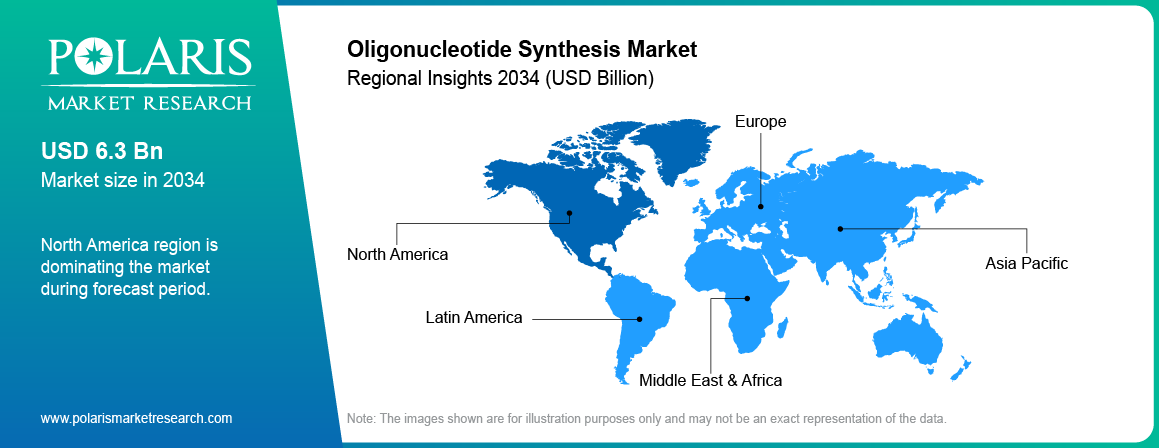
Some of the major players operating in the global market include:
- Agilent Technologies, Inc.
- Ansa Biotechnologies
- ATDBio Ltd.
- Azenta Life Sciences (GENEWIZ)
- Bio-Synthesis, Inc.
- Eurofins Genomics
- GenScript Biotech Corporation
- Integrated DNA Technologies (IDT)
- LGC Biosearch Technologies
- Merck KGaA
- Nitto Denko Avecia Inc.
- Thermo Fisher Scientific Inc.
- TriLink BioTechnologies
- Twist Bioscience Corporation
Key Players in the Oligonucleotide Synthesis Market
| Company | Market Positioning |
| Agilent Technologies, Inc. | Offers oligonucleotide synthesis, analytical testing, purification, and manufacturing solutions. |
| Bio-Synthesis, Inc. | Specializes in custom oligonucleotide synthesis and molecular biology services. |
| Eurofins Genomics | Provides custom oligonucleotide synthesis and genomics services for research and biotechnology applications. |
| GenScript Biotech Corporation | Provides custom oligonucleotide synthesis and manufacturing services for research and biotechnology applications. |
| LGC Biosearch Technologies | Offers custom oligonucleotides, assays, and genomics solutions for research and diagnostic applications. |
| Merck KGaA | Provides life science products, reagents, and oligonucleotide-related solutions through its global portfolio. |
| Thermo Fisher Scientific Inc. | Provides custom oligonucleotides and life science solutions for research, diagnostics, and therapeutic applications. |
| TriLink BioTechnologies | Focuses on nucleic acid manufacturing, including RNA and oligonucleotide products for research and therapeutic applications. |
| Twist Bioscience Corporation | Provides synthetic DNA and related solutions for synthetic biology, research, and biotechnology applications. |
Source: Polaris Market Research Analysis
Recent Developments
- July 2026: Oligo Factory launched NGS Unique-Dual Indexed Stubby Adapter Kits to support next-generation sequencing workflows. For research and sequencing applications the launch expands the company's oligonucleotide-based product portfolio. (Source: oligofactory.com)
- May 2025: Oligo Factory launched a new low scale oligo synthesis capability at its facility in Holliston, Massachusetts. The expansion helps therapeutic, diagnostic, and life science applications and increases access to DNA and RNA oligonucleotide manufacturing. (Source: oligofactory.com)
- In July 2025, AstraZeneca announced plans to invest USD 50 billion in the U.S. by 2030 to expand its medicines R&D and manufacturing capabilities, including a new large-scale drug-substance facility in Virginia for the production of small molecules, peptides, and oligonucleotides. (Source : www.astrazeneca.com)
Future Outlook for the Oligonucleotide Synthesis Market
The future of the oligonucleotide synthesis market is expected to be shaped by growing demand for RNA therapeutics, gene editing, and personalized medicine. Automation and high-throughput systems can improve production speed and consistency. Particularly for longer sequences and more sustainable manufacturing enzymatic synthesis is also gaining attention as a potential alternative to traditional chemical methods. AI-assisted design and improved purification methods may further help the development of complex oligonucleotides.
Research Methodology
The oligonucleotide synthesis market study uses both primary and secondary research. Secondary research includes company websites, industry reports, scientific publications, government sources, and other reliable databases. This information helps understand market trends, major companies, products, applications, and regional developments.
Primary research includes discussions with industry experts, manufacturers, suppliers, and other market participants. The collected information is compared with secondary data to check its accuracy and understand current market conditions.
Market data is analyzed by product, application, end user, technology, and region. Historical data is used to identify market trends and growth patterns. The study also considers key drivers, restraints, opportunities, technological developments, and competitive activities to prepare market estimates and forecasts.
Report Coverage
The oligonucleotide synthesis market research report emphasizes key regions across the globe to provide a better understanding of the product to the users. Also, the report provides market insights into recent developments and market trends and analyzes the technologies that are gaining traction around the globe. Furthermore, the report covers an in-depth qualitative market analysis pertaining to various paradigm shifts associated with the transformation of these solutions.
The market research report provides a detailed market analysis of the market while focusing on various key aspects such as competitive industry analysis, product, end-user, and their futuristic growth opportunities.
Oligonucleotide Synthesis Market Segmentation
By Product Outlook (Revenue, USD Billion, 2021–2034)
- Synthesized Oligonucleotide Products
- Equipment
- Reagents
- Services
By Application Outlook (Revenue, USD Billion, 2021–2034)
- PCR Assays and Panels
- PCR Primers
- DNA Microarrays
- Sequencing
- Antisense Oligonucleotides
- FISH
- Others
By End User Outlook (Revenue, USD Billion, 2021–2034)
- Pharmaceutical & Biotechnology Companies
- Academic & Research Institutes
- Diagnostic Laboratories
- CROs
- Hospitals & Clinical Laboratories
By Technology/Chemistry Outlook (Revenue, USD Billion, 2021–2034)
- Phosphoramidite Chemistry
- Solid-Phase Synthesis
- Liquid-Phase Synthesis
- Enzymatic Synthesis
- Other Advanced Synthesis Technologies
By Regional Outlook (Revenue, USD Billion, 2021–2034)
- North America
- US
- Canada
- Europe
- France
- Germany
- UK
- Italy
- Netherlands
- Spain
- Russia
- Rest of Europe
- Asia Pacific
- Japan
- China
- India
- Malaysia
- Indonesia
- South Korea
- Australia
- Rest of Asia Pacific
- Latin America
- Brazil
- Mexico
- Argentina
- Rest of Latin America
- Middle East & Africa
- Saudi Arabia
- UAE
- Israel
- South Africa
- Rest of the Middle East & Africa
Oligonucleotide Synthesis Market Report Scope
| Report Attributes | Details |
| Market size value in 2025 | USD 3.55 billion |
| Market size value in 2026 | USD 4.07 billion |
| Revenue forecast in 2034 | USD 12.49 billion |
| CAGR | 15.01% from 2026 – 2034 |
| Base year | 2025 |
| Historical data | 2021 – 2024 |
| Forecast period | 2026 – 2034 |
| Quantitative units | Revenue in USD billion and CAGR from 2026 to 2034 |
| Segments covered |
|
| Regional scope |
|
| Competitive Landscape |
|
| Report Format |
|
| Customization | Report customization as per your requirements with respect to countries, region, and segmentation. |
Source: Polaris Market Research Analysis
Oligonucleotide Synthesis Market FAQ's
The market covers products and services used to produce short DNA and RNA sequences for research, diagnostics, drug development, gene editing, and therapeutic applications.
The global market was valued at USD 3.55 billion in 2025.
The market is projected to grow at a CAGR of 15.01% from 2026 to 2034.
The market is segmented by product, application, end user, technology or chemistry, and region.
North America dominated the global market in 2025, supported by strong pharmaceutical, biotechnology, and research activity.
Asia Pacific is expected to register the fastest growth during the forecast period, supported by rising biotechnology investment and research activity.
Major applications include PCR, sequencing, genetic testing, molecular diagnostics, DNA microarrays, and antisense oligonucleotides.
Growing use in molecular diagnostics, genetic testing, drug discovery, gene editing, and nucleic acid-based therapies is supporting market growth.
High manufacturing costs, complex synthesis processes, purification requirements, and strict quality-control needs are key challenges.
Major players include Agilent Technologies, Bio-Synthesis, Eurofins Genomics, GenScript, LGC Biosearch Technologies, Merck, Thermo Fisher Scientific, TriLink BioTechnologies, and Twist Bioscience.
Download Sample Report of Oligonucleotide Synthesis Market
Please fill out the form to request a customized copy of the research report.


