
Orthodontics Market Demand, Business Insights, 2026-2034
REPORT DETAILS
Orthodontics Market Summary
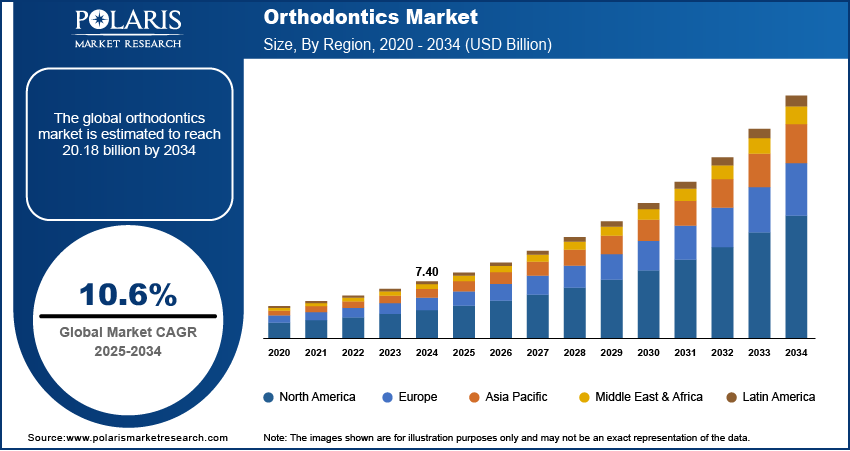
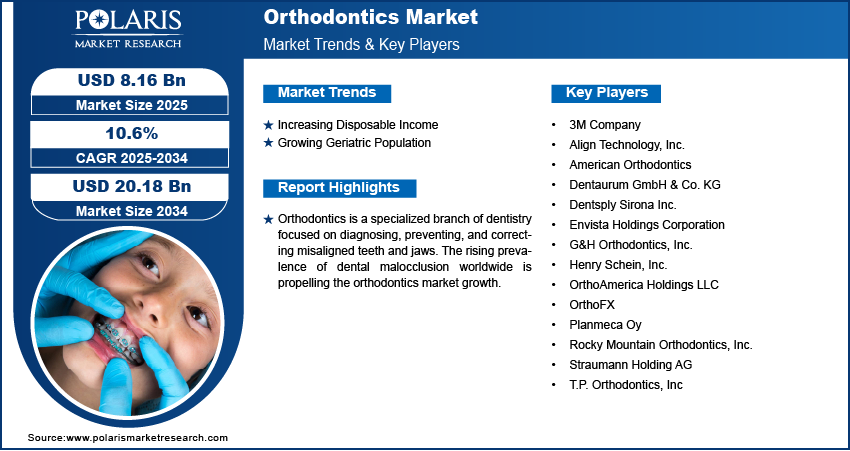
The global orthodontics market size was valued at USD 8.52 billion in 2025. It is expected to grow from USD 10.08 billion in 2026 to USD 41.03 billion by 2034, at a CAGR of 19.09% during 2026–2034.
Market Statistics
Key Takeaways
- North America accounted for a major market share of 39.0% in 2025. The high disposable incomes and a strong culture of aesthetic dentistry contribute to the segment’s leading position.
- Asia Pacific is expected to grow at a 21.96% CAGR. This is owing to the rising disposable incomes and increasing awareness of dental health.
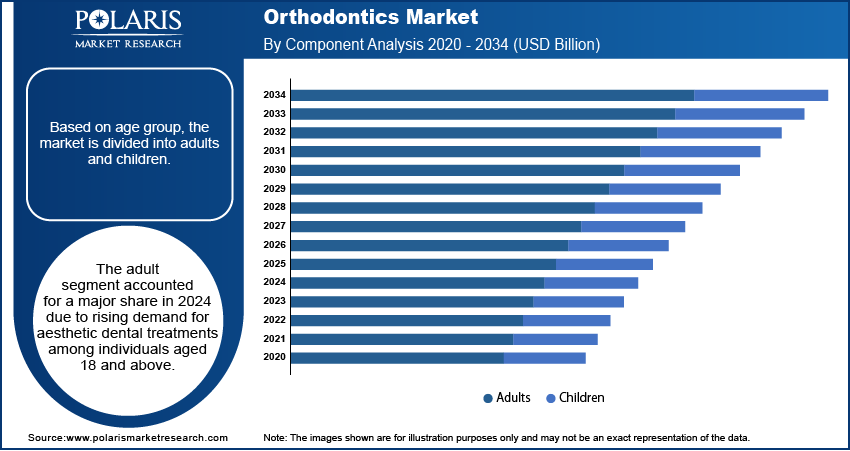
- The adult segment accounted for a major market share of 72.0% in 2025. The rising demand for aesthetic dental treatments among individuals aged 18 and above drives the segment’s leading position.
- The hospitals segment dominated with a 68.0% share in 2025. The segment’s leading position is primarily attributed to the extensive infrastructure and advanced diagnostic equipment in hospitals.
- The dental clinics segment is expected to grow at a 17.83% CAGR. This is owing to their ability to offer personalized treatment plans and shorter waiting times as compared to hospitals.
Note: Figures and projections outlined in this report are the result of Polaris Market Research’s proprietary analytical processes, grounded in the latest available datasets and market observations.
Industry Dynamics
- Increasing disposable incomes have enabled individuals to allocate more funds toward healthcare and personal well-being, including orthodontic care.
- The growing geriatric population has led to increased demand for orthodontic treatments among older adults.
- The shift towards clear aligners is presenting several market opportunities.
- Limited insurance coverage may present market challenges.
AI Impact on Orthodontics Market
- AI assists orthodontists in formulating their treatment plans by analyzing the data and images of the patients with better precision.
- AI analyzes the tooth movement and assists the orthodontist in forming a personalized treatment plan for the patients.
- With the help of AI, the orthodontist can monitor the patient remotely and reduce their visits to the clinic.
What are Orthodontics?
Orthodontics is a specialized branch of dentistry focused on diagnosing, preventing, and correcting misaligned teeth and jaws, as well as improper bite patterns-conditions collectively known as malocclusions. Orthodontic treatment aims to achieve both functional and aesthetic improvements by repositioning teeth and adjusting jaw alignment, using appliances such as braces, clear aligners, and retainers. Orthodontic is suitable for children, teens, and adults. Orthodontic duration varies from several months to a few years, depending on the complexity of the case. In severe cases, the process may involve surgical procedures to correct jaw discrepancies. It usually begins with a comprehensive evaluation through digital X-rays and dental impressions to create a personalized treatment plan.
The rising prevalence of dental malocclusion worldwide is propelling the orthodontics market growth. Dental malocclusion refers to the misalignment of teeth and jaws, leading to various oral health issues, including difficulties in chewing, speaking, and maintaining proper oral hygiene. This drives individuals to seek orthodontic treatments to correct these problems. Orthodontic interventions, such as braces and aligners, improve the aesthetic appearance of teeth and enhance functional aspects such as bite alignment and overall oral health. Additionally, advancements in orthodontic technology, such as the development of clear aligners and less visible braces, make orthodontics more appealing and accessible to a broader audience suffering from dental malocclusion. Therefore, the rising prevalence of dental malocclusion worldwide is fueling the demand for orthodontic treatments.
Source: Polaris Market Research Analysis
To Understand More About this Research: Download Sample Report
The demand for orthodontics is driven by the rising healthcare investments in emerging nations such as India, Brazil, and others. The rise in healthcare expenditure is allowing healthcare bodies and the private sector to improve healthcare infrastructure, including dental and orthodontic facilities. This expansion enables more people to access orthodontic services, which were previously limited or unavailable. Enhanced healthcare infrastructure also supports the training and employment of more orthodontic specialists, ensuring that a larger population receives necessary treatments. High healthcare investments further lead to public health campaigns that raise awareness about the importance of oral health. These campaigns educate the public on the benefits of orthodontic treatments, such as improved dental function, enhanced aesthetics, and better overall oral hygiene, contributing to market expansion. Additionally, increased healthcare spending includes subsidies or insurance coverage for orthodontic procedures, making these treatments more affordable for a broader segment of the population.
Clear Aligners vs Traditional Braces
| Aspect of Comparison | Clear Aligners | Traditional Braces |
| Appearance | Nearly clear and unnoticeable | Have visible metallic components |
| Removability | Removable during meals and dental hygiene procedures | Are fixed during the entire process |
| Comfort level | More comfortable than braces | May cause pain due to the wires and brackets |
| Complexity of Treatment | Suitable for minor problems | Effective for more complicated and serious problems |
| Oral Hygiene | Allows easy maintenance of oral hygiene | Difficult to clean between brackets and wires |
| Monitoring Process | Monitoring is usually done using digital scans and AI analysis | Regular adjustments from the orthodontist required |
| Cost Implications | Costlier than braces | Less costly than aligners in most cases |
Market Dynamics
Increasing Disposable Income
Increased disposable income allows people to allocate more funds toward healthcare and personal well-being, including orthodontic care. This financial flexibility also allows them to prioritize essential dental treatments and elective procedures aimed at improving dental aesthetics and function, leading to greater adoption of orthodontics. Additionally, increased disposable income enables individuals to opt for advanced and more expensive orthodontic technologies such as digital impressions, dental 3D printing, clear aligners, self-ligating brackets, and lingual braces. Therefore, the growing disposable income globally is propelling the market growth.
Growing Geriatric Population
Geriatric people often face a variety of dental issues such as tooth loss, misalignment, and jawbone deterioration, which affect overall oral health and quality of life. Orthodontic treatments address these problems, improving functionality and aesthetics for older adults. Geriatric population usually has better access to healthcare and financial resources, enabling them to invest in orthodontic treatments. Increased healthcare coverage and disposable income allow older adults to prioritize their oral health and seek necessary orthodontic interventions. Additionally, advancements in orthodontic technology have made treatments more accessible and comfortable for older adults. Innovations such as clear aligners, lingual braces, and less invasive procedures appeal to the geriatric population. These technological improvements encourage older adults to pursue orthodontic care, contributing to the growth of the industry.
Importance of Early Orthodontic Intervention
There has been increasing interest in early orthodontic care in children by the government and dental organizations because of the importance of diagnosing and fixing any issues regarding the alignment of teeth in children. This is important because it ensures that the child grows up with proper jaw development and enough space for their adult teeth, and ensures that the bite is properly aligned. In addition, it makes sure that the child does not require complicated dental treatments in the future and that the child can speak and chew better.
Source: Polaris Market Research Analysis
Segment Insights
Market Assessment by Age Group
Based on age group, the market is divided into adults and children. The adult segment accounted for a major orthodontics market share of 72.0% in 2025 due to rising demand for aesthetic dental treatments among individuals aged 18 and above. Many adults increasingly seek corrective procedures to improve oral function and enhance their appearance and boost self-confidence. The growing availability of discreet treatment options, such as clear aligners and ceramic braces, has made orthodontics more appealing among individuals aged 18 and above. Furthermore, the increasing awareness about the long-term health benefits of properly aligned teeth, including improved oral hygiene, reduced risk of periodontal disease, and alleviation of temporomandibular joint (TMJ) disorders, has contributed to orthodontics adoption among adults.
Market Evaluation by End User
In terms of end user, the orthodontics market is segregated into hospitals, dental clinics, and others. The hospitals segment dominated the industry share of 68.0% in 2025 due to their extensive infrastructure, advanced diagnostic equipment, and multidisciplinary expertise to attract a broader patient base seeking comprehensive and specialized care. Hospitals also benefited from higher patient footfall, particularly for complex orthodontic procedures that require surgical intervention or coordination with other medical specialties such as maxillofacial surgery and pediatrics. The growing prevalence of malocclusion, jaw discrepancies, and craniofacial anomalies further fueled the hospital segment. Additionally, increasing insurance coverage and reimbursement options are making hospitals more accessible for orthodontic treatments.
The dental clinics segment is expected to grow at a robust pace of 17.83% CAGR in the coming years, owing to their ability to offer personalized treatment plans, shorter waiting times, and a more patient-friendly environment compared to larger hospital systems. Rising awareness of cosmetic dentistry, coupled with an increasing emphasis on aesthetic appeal and minimally invasive procedures, positions clinics as preferred centers for both adolescents and adults seeking aligners, braces, and related treatments. The proliferation of technologically advanced solutions, such as clear aligners and digital scanning, aligns well with clinic-based practices that emphasize efficiency and patient comfort.
Source: Polaris Market Research Analysis
Regional Analysis
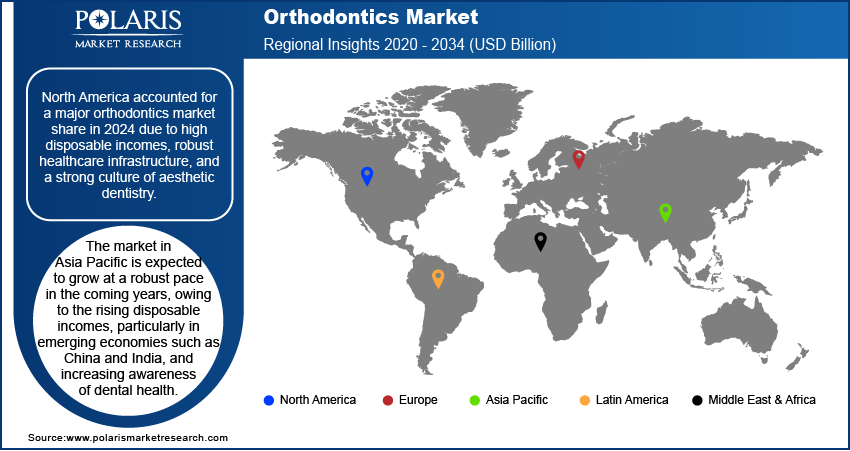
By region, the market report provides insight into North America, Europe, Asia Pacific, Latin America, and Middle East & Africa. North America accounted for a major market share of 39.0% in 2025 due to high disposable incomes, robust healthcare infrastructure, and a strong culture of aesthetic dentistry. The presence of well-established players and the early adoption of innovative technologies such as clear aligners, 3D printing, and intraoral scanners further strengthened the region’s dominance.
The US led the North America orthodontics market share of 82.0% in 2025, driven by its large base of certified orthodontists, widespread insurance coverage, and an increasing inclination among both teenagers and adults to invest in cosmetic dental improvements. Aggressive marketing strategies by major companies, coupled with a growing emphasis on appearance and facial aesthetics across diverse age groups, are contributing to industry expansion in the region.
The Asia Pacific orthodontics market is expected to grow at a robust pace of 21.96% CAGR in the coming years, owing to the rising disposable incomes, particularly in emerging economies such as China and India, and increasing awareness of dental health. Urbanization and the expansion of private dental clinics equipped with advanced technologies are catering to a rapidly growing population seeking both functional and aesthetic dental treatments. Additionally, favorable government initiatives aimed at improving oral healthcare infrastructure and increasing healthcare expenditure are contributing to the region’s expansion. India is estimated to hold a major share within the region owing to its large population base, rising prevalence of malocclusion, expanding private healthcare services, and increasing medical tourism.
Source: Polaris Market Research Analysis
Key Players and Competitive Analysis Report
The orthodontics market is highly competitive, characterized by strategic mergers and acquisitions, and partnerships that drive innovation and expansion. Major players are actively consolidating their positions through acquisitions & mergers. These mergers enable companies to diversify product offerings and expand geographically. Product portfolios are a key differentiator in the industry. Additionally, companies are investing in AI and digital workflows to enhance their treatment planning. Regional players are also expanding their presence through alliances with local distributors, intensifying competition in the emerging nations.
The orthodontics market is fragmented, with the presence of numerous global and regional players. A few major players are 3M Company; Align Technology, Inc.; American Orthodontics; Dentaurum GmbH & Co. KG; Dentsply Sirona Inc.; Envista Holdings Corporation; G&H Orthodontics, Inc.; Henry Schein, Inc.; OrthoAmerica Holdings LLC; OrthoFX; Planmeca Oy; Rocky Mountain Orthodontics, Inc.; Straumann Holding AG; and T.P. Orthodontics, Inc.
Align Technology, Inc., founded in 1997 and headquartered in Tempe, Arizona, is a major global medical device company specializing in orthodontic devices, notably the Invisalign clear aligner system. The company revolutionized orthodontics by introducing the clear aligners, providing an alternative to traditional metal braces. Invisalign uses a series of custom-made, virtually invisible aligners to gradually straighten teeth, leveraging proprietary digital modeling software, rapid manufacturing, and patented materials to address a wide range of orthodontic cases-from simple to complex malocclusions. Align Technology also offers comprehensive digital dentistry solutions, including the iTero intraoral scanner and exocad CAD/CAM software, which streamline treatment planning and enhance clinical outcomes for both orthodontic and restorative dental workflows.
Henry Schein, Inc., founded in 1932 and headquartered in Melville, New York, is a Fortune 500 company and one of the world’s largest providers of health care products and services to dental and medical professionals. The company serves over a million customers globally with operations or affiliates in 33 countries and a workforce of approximately 25,000. Henry Schein has a robust presence in the orthodontics sector through its dedicated division, Henry Schein Orthodontics, which has been delivering orthodontic solutions for more than 45 years. The company offers a comprehensive portfolio of orthodontic products, including brackets, bands, elastomerics, archwires, temporary anchorage devices, intraoral appliances, and clear aligners such as its proprietary Reveal Clear Aligners. Henry Schein Orthodontics is recognized for its commitment to quality, innovation, and education, supporting dental professionals with both products and continuing education opportunities to enhance clinical outcomes.
List of Key Companies in Orthodontics Industry
- 3M Company
- Align Technology, Inc.
- American Orthodontics
- Dentaurum GmbH & Co. KG
- Dentsply Sirona Inc.
- Envista Holdings Corporation
- G&H Orthodontics, Inc.
- Henry Schein, Inc.
- OrthoAmerica Holdings LLC
- OrthoFX
- Planmeca Oy
- Rocky Mountain Orthodontics, Inc.
- Straumann Holding AG
- T.P. Orthodontics, Inc.
Orthodontics Industry Developments
- May 2026: Align Technology, Inc. shared highlights of its 2026 Invisalign EMEA Ortho Summit. The company stated that the event brought about 400 dental professionals and orthodontists from across Europe, the Middle East, and Africa (EMEA). It featured digital orthodontic solutions focused on clinical indications. Upcoming align innovations were also highlighted during the event. (source: aligntech.com)
- April 2026: Align Technology, Inc showcased the latest advances in integrated digital orthodontics at the American Association of Orthodontists (AAO) 2026 Annual Session. Features included early interceptive care options (such as the Invisalign Palatal Expander) and the highly precise ClinCheck Signature platform, designed to reduce treatment revisions. (source: aligntech.com)
Orthodontics Market Segmentation
By Age Group Outlook (Revenue, USD Billion, 2021–2034)
- Adults
- Children
By Type Outlook (Revenue, USD Billion, 2021–2034)
- Brackets
- Fixed Brackets
- Removable Brackets
- Anchorage Appliances
- Bands and Buccal Tubes
- Miniscrews
- Ligatures
- Elastomeric Ligatures
- Wire Ligatures
- Archwires
By End User Outlook (Revenue, USD Billion, 2021–2034)
- Hospitals
- Dental Clinics
- Others
By Regional Outlook (Revenue, USD Billion, 2021–2034)
- North America
- US
- Canada
- Europe
- Germany
- France
- UK
- Italy
- Spain
- Netherlands
- Russia
- Rest of Europe
- Asia Pacific
- China
- Japan
- India
- Malaysia
- South Korea
- Indonesia
- Australia
- Rest of Asia Pacific
- Middle East & Africa
- Saudi Arabia
- UAE
- Israel
- South Africa
- Rest of Middle East & Africa
- Latin America
- Mexico
- Brazil
- Argentina
- Rest of Latin America
Orthodontics Market Report Scope
| Report Attributes | Details |
| Market Size Value in 2025 | USD 8.52 billion |
| Market Size Value in 2026 | USD 10.08 billion |
| Revenue Forecast by 2034 | USD 41.03 billion |
| CAGR | 19.09% from 2026 to 2034 |
| Base Year | 2025 |
| Historical Data | 2021–2024 |
| Forecast Period | 2026–2034 |
| Quantitative Units | Revenue in USD Billion and CAGR from 2026 to 2034 |
| Report Coverage | Revenue Forecast, Competitive Landscape, Growth Factors, and Industry Trends |
| Segments Covered |
|
| Regional Scope |
|
| Competitive Landscape |
|
| Report Format |
|
| Customization | Report customization as per your requirements with respect to countries, regions, and segmentation. |
Source: Polaris Market Research Analysis
orthodontics market FAQ's
The global market size was valued at USD 8.52 billion in 2025 and is projected to grow to USD 41.03 billion by 2034.
The global market is projected to register a CAGR of 19.09% during the forecast period.
North America accounted for a major market share of 39.0% in 2025.
A few of the key players in the market are 3M Company; Align Technology, Inc.; American Orthodontics; Dentaurum GmbH & Co. KG; Dentsply Sirona Inc.; Envista Holdings Corporation; G&H Orthodontics, Inc.; Henry Schein, Inc.; OrthoAmerica Holdings LLC; OrthoFX; Planmeca Oy; Rocky Mountain Orthodontics, Inc.; Straumann Holding AG; and T.P. Orthodontics, Inc.
The adult segment accounted for a major market share of 72.0% in 2025.
The dental clinics segment is expected to grow at a 17.83% CAGR.
Download Sample Report of orthodontics market
Please fill out the form to request a customized copy of the research report.


