
Pharmacogenomics Technologies Market Share, Analysis & Value 2025-2034
REPORT DETAILS
Pharmacogenomics Technologies Market Summary
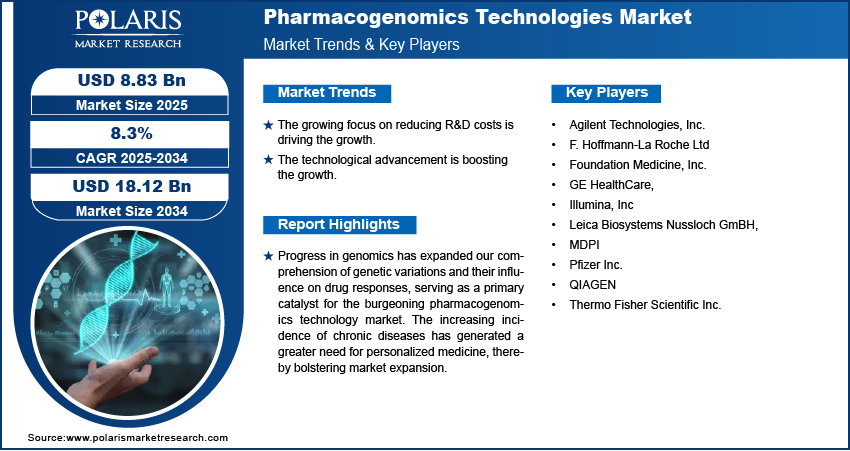
The global pharmacogenomics technologies market size and share was valued at USD 8.17 billion in 2024 and is expected to grow at a CAGR of 8.3% during the forecast period. The growth is driven by increasing adoption of personalized medicine, and technological advancement.
Market Statistics
Key Takeaways
- The PCR segment dominated in 2024 due to its pivotal role in genetic analysis and diagnostics.
- The oncology segment is expected to witness fastest growth during the forecast period due to expanding range of therapies developed using molecular diagnostics principles for cancer treatment.
- North America dominated with largest share in 2024 due to the presence of well-established industry key players.
- Asia Pacific is projected to accounted for a significant share in the global market due to diverse population, the increasing prevalence of chronic diseases.
Industry Dynamics
- The increasing awareness and adoption of personalized healthcare is fueling the growth.
- The growing focus on reducing R&D costs is driving the growth.
- The technological advancement is boosting the growth.
- High initial costs for genetic testing and analysis are limiting the growth.
Source: Polaris Market Research Analysis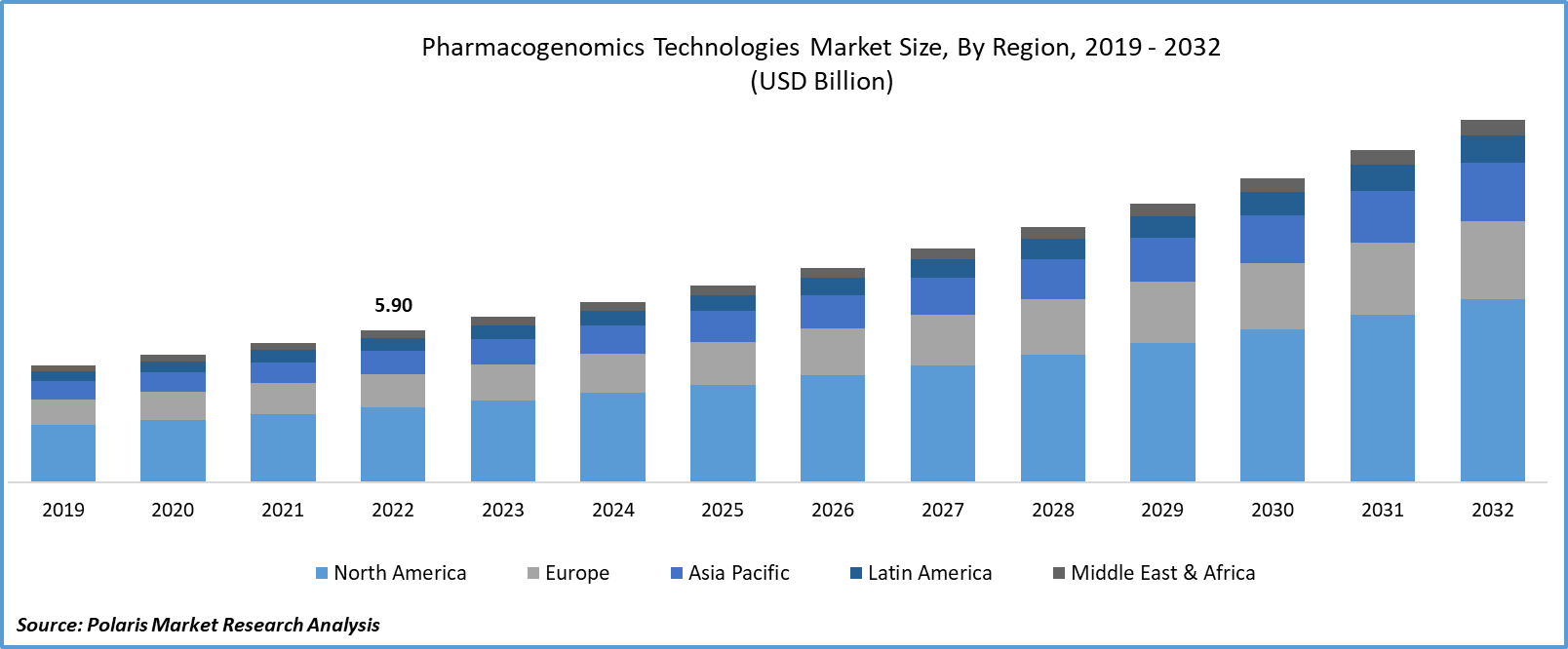
To Understand More About this Research: Download Sample Report
Pharmacogenomics is the study of how disparities in the human genome command a person’s counter to medications. In a study, an additional 99% of people examined had a genotype linked with an escalated probability to at the minimum one medication. Citations from pharmacogenomics research can cause superlative future results for both persons and healthcare donors through enhanced medication security and efficiency and minimized medical prices.
Progress in genomics has expanded our comprehension of genetic variations and their influence on drug responses, serving as a primary catalyst for the burgeoning pharmacogenomics technology market. The increasing incidence of chronic diseases has generated a greater need for personalized medicine, thereby bolstering market expansion. Additionally, the decreasing costs associated with genomic sequencing and ongoing technological improvements are further propelling market growth. Capitalizing pharmacogenomics techniques will finally sanction healthcare providers to accelerate the calculated usage of a medication or a cure, lessen untimely drug responses, accelerate of time to obtain therapeutic advantage of a drug, and lessen the opportunity of side effects or reliance. Pharmacogenomics reduces the cost of healthcare disbursements by utilizing genomics to recognize the most suitable and cost-effective drugs initially. The pharmacogenomics technologies market size is expanding as it lessens premature drug responses early in the cure thereby lessening hospital expanse at stays, lessening hospital readmissions, and lessening ER visits
The adoption of theragnostic by pharmaceutical companies is being driven by its potential to reduce research and development costs while expediting clinical trial timelines. Market prospects are motivating smaller players to concentrate on creating new tests for drugs that are already licensed, which is expected to fuel growth in the future. Collaborations and upcoming product pipelines are significant drivers of the pharmacogenomics technology market. These collaborations aim to identify suitable tumor targets by expanding the knowledge of mutations linked to faulty DNA repair. Companies are actively working on creating comprehensive tests capable of capturing a vast amount of pertinent content. Advancements in genomics have significantly enhanced our understanding of the impact of genes on health. The development of next-generation sequencing technologies has accelerated the analysis of DNA and RNA sequencing, enabling the examination of vast amounts of genetic data. Genome-wide association studies have played a pivotal role in pinpointing specific gene variations linked to various diseases, offering valuable insights into the genetic underpinnings of illnesses.
Source: Polaris Market Research Analysis
Industry Dynamics
What Factors are Driving the Industry Growth?
The increasing adoption of personalized care has made a substantial contribution to the expansion of the pharmacogenomics technologies market. The emphasis on customizing medical treatments for individual patients has given rise to personalized care, with a growing awareness of the influence of genetic factors on drug responses. These technologies perform a pivotal role in recognizing genetic deviations that impact drug effectiveness and metabolism. In May 2022, Invitae unveiled its comprehensive 38-gene testing panel for pharmacogenomics, known as the Invitae Pharmacogenomics (PGx) Panel, for Mental Health Panel in combination with a clinical decision support tool. Pharmacogenomics technologies can enhance treatment effectiveness and reduce adverse drug reactions, resulting in improved patient outcomes, which is a significant driver for their adoption. There is an increasing awareness among healthcare professionals and patients about the impact of genetic variations on drug responses, prompting the use of pharmacogenomics to optimize treatments. It plays a crucial role in drug development and clinical trials, helping pharmaceutical companies identify and target specific patient populations for their medications.
Key Report Segmentation
The market is primarily segmented based on technology, therapeutic area, and region.
| By Technology | By Therapeutic Area | By Region |
|
|
|
Source: Polaris Market Research Analysis
To Understand the Scope of this Report: Request Customization
Why PCR segment Dominated in 2024?
The PCR segment dominated with largest market share due to its pivotal role in genetic analysis and diagnostics. PCR enables the amplification of precise DNA sequences, making it an indispensable tool for genotyping and identifying genetic variations linked to drug response. Its extensive utilization involves the detection of single nucleotide polymorphisms (SNPs) and genetic mutations that influence drug metabolism and effectiveness. In September 2021, Thermo Fisher Scientific Inc. introduced the QuantStudio Absolute Q Digital PCR System, a comprehensive digital PCR (dPCR) technology designed to provide highly precise results rapidly. This innovative system does not rely on complex, multi-instrument workflows. Instead, it integrates microfluidic array technology with simplified processes, enhancing data consistency and accuracy.
Which Segment by Therapeutic Area is Expected to Witness the Fastest Growth During the Forecast Period?
The oncology segment is expected to witness the fastest growth during the forecast period. It is linked to the expanding range of therapies developed using molecular diagnostics principles for cancer treatment. The key to implementing companion diagnostics in cancer lies in the careful selection of predictive biomarkers. These biomarkers are specific genetic or molecular characteristics that can be identified through diagnostic tests. They play a crucial role in identifying which patients are likely to benefit from a particular treatment. In other words, companion diagnostics help determine whether a specific drug or therapy is suitable and effective for a particular individual's cancer. Oncology has increasingly turned to a deeper understanding of the genetic makeup of both tumors and individual patients to revolutionize the selection of effective therapies. This shift towards precision medicine in oncology is made possible through the utilization of pharmacogenomics technologies, which empower oncologists to identify crucial genetic variations present within tumors. These genetic variations serve as valuable targets for specific drugs, thereby opening the door to more precise and effective treatment options for cancer patients. By pinpointing these genetic variations, oncologists can tailor treatment plans to the individual characteristics of each patient's cancer. This personalized approach often leads to more effective therapies with fewer side effects. It also helps identify which drugs are likely to work best for a particular patient, enhancing the chances of successful treatment outcomes.
Source: Polaris Market Research Analysis
Regional Insights
How North America Captured Largest Market Share?
North America dominated with the largest market due to the presence of well-established industry key players operating within the region. These key players have been actively pursuing collaborations to secure their foothold in the pharmacogenomics companion diagnostics market. The United States has seen a significant surge in integrated medicine research and development. It has been facilitated by the active involvement of regulatory bodies and government initiatives aimed at promoting this field. The FDA (Food and Drug Administration) has played a pivotal role by issuing guidance documents that facilitate milestone review coordination across various agencies, establish performance requirements, clarify regulatory strategies, and define timelines.
What are the Reason for Asia Pacific's Fastest Growth?
Asia Pacific is expected to witness the fastest growth during the forecast period. The region's rapid growth in the pharmacogenomics technology market can be attributed to its diverse population, the increasing prevalence of chronic diseases, a focus on precision medicine, and significant investments in research and infrastructure. These factors collectively drive the demand for pharmacogenomics solutions and contribute to the region's expanding pharmacogenomics technologies market. It boasts a diverse population, making it a fertile ground for genetic research. This diversity allows for a broader range of genetic variations to be studied, which can lead to more comprehensive insights into the genetic underpinnings of diseases and drug responses. Moreover, the growing health burden has amplified the demand for personalized medicine and targeted therapies. Pharmacogenomics technologies are instrumental in tailoring treatments to individual patients, which is particularly crucial in managing chronic diseases effectively.
Source: Polaris Market Research Analysis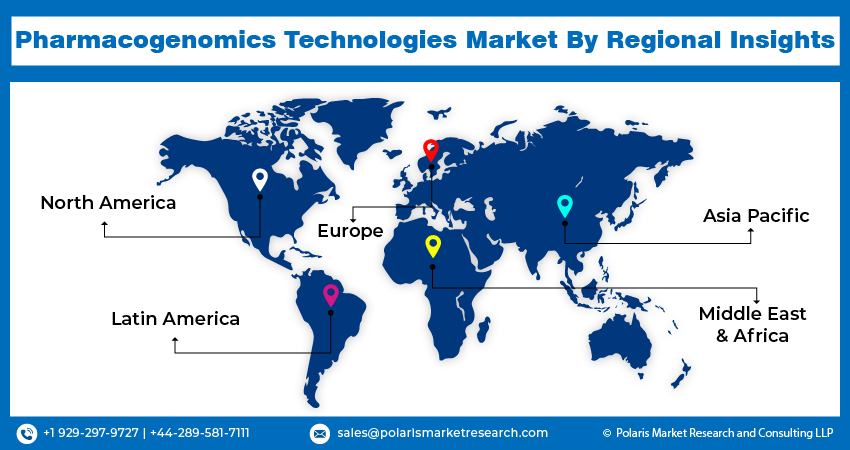
Key Market Players & Competitive Insights
The market exhibits intense competition, with companies employing strategies like introducing new products, securing approvals, engaging in strategic acquisitions, and fostering innovations to expand their global presence.
Some of the key players operating in the global market are:
- Agilent Technologies, Inc.
- F. Hoffmann-La Roche Ltd
- Foundation Medicine, Inc.
- GE HealthCare,
- Illumina, Inc
- Leica Biosystems Nussloch GmBH,
- MDPI
- Pfizer Inc.
- QIAGEN
- Thermo Fisher Scientific Inc.
Recent Developments
-
September 2025: Quest Diagnostics collaborated with Coriell Life Sciences for the launch of an advanced pharmacogenomics (PGx) laboratory test service. The new test service aims to provide tailored drug response insights across specialties, such as cardiology, oncology, psychiatry, and pain management.
-
March 2025: InformedDNA announced the acquisition of Coriell Life Sciences. With expansion, InformedDNA aims to expand its pharmacogenomics capabilities and integrate genetic insights into its precision health platform.
-
October 2024, QIAGEN Digital Insights launched Pharmacogenomic Insights (PGXI), a knowledgebase to help researchers understand gene-based medication responses.
-
May 2024, Oxford Nanopore Technologies and Twist Bioscience introduced a Pharmacogenomics Beta Program combining advanced sequencing technologies to enhance personalized medicine.
- January 2023, QIAGEN unveiled a strategic collaboration with Helix, a company specializing in population genomics. This partnership aims to facilitate the development of companion diagnostics for genetic diseases.
Pharmacogenomics Technologies Market Report Scope
| Report Attributes | Details |
| Market size in 2024 | USD 8.17 billion |
| Market size in 2025 | USD 8.83 billion |
| Revenue forecast in 2034 | USD 18.12 billion |
| CAGR | 8.3% from 2025 – 2034 |
| Base year | 2024 |
| Historical data | 2020 – 2023 |
| Forecast period | 2025 – 2034 |
| Quantitative units | Revenue in USD billion and CAGR from 2025 to 2034 |
| Segments Covered | By Type, By Application, By Distribution Channel, By Region |
| Regional scope | North America, Europe, Asia Pacific, Latin America; Middle East & Africa |
| Customization | Report customization as per your requirements with respect to countries, regions, and segmentation. |
Source: Polaris Market Research Analysis
Pharmacogenomics Technologies Market FAQ's
• The market size was valued at USD 8.17 Billion in 2024 and is projected to grow to USD 18.12 Billion by 2034.
• The market is projected to register a CAGR of 8.3% during the forecast period.
• A few of the key players in the market are Agilent Technologies, Inc., F. Hoffmann-La Roche Ltd, Foundation Medicine, Inc., GE HealthCare, Illumina, Inc., Leica Biosystems Nussloch GmBH, MDPI, Pfizer Inc., QIAGEN, and Thermo Fisher Scientific Inc.
• The PCR segment accounted for the largest market share in 2024.
• The oncology is expected to record significant growth.
Download Sample Report of Pharmacogenomics Technologies Market Share, Analysis & Value 2025-2034
Please fill out the form to request a customized copy of the research report.


