
Spine Biologics Market Size, Share, Trends & Growth Analysis, 2026-2034
REPORT DETAILS
Spine Biologics Market Summary
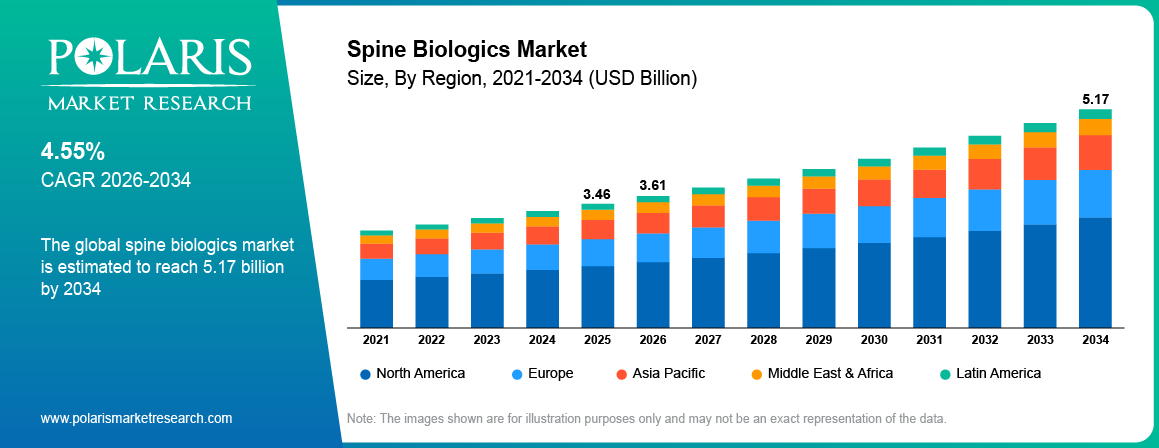
The spine biologics market size was valued at USD 3.46 billion in 2025. The market is anticipated to grow at a CAGR of 4.55% from 2026 to 2034. The increasing prevalence of spinal disorders and rising surgical procedure volumes are a few of the key factors driving market growth.
Market Statistics
Spine Biologics Market Key Takeaways
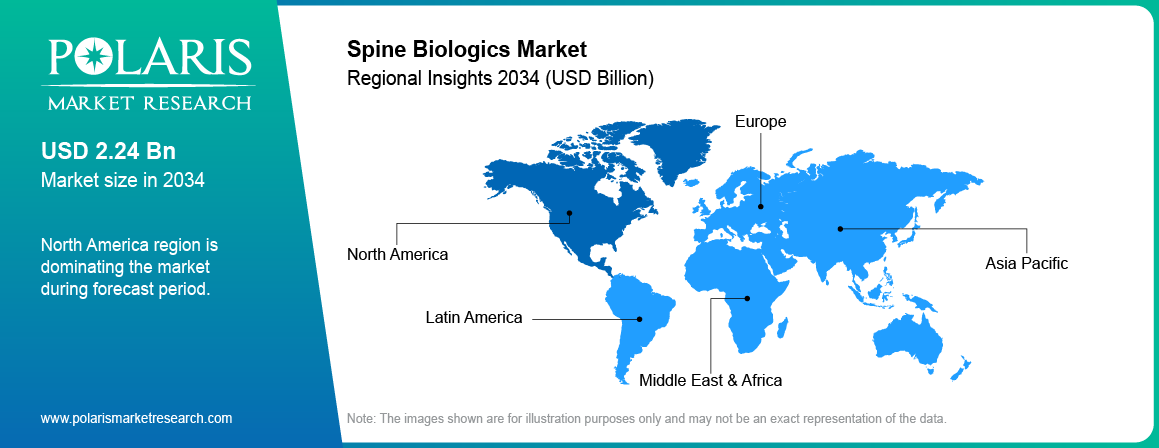
- North America dominated with a market share of 43.4% in 2025. Its well-developed healthcare system plays a key role in the dominance of this market.
- Asia Pacific is projected to witness strong growth with a CAGR of 8.9%. High incidence of spinal diseases in elderly people fuels demand for spine biologics.
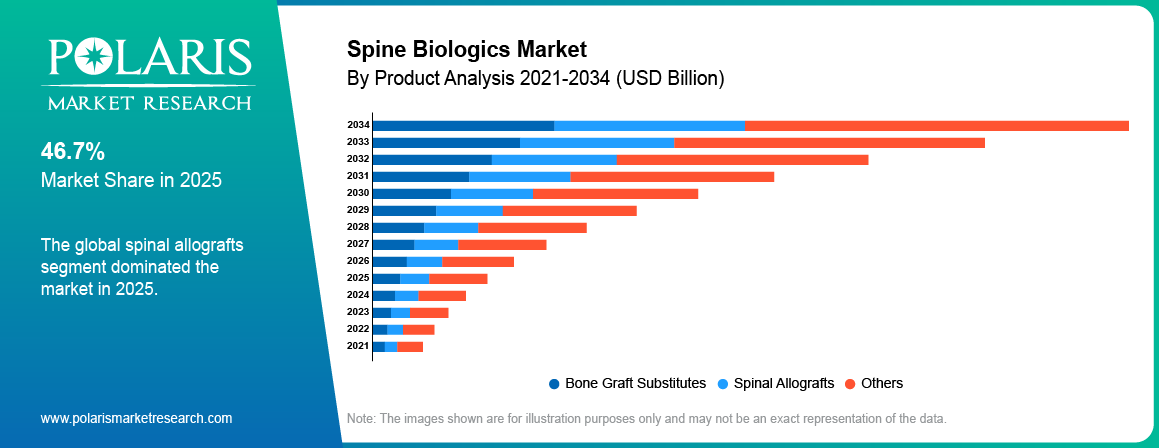
- The spinal allografts segment was dominant with a market share of 46.7% in 2025. It is attributed to their efficacy in spinal fusion and tissue regeneration.
- The hospitals and clinics segment accounted for a market share of 68.3% in 2025. They act as primary locations for spinal procedures.
- The ambulatory surgical centers segment is forecasted to grow at a CAGR of 9.5%. It is attributed to significant cost reduction per case.
Note: Figures and projections outlined in this report are the result of Polaris Market Research’s proprietary analytical processes, grounded in the latest available datasets and market observations.
What Are Spine Biologics? Definition, Types & Role in Spinal Fusion
Spine biologics are special materials used during spine surgeries to enhance bone growth and fusion. They include autograft bone tissue, bone from donors, synthetic grafts, and biologic products that promote bone growth. Spine biologics aid spinal fusion, accelerate the healing process, and contribute to creating a stable spine. They are widely used in the treatment of spinal trauma, degenerative disc disease, scoliosis, and other medical conditions involving spinal reconstruction.
How Do Spine Biologics Work? Bone Growth, Graft Placement & Spinal Fusion
Patient Evaluation – The surgeon assesses the patient’s spine and decides whether biologic materials are required.
Preparation for Surgery – The spine segment that has been damaged is prepared for fusion.
Placement of Biologic Materials – Bone grafts, bone graft substitutes, or growth factor drugs are put between the vertebrae.
Activation of Bone Growth – The biologic material promotes bone formation by stimulating bone cells inside the body.
Formation of New Bone – The body begins forming new bone tissue around the graft, joining the vertebrae together.
Fusion of Vertebrae – The vertebrae fuse together into one solid structure over several months.
Monitoring & Recovery – The doctors will monitor your recovery process using imaging and follow-up visits.
Source: Polaris Market Research Analysis
To Understand More About this Research:Download Sample Report
Spine Biologics Market Overview: Clinical Adoption, Technology & Demand Drivers
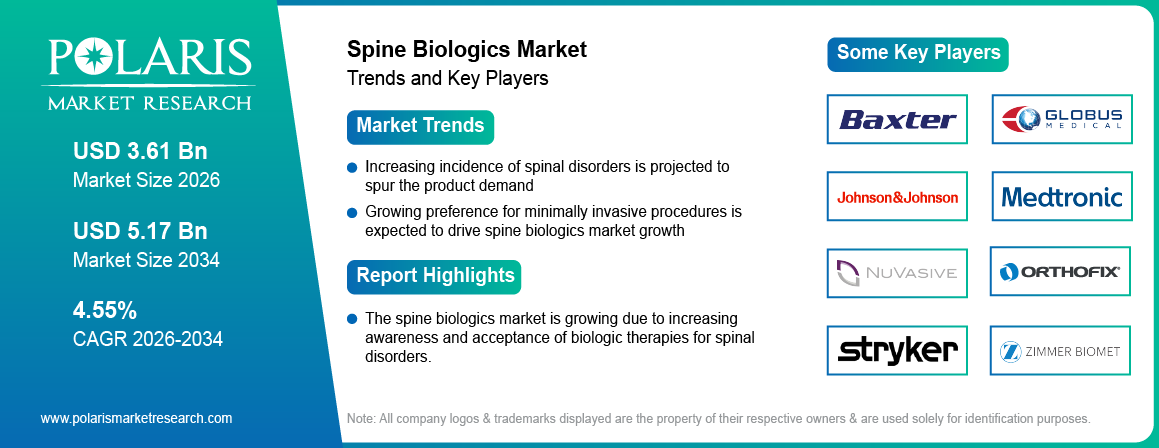
The spine biologics market is growing due to increasing awareness and acceptance of biologic therapies for spinal disorders. Advances in medical knowledge and technology have led to greater recognition of the benefits of biologics in supporting spinal fusion and bone healing. Healthcare professionals are integrating biologic products into treatment strategies to improve patient outcomes, while patients seek treatments offering better results and faster recovery. Continued innovation in biotechnology and regenerative medicine is driving the development of enhanced biologic products. Regulatory approvals for biologic treatments in spinal applications are also contributing to market expansion. As awareness and acceptance of biologic therapies continue to rise, the spine biologics market is poised for significant growth.
In addition, companies operating in the market are introducing new products to expand market reach and strengthen their presence.
Technological advancements are driving the spine biologics market growth, transforming spine care. Breakthroughs in biotechnology have yielded advanced biologic products like bone graft substitutes and stem cell therapies, aiding spinal fusion and tissue regeneration. Imaging technologies such as MRI and CT scans enable precise diagnosis and treatment planning, enhancing treatment efficacy. Minimally invasive surgical techniques reduce trauma and recovery times, paired with spine biologics, offer less invasive alternatives to open surgeries, improving patient outcomes.
Autograft vs Allograft vs Synthetic Bone Grafts for Spinal Fusion
| Feature | Autograft | Allograft | Synthetic Bone Graft |
| Origin | Bone taken from the patient’s body itself | Bone taken from a screened donor | Materials like calcium phosphate, bioactive ceramics etc. |
| Bony Healing Capability | High since the bone contains living cells of the patient itself | Good but depends on the quality of donor material | Good and keeps on improving as new biomaterials are being invented |
| Additional Surgeries Required | Yes | No | No |
| Availability | Based on how much bone the patient can provide | Readily available through tissue banks | Available in various forms |
| Risk of Contamination | None | Extremely low due to rigorous screening | None |
| Primary Benefits | High bone regeneration capacity and fusion rates | Avoids the need for a second surgery site and eliminates pain | Uniform quality, availability, and no need for donor bone |
| Usages | Mostly used for complex spinal fusions | Used in routine spinal fusion operations | Patients needing an alternative to autogenous bone grafting or allograft bone |
Source: Polaris Market Research Analysis
Spine Biologics Market Dynamics
Driver: Rising Spinal Disorders and Spinal Fusion Procedure Volumes
The spine biologics market is expanding due to the rising incidence of spinal disorders globally. Factors such as aging populations, sedentary lifestyles, and occupational hazards contribute to conditions like degenerative disc disease and spinal fractures, leading to severe pain and reduced mobility. Spine biologics, including bone graft substitutes and stem cell therapies, offer innovative treatments by promoting spinal fusion and tissue regeneration. Recent advancements in biotechnology have enhanced the efficacy and safety of these therapies, providing enhanced alternatives to traditional spinal surgeries. As awareness grows among healthcare providers and patients, the demand for spine biologics is increasing, driving market growth in the coming years.
Driver: Growing Adoption of Minimally Invasive Spine Surgery
The spine biologics market is growing due to the increasing preference for minimally invasive spinal surgeries. Surgeons are opting for biologic products to support spinal fusion and bone healing, meeting patient demands for reduced post-operative pain and quicker recovery. These biologics, sourced from natural materials or developed through biotechnology, stimulate bone growth and fusion. Minimally invasive procedures offer advantages such as smaller incisions and reduced tissue damage, while biologic products like bone graft substitutes and growth factors promote bone regeneration, reducing the need for extensive hardware fixation. The aging population and prevalence of degenerative spine conditions further fuel demand, driving growth in the spine biologics market.
Regenerative Medicine Transforming Spine Care
Regenerative medicine is bringing about significant changes in spine care through assisting the body in repairing damaged bones and tissues. Spinal fusion biologics have been extensively applied in the enhancement of bone regeneration following spinal fusion surgery. Emerging regenerative technologies are making spine surgeries more predictable and allowing patients to recover faster. Scientists are working on new treatments that can stimulate bone regeneration. This may help reduce the incidence of re-surgery among patients who require spinal fusions. Regenerative medicine for spine is increasingly being utilized in spine surgery due to growing evidence from clinical trials.
Growth of Orthopedic Biologics Market
The orthopedic biologics market is growing due to the increase in the need for treatment of bone and joint-related problems. Factors such as aging, sports injuries, and spine disorders have resulted in an increased demand for better treatments. Spine biologics have become an integral part of orthopedic operations as they help in bone healing and improve operation results. There is also an increased awareness about the benefits of using the product among doctors, thus resulting in greater use of spinal biologics in orthopedic surgery. New bone graft substitutes and regenerative medicine products have expanded treatment options.
Integration with Modern Spine Care
Spine biologics can now be combined with a number of surgical techniques to ensure better patient care. Physicians resort to imaging technology to prepare for the procedure before the surgery takes place. The robotic-assisted technology and surgical navigation aid in placing biologics with great precision during the procedure. Post-surgical recovery programs help the patient recover, along with biologics that aid bone growth. Imaging technology is used after surgery to track the progress of spine fusion. This combination of technologies helps enhance surgical precision and recovery.
Source: Polaris Market Research Analysis
Restraint: High Treatment Costs and Reimbursement Constraints
The spine biologics market faces limitations due to the high cost of treatment, hindering access for many patients. Expenses associated with research, development, manufacturing, and regulatory compliance contribute to the overall price of advanced biologic products used in spine care. Additionally, the complexity of spine biologics procedures, coupled with the need for specialized equipment and trained professionals, further increases treatment costs. Patients sometimes struggle with additional expenses for diagnostic tests, consultations, and post-operative care.
AI Impact on Spine Biologics: R&D, Patient Selection & Postoperative Monitoring
- AI enables researchers to study large biological and clinical datasets to discover new spine biologic therapies. The technology ensures a faster research and development process for products.
- AI allows physicians to select appropriate spine biologic therapies through reviewing patient information and images. The technology is set to enable more personalized treatment decisions.
- It enables monitoring of the patient recovery process by analysis of patients' health information. This will enable healthcare practitioners to spot any potential complications early enough and change the course of treatment where necessary.
- The use of AI in research, manufacturing, and decision-making for spine biologics therapies has increased among companies in the industry. It is likely to enhance innovation in the market in the coming years.
Spine Biologics Market Segmentation Analysis
The spine biologics market analysis is primarily segmented based on product, end user, and region.
| By Product | By End User | By Region |
|
|
|
Source: Polaris Market Research Analysis
Spine Biologics Market by Product:
The spinal allografts segment was dominant with a market share of 46.7% in 2025. They are favored for their proven efficacy in promoting spinal fusion and tissue regeneration, along with their widespread availability from tissue banks. Their use reduces surgical morbidity compared to autografts and offers customization options to match patients' anatomical needs. Moreover, spinal allografts are often more cost-effective than alternative biologics, enhancing their appeal to healthcare facilities aiming for efficiency. Rigorous screening and processing protocols minimize the risk of disease transmission, ensuring patient safety. Supported by clinical evidence and guidelines, spinal allografts have gained widespread acceptance in the medical community.
Spine Biologics Market by End User:
The hospitals and clinics segment accounted for a market share of 68.3% in 2025.Hospitals and clinics play a pivotal role in the spine biologics market, serving as primary destinations for spinal treatments. These facilities offer comprehensive care, encompassing diagnostics, surgeries, and post-operative management, attracting patients seeking spine biologics. The presence of specialized spinal care centers within hospitals enhances their appeal and expertise. Integrated healthcare systems streamline spine biologics utilization across treatment stages, ensuring efficient care delivery. Academic hospitals drive innovation through research and development. Their proficiency in navigating reimbursement policies enables effective procurement and administration of spine biologics. Moreover, established trust and robust referral networks sustain a consistent flow of spine biologics utilization, significantly contributing to segment growth.
Spine Biologics Applications: Lumbar Fusion, Cervical Fusion, Trauma & Revision Surgery
| Application | How Spine Biologics Assist |
| Lumbar Spinal Fusion | Facilitate bone growth in the lower spine following surgery. |
| Cervical Spine Fusion | Aid in the healing of bone and fusion in neck surgery. |
| Degenerative Disc Disease | Increase the strength of the spinal fusion following disc removal. |
| Scoliosis Correction | Enhance the fusion of several vertebrae in spine surgery. |
| Spinal Trauma Reconstruction | Improve spinal stability after suffering from fractures or other trauma. |
| Revision Spine Surgery | Improve bone healing in cases where bone healing is necessary following spinal fusion surgery. |
| Spine Surgery in Osteoporotic Patients | Improve bone formation in osteoporotic patients. |
| Complex Orthopedic Spinal Reconstruction | Facilitate bone regeneration in spinal reconstruction surgery. |
Source: Polaris Market Research Analysis
Source: Polaris Market Research Analysis
Spine Biologics Reimbursement & Regulatory Landscape
Before spine biologics are used in patients, they must pass the necessary regulatory approvals. Producers have to prove the safety, efficacy, and consistency of their products. The regulators approve the product based on the clinical evidence, quality of the product, and manufacturing process. Insurance coverage is another factor that influences the use of such products. Reimbursement rules may vary between countries and healthcare systems. Clinical evidence has a significant effect on better coverage decisions. This can be achieved by making more investments in research, testing and quality control.
Spine Biologics Market by Region
North America region accounted for a significant market share in 2025
North America dominated with a market share of 43.4% in 2025. The region’s advanced healthcare infrastructure, strong research and development sector, and high prevalence of spinal disorders contribute to the demand for spine biologics. Favorable reimbursement policies and technological advancements further drive market growth. Additionally, the region's well-established regulatory framework ensures the safety and efficacy of spine biologics, enhancing confidence among healthcare professionals and patients. Collaboration between industry and academia further accelerates innovation and the development of spine biologics.
Asia Pacific is projected to witness strong growth with a CAGR of 8.9%. The region's aging population contributes to a higher prevalence of spinal disorders, driving demand. Increased healthcare expenditure in countries like China, India, and Japan enables investment in advanced treatments. Technological advancements and improving healthcare infrastructure support the adoption of spine biologics. Growing awareness among healthcare professionals and patients further boosts market growth. Government initiatives aimed at enhancing healthcare access and infrastructure also play a significant role. Additionally, the expanding healthcare industry and rising medical tourism create opportunities for spine biologics market expansion in the Asia-Pacific region.
Source: Polaris Market Research Analysis
Spine Biologics Competitive Landscape & Leading Companies
The spine biologics encompasses various participants, and the anticipated entry of new competitors is set to heighten competition. Established frontrunners consistently upgrade their technologies to sustain a competitive edge, focusing on efficiency, dependability, and safety. These companies prioritize strategic maneuvers like forging partnerships, enhancing product arrays, and engaging in collaborative ventures. Their objective is to surpass rivals within the industry, solidifying a substantial spine biologics market share.
Leading Spine Biologics Companies
- Arthrex, Inc.
- Baxter International Inc.
- Exactech, Inc.
- Globus Medical Inc.
- Johnson & Johnson (DePuy Synthes)
- Kuros Biosciences.
- Medtronic plc
- NuVasive, Inc.
- Organogenesis Inc.
- Orthofix Medical Inc.
- RTI Surgical Holdings, Inc.
- SeaSpine Holdings Corporation
- Spine Wave, Inc.
- Stryker Corporation
- Zimmer Biomet Holdings, Inc.
Spine Biologics Market Recent Developments, Product Launches & Clinical Milestones
- May 2026: Bone Biologics Corporation revealed the extension of the validated shelf life of its rhNELL-1 protein product to 29 months. The company stated that the milestone advances commercial and manufacturing readiness ahead of anticipated pivotal study scale-up.(source: globenewswire.com)
- April 2026: Theradaptive, Inc. announced U.S. FDA approval to initiate the Phase 3 clinical trial for OsteoAdapt SP. According to Theradaptive, Inc., OsteoAdapt is the company’s next-generation regenerative therapeutic for spinal fusion procedures.(source: prnewswire.com)
- In July 2025, Orthofix announced the nationwide U.S. commercial rollout of the Reef™ L Interbody System intended for lateral lumbar fusion surgeries. The advanced system features proprietary NanoMetalene™ surface technology along with distinctive Reef undercut designs, aimed at improving surgical accuracy and optimizing patient clinical outcomes.
- In May 2025, Xtant Medical launched OsteoFactor Pro™, a naturally sourced, growth factor–enriched formulation developed to boost the biological performance and regenerative capacity of bone grafts used in spine fusion procedures. The product is designed to support improved healing results and shorten recovery durations for patients undergoing spinal operations.
Spine Biologics Market Future Outlook
The spinal biologics market is projected to expand with increased treatments for spinal ailments. Progress in regenerative medicine, stem cell technology, and artificial bone grafting has improved the effectiveness of spinal fusions. The demand for biologics has been on the rise owing to minimally invasive surgery practices that enhance quick recovery. Various companies are constantly inventing new products that promote bone healing. There will be various market opportunities due to increased healthcare spending and R&D efforts.
Spine Biologics Market Report Scope, Segmentation & Forecast Coverage
The spine biologics market report emphasizes on key regions across the globe to provide better understanding of the product to the users. Also, the report provides market insights into recent developments, trends and analyzes the technologies that are gaining traction around the globe. Furthermore, the report covers in-depth qualitative analysis pertaining to various paradigm shifts associated with the transformation of these solutions.
The report provides detailed analysis of the market while focusing on various key aspects such as competitive analysis, products, end users, and their futuristic growth opportunities.
Spine Biologics Market Report Scope
| Report Attributes | Details |
| Market size value in 2025 | USD 3.46 billion |
| Market size value in 2026 | USD 3.61 billion |
| Revenue forecast in 2034 | USD 5.17 billion |
| CAGR | 4.55% from 2026 – 2034 |
| Base year | 2025 |
| Historical data | 2021 – 2024 |
| Forecast period | 2026 – 2034 |
| Quantitative units | Revenue in USD billion and CAGR from 2026 to 2034 |
| Segments covered |
|
| Regional scope |
|
| Competitive Landscape |
|
| Report Format |
|
| Customization | Report customization as per your requirements with respect to countries, region and segmentation. |
Source: Polaris Market Research Analysis
Spine Biologics Market FAQ's
One of the key segments is spinal allografts, which was dominant in the Spine Biologics Market with a 46.7% share in 2025, attributed to their efficacy in spinal fusion and tissue regeneration.
Spine Biologics Market Size Worth $5.17 Billion By 2034
Spine Biologics Market exhibiting the CAGR of 4.55% during the forecast period.
North America is leading the global market, dominating with a 43.4% share in 2025, driven by its well-developed healthcare system.
key driving factors in Spine Biologics Market are Increasing incidence of spinal disorders
Spine biologics refer to biological products used in spine surgery to aid in bone healing and fusion of bones. These include bone grafts, bone graft substitutes, and growth factors that promote the growth of new bones.
The use of spine biologics promotes bone healing and fusion of bones and reduces the need to harvest bones from other parts of the patient's body, among others. They also minimize the chances of having unsuccessful fusion and generally result in better surgical outcomes.
Bone graft substitutes refer to alternative spinal bone graft materials that are used in place of bone grafts in spine surgeries. They are designed to encourage new bone formation and fusion of bones. They are popular because they are readily available. Also, they take away the need to harvest other bones from the patient's body.
Download Sample Report of Spine Biologics Market
Please fill out the form to request a customized copy of the research report.


