
Sterile Injectable Contract Manufacturing Market Size, Share, Trends & Forecast, 2026–2034
REPORT DETAILS
Sterile Injectable Contract Manufacturing Market Summary
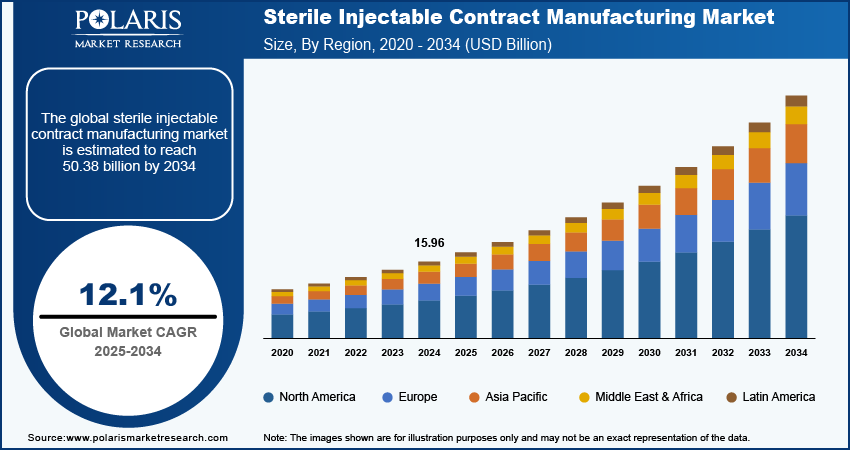
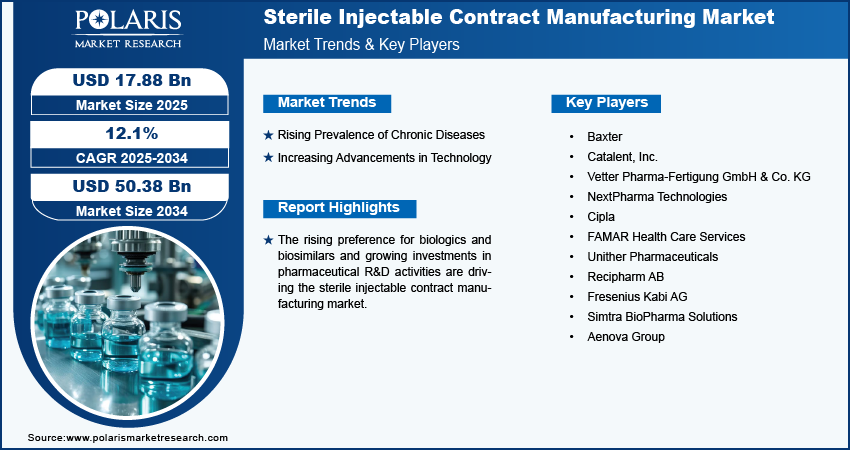
The sterile injectable contract manufacturing market size was valued at USD 24.15 billion in 2025. The market is projected to register a CAGR of 12.2% from 2026 to 2034. The rising preference for biologics and biosimilars propels the demand for sterile injectable contract manufacturing. The industry growth is also driven by growing investments in pharmaceutical R&D activities.
Market Statistics
Sterile Injectable Contract Manufacturing Market Key Takeaways
- North America led with an 36.15% sterile injectable contract manufacturing market share in 2025. Robust pharmaceutical infrastructure and high healthcare spending contribute to the regional dominance.
- Asia Pacific is projected to grow at a 13.75% CAGR. Increasing investments in healthcare infrastructure and a rising population propel the growth.
- The large molecules segment accounted for an 59.65% sterile injectable contract manufacturing market share in 2025. This is due to the increasing prevalence of biologics and biosimilars.
- The oncology segment led with an 29.15% sterile injectable contract manufacturing market share in 2025. The segment’s leading position is attributed to the high prevalence of cancer globally.
- The CNS diseases segment is projected to grow at a 14.15% CAGR. This is owing to the growing prevalence of neurological disorders.
Note: Figures and projections outlined in this report are the result of Polaris Market Research’s proprietary analytical processes, grounded in the latest available datasets and market observations.
What Is Sterile Injectable Contract Manufacturing?
Sterile injectable contract manufacturing refers to the outsourcing of injectable drug production to a specialized manufacturer. The process entails the manufacture of medicines under controlled conditions where chances of contamination are minimized. Some of the services offered by the contract manufacturer include formulation, aseptic filling, quality inspection, packaging, and testing for pharmaceutical and biotechnology companies.
How Sterile Injectable Contract Manufacturing Works?
The sterile manufacturing of injectables is a process carried out through a number of controlled stages. In each stage, the product is prepared to go through another process, but always in optimal condition of quality and sterility.
Sterile Injectable Manufacturing Process Steps
Drug formulation: Preparation of the drug ingredients and mixing of the drug in order to formulate an injectable product.
Sterile filtration: Filtration of the formulated drug through a sterile filter.
Aseptic fill: The filtered drug is filled into vials, syringes, cartridges, and others depending on the container that will be suitable.
Closing: Closures of the containers containing the filled drug.
Lyophilization: Freeze-drying some of the drugs to enhance their stability in storage.
Quality control test: This is carried out on the product and involves tests like sterility, potency and purity.
Packaging: Labeled packaging of the product for shipment or storage.
Cold chain: Keeping of the product under cold conditions from the time of preparation to the point of use by the consumer.
Source: Polaris Market Research Analysis
Market Dynamics
The sterile injectable contract manufacturing market is being supported by changes in drug development, treatment needs, and pharmaceutical supply approaches. The following factors are particularly relevant to market growth:
Driver: Rising Biologics & Biosimilars Demand
The expanding biologics and biosimilars pipeline has led to increased demand for specialty injectable manufacturing capabilities. In March 2026, the FDA announced further steps in an effort to facilitate the development of biosimilars and reported that 82 biosimilars have been approved in the U.S. At the same time, the FDA published revised guidelines to facilitate the development of biosimilar and interchangeable products (source: fda.gov). Such developments will allow more biosimilar drugs to go through the development process up to commercial production. Biosimilar and biologics contract development typically needs specialty processes in terms of manufacturing, especially sterile filling and packaging. For this reason, drug manufacturers will be willing to outsource the manufacturing of biosimilars to a contract manufacturing organization (CMO) that possesses such capability.
Driver: Growing Pharmaceutical Outsourcing Trend
Pharmaceutical organizations are shifting towards the use of third-party manufacturers rather than internal development of capabilities. In June 2026, Shantha Biologics entered into an outsourcing arrangement with Novo Nordisk to manufacture cartridge fill-finish of injectable medicines in India. The arrangement is related to a specialized manufacturing process for medicines like insulin and other injectables (source: prnewswire.com). These developments indicate that pharmaceutical organizations are utilizing CDMOs to have access to well-established capabilities in sterile manufacturing. The approach is highly beneficial for organizations that are planning to develop or expand their offerings in injectable products. As these arrangements extend to the commercial manufacturing stage, sterile injectable CDMOs have more opportunities.
Driver: Increasing Prevalence of Chronic Diseases
The prevalence of chronic diseases continues to drive demand for injections. Diabetes, for instance, is a prevalent chronic disease. According to the International Diabetes Federation, 589 million adults (20-79 years) are living with diabetes. The number is predicted to rise to 853 million by 2050 (source: diabetesatlas.org). Insulin and other forms of injectable drugs continue to be effective ways of treating diabetes. Consequently, the continuing trend toward more patients will increase the need for sterile drug production. Similar demand is seen across conditions such as cancer and autoimmune conditions, which use injectable drugs in their treatments. This makes for a continual requirement for manufacturing capabilities as the number of treatments increases.
Driver: Patent Cliffs Driving Biosimilar & Generic Injectable Volumes
Patent expirations are giving biosimilar and generic manufacturers an opportunity to enter established markets. The impact is evident in 2026, when Sandoz reported 22% growth in biosimilar drug sales in the second quarter of 2026 and said major patent expirations are creating a tremendous opportunity for biosimilar drugs (source: sandoz.com). As more biologics lose market exclusivity, competitors can develop alternatives. The result is a requirement for increased production capacity, especially since these drugs have specific formulation, sterilization, and packaging needs. Contract manufacturers can assist these firms in preparation for higher levels of production and eventual launch.
Driver: Drug Shortage Rules Creating Mandatory Dual Sourcing
Regulations regarding drug shortages are leading to greater emphasis on supply redundancy and manufacturing resilience. According to the CARES Act, certain manufacturers need to maintain a risk management plan that outlines any risks involved in the supply chain of their products. This regulation does not necessarily require two suppliers per product but encourages such an evaluation. This can assist in demand for contract manufacturing organizations providing adequate backup capacity for sterile injectables. For pharmaceutical companies, keeping alternative options for production will assist in avoiding any manufacturing issues and ensuring supply continuity.
Challenges & Restraints: High Manufacturing Costs and Regulatory Complexity
Market participants face some sterile injectable manufacturing challenges. Sterile injectables manufacturing requires substantial initial cost as well as operational expenditure. The factories require specific equipment, manufacturing premises, and maintenance. The companies also require qualified personnel and quality assurance systems to run production to set standards. This increases the investment cost and operational cost, respectively. Manufacturers are subjected to stringent requirements on sterility, contamination control, quality checks, and process validations. These requirements may differ from one country to another, thus making international supply more demanding. Complying with these standards can take longer and increase compliance costs. Small scale producers find this challenging due to limited resources for factory upgrading and regulation.
Opportunities : Growth in High-Containment Injectable Manufacturing
Demand for manufacturing drugs containing potent materials presents an opportunity for manufacturers with high-containment facilities. Certain injectable drugs may require specialized facilities and equipment to protect workers and prevent product contamination during manufacturing. The pharmaceutical company may consider external manufacturers in case it requires these capabilities in only a few products. This allows CDMOs that possess these capabilities to serve projects that would otherwise be difficult to manage in regular sterile facilities. Investing in containment facilities and specialized production facilities helps the manufacturers manage more injectable projects.
Opportunities : Small-Batch Manufacturing for Personalized Therapies
Personalized therapy development also drives interest in production processes that can produce smaller amounts. Unlike large-volume drugs, personalized therapies require manufacturing for one or a few patients. This creates opportunities for contract manufacturing organizations with capabilities adaptable to smaller volumes. These therapies, in their progression from clinical to commercial production, create an opportunity for manufacturing companies that are able to deal with changing production amounts. They also provide an opportunity for companies seeking external manufacturing services without committing to large production facilities.
Trends : Increasing Adoption of Ready-to-Use Manufacturing Components
Sterile injectable contract manufacturing market manufacturers are opting for ready-to-use parts, such as pre-sterilized containers, closures, and single-use assemblies. These components help manufacturers perform certain procedures in their facilities and improve production processes. Furthermore, using ready-made components makes it easier for manufacturers to adapt to their needs without modifying their machines. This trend becomes even more relevant for contract manufacturers producing multiple products simultaneously.
Trends : Greater Focus on Environmental Impact in Sterile Production
The shift towards sustainability is becoming more apparent in the injectable drug outsourcing market. Manufacturing firms are exploring ways to reduce water and energy use, material waste, and the overall environmental impact of their operations. Single-use technology can reduce the need for cleaning in some processes, while improved sterilization techniques may help cut resource use. Waste management and energy consumption tracking in production operations have also been upgraded by facilities. In addition, environmental performance is becoming an increasingly important issue in CDMO planning for both new facilities and upgrades to existing facilities. Environmental performance considerations may also influence a pharmaceutical customer’s selection of a manufacturing partner.
AI & Technology Impact on Sterile Manufacturing
Artificial intelligence and automation technologies are influencing the monitoring and management of sterile injectable manufacturing. Digital monitoring systems are currently being used by manufacturers to gather production data and to detect process anomalies early. Artificial intelligence can also be used to analyze equipment performance, detect patterns, and make maintenance decisions that could lower the chances of equipment failures that can lead to process interruptions.
Automation technology has been used in filling, inspection, and material handling processes. Automation technology can consistently check for inconsistencies in containers in large-scale manufacturing processes. Robotic technology may also be used to perform repetitive functions in a clean environment without human interference in the manufacturing process. Digital batch records can also be developed. Digital batch records would assist in collecting and analyzing production data digitally.
For sterile injectable contract manufacturing market manufacturers, the use of these technologies can lead to consistent production irrespective of different client projects. Additionally, such technologies may help manufacturing companies to track processes in real time and to respond quickly whenever results exceed the normal range of expectations. However, the implementation of AI and automation technologies involves spending on equipment, software, data management, and staff training. Additionally, manufacturers must ensure that computerized systems comply with quality and validation requirements.
Advanced Technologies in Sterile Injectable Manufacturing
| Technology | Description | Key Benefit | Adoption Stage |
| Isolator-based Filling Systems | Fully enclosed barrier systems that eliminate human intervention in filling zone | Highest sterility assurance; EMA Annex 1 preferred | Mainstream |
| Robotic Fill-Finish Lines | Automated robotic arms for vial/syringe handling, inspection, and stoppering | Speed, precision, reduced contamination risk | Growing |
| Single-Use Bioprocessing Systems | Disposable bioreactors, tubing, and presterilized components replacing stainless-steel equipment | Flexibility, reduced cross-contamination, faster changeover | Rapidly adopted, especially for biologics |
| Lyophilization (Freeze-Drying) | Removal of water from biological products at low temperature to enhance stability | Extended shelf life; critical for protein biologics and vaccines | Established; capacity in high demand |
| Continuous Aseptic Manufacturing | Uninterrupted manufacturing flow versus traditional batch processing; recognized under FDA Emerging Technology Program | Reduced lot-release time; improved consistency | Emerging |
| AI-Enabled Real-Time Release | Machine learning models for in-process quality monitoring and release decisions | Reduced batch failure rate; faster QC cycle | Early Adoption |
| COC/COP Container Systems | Cyclic olefin copolymer/polymer alternatives to borosilicate glass vials and syringes | Addresses glass shortage; reduces breakage | Gaining traction |
| Modular Cleanroom Platforms | Pre-fabricated, reconfigurable cleanroom modules for rapid capacity addition | 18-month deployment vs. 3–5 years greenfield | Growing adoption for cell/gene therapy batches |
Source: Polaris Market Research Analysis
U.S. Tariff & Supply Chain Impact on Injectable CMO Market
U.S. trade regulations are leading to additional strategic planning needs for pharmaceutical manufacturers relying on imports for production and raw materials. In April 2026, the U.S. government enacted Section 232 tariff rates of as much as 100% on specific patented drugs and their relevant pharmaceutical ingredients. Generic medicines and biosimilars were excluded from the tariffs at that time (source: whitehouse.gov). As a result, more focus is now on domestic pharmaceutical production and sourcing active pharmaceutical ingredients.
The U.S. tariff impact on pharmaceutical contract manufacturing also extends to materials used in sterile injection production. Some of the materials used in the production process include glass vials, filters, and stoppers. The disruption in the supply of these materials impacts the schedule and inventory management. A diversified supplier base makes it easy for CDMOs to manage disruptions. For pharmaceutical companies, they can search for manufacturing sites close to their location in order to mitigate the risks posed by changes in international trade policies. In this context, tariffs and supply chain disruptions can influence decisions about where to manufacture injectables.
Sterile Injectable CMO Pricing Models
Contract manufacturers of sterile injectables use various pricing models that depend on project scale, manufacturing requirements, and manufacturing commitments. The chosen pricing mechanism affects cost and payment transparency and the amount of funding required by the sponsor.
| Pricing Model | Characteristics of Model | Appropriate for |
| Fee for Service | Payment for specific manufacturing operations or lots | Proven products and routine manufacture |
| Full-Time Equivalent (FTE) | Charges determined by staff time and resource commitment | Innovative processes and technology transfer |
| Milestone-Based / Project-Based | Base payments on milestones of projects | Very complex development projects and technology transfer |
| Capacity Reservation / Dedicated Suite | Payment made in advance for securing manufacturing capacity | Sponsors who need guaranteed access to manufacturing |
| Hybrid / Risk-Sharing Models | A combination of the above pricing models | Long-term or staged manufacturing projects |
Source: Polaris Market Research Analysis
Pricing decision is based on the manufacturing program stage as well as the degree of commitment. Sponsors with known volumes of production may want to rely on batch-based costs that are predictable. However, development projects may require a more flexible pricing structure since resource requirements may vary. Capacity commitments can assist in long-term project planning and minimize risks of access issues in manufacturing. Hybrid models may also be considered depending on project stage.
Source: Polaris Market Research Analysis
Segment Analysis
By Molecule Type (Small vs. Large Molecules)
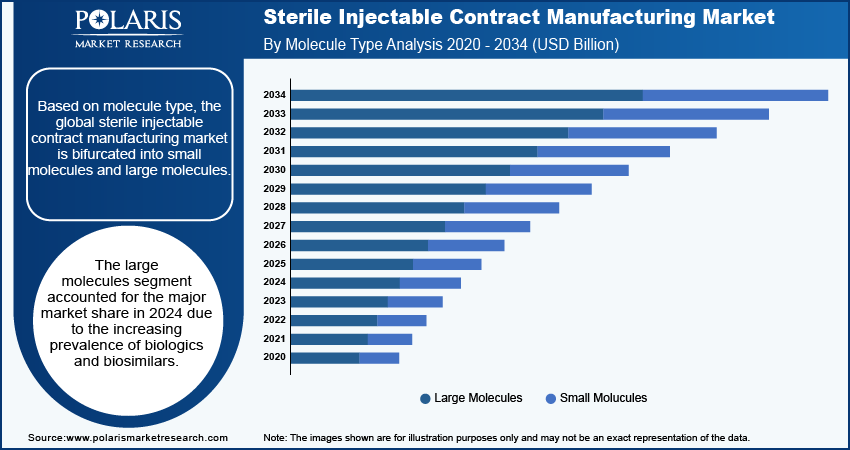
The large molecules segment led with an 59.65% sterile injectable contract manufacturing market share in 2025. The large molecules segment includes biologics and complex therapies that require unique manufacturing processes. These types of manufacturing operations require process control and advanced quality management systems. Contract manufacturing organizations address these requirements with specialized facilities and manufacturing capabilities. The need for outsourced manufacturing operations has been growing as pharma companies expand their biologics pipeline. This has encouraged manufacturing organizations to invest in capabilities suitable for large molecule manufacturing. The segment is thus becoming increasingly important in development and commercial manufacturing programs.
The small molecules segment is projected to grow at an 10.15% CAGR. Small molecules form a major proportion of pharmaceutical development and production. They have well-defined production processes that ensure consistent production in various products. Contract manufacturers provide manufacturing capacity and services to pharmaceutical firms in order to assist them in managing their manufacturing needs. Growing demand can be attributed to ongoing development of novel small molecule drugs. Manufacturers are expanding their manufacturing capabilities to accommodate changes in manufacturing quantities and products. This is likely to drive segment growth during the forecast period.
By Product Type
The finished drug product segment led with an 63.55% sterile injectable contract manufacturing market share in 2025. This leading position is due to the continued need to outsource the manufacture of ready-to-use sterile injectable drugs. Pharmaceutical companies rely on their contract manufacturing organizations to aid in production through the management of their internal manufacturing capacities. Contract manufacturers have the capability of providing filling, packaging, and quality control for finished products. This is particularly relevant for companies that want to increase production without having to make significant investments in terms of their facilities. There will be increased demand as a result of the requirement to manufacture injectable drugs in various product types. With increased outsourcing, finished product manufacturing is expected to continue playing a pivotal role in the market.
The API segment is projected to witness rapid growth at an 10.65% CAGR. Increasing demand for sterile APIs is prompting pharmaceutical firms to expand their external manufacturing partnerships. Contract manufacturers can offer specialized equipment and expertise in API development and manufacturing. Through outsourcing, pharmaceutical firms can leverage increased capacity without expanding their own facility. The segment is becoming increasingly popular as companies want more flexibility at various points along the supply chain. Rising demand is also driven by the creation of new injectables that require an assured supply of APIs. Manufacturers are therefore placing increased emphasis on processes that help to maintain quality and production needs.
By Service Type
The commercial manufacturing segment led with an 42.15% sterile injectable contract manufacturing market share in 2025. Its prominent position is attributed to the continued need for volume production of sterile injectable pharmaceuticals after their development and approval. For many pharma companies, partnerships with contract manufacturers allow them to gain access to production capacities and facilities suitable for this purpose. Commercial production helps ensure production volume as demand for the product grows. The commercial production segment is supported by long-term production programs and repetitive production needs. Increasing dependence on outsourcing will positively affect demand for production services offered in the segment. With the shift of products from development to commercialization, the segment is expected to maintain its leading market position.
The aseptic fill-finish services segment is expected to grow at an 11.35% CAGR. Pharmaceutical companies are increasingly seeking these services to manufacture sterile injectable drugs reliably. The contract manufacturers have the ability to offer special facilities for the filling and packaging of drug products. Additionally, outsourcing may assist the company in obtaining the necessary equipment and manufacturing capacities without making huge investments in new facilities. The growing development of injectable treatments has increased the demand for aseptic processing facilities. In addition, there is an emphasis by the manufacturers on minimizing any potential risks of contamination as well as ensuring consistency in product quality. This is leading pharmaceutical companies to outsource their fill-finish services for both development and commercialization purposes.
By Therapeutic Application
The oncology segment accounted for an 29.15% sterile injectable contract manufacturing market share in 2025. The rising demand for oncology products necessitates the services of specialized manufacturing firms. Pharmaceutical companies have been increasingly turning to contract manufacturers for the management of production needs for sterile oncology drugs. This can help them access specialized infrastructure, manufacturing environments, and production processes. There are also demands for specialized technical expertise based on the complexity of oncology products. Contract manufacturing can enable companies to manage their production needs as their pipelines grow. Oncology injectable contract manufacturing will remain a crucial segment of the industry as demand for oncology products continues to grow.
The CNS diseases segment is projected to grow at an 14.15% CAGR. Increasing demand for treatment of nervous system disorders has necessitated the need for specialist sterile injectable manufacturing processes. Pharmaceutical firms are collaborating with contract manufacturing organizations to help with their manufacturing process due to internal capacity problems. These collaborations enable them to have access to the right facility, equipment, and skills for the manufacture of complicated injectable drugs. The introduction of new drugs provides an opportunity for manufacturers who can manufacture these products. This makes it easier for them to control production and market the drug. As the pipeline of pharmaceuticals grows, there will be more demand for these services.
By Route of Administration
The Intravenous (IV) segment led with an 52.35% sterile injectable contract manufacturing market share in 2025. The intravenous delivery of sterile injectable drugs is one of the key modes of delivery of sterile injectable drugs, especially in clinical environments. The IV route of administration allows the delivery of medicine into the bloodstream in a rapid and/or controlled manner. This creates steady demand for IV dosage forms across many therapy areas. Pharmaceutical companies partner with contract manufacturing organizations to produce such products using sterile manufacturing plants. In addition, the ongoing growth of injectable drug therapies continues to create demand for intravenous manufacturing services. With more pharmaceutical companies developing injectable drug formulations, the need for reliable IV manufacturing services will continue to grow.
The subcutaneous (SC) segment is projected to witness rapid growth at an 14.15% CAGR. The subcutaneous route is used for drugs that can be administered beneath the skin and finds application in various injectable drug routes. The growing development of self-administration drugs is driving the demand for SC drug forms. The growing trend of pharmaceutical companies collaborating with contract manufacturing organizations to produce injectables is also being observed due to the growing pipeline of injectables. The contract manufacturing organizations have the ability to offer specialized filling and packaging capabilities for SC drugs. The increasing emphasis on convenient drugs is providing more scope for this market segment. The growing pipeline of injectable drugs across therapy areas is expected to drive manufacturing demand.
By End Use
The pharmaceutical companies segment led with an 46.15% sterile injectable contract manufacturing market share in 2025. Contract manufacturing for sterile injectable products continues to be driven mainly by pharmaceutical companies. This is because outsourcing helps them have access to specialized manufacturing facilities as well as production capabilities without being totally dependent on their own. Outsourcing also offers flexibility when there are changes in production requirements in terms of different products at various levels of development. Contract manufacturers support tasks such as product development, technology transfer, and commercial manufacturing. The increase in pipelines of injectable products has further increased demand for such services. As a result, pharmaceutical companies will remain an important customer group over the forecast period.
The biopharmaceutical companies segment is projected to account for an 13.55% CAGR. Increasingly, biopharmaceutical firms are relying on external manufacturing service providers to aid the manufacture of complex injectable drugs. This practice lets companies use specialized facilities and manufacturing capacity without making major investments in internal infrastructure. External manufacturing offers more flexibility as companies advance in their product pipeline. The increasing number of biologics requires more manufacturing facilities to accommodate the needs. Contract manufacturing facilities can play a vital role in this respect. As biopharmaceutical pipelines grow, external manufacturing will play a major role in manufacturing planning.
Segmentation Overview
| Segment Category | Sub-Segments | Leading Segment (2025) | Fastest-Growing |
| Molecule Type | Small Molecules, Large Molecules | Large Molecules | Small Molecules |
| Product Type | API, Finished Drug Product (Vials, Prefilled Syringes, Ampoules, Specialty Injectables) | Finished Drug Product | API |
| Service Type | Clinical Trial Manufacturing, Commercial Manufacturing, Aseptic Fill-Finish, Packaging & Labelling | Commercial Manufacturing | Aseptic Fill-Finish |
| Therapeutic Application | Oncology, Diabetes, Cardiovascular, CNS Diseases, Infectious Disorders, Musculoskeletal, Anti-Viral | Oncology | CNS Diseases |
| Route of Administration | Intravenous (IV), Subcutaneous (SC), Intramuscular (IM) | Intravenous (IV) | Subcutaneous (SC) |
| End Use | Pharmaceutical Companies, Biopharmaceutical Companies, Others | Pharmaceutical Companies | Biopharmaceutical Companies |
| Region | North America (U.S., Canada) · Europe (UK, Germany, France, Italy, Spain, Netherlands, Russia, Rest of Europe) · Asia Pacific (China, India, Japan, Malaysia, Indonesia, South Korea, Rest of Asia Pacific) · Latin America (Brazil, Mexico, Argentina, Rest of Latin America) · Middle East & Africa (Saudi Arabia, UAE, Israel, South Africa, Rest of Middle East & Africa) | North America | Asia Pacific |
Source: Polaris Market Research Analysis
Source: Polaris Market Research Analysis
Regional Market Insights
North America
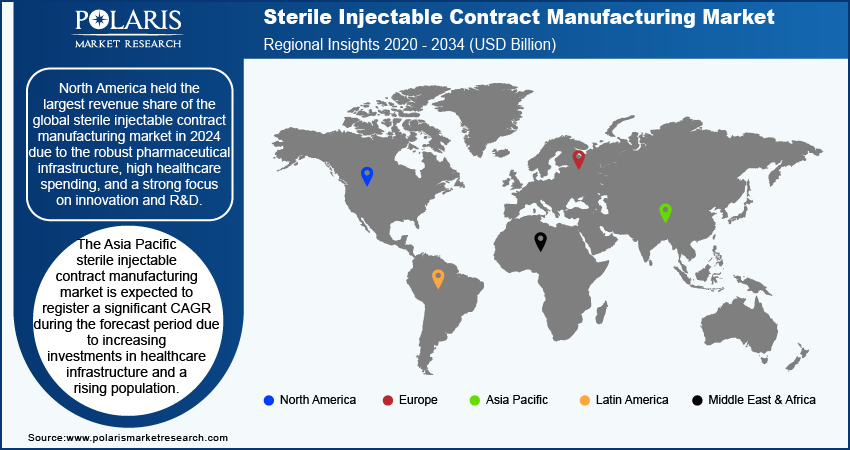
North America accounted for an 36.15% sterile injectable contract manufacturing market share in 2025. North America remains an important region for the sterile injectable contract manufacturing industry owing to the presence of well-established pharmaceutical manufacturing operations and robust outsourcing practices in the region. The U.S. is a major driver of the regional demand owing to the increasing outsourcing trend among pharmaceutical firms due to the need for specialized manufacturing facilities. The region also has a well-established FDA regulatory framework that clearly outlines the guidelines for drug manufacturing as well as quality agreements between sponsors and contract manufacturing organizations. It provides more clarity for companies that outsource their production facilities. The region is also seeing capacity expansion. In 2025, Jubilant HollisterStier introduced a new high-speed sterile fill-finish isolator production line in its facility in Spokane, Washington, following a US$ 132 million investment. This expansion increased the capacity of the facility by 50% (source: jublhs.com). These developments reflect continued investment in sterile manufacturing infrastructure in North America.
Europe
Europe held an 28.45% sterile injectable contract manufacturing market share in 2025. Europe is an important market for sterile injectable contract manufacturing due to its developed pharmaceutical manufacturing industry and specialized manufacturing base. Adherence to EU GMP Annex 1 is one of the essential aspects that sterile production companies have to consider when focusing on contamination prevention and aseptic production. Thus, the regulatory aspect makes companies strive to retain quality and advanced production processes. Germany remains a leader in the pharmaceutical manufacturing industry owing to its strong industrial base and demand for outsourced manufacturing services. Similarly, the UK has a well-developed pharmaceutical industry and contract manufacturing capabilities. These factors are expected to drive continued demand for sterile manufacturing services in Europe.
Asia Pacific
Asia Pacific is projected to witness rapid growth at an 13.75% CAGR. Asia Pacific's importance for sterile injectable contract manufacturing is rising as drug manufacturers increase capacity in the region. The China + 1 strategy has encouraged more companies to develop manufacturing partnerships in Asia beyond the capacity of their existing plants in China. This creates a chance for India due to the high capacity for pharmaceutical manufacturing in India and the low-cost structure. Industry estimates suggest that manufacturing some drugs in India costs significantly less than production in the U.S. and Europe. China continues to be a center for investment in establishing modern manufacturing capacity.
Latin America & Middle East & Africa
Latin America & Middle East & Africa are projected to grow at a CAGR of 11.65% and 10.95%, respectively. Latin America and the Middle East & Africa regions are gradually increasing their capacity to manufacture pharmaceuticals, which means that there will be an opportunity to offer sterile injectable contract manufacturing. Brazil has set up regulations for biosimilars that are likely to help in the production of biological medicines in that country. In the Middle East region, Saudi Arabia’s Vision 2030 initiative is promoting local production of pharmaceuticals and cutting down the dependence on imported medicines (source: vision2030.gov.sa). The localization efforts are creating opportunities for domestic manufacturing partnerships and technology transfer.
Source: Polaris Market Research Analysis
In-House vs. Contract Manufacturing: Decision Framework
The choice between fill-finish outsourcing vs in-house depends on the sponsor's production requirements and its ability to meet them. In-house manufacturing provides more control over the overall manufacturing process and internal operations. It also requires covering the costs of premises, equipment, personnel, and compliance, among others. Contract manufacturing saves the sponsor from incurring these costs and gives it access to an already established sterile production process. Contract manufacturing can be useful when the sponsor needs rapid access to additional capacity or when production parameters change. The sponsor will opt for in-house manufacturing if full control is a priority and production volumes justify the investment.
| Decision Factor | In-House Manufacturing | Contract Manufacturing |
| Capital Requirement | Large initial capital requirement for facility and equipment | Lesser initial capital requirement |
| Control Over Production | Higher control over operations and processes | Some control via agreement and supervision |
| Flexibility in Production | Hard to expand capacity with additional resources | Flexibility available through manufacturing partners |
| Expertise Required | Internal expertise is required | Access to expertise of the provider |
| Time to Production | Longer time required to set up new capacity | faster access to existing capacity |
| Compliance Management | Compliance managed internally | Provider manages manufacturing compliance under sponsor supervision |
| Best suited for | Consistent large volume production requirements | Variable demand and specialized requirements |
Source: Polaris Market Research Analysis
Real-World Use Cases & Applications
The sterile injectable contract manufacturing services are used during various phases in drug development and manufacturing. The following use cases highlight why outsourcing manufacturing capacity becomes especially important:
- Oncology biologics: Contract manufacturers assist in the production of sterile biologic drugs that are used in oncology treatments. They provide proper manufacturing conditions and the appropriate fill-finish services.
- GLP-1 pens: With growing demand for GLP-1 drugs, there is an increased need for capacity to manufacture and assemble devices for these products. External manufacturing partners can assist pharmaceutical companies to meet increased production needs.
- Vaccines fill-finish: Vaccine manufacturers can outsource filling and packaging, and other sterile manufacturing processes related to vaccines.
- Insulin SC: Subcutaneous insulin requires proper fill and finish services in order to ensure proper production of such products as per demands in various regions.
- mAb manufacturing: Monoclonal antibody products require specialized monoclonal antibody manufacturing and proper production conditions. Contract manufacturing organizations provide both development and manufacturing of these products.
- ADC production: Antibody-drug conjugates (ADCs) need to be manufactured under special conditions. There is an opportunity to engage external manufacturing partners in such projects.
- Biosimilar launch: Companies planning the market launch of biosimilars can use contract manufacturing partners in order to manufacture their products commercially without building a whole manufacturing network inside their company.
Role of CDMOs in Biologics & Biosimilars
CDMOs play a critical role in helping biopharmaceutical firms advance biologics through the product pipeline toward commercial supply. CDMO responsibilities extend beyond manufacturing, as they support various stages of the product lifecycle. For mAbs, CDMOs may assist with process development, scale-up, technology transfer, and manufacturing planning. Some proteins are complex and may require specialized processes and equipment that small or developing biopharmaceutical firms may not have. Sterile injectable CDMO market offerings may fill in such capability gaps for biopharmaceutical firms without necessarily building their own manufacturing plants. They also assist in biosimilar commercialization by helping manufacturers scale up their manufacturing processes. External manufacturing facilities may help biopharmaceutical firms developing biologics pipelines add more resources to programs as they move through the product life cycle.
Key Players & Competitive Landscape
The sterile injectable contract manufacturing market comprises both existing CDMOs and pharmaceutical service companies with capabilities of providing services ranging from development through fill-finish to manufacturing of injectable drug substances. Competitiveness in this market is influenced by manufacturing capacity, compliance, capabilities, and ability to cater to different types of products. Some organizations compete on the basis of having commercial manufacturing capability, while others compete with specialized services that cater to difficult-to-manufacture products. Geographical reach is an additional important aspect in this market, where sponsors have become more and more interested in picking up manufacturing organizations from various geographic regions. New plant and line construction, along with advances in manufacturing technology, have played a role in competitiveness.
Sterile Injectable Contract Manufacturing Market Competitive Positioning
| Company | Headquarters | Key Capabilities |
| Starnberg, Germany | Sterile fill-finish, aseptic manufacturing, lyophilization, pharmaceutical development | |
| Alcami Corporation | North Carolina, U.S. | Sterile fill-finish, lyophilization, prefilled syringes, analytical services |
| Boehringer Ingelheim BioXcellence | Ingelheim, Germany | Biologics development, mammalian cell culture, mAbs, large-scale biologics manufacturing outsourcing |
| Cipla Limited | Mumbai, India | Injectable manufacturing, sterile formulations, respiratory and complex generics |
| CordenPharma International | Basel, Switzerland | Aseptic fill-finish, terminal sterilization, lyophilized vials, LNP manufacturing |
| Boulogne-Billancourt, France | Sterile manufacturing, aseptic filling, pharmaceutical development, commercial production | |
| FAMAR Health Care Services | Athens, Greece | Sterile manufacturing, injectables, lyophilization, pharmaceutical development |
| Fresenius Kabi AG | Bad Homburg, Germany | IV drugs, generic injectables, parenteral nutrition, sterile pharmaceutical manufacturing |
| Jubilant HollisterStier | Spokane, U.S. | Sterile fill-finish, lyophilization, biologics, clinical and commercial manufacturing |
| NextPharma Technologies | London, UK | Pharmaceutical development, sterile products, manufacturing, packaging and distribution |
| PCI Pharma Services | Philadelphia, U.S. | Sterile fill-finish, lyophilization, drug-device combinations, clinical and commercial supply |
| Pfizer CentreOne | New York, U.S. | Sterile fill-finish, lyophilization, biologics, ADCs, complex injectables |
| Recipharm AB | Stockholm, Sweden | Parenteral drug manufacturing, sterile manufacturing, fill-finish, analytical and stability testing |
| Simtra BioPharma Solutions | Bloomington, Indiana, U.S. | Sterile injectables, aseptic filling, lyophilization, complex injectable manufacturing |
| Unither Pharmaceuticals | Amiens, France | Sterile and non-sterile liquid manufacturing, BFS technology, ophthalmic products |
| Vetter Pharma-Fertigung GmbH & Co. KG | Ravensburg, Germany | Aseptic filling, visual inspection, device assembly, packaging, clinical and commercial supply |
| WuXi Biologics | Wuxi, China | Biologics development, cell culture, mAbs, drug substance and drug product manufacturing |
Source: Polaris Market Research Analysis
Recent Industry Developments
- July 2026: Resilience announced the expansion of its partnership with Eli Lilly and Company to increase U.S. manufactured medicine supply. The investment will significantly boost U.S. production of Lilly’s KwikPen injectable device for diabetes and obesity medicines to meet rising patient demand. (source: businesswire.com)
- April 2026: Adragos Pharma revealed the completion of the acquisition of a commercial-scale sterile fill-finish facility in Maisons-Alfort, France, from Sanofi. According to Adragos Pharma, the acquisition will significantly expand its sterile injectables network. (source: adragos-pharma.com)
Market Outlook and Future Trends
The sterile injectable contract manufacturing market is projected to maintain steady growth as more drug firms are outsourcing their manufacturing of complex injectables to specific contractors. The growing requirement for biologics, biosimilar manufacturing, vaccines, and oncology drugs will drive contract manufacturing and fill-finish services. Developments in aseptic processes, single-use technologies, automation, and quality control are expected to make manufacturing operations more efficient. As the drug pipeline becomes complicated, CDMOs will have an increasing role in facilitating production expansion and improving global supplies of sterile injectables.
Research Methodology
Polaris Market Research developed the sterile injectable contract manufacturing market report through a multi-stage primary and secondary research framework designed to ensure accuracy, consistency, and market-level reliability.
The baseline sterile injectable contract manufacturing market assessment draws on regulatory filings (FDA Drug Establishment Registration, EMA EudraGMDP), company annual reports and investor disclosures, industry association data (ISPE, PDA), trade databases, UN Comtrade pharmaceutical import-export codes, and publicly available clinical pipeline data from ClinicalTrials.gov. Market sizing uses a top-down reconstruction of global sterile drug production volumes and contract development and manufacturing organization (CDMO) outsourcing penetration rates.
Findings are validated through structured interviews and surveys with plant managers, quality leads, CDMO procurement heads, and pharma sourcing executives across North America, Europe, and Asia Pacific. These interviews verify utilization rates, batch sizes, planned capacity additions, and pricing dynamics.
A bottom-up revenue roll-up of leading CDMOs cross-validates the top-down estimates. Key variables (FDA and EMA injectable approvals, biologics late-stage pipeline share, oncology incidence rates, fill-finish capacity growth, and prevailing average selling prices) feed a multivariate regression model. An ARIMA overlay captures market cycle shifts.
All outputs undergo two-step peer review, anomaly detection against trade and regulatory approval trends, and variance checks versus prior report editions. Reports are refreshed annually, with interim updates triggered by major market events such as facility expansions, M&A activity, or landmark drug approvals.
Sterile Injectable Contract Manufacturing Market Report Scope
| Report Attributes | Details |
| Market Size Value in 2025 | USD 24.15 billion |
| Market Size Value in 2026 | USD 27.06 billion |
| Market Forecast 2034 | USD 68.05 billion |
| CAGR | 12.2% from 2026 to 2034 |
| Base Year | 2025 |
| Historical Data | 2021–2024 |
| Forecast Period | 2026–2034 |
| Quantitative Units | Revenue in USD billion and CAGR from 2026 to 2034 |
| Report Coverage | Revenue Forecast, Market Competitive Landscape, Growth Factors, and Industry Trends |
| Segments Covered |
|
| Regional Scope |
|
| Competitive Landscape |
|
| Report Format |
|
| Customization | Report customization as per your requirements with respect to countries, regions, and segmentation. |
Source: Polaris Market Research Analysis
Sterile Injectable Contract Manufacturing Market FAQ's
The sterile injectable contract manufacturing market was valued at USD 24.15 billion in 2025. The market is projected to reach USD 68.05 billion by 2034.
The global market is projected to record a CAGR of 12.2% from 2026 to 2034.
North America led with an 36.15% market share in 2025. Robust pharmaceutical infrastructure drives the regional market dominance.
A few of the key market players include Aenova Group; Alcami Corporation; Boehringer Ingelheim BioXcellence; Cipla Limited; CordenPharma International; Delpharm; FAMAR Health Care Services; Fresenius Kabi AG; Jubilant HollisterStier; NextPharma Technologies; PCI Pharma Services; Pfizer CentreOne; Recipharm AB; Simtra BioPharma Solutions; Unither Pharmaceuticals; Vetter Pharma-Fertigung GmbH & Co. KG; and WuXi Biologics.
The small molecules segment is projected to grow at an 10.15% CAGR. This is due to its well-established production infrastructure.
The oncology segment dominated with an 29.15% market share in 2025. This is largely due to the availability of a range of injectable oncology drugs.
Sterile injectable contract manufacturing involves outsourcing the process of development, manufacturing, filling and packaging of injectable drugs through specialized contract manufacturers.
Aseptic fill-finish manufacturing is the process of filling a sterile drug product into its final container. The container can be a vial, prefilled syringe, or ampoule. The filling is done under controlled conditions that prevent contamination.
Sterile injectable manufacturing is outsourced by pharmaceutical companies to make use of specialized manufacturing facilities, knowledge base, high-level aseptic processes, and quality systems without making extensive investments in manufacturing infrastructure.
Manufacturers offer services like formulation, sterile filtration, sterile fill finish contract manufacturing, lyophilization, packaging of vials and syringes, quality control, and labeling of injectable pharmaceuticals.
Market challenges include strict regulatory compliance norms, contamination risk, expensive sterile facility infrastructure, limitations of manufacturing capacity, and unavailability of skilled labor.
Download Sample Report of Sterile Injectable Contract Manufacturing Market
Please fill out the form to request a customized copy of the research report.


