
Value-based Healthcare Services Market Size, & Growth Analysis Report, 2026-2034
REPORT DETAILS
Value-based Healthcare Services Market Summary
The global value-based healthcare services market is estimated around USD 68.60 Billion in 2025,with consistent growth anticipated during 2026–2034. Market growth is driven by rising healthcare costs, increasing chronic disease cases, reimbursement reforms, and growing adoption of AI-based healthcare analytics. The market is projected to grow at a CAGR of 9.08% during the forecast period.
Market Statistics
Key Takeaways
- North America dominated the global market in 2025 capturing 47.6% share, due to strong reimbursement reforms.
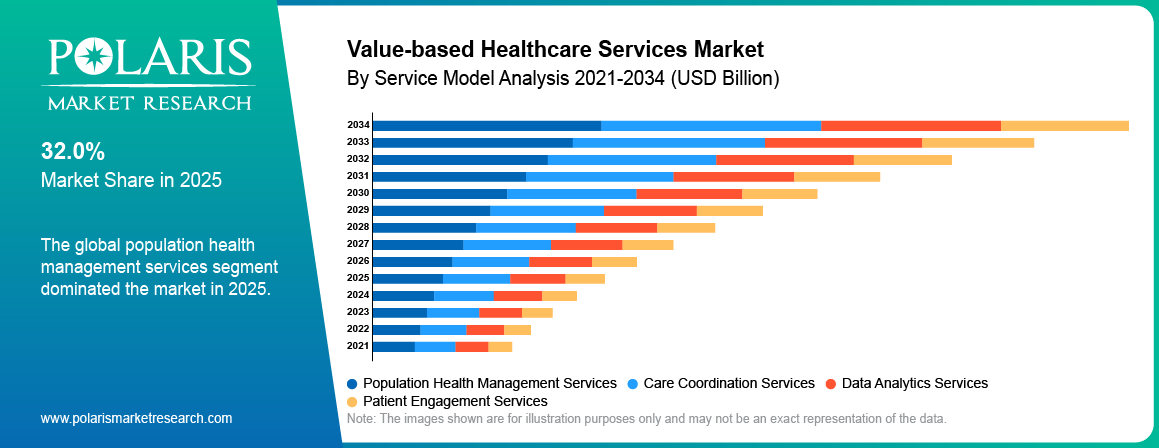
- Population health management services dominated the market with 32.0% s in 2025 due to rising demand for preventive care solutions.
- Hospitals dominated the end-user segment with 40.0% share in 2025 due to increasing adoption of outcome-based reimbursement models.
- Cloud-based solutions dominated the market with 60.0% share in 2025 due to scalability and lower infrastructure costs.
- Major companies operating in the market include Aetna Inc., Cigna Group, CVS Health Corporation, Epic Systems Corporation, Humana Inc., and others.
Industry Dynamics
- Rising healthcare expenditure is increasing adoption of value-based reimbursement models.
- Growing AI integration in healthcare analytics is improving patient care efficiency.
- Interoperability issues across healthcare systems remain a major challenge.
- Employer-sponsored healthcare models are creating new revenue opportunities.
What is Value-based Healthcare Services?
Value-based healthcare services focus on improving patient health outcomes while reducing unnecessary healthcare spending. Healthcare providers are compensated based on treatment efficiency, patient satisfaction, and long-term health improvements rather than service volume. These types of applications are highly prevalent in the management of chronic diseases, preventive medicine, remote monitoring and control, and coordination of medical services.
The value chain within the market consists of technology vendors, software analytics providers, insurance firms, hospitals, doctors’ clinics, healthcare consultancies, and patients themselves. Technology firms provide analytics tools, while insurance firms and hospitals provide models for reimbursement based on patient outcomes.
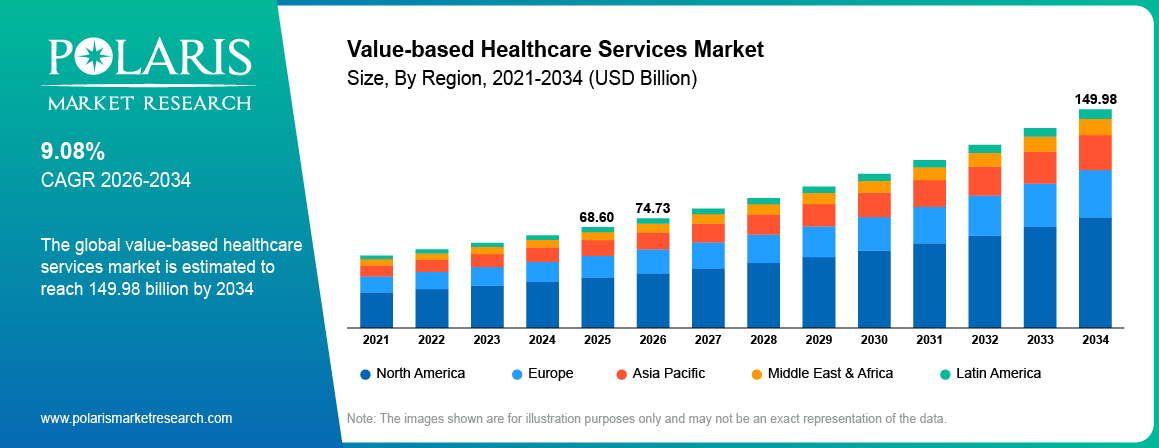
Market demand drivers are high prevalence of chronic diseases, aging population, healthcare sector digitization, and requirement for reducing health care costs. Insurance companies and government authorities are adopting risk-sharing reimbursement models.
Drivers & Opportunities
Rising Healthcare Expenditure Pressures: The world’s health care industry is under tremendous pressure financially due to the prevalence of chronic diseases, the aging population, and costly treatments. According to the American Medical Association, the US healthcare expenditure rose by 7.5% in 2023 to reach 4.9 trillion US dollars or 14,570 per capita compared to a 4.6% rise in 2022.Besides, there is a move towards reimbursement methods based on patient outcomes to optimize the process. Value-based healthcare programs are adopted by hospitals to reduce readmissions.
AI-Enabled Population Health Management : The implementation of AI-powered analytical tools has helped healthcare workers identify high-risk patients and improve their treatment plans. AI-powered prediction tools are helping create early interventions and reduce the expenses incurred due to hospital admissions. Investments in AI-powered care coordination tools have increased. For example, in December 2025, Trivitron Healthcare launched Digital.AI for improving the digitalization process within hospitals in India.
Restraints & Challenges
Interoperability Challenges Is Limiting Market Growth: There is no standardized approach for evaluating value-based healthcare services due to the lack of a common price structure, measurement, and validation process. The difference in approach in each project makes it hard to give a consistent valuation for value-based healthcare services.
Opportunity
Employer-Sponsored Value-Based Care Programs Are Creating New Growth Opportunities: Major companies are collaborating with health insurance companies and healthcare facilities in an effort to minimize healthcare costs associated with their employees over the long term. For example, In October 2025, Carrum Health has increased its covered lives to 6.7 million due to value-based healthcare becoming more common among employers.
Segmental Insights
The report offers an exhaustive analysis of the value-based healthcare services market by service model, end user, and deployment model is helping identify the most profitable and promising areas.
By Service Model
-
Population Health Management Services
The population health management services segment dominated the market in 2025 with 32.0% share due to rising demand for chronic disease management and preventive healthcare solutions. Healthcare providers are investing in healthcare predictive analytics platforms to improve patient engagement.
-
Care Coordination Services
The care coordination services segment is projected to grow at the fastest CAGR of 7.9% during the forecast period due to rising adoption of integrated healthcare delivery models. Providers are using AI tools to improve treatment coordination.
By End User
-
Hospitals
Hospitals segment dominated the market with 40.0% share in 2025 due to rising implementation of value-based reimbursement programs. Large hospital networks are investing in analytics platforms and interoperability tools. Growing pressure to improve patient outcomes is increasing hospital investments in care optimization solutions.
-
Healthcare Payers
Healthcare payers segment is projected to grow at the fastest CAGR of 9.5% during the forecast period due to increasing adoption of risk-sharing contracts. Insurers are working closely with providers to improve healthcare efficiency. Rising focus on reducing unnecessary claims expenses is supporting segment expansion.
By Deployment Model
-
Cloud-Based
The cloud-based solutions segment was the leading segment in 2025 with 60.0% share owing to reduced capital investment and scalability advantages. These innovations enhance data interoperability and provide the ability to monitor patients remotely. Growing adoption of cloud-based electronic health records is further driving market demand.
-
On-Premise
The on-premise solutions segment is projected to grow at the fastest CAGR of 7.1% during the forecast period due to rising demand from large healthcare organizations with strict data security requirements. Large healthcare systems continue to prefer on-premise infrastructure for sensitive patient data management.
Regional Analysis
North America Value-based Healthcare Services Market Overview
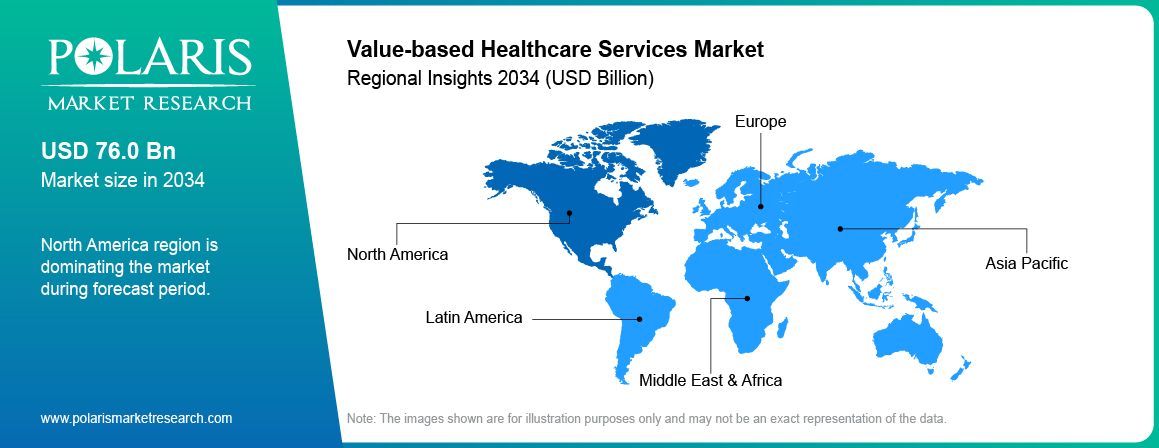
North America dominated the market in 2025 capturing 47.6% share due to advanced healthcare infrastructure and strong reimbursement reforms. The US remains the largest contributor due to Medicare and Medicaid value-based initiatives. In February 2026, Centers for Medicare & Medicaid Services launched a new value-based care model to expand alternative payment programs and reduce healthcare costs. Additionally, rising adoption of AI-based clinical decision tools is further supporting regional growth.
Asia Pacific Value-based Healthcare Services Market Insights
Asia Pacific is projected to grow at the fastest CAGR of 12.0% during the forecast period due to rising healthcare expenditure and growing healthcare digitization. IBEF reported that India’s healthcare industry expanded significantly, rising from USD 110 billion in 2016 and is projected to reach USD 638 billion by 2025.Moreover, China, India, Japan, and South Korea are investing in healthcare IT infrastructure. Growing patient populations are increasing demand for cost-efficient healthcare delivery models.
Europe Value-based Healthcare Services Market Insights
Europe is witnessing steady growth capturing 30.0% share in 2025 due to rising healthcare modernization programs and increasing investment in digital healthcare systems. In December 2025, the European Commission highlighted that increased healthcare investments are improving health outcomes, strengthening digital health systems, and boosting Europe’s economic resilience.Also, Germany, the UK, France, and the Netherlands are expanding integrated care programs while government initiatives focused on healthcare efficiency are increasing adoption across the region.
Middle East & Africa Market Overview
Middle East & Africa is experiencing steady demand at a CAGR of 1.2% due to healthcare reforms and investments in smart hospitals. Saudi Arabia and UAE are increasing digital healthcare spending. The national initiatives for transforming healthcare systems is expected to enable the growth of the market in the long term. Growing private sector participation in healthcare infrastructure development is further increasing adoption of value-based care platforms across the region.
Competitive Landscape & Key Players
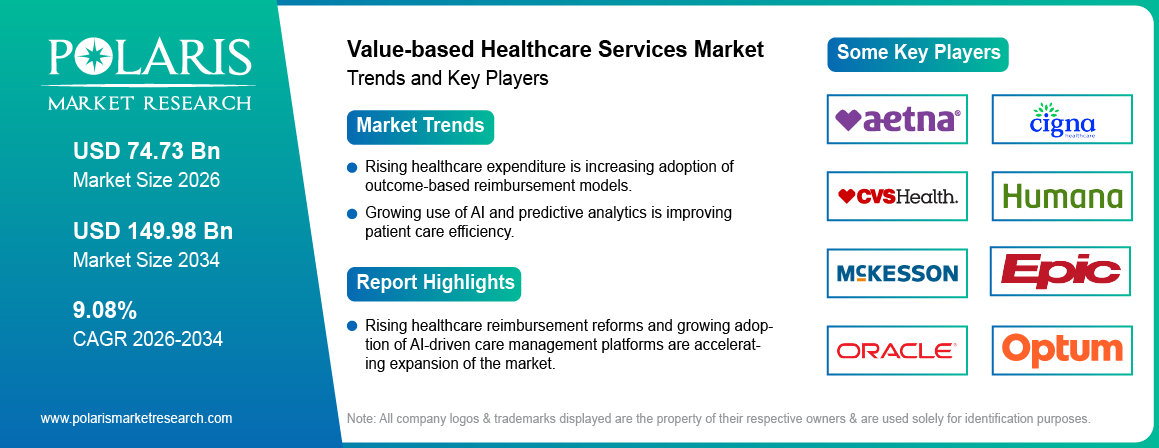
The value-based healthcare services market is moderately fragmented due to the presence of global healthcare providers, analytics companies, and insurance firms. Competition is based on pricing, healthcare analytics capabilities, interoperability solutions, and strategic partnerships. Companies are focusing on acquisitions, AI integration, and service expansion.
Among the major companies operating in this industry are Aetna Inc., Cigna Group, CVS Health Corporation, Epic Systems Corporation, Humana Inc., McKesson Corporation, Oracle Health LLC, Optum, Inc., Teladoc Health, Inc., UnitedHealth Group Incorporated, Veradigm LLC, ZeOmega, Inc., and others.
Premium Insights
AI-Powered Predictive Care Expansion
The future of the value-based healthcare services market is expected to be driven by increasing adoption of AI-powered predictive analytics platforms that help providers identify high-risk patients and improve treatment outcomes. These platforms are improving care coordination, reducing hospital readmissions, and supporting preventive healthcare strategies across provider networks.
Shift Toward Outcome-Based Financial Models
More healthcare providers and insurers are moving from fee-for-service to outcome-based payment models. This trend is expected to lead to increase the adoption of care coordination software, patient engagement software, and population health management software.
Growth of Personalized Healthcare Ecosystems
The digital health platform, remote monitoring system, and interoperability system is expected to drive the establishment of the personalized health care ecosystem. The technologies helps to cut down administrative costs, engage patients, and allocate clinical resources efficiently during the forecast period.
Key Players
- Aetna Inc.
- Cigna Group
- CVS Health Corporation
- Epic Systems Corporation
- Humana Inc.
- McKesson Corporation
- Oracle Health LL
- Optum, Inc.
- Teladoc Health, Inc.
- UnitedHealth Group Incorporated
- Veradigm LLC
- ZeOmega, Inc.
Industry Developments
- February 2026 : Optum AI Platform was created to reduce health-care expenses, enhance care coordination, and hasten the adoption of value-based care. [source: optum.com]
- March 2026: Arbital Health announced its 2026 summit focused on advancing value-based care strategies and risk contracting models across healthcare organizations. [source: arbitalhealth.com]
Value-based Healthcare Services Market Segmentation
By Service Model Outlook (Revenue, USD Billion, 2021-2034)
- Population Health Management Services
- Care Coordination Services
- Data Analytics Services
- Patient Engagement Services
By End User Outlook (Revenue, USD Billion, 2021-2034)
- Hospitals
- Healthcare Payers
- Physician Groups
- Employers
By Deployment Model Outlook (Revenue, USD Billion, 2021-2034)
- Cloud-Based
- On-Premise
By Regional Outlook (Revenue, USD Billion, 2021-2034)
- North America
- US
- Canada
- Europe
- Germany
- France
- UK
- Italy
- Spain
- Netherlands
- Russia
- Rest of Europe
- Asia Pacific
- China
- Japan
- India
- Malaysia
- South Korea
- Indonesia
- Australia
- Vietnam
- Rest of Asia Pacific
- Middle East & Africa
- Saudi Arabia
- UAE
- Israel
- South Africa
- Rest of Middle East & Africa
- Latin America
- Mexico
- Brazil
- Argentina
- Rest of Latin America
Value-based Healthcare Services Market Report Scope
| Report Attributes | Details |
| Market Size in 2025 | USD 68.60 Billion |
| Market Size in 2026 | USD 74.73 Billion |
| Revenue Forecast by 2034 | USD 149.98 Billion |
| CAGR | 9.08% from 2026 to 2034 |
| Base Year | 2025 |
| Historical Data | 2021–2024 |
| Forecast Period | 2026–2034 |
| Quantitative Units | Revenue in USD Billion and CAGR from 2026 to 2034 |
| Report Coverage | Revenue Forecast, Competitive Landscape, Growth Factors, and Industry Trends |
| Segments Covered |
|
| Regional Scope |
|
| Competitive Landscape |
|
| Report Format |
|
| Customization | Report customization as per your requirements with respect to countries, regions, and segmentation. |
Source: Polaris Market Research Analysis
Value-based Healthcare Services Market FAQ's
North America held the market leadership position in 2025 with 47.6% share. This is owing to ongoing improvements in reimbursement reforms ensure regional dominance.
The global market size was valued at USD 68.60 Billion in 2025 and is projected to grow to USD 149.98 Billion by 2034.
Major applications include population health management, care coordination, and patient engagement.
A few of the key players in the market are Aetna Inc., Cigna Group, CVS Health Corporation, Epic Systems Corporation, Humana Inc., McKesson Corporation, Oracle Health LLC, Optum, Inc., Teladoc Health, Inc., UnitedHealth Group Incorporated, Veradigm LLC, ZeOmega, Inc., and others.
Growth is driven by rising healthcare costs, chronic disease burden, and healthcare digitization.
The major use cases are seen in hospitals, healthcare payers, physician groups, and employers.
The market is expected to witness strong growth due to AI-driven healthcare ecosystems and reimbursement reforms.
Download Sample Report of Value-based Healthcare Services Market
Please fill out the form to request a customized copy of the research report.


