
Varicose Vein Treatment Market Size, Share, Trends & Forecast, 2026-2034
REPORT DETAILS
Varicose Vein Treatment Market Summary
The varicose vein treatment market size was valued at USD 1.51 billion in 2025. The market is projected to grow at a CAGR of 6.30% from 2026 to 2034. The rising prevalence of chronic venous insufficiency and a shift toward minimally invasive outpatient procedures are a few of the key factors driving market growth.
Market Statistics
Varicose Vein Treatment Market Key Takeaways
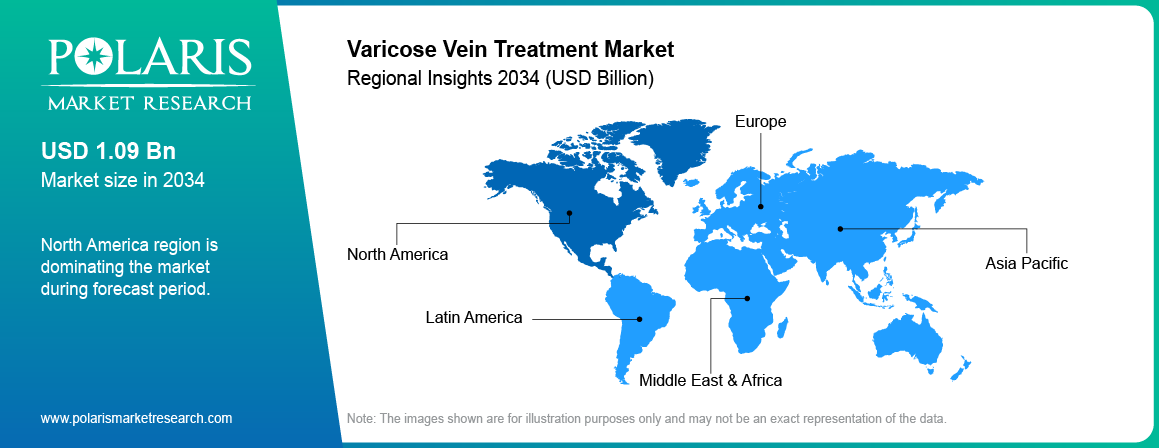
- North America led with a 41.9% share in 2025. This is due to the high prevalence of varicose veins in the region.
- Asia Pacific is projected to grow at a 9.8% CAGR. The regional market growth is fueled by its improving healthcare infrastructure.
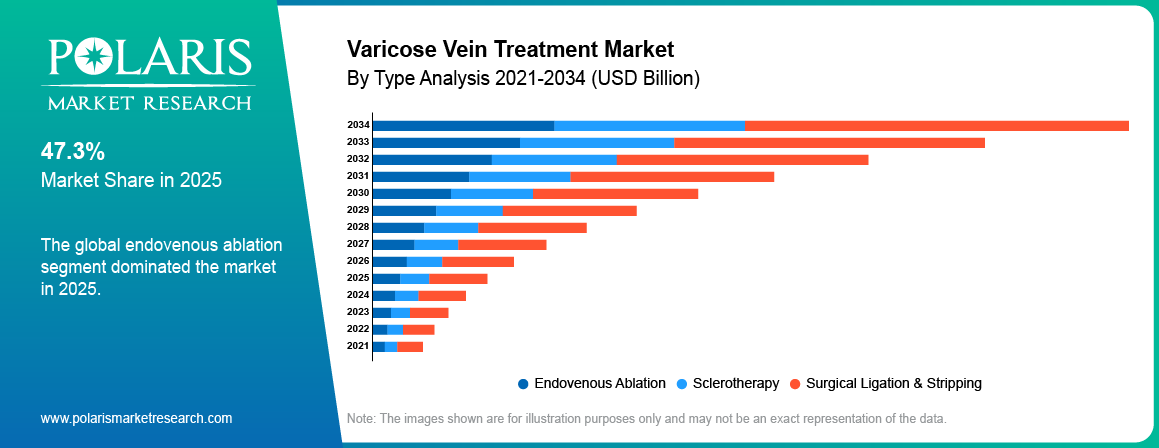
- The endovenous ablation segment led with a 47.3% share in 2025. This is owing to its noninvasive nature and effectiveness.
- The vein clinics segment accounted for the largest market share of 52.6% in 2025. The segment’s dominance is driven by their specialized focus on vascular conditions.
- The ambulatory care unit segment is projected to grow at a 10.4% CAGR. This is primarily due to the increasing preference for outpatient treatments.
Note: Figures and projections outlined in this report are the result of Polaris Market Research’s proprietary analytical processes, grounded in the latest available datasets and market observations.
Industry Dynamics
- The growing prevalence of varicose veins, especially among aging populations, is a major driver of market growth.
- The market is witnessing a shift towards minimally invasive treatments due to their ability to offer effective results with minimal downtime and fewer risks.
- The increasing awareness surrounding varicose vein treatment is shaping market development.
- High out-of-pocket procedure costs may present market challenges.
AI in Varicose Vein Care: Ultrasound Analysis, Treatment Planning & Follow-Up Monitoring
- Through the utilization of AI, physicians are able to analyze images and data related to patients in order to make an accurate diagnosis of varicose veins.
- AI-based solutions can enable healthcare providers to determine appropriate treatment plans for patients depending on their condition and vein status.
- AI can be used to monitor the post-treatment recovery of patients after varicose vein surgery in order to track any changes.
- The application of AI in the field of vascular care is making treatment processes more efficient and effective.
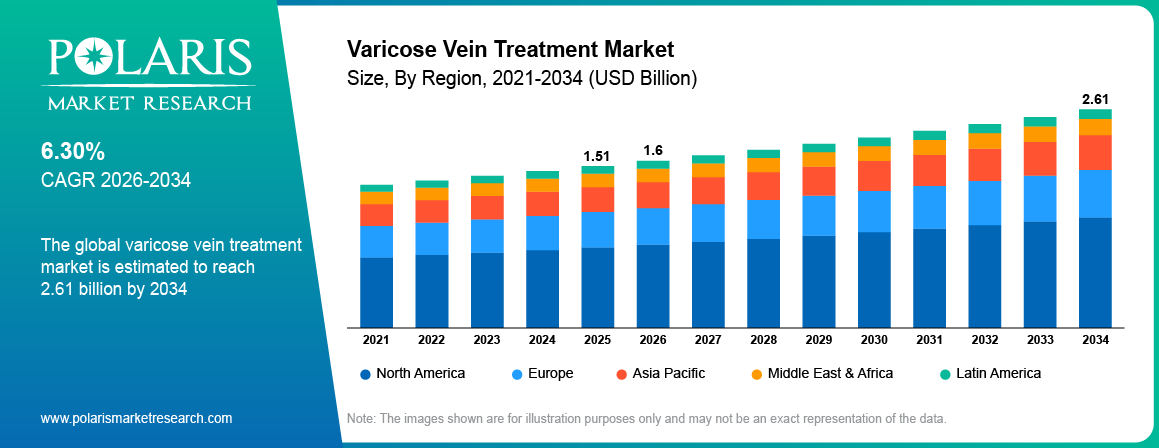
Source: Polaris Market Research Analysis
To Understand More About this Research: Download Sample Report
What Is Varicose Vein Treatment? Definition, Diagnosis & Treatment Options
Varicose vein treatment refers to the medical treatment process involving closure or removal of enlarged and twisted veins, normally occurring in the leg areas. These methods help improve blood circulation and reduce discomfort. They also help enhance the aesthetic appearance of the veins.
How Is Varicose Vein Treatment Performed? Duplex Ultrasound, Vein Closure & Follow-Up
Vein Condition Diagnosis: First of all, the patient is examined physically and using diagnostic equipment, like ultrasound, in order to detect damaged veins and to evaluate the state of blood flow.
Treatment Method Selection: Depending on the condition’s severity, medical specialists choose an appropriate treatment technique, such as endovenous ablation, sclerotherapy, or surgery.
Veins’ Closing/Removal: There are several minimally invasive techniques that allow closing affected veins using laser or radiofrequency energies or by injection, or surgery that can remove the veins.
Blood Flow Rerouting: After the procedure, the blood is rerouted through healthy veins automatically.
Recovery and Compression Therapy: After the treatment, patients can wear compression garments.
Follow-Up Monitoring: This stage allows monitoring the progress and health condition of the treated veins.
The varicose vein treatment market focuses on medical interventions aimed at alleviating the symptoms and appearance of varicose veins, which are enlarged, swollen veins that commonly affect the legs. Varicose vein treatment includes procedures such as sclerotherapy, laser therapy, endovenous laser treatment, and vein stripping. Key drivers of market growth are the increasing prevalence of varicose veins due to aging populations and sedentary lifestyles, rising awareness about minimally invasive surgery options, and advancements in medical technology. Varicose vein treatment market trends show a shift toward noninvasive procedures, with laser and radiofrequency ablation becoming more popular due to their lower recovery times and fewer complications. Additionally, growing consumer preference for cosmetic procedures and the expanding availability of these treatments in clinical and outpatient settings are contributing to the market expansion.
Minimally Invasive vs Surgical Varicose Vein Treatment: Recovery, Pain, Anesthesia & Use Cases
| Factor | Minimally Invasive Treatment | Surgical Treatment |
| Type of Procedure | Uses treatment methods such as lasers, radiofrequency ablation and sclerotherapy | Entails surgical procedures such as stripping and ligation of veins |
| Duration of Recovery | Time needed for recovery is relatively shorter, where most patients go back to their routine quickly | Recovery time is relatively longer |
| Level of Pain | Associated with less pain | May be associated with more pain |
| Hospitalization | Generally done as an outpatient treatment | Hospitalization may be required in some procedures |
| Scarring | Produces minimal scars due to small incisions | May produce larger scars |
| Most Appropriate | For patients with suitable venous conditions | For severe cases or those not suitable for other types of treatment |
Source: Polaris Market Research Analysis
Varicose Vein Treatment Market Dynamics
Driver: Aging, Obesity & Chronic Venous Disease Burden
The increasing prevalence of varicose veins, especially among aging populations, is a major driver of the varicose vein treatment market growth. As individuals age, the veins naturally weaken and become less efficient in returning blood to the heart, leading to conditions such as varicose veins. According to a study published in the American Heart Association Journals, approximately 23% of US adults have varicose veins. The condition is more common among women than men (source: ahajournals.org).The rising aging population across the world is expected to increase the number of varicose vein cases, thereby propelling the demand for effective treatment options. Additionally, lifestyle factors such as long periods of sitting or standing, which are more prevalent in modern work environments, exacerbate the condition, fueling the need for timely treatments.
Driver: Shift from Vein Stripping to Endovenous & Office-Based Treatment
Traditional surgical treatments, such as vein stripping, are associated with longer recovery times and higher complication rates. In contrast, procedures such as sclerotherapy, laser processing, and radiofrequency ablation are gaining popularity due to their ability to offer effective results with minimal downtime and fewer risks.This shift toward noninvasive treatments is improving patient outcomes and catering to a larger, more diverse patient base. Hence, the rising shift toward minimally invasive treatments boosts the varicose vein treatment market demand.
Driver: Medical and Aesthetic Demand for Vein Treatment
The increasing awareness surrounding varicose vein treatments, especially in terms of their cosmetic benefits, is driving varicose vein treatment market development. While varicose veins are often seen as a medical issue, many individuals also seek treatment for aesthetic reasons. The desire to improve the appearance of the legs is a significant motivator, especially in regions where social perceptions place importance on physical appearance.As cosmetic procedures become more accessible, the number of individuals opting for varicose vein treatment is steadily rising.
Lifestyle-Driven Risk Factors
Lifestyle factors contribute greatly to the increase in risk of developing varicose veins. Prolonged sitting or standing poses additional strain on veins in legs, affecting normal circulation of blood. An inactive lifestyle contributes to poor blood circulation and increases the likelihood of complications involving veins. An obese individual is at greater risk of developing varicose veins because obesity results in additional strain on the veins. Some other risk factors include unhealthy weight gain, sedentary lifestyle, and occupations that pose high physical demands. Increasing awareness regarding lifestyle risks has led to changes in behavior. Increased knowledge about these risk factors has encouraged individuals to change their lifestyles and seek early treatment.
Varicose Vein Treatment Market Challenges: Cost, Reimbursement, Specialist Access & Recurrence
Cost concerns, lack of awareness, and difficulties in accessing specialized treatment pose problems for the varicose vein treatment market. More complex treatments using laser and radiofrequency ablation vein treatments could turn out to be costly. In developing countries, lack of awareness about the various treatment options can lead to delayed treatment. The need for trained vascular experts to carry out the more complex treatments is also an issue that needs consideration. There could be recurrence of varicose veins after treatment in some cases. Insurance coverage for particular treatments may present market challenges.
Varicose Vein Treatment Technology Trends: RFA, EVLA, Adhesive Closure, MOCA & HIFU
| Technology | Description |
| Laser-Assisted Closure of Veins | Helps close affected veins using laser energy, directing blood circulation via healthy veins without any discomfort. |
| Radiofrequency Ablation Equipment | Employs heat energy for the treatment of affected veins; fast recovery as compared to surgery. |
| Ultrasound-Assisted Procedures | Equips doctors with a view of veins being treated, thus increasing precision and reducing procedure risks. |
| New Generation Catheters | Their use enables more precise delivery of treatment. |
| Advancement in Imaging Techniques | Enables better diagnosis and planning of treatment of complicated venous conditions. |
| Minimally Invasive Vein Treatment | New approaches aim at minimizing pain, recovery time and the necessity of surgical procedures.
|
Source: Polaris Market Research Analysis
Source: Polaris Market Research Analysis
Varicose Vein Treatment Market Segmentation Analysis
Varicose Vein Treatment Market by Treatment Type
The varicose vein treatment market, by type, is segmented into endovenous ablation, sclerotherapy, and surgical ligation & stripping. The endovenous ablation segment led with a 47.3% share in 2025, which includes laser and radiofrequency ablation, holds the largest market share due to its noninvasive nature and effectiveness. This segment is experiencing significant growth, driven by advancements in technology that have enhanced the precision and success rates of these procedures. The popularity of endovenous ablation is further supported by its ability to offer a quicker recovery time and lower risk of complications compared to traditional surgical methods, making it the preferred choice for patients and healthcare providers. Sclerotherapy, another noninvasive option, remains widely used, especially for smaller varicose veins. The sclerotherapy segment continues to register steady demand, though it is not growing as rapidly as endovenous ablation. The surgical ligation & stripping segment, while still in use for severe cases, is gradually losing market share due to its more invasive nature and longer recovery times.
The endovenous ablation segment is projected to maintain the highest growth rate in the coming years, driven by increased patient preference for minimally invasive treatments and the ongoing development of more advanced techniques. The efficiency and safety profile of endovenous ablation procedures are key factors fueling their adoption. Additionally, the segment benefits from the growing awareness of the benefits of minimally invasive options. Sclerotherapy and surgical ligation & stripping segment will continue to serve specific niches within the market, with sclerotherapy remaining a staple for smaller veins and surgical methods being applied to more complex or severe cases that do not respond well to noninvasive treatments.
Varicose Vein Treatment Use Cases: Symptomatic Reflux, Cosmetic Varicosities, CVI & Venous Ulcers
| Applications | Description |
| Treatment of Leg Varicose Veins | These procedures assist in closing or removing varicose veins on legs for better blood circulation. |
| Removal of Cosmetic Veins | This is a form of treatment that aims at enhancing the cosmetic effect of visible veins. |
| Chronic Venous Insufficiency Treatment | Management of conditions where the affected veins impede blood flow in the legs. |
| Prevention of Venous Ulcers | Appropriate treatments can prevent complications associated with poor blood circulation. |
| Management of Post-Thrombotic Condition | Management of vein conditions that occur after the development of certain blood clotting conditions. |
| Outpatient Varicose Veins Treatment Procedures | Minimally invasive treatments that are carried out in specialty clinics, allowing patients to avoid a hospital stay. |
| Ambulatory Surgical Treatments | Surgical and catheter treatments that are done in ambulatory settings. |
Source: Polaris Market Research Analysis
Varicose Vein Treatment Market Outlook – End Use-Based Insights
The varicose vein treatment market, by end use, is segmented into vein clinics, hospitals, and ambulatory care units. The vein clinics segment accounted for the largest market share of 52.6% in 2025, driven by their specialized focus on vascular conditions, including varicose veins. These clinics are equipped with advanced technologies for minimally invasive treatments such as endovenous ablation and sclerotherapy, which are increasingly preferred by patients due to their convenience and lower recovery times. Vein clinics offer a focused, patient-centered approach, contributing to their dominant position in the market. This segment is also benefiting from the growing demand for outpatient procedures that offer faster recovery and reduced hospitalization time.
The ambulatory care unit segment is projected to grow at a 10.4% CAGR, primarily due to the increasing preference for outpatient treatments that allow patients to undergo procedures and return home on the same day. With a growing emphasis on reducing healthcare costs and providing efficient, quick treatments, ambulatory care units are becoming more prominent for varicose vein procedures. These units cater to patients seeking affordable and accessible care, which is contributing to their rapid growth. Hospitals, while still a significant segment, are seeing relatively slower growth compared to vein clinics and ambulatory care units due to the rising trend toward outpatient care and less invasive treatment options. However, the hospitals segment continues to serve patients with more complex cases that require comprehensive medical attention.
Source: Polaris Market Research Analysis
Varicose Vein Treatment Market by Region
By region, the study provides varicose vein treatment market insights into North America, Europe, Asia Pacific, Latin America, and the Middle East & Africa. North America led with a 41.9% share in 2025 revenue, primarily due to the high prevalence of varicose veins, a well-established healthcare infrastructure, and a strong preference for minimally invasive treatments. The region's advanced medical technologies, high patient awareness, and availability of specialized vein clinics contribute to its dominance. Additionally, the aging population and increasing demand for cosmetic procedures in countries, such as the US, fuel the varicose vein treatment market expansion. Europe also holds a significant share, driven by a similar healthcare environment like North America and rising preference for noninvasive procedures. Meanwhile, Asia Pacific is expected to experience the highest growth rate, attributed to increasing healthcare access, growing awareness, and expanding adoption of advanced treatment methods in emerging markets. The market in Latin America and the Middle East & Africa is witnessing steady growth, supported by improving healthcare infrastructure and rising disposable incomes.
Europe is one of the key regions in the varicose vein treatment market, driven by a combination of factors such as an aging population, high healthcare standards, and increasing patient awareness about varicose vein treatments. Countries such as Germany, the UK, and France are leading in terms of varicose vein treatment market share due to advanced healthcare facilities, specialized clinics, and the growing preference for minimally invasive procedures such as sclerotherapy and endovenous ablation. The rise in the cosmetic appeal of varicose vein treatments, along with the increasing availability of advanced technologies, is further propelling market growth in Europe. Furthermore, the region benefits from a well-established regulatory framework and favorable reimbursement policies for varicose vein treatments, encouraging patients to seek medical attention.
Asia Pacific is projected to grow at a 9.8% CAGR.The Asia Pacific varicose vein treatment market is experiencing rapid growth, fueled by an upsurging population of senior citizens, improving healthcare infrastructure, and increasing awareness of varicose vein treatments. Countries such as Japan, China, and India are seeing higher adoption of minimally invasive procedures due to technological advancements and rising healthcare accessibility. The demand for medical and cosmetic treatments is growing, as more individuals are opting for effective solutions to manage varicose veins. The growing focus on healthcare affordability, especially in emerging markets, along with increasing awareness of the benefits of noninvasive procedures, is expected to drive the market’s expansion in this region. The Asia Pacific market is poised for significant growth in the coming years, supported by a large patient pool and increasing healthcare investments.
Source: Polaris Market Research Analysis
Varicose Vein Treatment Market – Key Players and Competitive Insights
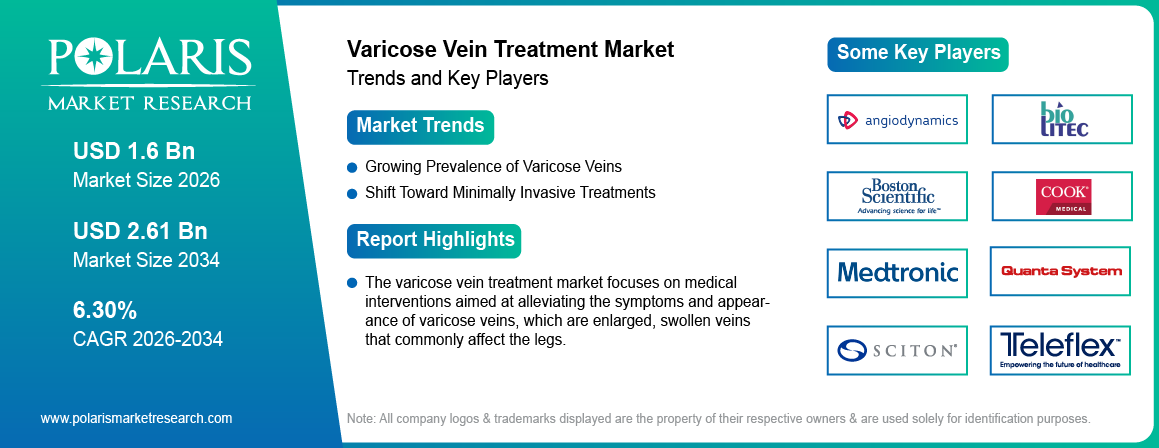
One of the key players in the varicose vein treatment market includes Medtronic, a player offering advanced technologies for minimally invasive procedures, including the ClosureFast system for endovenous radiofrequency ablation. Boston Scientific Corporation provides comprehensive solutions in varicose vein treatment, particularly through its VenaCure EVLT laser treatment system. AngioDynamics offers products such as the Venacure laser and is involved in minimally invasive procedures for vascular conditions. Biolitec AG is known for its high-performance laser technologies such as ELVeS laser system for varicose vein treatments. Cook Medical, a global medical device company, offers various interventional radiology tools, including those for varicose vein treatment.
Other notable companies include Sotrastan, a supplier of medical devices for vascular surgery, with a focus on minimally invasive procedures. Lumenis Ltd. is another key player, offering laser technologies for varicose vein treatments. Medtronic's subsidiary Covidien produces vascular interventions, contributing to the development of innovative solutions. Teleflex Incorporated provides a broad portfolio of vascular products, including those used for varicose vein treatment. Vascular Insights is known for its Clarivein mechanical catheter for endovenous ablation and provides solutions for vein-related conditions. Sciton Inc. offers laser systems for vascular treatments, including varicose veins, while Quanta System S.p.A. is involved in laser technology solutions for the treatment of varicose veins.
The varicose vein treatment market is characterized by a mix of established and emerging players focusing on innovation and product development to cater to the growing demand for minimally invasive treatments. Companies such as Medtronic, Boston Scientific, and AngioDynamics dominate the market with a wide range of technological solutions and established healthcare networks. However, smaller players such as Sciton and Teleflex are increasing their presence through specialized offerings that focus on enhancing patient outcomes with innovative treatment options. The competition in the market remains intense, with players investing heavily in research and development to introduce new solutions that reduce recovery times and improve treatment efficacy. There is also a growing trend toward partnerships and collaborations, enabling these companies to expand their reach and enhance their treatment portfolios in a market driven by rising demand for medical and cosmetic vein treatments.
Medtronic is a prominent player in the varicose vein treatment market, offering a range of products focused on minimally invasive procedures. The company provides the ClosureFast system for endovenous radiofrequency ablation, which is widely used in treating varicose veins. Medtronic’s presence in the market is strengthened by its global healthcare network and broad portfolio of medical technologies.
Boston Scientific Corporation is another key player in the varicose vein treatment market, offering various products and solutions for the treatment of venous conditions. Their VenaCure EVLT laser treatment system is commonly used for endovenous laser ablation. The company focuses on providing minimally invasive medical technologies that improve patient outcomes.
Varicose Vein Treatment Competitive Landscape & Leading Companies
- AngioDynamics
- Biolitec AG
- Boston Scientific Corporation
- Cook Medical
- Covidien (a Medtronic subsidiary)
- EndoShape
- Lumenis Ltd.
- Medtronic
- Quanta System S.p.A.
- Sciton Inc.
- Sotrastan
- Teleflex Incorporated
- Vascular Insights
- VeinMed Inc.
Varicose Vein Treatment Industry Developments
- July 2026: Theraclion reported its progress during the first half of 2026. The company revealed the completion of the first clinical implementation of Sonovein, an extracorporeal medical device to treat varicose veins, in Hainan, China. (source: businesswire.com)
- June 2026: Theraclion announced receiving approval from the American Medical Association (AMA) CPT Editorial Panel for the development of a new Category III CPT code for noninvasive (HIFU) treatment of varicose veins, performed using Sonovein. The company stated that the new code will become effective in January 2027. (source: businesswire.com)
Varicose Vein Treatment Market Future Outlook
The varicose vein treatment market is projected to witness steady growth due to growing demand for treatment options driven by both clinical and cosmetic needs. The increasing use of minimally invasive approaches will also fuel market growth, considering that these procedures are associated with faster healing time and reduced pain. Further developments in the field of laser, radiofrequency, and imaging devices are anticipated to boost the efficiency and effectiveness of treatment procedures. Awareness regarding the importance of healthy veins and increased availability of specialist clinics are expected to drive market development. As the infrastructure for healthcare keeps improving, the adoption rate is expected to increase in both developed and developing countries.
Varicose Vein Treatment Market Segmentation
By Type Outlook (Revenue – USD Billion, 2021–2034)
- Endovenous Ablation
- Sclerotherapy
- Surgical Ligation & Stripping
By Products Outlook (Revenue – USD Billion, 2021–2034)
- Ablation Devices
- Radiofrequency Ablation Devices
- Laser Ablation Devices
- Venous Closure Products
By End Use Outlook (Revenue – USD Billion, 2021–2034)
- Vein Clinics
- Hospitals
- Ambulatory Care Unit
By Regional Outlook (Revenue – USD Billion, 2021–2034)
- North America
- US
- Canada
- Europe
- Germany
- France
- UK
- Italy
- Spain
- Netherlands
- Russia
- Rest of Europe
- Asia Pacific
- China
- Japan
- India
- Malaysia
- South Korea
- Indonesia
- Australia
- Vietnam
- Rest of Asia Pacific
- Middle East & Africa
- Saudi Arabia
- UAE
- Israel
- South Africa
- Rest of Middle East & Africa
- Latin America
- Mexico
- Brazil
- Argentina
- Rest of Latin America
Varicose Vein Treatment Market Report Scope
| Report Attributes | Details |
| Market Size Value in 2025 | USD 1.51 billion |
| Market Size Value in 2026 | USD 1.6 billion |
| Revenue Forecast by 2034 | USD 2.61 billion |
| CAGR | 6.30% from 2026 to 2034 |
| Base Year | 2025 |
| Historical Data | 2021–2024 |
| Forecast Period | 2026–2034 |
| Quantitative Units | Revenue in USD billion and CAGR from 2026 to 2034 |
| Report Coverage | Revenue Forecast, Market Competitive Landscape, Growth Factors, and Trends |
| Segments Covered |
|
| Regional Scope |
|
| Competitive Landscape |
|
| Report Format |
|
| Customization | Report customization as per your requirements with respect to countries, regions, and segmentation. |
Source: Polaris Market Research Analysis
How is the report valuable for an organization?
Workflow/Innovation Strategy: The varicose vein treatment market has been segmented on the basis of type, product, and end use. Moreover, the study provides the reader with a detailed understanding of the different segments at both the global and regional levels.
Growth/Marketing Strategy: The varicose vein treatment market growth and marketing strategies focus on expanding product portfolios, increasing patient awareness, and enhancing treatment accessibility. Companies are investing in research and development to innovate minimally invasive procedures that offer quicker recovery times and better outcomes. Strategic partnerships, collaborations, and acquisitions are being pursued to broaden geographical reach and integrate advanced technologies into treatment offerings. Additionally, digital marketing campaigns and educational content are being used to raise awareness about varicose vein treatments, targeting medical professionals and patients. Companies are also focusing on improving the affordability and availability of treatments to cater to a broader demographic
Varicose Vein Treatment Market FAQ's
The varicose vein treatment market size was valued at USD 1.51 billion in 2025 and is projected to grow to USD 2.61 billion by 2034.
The market is projected to register a CAGR of 6.30% during the forecast period.
North America dominated the market with 41.9% share in 2025 .
A few key players in the varicose vein treatment market are Medtronic, Boston Scientific Corporation, AngioDynamics, Biolitec AG, Cook Medical, Sotrastan, Lumenis Ltd., Covidien (a Medtronic subsidiary), and Teleflex Incorporated.
The endovenous ablation segment accounted for the largest market share of 47.3% in 2025, driven by the increasing adoption of minimally invasive treatment procedures for varicose veins.
Varicose vein treatment refers to medical procedures aimed at alleviating the symptoms and improving the appearance of varicose veins, which are enlarged, twisted veins that typically occur in the legs. These veins are caused by weakened or damaged valves that prevent proper blood flow. Treatment options include minimally invasive procedures such as sclerotherapy (injection of a solution to close the vein), endovenous laser ablation (using laser energy to seal the vein), and radiofrequency ablation. Traditional methods, such as surgical ligation and stripping, are also used in severe cases. The goal of treatment is to reduce discomfort, prevent complications, and improve cosmetic appearance.
A few key trends in the market are described below: Minimally Invasive Treatments: Increased preference for noninvasive procedures such as endovenous laser ablation, radiofrequency ablation, and sclerotherapy due to shorter recovery times and fewer complications. Technological Advancements: Continuous innovations in treatment technologies, including improved laser systems, radiofrequency energy devices, and catheter-based therapies. Cosmetic Focus: Rising demand for varicose vein treatments driven by cosmetic concerns, as more people seek solutions for aesthetic reasons alongside medical benefits. Outpatient Care: Growing shift toward outpatient procedures, with a preference for treatments offered in vein clinics and ambulatory care units rather than hospitals.
A new company entering the varicose vein treatment market must focus on offering innovative, minimally invasive treatment options that prioritize patient comfort and faster recovery times. Investing in advanced technologies, such as next-generation laser systems or radiofrequency devices, could differentiate the company by improving treatment efficiency and outcomes. Additionally, targeting underserved markets, including emerging regions with growing healthcare access, could provide significant growth opportunities. Building strong relationships with healthcare professionals and establishing specialized vein clinics would also enhance credibility. Further, focusing on patient education and offering comprehensive support services can strengthen brand loyalty and attract a wider patient base.
It is projected that the market will continue growing owing to an increasing number of patients opting for minimally invasive treatments and rising awareness about vein health.
Download Sample Report of Varicose Vein Treatment Market
Please fill out the form to request a customized copy of the research report.


