
Veterinary Medicine Market Size, Share & Growth Analysis Report, 2026-2034
REPORT DETAILS
Veterinary Medicine Market Summary
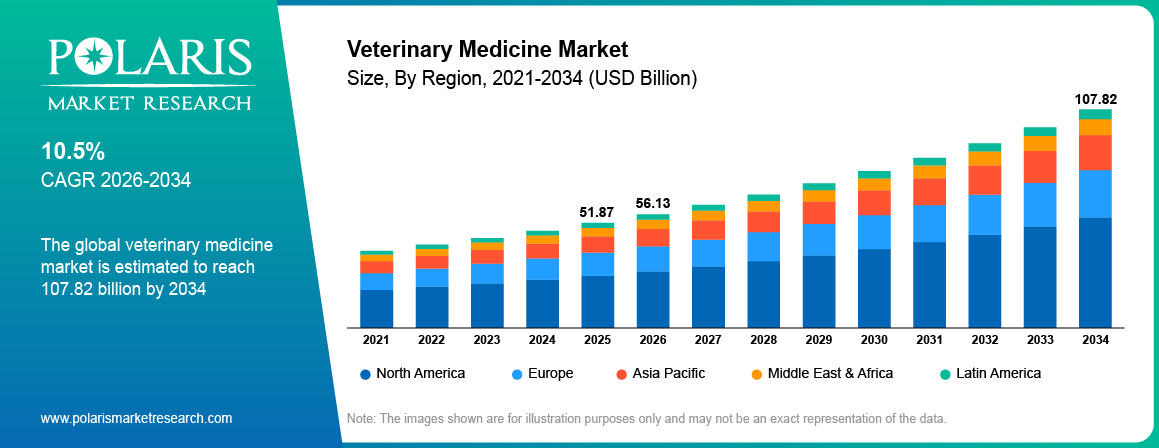
The global veterinary medicine market is estimated around USD 51.87 Billion in 2025, with consistent growth anticipated during 2026–2034. Growth is driven by rising pet ownership and expanding livestock production across the global animal health industry. The market is projected to grow at a CAGR of 10.5% during the forecast period.
Market Statistics
Key Takeaways
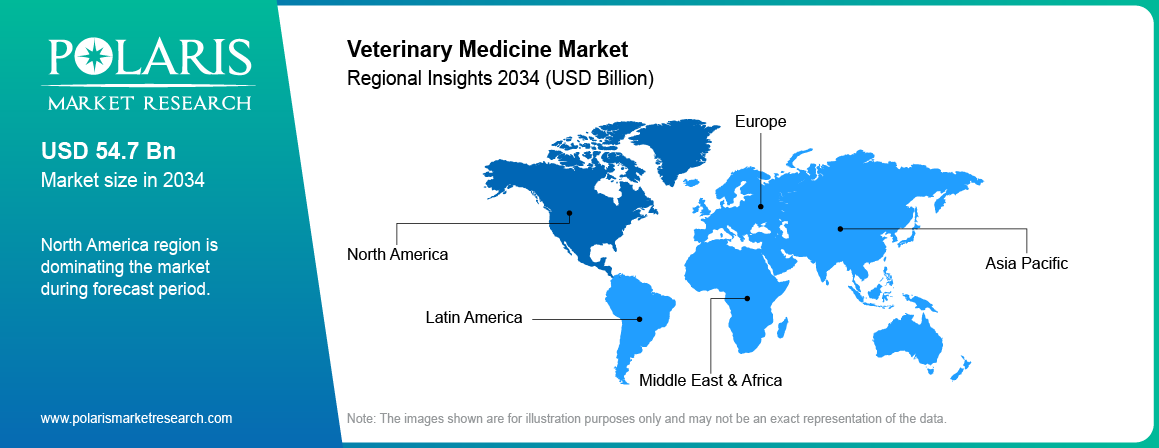
- North America dominated the market with a share of ~44% in 2025, driven by strong veterinary healthcare infrastructure and high pet healthcare spending.
- Veterinary pharmaceuticals accounted for approximately 47% of the market share in 2025, holding the largest product share in the global animal health industry.
- The companion animal healthcare segment is expected to grow at a CAGR of approximately 8.8% during the forecast period, supported by rising demand for pet therapeutics and preventive care.
- Veterinary biologics held around 32% of the market share in 2025, driven by increasing adoption of vaccines and disease prevention programs.
- Veterinary vaccines are expected to grow at a CAGR of approximately 9.5% during the forecast period, supported by their rising use in livestock disease management and herd health programs.
- Digital veterinary diagnostics are expected to grow at a CAGR of approximately 10.7% during the forecast period, driven by advancements in disease detection and treatment management.
Industry Dynamics
- Rising pet ownership is increasing demand for veterinary pharmaceuticals and preventive pet healthcare.
- Expanding livestock production is strengthening demand for livestock veterinary medicine and vaccines.
- Strict veterinary drug regulations increase approval timelines for new veterinary medicines.
- Advances in veterinary biotechnology and biologics create long term opportunities in animal health.
What the Veterinary Medicine Market Includes?
The veterinary medicine market is defined as a process that involves the development and production of therapeutic agents for animal health management. The veterinary medicine market are described as veterinary medicines such as pharmaceuticals, biologics, vaccines, parasiticides, and medicated feed additives that help in the management and treatment of diseases in animals. The veterinary medicine manufacturers provide their products to veterinary clinics, farms, pet care services, and animal health services.
Veterinary medicines help in animal health management by preventing and controlling diseases in animals. Veterinary therapeutics help manage bacterial infections, viral diseases, parasitic infestations, and metabolic disorders in companion animals and livestock. Vaccines and biologics support preventive care, while parasiticides and medicated feed additives improve herd health and livestock performance.
Source: Polaris Market Research Analysis
To Understand More About this Research:Download Sample Report
Growth in pet ownership and rising demand for livestock productivity support the adoption of veterinary pharmaceuticals and animal health products. Pet owners increase spending on preventive care and veterinary therapeutics for companion animals. Livestock producers adopt veterinary medicines to control diseases, improve feed efficiency, and support sustainable animal production.
Drivers & Opportunities
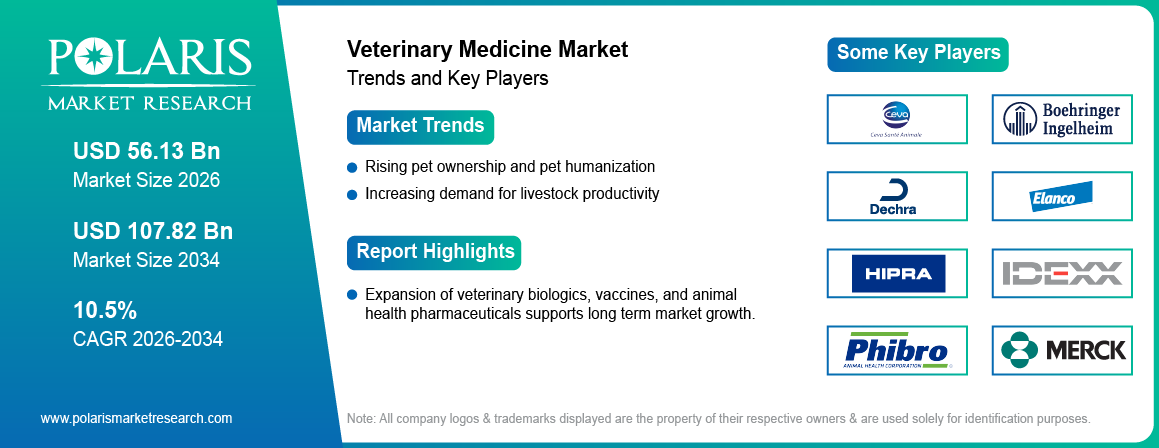
Rising pet ownership and pet humanization: Increase in the number of pets worldwide is leading to a rise in the demand for companion animal healthcare services. This is owing to owners are willing to spend on preventive care for their pets, chronic disease management for their pets, and other pet care services. For instance, HealthforAnimals reported that over 500 million families across the US, EU, and China own more than half a billion dogs and cats. Veterinary clinics and hospitals are using pet healthcare pharmaceuticals and veterinary therapeutics for the management of chronic conditions in companion animals. This is a major driver for the companion animal medicine market and the pet medicine market.
Increasing demand for livestock productivity: Livestock producers focus on animal health for food safety and sustainable agricultural productivity. Veterinary medicines help control infectious diseases and improve herd productivity across cattle, poultry, and swine farms. Veterinary pharmaceuticals and vaccines help in the prevention of diseases and growth management in animal husbandry. The demand for veterinary pharmaceuticals and vaccines for animal husbandry is expected to drive the growth of the livestock veterinary medicine market, cattle veterinary drug market, and poultry veterinary pharmaceutical market.
Restraints & Challenges
Strict regulatory approval processes: Veterinary medicines need to undergo a regulatory process before commercialization in many countries. The process for veterinary pharmaceutical regulations includes safety evaluation, clinical testing, and manufacturing compliance. The veterinary drug regulations increase the time and costs for veterinary pharmaceutical manufacturers.
Opportunity
Adoption of veterinary biotechnology and biologics: Advancements in veterinary biotechnology are opening new avenues for veterinary biologics and animal therapeutics. Scientists and animal healthcare companies are producing monoclonal antibodies, veterinary vaccines, and animal immunotherapy. In April 2025, the Food and Drug Administration (FDA) revealed a plan to remove animal testing requirements for monoclonal antibodies and other animal drugs. The agency is encouraging AI models and human-based lab tests as alternatives for animal testing. These technologies expand treatment options in the veterinary medicine industry and support innovation in animal health management
Source: Polaris Market Research Analysis
Segmental Insights
This report offers detailed coverage of the veterinary medicine market by product type, animal, type, route of administration, and distribution channel to help readers identify the fastest expanding and most attractive demand segments.
By Product Type
-
Pharmaceuticals
In 2025, the pharmaceutical segment had the largest market share due to the growing demand for veterinary pharmaceuticals and animal health pharmaceuticals for the treatment of animal diseases. Veterinary therapeutics are used to treat animal diseases like bacterial infections, metabolic disorders, and chronic diseases. Companion animal pharmaceuticals and animal healthcare services contribute to the growth of veterinary therapeutics.
-
Biologics
Biologics segment is projected to grow at the fastest CAGR during the forecast period, due to strong adoption of veterinary vaccines and veterinary biologics in animal health management. Veterinary biologics contribute to the prevention of disease programs on livestock farms as well as companion animal care. Veterinary vaccines and veterinary parasiticides are used to control infectious diseases, thereby improving animal health.
By Animal Type
-
Companion Animals
Companion animals had the highest market share in 2025 due to the increase in companion animal care expenditures as well as the demand for companion animal pharmaceuticals. Veterinary medicines support treatment of chronic diseases and preventive care in dogs and cats. Growth in pet healthcare services increases demand for veterinary pharmaceuticals and vaccines in companion animal care.
-
Livestock Animals
The livestock animals segment is projected to grow at the fastest CAGR during the forecast period, due to rising demand for livestock veterinary medicine in commercial animal farming. Veterinary medicines support disease prevention and productivity improvement in cattle, poultry, and swine. Livestock producers use veterinary vaccines and veterinary therapeutics to maintain herd health and stable food production.
By Route of Administration
-
Injectable
Injectable accounted for the highest market share in 2025, driven by strong use of injectable veterinary medicines in veterinary hospitals and livestock health programs. Injectable veterinary medicines provide rapid therapeutic response in severe infections and vaccination procedures. Veterinary biologics and vaccines are commonly administered through injectable veterinary drug delivery.
-
Oral
The oral segment is projected to grow at the fastest CAGR during the forecast period, due to rising adoption of oral veterinary drugs for routine treatments and parasite control. Oral veterinary drugs are used for easy administration on livestock farms as well as companion animal care. Veterinary parasiticides and therapeutic medicines are administered using veterinary drug delivery systems.
By Distribution Channel
-
Hospitals and Clinics
The hospitals and clinics segment had the largest market share in 2025 due to the strong demand for veterinary medicine in animal healthcare services. Veterinary hospitals supply veterinary pharmaceuticals, vaccines, and therapeutics for disease diagnosis and treatment. Veterinary medicine distribution through clinical facilities supports professional veterinary care.
-
Online
The online segment is projected to grow at the fastest CAGR during the forecast period, due to expansion of veterinary medicine e-commerce platforms. Online channels support convenient veterinary medicine distribution for pet owners and livestock producers. Veterinary medicine e-commerce platforms provide access to veterinary pharmaceuticals, vaccines, and pet healthcare products.
Source: Polaris Market Research Analysis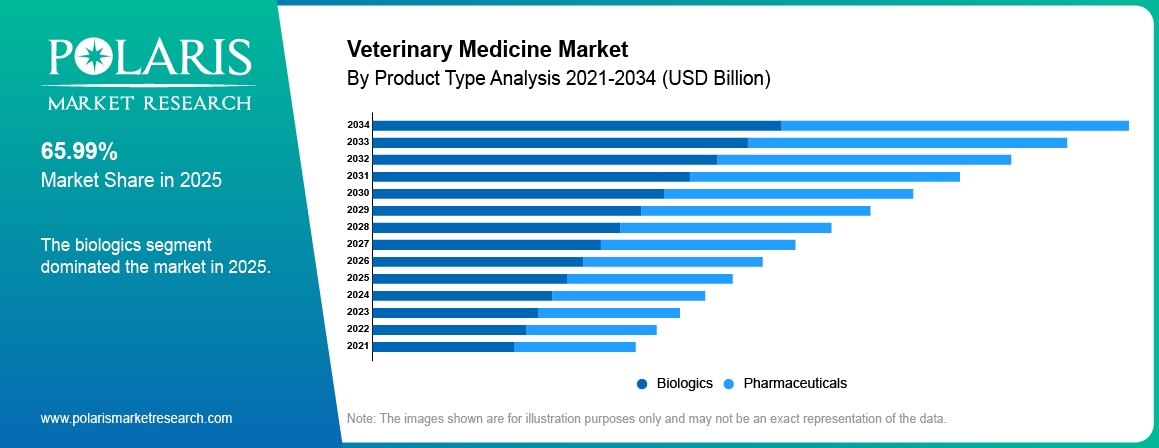
Regional Analysis
North America Market Assessment
North America veterinary medicine market dominated in 2025, driven by rising pet insurance adoption and advanced veterinary infrastructure across the US and Canada. In June 2025, American Veterinary Medical Association (AVMA) reported that the U.S. pet insurance market has exceeded a gross written premium of USD 4.7 billion in 2024. The region has a strong pharmaceutical industry with a well-established animal healthcare system that supports the use of veterinary medicine and veterinary vaccines. High spending on pet healthcare and preventive treatments is strengthening the veterinary medicine market North America and expanding the US veterinary pharmaceuticals market.
Asia Pacific Veterinary Medicine Market Insights
Asia Pacific veterinary medicine market is projected to grow at the fastest CAGR during the forecast period, due to rising livestock population and increasing pet adoption across emerging economies. Countries such as China and India are expanding veterinary hospitals, diagnostic laboratories, and animal healthcare services. For instance, in October 2024, according to the 20th Livestock Census, the country has 303.76 million bovines, 74.26 million sheep, 148.88 million goats, 9.06 million pigs, and 851.81 million poultry.
Europe Veterinary Medicine Market Overview
Europe was the second largest market for veterinary medicines driven by a strong livestock industry and strict veterinary regulations across the region. Countries like Germany, France, and the UK have strong animal health monitoring systems with veterinary medicine standards. Regulatory frameworks supporting veterinary biologics and disease prevention programs are strengthening the Europe veterinary medicine market and supporting growth of veterinary biologics Europe.
Source: Polaris Market Research Analysis
Key Players & Competitive Analysis Report
The veterinary medicine market competition is driven by leading veterinary pharmaceutical companies that develop animal health products across pharmaceuticals, vaccines, biologics, and parasiticides. Veterinary medicine market companies focus on expanding product portfolios, strengthening research activities, and improving veterinary medicine distribution networks. Rising demand for preventive animal healthcare and livestock disease control is increasing investment by top animal health companies in veterinary therapeutics and veterinary biologics.
Leading companies in the veterinary medicine market are Zoetis Inc., Merck & Co., Inc., Boehringer Ingelheim, Elanco Animal Health Inc, Virbac, Ceva Santé Animale, Vetoquinol, Dechra Pharmaceuticals PLC, Phibro Animal Health Corporation, Zydus Animal Health, HIPRA, IDEXX Laboratories, Inc., and many more.
Emerging Trends and Future Outlook
| Trends | Key Insight |
| AI-driven veterinary diagnostics | AI-based diagnostic tools improve disease detection and support growth of the veterinary diagnostics market. |
| Veterinary telemedicine | The rise in remote veterinary consultation services projected to drive the veterinary digital health services market. |
| Precision livestock medicine | Data-driven livestock monitoring improves herd health management and treatment outcomes. |
| One Health initiatives | Integrated human, animal, and environmental health programs strengthen disease prevention systems. |
| Veterinary biotechnology | Advancements in the veterinary biotechnology market support innovation in vaccines, biologics, and animal therapeutics. |
Source: Polaris Market Research Analysis
Key Players
- Boehringer Ingelheim
- Ceva Santé Animale
- Dechra Pharmaceuticals PLC
- Elanco Animal Health Inc
- HIPRA
- IDEXX Laboratories, Inc.
- Merck & Co., Inc.
- Phibro Animal Health Corporation
- Vetoquinol
- Virbac
- Zydus Animal Health
- Zoetis Inc.
Industry Developments
- February 2026: Merck Animal Health received approval from the U.S. FDA for Numelvi (atinvicitinib) tablets, the first second-generation JAK inhibitor for controlling pruritus associated with allergic dermatitis in dogs.
- February 2026: Gallant partnered with MWI Animal Health to support distribution of an anticipated FDA-conditionally approved stem cell therapy for pets through specialized ultra-low temperature logistics for veterinary clinics.
Veterinary Medicine Market Segmentation
By Product Type Outlook (Revenue, USD Billion, 2021-2034)
- Biologics
- Vaccines
- Modified/ Attenuated Live
- Inactivated (Killed)
- Other Vaccines
- Other Biologics
- Vaccines
- Pharmaceuticals
- Parasiticides
- Anti-infectives
- Anti-inflammatory
- Analgesics
- Others
- Medicated Feed Additives
By Animal Type Outlook (Revenue, USD Billion, 2021-2034)
- Companion Animals
- Livestock Animals
By Route of Administration Outlook (Revenue, USD Billion, 2021-2034)
- Oral
- Injectable
- Topical
By Distribution Channel Outlook (Revenue, USD Billion, 2021-2034)
- Hospitals and clinics
- Pharmacies
- Online
By Regional Outlook (Revenue, USD Billion, 2021-2034)
- North America
- US
- Canada
- Europe
- Germany
- France
- UK
- Italy
- Spain
- Netherlands
- Russia
- Rest of Europe
- Asia Pacific
- China
- Japan
- India
- Malaysia
- South Korea
- Indonesia
- Australia
- Vietnam
- Rest of Asia Pacific
- Middle East & Africa
- Saudi Arabia
- UAE
- Israel
- South Africa
- Rest of Middle East & Africa
- Latin America
- Mexico
- Brazil
- Argentina
- Rest of Latin America
Veterinary Medicine Market Report Scope
| Report Attributes | Details |
| Market Size in 2025 | USD 51.87 Billion |
| Market Size in 2026 | USD 56.13 Billion |
| Revenue Forecast by 2034 | USD 107.82 Billion |
| CAGR | 10.5% from 2026 to 2034 |
| Base Year | 2025 |
| Historical Data | 2021–2024 |
| Forecast Period | 2026–2034 |
| Quantitative Units | Revenue in USD Billion and CAGR from 2026 to 2034 |
| Report Coverage | Revenue Forecast, Competitive Landscape, Growth Factors, and Industry Trends |
| Segments Covered |
|
| Regional Scope |
|
| Competitive Landscape |
|
| Report Format |
|
| Customization | Report customization as per your requirements with respect to countries, regions, and segmentation. |
Source: Polaris Market Research Analysis
Veterinary Medicine Market FAQ's
The global market size was valued at USD 51.87 Billion in 2025 and is projected to grow to USD 107.82 Billion by 2034.
North America dominates due to advanced animal healthcare systems and high pet healthcare spending.
Key applications include disease prevention, infection treatment, parasite control, and livestock productivity improvement.
A few of the key players in the market are Zoetis Inc., Merck & Co., Inc., Boehringer Ingelheim, Elanco Animal Health Inc, Virbac, Ceva Santé Animale, Vetoquinol, Dechra Pharmaceuticals PLC, Phibro Animal Health Corporation, Zydus Animal Health, HIPRA, IDEXX Laboratories, Inc., and others.
Major veterinary medicine adoption drivers include rising pet ownership and growing livestock healthcare.
Major adoption occurs across veterinary hospitals and clinics, livestock farms, pet owners, and animal healthcare providers.
The future of veterinary medicines is driven by veterinary biotechnology, biologics, and advanced animal health pharmaceuticals.
Download Sample Report of Veterinary Medicine Market
Please fill out the form to request a customized copy of the research report.


