
Wound Care Market Size, Trends, Revenue, Growth Report 2026-2034
REPORT DETAILS
Wound Care Market Summary
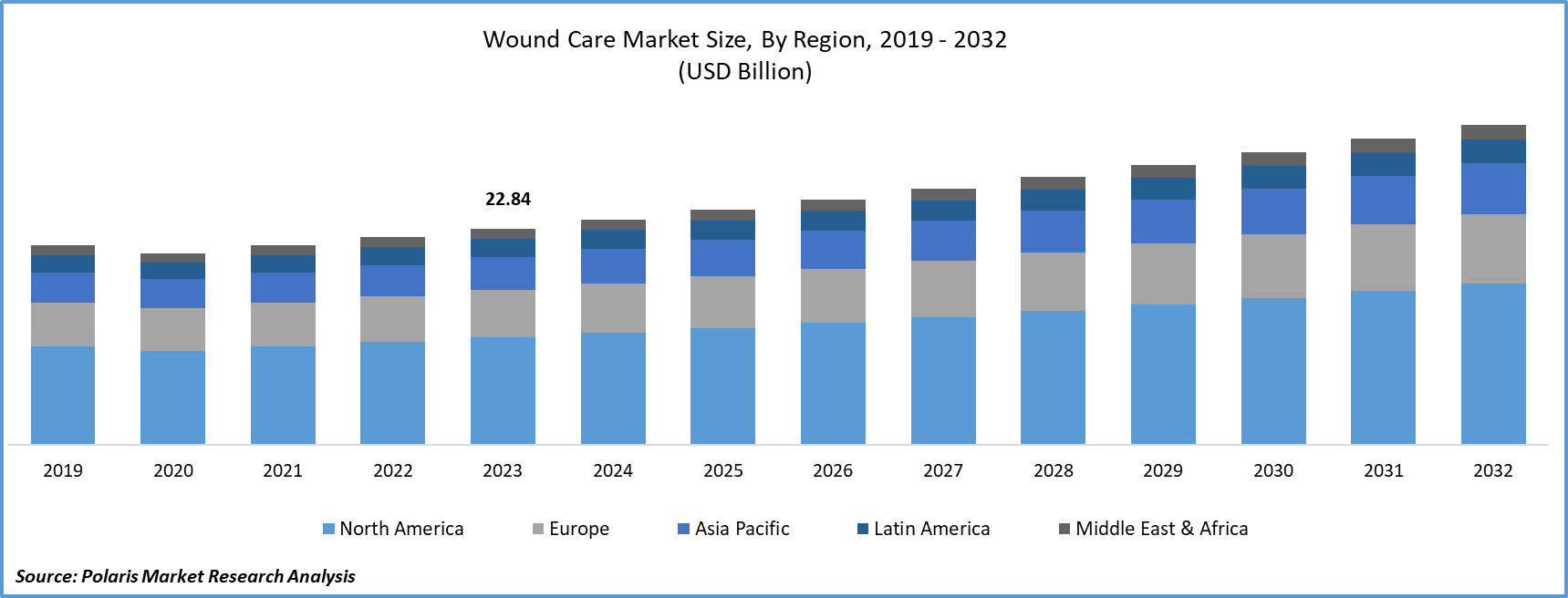
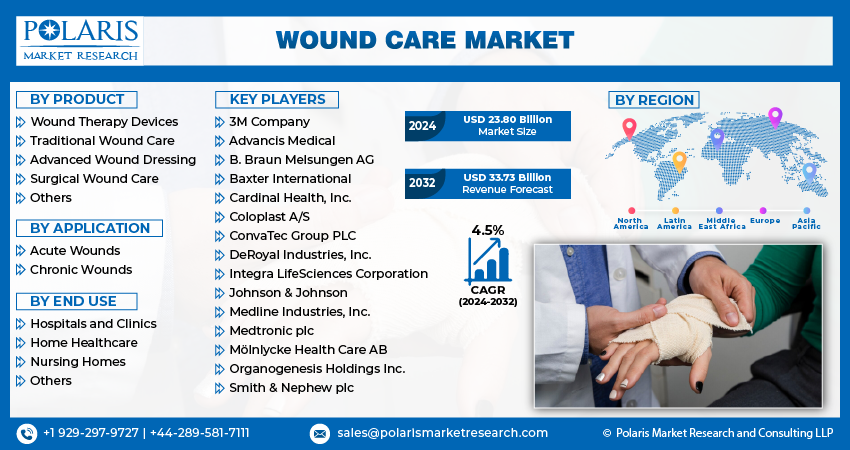
The global wound care market is estimated around USD 21.78 Billion in 2025,?with consistent growth anticipated during 2026–2034. Expansion is supported by increasing prevalence of chronic wounds, rising surgical procedure volumes, and growing adoption of advanced wound management technologies. The market is projected to grow at a CAGR of 5.3% during the forecast period.
Market Statistics
Key Takeaways
- North America dominated the market with a share of 43.21% in 2025, driven by a strong healthcare system and advanced wound care infrastructure.
- Advanced wound care products accounted for approximately 39.12% of the market share in 2025, owing to superior healing outcomes and infection prevention capabilities.
- Foam dressings and antimicrobial dressings held around 36.87% of the market share in 2025, supported by effective moisture balance and infection protection.
- Chronic wound management captured nearly 42.66% of the market share in 2025, driven by the rising prevalence of diabetes and vascular disorders.
- Hospitals led the end-user segment with a share of about 46.21% in 2025, due to high patient volume and complexity of wound treatment procedures.
- Home healthcare for wound treatment is expected to grow at a CAGR of approximately 9.8% during the forecast period, supported by the shift toward outpatient care and home-based treatment solutions.
Note: Figures and projections outlined in this report are the result of Polaris Market Research’s proprietary analytical processes, grounded in the latest available datasets and market observations.
Industry Dynamics
- Rising prevalence of chronic wounds such as diabetic foot ulcers and pressure sores is propelling the growth of the wound treatment market.
- Rapid global aging is increasing long-term wound care treatment requirements.
- High cost of advanced wound care technologies remains a constraint for adoption in cost-sensitive healthcare systems.
- AI-enabled wound monitoring and digital health technologies are creating new opportunities for remote patient management.
What is included in the Wound Care market?
Wound care refers to the medical treatment and use of products to heal injuries including cuts, burns, and ulcers. It includes dressings, medications, advanced therapies, and sometimes surgical care to prevent infection, support healing, and improve recovery outcomes
The market includes medical products and therapies used to treat acute and chronic wounds and support tissue healing. Surgical dressings, conventional gauze, bandages, wound therapy devices, and biologic treatment products, are included under the market ecosystem.
In wound care industry analysis, these products are applied in the management of surgical wounds, diabetic ulcers, pressure ulcers, and burn injuries. Manufacturers are offering a wide range of wound treatment solutions that are used for the regulation of the balance of moisture, protection of injured tissues, and the promotion of faster healing.
Source: Polaris Market Research Analysis
To Understand More About this Research:Download Sample Report
The market size reflects strong demand for advanced treatment solutions as chronic disease prevalence and surgical procedures increase globally. Current estimates show a significant global wound care market share distributed across advanced dressings, wound therapy systems, and biologic treatment products. The growth rate of the market is sustained by the increasing prevalence of diabetes, elderly population, and expansion of the healthcare infrastructure.
Advanced vs Traditional Wound Care Products Comparison
| Basis | Advanced Wound Care Products | Traditional Wound Care Products |
| Product Scope | Foam dressings, hydrocolloids, alginates, antimicrobial dressings, NPWT | Gauze, bandages, basic dressings |
| Function | Maintain moisture balance and prevent infection | Cover and protect wound |
| Healing Outcome | Faster healing and better clinical outcomes | Slower healing |
| Infection Control | Strong infection prevention capabilities | Limited infection control |
| Cost Factor | High cost limits adoption | Low cost supports wider use |
| Applications | Chronic wounds, complex and non-healing wounds | Acute and minor wounds |
| Market Position | Significant share | Used in cost-sensitive markets |
| Technology | Advanced materials and therapies | Basic and conventional methods |
| Limitation | Expensive and needs trained handling | Less effective for complex wounds |
Source: Polaris Market Research Analysis
Drivers & Opportunities
Rapidly aging population increasing wound treatment demand: The expanding elderly population is increasing the number of patients requiring long-term wound treatment. Older populations are more susceptible to the risk of pressure ulcers, diabetic foot ulcers, and impaired surgical wound healing due to decreased tissue regeneration. The World Health Organization states that the population aged 80 years and above is expected to triple between 2020 and 2050, reaching 426 million. This demographic shift increases clinical demand for specialized dressings, wound monitoring products, and long-term therapies, supporting market growth and expansion of the wound care therapy market.
Rising prevalence of chronic wounds: Increasing cases of diabetic ulcers, venous leg ulcers, and pressure injuries are expanding the chronic wound care market worldwide. Chronic skin wounds affect more than 40 million patients globally and require prolonged treatment, frequent monitoring, and specialized medical products. Rising diabetes incidence and sedentary lifestyles increase the number of patients needing continuous wound management. This growing treatment demand supports wound care industry growth and strengthens adoption across the wound treatment devices industry.
Restraints & Challenges
High cost of advanced wound care products: Advanced wound care products, including bioactive dressings, antimicrobial dressing, and negative pressure wound therapy, are more expensive than traditional dressing materials. Procurement limitations slow the penetration of premium therapies within the wound management market.
Opportunity
AI-enabled wound monitoring technologies: AI-based wound monitoring systems are creating new opportunities in the wound care therapy market. Image-based analytics platforms help clinicians track healing progress, detect infection risk, and adjust treatment plans. These technologies support remote care and telehealth integration, allowing continuous monitoring outside hospital settings. Growing adoption of digital health tools supports advanced wound care industry trends and strengthens innovation in the wound treatment devices industry.
Source: Polaris Market Research Analysis
Segmental Insights
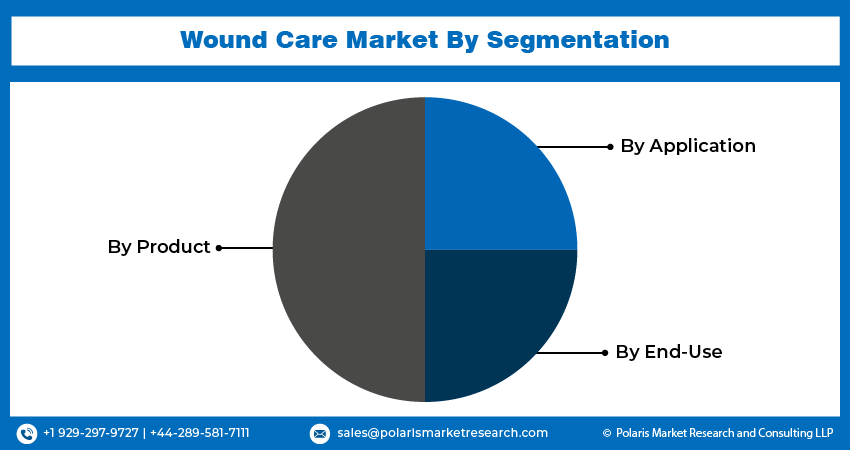
This report offers detailed coverage of the wound care market by product, wound type, and end user to help readers identify the fastest expanding and most attractive demand segments.
By Product
-
Advanced Wound Care
The advanced wound care market size represents the largest share of the global market due to rising demand for faster healing and infection control. Advanced wound care products market adoption includes foam dressings, hydrocolloids, alginates, and antimicrobial dressings designed to maintain optimal moisture balance and prevent microbial contamination.
-
Negative Pressure Wound Therapy
The negative pressure wound therapy market is the fastest-growing segment as clinicians adopt NPWT systems for complex and non-healing wounds. Vacuum assisted wound closure market technologies apply controlled suction to remove exudate and promote tissue regeneration.
By Wound Type
-
Chronic Wound Care
The chronic wound care market size accounts for the largest share due to increasing prevalence of diabetes and vascular diseases. Chronic wound therapy market demand includes treatment of diabetic foot ulcers, pressure ulcers, and venous leg ulcers.
-
Surgical and Acute Wound Care
The surgical wound care market is the fastest-growing segment due to increasing surgical procedures worldwide. Acute wound care treatment market demand includes management of trauma wounds, burns, and post-surgical incisions.
By End User
-
Hospitals
Hospital wound care market is the largest end-user segment due to the patient pool size and the complexity of managing their wounds. Hospital segment is largely dependent on advanced wound care products and NPWT devices to treat chronic and surgical wounds.
-
Home Healthcare
The home healthcare wound care market is expanding rapidly as treatment shifts toward outpatient and home-based care. Wound care home treatment market solutions allow patients with chronic wounds to receive therapy outside hospital environments.
Wound Type and Real-World Treatment Applications Table
| Wound Type | Description | Common Treatment Approach | Products Use | Care Setting |
| Diabetic Ulcers | Chronic wounds caused by diabetes and poor circulation | Long-term wound management and infection control | Advanced dressings, antimicrobial dressings, NPWT | Hospitals, Home healthcare |
| Burns | Tissue damage caused by heat, chemicals, or radiation | Moisture balance and infection prevention | Foam dressings, hydrocolloids, bioactive dressings | Hospitals |
| Surgical Wounds | Wounds from surgical procedures | Post-surgical healing and protection | Antimicrobial dressings, advanced dressings | Hospitals |
| Trauma Injuries | Injuries from accidents or physical damage | Immediate wound closure and healing support | Gauze, bandages, advanced dressings | Hospitals, Emergency care |
Source: Polaris Market Research Analysis
Source: Polaris Market Research Analysis
Regional Analysis
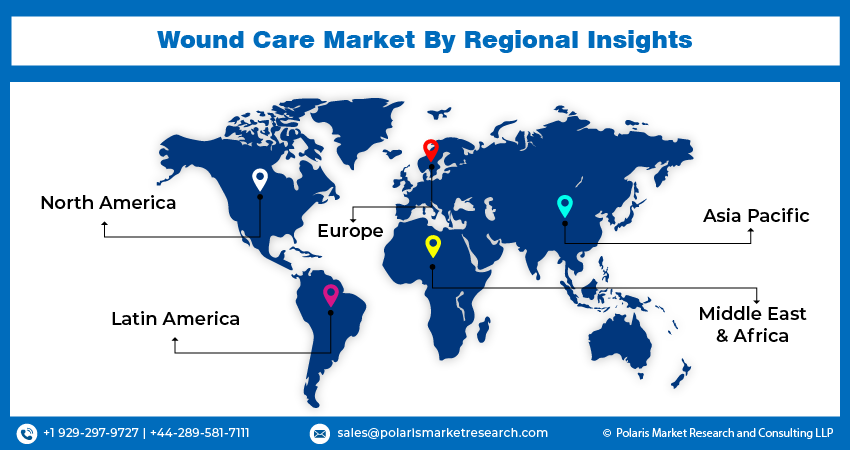
North America Wound Care Market Assessment
The North America wound care market maintained the largest share, supported by advanced healthcare systems and strong clinical adoption of specialized wound management products. Hospitals and outpatient care centers are the key adopters of advanced wound care products like dressings and negative pressure therapy for the treatment of chronic wounds. The US healthcare expenditure rose by 7.2% in 2024, according to the Centers for Medicare & Medicaid Services. The expenditure was for 18% of the country's gross domestic product, totaling USD 5.3 trillion or about USD 15,474 per person. This increased expenditure on healthcare further fueled the demand for advanced wound care products, thereby increasing the US wound care market size.
Europe Wound Care Market Overview
Europe wound care market represented the second-largest regional segment due to increasing adoption of innovative wound management technologies across hospitals and specialized care facilities. Healthcare providers in countries such as Germany, France, and the UK are increasingly incorporating advanced wound therapies such as negative pressure wound therapy and bioactive dressings to enhance the healing process. The prevalence of chronic wounds and an aging population have boosted the demand for advanced wound healing solutions in the European region.
Asia Pacific Wound Care Market Insight
The Asia Pacific wound care market recorded the fastest growth, supported by rising healthcare investment and expanding medical infrastructure. According to Invest India, nearly 600 investment opportunities worth about USD 32 billion were identified in India’s hospital and medical infrastructure sub-sector. Expansion of hospitals and specialized healthcare facilities strengthened adoption of modern wound management solutions, reinforcing India wound care market trends while supporting China wound care market growth through increasing healthcare service capacity.
Middle East Wound Care Market Assessment
Middle East wound care market is expanding gradually due to increasing investment by the government to modernize the healthcare infrastructure and adopt advanced medical technologies. New hospital construction and the development of specialized treatment facilities have boosted the demand for advanced wound management products in the GCC region.
Source: Polaris Market Research Analysis
Key Players & Competitive Analysis Report
The competitive landscape of the market reflects strong participation from leading wound care companies and advanced wound care manufacturers delivering a broad portfolio of products designed for acute and chronic wound management. Global market competitors compete through development of advanced dressings, negative pressure wound therapy systems, antimicrobial wound care products, and bioactive wound management solutions aimed at improving healing outcomes and infection control.
Key companies operating in the market include B. Braun Melsungen AG, Baxter International Inc., Cardinal Health, Inc., Coloplast A/S, ConvaTec Group Plc, Integra LifeSciences Holdings Corporation, Johnson & Johnson Services, Inc. (Ethicon), Medtronic plc, Medline Industries, LP, Mölnlycke Health Care AB, Paul Hartmann AG, Smith & Nephew plc, Solventum Corporation, URGO Medical, and 3M Company.
Key Players
- B. Braun Melsungen AG
- Baxter International Inc.
- Cardinal Health, Inc.
- Coloplast A/S
- ConvaTec Group Plc
- Integra LifeSciences Holdings Corporation
- Johnson & Johnson Services, Inc. (Ethicon)
- Medtronic plc
- Medline Industries, LP
- Mölnlycke Health Care AB
- Paul Hartmann AG
- Smith & Nephew plc
- Solventum Corporation
- URGO Medical
- 3M Company
Premium Insights
The market is evolving through innovation in advanced materials and treatment technologies. The major areas of innovation are bioactive dressings, antimicrobial wound products, and negative pressure wound therapy products to enhance healing rates and minimize the risk of infection associated with diabetic foot ulcers and pressure injuries.
Reimbursement frameworks play a major role in product adoption. The developed healthcare systems provide reimbursements to encourage the use of advanced wound therapies. However, the lack of reimbursements hinder the adoption of advanced wound care products. Advanced wound care products are more expensive, acting as a barrier for the regions where reimbursements are not provided.
The barriers to adoption are the cost-sensitive markets where traditional dressings are still used due to the low cost of traditional dressings. There are also some issues related to the training of healthcare professionals, which affect the adoption of advanced wound care products.
The emerging technology that is expected to improve clinical outcomes for wound care includes smart dressings, digital wound monitoring technology, and bioengineered wound care materials.
Industry Developments
- November 2025: Cologenesis Healthcare launched a nitric oxide-based dressing in India. It targets diabetic ulcer treatment. The product focuses on improving healing response and infection control. Source: newsonair.gov.in
- January 2026: Beiersdorf launched its Second Skin Protection Spray Plaster, Liquid Plaster Concentrate under the Hansaplast, Elastoplast, and CURITAS brands, which are invisible formats for the protection of wounds, thereby increasing the level of convenience for users compared to traditional bandages. (Source: beiersdorf.com)
Market Segmentation
By Product Outlook (Revenue, USD Billion, 2021-2034)
- Advanced Wound Care
- Traditional Wound Care
- Negative Pressure Wound Therapy
- Wound Care Devices
By Wound Type Outlook (Revenue, USD Billion, 2021-2034)
- Chronic Wound Care
- Surgical and Acute Wound Care
By End User Outlook (Revenue, USD Billion, 2021-2034)
- Hospitals
- Wound Care Clinics
- Home Healthcare
By Regional Outlook (Revenue, USD Billion, 2021-2034)
- North America
- US
- Canada
- Europe
- Germany
- France
- UK
- Italy
- Spain
- Netherlands
- Russia
- Rest of Europe
- Asia Pacific
- China
- Japan
- India
- Malaysia
- South Korea
- Indonesia
- Australia
- Vietnam
- Rest of Asia Pacific
- Middle East & Africa
- Saudi Arabia
- UAE
- Israel
- South Africa
- Rest of Middle East & Africa
- Latin America
- Mexico
- Brazil
- Argentina
- Rest of Latin America
Report Scope
| Report Attributes | Details |
| Market Size in 2025 | USD 21.78 Billion |
| Market Size in 2026 | USD 22.91 Billion |
| Revenue Forecast by 2034 | USD 34.64 Billion |
| CAGR | 5.3% from 2026 to 2034 |
| Base Year | 2025 |
| Historical Data | 2021–2024 |
| Forecast Period | 2026–2034 |
| Quantitative Units | Revenue in USD Billion and CAGR from 2026 to 2034 |
| Report Coverage | Revenue Forecast, Competitive Landscape, Growth Factors, and Industry Trends |
| Segments Covered |
|
| Regional Scope |
|
| Competitive Landscape |
|
| Report Format |
|
| Customization | Report customization as per your requirements with respect to countries, regions, and segmentation. |
Source: Polaris Market Research Analysis
Wound Care Market FAQ's
The global market size was valued at USD 21.78 Billion in 2025 and is projected to grow to USD 34.64 Billion by 2034.
North America held leading market share, due to advanced healthcare infrastructure, strong adoption of specialized wound management products, and high healthcare spending.
Chronic wound treatment represents the largest application segment, followed by surgical and acute wound care management.
Key companies include B. Braun Melsungen AG, Baxter International Inc., Cardinal Health, Inc., Coloplast A/S, ConvaTec Group Plc, Integra LifeSciences Holdings Corporation, Johnson & Johnson Services, Inc., Medtronic plc, Medline Industries, LP, Mölnlycke Health Care AB, Paul Hartmann AG, Smith & Nephew plc, Solventum Corporation, URGO Medical, and 3M Company.
Growth is driven by rising diabetes prevalence, increasing chronic wound incidence, expanding surgical procedures, and advancements in wound treatment technologies.
The wound care market is expected to witness steady growth driven by technological advancements, increasing healthcare awareness, and the rising demand for effective wound management solutions worldwide.
Download Sample Report of Wound Care Market
Please fill out the form to request a customized copy of the research report.


