
Allergy Diagnostics Market Size, Share Analysis Report, 2026-2034
REPORT DETAILS
Allergy Diagnostics Market Summary and Key Insights
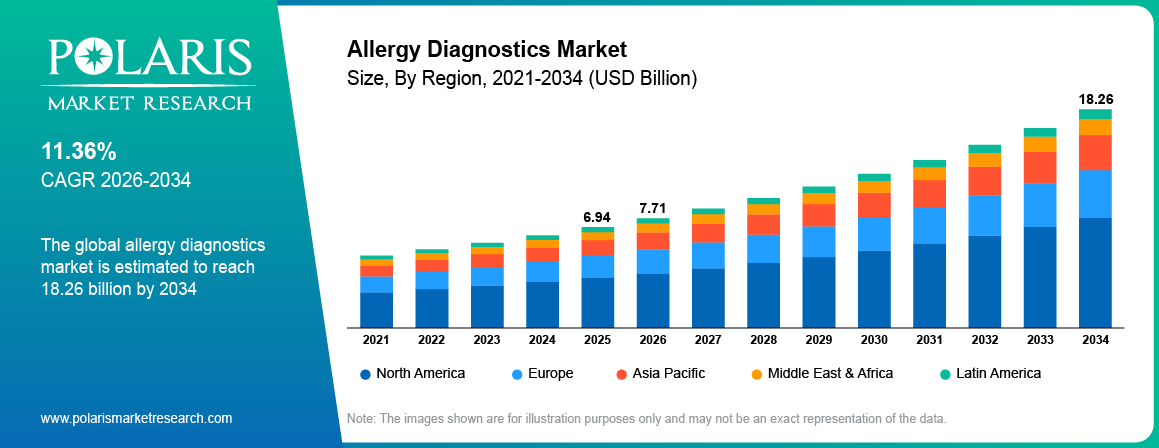
The global allergy diagnostics market size was valued at USD 6.94 billion in 2025. The market is anticipated to grow at a CAGR of 11.36% from 2026 to 2034. The rising global prevalence of allergic conditions and increasing environmental pollution are a few of the key factors driving market growth.
Market Statistics
Key Takeaways
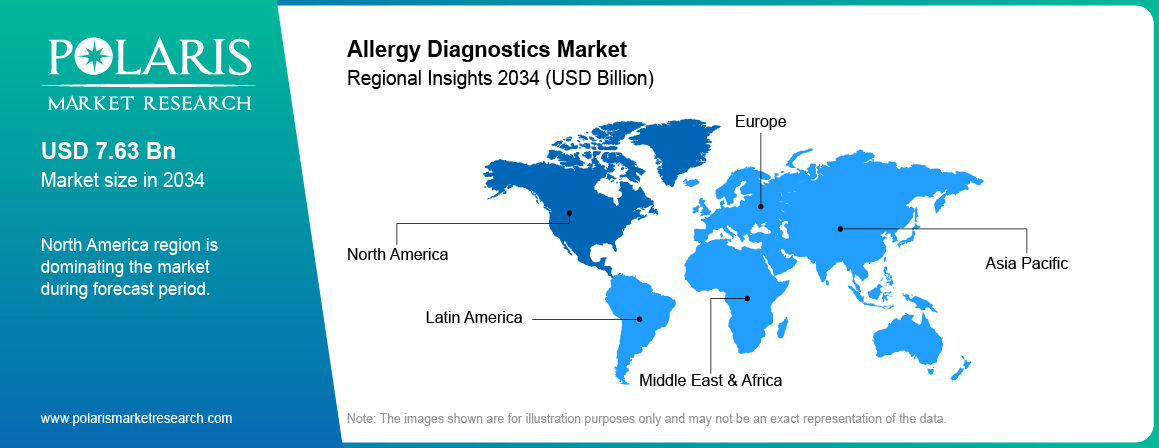
- North America accounted for the largest share of 41.8% in 2025. This is owing to the growing demand for swift and precise allergy diagnostics.
- Asia Pacific is expected to account for a 10.9% CAGR. Healthcare reforms and expanding infrastructure are driving the regional market growth.
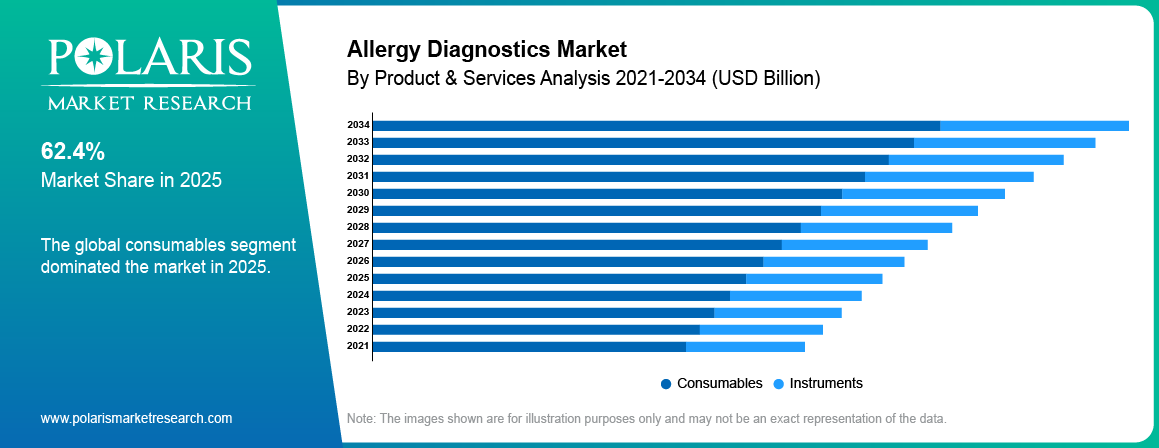
- The Consumables segment held the largest share of 62.4% in 2025. The segment’s growth is driven by the increasing prevalence of allergies such as inhaled and food allergies.
- The Inhaled Allergens segment held the largest share of 48.7% in 2025. The dominance is driven by the increasing prevalence of respiratory allergies due to industrialization and air pollution.
- The In Vivo segment is expected to witness the fastest growth at a 11.8% CAGR. The rising demand for point-of-care testing drives the segment’s growth.
Note: Figures and projections outlined in this report are the result of Polaris Market Research’s proprietary analytical processes, grounded in the latest available datasets and market observations.
Allergy Diagnostics Market size was valued at USD 6.94 billion in 2025. The market is anticipated to grow from USD 7.71 billion in 2026 to USD 18.26 billion by 2034, exhibiting the CAGR of 11.36% during the forecast period.
Industry Dynamics
- Advancements in biologic therapies targeting specific immune pathways are shaping the market landscape.
- The allergy testing market is driven by the integration of digital health solutions for remote monitoring and management of allergies.
- The emphasis on patient-centric care is another factor driving growth and creating opportunities.
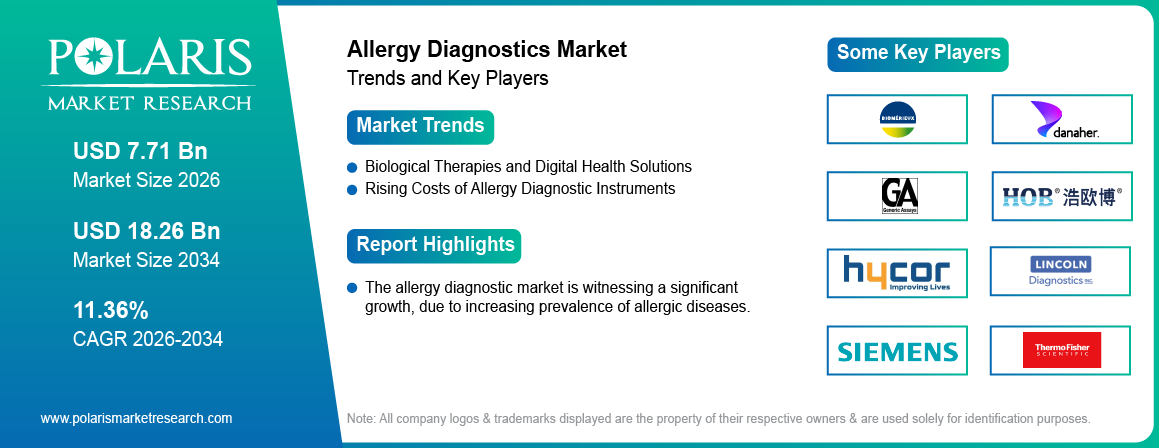
- Rising costs of allergy diagnostic instruments may present market challenges.
AI Impact on Allergy Diagnostics Market
- The use of AI helps in improving the diagnosis of cancer through the analysis of medical imaging, genomics, and biomarkers with greater efficiency and accuracy.
- The use of AI helps in early detection of cancer because it can help in identifying the patterns of disease which could have been missed by conventional methods.
- AI helps doctors in diagnosing and treating cancer patients by predicting the progress and response to treatment.
- AI makes diagnosis and treatment efficient by making real time analysis of data.
Source: Polaris Market Research Analysis
To Understand More About this Research:Download Sample Report
Allergy Diagnostics in Simple Terms
Allergy diagnostics are medical tests that are performed by health professionals in order to find out what substance causes allergic reactions in people. These tests measure the response of the immune system to different kinds of allergens, such as pollens, foods, dust, drugs, or insect stings. The results allow doctors to diagnose the condition correctly, provide proper treatment, and give advice on how to avoid allergy triggers.
How Allergy Diagnostics Work?
Medical History Evaluation: This step involves a discussion regarding the patient’s symptoms, medical history, and any potential exposure to allergens in order to pinpoint the cause of an allergic reaction.
Allergy Test: Depending on the patient’s condition, the physician performs either skin testing or a blood test in order to determine the body’s reaction to potential allergens.
Immune System Response Assessment: In this case, the body’s reaction to a certain substance is assessed in terms of a skin reaction or the detection of allergy antibodies (such as IgE)
Identifying Allergens: Based on the outcome, the health care provider can find out what substances trigger the immune system response, and what can be food, pollen, dust mites, medications, or another allergen.
Treatment Plan: Based on the results obtained during the test, appropriate treatment, preventive measures, or even immunotherapy can be recommended to the patient.
Growth Drivers
Digital Health and Precision Allergy Diagnostics
Innovation is propelled by advancements in biologic therapies targeting specific immune pathways and the integration of digital health solutions for remote monitoring and management of allergies. These developments are revolutionizing allergy diagnosis and treatment approaches.
For instance, in April 2023, Novartis announced that US FDA has approved for Xolair (omalizumab) to decrease allergic reactions including anaphylaxis, from accidental food exposure in adults and pediatric patients aged 1 year and older with IgE mediated food allergy.
Advancing Allergy Diagnostics Through Patient Centric Care Models
The emphasis on patient-centric care highlights the significance of early diagnosis, proactive management and better patient outcomes in treating allergic reactions. Providers prioritize user-friendly, patient-centric testing solutions to enhance accessibility and compliance with allergy assessments aiming to improve patient outcomes and expand market share.
For instance, LabCorp launched and online portal allowing patients to schedule allergy testing, access results and track allergies, empowering them with health data for proactive allergy management.
Pediatric Allergy Diagnostics Growth
There is a rising demand for allergy testing among children due to increasing cases of food allergies, asthma, eczema, and allergic rhinitis among kids. The causes of childhood allergies include genetics, environment, diet, and urbanization. Early detection helps the health practitioner identify the allergen and recommend appropriate treatment and management. This helps avoid serious allergic responses. The demand for pediatric allergy tests is expected to continue rising as more people become aware of the prevalence of childhood allergies.
Advancement in Molecular Allergy Testing
Molecular allergy tests can assist doctors in diagnosing allergies by analyzing the specific protein that causes the reaction rather than performing whole allergen extract tests. It allows healthcare professionals to differentiate between allergens, detect cross-reactions, and obtain more detailed information about a patient’s allergy profile. Additionally, this diagnostic tool is very useful for making appropriate medical decisions and for evaluating the risk of developing severe allergies. Furthermore, molecular allergy tests can help physicians choose which patients should be prescribed immunotherapy against specific allergens.
Rise of Home Allergy Testing Kits
Home allergy testing kits have become more prevalent, with individuals seeking a quick way to check their susceptibility to certain types of allergies. The kits generally allow individuals to collect their own blood samples from the comfort of their homes before sending them to the laboratory for analysis. Although these test kits cannot substitute for professional diagnosis, they provide useful preliminary data that can motivate individuals to visit their physician for a consultation if necessary. Awareness of allergic diseases, greater use of home healthcare services, and innovations in diagnostic technologies are among the factors contributing to increased use of home allergy test kits.
In Vitro vs In Vivo Allergy Diagnostics
| Factor | In Vitro Allergy Diagnostics | In Vivo Allergy Testing |
| Testing Procedure | Blood test analysis | Skin testing |
| Type of Sample Used | Blood | Skin exposure |
| Time to Get Results | Laboratory procedure | Fast results |
| Safety | Safe for people at high risk | Necessitates actual exposure to allergens under medical guidance |
| Accuracy | Good accuracy for various allergens | Commonly used for proving allergic reaction |
| Appropriate For | People with severe allergies, skin problems, or taking medications | People who need fast clinical allergy testing |
Source: Polaris Market Research Analysis
Allergy Diagnostics Market Restraints and Challenges
High Cost of Allergy Diagnostic Instruments and Testing Platforms
Costs for allergy diagnostic instruments are on the rise owing to the financial challenges for healthcare providers. Cost of high-class instruments like chemistry analyzer, hemodialyzers, chromatography equipment is very high, so return on investment takes longer years to recover. These increased expenses necessitate careful budgeting and resource allocation strategies.
Source: Polaris Market Research Analysis
Environmental Drivers of Allergies
Environmental factors are responsible for the rising incidence of allergies worldwide. Rising air pollution, climate change, increased urbanization, and extended exposure to pollen are causing people to come into contact with more allergens and airborne pollutants. Moreover, indoor allergens, such as dust mites, mold, and animal dander, as well as poor indoor air quality, are also considered responsible for the onset of allergic diseases. Furthermore, weather patterns may contribute to higher pollen levels and, hence, longer allergy seasons. With continued public exposure to such environmental factors, the need for reliable allergy diagnosis will become increasingly important.
Report Segmentation
The market is primarily segmented based on product & services, allergen type, test type, end user, and region.
| By Product & Services | By Allergen Type | By Test Type | By Region |
|
|
|
|
Source: Polaris Market Research Analysis
By Product & Services Analysis
Consumables Segment is Expected to Witness the Largest Share During the Forecast Period
The consumables segment held the largest share in the allergy diagnostics market driven by the increasing prevalence of allergies such as inhaled and food allergies. It is also driven by demand for rapid testing to detect allergic disorders.
Meanwhile, the instruments segment including testing platforms is expected to experience significant growth, driven by increasing demand for accurate allergy testing and comprehensive diagnosis and management of allergies. For instance, Metropolis Healthcare Limited (India) launched a new allergy testing platform based on Component Resolved Diagnostics (CRD) for India’s population for easy allergy diagnosis.
By Allergen Type Analysis
Inhaled Allergens Segment Accounted for the Largest Market Share in 2025
The inhaled allergens segment held the largest revenue share. The dominance is driven by the increasing respiratory allergies to the industrialization and air pollution. According to the Allergy and Asthma Foundation of America, seasonal allergic rhinitis affects 81 million Americans, including roughly 26% (67 million) and 19% (14 million) adults and minors respectively, with growth expected, offering future market opportunities. Furthermore, the food allergens are projected to experience the highest growth rate (CAGR) due the rising prevalence of food allergies, particularly in children and demand for accurate and early diagnosis.
By Test Type Analysis
In Vitro Test Segment Held The Significant Market Revenue Share in 2025
The in vitro test segment held a significant market share. This is primarily due to its ability in detecting allergen specific IgE. Serum IgE offers superior predictive value for aeroallergen sensitization. According Food Allergy Research and Education’s 2022 statistics, food allergy rates are rising globally, with an estimated 2.8 million Americans projected to have egg allergy and 2.5 million by wheat allergy.
Moreover, the in vivo segment is expected to have fastest growth rate in 2023 attributed to the factors such as rising demand for point-of-care testing and increasing awareness about allergic symptoms. For instance, in June 2023, Alkem Laboratories introduced the “Stop Sneeze to Wheeze” campaign during World Allergy Week 2023 to raise awareness about the co-existence of allergic rhinitis and asthma.
Use Cases of Allergy Diagnostics
| Use Case | Benefit |
| Food Allergies Detection | Determines food causing allergies, especially among kids and adults who suffer from food sensitivity. |
| Seasonal Allergies Detection | Detects allergies that are caused by pollens, grasses, mold, and other airborne substances. |
| Asthma Triggers Determination | Serves to find allergens contributing to the development of asthma. |
| Drug Allergies Testing | Detects allergies to drugs before commencing any treatment. |
| Skin and Eczema Management | Serves to detect allergens contributing to eczema and skin irritation. |
| Hospital Allergy Testing | Helps to diagnose the problem prior to carrying out hospital procedures. |
| Occupational Allergy Testing | Finds allergens in the workplace that affect employee health. |
| Pre-surgery Allergy Test | Helps to determine allergies to any medication or materials to be used during surgery. |
Source: Polaris Market Research Analysis
Source: Polaris Market Research Analysis
Regional Insights
North America Region Registered the Largest Share of the Global Market in 2025
The North America region held the dominant share in 2025. According to the research by the Asthma and Allergy Foundation of America, allergies rank as the 6th most common chronic ailment in U.S., impacting nearly 50 million individuals annually. As medication related fatalities rise, there is a growing demand for swift and precise allergy diagnostics. The prevalence of skin allergies, particularly eczema and skin inflammation among Black Americans along with the high incidence of allergic rhinitis will propel the expansion of allergy diagnostics market in U.S.
The Asia Pacific region is expected for a fastest growth rate in 2025, driven by factors such as healthcare reforms and expanding infrastructure. Increasing population, allergy rates and local company entries further fuel market expansion. Additionally, Japan, China and India are significant markets in this region projected to drive regional market share. Key players in these countries are implementing strategic initiatives to strengthen their market presence. For instance, in October 2022, Siemen’s Healthineers division into two regions (China and the rest of Asia Pacific) to optimize regional potential.
Source: Polaris Market Research Analysis
Key Market Players & Competitive Insights
Strategic Partnerships to Drive the Competition
The Allergy Diagnostics market is intensely competitive with market players engaging in strategic collaborations, new product launches, acquisitions, technological innovations, and regional expansion efforts. For instance, in October 2023, Astria Therapeutics, announced a licensing deal with the Inchon’s Science, centering on the OX40 portfolio. The agreement specifically targets the development of STAR-0310 for potential treatments of atopic dermatitis (AD) & immunological disorders.
Some of the major players operating in the global market include:
- Astra Biotech GmbH (Germany)
- bioMérieux SA (France)
- Danaher (US)
- GA Generic Assays GmbH (Germany)
- HOB Biotech Group Corp., Ltd. (China)
- HYCOR Biomedical (US)
- INDOOR Biotechnologies, Inc. (India)
- Lincoln Diagnostics, Inc. (US)
- Minaris Medical America, Inc. (US)
- Omega Diagnostics Group PLC (US)
- R-Biopharm AG (Germany)
- ROXALL Medizin GmbH (Germany)
- Siemens (Germany)
- Thermo Fisher Scientific (US)
Future Outlook
The market for allergy diagnostics is anticipated to experience consistent growth in the coming years due to the rising incidence of allergic diseases around the globe. Heightened awareness concerning the significance of early diagnosis, coupled with technological innovations in molecular diagnostics, immunoassays, and component-resolved testing, can enable the development of innovative and more efficient allergy diagnostics technologies. The increasing use of in vitro diagnostics, diagnostic laboratories, and home-testing solutions will facilitate the improvement of allergy diagnostics. The increased focus of healthcare organizations on preventive care and management of allergies is expected to contribute to the rise in the demand for more advanced, rapid, and convenient allergy diagnostics technologies.
Recent Developments in the Industry
- March 2026: Novartis announced an agreement for the acquisition of Excellergy, Inc., a biotech firm developing next-generation anti-IgE therapies for IgE-driven diseases. The company stated that the proposed acquisition will add Exl-111, a half-life extended, high-affinity anti-IgE antibody in Phase 1.(source: novartis.com)
- January 2026: GSK announced the acquisition of California-based RAPT Therapeutics. The company stated that the acquisition brings ozureprubart, a long-acting anti-IgE monoclonal antibody in Phase IIb development for food allergies, into GSK's immunology pipeline.(source: gsk.com)
Report Coverage
The Allergy Diagnostics market report emphasizes on key regions across the globe to provide better understanding of the product to the users. Also, the report provides market insights into recent developments, trends and analyzes the technologies that are gaining traction around the globe. Furthermore, the report covers in-depth qualitative analysis pertaining to various paradigm shifts associated with the transformation of these solutions.
The report provides detailed analysis of the market while focusing on various key aspects such as competitive analysis, product & services, allergen type, test type end user, and their futuristic growth opportunities.
Allergy Diagnostics Market Report Scope and Segmentation
| Report Attributes | Details |
| Market size value in 2025 | USD 6.94 billion |
| Market size value in 2026 | USD 7.71 billion |
| Revenue forecast in 2034 | USD 18.26 billion |
| CAGR | 11.36% from 2026 – 2034 |
| Base year | 2025 |
| Historical data | 2021 – 2024 |
| Forecast period | 2026 – 2034 |
| Quantitative units | Revenue in USD billion and CAGR from 2026 to 2034 |
| Segments covered |
|
| Regional scope |
|
| Competitive Landscape |
|
| Report Format |
|
| Customization | Report customization as per your requirements with respect to countries, region, and segmentation. |
Source: Polaris Market Research Analysis
Allergy Diagnostics Market Frequently Asked Questions
The key companies in Allergy Diagnostics Market are Astra Biotech GmbH, bioMérieux, Danaher
Allergy Diagnostics Market exhibiting the CAGR of 11.36% during the forecast period.
Allergy Diagnostics Market report covering key segments are product & services, allergen type, test type end user, and region.
The key driving factors in Allergy Diagnostics Market are Biological therapies and digital health solutions drive allergy diagnostics market
Allergy Diagnostics Market Size Worth $ 18.26 Billion By 2034
The major types of allergy diagnostic tests are skin tests and blood tests. Skin prick test diagnostics help in detecting the immediate type of allergic reaction, whereas blood tests determine allergy-specific antibodies, such as specific IgE, to detect allergens.
Allergy diagnostics play an essential role in identifying the exact allergens causing allergies. It helps healthcare professionals in providing proper treatments and avoiding any allergy triggers.
Several factors are driving the demand for allergy diagnostics. These include the increasing prevalence rate of allergies, increased awareness about early diagnosis of allergies, advances in diagnostic technologies, and improvement in healthcare facilities.
Download Sample Report of Allergy Diagnostics Market
Please fill out the form to request a customized copy of the research report.


