
Cancer or Tumor Profiling Market Size, Trends, Industry Analysis Report, 2026-2034
REPORT DETAILS
Cancer or Tumor Profiling Market Size and Growth Outlook
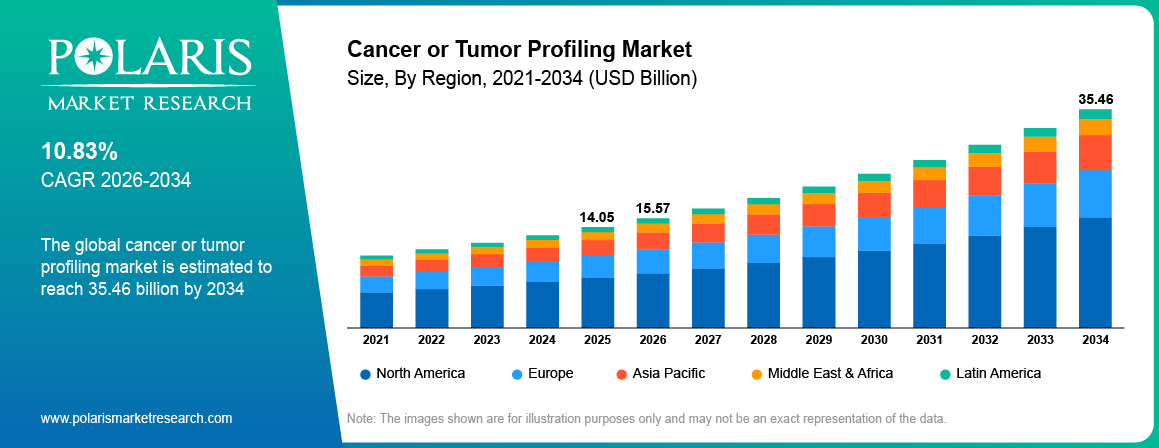
The cancer or tumor profiling market size was valued at USD 14.05 billion in 2025. The market is projected to grow from USD 15.57 billion in 2026 to USD 35.46 billion by 2034, exhibiting a CAGR of 10.83% during 2026–2034.
Market Statistics
Key Takeaways
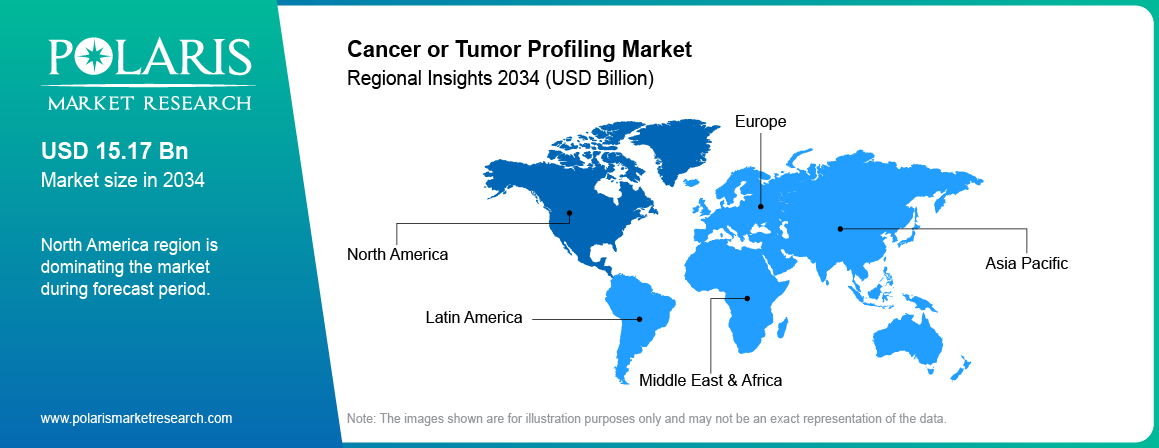
- North America held the largest share of 42.8% in 2025. The dominance is attributed to high adoption of precision medicine, advanced genomic testing infrastructure, and rising investments in cancer research.
- Asia Pacific is expected to register the highest CAGR of 12.6% during the forecast period. Growth is driven by the increasing cancer prevalence, expanding healthcare infrastructure, and rising adoption of molecular diagnostics.
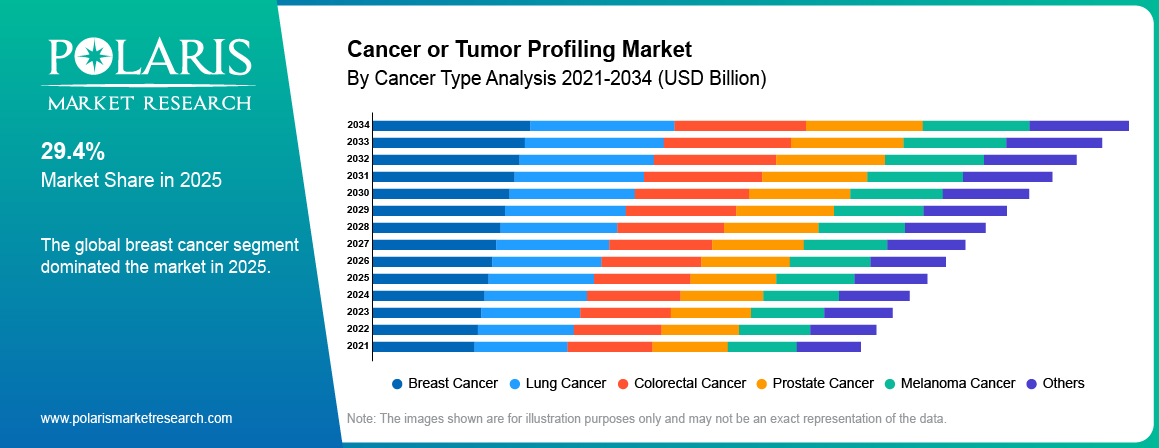
- The Breast Cancer segment dominated the market with a 29.4% revenue share in 2025. Increasing disease awareness, established screening programs, and continuous advancements in targeted therapies support the segment's leadership.
- In 2025, the Next-Generation Sequencing (NGS) segment accounted for 38.7% of the market revenue. The growing use of NGS in comprehensive genomic profiling and clinical oncology research continues to accelerate segment expansion.
- By technique, the Genomics segment held the largest revenue share of 46.2% in 2025, supported by widespread adoption of genomic sequencing, biomarker identification, and precision oncology initiatives.
- The Personalized Medicine application segment dominated the market by accounting for 41.5% of the total revenue in 2025. Rising investments in precision oncology, companion diagnostics, and individualized treatment strategies continue to strengthen segment growth.
Note: Figures and projections outlined in this report are the result of Polaris Market Research’s proprietary analytical processes, grounded in the latest available datasets and market observations.
Cancer Tumor Profiling in Simple Terms
The Cancer Tumor Profiling test is used to identify the special attributes of the cancer tumor. The purpose of this test is to understand the genetic modifications of cancerous cells. Using this information, appropriate treatment can be selected for patients. Use of this technique improves precision and treatment outcomes
Cancer or Tumor Profiling Market Drivers, Opportunities and Challenges
- Rising integration of liquid biopsy in cancer diagnostics drives the growth of the cancer or tumor profiling industry.
- Increasing role of next-generation sequencing (NGS) is propelling the growth of the market.
- High cost of profiling technologies hinders the growth of the market.
- Growing adoption of artificial intelligence (AI) in tumor profiling is expected to create lucrative market opportunities.
- Rising investments in cancer research and development would become a key market trend in the coming year.
Source: Polaris Market Research Analysis
To Understand More About this Research: Download Sample Report
Artificial Intelligence in Cancer Profiling
- Artificial Intelligence tools are used to analyze complex genomic datasets. It helps identify actionable mutations and biomarkers.
- By using artificial intelligence, clinicians can recognize the patterns of molecular structures associated with particular types of cancer and how they develop.
- AI tools allow for faster data analysis. It allows for more rapid detection of cancer.
- They are used by clinicians to predict the effectiveness of treatment, risks of disease recurrence, and resistance to drugs.
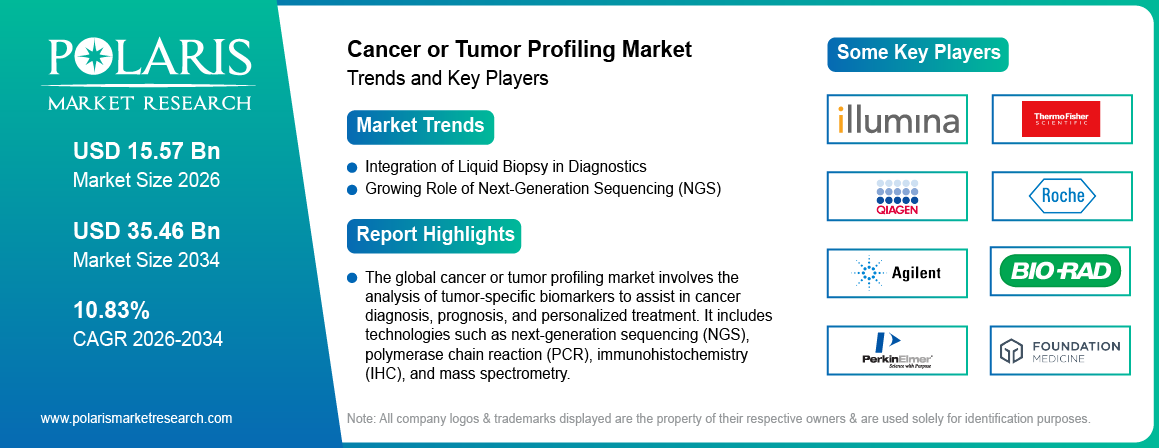
The global cancer or tumor profiling market involves the analysis of tumor-specific biomarkers to assist in cancer diagnosis, prognosis, and personalized treatment. It includes technologies such as next-generation sequencing (NGS), polymerase chain reaction (PCR), immunohistochemistry (IHC), and mass spectrometry. Key drivers for market growth include the increasing prevalence of cancer worldwide, advancements in precision medicine, and growing investments in oncology research. Trends such as the adoption of liquid biopsy techniques and the integration of artificial intelligence (AI) in cancer diagnostics are further propelling market expansion. Additionally, regulatory approvals for novel diagnostics and rising demand for biomarker discovery support the cancer or tumor profiling market development.
Traditional Cancer Treatment vs. Precision Oncology
| Factor | Traditional Cancer Treatment | Precision Oncology |
| Approach | Follows standardized treatment protocols for patients with the same cancer type. | Delivers individualized treatment based on each patient's tumor biology and molecular profile. |
| Testing | Uses limited molecular analysis with imaging, pathology, and basic biomarker tests. | Employs advanced genomic profiling, next-generation sequencing (NGS), and comprehensive biomarker analysis. |
| Therapy Selection | Selects chemotherapy, radiation, or surgery primarily according to cancer type and stage. | Chooses targeted therapies or immunotherapies based on actionable gene mutations and biomarkers. |
| Outcome Goal | Focuses on controlling disease progression, reducing symptoms, and extending survival. | Aims to maximize treatment effectiveness, improve response rates, and reduce unnecessary or ineffective treatments. |
Source: Polaris Market Research Analysis
How Cancer or Tumor Profiling Works
The structured workflow is designed for cancer or tumor profiling. It helps identify the molecular characteristics of a tumor. The process supports precision oncology treatment decisions.
| Step No. | Step | Process | Purpose |
| 1. | Cancer Sample Collection | Tumor tissue or blood (liquid biopsy) samples are collected from the patient. | Biological material for molecular analysis is provided. |
| 2. | DNA/RNA Extraction | Isolation of genetic material from the collected sample. | High-quality DNA and/or RNA is obtained for downstream testing. |
| 3. | Genomic Sequencing/Testing | genetic alterations are analyzed using NGS, PCR, or other molecular assays. | Mutations, gene fusions, copy number variations, and other genomic changes are detected. |
| 4. | Mutation and Biomarker Analysis | Identified genomic alterations and biomarkers are interpreted using clinical databases and bioinformatics tools. | Determines clinically actionable mutations and relevant biomarkers for therapy selection. |
| 5. | Treatment Recommendation | Results, clinical guidelines, and patient history are reviewed. | Targeted therapies, immunotherapies, or other appropriate treatment options are recommended. |
| 6. | Personalized Therapy Selection | Physicians choose and make an individualized treatment plan using profiling results. | It enhances treatment precision and improves outcomes. This also supports personalized oncology care.Cancer or Tumor Profiling Market Dynamics |
Source: Polaris Market Research Analysis
Cancer or Tumor Profiling Market Dynamics
Integration of Liquid Biopsy in Diagnostics
The adoption of liquid biopsy is transforming cancer profiling by enabling minimally invasive diagnostics and monitoring. Liquid biopsies analyze circulating tumor DNA (ctDNA), RNA, and exosomes in blood samples, providing insights into tumor heterogeneity and genetic mutations without the need for tissue samples. According to a study published in Nature Reviews Clinical Oncology, liquid biopsy techniques can detect actionable mutations in up to 70% of advanced cancer cases. Integration of liquid biopsy is gaining traction due to its ability to improve early detection, track treatment responses, and identify resistance mechanisms, thereby facilitating personalized therapy strategies.
Growing Role of Next-Generation Sequencing (NGS)
Next-generation sequencing (NGS) is emerging as a cornerstone technology in cancer profiling due to its capacity to provide comprehensive genomic information. NGS enables the simultaneous analysis of multiple genes, identifying mutations, gene fusions, and other alterations that drive tumor progression. Reports from the American Cancer Society indicate that NGS-based tests are increasingly used for actionable mutation detection, with over 55% of oncologists in the US utilizing these tests to guide targeted therapies. This trend is supported by decreasing costs of sequencing technologies and increasing regulatory approvals for NGS-based diagnostic assays.
Adoption of Artificial Intelligence (AI) in Tumor Profiling
Artificial intelligence (AI) is being extensively integrated into cancer profiling to enhance diagnostic accuracy and data analysis. AI algorithms can analyze large datasets, including genomic, transcriptomic, and proteomic profiles, to identify patterns and biomarkers with high precision. A report from the Journal of the American Medical Association (JAMA) highlights that AI-powered tools can reduce diagnostic errors by up to 30% in cancer profiling. Furthermore, AI applications are improving the efficiency of drug discovery processes by identifying potential therapeutic targets, a development expected to drive further adoption of AI in this domain.
Role of Tumor Profiling in Cancer Immunotherapy
Tumor profiling has become a key process to make effective immunotherapy decisions. Oncologists use molecular information to determine which patients will be the best candidates for treatment through the use of checkpoint inhibitors and other immunotherapies. Profiling tools enable the analysis of the tumor immune microenvironment. This allows the right patients to be selected for certain treatments.
Key applications include:
- PD-L1 expression testing – Identifies patients likely to benefit from PD-1/PD-L1 checkpoint inhibitor therapy
- Tumor mutation burden (TMB) analysis – Assesses the number of mutations within a tumor to predict immunotherapy response
- Immune biomarker identification – Detects markers such as microsatellite instability (MSI) and mismatch repair deficiency (MMR)
- Patient stratification for immuno-oncology trials – Supports enrollment criteria in clinical trials evaluating novel immunotherapies
- Treatment personalization – Combines genomic and immune profiling to tailor combination therapy regimens
As immuno-oncology pipelines expand, demand for profiling assays capable of delivering immune-relevant biomarkers alongside standard genomic data is expected to grow.
Companion Diagnostics & Drug Development Applications
Tumor profiling is becoming a core part of drug development pipelines of pharma companies, mostly in terms of companion diagnostics (CDx), which consists of the combination of a particular test and a targeted therapy. Tumor profiling is used in target identification in the early stages of drug discovery. Pharmaceutical companies use this to stratify patients in clinical trials.
In oncology, companion diagnostics have now become the norm where patients are matched with the most suitable treatment based on the molecular profile of their tumors. Such an approach speeds up clinical trials, increases the chances of success in those trials, and helps secure regulatory approval.
Continued collaboration of profiling companies and pharma companies continues to define this space. With more immuno-oncology drugs progressing into advanced development stages, the demand for profiling solutions that can enable CDx development is only set to increase.
Source: Polaris Market Research Analysis
Cancer or Tumor Profiling Market Segment Insights
Cancer or Tumor Profiling Market Outlook – Cancer Type-Based Insights
The cancer or tumor profiling market, by cancer type, is segmented into breast cancer, lung cancer, colorectal cancer, prostate cancer, melanoma cancer, and others. The breast cancer segment holds the largest market share due to its high prevalence and the availability of advanced diagnostic tools tailored to this cancer type. According to data from the World Health Organization (WHO), breast cancer is the most commonly diagnosed cancer worldwide, with over 2.3 million new cases annually. Profiling techniques such as immunohistochemistry (IHC) and next-generation sequencing (NGS) are widely adopted for identifying hormone receptor status and genetic mutations, which are critical for guiding personalized treatment plans. Continuous advancements in biomarker discovery, such as HER2 and BRCA mutation testing, further drive the demand for breast cancer profiling.
The lung cancer segment is registering the highest growth rate in the market, driven by the increasing focus on precision oncology and the adoption of advanced profiling technologies. The American Cancer Society highlights that lung cancer accounts for nearly 25% of cancer-related deaths globally, underscoring the urgent need for accurate diagnostic and prognostic tools. Tumor profiling in lung cancer frequently involves liquid biopsies and NGS to detect actionable mutations such as EGFR, ALK, and KRAS, which are pivotal for targeted therapies. The rising implementation of molecular profiling programs and growing awareness of personalized treatment options contribute significantly to the growth of this segment.
Cancer or Tumor Profiling Market Assessment – Technology-Based Insights
The cancer or tumor profiling market, by technology, is segmented into next-generation sequencing (NGS), polymerase chain reaction (PCR), immunohistochemistry (IHC), in-situ hybridization (ISH), microarray, and others. The next-generation sequencing (NGS) segment holds the largest share of the market due to its ability to provide comprehensive genomic insights, enabling precision medicine in oncology. NGS technology is widely adopted for detecting mutations, gene fusions, and other genetic alterations across various cancer types. It supports the development of targeted therapies by offering a high-throughput platform for analyzing tumor heterogeneity and actionable biomarkers. As per industry estimates, the widespread application of NGS in clinical and research settings is fueled by declining sequencing costs and regulatory approvals for NGS-based diagnostic assays, driving its dominance in the market.
The polymerase chain reaction (PCR) segment is registering the highest growth rate in the cancer or tumor profiling market, supported by its versatility, speed, and cost-effectiveness. PCR is frequently used for detecting specific genetic mutations, amplifying DNA samples, and monitoring treatment responses in cancer patients. Technological advancements, such as real-time PCR and digital PCR, have enhanced the precision and sensitivity of tumor profiling applications. Additionally, its compatibility with liquid biopsy samples has expanded its adoption, particularly in detecting circulating tumor DNA (ctDNA) for noninvasive cancer diagnostics. These attributes, combined with increasing research initiatives and clinical applications, contribute to the rapid growth of the PCR segment in the cancer profiling market.
Cancer or Tumor Profiling Market by Technique: Genomics, Proteomics, Epigenetics and Metabolomics
The cancer or tumor profiling market, by technique, is segmented into genomics, proteomics, epigenetics, and metabolomics. The genomics segment dominates the market, holding the largest market share due to its pivotal role in identifying genetic mutations, structural variations, and gene expression patterns associated with cancer. Genomic profiling enables the identification of actionable mutations that guide targeted therapies and immunotherapies, making it integral to precision oncology. The increasing adoption of technologies such as next-generation sequencing (NGS) and advancements in bioinformatics tools further drive its demand. According to the National Cancer Institute, genomic techniques are widely utilized in both research and clinical settings to improve diagnostic accuracy and treatment outcomes, solidifying its position as the leading segment.
The epigenetics segment is experiencing the highest growth rate in the cancer or tumor profiling market, fueled by its emerging significance in understanding cancer development and progression. Epigenetic profiling focuses on modifications such as DNA methylation, histone acetylation, and chromatin remodeling, which are key regulators of gene expression in cancer. The growing availability of advanced tools, such as methylation arrays and CRISPR-based editing, enhances the precision of epigenetic studies. Additionally, epigenetic biomarkers are increasingly being incorporated into diagnostic assays and therapeutic strategies, particularly in cancers with limited genomic mutations. This expanding scope of application is driving the rapid growth of the epigenetics segment.
Cancer or Tumor Profiling Market by Application: Personalized Medicine, Diagnostics and Biomarker Discovery
The cancer or tumor profiling market, by application, is segmented into personalized medicine, diagnostics, biomarker discovery, prognostics, and others. The personalized medicine segment holds the largest share of the market, as it plays a critical role in tailoring treatments based on an individual’s genetic and molecular profile. Advances in profiling technologies, such as next-generation sequencing (NGS) and liquid biopsy, have enhanced the precision of personalized treatment strategies. Personalized medicine enables the identification of actionable biomarkers and drug targets, facilitating the selection of therapies with optimal efficacy and minimal side effects. Studies from the National Institutes of Health (NIH) indicate that over 70% of oncology drugs approved in recent years are aligned with personalized approaches, underscoring its widespread adoption and significance in cancer management.
The biomarker discovery segment is registering the highest growth in the cancer or tumor profiling market, driven by the increasing focus on identifying novel biomarkers for early cancer detection, prognosis, and therapy selection. The integration of multi-omics approaches, including genomics, proteomics, and epigenetics, is accelerating the identification of potential biomarkers across diverse cancer types. Furthermore, advancements in data analytics and artificial intelligence (AI) tools have improved the ability to analyze complex datasets, expediting the biomarker discovery process. This growth is supported by rising investments in oncology research and the growing emphasis on developing noninvasive diagnostic assays based on biomarkers, boosting the prominence of this segment.
Applications of Cancer or Tumor Profiling
| Application | Description |
| Identifying Cancer-Driving Mutations | Cancer profiling involves detecting genetic alterations, such as driver mutations and gene fusions. It is responsible for tumor initiation and progression. This enables accurate molecular diagnosis. |
| Selecting Targeted Cancer Therapies | These treatment options are designed based on certain biomarkers and genetic modifications. It enhances the efficiency of treatment. Targeted cancer treatment helps in avoiding unnecessary treatments. |
| Guiding Immunotherapy Decisions | Biomarkers such as PD-L1 status, tumor mutation burden (TMB) and MSI status are evaluated to determine eligibility for immunotherapy. |
| Monitoring Treatment Response | Genomic profiling and liquid biopsy technologies monitor treatment effectiveness. They identify emerging resistance and support therapy adjustments over time. |
| Developing Personalized Oncology Treatments | Integration of genomic, transcriptomic, and proteomic data assists in designing personalized treatment strategies based on each patient's tumor biology. |
Source: Polaris Market Research Analysis
Source: Polaris Market Research Analysis
Cancer or Tumor Profiling Market Regional Analysis
By region, the study provides cancer or tumor profiling market insights into North America, Europe, Asia Pacific, Latin America, and the Middle East & Africa. North America holds the largest market share owing to advanced healthcare infrastructure, high adoption of precision medicine, and significant investments in cancer research. The region benefits from the presence of leading biotechnology and pharmaceutical companies, coupled with extensive clinical trial activities and regulatory support for innovative diagnostic technologies. The increasing prevalence of cancer, with the American Cancer Society estimating over 1.9 million new cases in the US annually, further drives the demand for profiling technologies. Additionally, robust government initiatives and reimbursement policies for genomic and biomarker-based diagnostics contribute to the dominance of North America in the market.
Europe represents a significant market for cancer or tumor profiling, driven by the increasing prevalence of cancer and the adoption of advanced diagnostic technologies. Countries such as Germany, the UK, and France are leading in this region due to strong investments in biotechnology research and the presence of key market players. The European Union’s emphasis on precision medicine initiatives and regulatory frameworks supporting biomarker-based diagnostics further enhance market growth. Additionally, collaborative efforts such as Horizon Europe are propelling advancements in cancer profiling through cross-border research and innovation.
The Asia Pacific cancer or tumor profiling market is experiencing rapid growth, fueled by the rising cancer burden and increasing awareness of personalized medicine. Countries such as China, Japan, and India are at the forefront, with expanding healthcare infrastructure and growing investments in genomic research. Government initiatives such as China’s Precision Medicine Initiative and Japan’s focus on genomic medicine are driving the adoption of tumor profiling technologies. Moreover, the region's large population and improving access to advanced diagnostics are contributing to the growing demand for cancer profiling solutions.
Source: Polaris Market Research Analysis
Cancer or Tumor Profiling Market Competitive Landscape and Company Positioning
Illumina, Thermo Fisher Scientific, Qiagen, F. Hoffmann-La Roche, Agilent Technologies, Bio-Rad Laboratories, PerkinElmer, Foundation Medicine (a Roche subsidiary), Guardant Health, NeoGenomics Laboratories, Pacific Biosciences, Personalis, GRAIL (a subsidiary of Illumina), Invitae, and Genomic Health (a subsidiary of Exact Sciences) are a few key players active in the cancer or tumor profiling market. These companies are at the forefront of developing technologies and platforms such as next-generation sequencing, polymerase chain reaction, and liquid biopsy solutions to address the growing demand for precision oncology tools.
The competitive landscape is marked by significant investments in R&D, with players focusing on technological innovation and the development of robust diagnostic and therapeutic solutions. Companies such as Illumina and Thermo Fisher Scientific maintain strong market positions due to their extensive portfolios of sequencing platforms and bioinformatics tools. Roche, through Foundation Medicine, and Guardant Health are expanding their offerings in liquid biopsy and comprehensive genomic profiling, addressing the need for minimally invasive diagnostics. Emerging companies such as NeoGenomics and Personalis are enhancing their capabilities in biomarker discovery and oncology-specific services, broadening the market's competitive dynamics.
Insights reveal a growing trend toward strategic collaborations and acquisitions to expand product portfolios and market reach. For example, Illumina’s acquisition of GRAIL emphasizes a focus on early cancer detection using liquid biopsy technologies. Similarly, partnerships between pharmaceutical companies and diagnostic firms are advancing biomarker-based clinical trials and drug development. This competitive environment underscores a shift toward integrated approaches combining genomics, proteomics, and data analytics, aimed at improving patient outcomes through precision medicine.
Illumina is a prominent player in the cancer or tumor profiling market, specializing in next-generation sequencing (NGS) technologies. The company offers a range of sequencing platforms and associated software that enable comprehensive genomic analysis for cancer diagnostics and research. Illumina focuses on advancing precision medicine by providing tools for biomarker discovery and molecular diagnostics.
Thermo Fisher Scientific is a key company in the market, offering a diverse portfolio of technologies, including polymerase chain reaction (PCR), NGS, and mass spectrometry, for cancer profiling. The company is actively involved in enhancing its oncology diagnostics and research capabilities.
List of Key Companies in Cancer or Tumor Profiling Market
- Illumina
- Thermo Fisher Scientific
- Qiagen
- F. Hoffmann-La Roche
- Agilent Technologies
- Bio-Rad Laboratories
- PerkinElmer
- Foundation Medicine (a Roche subsidiary)
- Guardant Health
- NeoGenomics Laboratories
- Pacific Biosciences
- Personalis
- GRAIL (a subsidiary of Illumina)
- Invitae
- Genomic Health (a subsidiary of Exact Sciences)
Cancer Tumor Profiling Ecosystem
The cancer tumor profiling market operates through a connected ecosystem of stakeholders spanning clinical care, diagnostics, and research:
| Stakeholder | Role in the Ecosystem |
| Oncologists | Order profiling tests and apply results to treatment decisions |
| Pathologists | Interpret molecular and histological findings from profiling assays |
| Diagnostic laboratories | Perform NGS, PCR, IHC, and other profiling tests |
| Biotechnology companies | Develop sequencing platforms and profiling technologies |
| Pharmaceutical companies | Use profiling data for drug development and companion diagnostics |
| Research institutions | Advance biomarker discovery and precision oncology research |
Source: Polaris Market Research Analysis
This interconnected network drives innovation across the value chain, from early biomarker discovery through to clinical implementation and treatment personalization.
Cancer or Tumor Profiling Industry Developments
- April 2026: CellCarta signed a global multi-year strategic partnership with Pillar Biosciences. With the deal, the company will expand access to fast, operationally streamlined NGS tumor profiling for clinical research partners and biopharma sponsors across the world.(Source: PRNewswire)
- In October 2024, Illumina announced a collaboration with AstraZeneca to develop advanced NGS-based companion diagnostics, strengthening its position in oncology solutions.
- In September 2024, Thermo Fisher launched its Oncomine Comprehensive Assay Plus, a targeted NGS solution designed to detect key mutations in solid tumors, demonstrating its commitment to expanding diagnostic options in the field of cancer genomics.
Future Outlook of Cancer or Tumor Profiling Market
The cancer tumor profiling industry is expected to grow in the coming years. The growth will be driven by the rising adoption of precision oncology, genomic testing, and personalized cancer therapies. Increasing adoption of NGS, liquid biopsy technologies, and AI-based genomic analysis will boost the market expansion. Expanding biomarker discovery would create lucrative market growth opportunities during the forecast period. Rising cancer research investments and integration of molecular diagnostics into clinical workflows will shape the market’s future.
Cancer or Tumor Profiling Market Segmentation
By Cancer Type Outlook
- Breast Cancer
- Lung Cancer
- Colorectal Cancer
- Prostate Cancer
- Melanoma Cancer
- Others
By Technology Outlook
- Next-Generation Sequencing (NGS)
- Polymerase Chain Reaction (PCR)
- Immunohistochemistry (IHC)
- In-Situ Hybridization (ISH)
- Microarray
- Others
By Technique Outlook
- Genomics
- Proteomics
- Epigenetics
- Metabolomics
By Application Outlook
- Personalized Medicine
- Diagnostics
- Biomarker Discovery
- Prognostics
- Others
By Regional Outlook
- North America
- US
- Canada
- Europe
- Germany
- France
- UK
- Italy
- Spain
- Netherlands
- Russia
- Rest of Europe
- Asia Pacific
- China
- Japan
- India
- Malaysia
- South Korea
- Indonesia
- Australia
- Vietnam
- Rest of Asia Pacific
- Middle East & Africa
- Saudi Arabia
- UAE
- Israel
- South Africa
- Rest of Middle East & Africa
- Latin America
- Mexico
- Brazil
- Argentina
- Rest of Latin America
Cancer or Tumor Profiling Market Report Scope
| Report Attributes | Details |
| Market Size Value in 2025 | USD 14.05 billion |
| Market Size Value in 2026 | USD 15.57 billion |
| Revenue Forecast by 2034 | USD 35.46 billion |
| CAGR | 10.83% from 2026 to 2034 |
| Base Year | 2025 |
| Historical Data | 2021–2024 |
| Forecast Period | 2026–2034 |
| Quantitative Units | Revenue in USD billion and CAGR from 2026 to 2034 |
| Report Coverage | Revenue Forecast, Market Competitive Landscape, Growth Factors, and Trends |
| Segments Covered |
|
| Regional Scope |
|
| Competitive Landscape |
|
| Report Format |
|
| Customization | Report customization as per your requirements with respect to countries, regions, and segmentation. |
Source: Polaris Market Research Analysis
Cancer or Tumor Profiling Market Strategic Insights for Industry Participants
Cancer Profiling Product Innovation, Clinical Adoption and Market Expansion Strategy
The cancer or tumor profiling market has been broadly segmented on the basis of cancer type, technology, technique, and application. Moreover, the study provides the reader with a detailed understanding of the different segments at both the global and regional levels.
Growth/Marketing Strategy
The cancer or tumor profiling market growth and marketing strategies focus on expanding product offerings, strategic partnerships, and technological advancements. Companies are investing heavily in research and development to introduce innovative diagnostic solutions, particularly in next-generation sequencing and liquid biopsy technologies. Collaborations with pharmaceutical firms for companion diagnostics and precision medicine are enhancing market penetration. Additionally, players are increasing their focus on emerging markets in Asia Pacific and Latin America, where rising healthcare access and cancer awareness are fueling demand. Targeted marketing campaigns aimed at educating healthcare professionals and patients about the benefits of personalized cancer treatments are also driving market growth.
Cancer or Tumor Profiling Market FAQs
The global cancer or tumor profiling market size was valued at USD 14.05 billion in 2025 and is projected to grow to USD 35.46 billion by 2034.
The global market is projected to register a CAGR of 10.83% during the forecast period.
North America had the largest share of the global market in 2025.
A few key players active in the cancer or tumor profiling market are Illumina, Thermo Fisher Scientific, Qiagen, F. Hoffmann-La Roche, Agilent Technologies, Bio-Rad Laboratories, PerkinElmer, Foundation Medicine (a Roche subsidiary), Guardant Health, NeoGenomics Laboratories, Pacific Biosciences, Personalis, GRAIL (a subsidiary of Illumina), Invitae, and Genomic Health (a subsidiary of Exact Sciences).
The breast cancer segment accounted for the largest share of the global market in 2025.
The NGS segment accounted for the largest share of the global market in 2025.
Cancer or tumor profiling is a diagnostic process that involves analyzing the genetic, molecular, and biochemical characteristics of cancer cells to better understand their behavior and guide treatment decisions. This profiling typically includes techniques such as next-generation sequencing (NGS), polymerase chain reaction (PCR), and immunohistochemistry (IHC) to identify mutations, gene expressions, and other molecular alterations in the tumor. The goal of cancer profiling is to provide personalized treatment plans based on the specific genetic makeup of the tumor, enabling more effective and targeted therapies, as well as predicting the likely course of the disease.
A few key cancer or tumor profiling market trends are described below: Adoption of Liquid Biopsy: Noninvasive testing through liquid biopsy is gaining traction, allowing for early detection and monitoring of cancer with blood samples. Integration of Artificial Intelligence (AI): AI is being used to enhance data analysis, improve diagnostic accuracy, and predict treatment outcomes by processing complex molecular data. Growth of Next-Generation Sequencing (NGS): NGS technologies continue to advance, enabling more comprehensive and cost-effective genomic profiling for personalized cancer treatment. Focus on Personalized Medicine: There is an increasing emphasis on tailoring cancer treatments based on individual genetic profiles, improving the efficacy of therapies.
A new company entering the cancer or tumor profiling market must focus on developing innovative, cost-effective solutions in liquid biopsy and next-generation sequencing (NGS), as these are key growth areas with strong demand for noninvasive diagnostics and comprehensive genetic analysis. Incorporating artificial intelligence (AI) into data analysis for faster and more accurate decision-making could also provide a competitive edge. Additionally, the company could prioritize personalized medicine by offering targeted diagnostic tools that align with evolving cancer treatments. Expanding into emerging markets with growing healthcare access and forming strategic partnerships with pharmaceutical companies for companion diagnostics could further differentiate the company from competitors.
Companies manufacturing, distributing, or purchasing cancer or tumor profiling and related products, and other consulting firms must buy the report.
Tumor profiling identifies genetic mutations and biomarkers within cancer cells. Clinicians use it to choose targeted therapies. It helps them make effective immunotherapy decisions. The process improves treatment effectiveness.
A few technologies, such as NGS, PCR, FISH, IHC, liquid biopsy, and bioinformatics, are being adopted for cancer tumor profiling.
The personalized treatment plan depends on the molecular changes and biomarkers. Tumor profiling is used to identify the unique biology of cancer tumors. The tumor profiling facilitates a customized treatment approach. In this way, tumor profiling supports personalized medicine in cancer treatment.
Download Sample Report of Cancer or Tumor Profiling Market
Please fill out the form to request a customized copy of the research report.


