
Clinical Trial Patient Recruitment Services Market Size Report, 2026-2034
REPORT DETAILS
Clinical Trial Patient Recruitment Services Market Summary
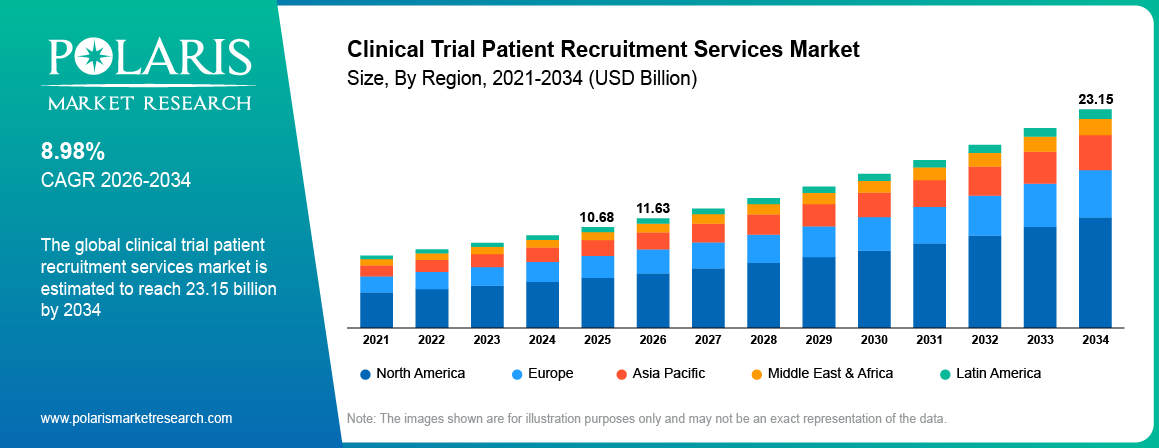
The global clinical trial patient recruitment services market was valued at USD 10.68 billion in 2025. The market is expected to grow at a CAGR of 8.98% from 2026 to 2034. Rising number of global clinical trials and a push for demographic diversity are driving the demand for clinical trial patient recruitment services.
Market Statistics
Key Takeaways
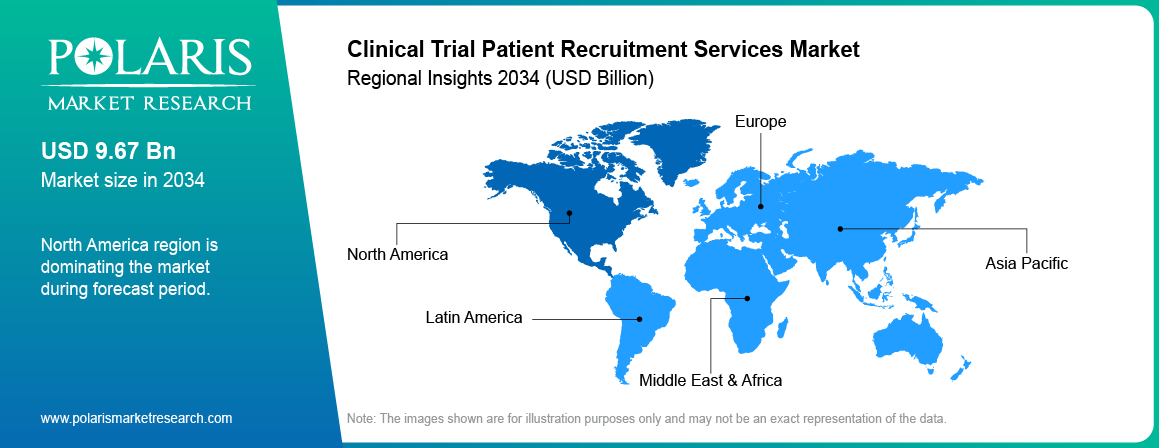
- North America led with nearly 41.80% market share in 2025. Initiatives promoting diversity contribute to the regional dominance.
- Asia Pacific is expected to grow at a CAGR of around 9.70% during the forecast period. Strategic growth in emerging markets like China and India drives the regional market expansion.
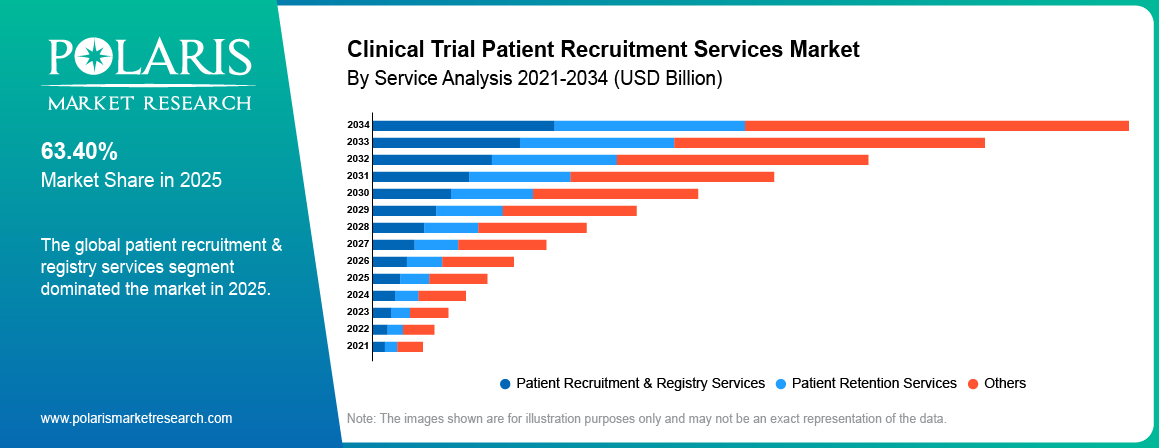
- The patient recruitment & registry services segment accounted for approximately 63.40% market share in 2025. The rising difficulty of identifying qualified participants contributes to the segment's leading position.
- The 18–64 years segment accounted for nearly 58.60% market share in 2025. The rising prevalence of chronic conditions within this age group contributes to the segment's dominance.
- The oncology segment is expected to grow at a CAGR of around 10.20% during the forecast period. The rapid expansion is driven by its strict eligibility criteria
Note: Figures and projections outlined in this report are the result of Polaris Market Research’s proprietary analytical processes, grounded in the latest available datasets and market observations.
Clinical Trial Patient Recruitment Services Market Drivers, Trends and Challenges
- The growing number of clinical trials conducted globally is driving the market for clinical trial patient recruitment services.
- Continuous advancements in digital technologies, including artificial intelligence and wearables, are shaping the market landscape.
- The emphasis on diverse patient groups to adhere to regulations is likely to provide market opportunities.
- Concerns about risks and side effects may pose as market threats.
AI Impact on Clinical Trial Patient Recruitment Services Market
- AI in clinical trial recruitment assists in identifying the right participants by analyzing their electronic medical records and patient eligibility criteria.
- It aids in speeding up the process of recruiting patients by selecting those who fit into clinical trials.
- AI facilitates in enhancing participant involvement through personalized communication and follow-ups.
- It assists in efficient clinical trial planning and forecasting through analytical insights.
Source: Polaris Market Research Analysis
To Understand More About this Research: Download Sample Report
Clinical Trial Patient Recruitment Services Market Definition
The clinical trial patient recruitment services market encompasses services that assist in the process of finding, screening, recruiting, and retaining patients suitable for clinical research. This involves the use of innovative technology for fast recruitment, ensuring diverse populations for study participation, and avoiding delays in the process of recruiting clinical trial patients.
The global clinical trial patient recruitment services market was valued at USD 10.68 billion in 2025 and is expected to grow at a CAGR of 8.98% during the forecast period.
The escalating complexity of clinical trials drives the clinical trial patient recruitment services market. Patient recruitment services play a pivotal role in efficiently identifying and engaging suitable participants amidst the intricacies of evolving trial designs. Their expertise becomes crucial in addressing the multifaceted aspects of trial complexity, ensuring precise participant targeting, and facilitating seamless recruitment processes. The market's growth is linked to its capability to meet the demands imposed by the increasing complexity of modern clinical trials.
How Clinical Trial Patient Recruitment Works?
Planning of Clinical Trial: The researchers design the protocol of the trial and establish the eligibility criteria according to the objectives of the study and patient needs.
Identification of Patients: The recruitment process begins with identifying potential subjects using patient registries, physicians, electronic health records, social media, and other means.
Candidate Pre-screening: Prospective candidates are assessed to identify whether they meet the criteria required for the clinical trial.
Informed Consent: The suitable candidates are informed of the clinical trial process and provide consent to take part in it.
Clinical Trial Enrollment: The qualified candidates are enrolled in the clinical trial.
Retention of Participants: It is a process that includes interaction with the participants to keep them engaged in the clinical trial process.
Market players are introducing new solutions to cater to the growing consumer demand.
- For instance, in January 2026, The Mount Sinai Tisch Cancer Center (TCC) launched an AI-powered clinical trial matching platform called PRISM to address low participation rates in oncology trials. The platform has been developed in collaboration with Triomics and utilizes the company’s OncoLLM technology.
The adoption of a patient-centric approach in clinical research fuels the clinical trial patient recruitment services market. Recognizing the pivotal role of participants, recruitment services prioritize enhancing participant experiences, communication, and overall satisfaction throughout the trial journey. This shift towards a more patient-centric process ensures transparent and empathetic engagement, addressing participant concerns and fostering trust. Services that align with this approach have gained prominence as the emphasis on participant well-being becomes integral to the success of clinical trials.
The globalization of clinical trials also influences the clinical trial patient recruitment services market. As research studies expand to diverse geographical locations, patient recruitment services play a pivotal role in navigating cultural nuances, language variations, and distinct healthcare systems. Services adept at addressing these challenges facilitate effective participant identification and engagement on a global scale. With trials conducted across borders, the demand for recruitment strategies that address regional differences and ensure consistent outreach and enrollment intensifies.
Traditional Recruitment vs AI-Driven Patient Recruitment
| Factor | Traditional Recruitment | AI-Assisted Patient Recruiting |
| Patient Identification | Manual searching in hospitals and through referrals | Coordinated searching in patients' databases and EHR |
| Screening Process | Long process of manual screening | Coordinated automatic screening of eligibility |
| Speed of Enrollment | Slower | Faster |
| Patient Matching | Manual matching of patients | AI-assisted multi-source matching of patients |
| Recruiting Scope | Constrained scope of recruiting | Unlimited scope of recruiting via digital platforms |
| Efficiency | Moderate | High |
| Scalability | Constrained | Easily scalable across different clinical trials |
Source: Polaris Market Research Analysis
Key Market Drivers & Restraints
AI-Based Patient Matching and Digital Recruitment Technologies
The growing number of clinical trials conducted worldwide is driving the market for clinical trial patient recruitment services. The increasing intricacy of clinical trials combined with changing regulatory environments highlights the necessity for patient recruitment strategies. The need for specialist services to find and enroll qualified participants is growing due to an increase in research efforts across a variety of therapeutic areas. This growth underscores how important recruitment services are to successfully navigate the complex trial landscape, guaranteeing accurate participant targeting and helping to carry out an increasing number of clinical trials.
Continuous advancements in digital technologies propel the clinical trial patient recruitment services market. Artificial intelligence, wearable devices, and sophisticated algorithms revolutionize patient identification and engagement strategies. Digital platforms enable precise targeting, streamlined communication, and real-time interaction, enhancing the efficiency of recruitment services. These technological innovations empower services to adapt to evolving trial complexities and participant preferences.
Impact of Decentralized Clinical Trials (DCTs)
Decentralized clinical trials are transforming the process of recruitment by allowing people to join a study without having to visit research centers. With the help of telemedicine, mHealth technology, wearables, and remote monitoring, most of the research activities can be performed from home. This way, not only is the process made easier, but those who live far away can also participate in studies. The use of this method also allows researchers to contact a larger number of people. With the development of digital healthcare technology, decentralized clinical trials are expected to be applied more widely in clinical research.
Emerging Technologies Transforming Recruitment
Clinical trial patient recruitment is becoming easier and more efficient through new technologies. With artificial intelligence, predictive analytics, the use of electronic health records, and patient matching platforms, scientists can find eligible candidates much faster compared to other ways. The same is true for digital engagement platforms, patient registries, and mobile apps that facilitate recruiting potential patients and updating them on the recruiting process. Automating the process helps to eliminate manual screenings and increase accuracy in selecting participants. Cloud-based platforms also enable collaborations between sponsors, research centers, and recruitment agencies.
Source: Polaris Market Research Analysis
Clinical Trial Patient Recruitment Services Market Segment Analysis
Market Segmentation by Service, Recruitment Step, Trial Phase, Age Group and Therapeutic Area
| By Service | By Age Group | By Therapeutic Area | By Region |
|
|
|
|
Source: Polaris Market Research Analysis
Market by Service: Recruitment, Registry and Patient Retention Services
Patient Recruitment and Registry Services Lead the Market
The patient recruitment & registry services segment accounted for a significant market share. Advanced algorithms identify diverse participants through targeted digital campaigns, community outreach, and healthcare collaborations. Utilizing cutting-edge technologies like AI and wearables streamlines engagement and real-time communication. Robust health literacy initiatives ensure comprehension of trial complexities. Meticulous informed consent processes and detailed educational materials underpin participant understanding. Patient registries, maintained with data privacy measures, serve as valuable resources for future research. Diversity-focused recruitment, flexible scheduling, and continuous communication enhance participant convenience. Feedback mechanisms and adherence to regulatory standards ensure ethical research practices. Post-trial engagement and collaborative healthcare relationships sustain long-term connections.
Market by Age Group: Pediatric, Adult and Geriatric Participants
The 18-64 years segment accounted for a significant market share in 2025
The 18-64 years segment accounted for a significant market share. Tailoring clinical trial patient recruitment services for the 18-64 age group involves a meticulous strategy. Employing advanced digital outreach through social media, targeted online ads, and mobile apps engages the tech-savvy demographic. Robust health literacy campaigns ensure clear communication, while community-centric events foster direct engagement. Inclusive language and imagery in recruitment materials resonate with the diverse demographic. Flexible scheduling options, user-friendly online pre-screening tools, and transparent benefits communication enhance convenience and motivation. Personalized communication channels and feedback mechanisms contribute to a participant-centric approach, fostering engagement and satisfaction.
Market by Therapeutic Area: Oncology, CNS, Cardiovascular and Other Diseases
The oncology segment is expected to experience significant growth during the forecast period
The oncology segment is expected to experience significant market growth during the forecast period. Utilizing advanced algorithms and databases, precision patient identification focuses on molecular profiling and cancer type considerations. Oncology experts guide patient education, consent, and protocol adherence. Collaborations with advocacy groups empower patients, and a multichannel strategy, including social media and healthcare collaborations, targets a diverse patient pool. Educational initiatives inform decisions, while centralized data repositories expedite matching patients to trials. Accelerated enrollment strategies address urgent research needs, and remote monitoring enhances accessibility. Strategic partnerships with oncology centers streamline referrals, and personalized engagement recognizes the individualized nature of cancer care.
Use Cases of Clinical Trial Patient Recruitment Services
| Application | Purpose |
| Clinical Trials in Oncology | Recruitment of eligible cancer patients for clinical trials |
| Research on Rare Diseases | Identification of patients with rare diseases |
| Clinical Trials in Vaccines | Recruitment of patients for vaccine trials |
| Cardiovascular Diseases | Recruitment of patients with cardiovascular diseases |
| Decentralized Clinical Trials | Conducting clinical trials remotely |
| Patient Diversity | Increased diversity among recruited patients |
| Longitudinal Clinical Trials | Recruitment of patients for long-term clinical trials |
| EHR Screenings | Detection of eligible patients from healthcare data sources |
Source: Polaris Market Research Analysis
Source: Polaris Market Research Analysis
Recruitment Cost and ROI Considerations
Recruitment is among the most costly and laborious processes involved in conducting a clinical trial, and hence, controlling the costs of a project is a key priority for sponsors. The costs related to the process include digital advertising, patient engagement, site management, patient selection, transportation assistance, and patient retention in clinical trials. Slow recruitment can increase costs and delay the development of a treatment. Many organizations are now investing in digital recruitment tools that help in quick identification of potential participants. Even though such tools are costly to develop, they can save the cost of a project through faster recruitment and better matching of participants.
Clinical Trial Patient Recruitment Services Market Regional Analysis
North America Clinical Trial Patient Recruitment Services Market
North America accounted for the largest market revenue share. Dominated by key Contract Research Organizations (CROs) like IQVIA and PPD, technological advancements, notably in AI and data analytics, refine precision in patient identification. A patient-centric approach emphasizes personalized approaches and improved communication. Initiatives promoting diversity and inclusion gain traction, aligning trial demographics with the broader population. Strategic collaborations among stakeholders, integration of real-world evidence, and compliance with stringent regulations mark the landscape. Digital marketing and social media play pivotal roles while COVID-19 accelerates decentralized trials. Expansion of site networks and heightened data privacy measures further shape this dynamic market.
Asia Pacific is expected to experience significant market growth during the forecast period. The clinical trial patient recruitment services industry in Asia is marked by strategic growth in emerging markets like China and India. Diverse regulatory landscapes and cultural intricacies necessitate tailored patient engagement strategies, emphasizing trust-building and community involvement. Government incentives further shape decision-making for trial sponsors. Technology adoption, especially in mHealth applications, facilitates outreach. Collaboration with local research sites enhances understanding of unique demographics. Patient advocacy and education efforts address cultural perceptions, fostering informed participation.
Source: Polaris Market Research Analysis
Clinical Trial Recruitment Ecosystem
The clinical trial participant recruitment ecosystem comprises pharma companies, biotechnology companies, CROs, healthcare providers, research centers, technology companies, and patient advocate organizations working together to recruit participants. The responsibility of identifying qualified patients rests on healthcare providers, whereas recruiting patients and conducting clinical studies is the responsibility of CROs. Technology companies offer digital recruitment solutions, work with electronic health records systems, and create tools to help recruit patients. Patient advocates also contribute by promoting clinical trials and recruiting patients. Collaboration among these stakeholders helps increase access for patients, recruit them, and conduct successful clinical trials.
Key Market Players & Competitive Insight
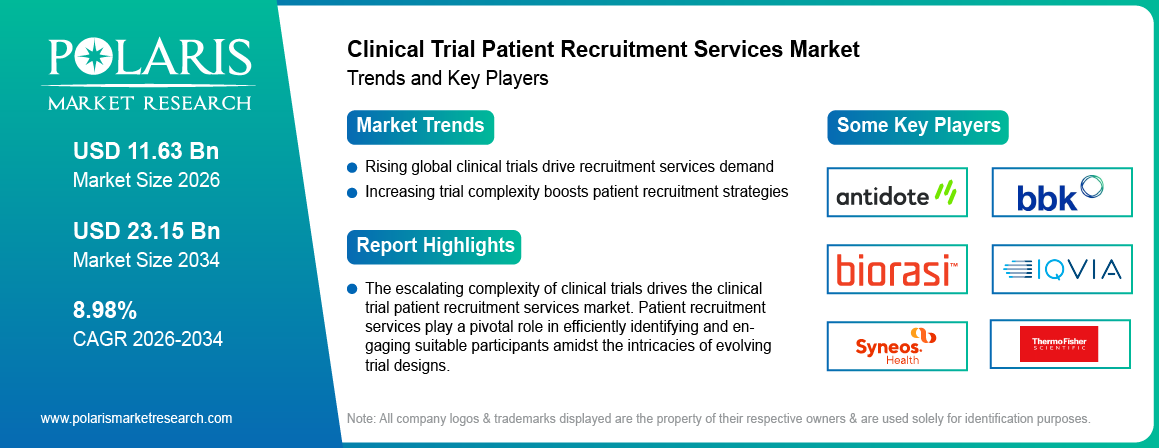
The market faces fierce rivalry, with companies leveraging cutting-edge technology, top-notch product offerings, and a robust brand reputation to propel revenue expansion. Key market players employ diverse tactics, including dedicated research and development, strategic mergers and acquisitions, and continuous technological advancements. These strategic maneuvers are aimed at broadening their product ranges and sustaining a competitive advantage. The market dynamic is shaped by constant innovation and a commitment to delivering high-quality solutions, underscoring the importance of strategic initiatives in ensuring sustained competitiveness.
Some of the major players operating in the global market include:
- Antidote Technologies, Inc.
- BBK Worldwide
- Biorasi
- Clara Health
- Clariness
- Clinical Site Services
- Elligo Health Research
- IQVIA
- PPD, Inc.
- ResearchPoint Global
- Syneos Health
- Thermo Fisher Scientific Inc.
- Trialfacts
- Veristat
- Worldwide Clinical Trials
Future Outlook
The future of the clinical trial patient recruitment services market appears promising, as pharmaceutical and biotech firms continue to seek quick, effective approaches to recruiting patients for clinical trials. The growing use of digital platforms, the integration of EHRs, the use of artificial intelligence, and decentralized clinical trials are expected to increase the efficiency and simplicity of patient identification and recruitment processes. Besides, the growing emphasis on patient diversity, engagement, and retention will lead to greater use of customized clinical trial recruitment strategies. Also, growing trends in oncology, rare diseases, and personalized medicine are likely to create more business opportunities for recruiting services.
Recent Developments
- January 2026: Jumo Health announced the launch of its readiness-based clinical trial recruitment, enrollment, and retention system, PRISM. The company stated that the system reframes the execution of trials by treating patient readiness as the key driver of predictability and completion.(source: jumohealth.com)
- January 2026: Truveta announced the introduction of its real-time clinical trials solution. According to Truveta, the solution has been developed in collaboration with the company’s leading U.S. health system members. It aims to accelerate study design, enrollment, and evidence generation by leveraging the most complete, daily-refreshed real-world data in the U.S.(source: truveta.com)
- In February 2025, Inovalon introduced the Clinical Research Patient Finder, an AI-enabled solution that connects with EHRs to identify suitable patients in real time. The platform simplifies recruitment, reduces manual inaccuracies, and improves trial efficiency for sponsors and research sites, ultimately speeding access to life-saving therapies and reshaping clinical trial operations.
- In July 2024, DocMode Health Technologies announced the rollout of its clinical research services. This expansion is intended to deliver offerings such as data analytics, clinical trial management, regulatory compliance, and more. The solutions are built to help healthcare providers, pharmaceutical firms, and researchers conduct high-quality clinical studies efficiently and effectively. Additionally, the services cover coordination and management of multicenter clinical trials to enable wider and more diverse patient recruitment and data collection.
Clinical Trial Patient Recruitment Services Market Report Scope
| Report Attributes | Details |
| Market size value in 2025 | USD 10.68 billion |
| Market size value in 2026 | USD 11.63 billion |
| Revenue forecast in 2034 | USD 23.15 billion |
| CAGR | 8.98% from 2026 - 2034 |
| Base year | 2025 |
| Historical data | 2021 - 2024 |
| Forecast period | 2026 - 2034 |
| Quantitative units | Revenue in USD million/billion and CAGR from 2026 to 2034 |
| Segments covered | By Service, By Age Group, By Therapeutic Area, By Region |
| Regional scope | North America, Europe, Asia Pacific, Latin America; Middle East & Africa |
| Customization | Report customization as per your requirements with respect to countries, region and segmentation. |
Source: Polaris Market Research Analysis
Clinical Trial Patient Recruitment Services Market FAQs
Antidote Technologies, Inc., BBK Worldwide, Clara Health, Elligo Health Research, IQVIA, PPD, Inc are the key companies in Clinical Trial Patient Recruitment Services Market.
The global clinical trial patient recruitment services market is expected to grow at a CAGR of 8.98% during the forecast period.
Service, age group, therapeutic area, and region are the key segments covered.
Rising Number of Clinical Trials are the key driving factors in Clinical Trial Patient Recruitment Services Market.
The global clinical trial patient recruitment services market size is expected to reach USD 23.15 billion by 2034.
They enable easier, quicker identification and enrolment of eligible patients in clinical trials. This ensures that the inefficient recruitment process does not slow down the development of new drugs by pharmaceutical and biotech companies.
They allow patients to take part in clinical trials via telemedicine, apps, and remote monitoring techniques. In this way, they become more accessible, and patient recruitment can expand to a larger pool of patients.
Its expansion is driven by the growing number of clinical trials, the increasing use of digital patient recruitment platforms, the expansion of decentralized clinical trials, greater attention to patient diversity, and higher demand for efficient patient recruitment.
Download Sample Report of Clinical Trial Patient Recruitment Services Market
Please fill out the form to request a customized copy of the research report.


