
Drug Device Combination Products Market Size, Share, Trends and Forecast, 2026–2034
REPORT DETAILS
Drug Device Combination Products Market Size and Growth Outlook
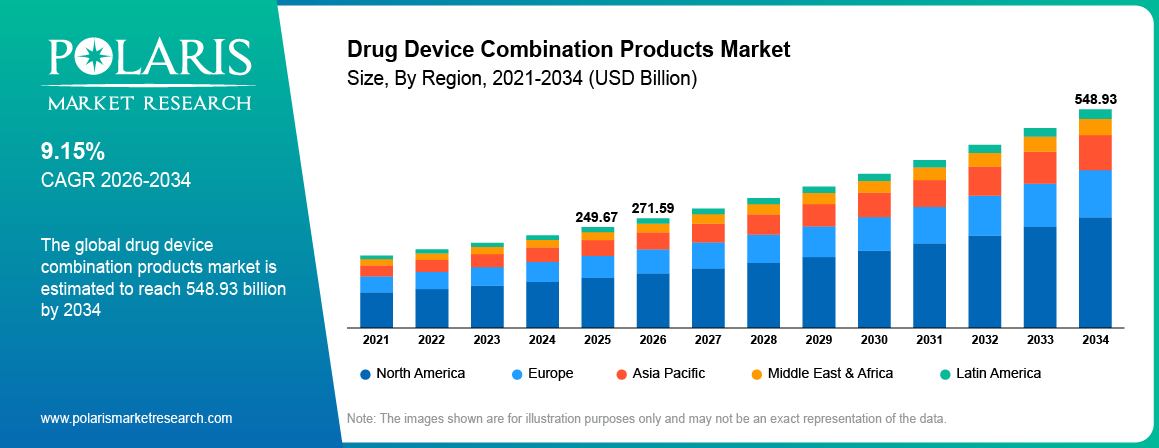
The drug device combination products market size was valued at USD 249.67 billion in 2025. The market is anticipated to grow at a CAGR of 9.15% from 2026 to 2034. The rising prevalence of chronic conditions and a strong shift towards self-administered home care are a few of the key factors driving market growth.
Market Statistics
Drug Device Combination Products Market Key Takeaways
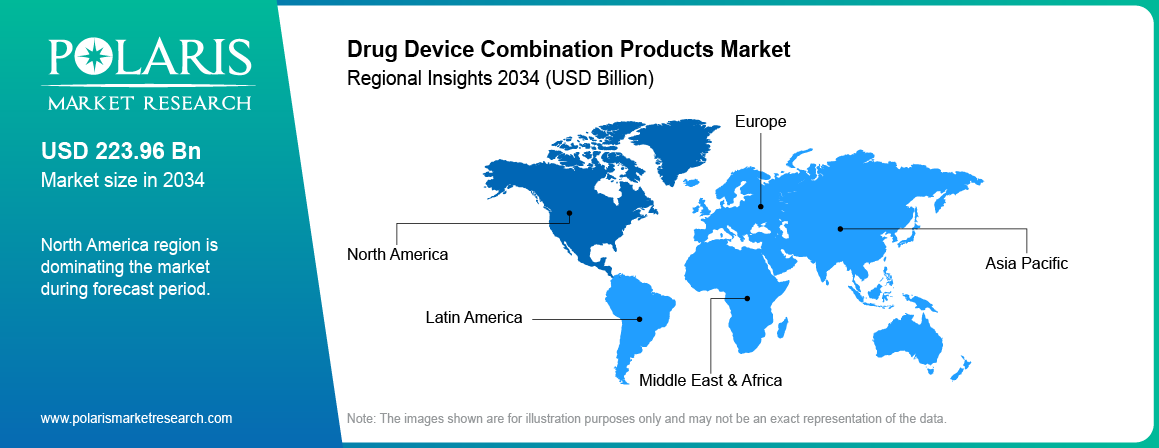
- North America held the largest market share of 40.8% in 2025. The region's dominance is attributed to high levels of R&D activity, strong regulatory support, and the presence of leading pharmaceutical and medical device manufacturers.
- Asia Pacific is expected to register the highest CAGR of 10.9% during the forecast period. The regional growth is driven by the rapid expansion of the healthcare sector, increasing healthcare expenditure, and rising adoption of advanced combination therapies.
- The Transdermal Patches segment dominated the market with a 23.9% revenue share in 2025. The non-invasive nature of transdermal patches, improved patient compliance, and sustained drug delivery capabilities align with the growing preference for minimally invasive drug delivery methods.
- The Drug-Eluting Stents segment is projected to grow at a CAGR of 11.6% during the forecast period. The segment's growth is driven by the increasing prevalence of coronary artery disease, continuous technological advancements, and the superior efficacy of drug-eluting stents in reducing restenosis.
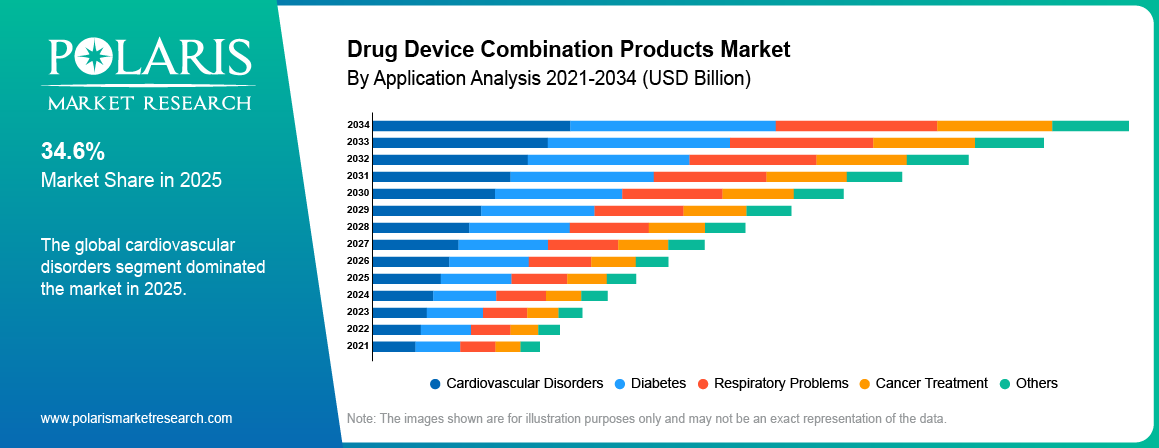
- The Cardiovascular Disorders segment accounted for the largest market share of 34.6% in 2025. The increasing burden of coronary artery disease and heart failure, coupled with the growing demand for advanced drug-device combination technologies, continues to support the segment's leadership.
Note: Figures and projections outlined in this report are the result of Polaris Market Research’s proprietary analytical processes, grounded in the latest available datasets and market observations.
What Are Drug-Device Combination Products?
Drug device combination products refer to products that integrate both drug and device into a single integrated solution. The aim is to provide medicines in a manner that is both safe and convenient for the user while ensuring efficacy. Drug-device combination products are widely used in treating various diseases such as diabetes, autoimmune diseases, cancer, and respiratory problems.
Source: Polaris Market Research Analysis
To Understand More About this Research: Download Sample Report
Drug Device Combination Products Market Drivers, Opportunities and Challenges
- The growing demand for personalized medicine has increased the adoption of drug-device combination products among chronic patients and others.
- The rising investments in drug delivery activities is another factor shaping the market landscape.
- The surge in the popularity of injectable drugs is expected to create several market opportunities.
- Complex and stringent regulatory frameworks may present challenges for market participants.
AI Impact on Drug-Device Combination Product Design, Trials and Post-Market Monitoring
- AI plays an important role in enhancing the development of drug-device combination products through optimization of their design and formulation, and device performance.
- It assists in delivering personalized medicine through analysis of patients’ data to determine the best therapy and mode of administration.
- It helps in speeding up the process of clinical trials through proper patient selection and safety monitoring.
- It improves product quality and post-market monitoring through predictive analytics.
How Do Drug-Device Combination Products Work?
Drug Preparation – The drug is either prefilled or enclosed within a unique medical device such that the drug dosage is always available for administration.
Device Activation – The device is activated by the user in accordance with the instructions given, which might involve pressing a button or insertion of the device.
Drug Administration – The drug is delivered through the device using the prescribed method, which can be through injection, inhalation, infusion, or even implantation.
Dosage Control – The device helps in controlling the dosage of the drug delivered.
End of Delivery – At the end of the delivery, the device can be disposed of or stored, as per its design.
Drug Device Combination Products Market Trends
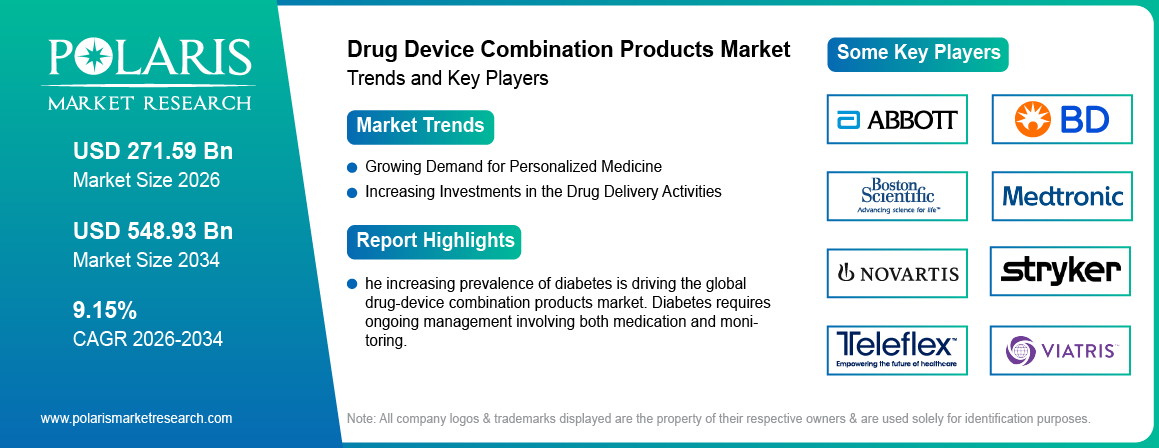
The increasing prevalence of diabetes is driving the global drug-device combination products market. Diabetes requires ongoing management involving both medication and monitoring. Drug-device combination products, such as insulin pumps or continuous glucose monitors (CGMs) that also administer medication provide a more integrated approach to treatment. These products simplify the management of diabetes by combining drug delivery with monitoring in a single device, making them more convenient for patients. Therefore, as the prevalence of diabetes increases, the demand for drug-device combination products also spurs. For instance,
The International Diabetes Federation (IDF) projects that the number of people with diabetes will increase to 643 million by 2030 and 783 million by 2045.
The rising geriatric population worldwide is propelling the drug-deice combination products market. Older adults often have multiple chronic conditions, such as diabetes, hypertension, and arthritis. Drug-device combination products that integrate medication delivery with monitoring or other supportive functions are particularly beneficial for managing these complex health needs, thereby boosting demand. Thus, the growing geriatric population is expanding the market. For instance,
According to a report published by the United Nations, the number of people aged 65 years or older worldwide is projected to more than double, rising from 761 million in 2021 to 1.6 billion in 2050.
Drug Device Combination Products vs Conventional Drug Delivery
| Features | Drug Device Combination Products | Conventional Drug Delivery
|
| Method of Medication Delivery | Drug delivery through a combined medical device | The medicine is delivered in an independent manner |
| Dosing Precision | High dosing accuracy | Doses are likely to vary |
| Convenience | Designed to be easy and convenient to administer, even independently | Requiring professional help during administration |
| Patient Convenience | Treatment process is simplified | More complex administration process |
| Adherence | Patients are encouraged to adhere to a prescribed treatment plan | Non-adherence is high due to complex administration |
| Examples | Autoinjectors, prefilled syringes, inhalers, infusion devices | Conventional syringes, tablets, capsules, and vials |
Source: Polaris Market Research Analysis
Drug Device Combination Products Drivers
Growing Demand for Personalized Medicine
The growing demand for personalized medicine is propelling the global drug-device combination products market. Personalized medicine aims to tailor treatments to individual patients based on their unique genetic, environmental, and lifestyle factors. Drug-device combination products that offer customizable or adjustable features align with this approach by providing personalized drug delivery and monitoring, which increases their adoption among chronic patients and others.
Increasing Investments in the Drug Delivery Activities
The rising investments in drug delivery activities are projected to expand the market. Increased investment allows key companies to develop products that address specific medical needs and offer superior performance compared to existing solutions. This increases the demand for updated and advanced drug delivery devices. For instance, in November 2025, Kindeva Drug Delivery, a drug delivery device contract development and manufacturing organization, received a £33 million grant from Life Sciences Innovation Manufacturing to manufacture the next generation of green inhalers.
Technological Advancements in Drug Device Combination Products
Technological advancements have increased the safety, efficiency, and effectiveness of combination drugs and devices. Smart injectors, networked combination drug delivery devices, wearable devices, and better prefilled syringes are being used by manufacturers to enhance patient care. The availability of features like dose reminders, treatment adherence, and mobile applications has made medication easier for patients. Improved design of devices has also enhanced accuracy in dosage and reduced the chances of medication errors. Most products today are designed for ease of self-administration at home. Such innovations have enhanced the patient’s experience and increased the application of combination products for various conditions.
Sustainability in Drug Delivery Devices
Sustainability is now emerging as an important factor in creating drug-device combination products. Manufacturers are minimizing the environmental effect of the drug delivery devices through the use of recyclable materials, reducing plastic usage, and efficient production procedures. Most manufacturers are also developing designs that use less material without compromising product quality and safety. Improved packaging and reduced carbon footprints during manufacturing are other aspects that are helping achieve the objective of sustainability. Healthcare organizations and manufacturers are employing more sustainable practices in drug delivery without compromising drug delivery reliability.
Growth of Home-Based Drug Delivery
The trend toward home-based administration of drugs is rising due to an increasing number of patients opting to be treated away from hospitals or clinics. Combination products such as autoinjectors, prefilled syringes, and wearable injectors make it possible for patients to administer the prescribed drugs in a safe manner at home. The process ensures that the frequency of visiting the hospital for treatment is minimized, thus making the process easy and convenient for the patients. Home-based health service delivery proves to be beneficial in particular for patients suffering from chronic conditions requiring long-term treatment. It is also being encouraged by healthcare providers in order to lower the cost of healthcare services and make the treatment easier for the patients.
Drug Device Combination Products Restraints
Strict Regulations
The ongoing regulations by government agencies are projected to hamper the market growth. Compliance with strict regulatory requirements is costly as companies must invest in rigorous clinical trials, comprehensive documentation, and regulatory submissions. These high costs deter smaller companies from entering the market or developing new products, potentially limiting innovation and reducing the overall supply of drug-device combination products.
Key Industry Trends in the Drug Device Combination Products Market
| Trends | Impact on the Market |
| Adoption of Self-Administration Devices | Higher adoption of self-administration devices like autoinjectors and prefilled syringes for ease of treatment in the comfort of home. |
| Demand for Biologics | The growing consumption of biologic drugs is fueling the need for advanced drug delivery devices. |
| Home Healthcare | Rising preference for home healthcare is leading to higher adoption of user-friendly combination products. |
| Technological Advances | Smart injectors, wearable devices, and advanced drug delivery systems are enhancing treatment results. |
| Patient-Centric Product Development | Manufacturers are coming up with simple, safe, and easy-to-use products. |
| Approvals of Combination Products | Growing number of approvals of combination products for various diseases. |
Source: Polaris Market Research Analysis
Source: Polaris Market Research Analysis
Report Segmentation
The Drug Device Combination Products Market is primarily segmented based on product type, application, End user, and region.
By Product Type | By Application | By End user | By Region |
|
|
|
|
Source: Polaris Market Research Analysis
Market by Type: Transdermal Patches, Drug-Eluting Stents, Inhalers, Infusion Pumps and Injectables
Transdermal Patches dominated the market in 2025
The transdermal patches segment dominated the market share in 2025 due to their non-invasive nature, which aligns with the rising demand for minimally invasive and patient-friendly drug delivery solutions. Transdermal patches offer a convenient alternative for continuous, controlled release of medication, addressing patient preferences for less discomfort and ease of use. The expansion of this market segment is also driven by advancements in drug formulation and patch technology, which enhance the efficacy and versatility of transdermal systems. These innovations enable the delivery of a wider range of medications, including those previously limited to oral or injectable forms. Moreover, the growing focus on personalized medicine supports the development of customized patches that cater to individual patient needs, further contributing to their market dominance.
The drug-eluting stents segment is estimated to grow at a robust pace in the coming years owing to their effectiveness in treating coronary artery disease by releasing medications that prevent restenosis of the artery. Drug-eluting stents combine the benefits of mechanical support with localized drug delivery, reducing the need for repeat procedures and improving long-term patient outcomes. The rise in cardiovascular diseases and the increasing prevalence of aging populations drive demand for these innovative devices. Additionally, continuous innovation and development of advanced drug-eluting stents by key players in the market are fueling the segment growth. For instance, In May 2024, Abbott introduced a new version of the drug-eluting coronary stent system, the XIENCE Sierra stent, in India.
Market by Application: Cardiovascular, Diabetes, Oncology, Respiratory and Pain Management
Cardiovascular Disorder Segment Accounted for the Largest Market Share in 2025.
The cardiovascular disorder segment accounted for the largest market share in 2025 due to the critical need for advanced technologies for managing coronary artery disease and heart failure. Devices like drug-eluting stents, which release medication to prevent artery re-narrowing, play a crucial role in this area. Innovations in stent technology, including improved drug formulations and biocompatible materials, have further contributed to this segment's growth. The effectiveness of these devices in enhancing patient outcomes and reducing the need for repeat interventions underscores their importance in the cardiovascular field.
The cancer treatment segment is expected to grow at a rapid pace during the forecast period owing to the increasing prevalence of cancer globally and the growing demand for targeted and effective treatment options. Drug-device combination products, such as implantable chemotherapy delivery systems and photodynamic therapy devices, offer advanced solutions for managing cancer with precision. These technologies allow for localized drug delivery directly to the tumor site, minimizing systemic side effects and improving treatment efficacy. Additionally, the rise in personalized medicine, which tailor’s treatments based on genetic and molecular profiles, also supports the growth of this segment.
Use Cases of Drug Device Combination Products
| Application | How Combination Products Help |
| Diabetes Management | Combination products like insulin pens and insulin pumps make it easy for patients to get insulin injections. |
| Cancer Management | Infusion pumps and injectable combination products assist in getting cancer drugs into the body. |
| Autoimmune Diseases | Through the use of autoinjectors, patients can receive their biologic drugs in the comfort of their homes. |
| Respiratory Diseases | Inhalers help in delivering drugs directly into the respiratory system for illnesses like asthma and COPD. |
| Emergency Response | Epinephrine autoinjectors are used for providing emergency care in case of an allergic reaction. |
| Pain Management | With infusion pumps, patients can receive pain-relieving drugs after surgery or when in pain. |
| Cardiovascular Diseases | The drug-eluting stents are used to release drugs into the body to prevent blocked blood vessels. |
| Hormone Therapy | Combination products like pen injectors and wearable products ease hormone therapy administration. |
Source: Polaris Market Research Analysis
Source: Polaris Market Research Analysis
Drug Device Combination Products Market Regional Insights
North America Registered the Largest Share of the Market in 2025
The North America region held the dominant share in 2025. This is mainly attributable to the advanced healthcare infrastructure, high levels of research and development activity, and strong regulatory frameworks that support innovation and market entry. The US, in particular, led this region due to its robust healthcare system, significant investments in medical technology, and a high prevalence of chronic diseases. Additionally, the presence of numerous leading pharmaceutical and medical device companies, along with a high rate of adoption of new technologies, further contributes to North America's market leadership.
The Asia Pacific region is expected to be the fastest-growing region during the projected period, owing to the expanding healthcare sector, increasing investments in medical technology, and rising patient populations. Countries such as China and India are driving this expansion due to their large and growing patient bases and improving access to advanced medical technologies. For instance,
According to the International Diabetes Federation, more than 60% of people with diabetes live in Asia, with almost one-half in China and India combined.
Source: Polaris Market Research Analysis
Key Market Players & Competitive Insights
Key market players are investing heavily in research and development in order to expand their offerings, which will help the drug-device combination products market grow even more. Market participants are also undertaking a variety of strategic activities to expand their global footprint, with important market developments including innovative launches, international collaborations, higher investments, and mergers and acquisitions between organizations. Major players in the drug-device combination products market include Abbott; Becton, Dickinson and Company; Medtronic; Novartis AG; Stryker; and others.
List of the Major Players Operating in The Global Drug Device Combination Products Market
- Abbott
- Becton, Dickinson and Company
- Boston Scientific Corporation
- Medtronic
- Novartis AG
- Sensely, Inc.
- Stryker
- Teleflex Incorporated
- Terumo Medical Corporation
- Viatris Inc.
- Hovione
Future Outlook
The drug device combination products industry is projected to develop at a steady rate due to the increasing demand for efficient, safe, and user-friendly methods of administering drugs. This is attributed to the increase in biologic drug applications, increasing preference for home health care, and self-administration devices. New product development and advanced drug delivery technology introduction by manufacturers to ensure high levels of safety, usability, and dose accuracy are propelling the growth of the drug device combination products market. Innovations in connected drug delivery and wearable technology also present new areas of opportunity within the industry. With the rising emphasis on personalized healthcare by healthcare professionals, drug device combination products are becoming increasingly significant in modern healthcare.
Recent Developments in the Industry
- June 2026: Insulet Corporation revealed the U.S. rollout of new algorithm enhancements for the Omnipod 5 Automated Insulin Delivery (AID) System. The company stated that the updates follow the device's clearance in December 2025. The enhancements expanded the choice for people with diabetes by making Omnipod 5 compatible in the U.S. with Abbott’s Libre 3 Plus sensor. (source: insulet.com)
- April 2025: Johnson & Johnson’s TAR-200, a targeted drug-release device, demonstrated notable efficacy and disease-free survival benefits in specific patient populations with non–muscle-invasive bladder cancer.
Report Coverage
The drug-device combination products market report emphasizes key regions across the globe to provide a better understanding of the product to the users. Also, the report provides market insights into recent developments and trends and analyzes the technologies that are gaining traction around the globe. Furthermore, the report covers an in-depth qualitative analysis pertaining to various paradigm shifts associated with the transformation of these solutions.
The report provides a detailed analysis of the market while focusing on various key aspects such as competitive analysis, type, application, End user, and their futuristic growth opportunities.
Drug Device Combination Products Market Report Scope
| Report Attributes | Details |
| Market size value in 2025 | USD 249.67 billion |
| Market size value in 2026 | USD 271.59 billion |
| Revenue Forecast in 2034 | USD 548.93 billion |
| CAGR | 9.15% from 2026 – 2034 |
| Base year | 2025 |
| Historical data | 2021 – 2024 |
| Forecast period | 2026 – 2034 |
| Quantitative units | Revenue in USD billion and CAGR from 2026 to 2034 |
| Segments Covered |
|
| Regional scope |
|
| Competitive Landscape | Drug Device Combination Products Industry Trend Analysis (2025) Company Profiles/Industry participants profiling includes company overview, financial information, product/service benchmarking, and recent developments |
| Report Format | PDF + Excel |
| Customization | Report customization as per your requirements with respect to countries, regions, and segmentation. |
Source: Polaris Market Research Analysis
Drug Device Combination Products Market FAQs
The global drug-device combination products market size was valued at USD 249.67 billion in 2025 and is projected to grow to USD 548.93 billion by 2034.
The global market is projected to grow at a CAGR of 9.15% during the forecast period.
North America had the largest share of the global market.
The key players in the market are Abbott; Becton, Dickinson and Company; Boston Scientific Corporation; Medtronic; Novartis AG; Sensely, Inc.; Stryker; Teleflex Incorporated; Terumo Medical Corporation; Viatris Inc.; and Hovione.
The drug-eluting stents type segment is projected for significant growth in the global market.
The cardiovascular disorder segment dominated the drug-device combination products market in 2025.
Drug device combination products refer to medical products combining the characteristics of both drugs and medical devices in order to provide safe and precise delivery of medicine and ease the treatment process. Typical examples include auto injectors, prefilled syringes, inhalers, insulin pens, and other devices.
The use of drug device combination products increases the efficiency of the delivery of medicines since they allow patients to take medications properly, provide accurate dosing, reduce the chances of error, and increase patient satisfaction. In addition, most of these devices allow treatment at home via self-administration.
There is an increasing demand for drug device combination products due to the high usage of biologics and home-based healthcare solutions. Other factors driving rising demand are the increased demand for self-administration devices, the development of technologies in drug delivery, and safety concerns.
Download Sample Report of Drug Device Combination Products Market
Please fill out the form to request a customized copy of the research report.


