
GLP-1 and CGM Convergence Market Size, Share, Trends and Forecast, 2026–2034
REPORT DETAILS
GLP-1 and CGM Convergence Market Summary
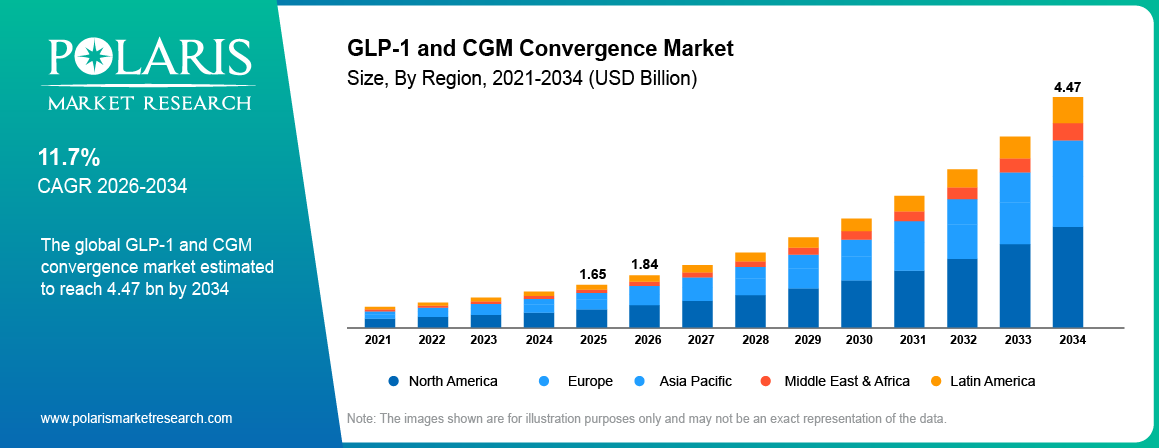
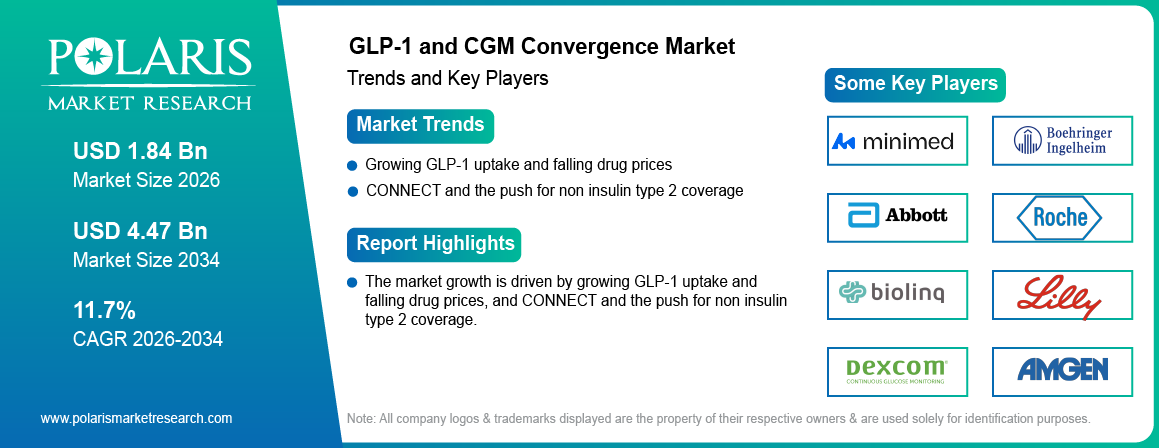
The GLP-1 and CGM convergence market size was valued at USD 1.65 billion in 2025. The market is expected to grow at a CAGR of 11.7% from 2026 to 2034. Growing GLP-1 uptake and falling drug prices and CONNECT and the push for non-insulin type 2 coverage are driving the growth of the GLP-1 and CGM convergence market.
Market Statistics
Key Takeaways
- North America accounted for 68.42% of the global share in 2025. The dominance is supported by established healthcare infrastructure and strong adoption of diabetes management technologies.
- The market in Asia Pacific is expected to exhibit a 15.42%CAGR during the forecast period. The growth is driven by rising diabetes prevalence and growing interest in obesity management.
- Injectable GLP-1 and dual agonists segment accounted for a major market share of 71.35% in 2025. The leading share is fueled by their established use in diabetes and obesity management.
- Over the Counter Biowearable CGM to record an 18.94% CAGR during the projected period, driven by rising consumer interest in metabolic health and accessible glucose tracking.
- Type 2 Diabetes on GLP-1 dominated the CGM for GLP-1 users market with a share of 63.54% in the base year due to the established use of GLP-1 therapies in diabetes management.
Note: Figures and projections outlined in this report are the result of Polaris Market Research’s proprietary analytical processes, grounded in the latest available datasets and market observations.
What is the GLP-1 and CGM Convergence Market?
The GLP-1 and CGM convergence market is built on the integration of GLP-1 medications with glucose monitoring technologies to support coordinated diabetes and weight management. This approach combines treatment with real-time glucose data, helping healthcare providers and patients understand metabolic responses. It connects medication use, glucose tracking and personalized care. Increasing attention to metabolic well-being is fostering a move towards integrated therapy in the field of diabetes management and obesity treatment. This is affecting the GLP-1 and CGM market trends in 2026, as medical professionals are increasingly interested in the combination of medication and continuous glucose monitoring. In this report, the market counts only CGM revenue earned from people who take a GLP-1 receptor agonist. GLP-1 drug sales, insulin pumps and meters are excluded. No company sells a combined offer, as Novo Nordisk and Eli Lilly sell drugs while Dexcom and Abbott sell devices. CGM use among people on GLP-1 drugs is already common in type 2 diabetes: a 2026 Dexcom survey found that 58% of people with type 2 diabetes who use GLP-1s use CGM, against 27% of non insulin type 2 users. The boundary test is simple: if the revenue comes from a sensor or CGM app used by a person on a GLP-1, it is in scope.
Continuous glucose monitoring ensures glucose readings on an ongoing basis, enabling the users to observe the fluctuations in their glucose levels and reactions of the body to the intake of food, exercise, and medication. Continuous glucose monitoring in the case of people taking GLP-1 drugs becomes even more insightful. Digital health solutions integrate glucose monitoring information along with details about medication into the decision-making process. This convergence enables patients and healthcare professionals to assess progress and adjust treatment strategies as needed, supporting more personalized care.
The use of GLP-1 receptor agonists with glucose monitoring is gaining more consideration due to the need for management of both diabetes and obesity. GLP-1 agonists are designed to mimic the functions of the glucagon-like peptide-1 hormone. This allows them to aid in controlling glucose levels and regulating the appetite of patients. The use of both medication and glucose monitoring has the potential of assessing patient response and metabolic trends. Technological advances such as digital health technology platforms are offering new possibilities in individualized treatment.
Drug Pipeline Analysis
The GLP-1 and CGM convergence market gains new users with every GLP-1 receptor agonist that reaches patients, which is why the drug pipeline matters even though drug revenue is not counted in market size.
Two oral GLP-1 launches stand out. Eli Lilly and Company's Foundayo (orforglipron) was approved on April 1, 2026 for adults with obesity, with the lowest dose priced at $149 a month for self pay patients. Novo Nordisk A/S's Wegovy pill, an oral semaglutide 25 mg, was approved on December 22, 2025.
Retatrutide, a triple agonist, reported TRIUMPH 1 results on May 21, 2026, with weight loss of 25.0% to 28.3% at 80 weeks at the 12 mg dose, depending on the estimand, in 2,339 adults. Lilly said on July 23, 2026 that it plans to file retatrutide for approval in the first quarter of 2027, after positive results in people with type 2 diabetes. Novo Nordisk filed an FDA application for CagriSema in December 2025, and a decision is anticipated by late 2026. Boehringer Ingelheim reported SYNCHRONIZE 1 results for survodutide on April 28, 2026, with up to 16.6% weight loss at 76 weeks against 3.2% on placebo. Amgen's MariTide is in the Phase 3 MARITIME program, and no efficacy results have been reported. Retatrutide, survodutide and MariTide are the GLP-1 drugs in Phase 3 in the table below. The test is which candidate wins a type 2 diabetes label first, since that is where CGM coverage is most likely to follow.
GLP-1 Drug Pipeline and Linked Device Trial
| Candidate | Company | Mechanism | Phase | Trial Identifier | Status |
| Orforglipron (Foundayo) | Eli Lilly | Oral small molecule GLP-1 agonist | Approved for obesity, Apr 2026 | ATTAIN 1, NCT05869903 | Approved. Type 2 diabetes submission planned |
| Retatrutide | Eli Lilly | GIP, GLP-1 and glucagon triple agonist | Phase 3 | TRIUMPH 1, NCT05929066 | Topline May 2026. Filing planned Q1 2027 |
| CagriSema | Novo Nordisk | Amylin analog plus semaglutide | Under FDA review | REDEFINE 1, NCT05567796 | NDA filed Dec 2025. Decision by late 2026 |
| Oral semaglutide 25 mg (Wegovy pill) | Novo Nordisk | Oral GLP-1 agonist | Approved for obesity, Dec 2025 | OASIS 4, NCT05564117 | Approved Dec 22, 2025 |
| Survodutide | Boehringer Ingelheim | Glucagon and GLP-1 dual agonist | Phase 3 | SYNCHRONIZE 1, NCT06066515 | Topline Apr 2026. Investigational |
| MariTide | Amgen | GIPR antagonist antibody with GLP-1 peptides | Phase 3 | MARITIME 1, NCT06858839; MARITIME 2, NCT06858878 | Ongoing. No efficacy results |
| Dexcom G7 (device trial) | Dexcom | CGM versus routine care, type 2 not on insulin | Completed, 26 weeks | CONNECT, NCT06601166 | Published Oct 14, 2026 |
Source: Polaris Market Research Analysis
Market Dynamics
Driver: Growing GLP-1 Uptake and Falling Drug Prices Are Supporting Market Growth
Growing use of GLP-1 drugs is opening up opportunities for integrated management of diabetes and obesity. Falling drug prices and broader access to treatment are helping encourage eligible patients to take up treatment. This trend benefits the GLP-1 and CGM convergence market, as glucose monitoring adds further information about metabolic responses during treatment. The growing use of these therapies is fueling interest in connected healthcare solutions that integrate medication management with continuous glucose data.
In addition to this, falling drug prices are impacting the GLP-1 market by creating fewer barriers to financing and promoting discussions regarding treatment options. For example, in 2026, Dexcom conducted surveys among over 2,500 people with type 2 diabetes and over 800 medical professionals in eight countries. According to the report, 58% of people with type 2 diabetes who use GLP-1s pair CGM with their medication, against 27% of type 2 non-insulin users, which shows possible ways to integrate medication and glucose monitoring. Eli Lilly launched its oral GLP-1 Foundayo in April 2026 at $149 a month for the lowest dose for self-pay patients. From July 1, 2026, the Medicare GLP-1 Bridge has offered selected GLP-1 drugs for weight management at a $50 monthly copay through December 31, 2027.
Driver: CONNECT and the Push for Non-Insulin Type 2 Coverage Is Driving the Market Growth
Expanding insurance coverage for diabetes technologies is supporting the adoption of integrated treatment solutions. The CONNECT trial and the push for broader coverage are increasing attention toward glucose monitoring for non-insulin type 2 diabetes patients. Using GLP-1 drugs along with glucose measurements gives more insights on treatment effects. It helps with individualized diabetes care and improves the need for connected health services. The CMS decision on Medicare coverage of CGM for people with type 2 diabetes who do not take insulin is expected before the end of 2026, with coverage taking effect in mid 2027. Dexcom estimates that about 25 Billion people in the U.S. have type 2 diabetes and do not take insulin, and roughly half are of Medicare age (Source: medtechdive.com).
Continuous glucose monitoring gives data that helps people and practitioners analyze glucose trends in patients taking GLP-1 drugs. Time in range is among the measures used for analyzing glucose management and the effectiveness of treatments. For instance, in 2026, the Dexcom funded CONNECT trial involved 145 participants for CGM and 138 participants for routine care with type 2 diabetes and not on insulin. After 26 weeks, CGM users had a 0.9 percentage point reduction in adjusted A1C compared to participants who received routine care. This is an indication of what glucose monitoring can achieve in diabetes management. In addition, expanded insurance coverage will minimize financial barriers to adoption.
Restraint: Coverage Gaps and Reimbursement Uncertainty Is Restricting Market Expansion
Limited insurance coverage of integrated GLP-1 and CGM solutions is a barrier to market adoption due to financial challenges for patients and healthcare providers. Insurance plans differ in their reimbursement rules, resulting in uneven access to medications and monitoring equipment. Insurers will often require you to get prior authorization before they’ll approve treatment. The Medicare GLP-1 Bridge also requires prior authorization. Such processes add administrative burden and delay access to the integrated care. The uncertainty over coverage also deters adoption among patients who pay significant out-of-pocket costs for long-term treatment. In the 2026 Dexcom survey, 90% of U.S. clinicians cited coverage and reimbursement challenges for CGM, against 53% in the other seven surveyed countries, and 55% of people with type 2 diabetes reported limited knowledge of CGM. The restraint is policy timing, not demand.
Coverage gaps also pose a challenge for healthcare providers and manufacturers who want to drive broader market adoption. Some plans will cover GLP-1s, but not CGM devices, for patients who don’t meet certain eligibility requirements. Treatment approaches integration is hampered by restrictions. The lack of clear reimbursement pathways makes care planning more complicated and less affordable. These financial and administrative hurdles limit patient access and slow the advancement of connected diabetes and obesity management solutions.
Opportunity: Over-the-Counter CGM to Expand Access for GLP-1 Users and Open Market Opportunity
OTC continuous glucose monitors open the door to wider glucose monitoring for those taking GLP-1 drugs for diabetes or weight loss. Direct-to-consumer access cuts down on the need to use prescriptions to buy and makes getting a device easier. For example, Abbott in 2024 introduced Lingo, an over-the-counter CGM system that provides real-time glucose monitoring and personalized insights via a smartphone app, so users can learn how their bodies respond to food, exercise and daily activities. These products expand the opportunities in the over the counter CGM market. Signos sells an FDA cleared CGM weight loss app that uses Dexcom Stelo sensors, on a quarterly plan priced at $139 a month.
GLP-1 drugs and biowearable technology together offer opportunities for connected metabolic health solutions. These are the devices that provide glucose readings to help users see how things change during treatment. Manufacturers can build digital platforms that combine monitoring data with medication adherence tracking to deliver personalized care. Digital health companies and device manufacturers also have a stake in consumer access to these technologies. These developments are shaping the way forward for wider adoption of integrated monitoring solutions for metabolic health.
Opportunity: AI Coaching and Digital Health Partnerships to Strengthen GLP-1 and CGM Convergence
AI coaches could bridge GLP-1 therapies and CGM through personalized digital health platforms. The programs analyze blood sugar trends and provide personalized recommendations on taking medication, exercising, and dieting. Time in range monitoring allows the user to see how well their glucose is controlled and to watch improvement during treatment. AI-powered platforms also provide opportunities for continuous engagement for patients and health care providers, resulting in better coordinated diabetes and weight management.
Platform partnerships offer opportunities to link sensor manufacturers, digital health companies and healthcare providers in connected services. For example, in 2026, Abbott and Google announced a partnership to merge glucose insights from Abbott’s Lingo wearable with Google Health’s technology and AI coaching. Such collaborations can expand user access, strengthen engagement and create scalable services for metabolic health management. These platforms also offer commercial opportunities through subscription services and employer-sponsored healthcare programs. In July 2026, Dexcom relaunched its Stelo app with AI driven insights and enhanced food logging.
Driver and Opportunity Impact Analysis
| Factor | Type | Impact on Market | Time Horizon | Impact Level |
| Growing GLP-1 uptake and falling drug prices | Driver | Widens the pool of possible CGM users | Short to medium term | High |
| CONNECT trial and push for non insulin type 2 coverage | Driver | Builds the clinical case for payer coverage | Medium term | High |
| Over the counter CGM for GLP-1 users | Opportunity | Opens self pay access without a prescription | Medium term | Medium |
| AI coaching and digital health partnerships | Opportunity | Raises engagement and supports subscription revenue | Long term | Medium |
Source: Polaris Market Research Analysis
Market Segmentation Analysis
The report provides a comprehensive GLP-1 and CGM convergence market analysis by GLP-1 therapy type, CGM device type, patient population, payment pathway, and region to identify the leading revenue-generating segments and emerging growth opportunities. The type 2 diabetes CGM market sits inside these variables. Region is covered in the Regional Insights section. Payment pathway sets a buyer's shortlist, so it is the variable to read first.
GLP-1 Therapy Type Insights
Injectable GLP-1 and dual agonists dominated the market with a share of 71.35% in the base year due to their established use in diabetes and obesity management. These therapies are delivered through established treatment pathways to assist with blood glucose control and weight loss. Clinical evidence and growing treatment demand support their adoption. More and more healthcare providers are looking at these medications for the right patients that need metabolic management. Meanwhile, oral GLP-1 formulations provide an option for patients looking for non-injectable treatment options. Ongoing improvements in drug delivery and patient convenience are setting the tone for increasing interest in these therapies in healthcare settings.
Next Generation Multi Agonists are expected to record the highest CAGR of 21.48% during the forecast period, due to the ongoing development of therapies targeting multiple metabolic pathways. The goal of these treatments is to improve weight control and glucose control through combined hormonal activity. The pharmaceutical companies are testing them in clinical research to see how safe and effective they are in groups of patients. Their ability to target complex metabolic conditions is attracting investment in drug development. We expect that clinical evidence and regulatory progress will drive adoption. The increasing interest in more comprehensive obesity treatments further supports the development of next-generation multi-agonist therapies. Retatrutide is the main multi agonist in Phase 3, with TRIUMPH 1 results reported in May 2026.
The oral GLP-1 market held a share of 20.84% in 2025, propelled by the increasing demand for non-injectable treatment options for diabetes and obesity. Oral formulations are easy to administer and do not require injections. These are favored by patient preference for simpler treatment regimens. Continued improvements in oral drug delivery are expected to fuel demand for oral GLP-1 therapies. Eli Lilly's Foundayo was approved in April 2026 and Novo Nordisk's Wegovy pill in December 2025.
CGM Device Type Insights
The prescription-based wearable CGM held the largest market share of 78.42% in the base year due to the proven utility of the device in monitoring glucose levels in people with diabetes. The devices provide real-time glucose levels and alerts to help you keep track of glucose levels throughout the day. Furthermore, the combination of the device with GLP-1 therapy helps to assess the responses to the therapy and metabolic changes. Implantable CGM however provides an alternative for those who want to monitor glucose level for long periods of time without changing the sensor frequently.
The over the counter biowearable CGM is expected to record the highest CAGR of 18.94% in the forecast period due to the growing consumer interest in metabolic health and the availability of glucose tracking. In 2024, for example, the U.S. Food and Drug Administration (FDA) cleared Dexcom’s Stelo as the first over-the-counter CGM for adults aged 18 and over who are not on insulin, extending access beyond traditional prescription channels. These devices offer convenient glucose information and can be combined with digital health applications to provide personalized feedback on meals and physical activity. OTC CGM is a blood glucose monitoring device that lets users see how their glucose and lifestyle interact. Adoption will be boosted by partnerships with GLP-1 providers and AI coaching platforms. Demand is driven by awareness of preventive health as well. A CGM can be bought without a prescription: Abbott's Lingo is sold over the counter, and Signos sells a CGM weight loss app on Stelo sensors.
Implantable CGM held 3.72% of market share in 2025 due to its ability to monitor glucose levels over extended periods without the need for frequent sensor changes. The devices are capable of continuous glucose monitoring and are useful in determining trends of glucose in GLP-1 therapy. But implantable CGMs require clinical applicability and implantation procedures. Senseonics' Eversense 365 implant lasts up to one year, and the company reported second quarter 2026 revenue of $14.5 Billion, up about 120%.
Patient Population Insights
Type 2 Diabetes on GLP-1 held a market share of 63.54% in the base year owing to the widespread application of GLP-1 drugs in treating diabetes. Combining the GLP-1 drugs with glucose monitoring will help identify the pattern of glucose and A1C reduction. The information obtained from ongoing monitoring of glucose is useful for the evaluation of the response of the therapy. The rise in diabetic connected therapy solutions is driving demand for integrated systems from patients on GLP-1 drugs. In the CONNECT trial, Dexcom G7 users with type 2 diabetes not on insulin cut A1C by 0.9 points more than routine care over 26 weeks, a sponsor funded result.
Obesity or Overweight without Diabetes is expected to grow at the highest CAGR of 15.24% over the forecast period. The growth is attributed to increasing awareness about weight management and metabolic health. GLP-1 treatment is helpful for weight loss and glucose testing provides further insight into the metabolism of selected patients. Digital health technologies allow for customized treatment and patient engagement. Prediabetes, however, is an opportunity in the form of preventive monitoring technology as the healthcare industry focuses more on prevention. Signos pairs Stelo sensors with a weight loss app cleared by the FDA in August 2025.
The prediabetes and wellness market category accounted for 6.88% of the market share in 2025, driven by the rising awareness of early detection of metabolism risks and preventative healthcare. Users can monitor glucose trends and lifestyle changes with glucose testing. When combined with digital health apps, they assist in providing personalized wellness recommendations. The increasing importance of early intervention is driving demand among people interested in managing their metabolism and diabetes risks. Abbott's Lingo is aimed at the 115 Billion U.S. adults with prediabetes.
Payment Pathway Insights
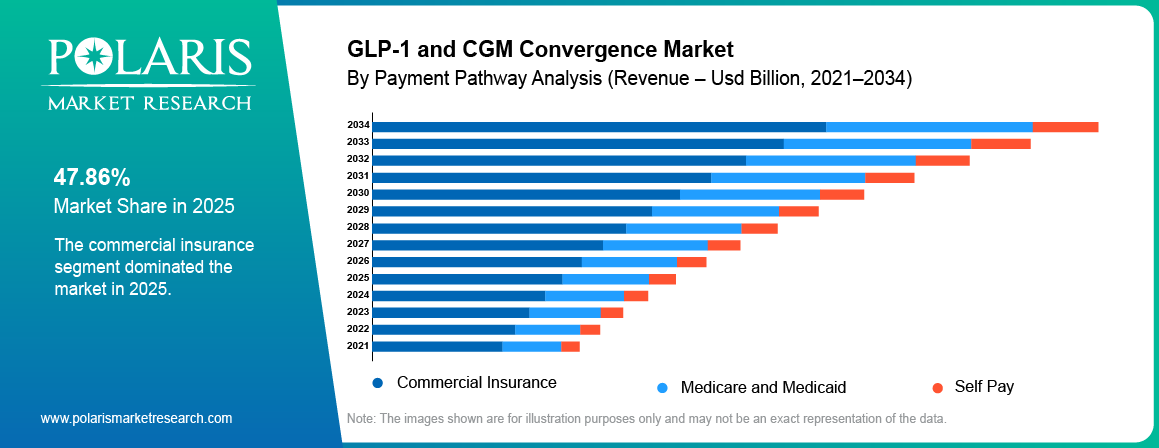
Commercial Insurance led the industry with 47.86% market share in the base year owing to the use of insurance in the coverage of prescription drugs and other healthcare services. Coverage policies affect the availability of GLP-1 drug treatments and glucose monitors. Health insurance from employers further encourages the use of these devices by eligible beneficiaries. Medicare and Medicaid help improve access to these treatments, while self-pay remains an alternative for patients who lack adequate insurance coverage or face high out-of-pocket expenses. The Medicare GLP-1 Bridge charges a $50 monthly copay for selected GLP-1 drugs from July 1, 2026 to December 31, 2027.
Self Pay is anticipated to witness the highest CAGR of 14.76% during the forecast period due to the increasing demand for customized metabolic health management and lack of insurance coverage for some treatments. Patients are looking for direct access to the GLP-1 drug and continuous glucose monitoring solutions. But it’s still expensive. Prior authorization requirements changes and wider access to digital health services are expected to impact payment preferences and adoption trends among patient cohorts. Self pay drug prices include $349 a month for Wegovy and $299 to $449 a month for Zepbound vials.
Medicare and Medicaid had a market share of 30.42% in 2025, attributable to their function in offering insurance services to their respective qualifying populations. The program provides for insulin testing technologies for qualifying recipients through the Medicare scheme, while the Medicaid scheme offers the same to eligible low-income recipients. Policy on health insurance coverage influences the use of GLP-1 and CGM devices. The BALANCE model began in Medicaid in May 2026.
Regional Insights
The regional analysis of the GLP-1 and CGM convergence market includes North America, Europe, Asia Pacific, Latin America, and the Middle East and Africa. The development of the regional market is affected by the availability of GLP-1 medications, the adoption of continuous glucose monitoring technologies, and healthcare reimbursement policies. Organizations such as KFF provide insights into health insurance coverage and affordability, helping explain how reimbursement policies influence patient access to these treatments. Market growth is further supported by increasing awareness of diabetes and obesity management and investments in connected care solutions. Coverage differs by region. In the 2026 Dexcom survey, 90% of U.S. clinicians cited coverage and reimbursement challenges for CGM, against 53% of clinicians in the other seven countries. The Medicare GLP-1 Bridge is a temporary CMS program that gives eligible Medicare Part D beneficiaries selected GLP-1 drugs for weight management at a $50 monthly copay.
North America GLP-1 and CGM Convergence Market Trends
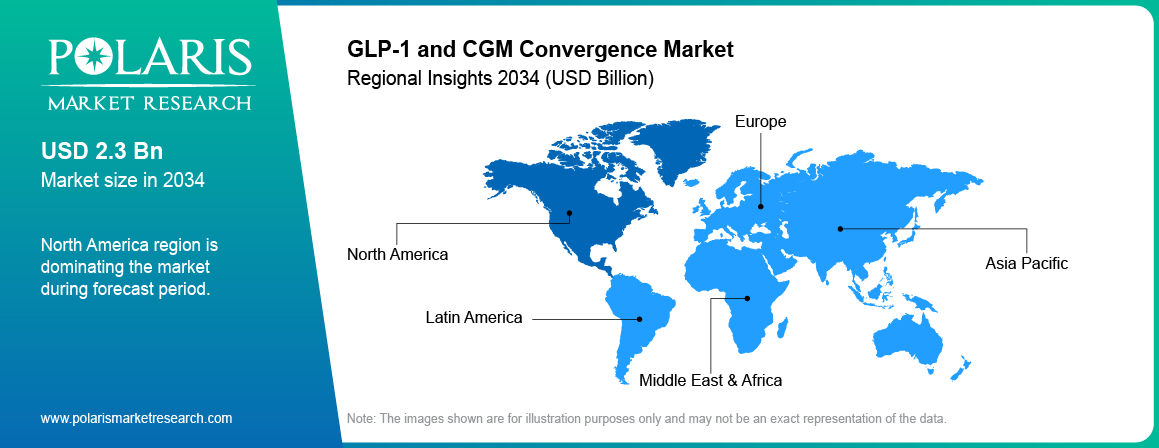
North America held a dominant position by capturing 68.42% share in 2025 due to robust healthcare facilities and high acceptance of diabetes treatment techniques. The US is the leading region in terms of demand due to the availability of GLP-1 medicines and CGM devices. Increasing popularity of a comprehensive approach to metabolic disorders has fueled the formation of strategic partnerships between drugmakers and device makers. Dexcom's U.S. revenue grew 14% year over year in the third quarter of 2026. The U.S. is the most developed market and also the most coverage constrained.
A major opportunity for growth is expanded Medicare coverage for continuous glucose monitoring in type 2 diabetes patients who are not on insulin. For instance, in 2024, Dexcom said about 25 Billion people in the US have type 2 diabetes and don’t use insulin, making a large population for continuous glucose monitoring solution. This transformation aims to improve access to glucose data for patients on GLP-1 treatment and increase demand for care services. However, timing and eligibility rules are a function of policy decisions and coverage requirements.
Europe GLP-1 and CGM Convergence Market Trends
The market share of Europe in the base year stood at 17.64%, owing to well-established healthcare infrastructure and awareness of the need for treatment of diabetes and obesity. Availability of GLP-1 drugs and glucose monitoring technologies in various countries depends on varying levels of reimbursement policies. The level of public healthcare insurance determines the cost-effectiveness of the therapy, and self-pay acts as another option for patients who cannot afford public healthcare insurance.
Healthcare initiatives such as diabetes care and availability of medication have been contributing to regional growth. For instance, in 2026, Glooko made plans to incorporate Roche’s Accu-Chek SmartGuide CGM into its network in selected European countries, enhancing connectivity of glucose monitoring systems in the GLP-1 and CGM convergence market. There are collaborations between healthcare providers, device manufacturers and digital health companies that provide for the integration of GLP-1 receptor agonists with glucose monitoring. Senseonics began launching Eversense 365 in Europe in April 2026 after receiving CE Mark approval in January 2026.
Asia Pacific GLP-1 and CGM Convergence Market Trends
Asia Pacific is expected to record the highest CAGR of 15.42% during the forecast period, driven by rising diabetes prevalence and growing interest in obesity management. For instance, the International Diabetes Federation reported that in India, the number of adults of age between 20-79 years with diabetes is projected to reach 156.7 Billion by 2050 from 89.8 Billion in 2024, strengthening the need for effective metabolic health management. The availability of GLP-1 drugs and glucose monitoring devices is supporting regional market growth. In addition, rising demand for personalized metabolism management services is enhancing the GLP-1 receptor agonists market. The increasing healthcare spending, along with the adoption of digital health technology is providing opportunities for comprehensive treatment options.
Increasing healthcare infrastructure and increasing adoption of connected medical devices are benefitting the Asia Pacific region. China, Japan, India and Australia are engaging in regional developments through diabetes management initiatives and the adoption of digital healthcare. The growing awareness of metabolic health is pushing the patients to look for integrated monitoring solutions. Moreover, the collaborations between pharma and tech companies are driving market innovation. These developments are expected to improve access to personalized care and strengthen regional adoption of GLP-1 and CGM convergence solutions during the forecast period.
Middle East and Africa GLP-1 and CGM Convergence Market Trends
The Middle East and Africa region is in a developing stage, with a market share of 1.70%, supported by growing awareness of diabetes and obesity management. Healthcare providers are looking at integrated treatment solutions, pairing GLP-1 drugs with glucose monitoring technologies. The digital health ecosystem is seeing growing investments, which are creating scope for connected treatments. But the adoption of these technologies in different regions is still cost driven and reimbursement issues.
The governments are taking initiatives to improve their healthcare systems which is leading to opportunities for the development of integrated metabolic health programs in the region. The increasing number of diabetes cases is creating a demand for better management and treatment infrastructure. Pharmaceutical companies and digital health organizations are collaborating to provide access to connected monitoring systems. Investment in healthcare infrastructure and patient education will further help the regional growth of the market during the forecast period.
Latin America GLP-1 and CGM Convergence Market Trends
The Latin America region accounted for 2.36% of the global market in 2025, owing to the rising number of type 2 diabetes and demand for integrated metabolic healthcare. For example, Brazil’s Ministry of Health reports that more than 90% of people with diabetes in the country have type 2 diabetes, which shows the significance of effective long-term management of the disease. This presents opportunities for GLP-1 therapies and continuous glucose monitoring technologies to aid in the treatment and glucose management of eligible patients. However, affordability and unequal access to healthcare remain constraints on adoption in regional markets. There are opportunities to scale connected diabetes management solutions in Brazil and Mexico.
Brazil’s regional programs related to healthcare are creating new possibilities for metabolic health care. Increasing diabetes management programs are making healthcare practitioners consider treatment methods involving GLP-1 drugs together with glucose measuring devices. These developments support more coordinated patient care and improve the assessment of treatment outcomes. Partnerships among pharmaceutical companies, monitoring technology providers and healthcare professionals are also creating opportunities to expand personalized metabolic health services across Latin America.
GLP-1 and CGM Convergence Market Competitive Landscape
Vendor Landscape Snapshot
| Vendor | Category | Key Offering | Market Position |
| Abbott Laboratories | CGM | FreeStyle Libre, Lingo | Leader |
| DexCom, Inc. | CGM | G7, Stelo | Leader |
| F. Hoffmann-La Roche Ltd | CGM | Accu-Chek SmartGuide | Challenger |
| MiniMed Group, Inc. | Pumps and CGM | MiniMed 780G, Simplera Sync | Challenger |
| Senseonics Holdings, Inc. | Implantable CGM | Eversense 365 | Niche Player |
| Signos, Inc. | CGM weight loss app | Signos system on Stelo | Emerging Player |
| Biolinq Incorporated | Intradermal biosensor | Biolinq Shine | Emerging Player |
| Eli Lilly and Company | GLP-1 drugs | Foundayo, Zepbound | Leader |
| Novo Nordisk A/S | GLP-1 drugs | Wegovy, Wegovy pill | Leader |
| Boehringer Ingelheim International GmbH | GLP-1 pipeline | Survodutide | Emerging Player |
| Amgen Inc. | GLP-1 pipeline | MariTide | Emerging Player |
Source: Polaris Market Research Analysis
The GLP-1 and CGM convergence market is decided by who earns the sensor revenue from people on GLP-1s, and the competitive landscape focuses on integrating medication-based treatment with glucose monitoring and digital health services. Companies are developing connected solutions that support personalized diabetes and obesity management. Innovation in products, integration of information, involvement of patients, and clinical outcomes are impacting competition. Collaboration between pharmaceutical companies and the manufacturers of health monitoring devices is also impacting the market through increasing availability of care and better treatment management.
Market-leading firms such as Abbott, Dexcom, and Novo Nordisk continue to strengthen their positions through product innovations and strategic partnerships. GLP-1 and CGM convergence market share reflects the competitive positioning of companies across drug development, continuous glucose monitoring, and digital health solutions. In the GLP-1 and continuous glucose monitoring market, the CGM manufacturers are Dexcom, Abbott, Senseonics, Roche and MiniMed, whose devices complement GLP-1 therapies. Strategic alliances between pharmaceutical companies and CGM manufacturers will improve the integration of treatment insights and glucose monitoring data. This integration will help companies deliver personalized healthcare solutions and expand their market opportunities.
The major competitive advantage is the delivery of an integrated solution, which turns the glucose levels data into health information. Companies have been working on improving the digital platforms for the purposes of monitoring the treatment process and engaging patients in this process. Cooperation with healthcare providers is also essential for clinical supervision and customization of treatments. Data security, device compatibility and ease of use remain important considerations. Continued investment in artificial intelligence and connected health technologies will support the development of integrated metabolic care solutions. Dexcom and Abbott are the two device leaders. Dexcom reported third quarter 2026 revenue of $1.34 billion, up 11%, and Abbott announced a multi year collaboration with Google Health on August 11, 2026. Senseonics and Signos are differentiators, and Biolinq Incorporated entered the over the counter segment when Biolinq Shine received FDA 510(k) clearance on September 24, 2026. Boehringer Ingelheim and Amgen are named for their GLP-1 pipelines. Roche has an active CGM product, Accu-Chek SmartGuide, which Glooko agreed to integrate in select European countries in March 2026. MiniMed Group, Inc., formerly the diabetes business of Medtronic, completed its separation from Medtronic on October 15, 2026. Tandem Diabetes Care and Insulet are outside the scope of this report because they are insulin delivery companies.
GLP-1 and CGM Convergence Market Technology and Innovation Landscape
GLP-1 and CGM technology integration involves bringing the technology for drug administration and glucose monitoring to the level of personalized metabolic treatment. Digital platforms combine the data on glucose levels and treatment details to enable practitioners to assess the response to treatment. The development of biowearable technology makes it possible to make glucose monitoring even more effective through the use of sensors in wearable devices. This contributes to better decision making concerning treatments as well as to better linking of the process of diabetes management, obesity treatment and remote patient monitoring. These technological advancements also shape the GLP-1 and CGM convergence market forecast by supporting the development of more personalized and connected metabolic care solutions. The over the counter segment widened in June 2026, when the FDA cleared Dexcom's Stelo for children aged 2 years and older who do not use insulin.
Improvements in continuous glucose monitoring systems include increasing accuracy, connectivity, and technological advancements in the devices. The implantable continuous glucose monitoring system is beneficial since it can perform long-term monitoring without the need for frequent sensor replacements. The example is the implantable CGM Eversense 365 system which allows long-term glucose monitoring using an implantable sensor. Continuous glucose monitoring system integration with digital health platforms will enable the health practitioner to assess the patient's glucose level trends and the effectiveness of the administered treatment. On the other hand, the development of multi-agonist therapies for obesity and diabetes has created new possibilities in terms of treatments. Pump interoperability also links the wider diabetes device market to CGM sensors, as MiniMed systems use Simplera Sync or Abbott's Instinct sensors.
Innovations in pharmaceuticals are making the possibilities of converging GLP-1 and CGM greater by developing more advanced medical solutions. Multi agonist drugs act on several metabolic routes to ensure proper glucose control and management of body weight. When such medications are combined with glucose measurement devices, they provide more insights into patients’ reactions to treatment. Moreover, digital tools can help gather data from treatment and support clinical assessments. Continued advances in metabolic medicines and connected monitoring systems are creating opportunities for more personalized diabetes and obesity care.
Technology and Innovation Landscape Snapshot
| Technology | Example | Key Feature | Adoption Stage | Relevance to GLP-1 Users |
| Prescription wearable CGM | Dexcom G7 15 Day, FreeStyle Libre | Real time readings and alerts | Mature | High |
| Over the counter biowearable CGM | Stelo, Lingo | Sold without a prescription, app insights | Early growth | High |
| Implantable CGM | Eversense 365 | Up to one year of wear | Niche | Medium |
| Intradermal needle free sensor | Biolinq Shine | Needle free, on device display | Early | Medium |
| AI coaching platforms | Google Health Coach, Stelo app, Signos | Guidance built on glucose data | Early | High |
| Pump and CGM interoperability | MiniMed with Simplera Sync, Instinct | Automated insulin delivery | Mature | Low, outside scope |
| Multi agonist drugs | Retatrutide, survodutide, MariTide | Several hormone targets | Phase 3 | Indirect |
Source: Polaris Market Research Analysis
Use Case Analysis
GLP-1 and CGM convergence is a combination of drugs, glucose monitoring, and digital technologies that are used for metabolic health management. They enable people to have knowledge about their metabolic response and lifestyle patterns. In addition, the type 2 diabetes CGM market is involved due to diabetes management and glucose monitoring. Other applications include awareness of metabolic risks and weight management. Connected platforms provide personalized guidance, supporting informed treatment decisions and long-term health goals.
Type 2 Diabetes: Connected Glucose Monitoring
Glucose continuous monitoring assists individuals with type 2 diabetes to monitor glucose fluctuations on a daily basis. The integration of GLP-1 treatments opens up further chances for metabolic evaluation when on medication. Individuals will be able to see how glucose readings are being affected by the things they do every day. The information will be important in helping healthcare providers know how to communicate to the patients about the treatments being offered and how they are trying to reduce their A1C levels. The digital applications will be important in ensuring that there is constant monitoring. This can help in managing diabetes through the integration of glucose information and treatment. CONNECT compared Dexcom G7 with routine care for 26 weeks at 22 U.S. primary care practices, and Dexcom funded the study. A1C fell 1.6 points from a baseline of 8.8%, which is 0.9 points more than routine care.
Prediabetes: Glucose Insights and Digital Health Coaching
The digital health applications combine glucose monitoring with coaching to raise awareness regarding metabolic health of the individuals who are prone to getting prediabetes. This way, people will be able to examine their glucose levels and understand the impact of nutrition and physical activity on the test results. By using AI technology, any bad behavior patterns will become apparent and need changing into good habits. Despite the fact that glucose monitoring can provide certain insights into the person's lifestyle, it does not diagnose prediabetes. Abbott and Google Health announced a multi year collaboration in August 2026 to link Lingo glucose data to Google Health Coach, with integrations rolling out later in 2026.
Obesity: CGM-Based Weight Management with Signos
The combination of CGM and digital coaching in Signos facilitates weight loss management through personalized analytics. The CGM weight loss app Signos allows users to analyze glucose levels in relation to nutrition and physical activity. This guidance helps users develop healthier habits and make informed food choices. The integration of GLP-1 therapy also connects medication management with behavioral changes. Users can track behavioral patterns and monitor progress toward their weight goals. These features support personalized obesity care by linking glucose insights with individual health objectives and digital coaching.
Insulin Users with Type 2 Diabetes: Pumps Meet CGM
For individuals suffering from type 2 diabetes who need insulin, integration of continuous glucose monitoring (CGM) technology with insulin administration devices helps in the better management of diabetes. Companies like Insulet offer insulin pump technologies which aid users in administering insulin for their treatment. Together with CGM information, these technologies enable the understanding of glucose levels and determine the requirements of treatment accordingly. Glucose monitoring, insulin administration, and digital health technologies, together, help coordinate care to allow patients and healthcare professionals to make an informed decision regarding insulin administration and glucose levels. These users sit outside the non insulin population studied in CONNECT and outside the scope of this report, so the segment is adjacent, not core.
Regulatory and Reimbursement Snapshot
| Body | Policy or Decision | Date | Status | Market Effect |
| U.S. CMS | Medicare CGM coverage for type 2 not on insulin | Decision expected before end of 2026 | Pending | Largest swing factor for sensor demand |
| U.S. CMS | Medicare GLP-1 Bridge, $50 copay | Jul 1, 2026 to Dec 31, 2027 | Active | Raises GLP-1 uptake |
| U.S. CMS | BALANCE model | Part D not launching Jan 2027 | Delayed | Keeps Bridge as the only Medicare route |
| U.S. FDA | Foundayo approval for obesity | Apr 1, 2026 | Approved | Adds an oral GLP-1 option |
| U.S. FDA | Stelo cleared for children 2 and older | Jun 2026 | Cleared | Widens over the counter access |
| U.S. FDA | Biolinq Shine over the counter clearance | Sep 24, 2026 | Cleared | Adds a needle free entrant |
| U.S. FDA | CagriSema application | Decision expected by late 2026 | Pending | Pipeline for GLP-1 users |
| European Union | Eversense 365 CE Mark | Jan 2026 | Approved | Supports Europe launch |
Source: Polaris Market Research Analysis
Premium Insights and Forward Outlook
CMS Coverage Decisions Will Shape the Market Outlook for 2027
The 2027 market outlook is not driven primarily by the speed of clinical trials, but by Medicare coverage decisions. Expanded CGM reimbursement for type 2 diabetes may improve patient access and uptake of integrated metabolic health solutions. Coverage eligibility, payment policies, and implementation timelines will impact commercial opportunities for device makers and digital health providers in the United States.
Falling Drug Prices Are Outpacing Evidence for Integrated Care
The price of GLP-1 therapies is decreasing, which is modifying access conditions more quickly than clinical evidence is evolving for integrated monitoring approaches. Better affordability may increase access to treatment in non insulin type 2 diabetes, but the utility of combining medications with continuous glucose monitoring requires further validation. Adoption by patients, providers and payers hinges on clear clinical outcomes and cost-effectiveness evidence.
Cost and Pricing Benchmarking Analysis
The cost to combine GLP-1s and CGMs will depend on the price of the medication, the cost of subscribing to the sensor and the functionality of the digital health platform. The market includes solutions with different cost structures depending on the length of treatment and the monitoring required. Insurance coverage, out-of-pocket expenses, and device replacement frequency affect total costs. Pricing also reflects software capabilities, personalized coaching, and the integration of glucose monitoring with metabolic health management across patient groups.
Cost and Pricing Benchmarks
| Item | Value | Basis | Date |
| Foundayo, lowest dose | $149 per month | Self pay via LillyDirect | Apr 1, 2026 |
| Foundayo, lowest dose per year | $1,788 | Derived, $149 times 12 | n/a |
| Wegovy | $349 per month | Novo self pay price | Nov 17, 2025 |
| Zepbound vials | $299 to $449 per month | Lilly direct program | Dec 1, 2025 |
| Medicare GLP-1 Bridge copay | $50 per month | Program rule | Jul 1, 2026 |
| Medicare net price | $245 per 30 day supply | Agreed manufacturer net price | Nov 17, 2025 |
| Stelo | $99 for two sensors or $89 a month | Launch price, older than 24 months | Aug 26, 2024 |
| Stelo subscription per year | $1,068 | Derived, $89 times 12 | n/a |
| Lingo | $49 per sensor | Launch price, older than 24 months | Sep 5, 2024 |
| Lingo at Walmart | $48.97 per sensor | Retail price | Oct 21, 2025 |
| Signos plan | $139 per month, quarterly, six sensors included | Reported | Aug 20, 2025 |
Source: Polaris Market Research Analysis
Key Players in the GLP-1 and CGM Convergence Market
- Abbott Laboratories
- Amgen Inc.
- Biolinq Incorporated
- Boehringer Ingelheim International GmbH
- DexCom, Inc.
- Eli Lilly and Company
- F. Hoffmann-La Roche Ltd
- MiniMed Group, Inc.
- Novo Nordisk A/S
- Senseonics Holdings, Inc.
- Signos Inc.
Industry Developments
- October 2026: Dexcom announced that the CONNECT randomized trial was published in The New England Journal of Medicine, reporting a 1.6 point A1C reduction and about five more hours a day in range for Dexcom G7 users with type 2 diabetes not on insulin. (Source: dexcom.com)
- September 2026: Dexcom released its State of Type 2 Report on September 28, 2026, ahead of the EASD congress, based on a survey of more than 800 clinicians and 2,500 people with type 2 diabetes in eight countries.
- September 2026: Biolinq Incorporated received FDA 510(k) clearance for over the counter use of Biolinq Shine, a needle free glucose sensor, on September 24, 2026.
- August 2026: Abbott and Google Health announced a multi year partnership on August 11, 2026 to connect glucose data from Abbott's Lingo biowearable to the Google Health app and Health Coach.
- August 2026: Senseonics Holdings, Inc. reported second quarter 2026 revenue of $14.5 Billion on August 6, 2026 and raised its full year revenue guidance to $62 Billion to $66 Billion.
- July 2026: Eli Lilly reported positive Phase 3 results for retatrutide in adults with obesity and type 2 diabetes or established cardiovascular disease on July 23, 2026, and said it plans to file for approval in the first quarter of 2027.
- July 2026: The US Centers for Medicare & Medicaid Services (CMS) introduced the Medicare GLP-1 Bridge programme, offering eligible Medicare beneficiaries specified GLP-1 medications for weight management at a monthly copayment of USD 50 through December 2027.
- June 2026: The FDA cleared Dexcom's Stelo for children aged 2 years and older who do not use insulin, extending over the counter CGM access to children.
- May 2026: Signos, Inc. raised USD 20 Billion from GV, Dexcom and Blue Cross Blue Shield of Alabama on May 27, 2026, and its system became available for purchase on Stelo.com.
- May 2026: Eli Lilly announced positive topline Phase 3 results from its TRIUMPH-1 trial of retatrutide, reporting clinically meaningful weight loss across all three doses in adults with obesity or overweight and at least one weight-related comorbidity without diabetes.
- April 2026: Boehringer Ingelheim reported positive Phase 3 SYNCHRONIZE 1 results for survodutide on April 28, 2026, with up to 16.6% weight loss at 76 weeks.
- April 2026: Eli Lilly received FDA approval for Foundayo, an oral GLP-1 medication for adults with obesity or overweight with at least one weight-related condition, expanding treatment options for weight management.
GLP-1 and CGM Convergence Market Report Market Segmentation
By GLP-1 Therapy Type (Revenue, USD Billion, 2021–2034)
- Injectable GLP-1 and Dual Agonists
- Oral GLP-1
- Next Generation Multi Agonists
By CGM Device Type (Revenue, USD Billion, 2021–2034)
- Prescription Wearable CGM
- Over the Counter Biowearable CGM
- Implantable CGM
By Patient Population (Revenue, USD Billion, 2021–2034)
- Type 2 Diabetes on GLP-1
- Obesity or Overweight without Diabetes
- Prediabetes and Wellness
By Payment Pathway (Revenue, USD Billion, 2021–2034)
- Medicare and Medicaid
- Commercial Insurance
- Self Pay
By Regional Outlook (Revenue, USD Billion, 2021-2034)
- North America
- US
- Canada
- Europe
- Germany
- France
- UK
- Italy
- Spain
- Netherlands
- Russia
- Rest of Europe
- Asia Pacific
- China
- Japan
- India
- Malaysia
- South Korea
- Indonesia
- Australia
- Vietnam
- Rest of Asia Pacific
- Middle East & Africa
- Saudi Arabia
- UAE
- Israel
- South Africa
- Rest of Middle East & Africa
- Latin America
- Mexico
- Brazil
- Argentina
- Rest of Latin America
Report Scope
| GLP-1 and CGM Convergence Market Report Attributes | Details |
| Market Size in 2025 | USD 1.65 Billion |
| Market Size in 2026 | USD 1.84 Billion |
| Revenue Forecast by 2034 | USD 4.47 Billion |
| CAGR | 11.7% from 2026 to 2034 |
| Base Year | 2025 |
| Historical Data | 2021–2024 |
| Forecast Period | 2026–2034 |
| Quantitative Units | Revenue in USD Billion and CAGR from 2026 to 2034 |
| Report Coverage | Revenue Forecast, Competitive Landscape, Growth Factors, and Industry Trends |
| Segments Covered |
|
| Regional Scope |
|
| Competitive Landscape |
|
| Report Format |
|
| Customization | Report customization as per your requirements with respect to countries, regions, and segmentation, including patient population and payment pathway cuts. |
| Companies Profiled | Abbott Laboratories; Amgen Inc.; Biolinq Incorporated; Boehringer Ingelheim International GmbH; DexCom, Inc.; Eli Lilly and Company; F. Hoffmann-La Roche Ltd; MiniMed Group, Inc.; Novo Nordisk A/S; Senseonics Holdings, Inc.; Signos, Inc. |
Source: Polaris Market Research Analysis
Why Choose Polaris Market Research
Polaris Market Research provides market analysis through treatment assessment, technology mapping and competitive benchmarking. The GLP-1 and CGM convergence market report examines the integration of GLP-1 therapies with continuous glucose monitoring and digital health platforms. The assessment analyzes the adoption trends, patient requirements, and delivery systems for metabolic health. It allows the client to analyze the market dynamics and the strengths of their business as well as the factors that determine the demand for their products. The GLP-1 and CGM convergence market report can be bought from the report details module at the top of this page. The research combines primary interviews with secondary research.
Clients can request customized research on the CGM for GLP-1 users market by region, patient population or payment pathway. This custom GLP-1 and CGM market research also covers sensor technologies, medication access, reimbursement policies and digital coaching platforms. Moreover, the report examines competitive positioning through product offerings, collaborations, and business strategies. This approach allows clients to evaluate market players and gain insights into industry dynamics and business opportunities. The analysis supports informed decisions by connecting treatment trends with monitoring technologies and evolving healthcare needs. If you need this scope cut by patient population or payment pathway, Polaris Market Research & Consulting, Inc. will build a custom study around it.
Research Methodology
The study comprises five phases: market definition and scope setting, secondary data collection, primary research, data analysis and triangulation, and final review. Secondary sources include company disclosures, clinical trial registries, regulatory publications, healthcare guidelines and device documentation. The methodology supports GLP-1 and CGM convergence market analysis by treatment type, monitoring technology, payment pathway, application and region. It evaluates adoption patterns, reimbursement policies and competitive developments, including guidance from the U.S. Centers for Medicare and Medicaid Services on healthcare coverage and reimbursement.
Primary data will consist of interviews conducted with pharmaceutical companies, manufacturers of CGMs, providers of digital health, and medical professionals. These will focus on issues related to accessibility of drugs, use of sensors, cost and reimbursement mechanisms. The analysis covers GLP-1 therapies, glucose monitoring devices and connected coaching platforms. Findings from primary and secondary research are compared to assess market structure, competitive positioning, technology integration and adoption trends across regional healthcare systems and patient populations. The research therefore combines primary interviews with secondary research.
Research Methodology Phases
| Phase | Activity | Primary evidence in this report |
| 1 Scoping | GLP-1 user CGM revenue versus drugs, pumps and meters, overlap check with four Polaris reports | Scope boundary in the Market Definition section |
| 2 Secondary research | Company releases, trade press, policy summaries, trial reports | Source names in the report |
| 3 Estimation | Revenue sizing on a stated basis | Polaris estimation model |
| 4 Validation | Coverage, price, trial and company evidence | Market Dynamics and Cost and Pricing sections |
| 5 Quality review | Senior analyst review and quality checks | Analyst review before release |
Source: Polaris Market Research Analysis
GLP-1 and CGM Convergence Market FAQ's
The GLP-1 and CGM convergence market was valued at USD 1.65 billion in 2025 and is projected to reach USD 4.47 billion by 2034. Growing GLP-1 uptake and falling drug prices are supporting market growth.
The market is expected to grow at a CAGR of 11.7% from 2026 to 2034. Over-the-counter CGM to expand access for GLP-1 users and create market opportunities.
North America dominated the GLP-1 and CGM convergence market by region in 2025, supported by established healthcare infrastructure and strong adoption of diabetes management technologies.
Injectable GLP-1 and dual agonists segment accounted for the highest share in the base year due to their established use in diabetes and obesity management.
The leading GLP-1 and CGM convergence companies in 2026 are Abbott Laboratories, Amgen Inc., Boehringer Ingelheim International GmbH, DexCom, Inc., Eli Lilly and Company, Novo Nordisk A/S and others.
No, patients receiving GLP-1 receptor agonists do not necessarily require a continuous glucose monitor, but it depends on their diabetic condition and medication use. Dexcom's 2026 survey found that 58% of people with type 2 diabetes who use GLP-1s also use CGM.
In the CONNECT trial, CGM users cut A1C by 0.9 points more than routine care over 26 weeks in adults with type 2 diabetes not on insulin, and Dexcom funded the trial.
Not yet, as of November 2026, Medicare generally covers CGM for non insulin treated type 2 diabetes only if the patient has a documented history of problematic hypoglycemia, while broader coverage is expected to be decided by CMS.
The Medicare GLP-1 Bridge Program is a short-term CMS program running from July 1, 2026, to December 31, 2027, that provides eligible individuals enrolled in Medicare Part D access to GLP-1 anti-obesity medicines at a monthly copay of $50, known as the Medicare GLP-1 Bridge $50 copay.
Foundayo costs $149 a month for the lowest dose, $199 for the 2.5 mg dose and $299 for higher doses through LillyDirect for self pay patients.
Yes, there are some CGM devices available over the counter. However, their availability varies by the type of CGM and the country. In the U.S., examples include Dexcom's Stelo and Abbott's Lingo.
As of November 2026, the drugs in Phase 3 include retatrutide, survodutide and MariTide, and CagriSema is under FDA review after a December 2025 filing, as shown in the Drug Pipeline Analysis section.
The CONNECT trial found that adults with type 2 diabetes not on insulin who used Dexcom G7 cut A1C by 0.9 points more than routine care over 26 weeks, and the benefit held in people already on a GLP-1.
Dexcom's Stelo launched in August 2024 at $99 for two sensors or $89 a month by subscription (Source: Dexcom), while Abbott's Lingo launched in September 2024 at $49 per sensor or $89 for two, so the two launch prices were close for a four week supply.
You can buy the GLP-1 and CGM convergence market report from Polaris Market Research & Consulting, Inc. through the report details module on this page.

Download Sample Report of GLP-1 and CGM Convergence Market
Please fill out the form to request a customized copy of the research report.


